Author: admin

  • Knees Broken (Part 1)

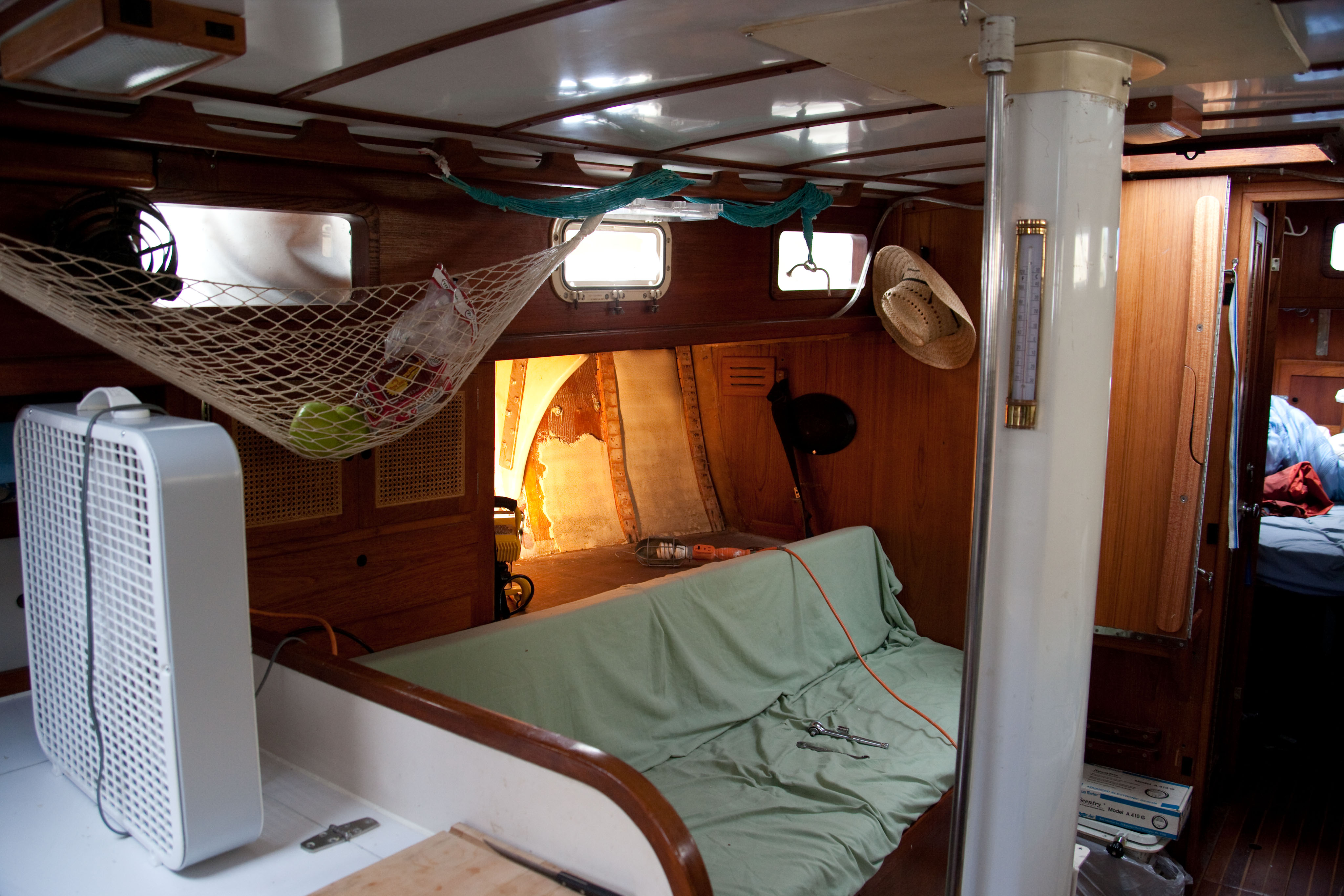
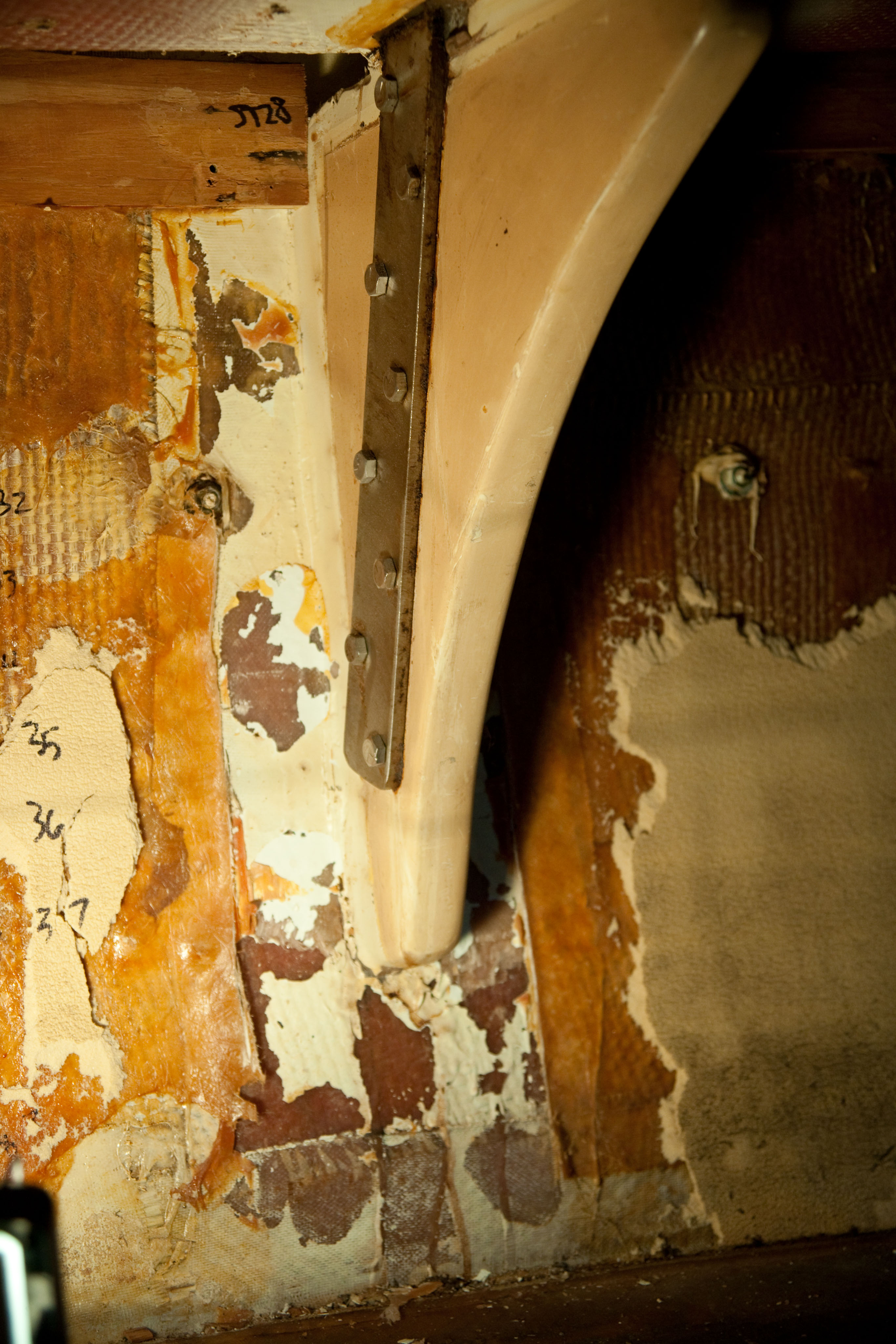
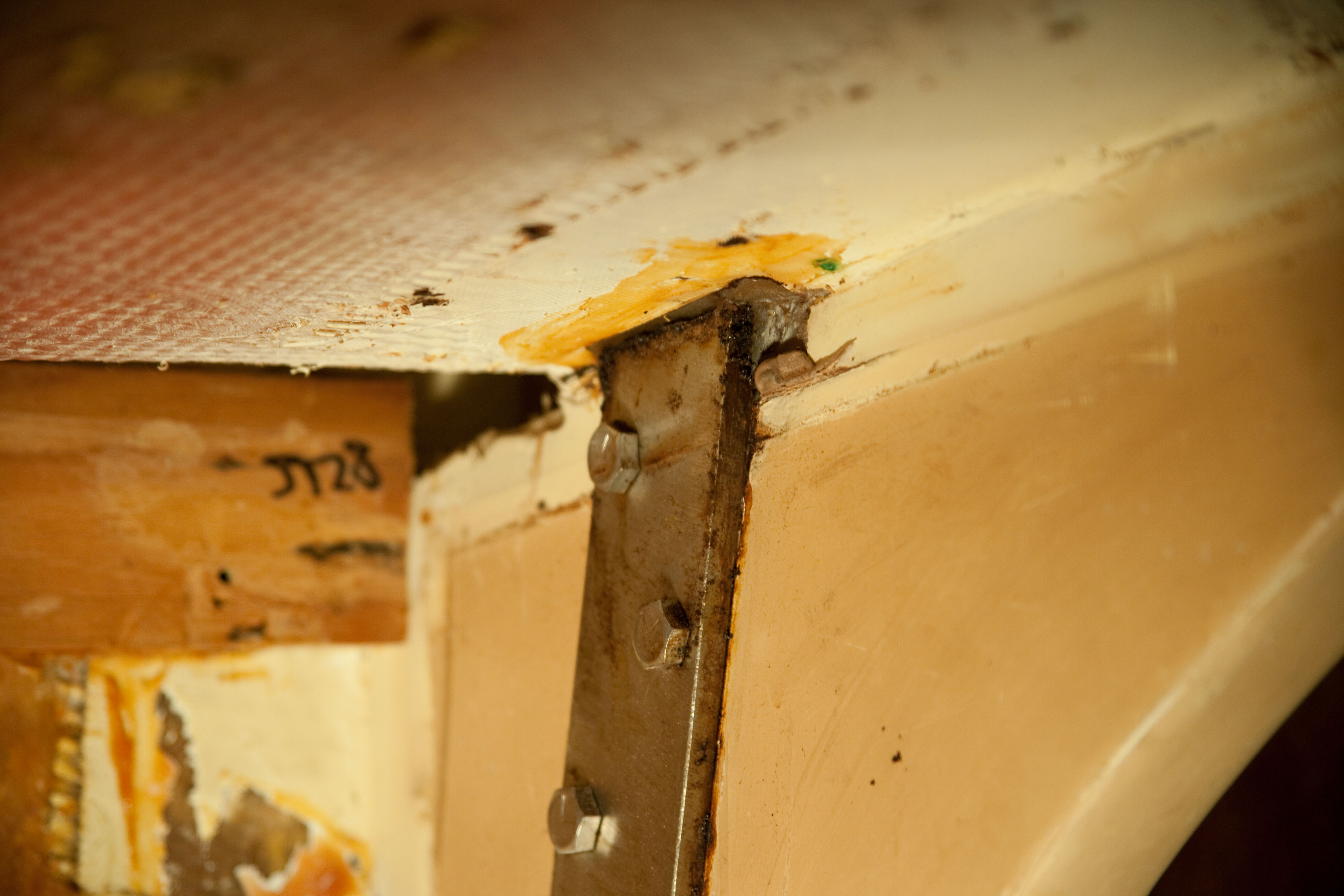
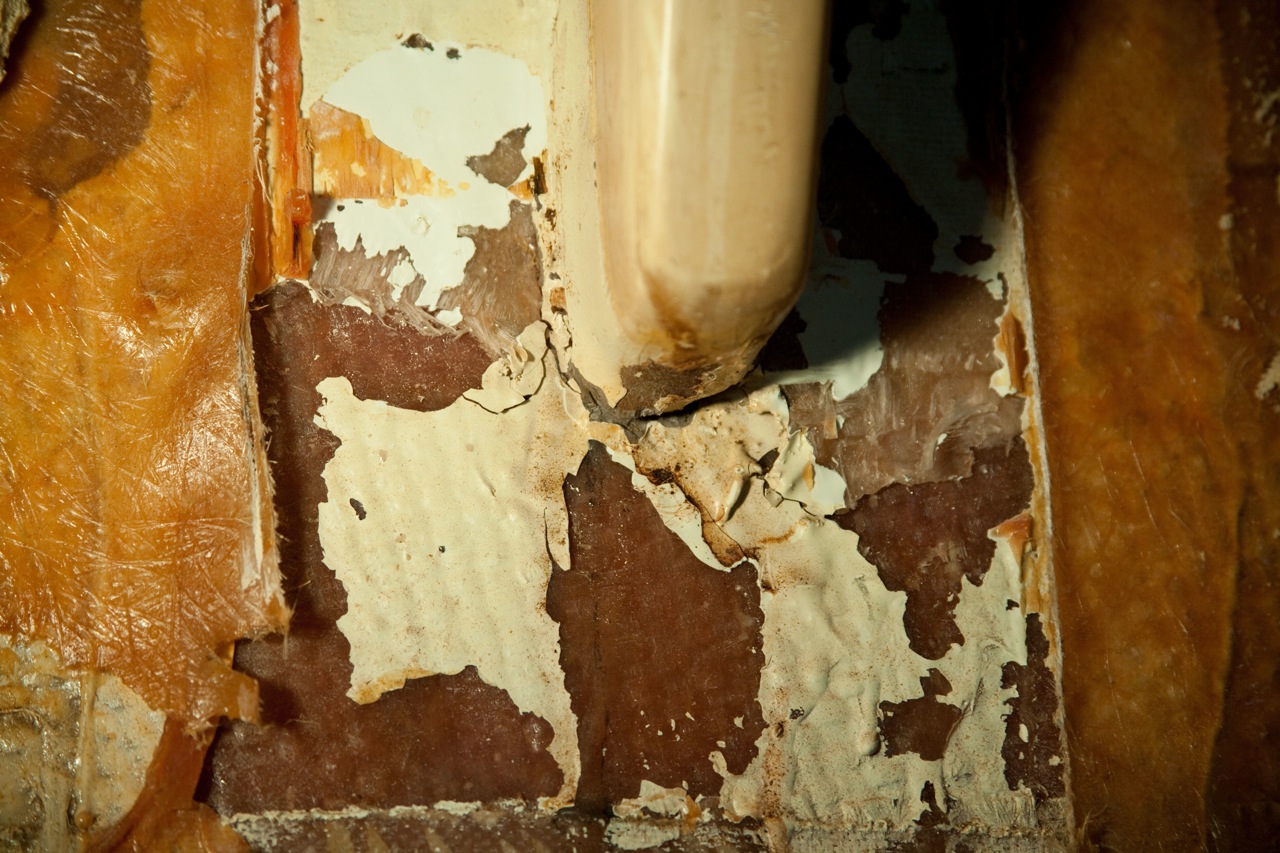
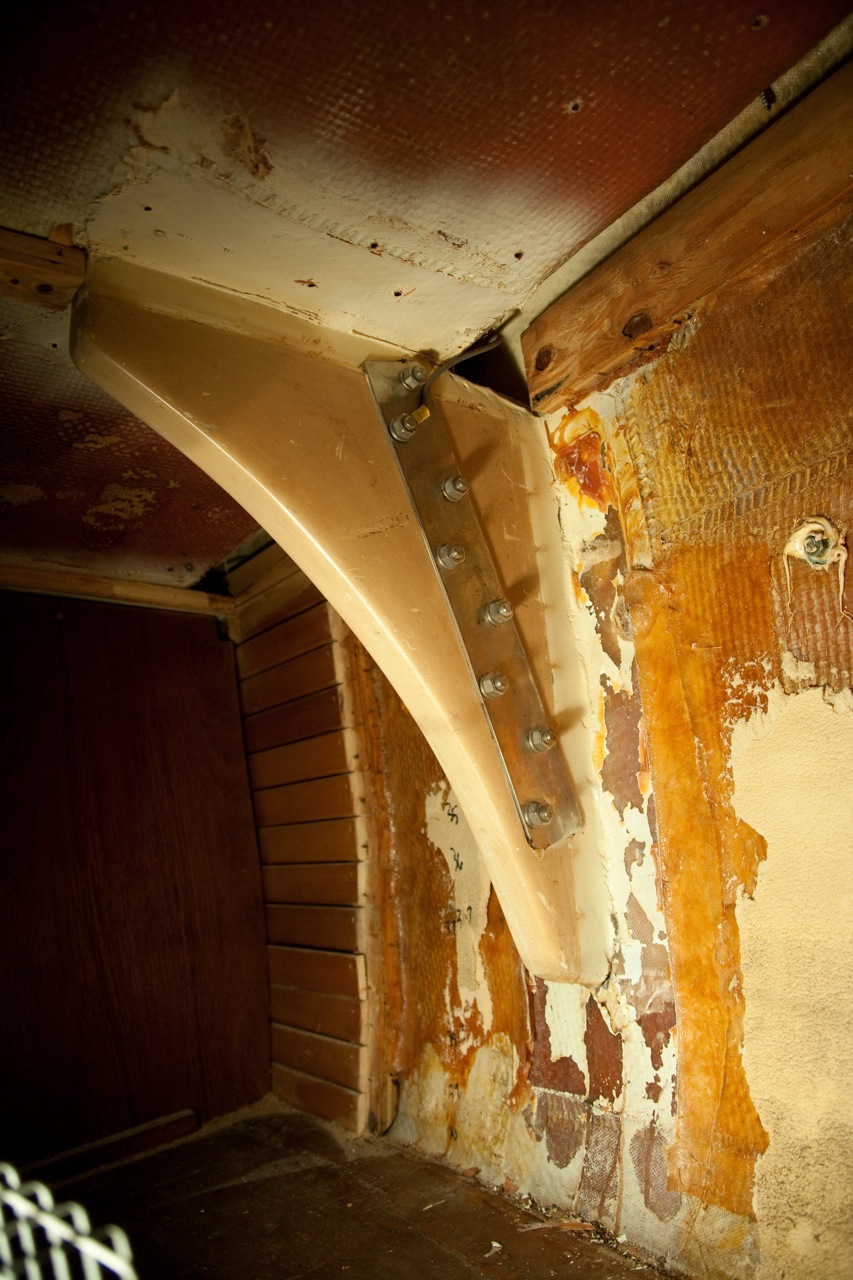
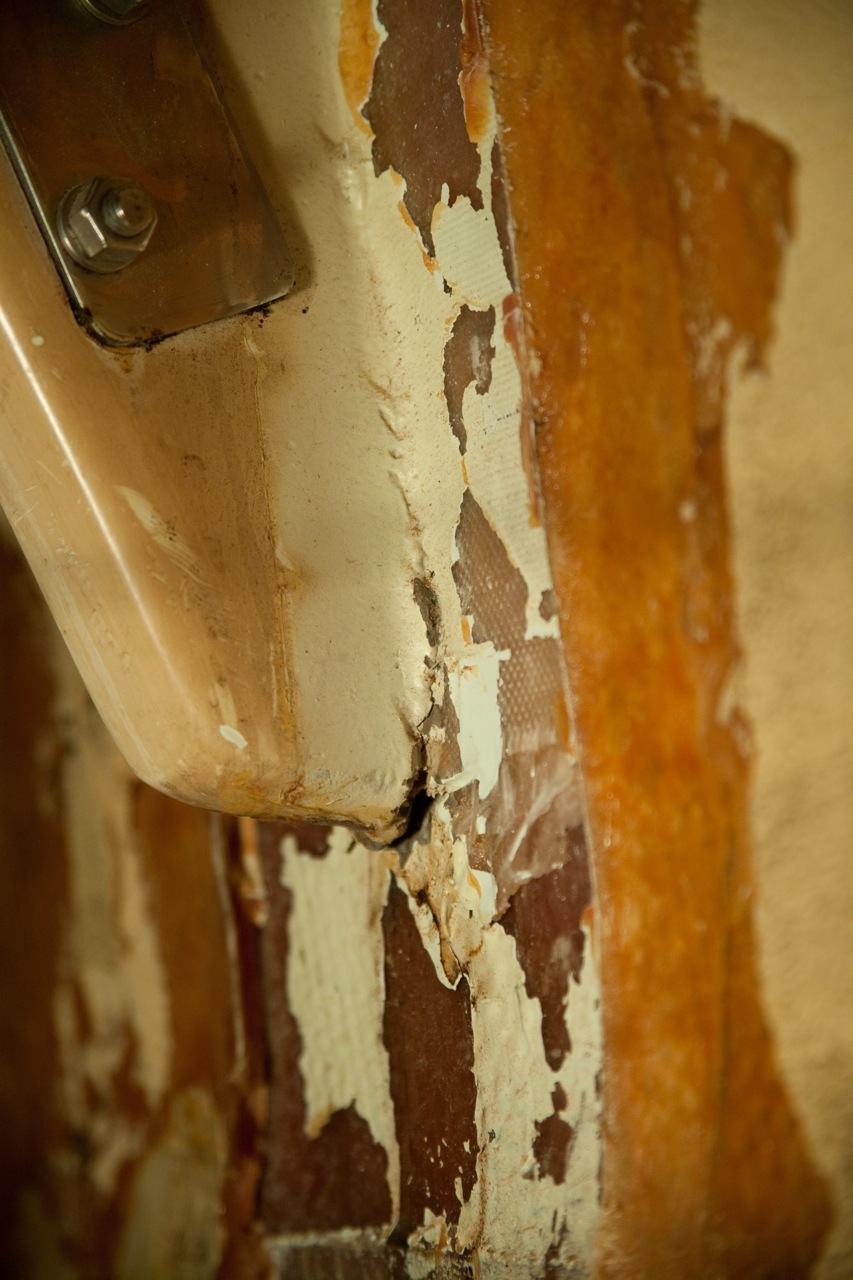
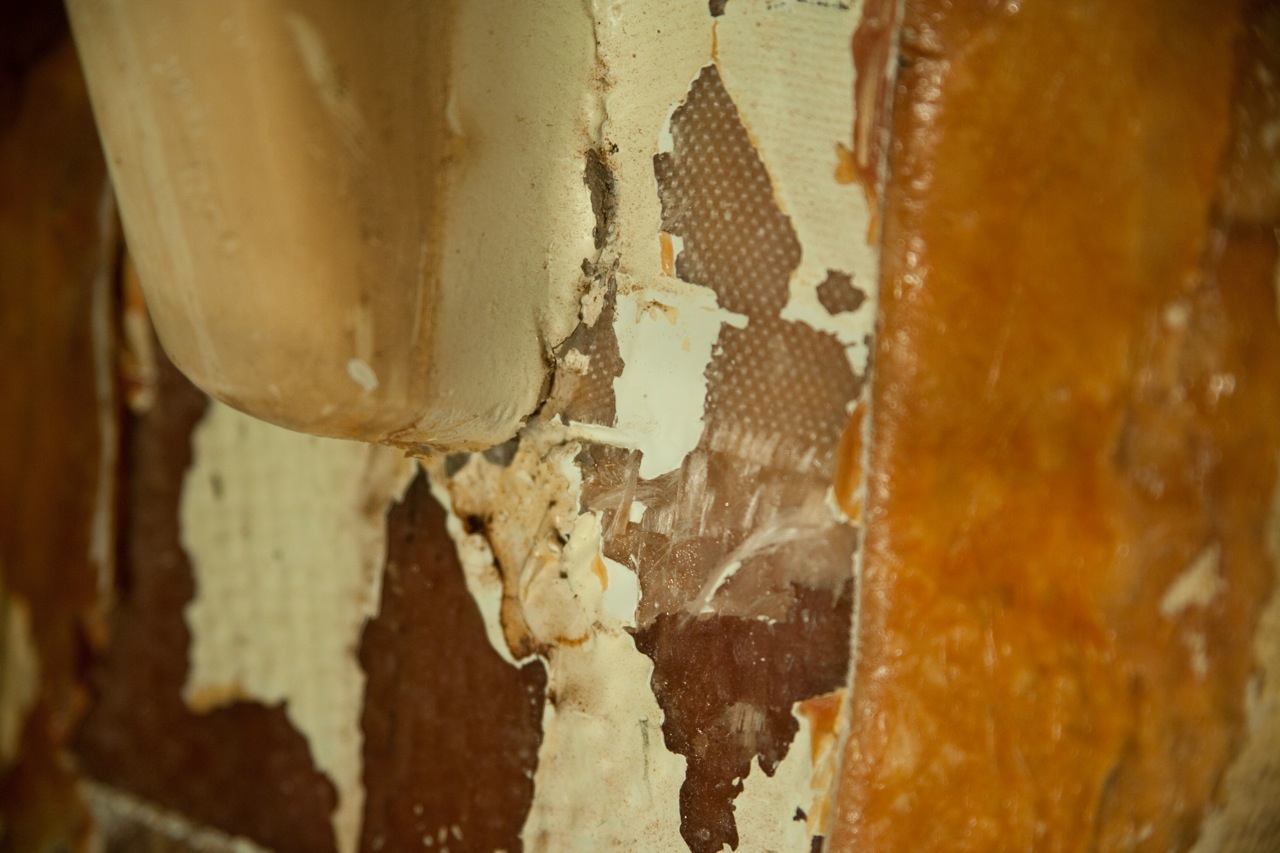
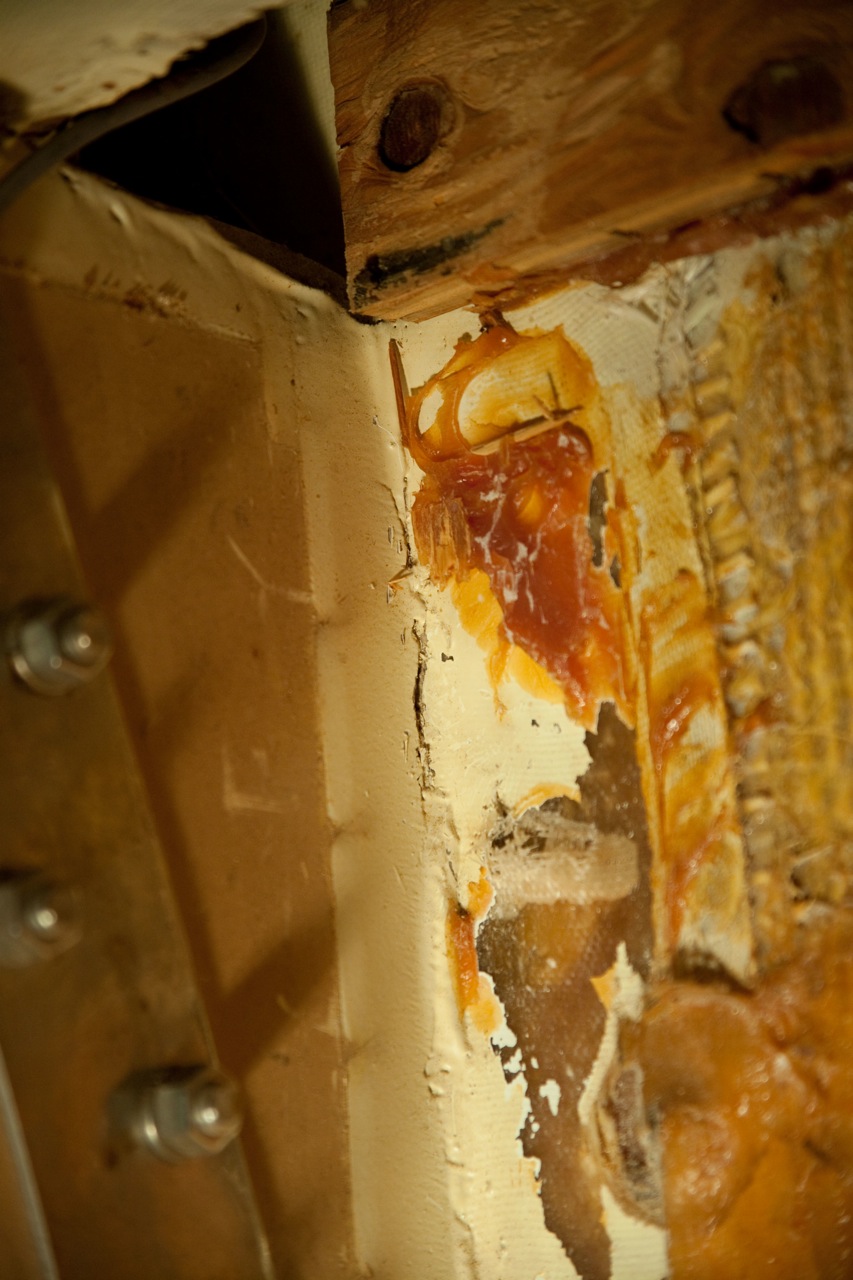
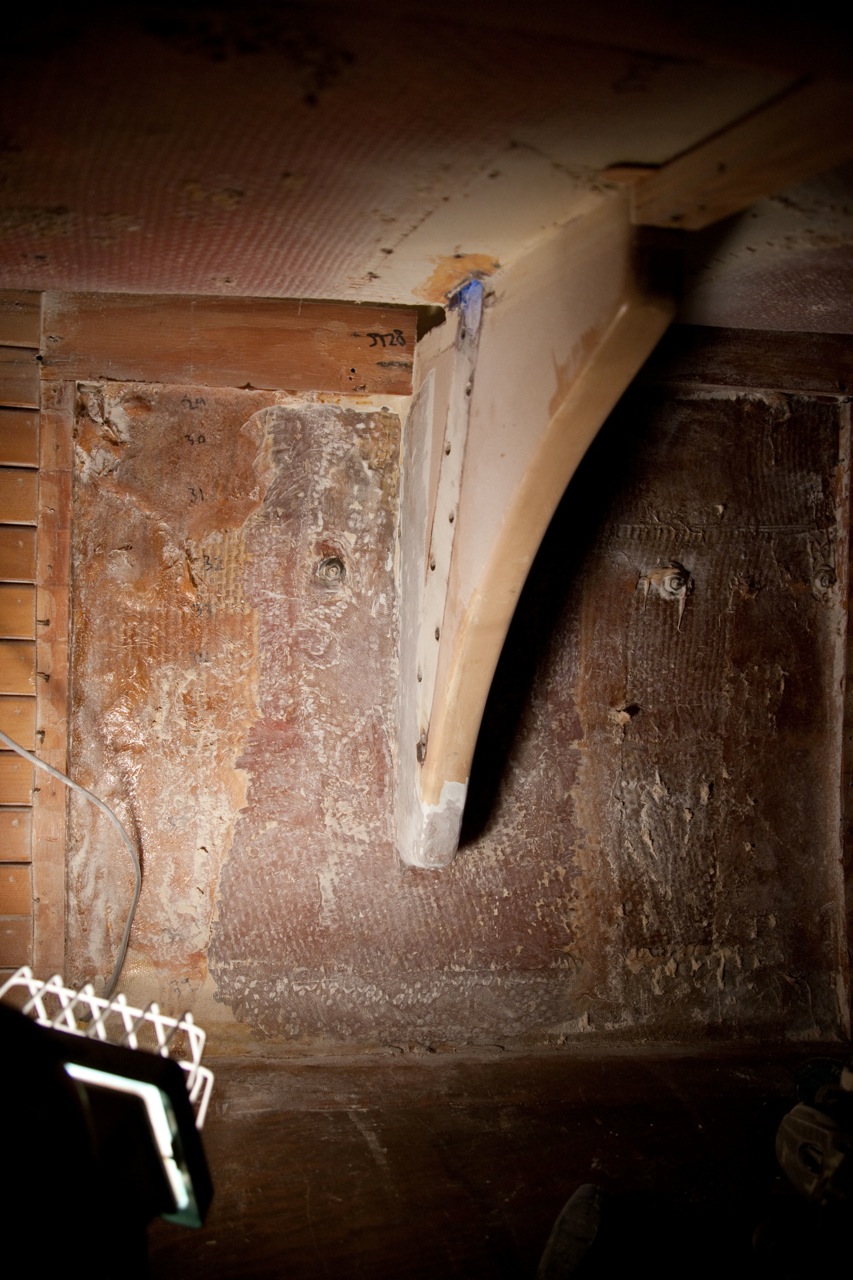
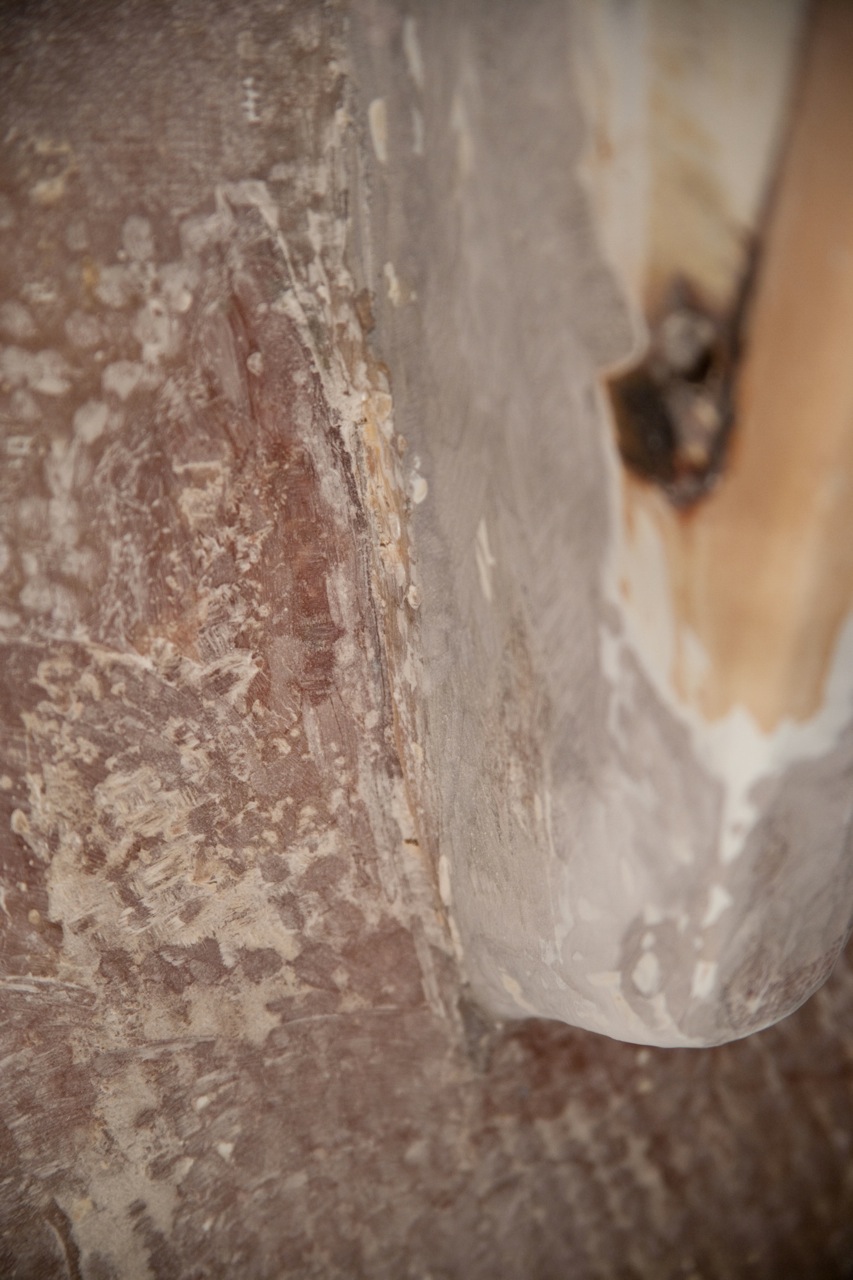
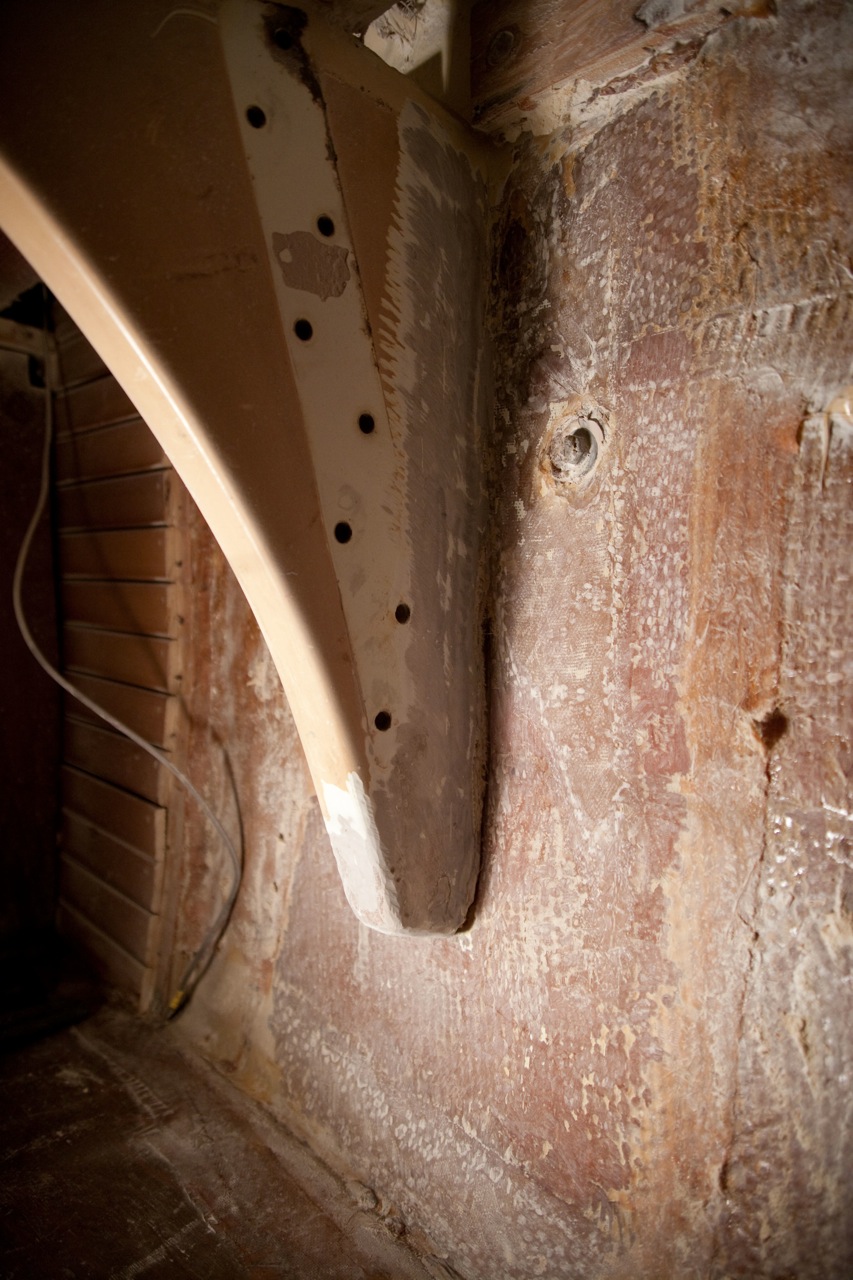
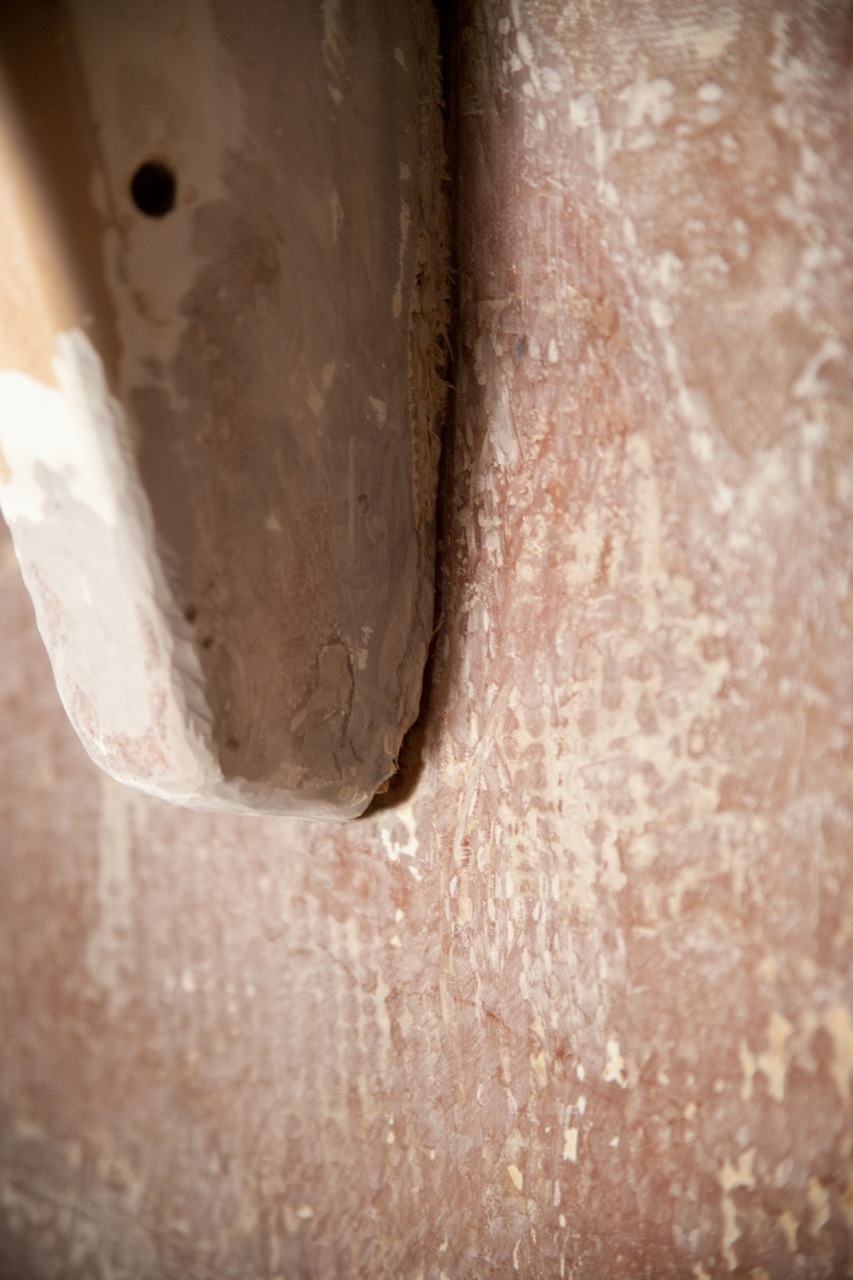
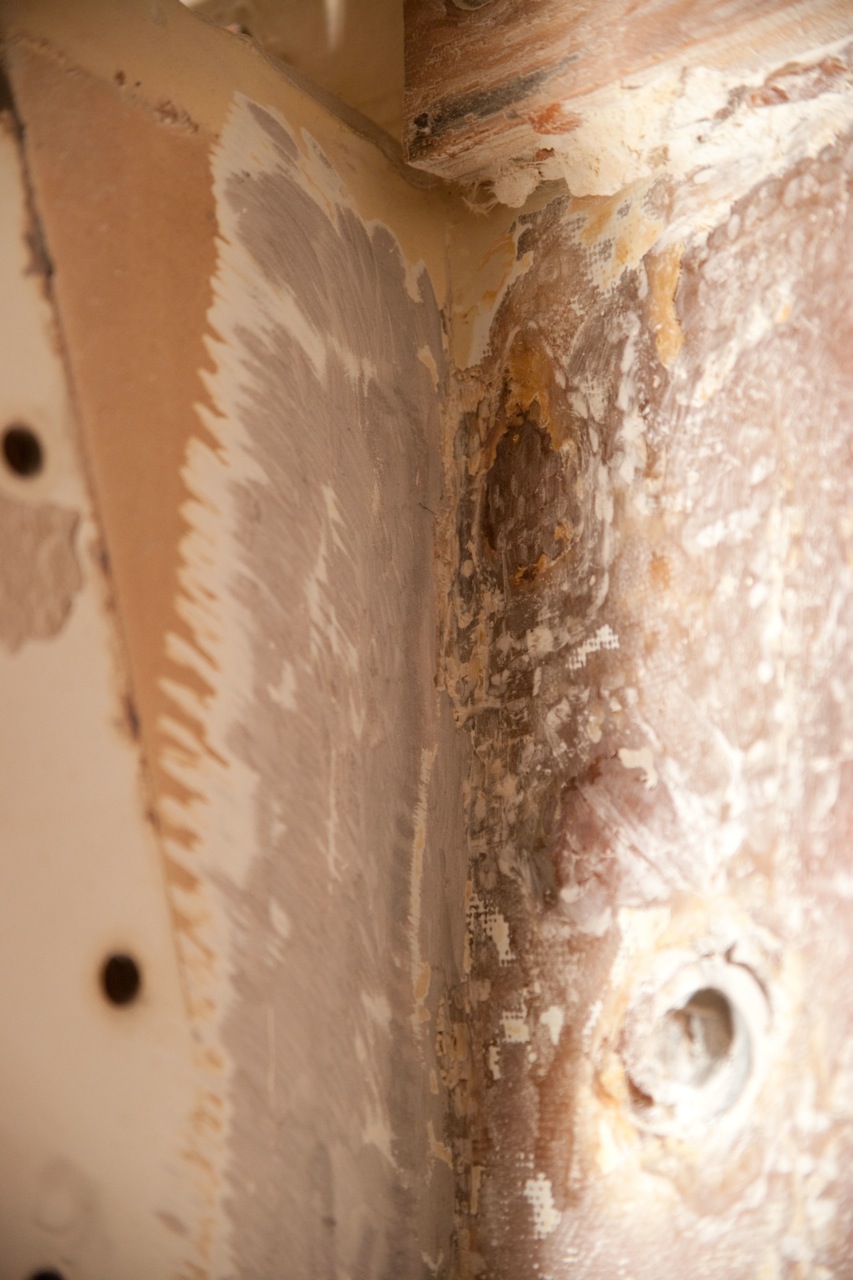
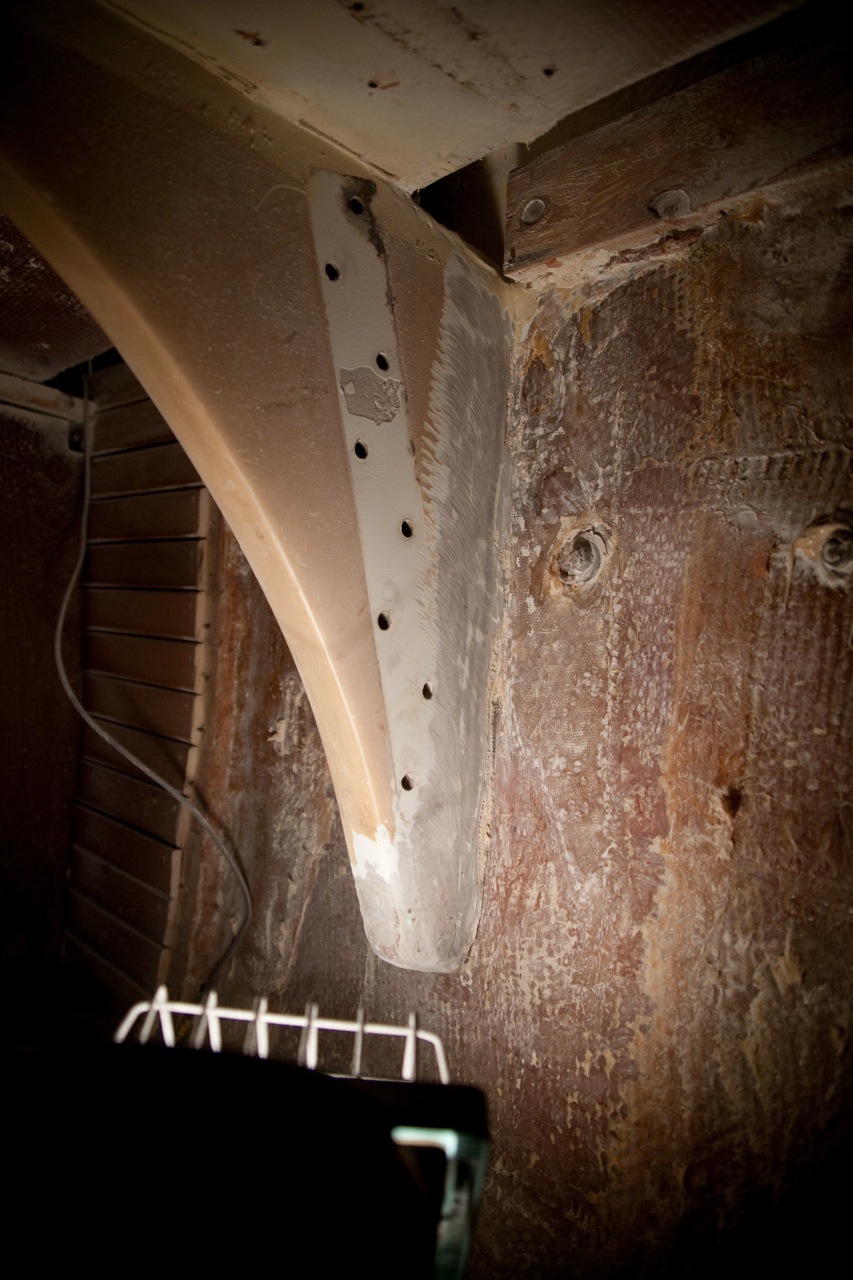
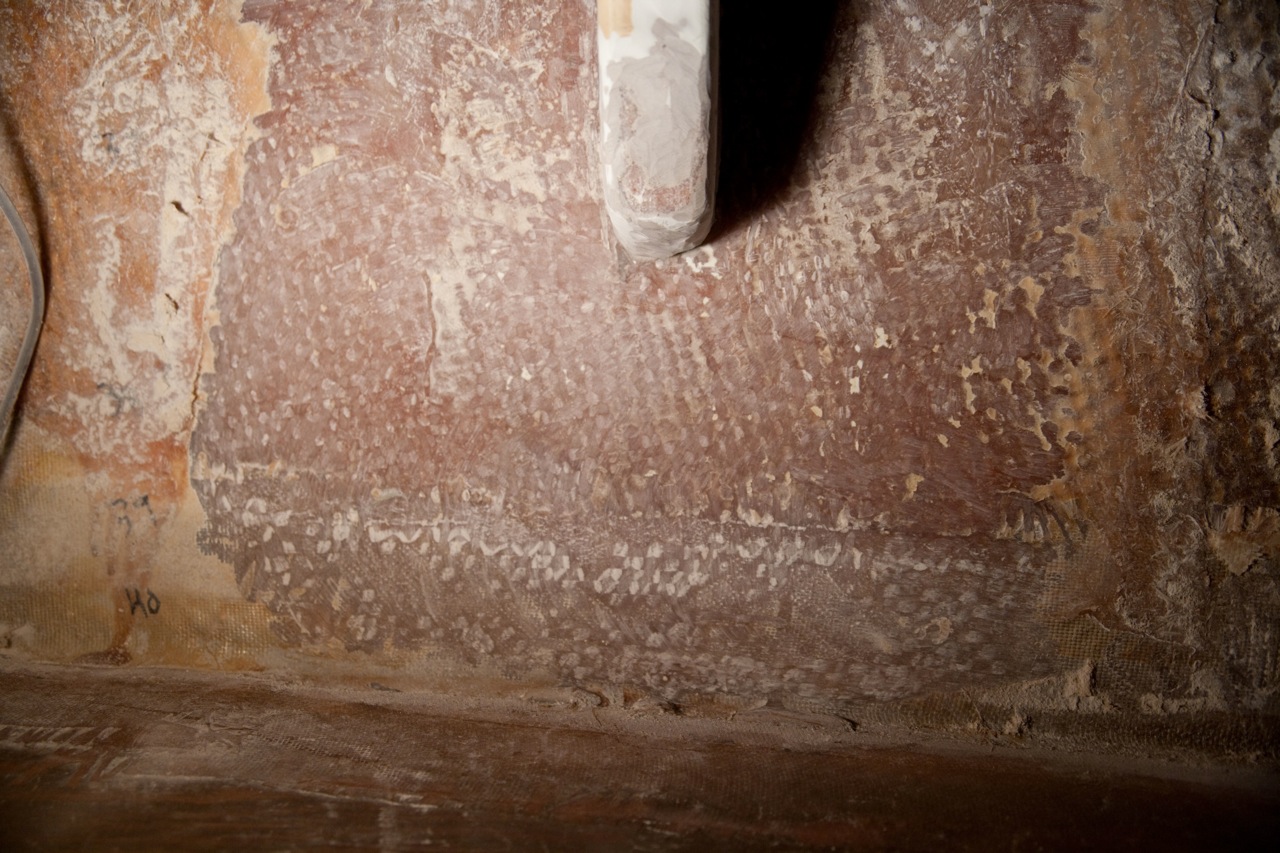
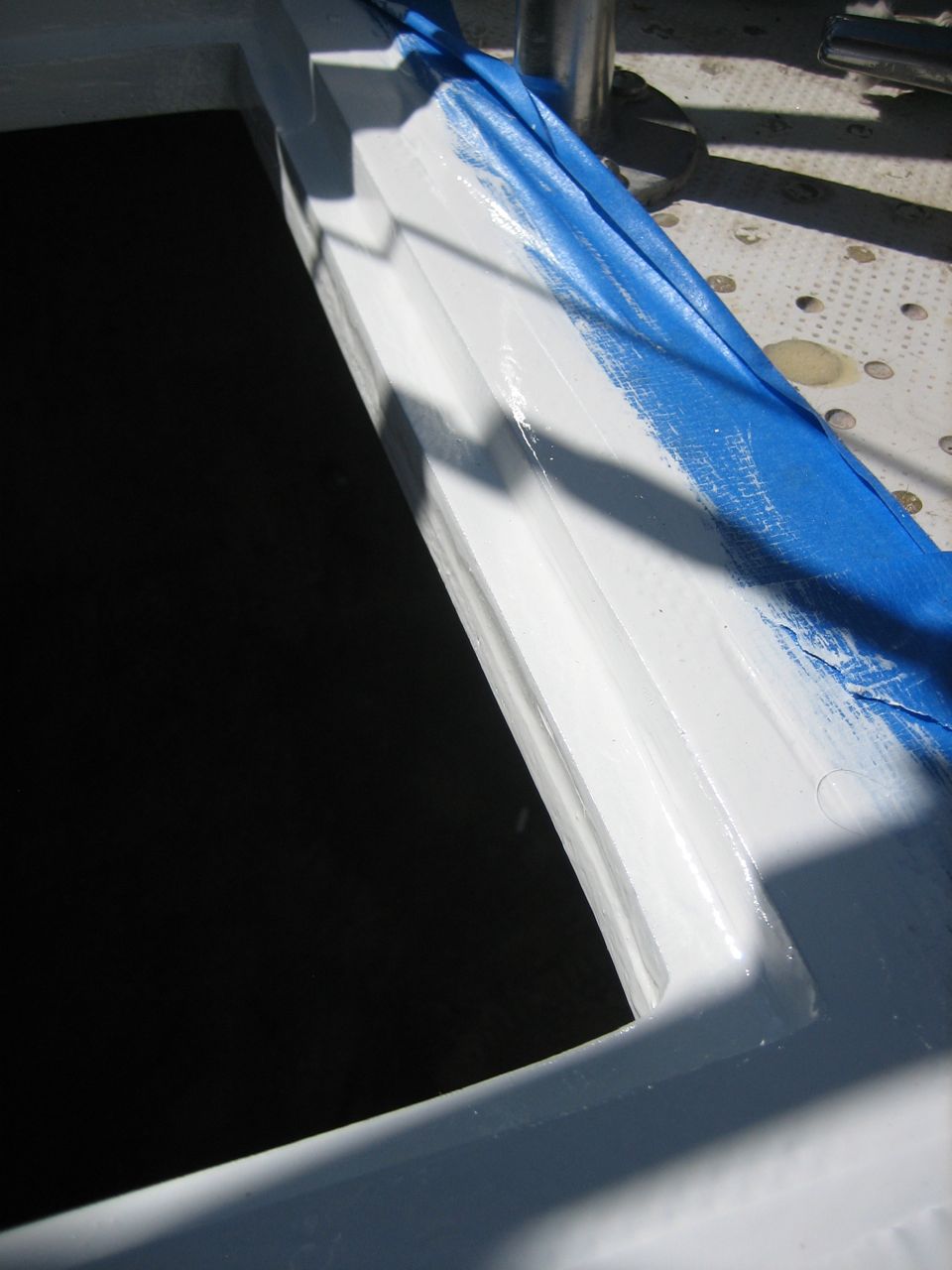
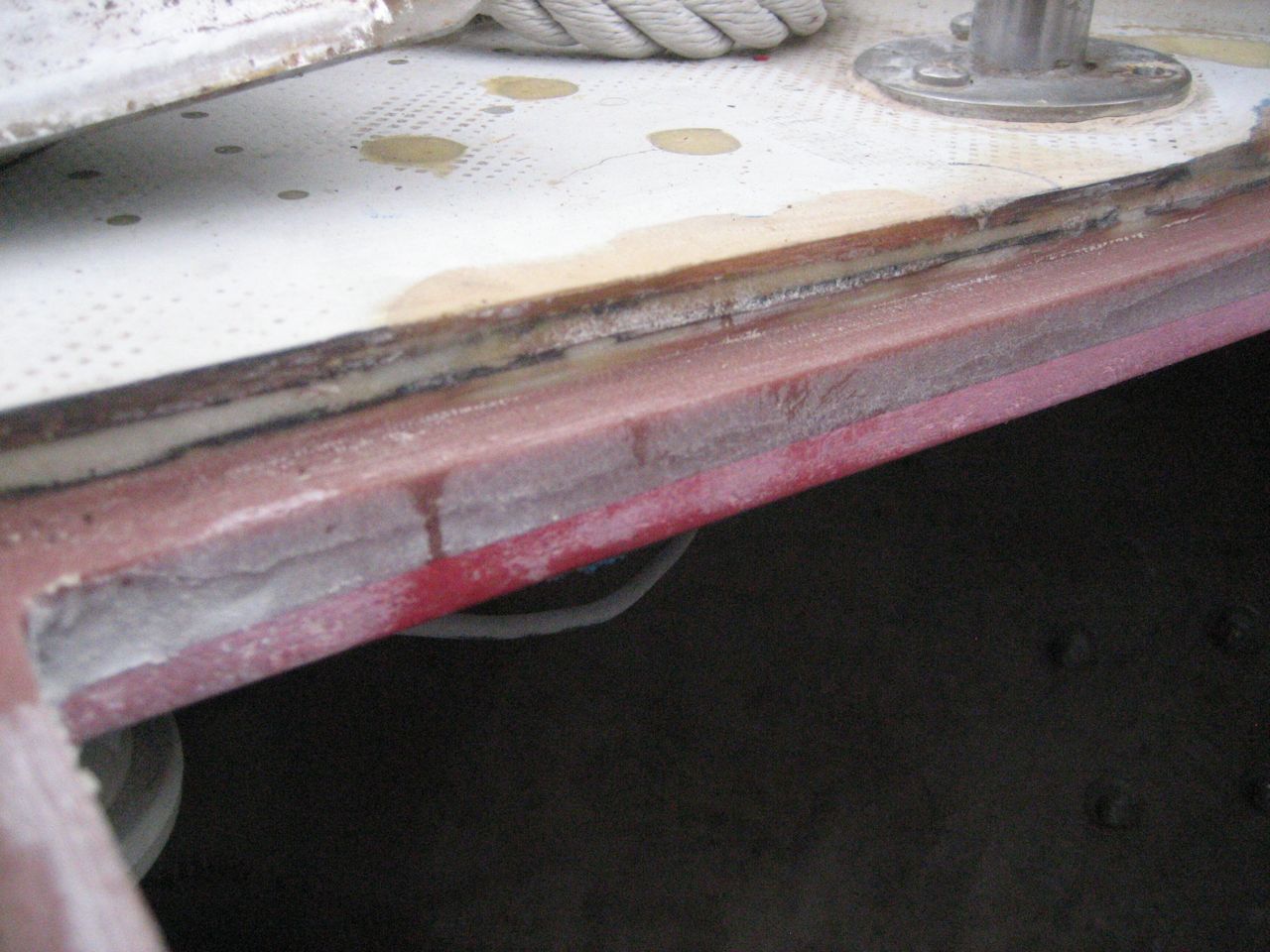
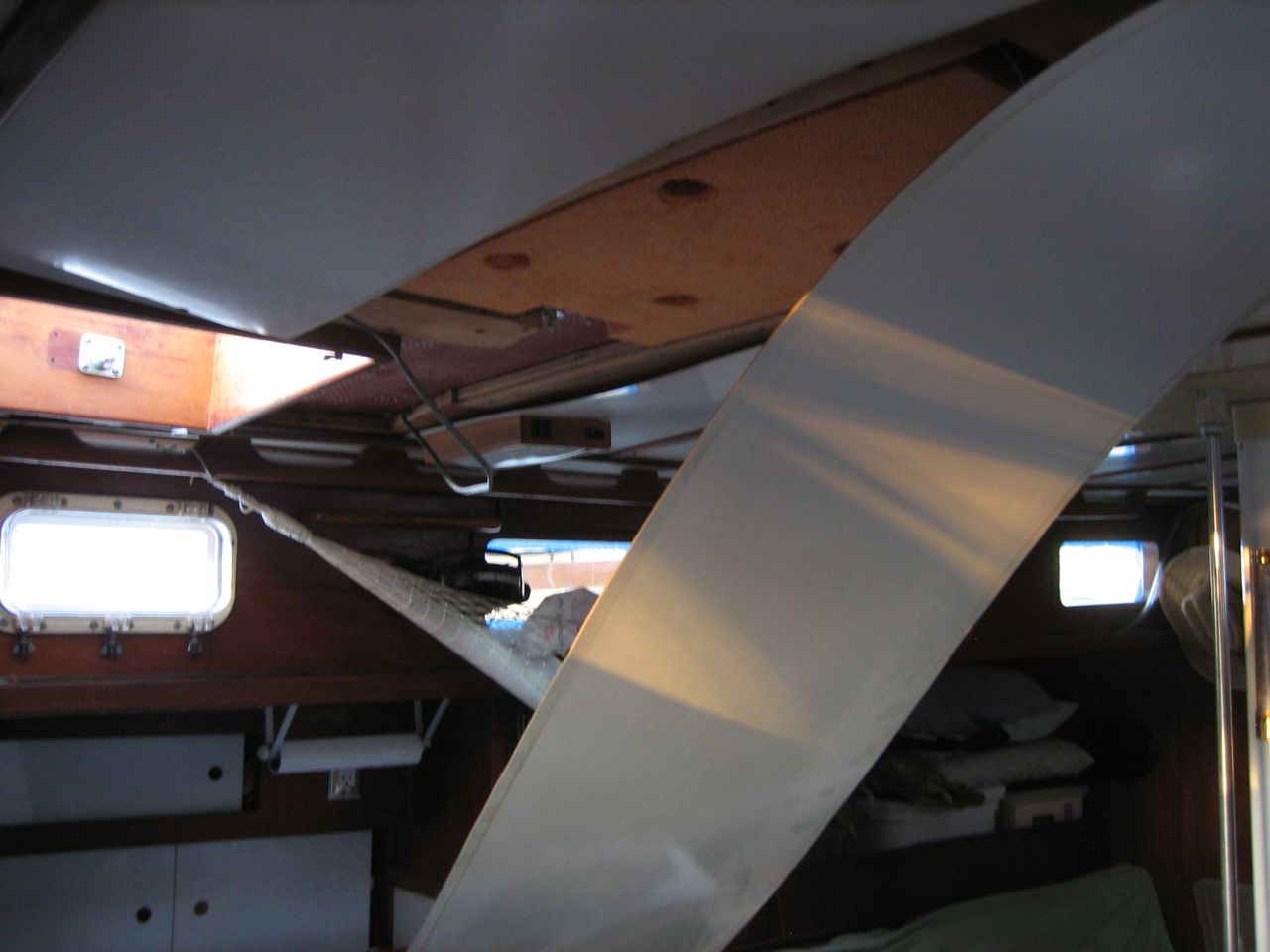
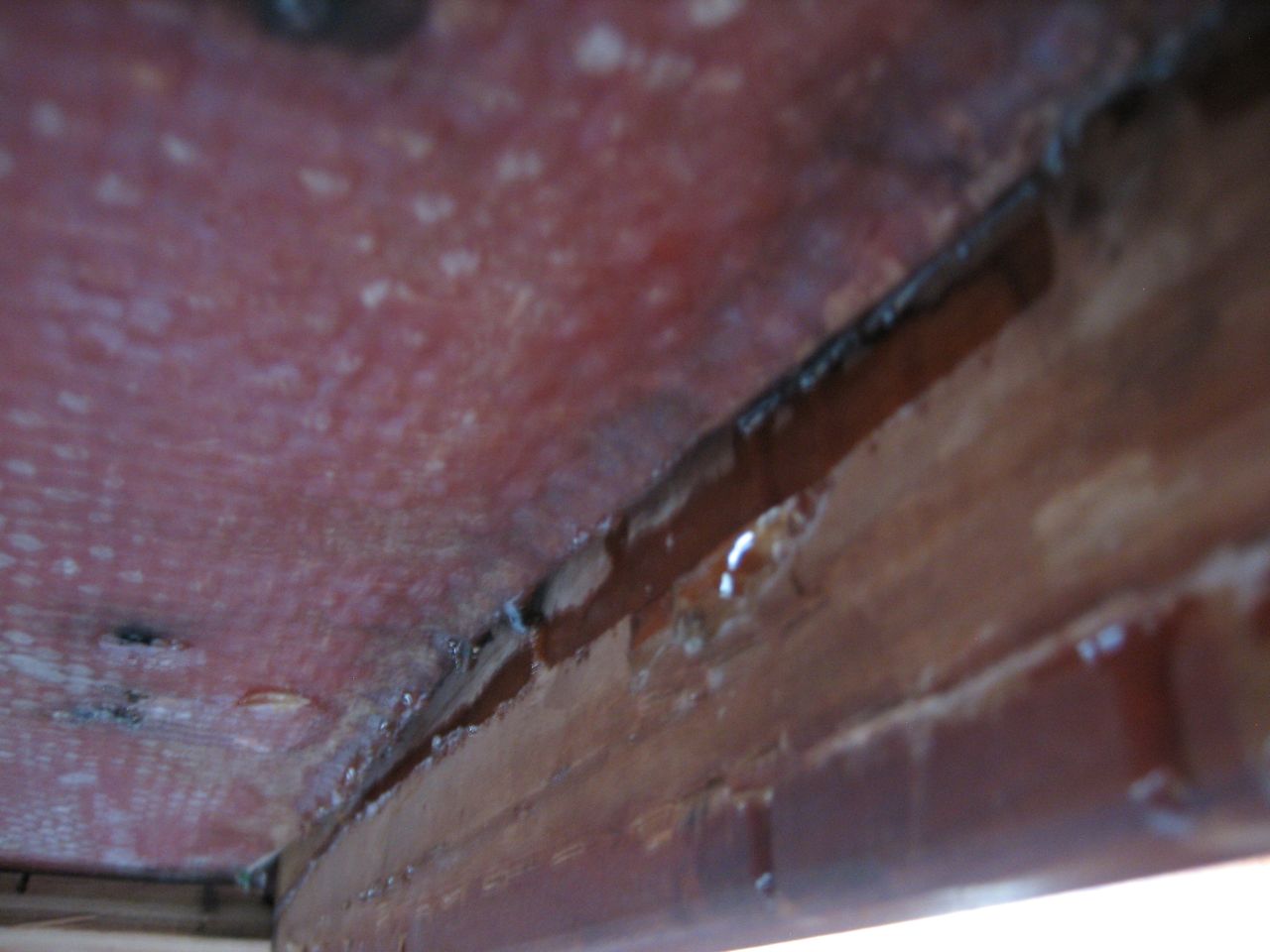
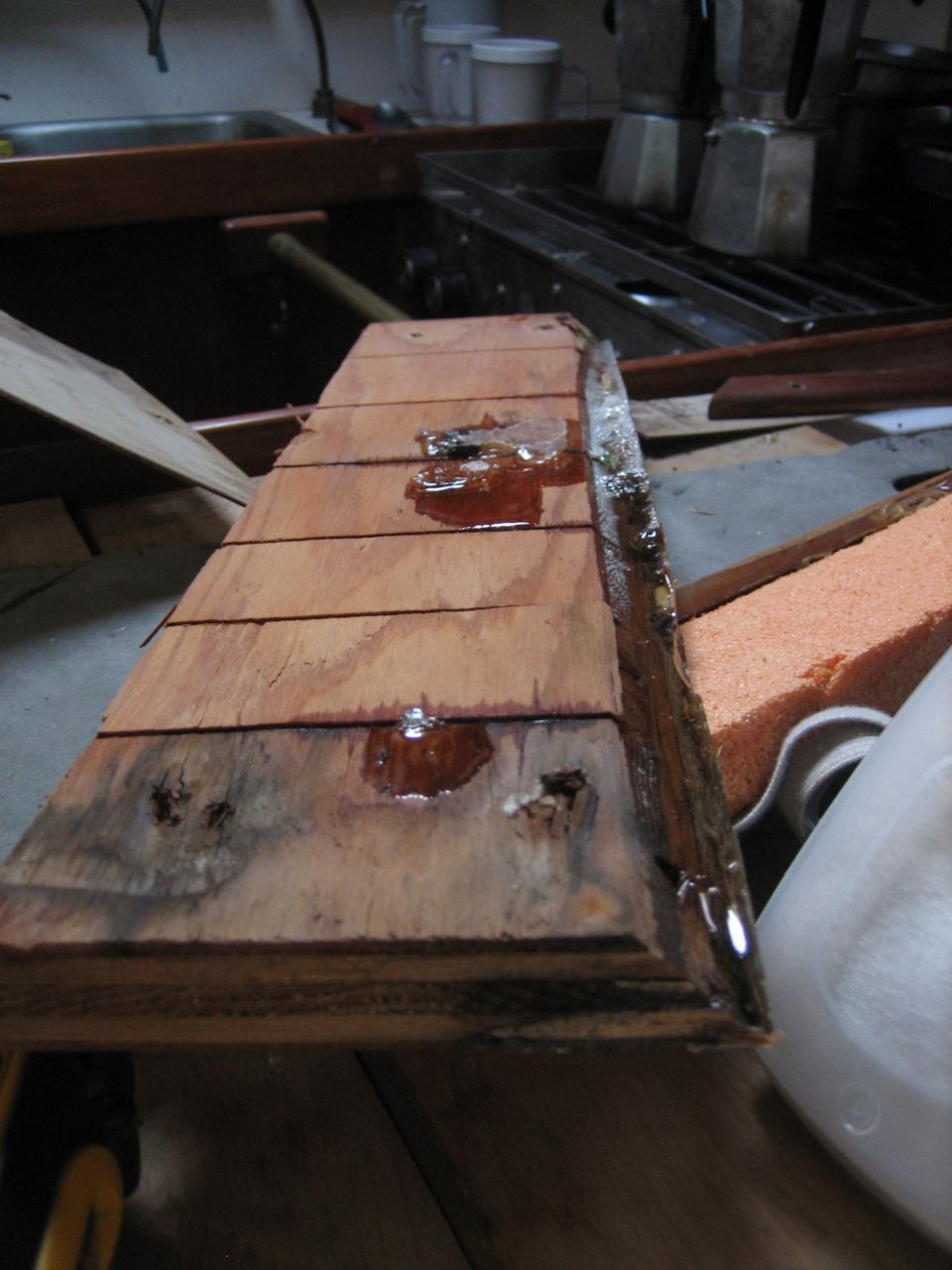
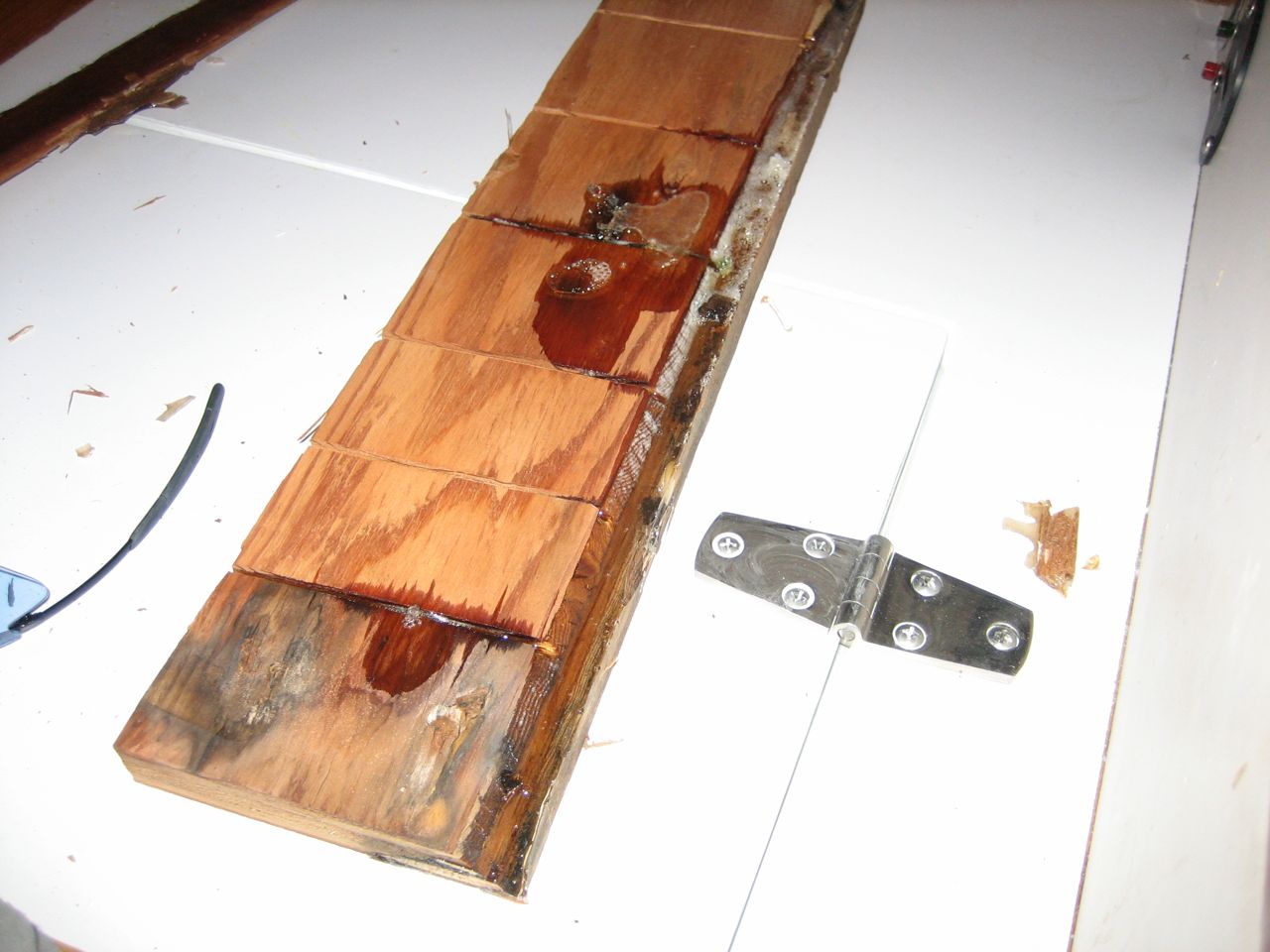
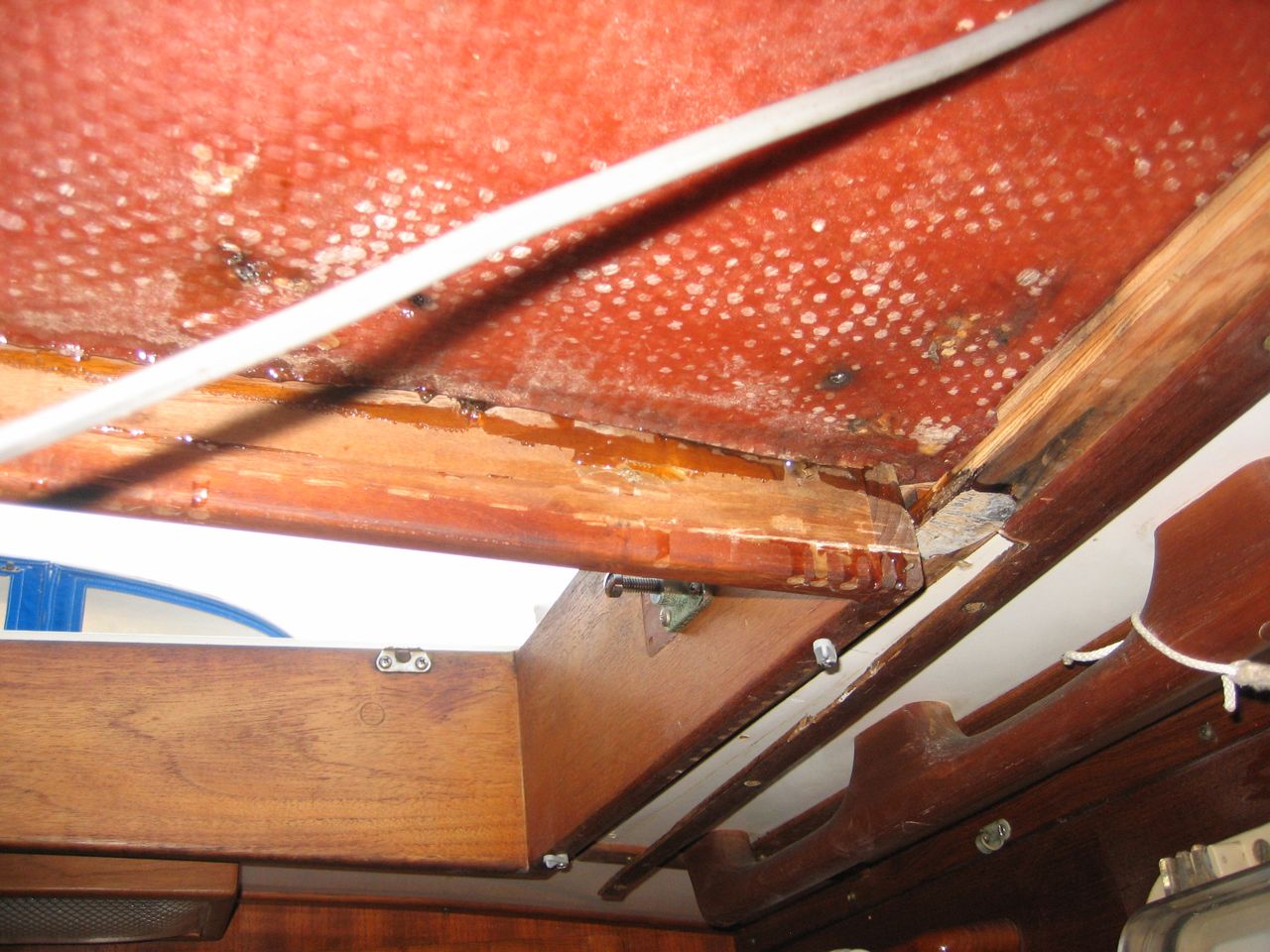
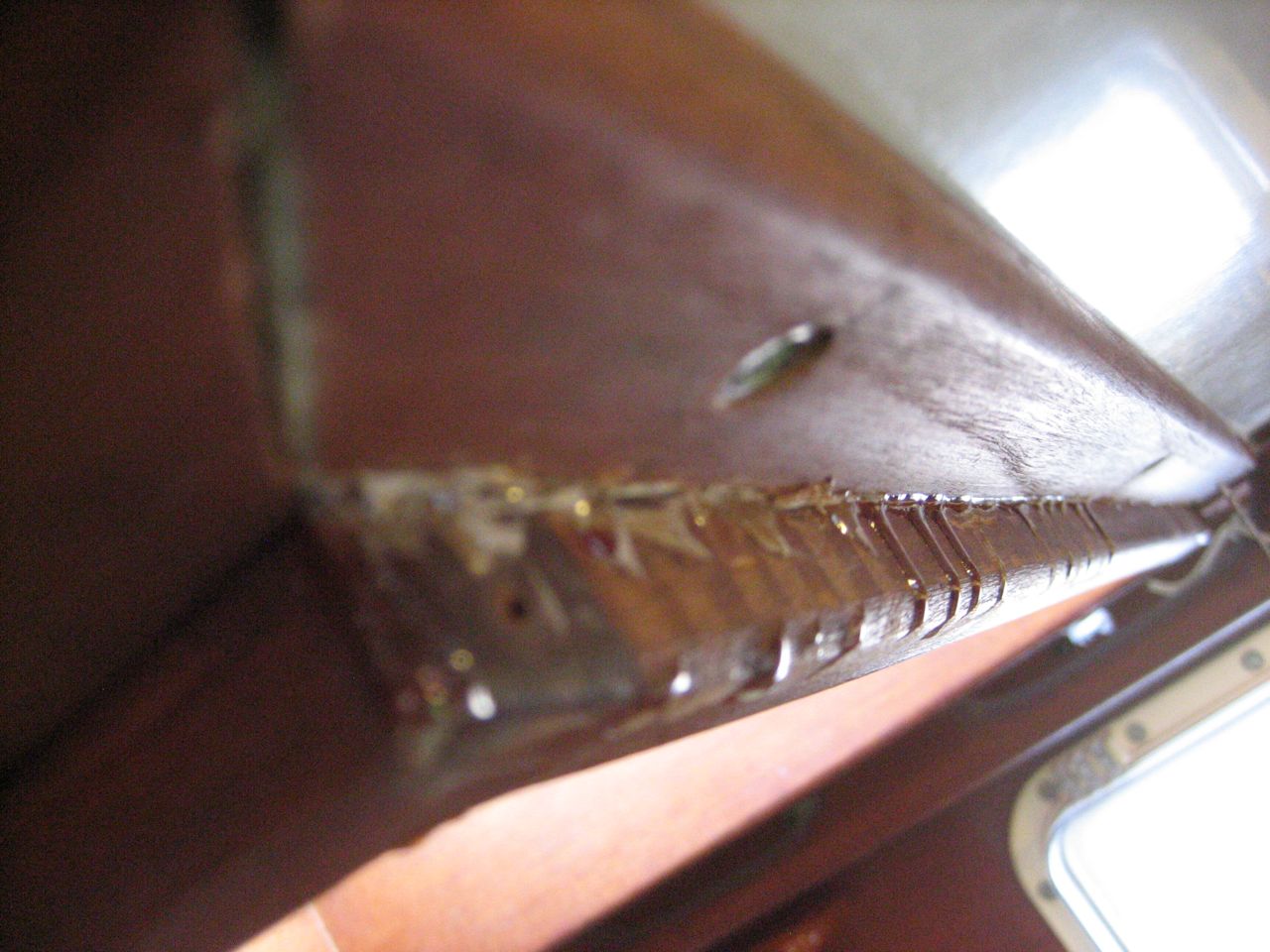
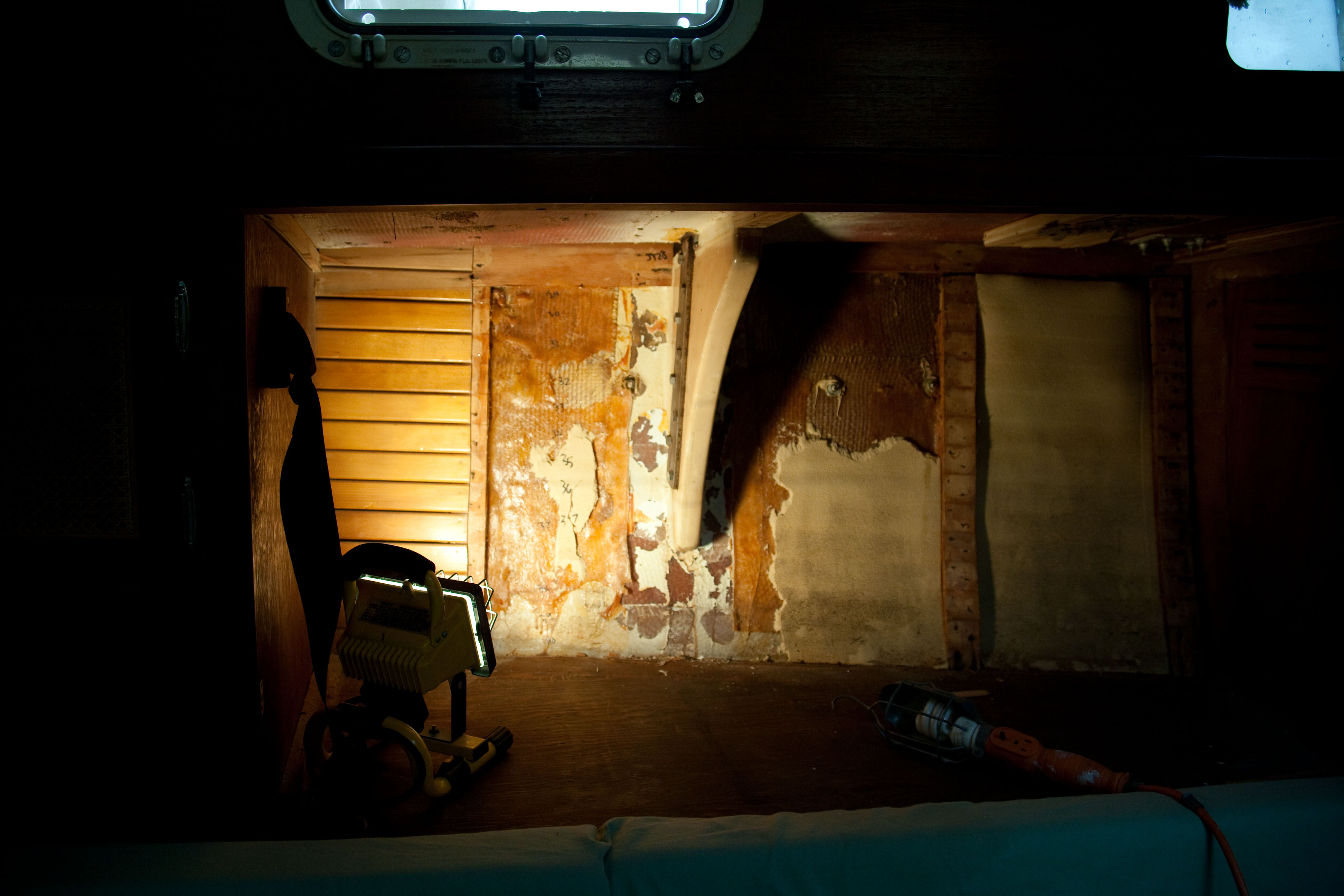
    My worst fears have come true: the raised lumps on the deck that we discovered while refinishing are caused by the knees, which have separated from the hull and are rotating up and pushing on the deck inboard of the chainplates.  Three out of four knees have ~1/8″ to 1/4″ gaps at their bottom ends, and the tabbing towards the bottom is colored white, further indicating delamination from the hull.

    We were intending to depart in January; I don’t see how that’s possible now with this job thrown into my lap at the last minute.  Karen and I just moved onto the boat, and I’m going to have to rip out the cabinets and do a massive fiberglass grinding and repair.

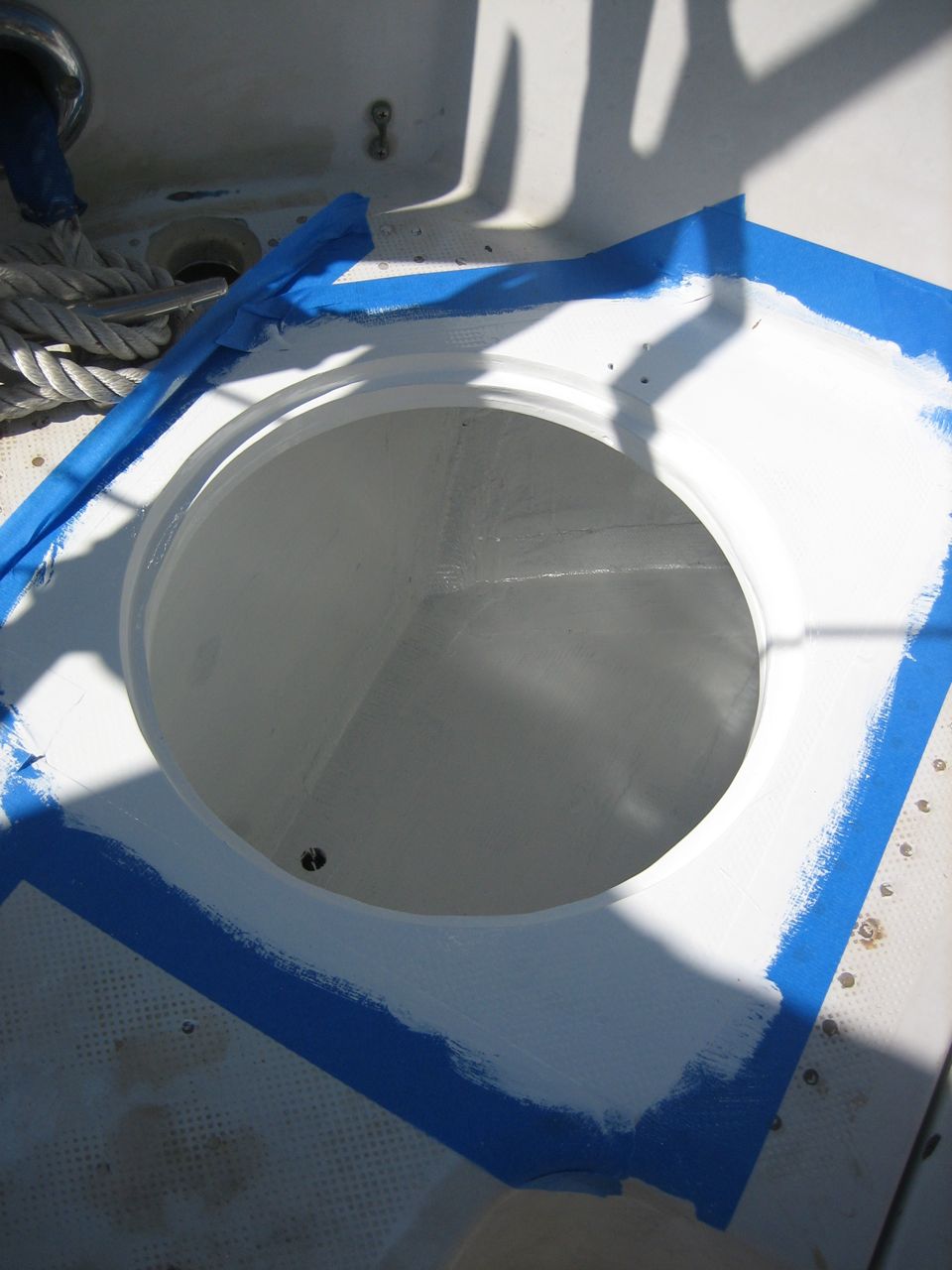
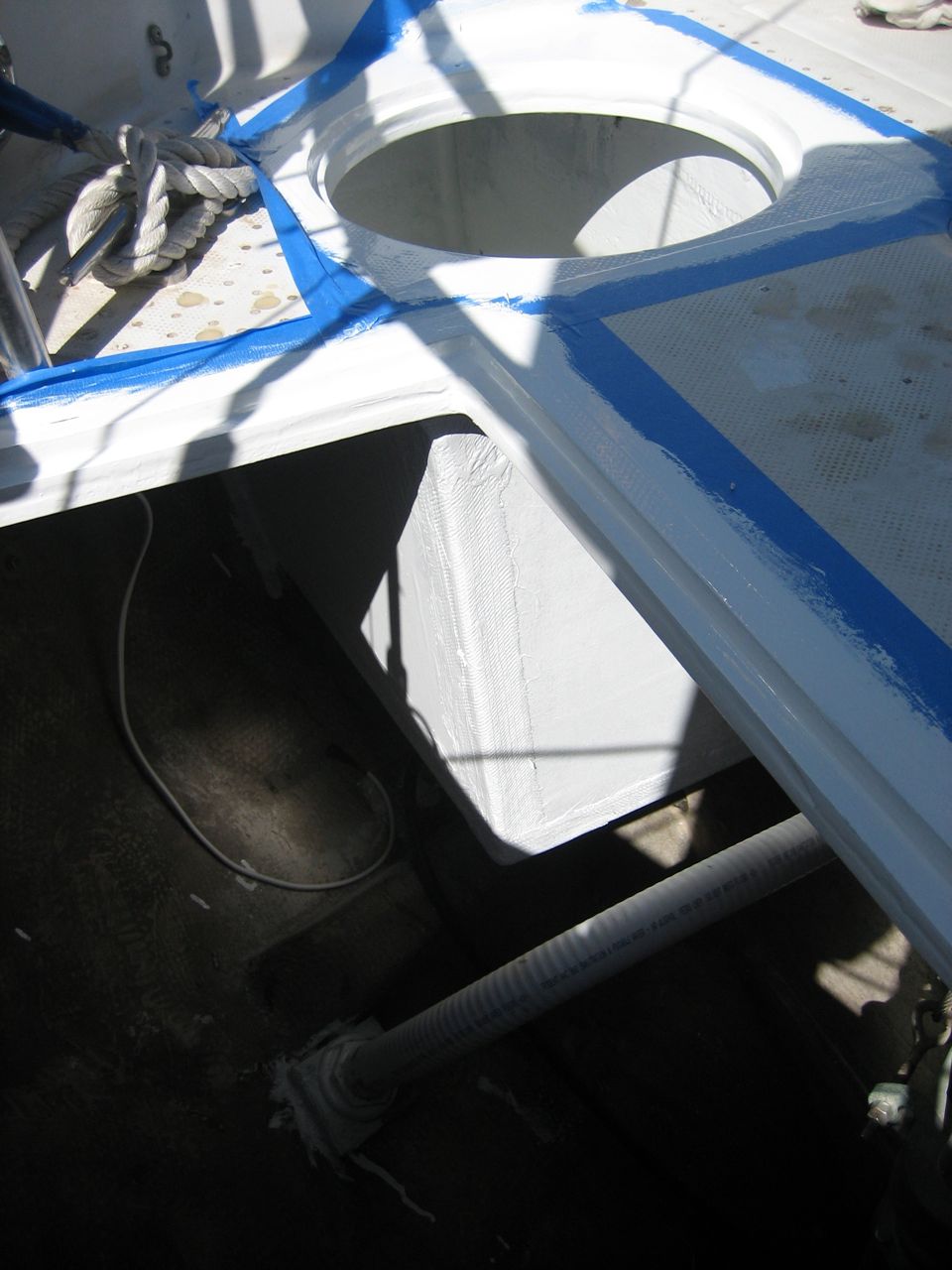
    I removed the slats that hide the port forward lower; I chose to tackle this one first because it doesn’t require removing cabinets to access it.

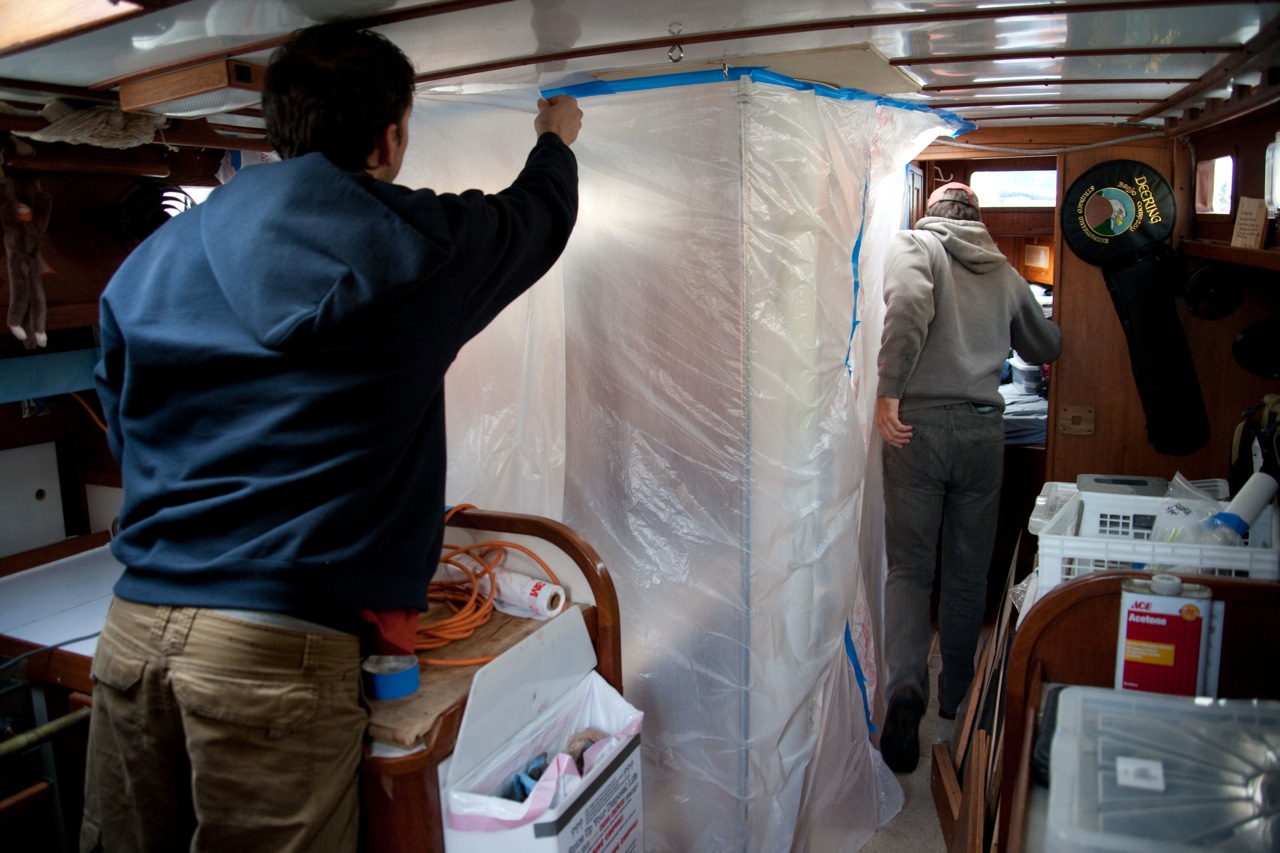
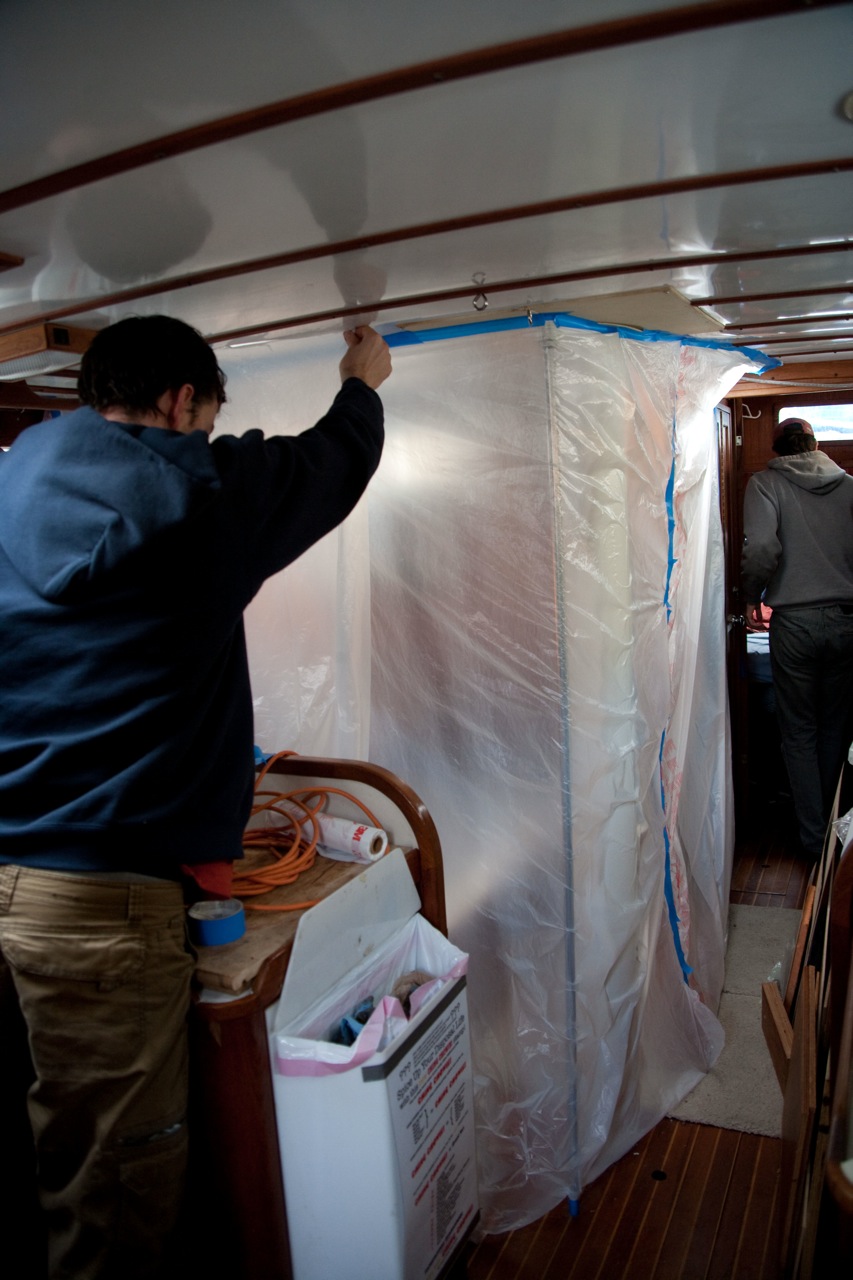
    I used plastic to tape off the entire area.  I wore a bunny suit, full facemask, and respirator.  I ground the fiberglass tabbing off until reaching clean, solid glass.  That part really sucks, the grinding.

  • Refinished Deck

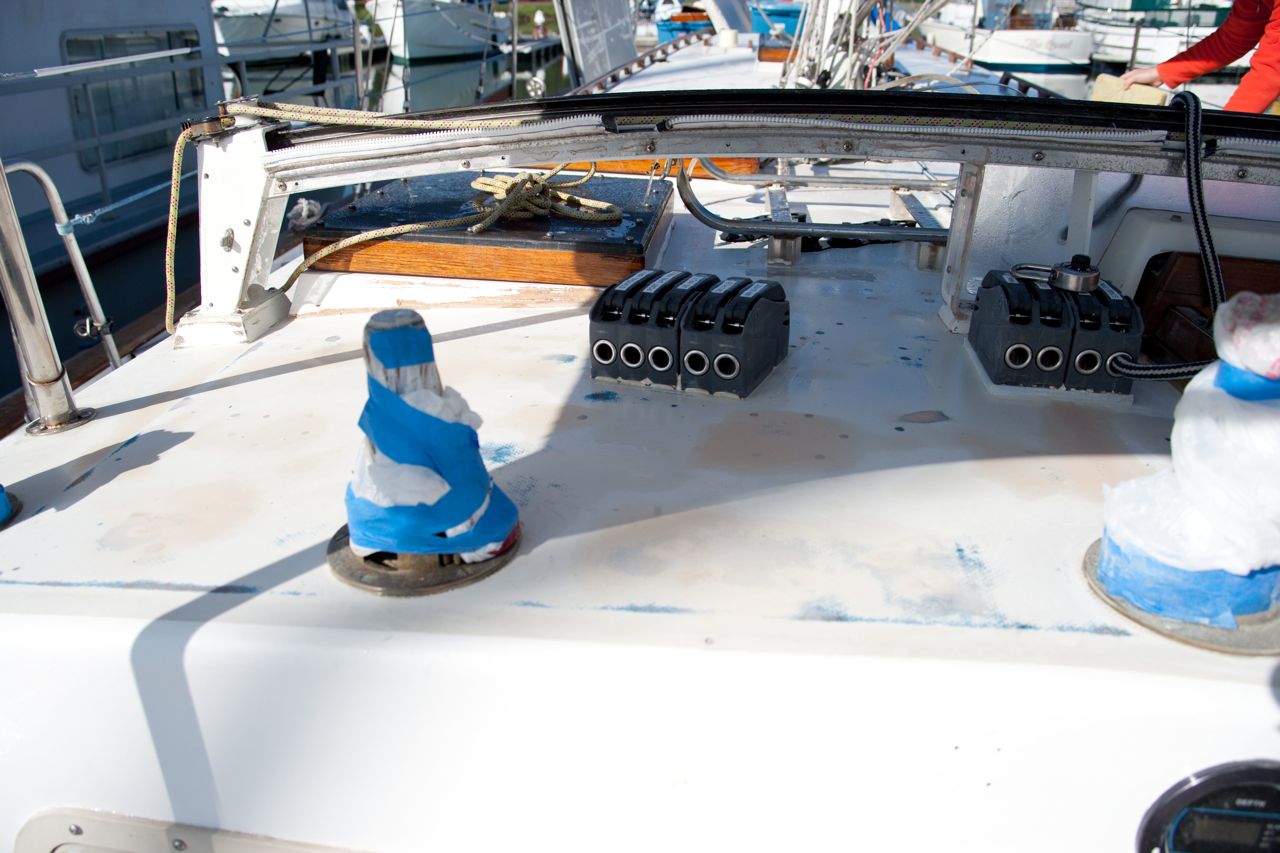
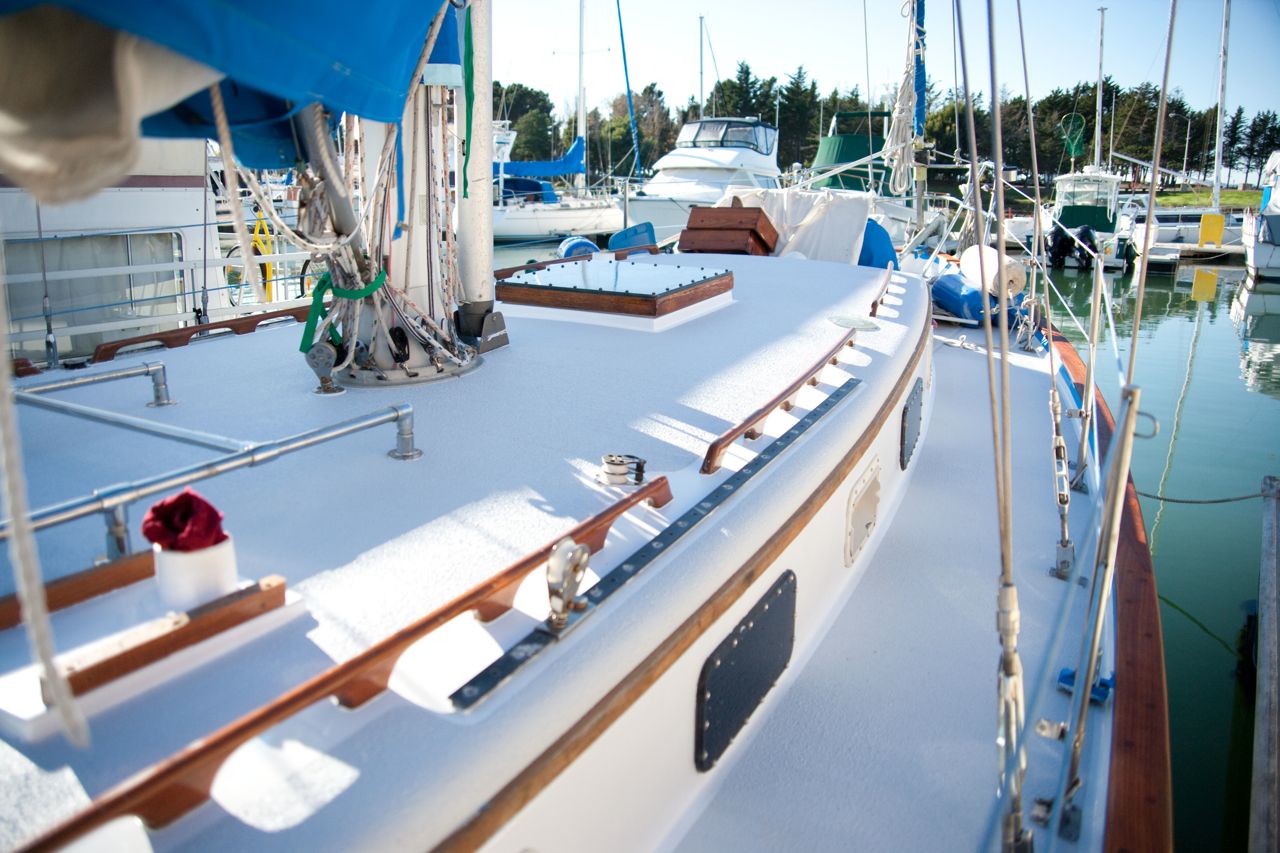
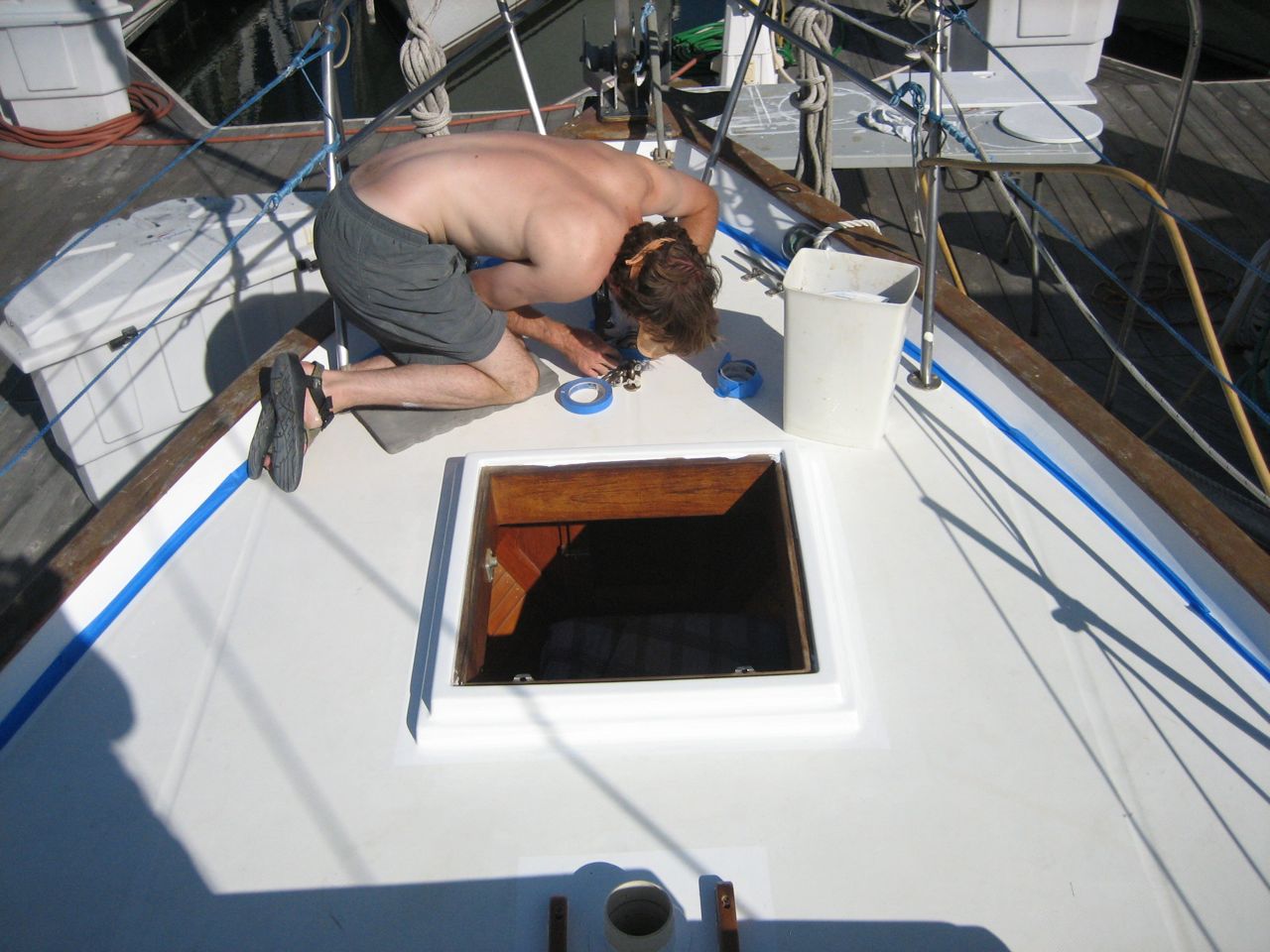
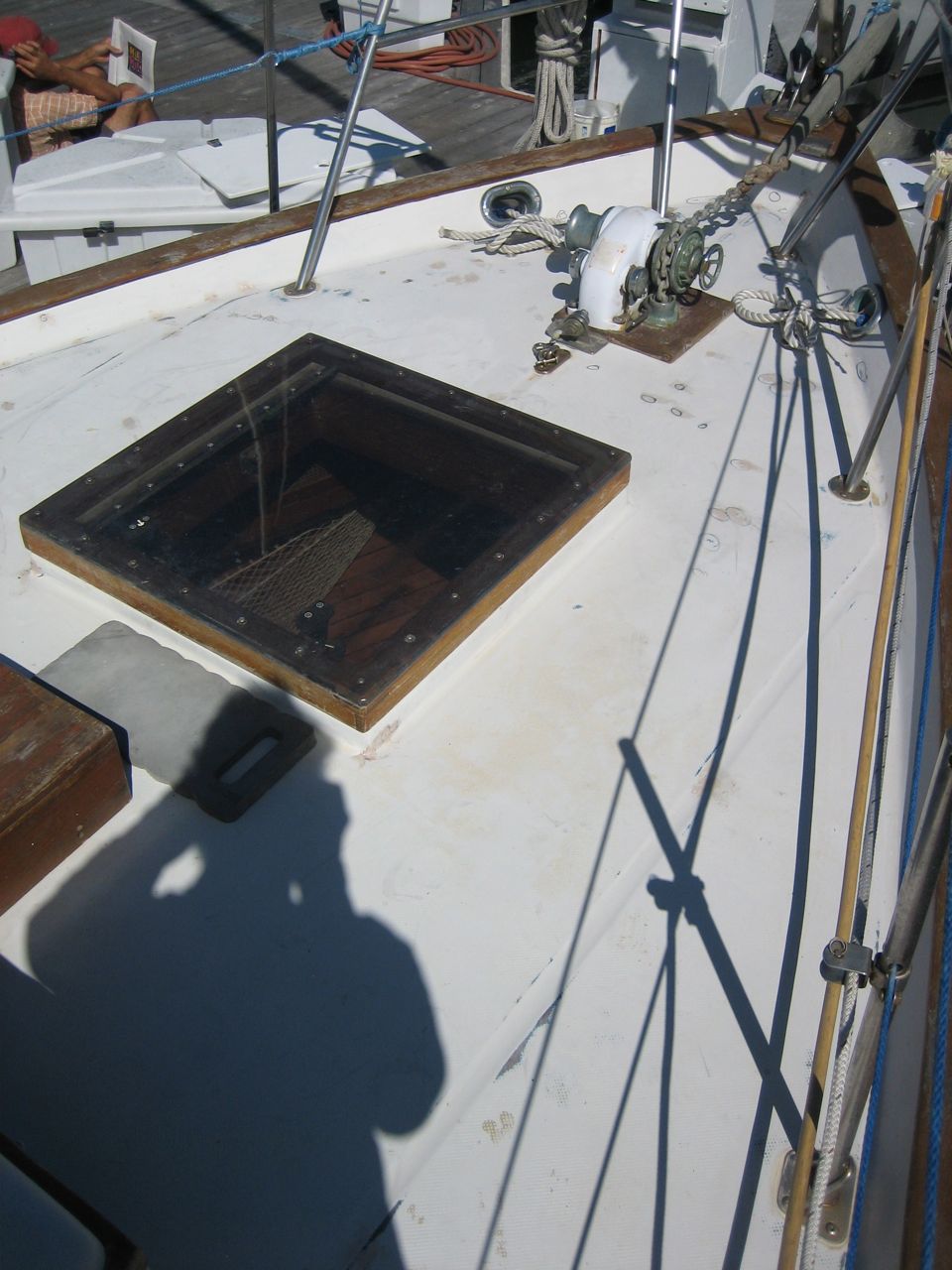
    Ooh boy this has been a long time coming.  I have been looking forward to this job more than any other, for the past year, because it is one of the few jobs that people walking down the dock can actually see and admire.  Most everything else I do on the boat is hidden behind some panel and goes unseen and unsung.

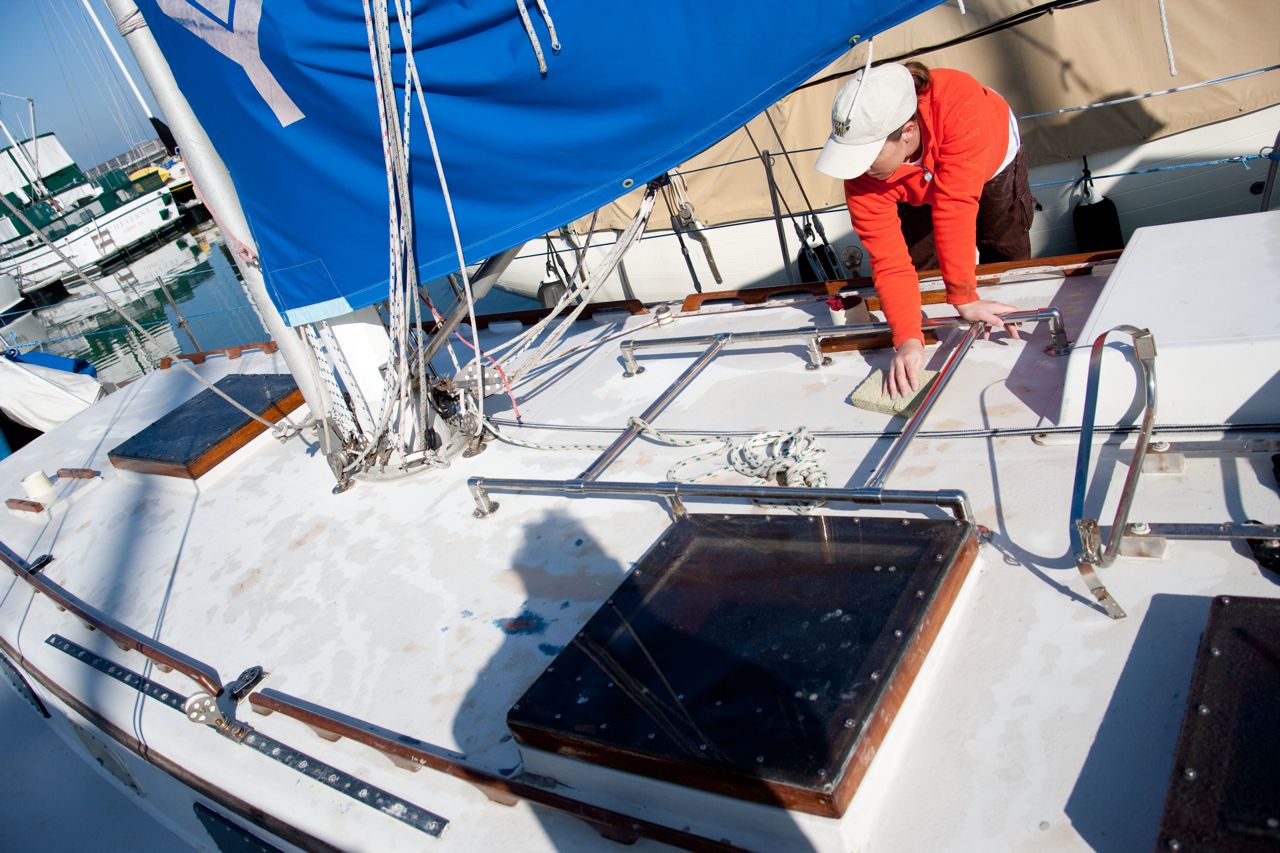
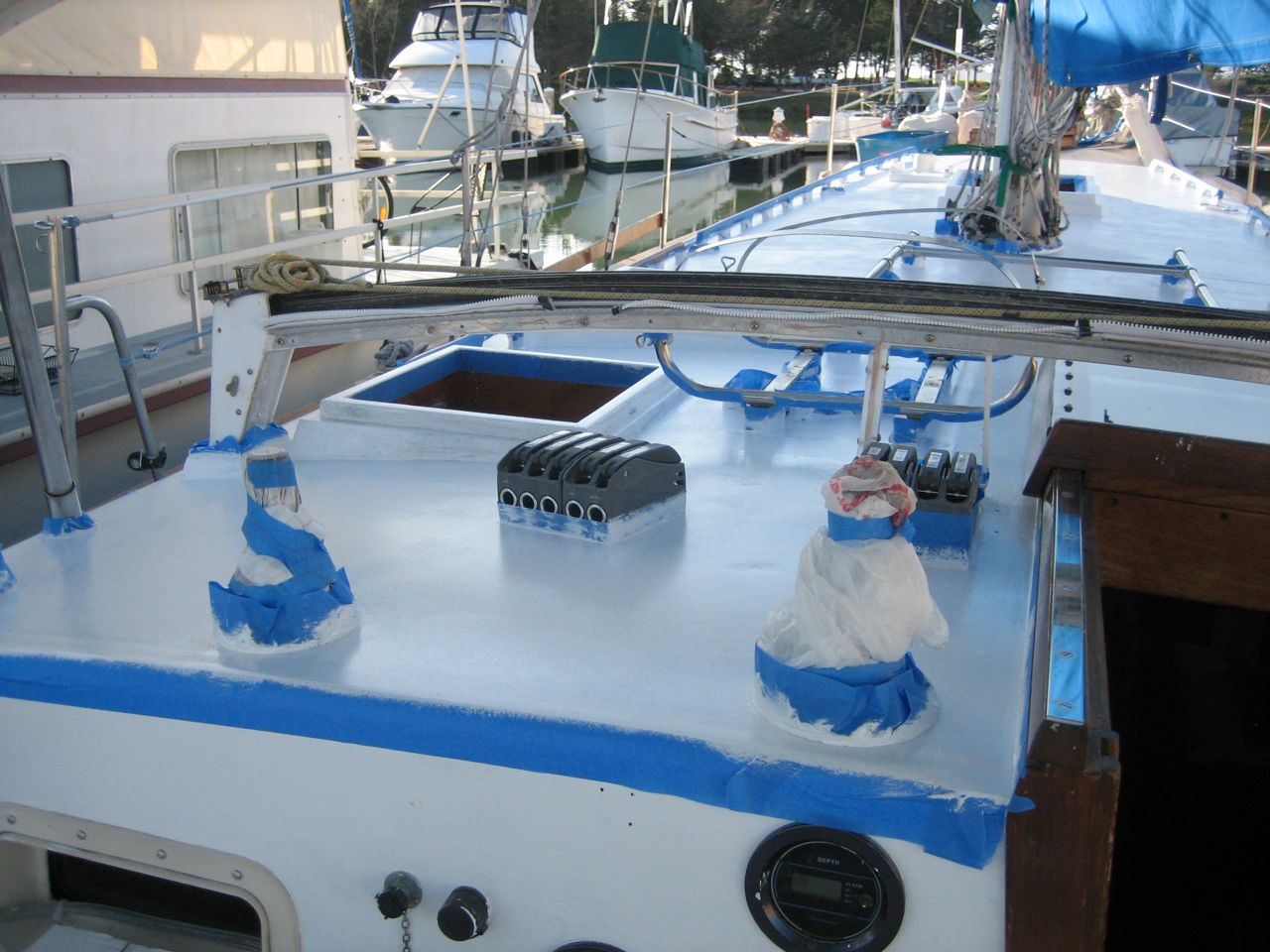
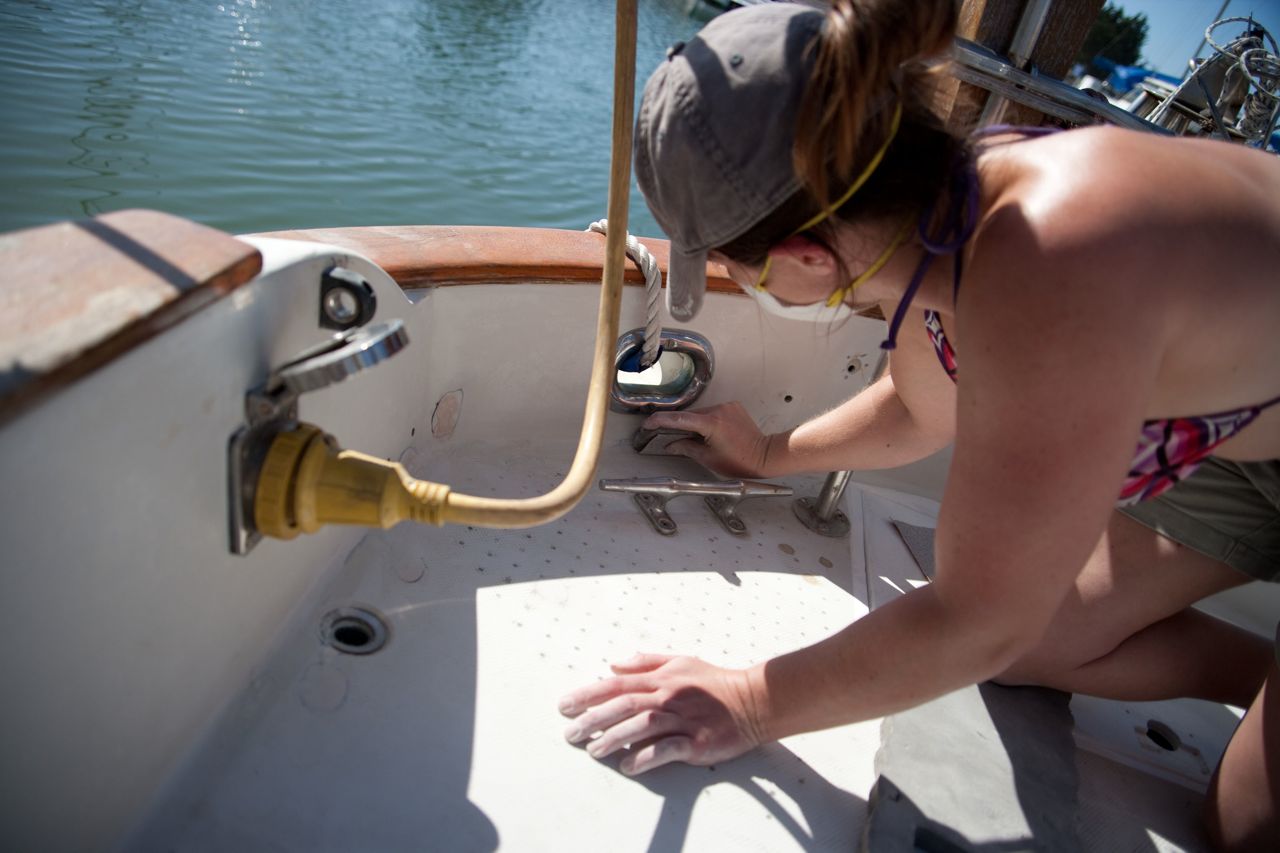
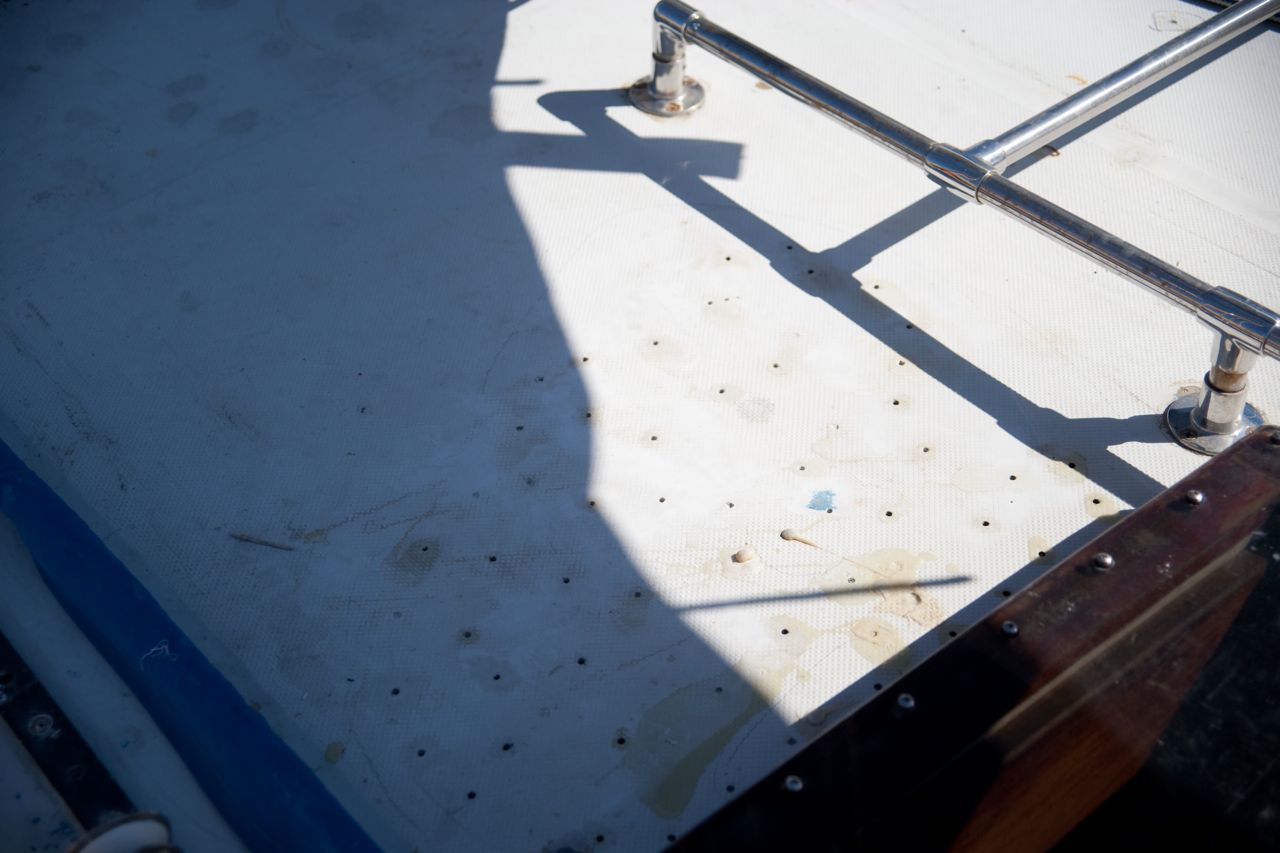
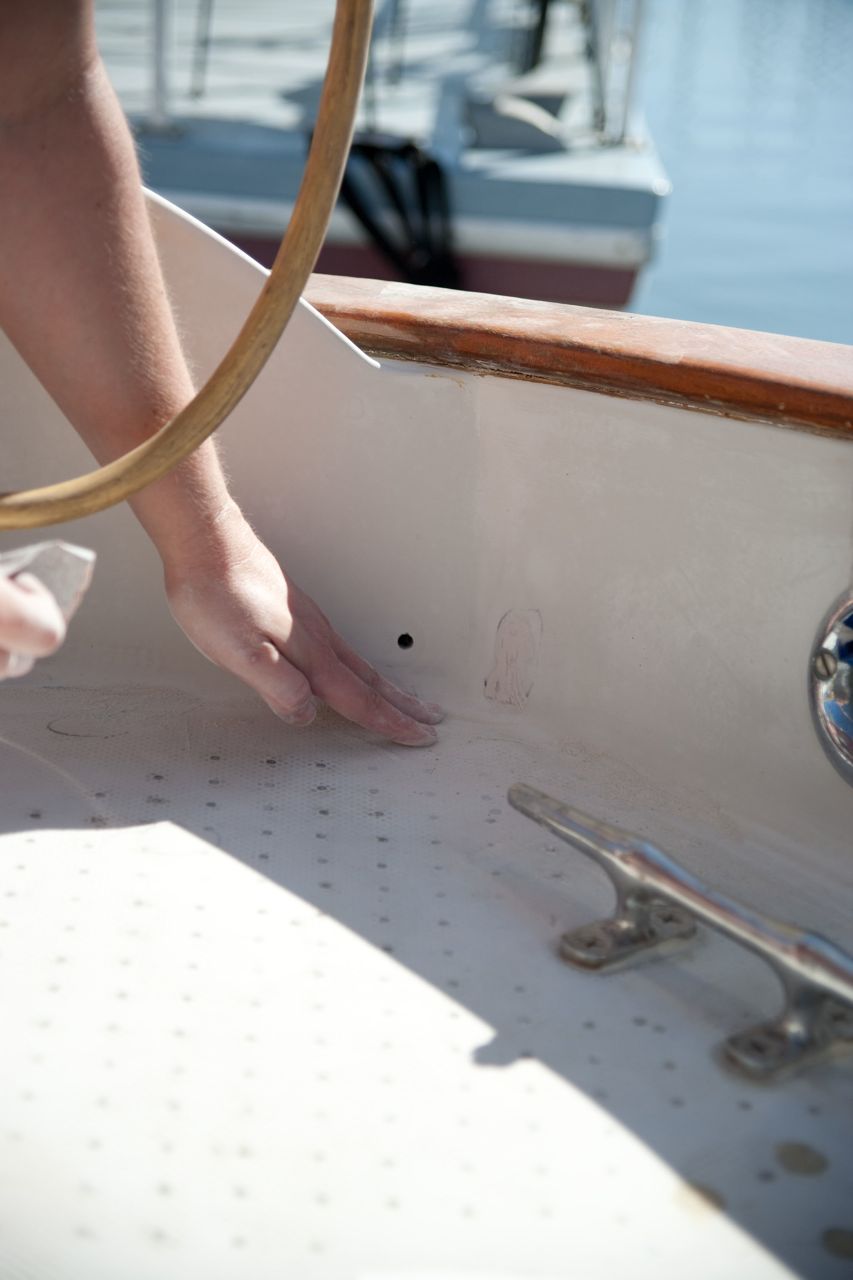
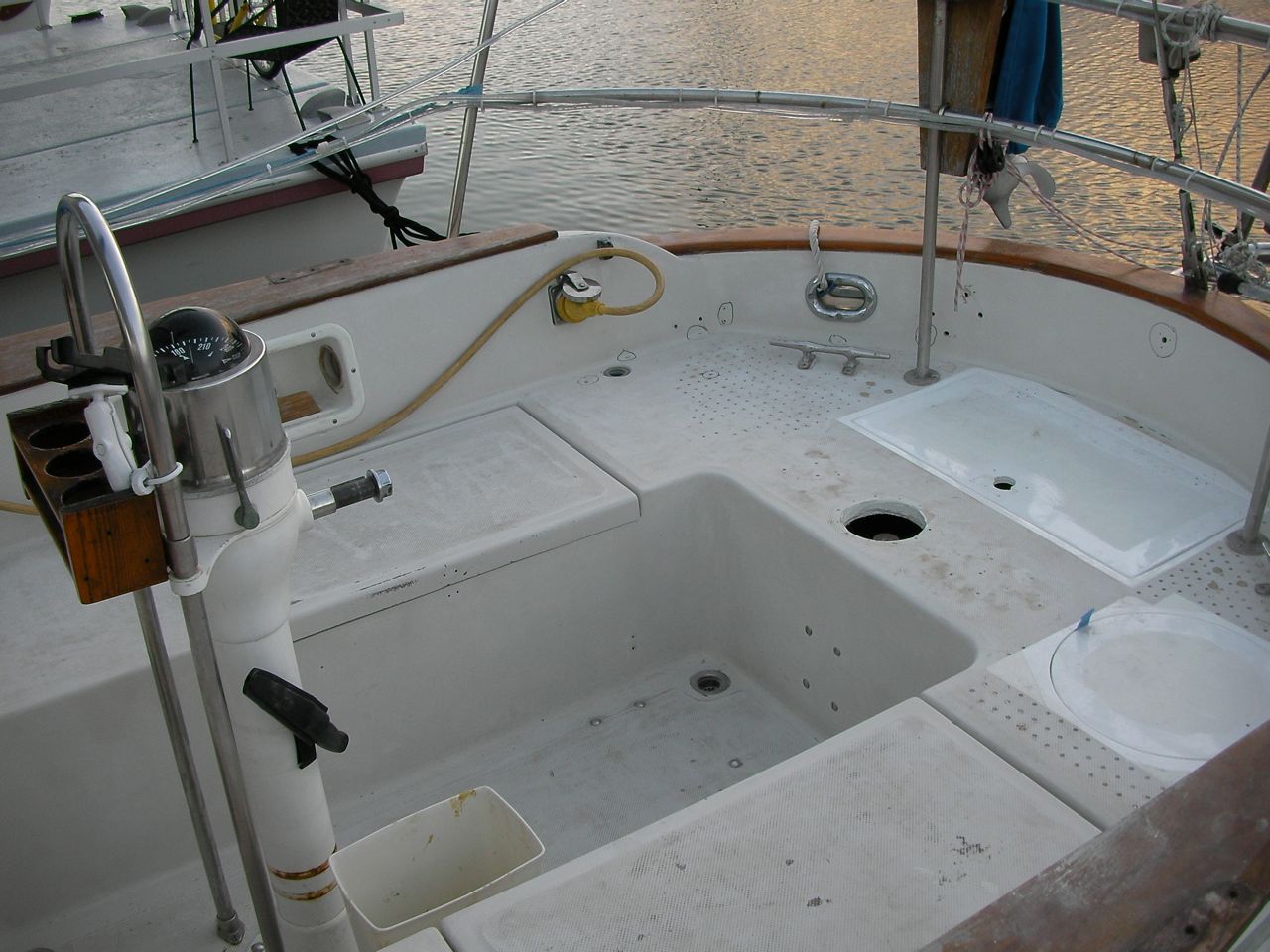
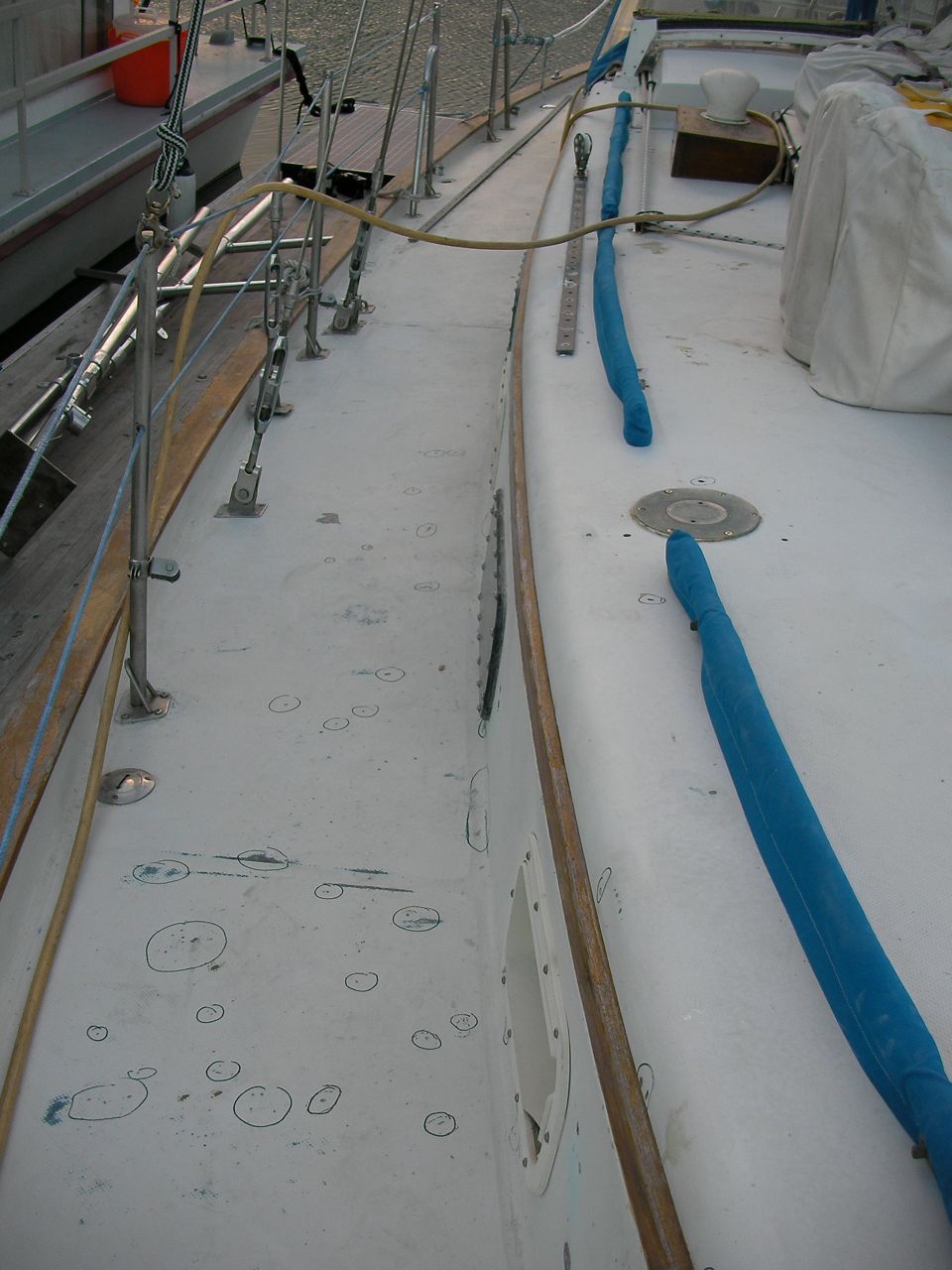
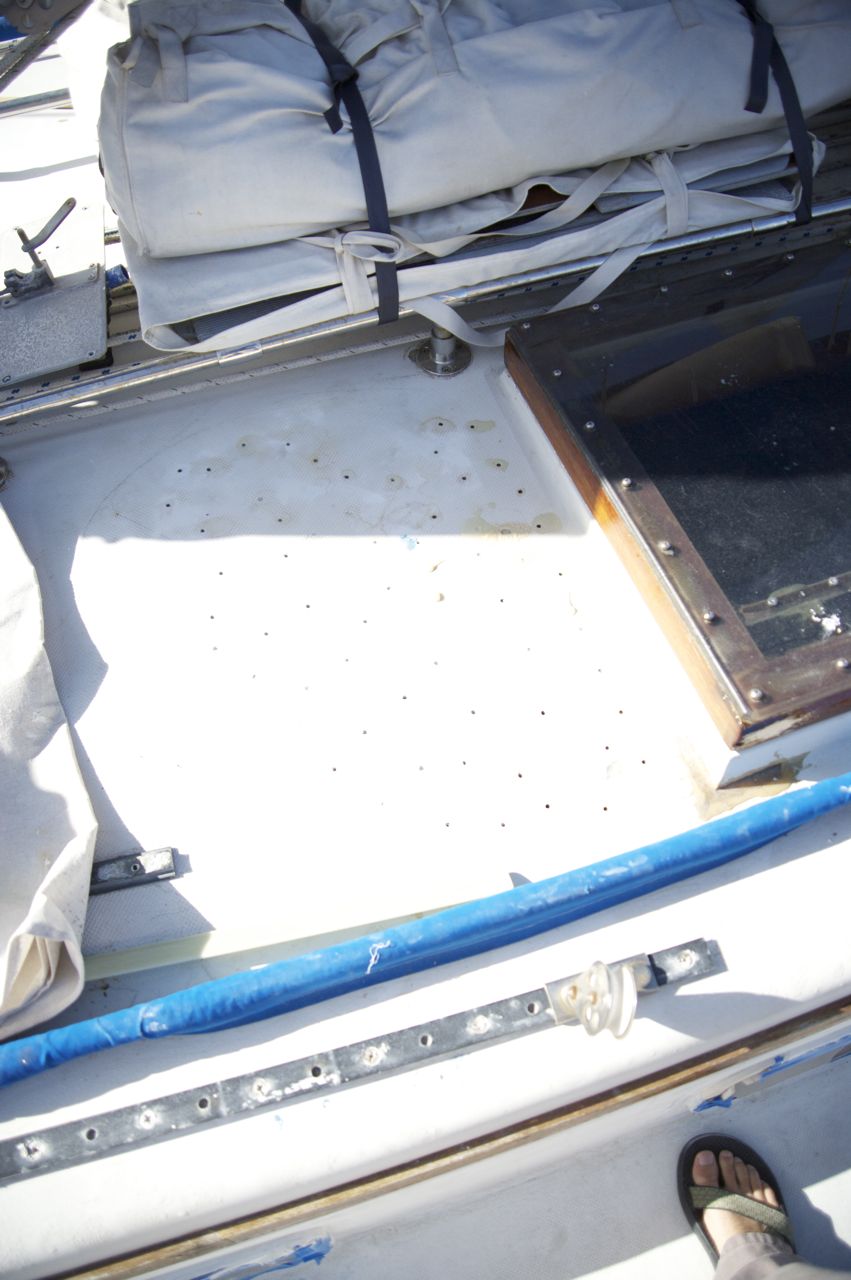
    Since we bought the boat, the deck has become increasingly ugly.  We made no attempts to keep errant epoxy or other crap from marring the surface; many spots have holes drilled for the purpose of repairing minor delamination; some areas jonny gooped over with plain epoxy in a failed attempt to fair the surface where there was some crack or hole.  The final state of the deck before I started sanding it was undeniably shameful.  Some might argue that appearances don’t matter and that our deck only looked ugly, but the truth is that there were cracks and holes all over the place that were admitting water into the balsa core and causing increasingly serious delamination (see my post regarding the delamination mess).

    Since other projects have been so much higher priority, I have had a really long time to dream up how I was going to tackle this project.  I went through a number of different options for which non-skid to use.  For a few months I was planning on going the way of Wally, using a product called Ultra-Tuff.  Fortunately, Wally’s boat Stella Blue happened to be in a marina less than 10 minutes away at the time, so I got in touch with him and went over to see for myself how it turned out.  I have the utmost respect for Wally–he does the most meticulous and ridiculously successful work on his boat of anyone I know and his project pages have been invaluable to me–but I didn’t like the ultra-tuff that much.  Largely because it was a sharp, fairly brittle feeling surface, and not too pretty.  I definitely didn’t want to do the shake-sand-on-paint route, or the route of putting “microballoons” or some other such artificial sand in the paint and rolling it on, etc, because all of those decks that I have seen look very amateur, very DIY, and didn’t seem all that non-skid either.

    All of those methods are still a hundred times better than our deck was before I touched it, and all perfectly adequate solutions.  But I had about a year to plan this project to perfection, and since the sheer magnitude of this job is overwhelming, I needed to feel like I would be really excited and proud of the end result, or else my motivation would waver.

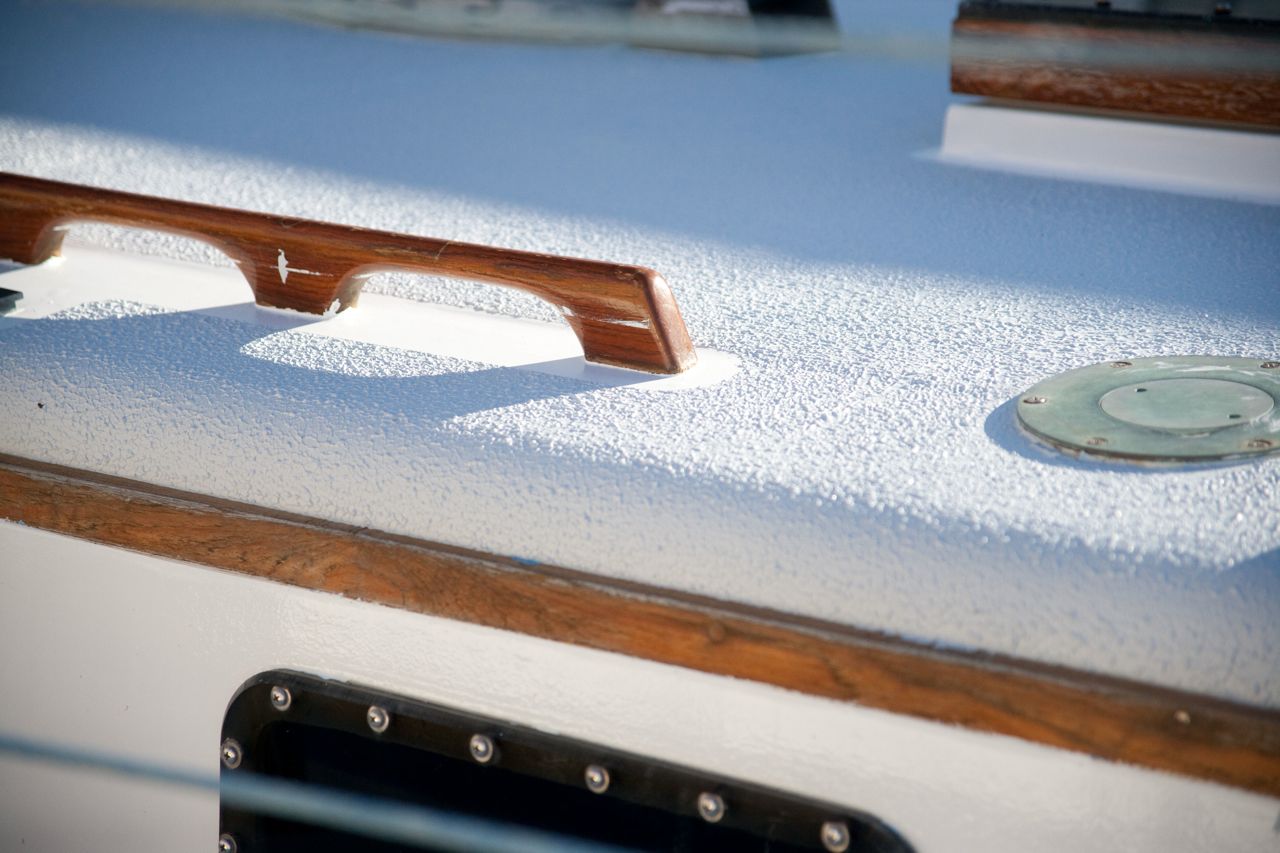
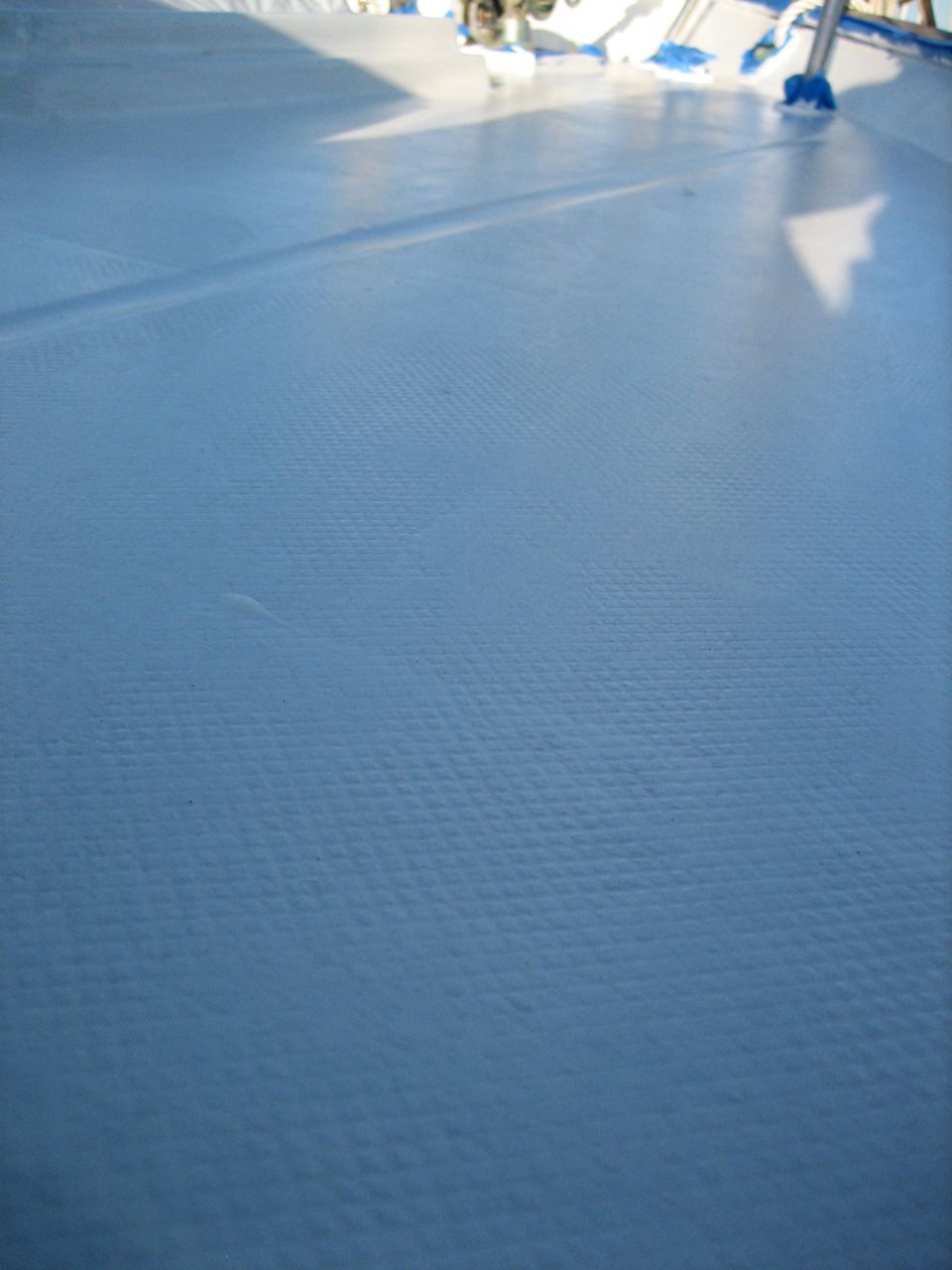
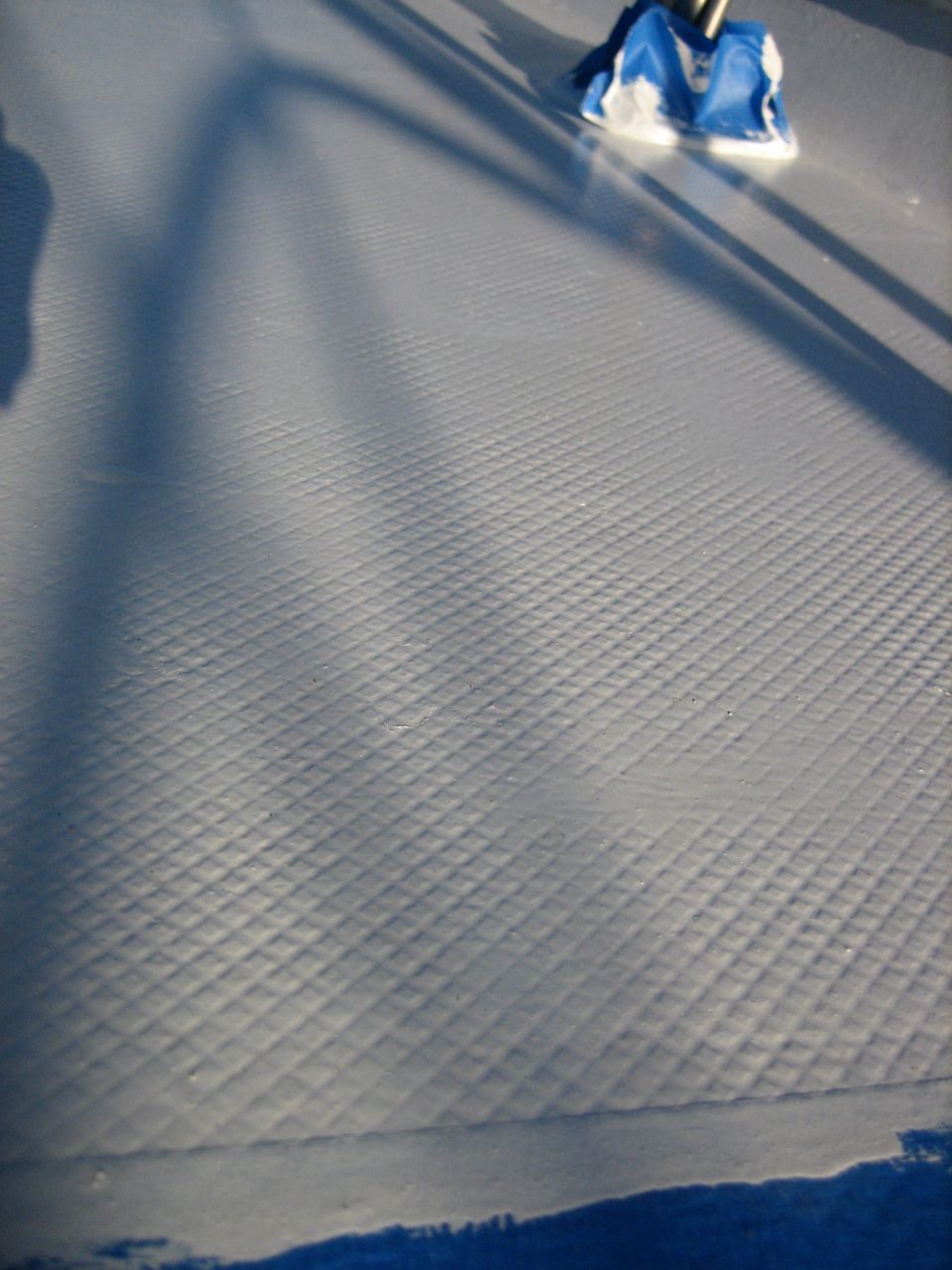
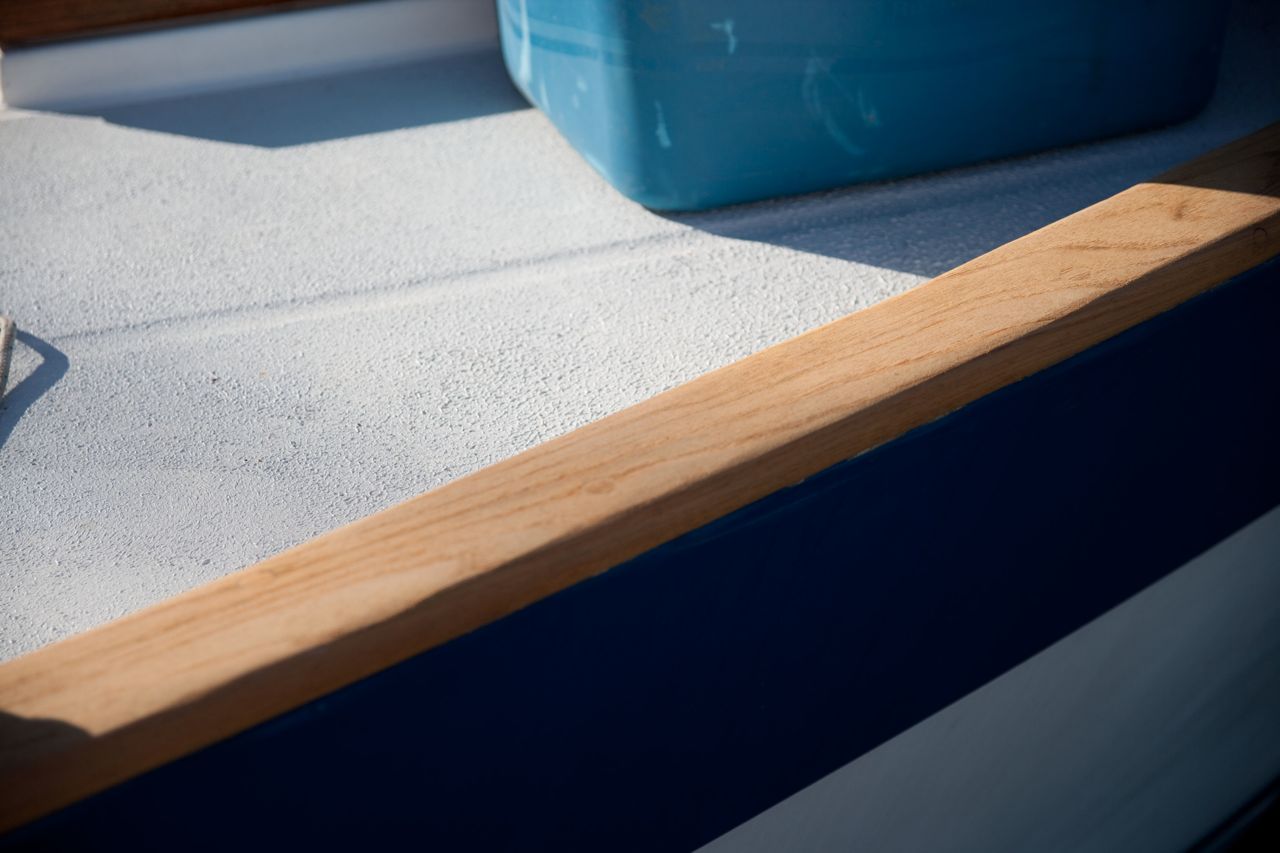
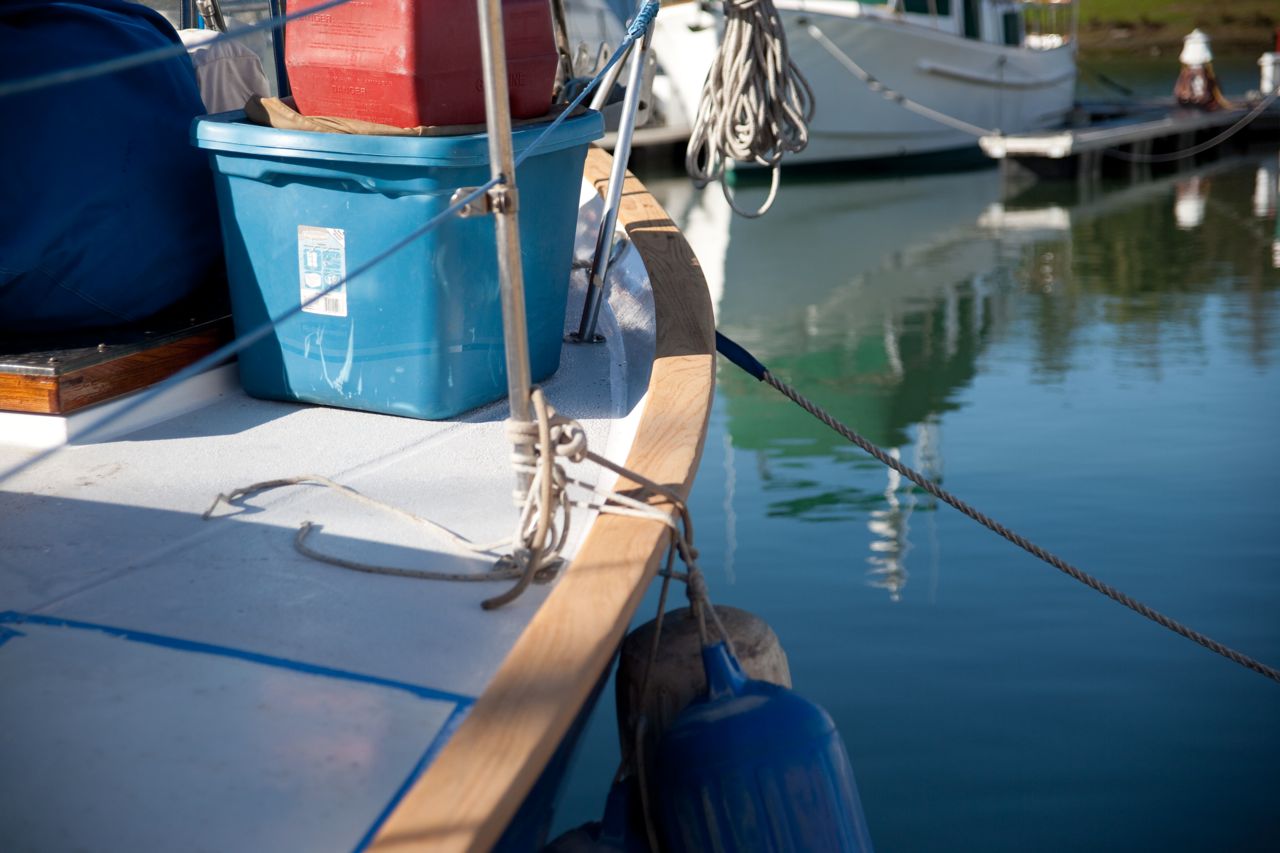
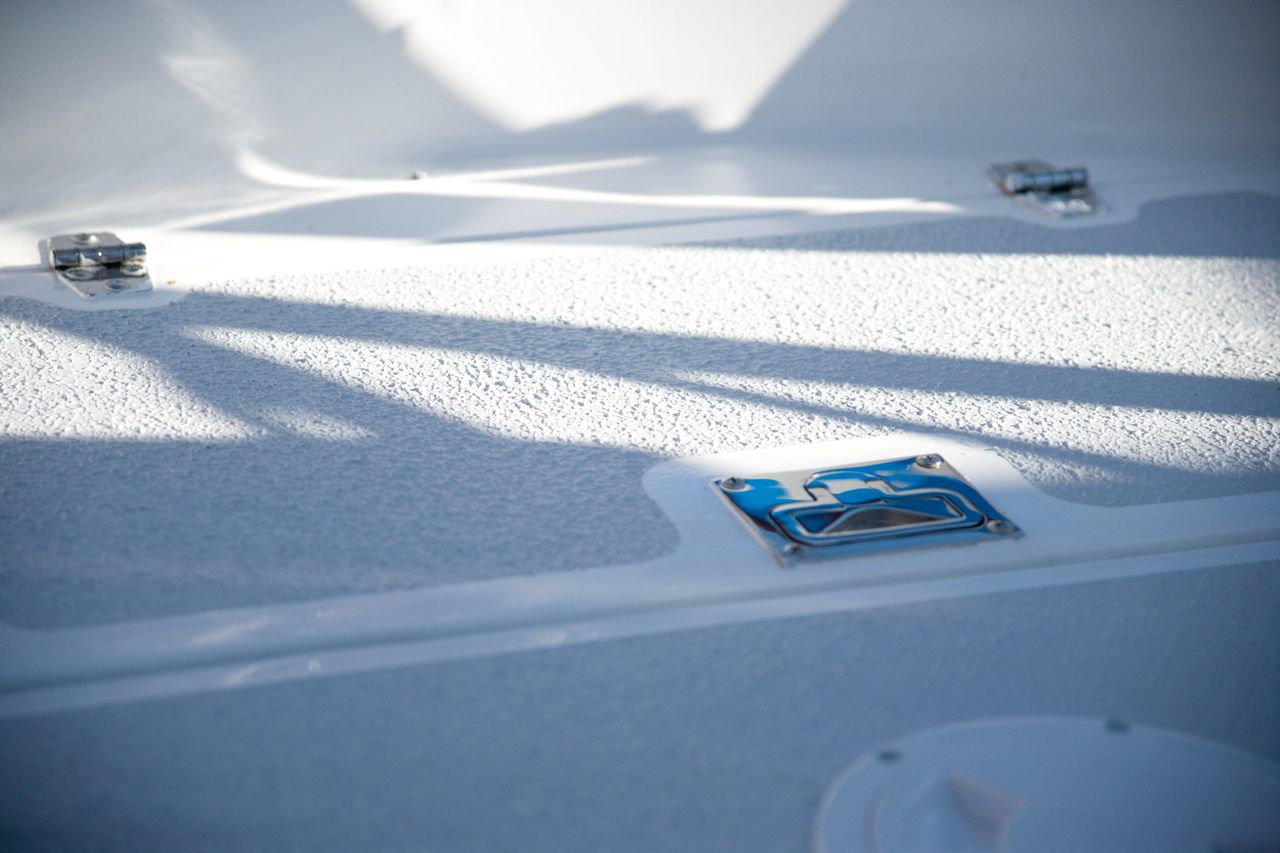
    I ended up choosing a product called Kiwi-Grip, because of the ease of application, the ease of recoating when necessary, and the look of the finished surface (as viewed up-close on various web pages where I found references).  It costs $100/gallon and you have to use a lot of it to get a really nice texture.  I ended up using 2.25 gallons to do the entire boat.

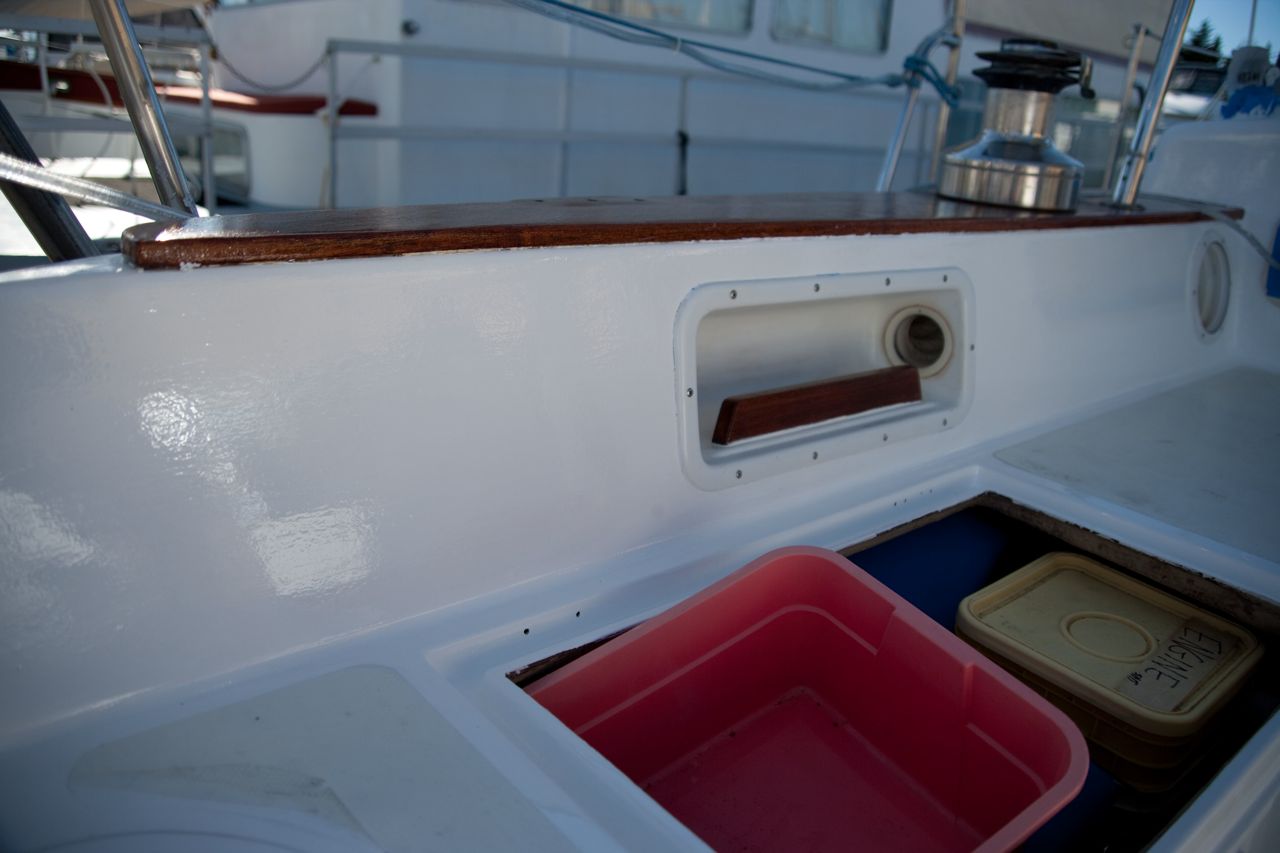
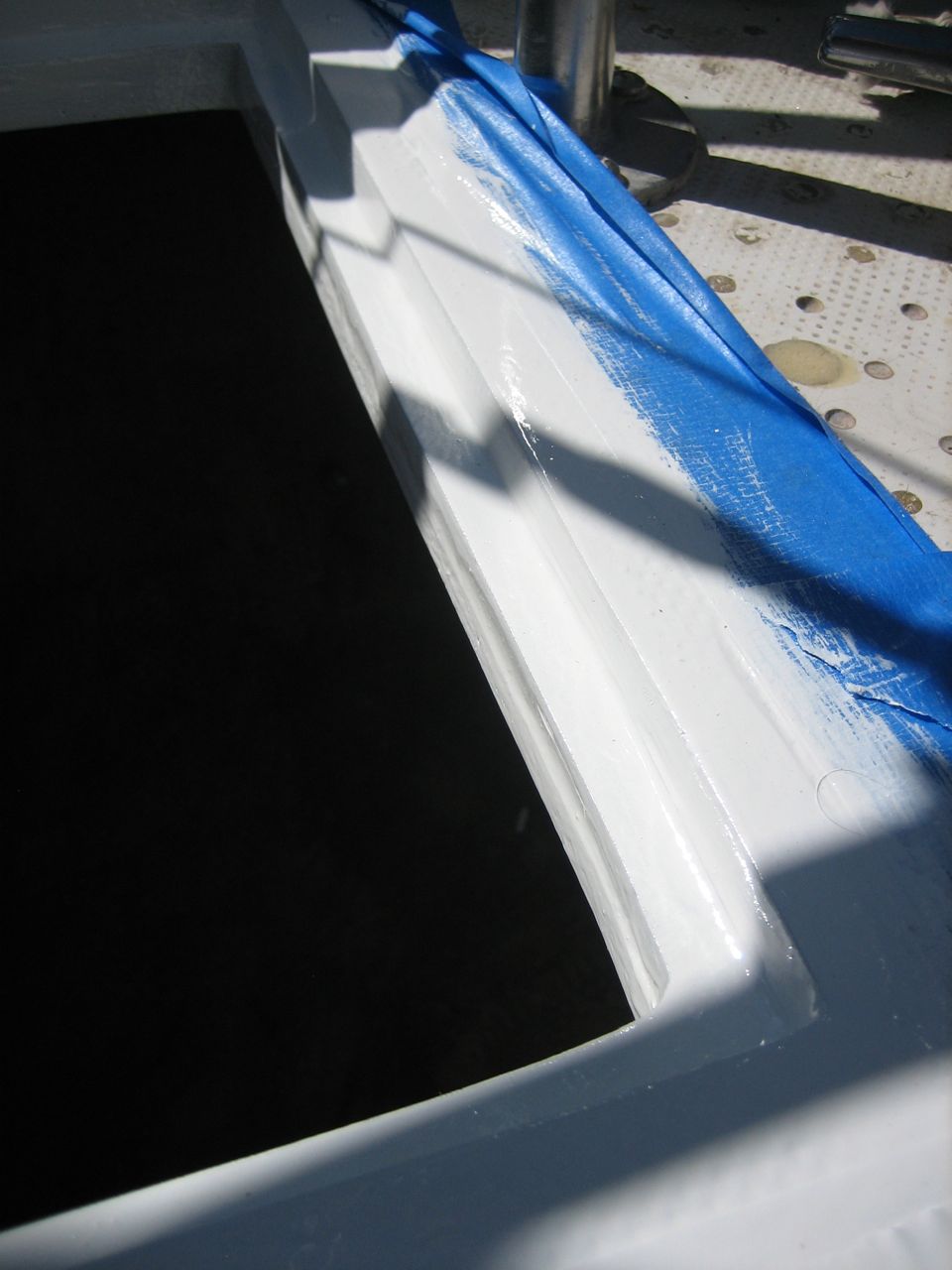
    I elected to brush on a two-part polyurethane paint for all the non-non-skid (i.e. “skid”) areas.  Usually this means the trim around the edges of hatches, the outside edge under the caprail, etc.  Two-part polyurethane is synonymous with “linear polyurethane”, which I can abbreviate as LP, and that’s a hell of a lot easier to type from now on.

    LP is harder to apply nicely than single-part polyurethane.  The surface of it gels quickly, so you have to start painting and keep moving and you can’t go back and fix “mistakes”.  For the professionals, “mistakes” refers to brush strokes that remain visible in the paint after it cures, instead of disappearing into a mirror-finish gloss that looks like it was sprayed on.  For me, “mistakes” refers to long drips and runs and uneven gobs of paint, etc, in spots where I accidentally caught the brush on an edge, or couldn’t see the white-on-white paint dripping down, etc, and so my mistakes are very obvious.  The good thing is that the mistakes don’t matter for the functionality.  LP is a hell of a lot more durable and long-lasting than single-part polyurethane, so I get to claim victory for choosing the LP even if it does end up looking like shit.

    I chose Interlux Perfection for my two-part polyurethane, because we can get a deal on it, it’s made for amateurs like me, and it is popular (i.e. reliable).  In retrospect, I may have chosen a cheaper alternative.  Even with our deal, the stuff is way overpriced.

    So the order of things is as follows:
    pick a section of the deck, then . . .
    1) sand deck with 80grit
    2) prepare spots that need fairing by digging out loose shards of gelcoat
    3) vacuum up dust
    4) wipe down spots that need fairing with acetone
    5) mix up a batch of Quikfair and apply to all prepared digs, holes, scratches, etc
    6) sand down quikfaired areas with 80 grit
    7) if inadequately faired with only one round, repeat steps 3-6
    8) vacuum all dust
    9) mask off
    10) wipe down/clean the deck with the thinner (in this case Interlux 2333N)
    11) paint coat 1 of two-part epoxy primer (I used Interlux Primekote)
    12) lightly sand with 120grit
    13) vacuum all dust
    14) wipe down with 2333N
    15) paint coat 2 of two-part epoxy primer
    16) lightly sand with 120 grit
    17) vacuum all dust
    18) re-mask off for only LP areas
    19) wipe down with 2333N
    20) paint coat 1 of LP (I used Interlux Perfection)
    21) lightly sand with 320 grit
    22) vacuum all dust
    23) wipe down with 2333N
    24) paint coat 2 of LP
    25) re-mask for only non-skid areas
    26) wipe down with acetone
    27) paint kiwi-grip (one coat only (hopefully!))
    27) pull up tape and admire
    28) repeat steps 1-27 for other sections of the deck

    One thing I’ve learned from this whole affair is that all of the two-part stuff is way more of a pain in the ass than all of the one-part stuff.  To start with, you can just open a can of the one-part stuff, mix it up, and start going.  And then close up the can at the end of the day.  With the two-part products, you need to open both cans, use little mixing cups or spoons or something to very accurately measure out perfect amounts of each, then use up the whole mixture usually within an hour or so (there’s always a time limit on the two-part stuff), and whatever extra you have is wasted, but usually you’ll end up being about a quarter cup short, but you sure as hell don’t want to mix up another cup full of the stuff because it costs almost as much as gold.  Not to mention all of the two-part products are about 10 times more toxic and deadly than the one-part products–this includes the two-part epoxy bilge paint from sherwin-williams that gave me a headache for a day (I was stupid it was my fault, no respirator that time), the two-part epoxy bottom paint primer we used before painting the hull, the two-part epoxy primer paint (Primekote) I use on the deck, the two-part polyurethane Interlux Perfection, and even the regular old West System two-part epoxy (redundant since all epoxy is two-part).  Contrast this with the kiwi-grip, which is an acrylic water-based paint: I open the can, slap it on the deck with a brush, roll it out with the roller they provide, then put the lid back on and rinse everything out quickly and easily with water.

    True, the LP will last a long time.  But on the other hand, wherever the non-skid starts to wear off, I can just grab the can and goop some more on in a matter of minutes (if I’m not too lazy to just ignore it for years that is).  Both approaches have their appeal.  After throwing away hundreds of small paper cups and whatnot in the course of mixing up these two-part poisons, I have to admit the Kiwi-Grip’s ease of application was pretty refreshing (though I’ll be singing a different tune if it only lasts a few months before it starts to fall off).

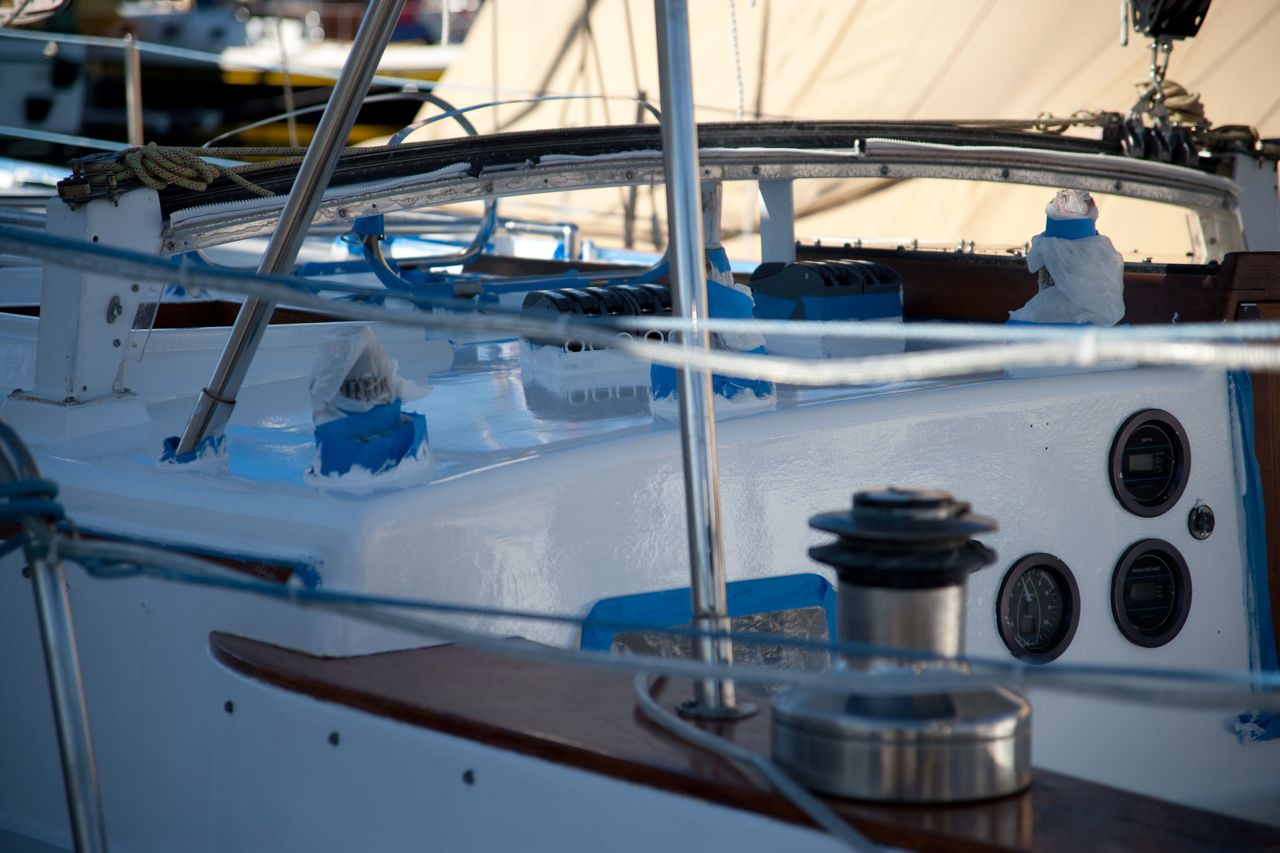
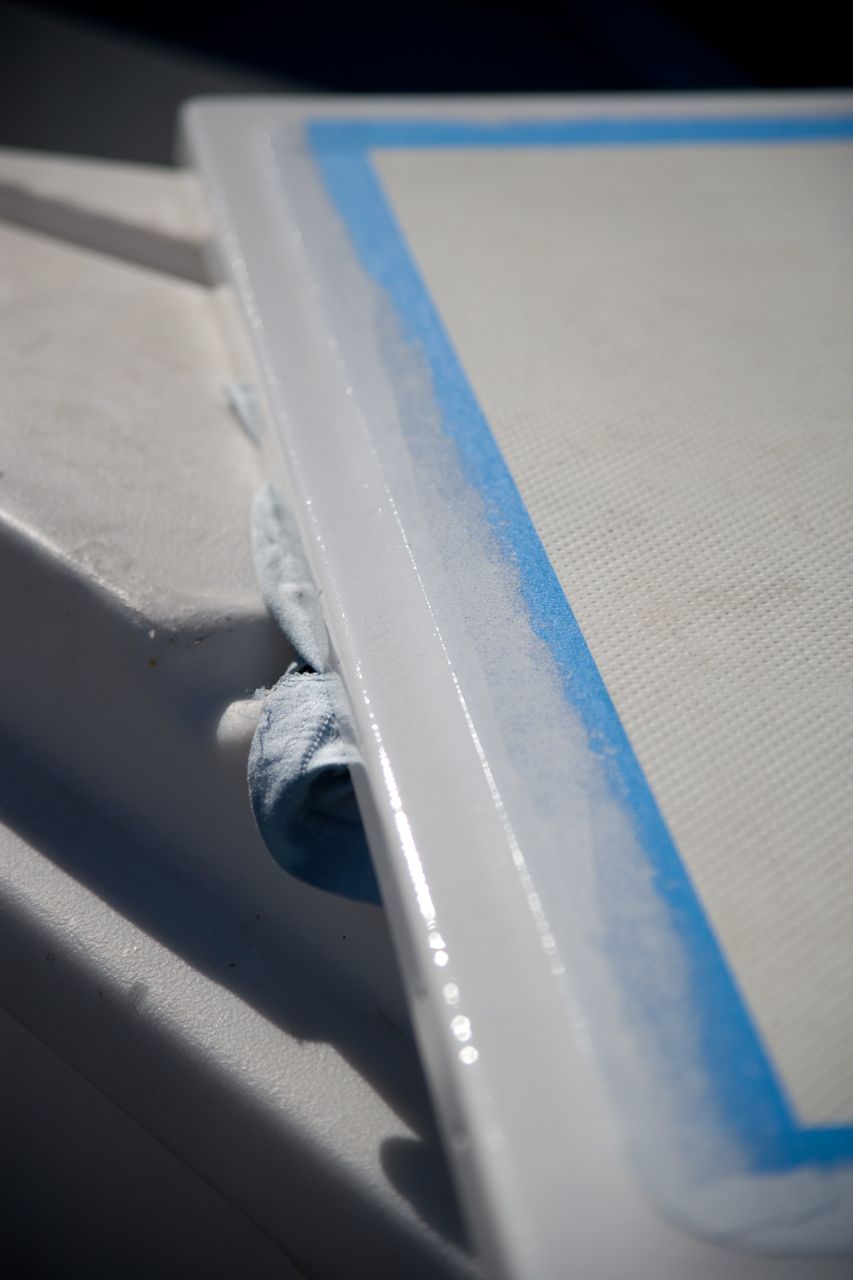
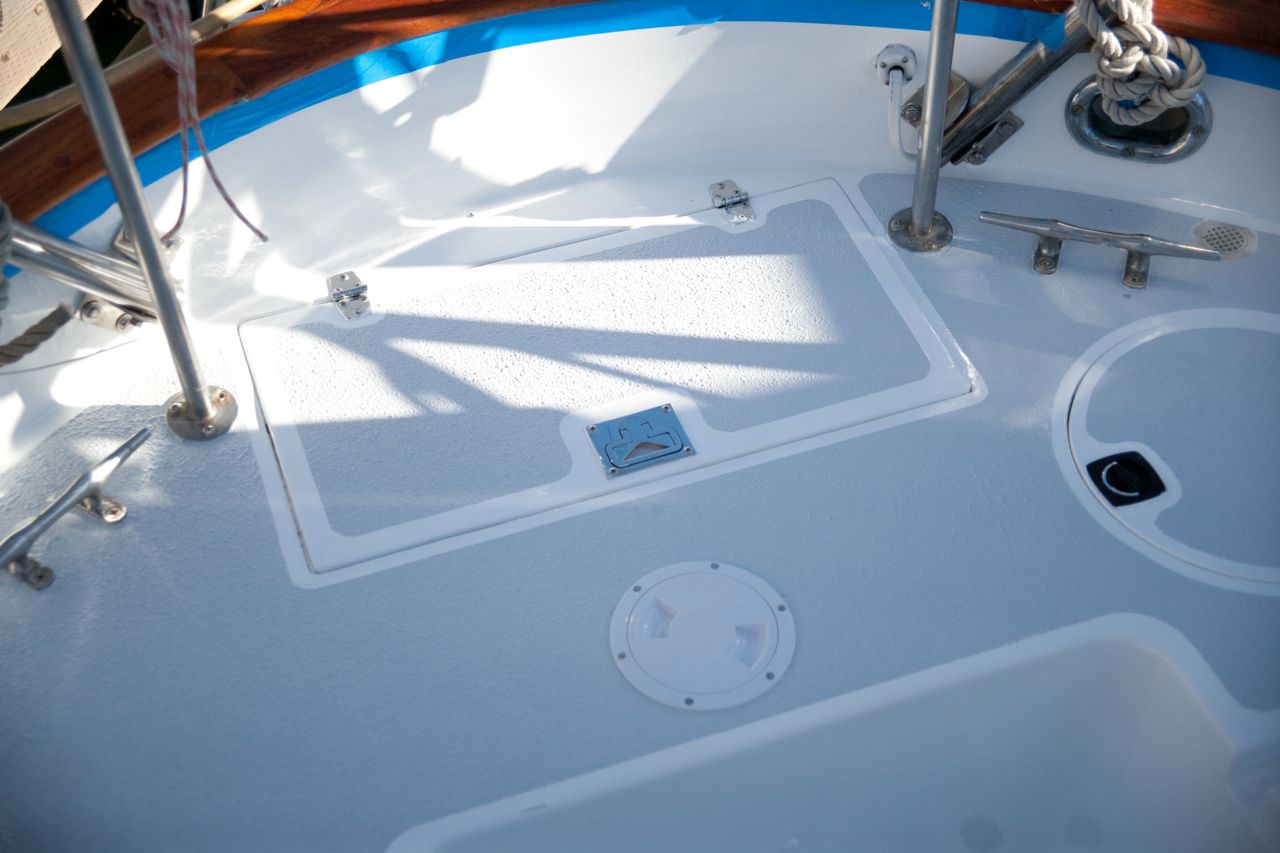
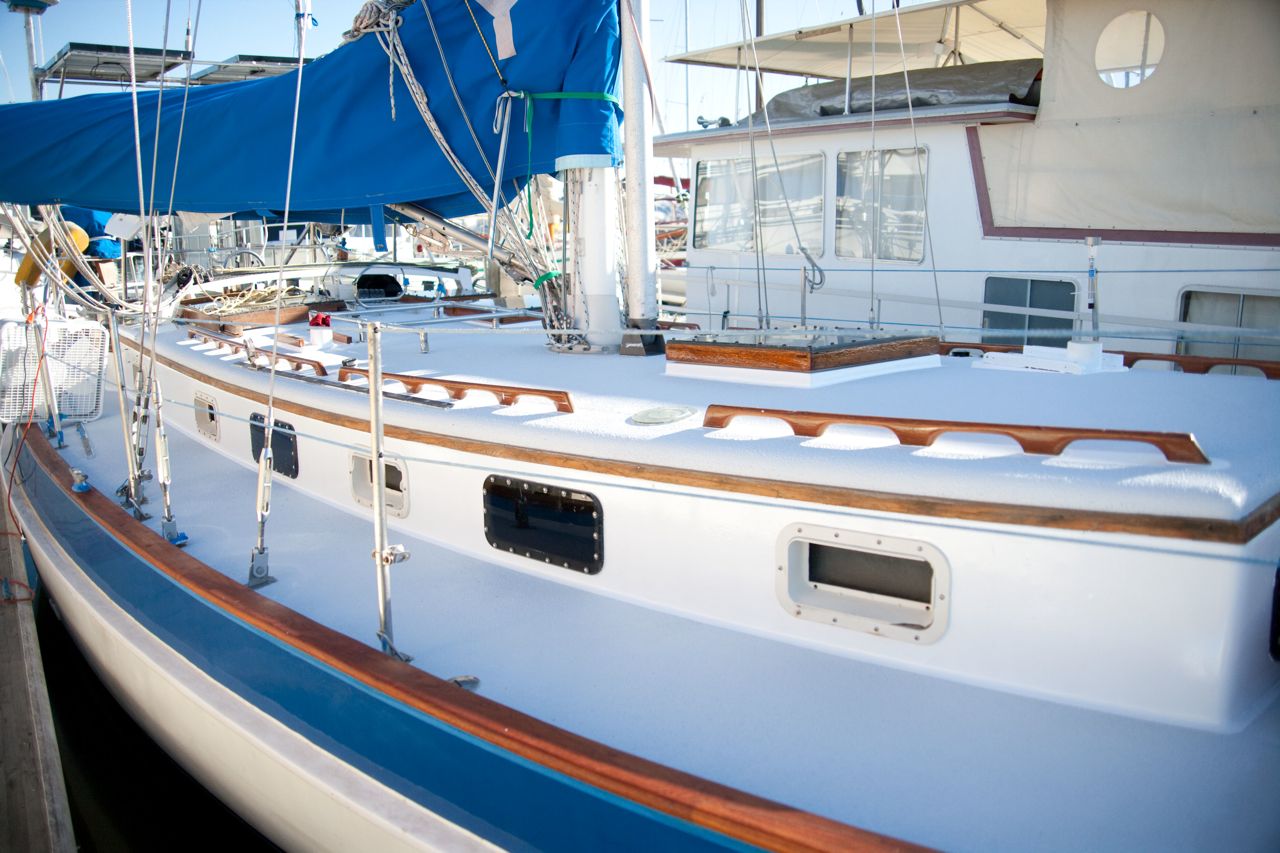
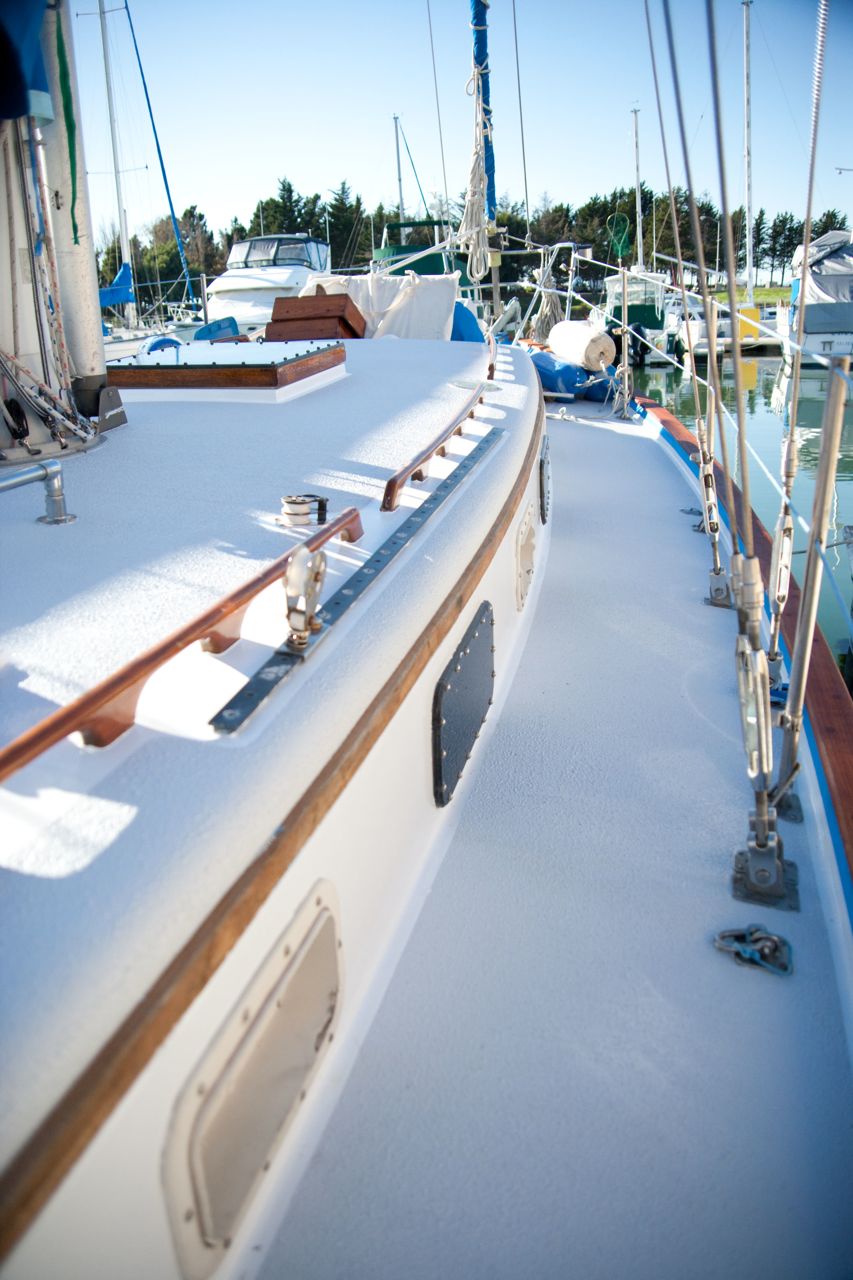
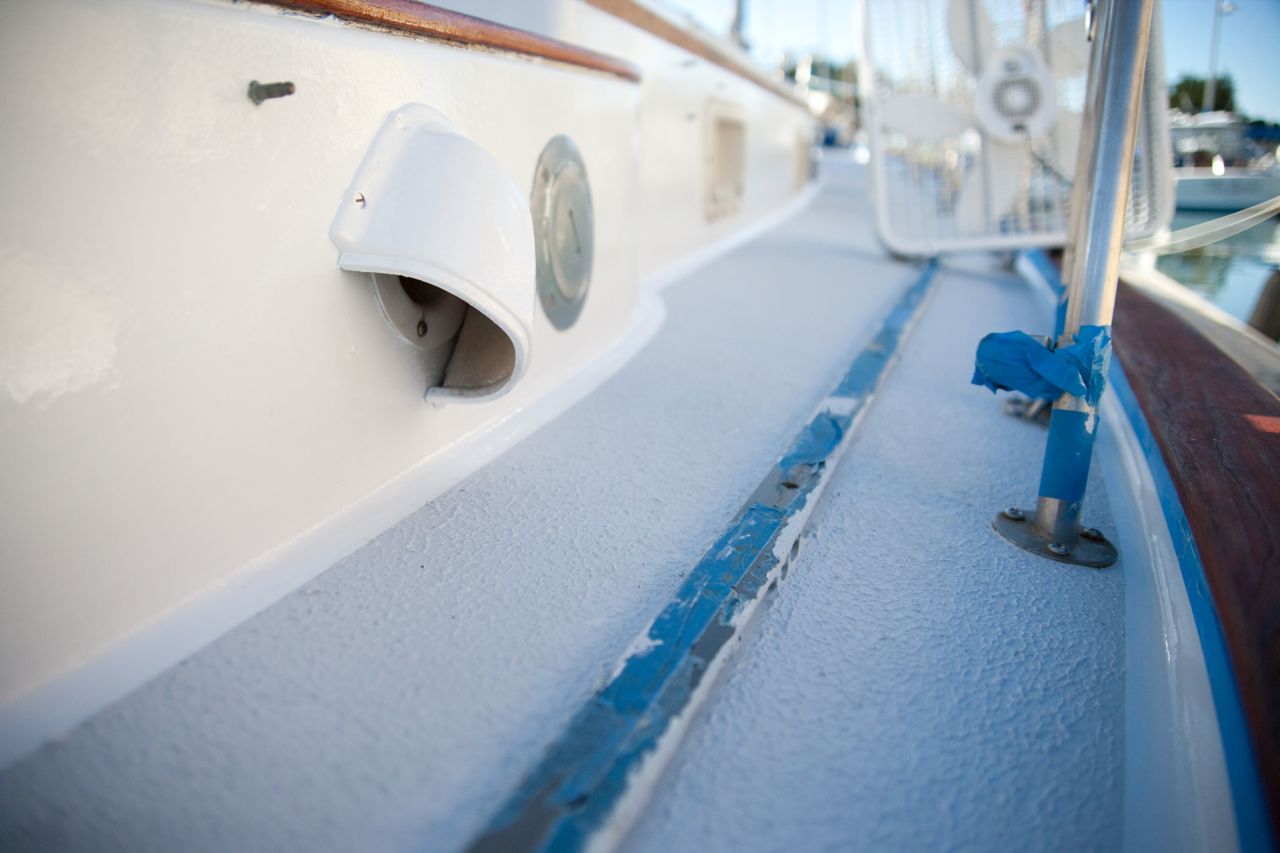
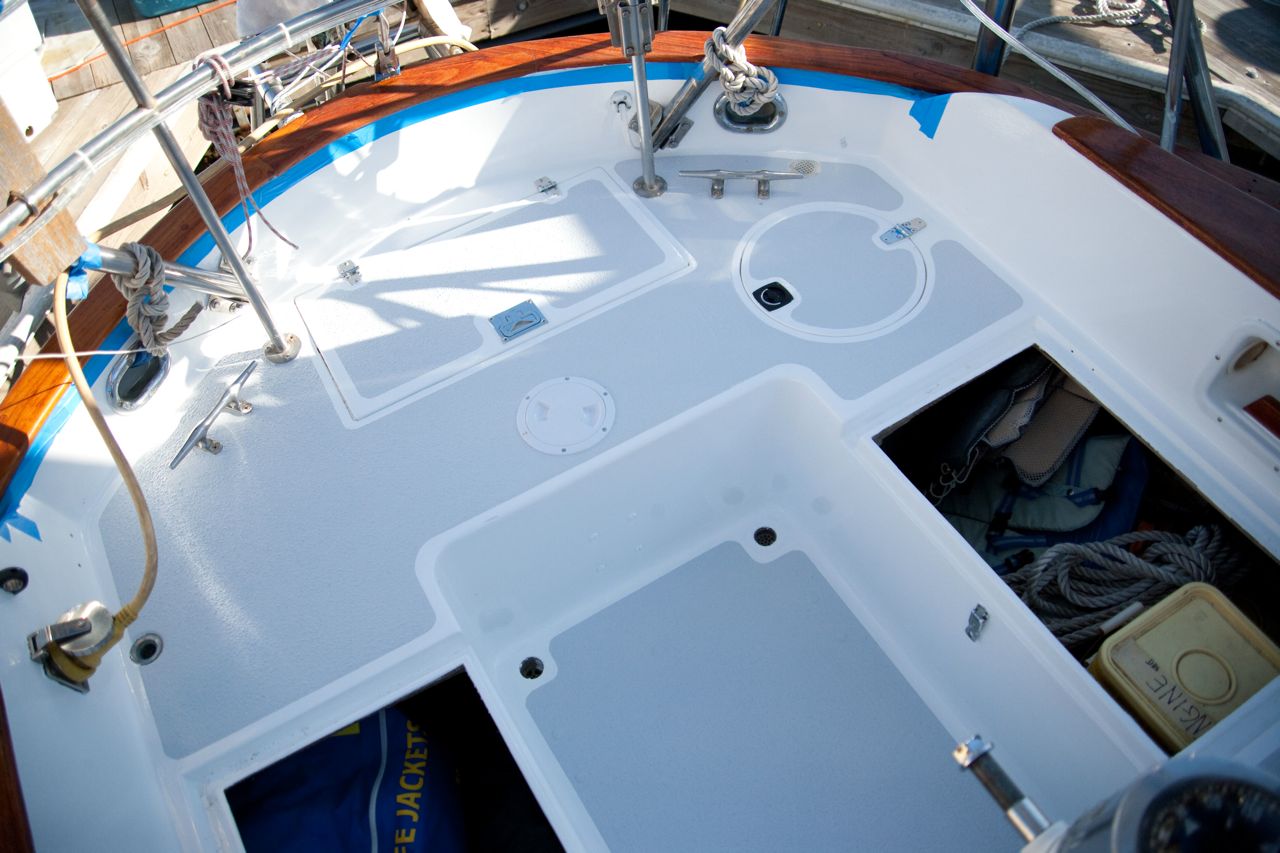
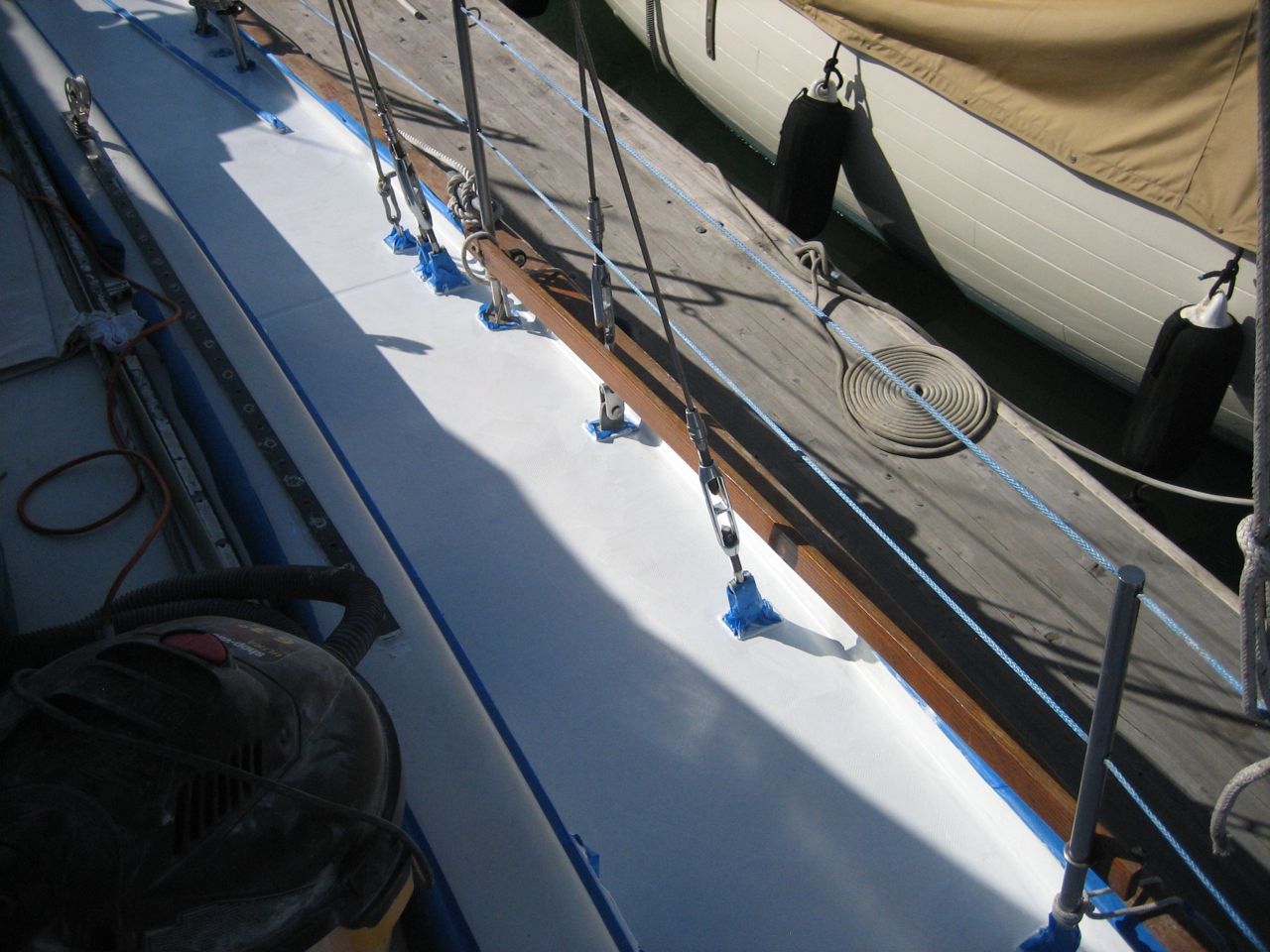
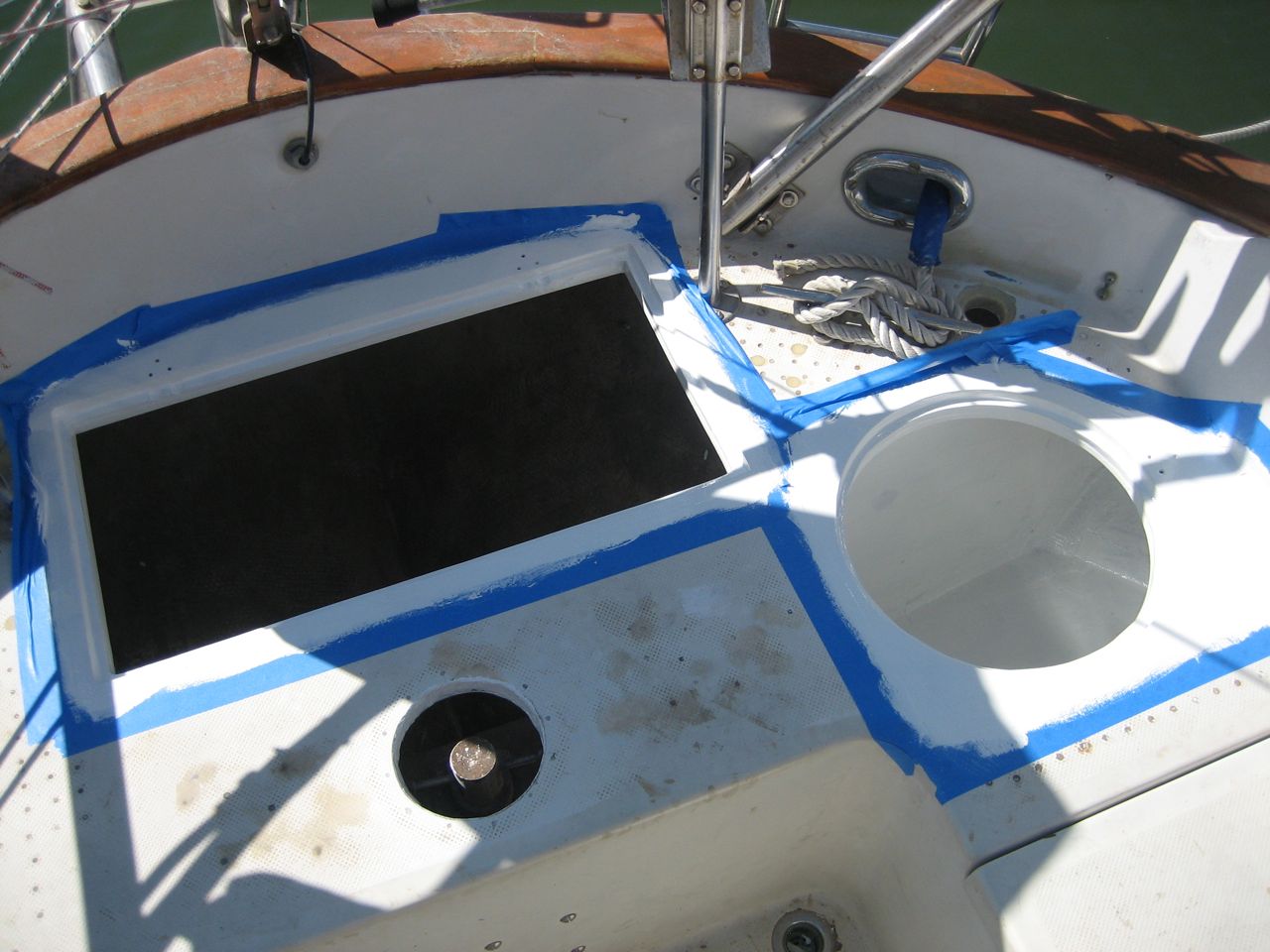
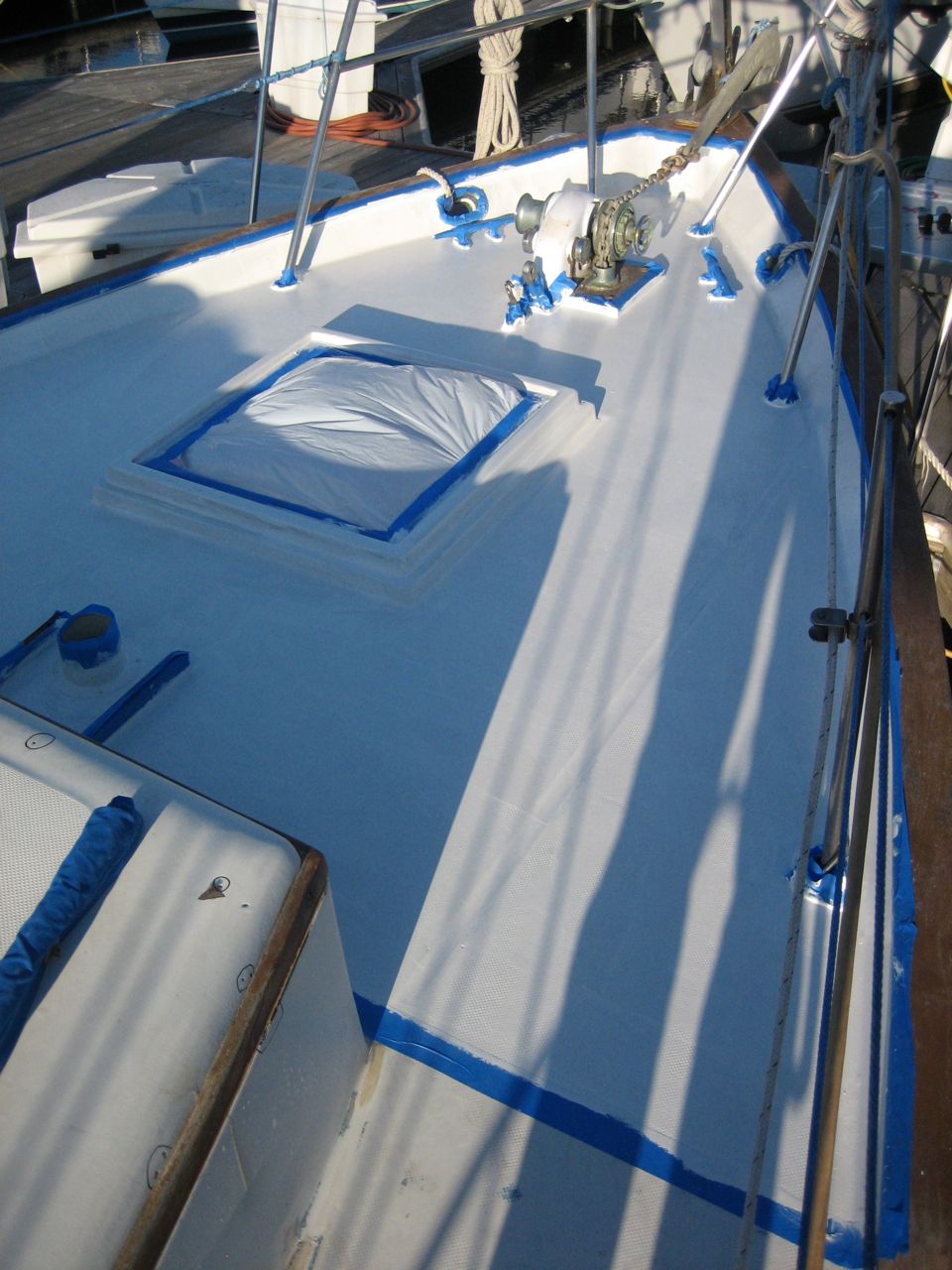
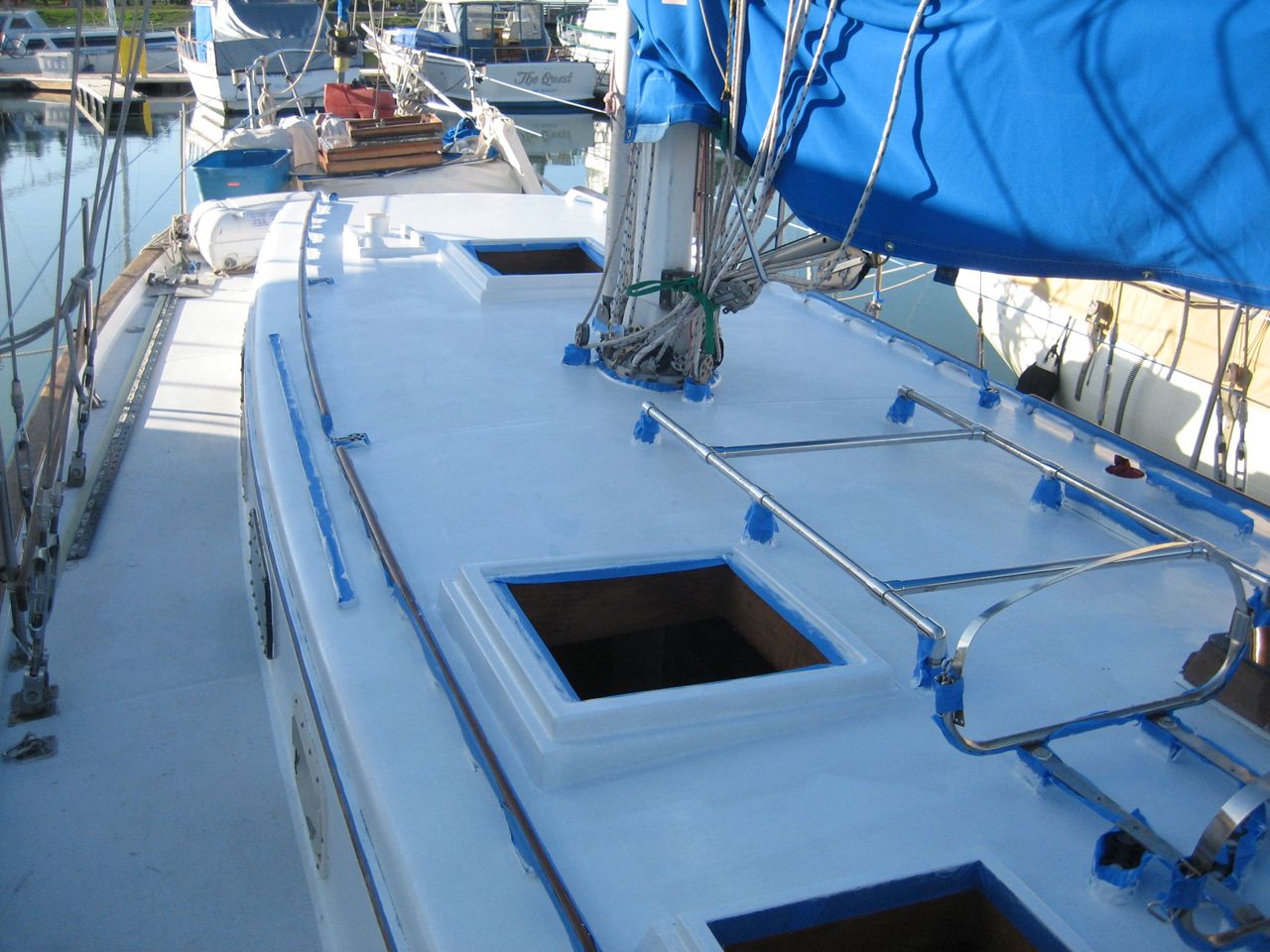
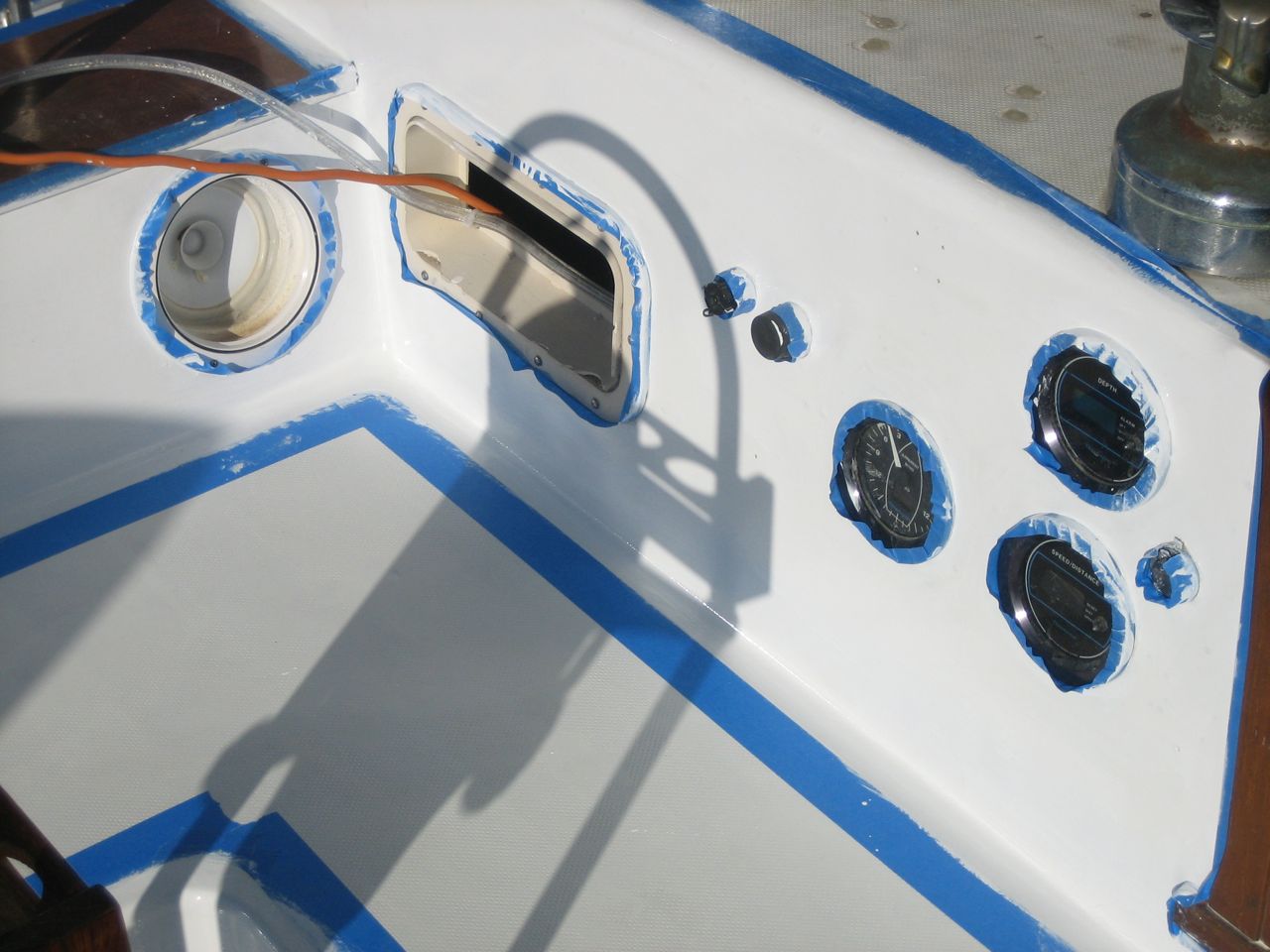
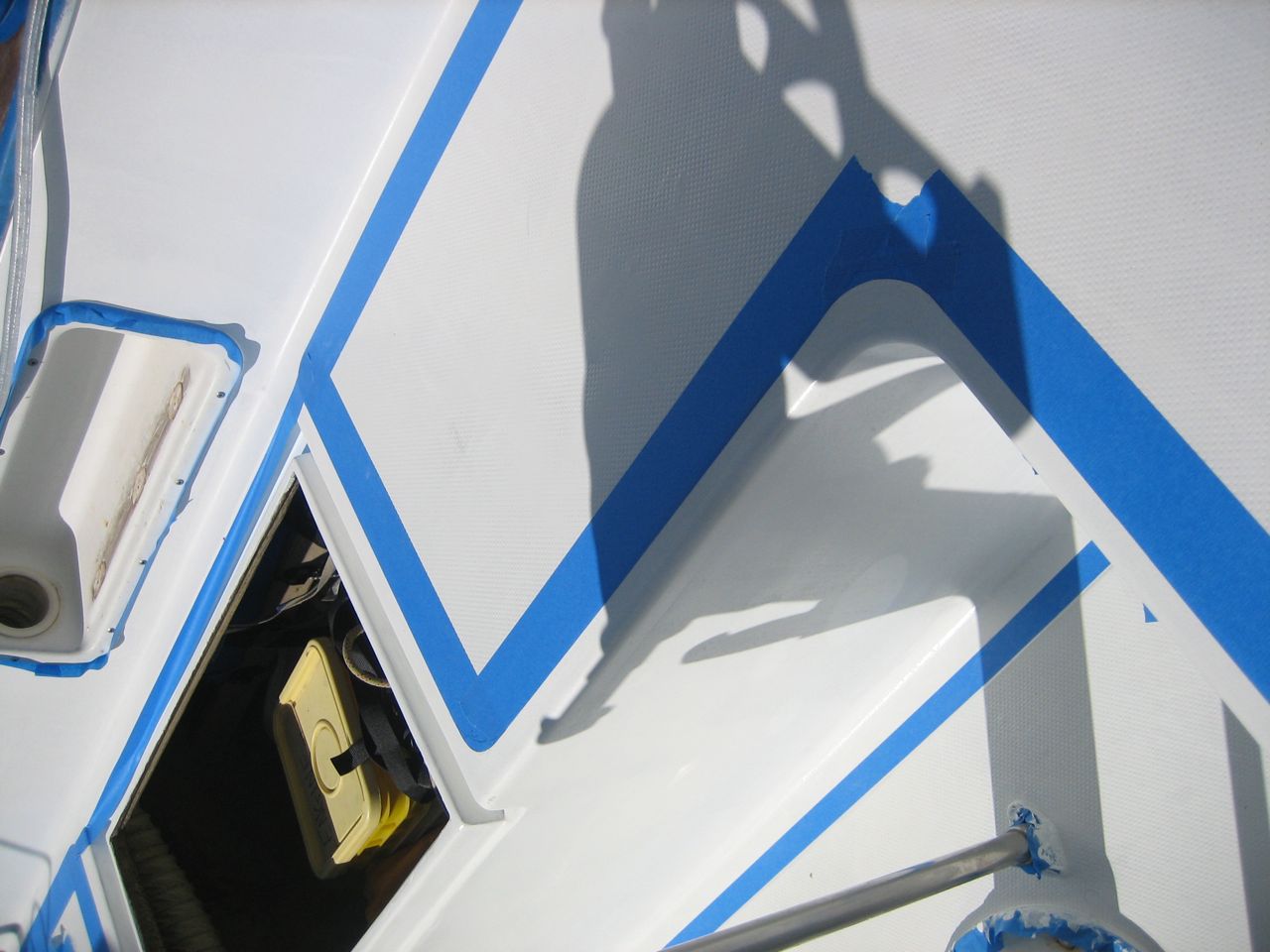
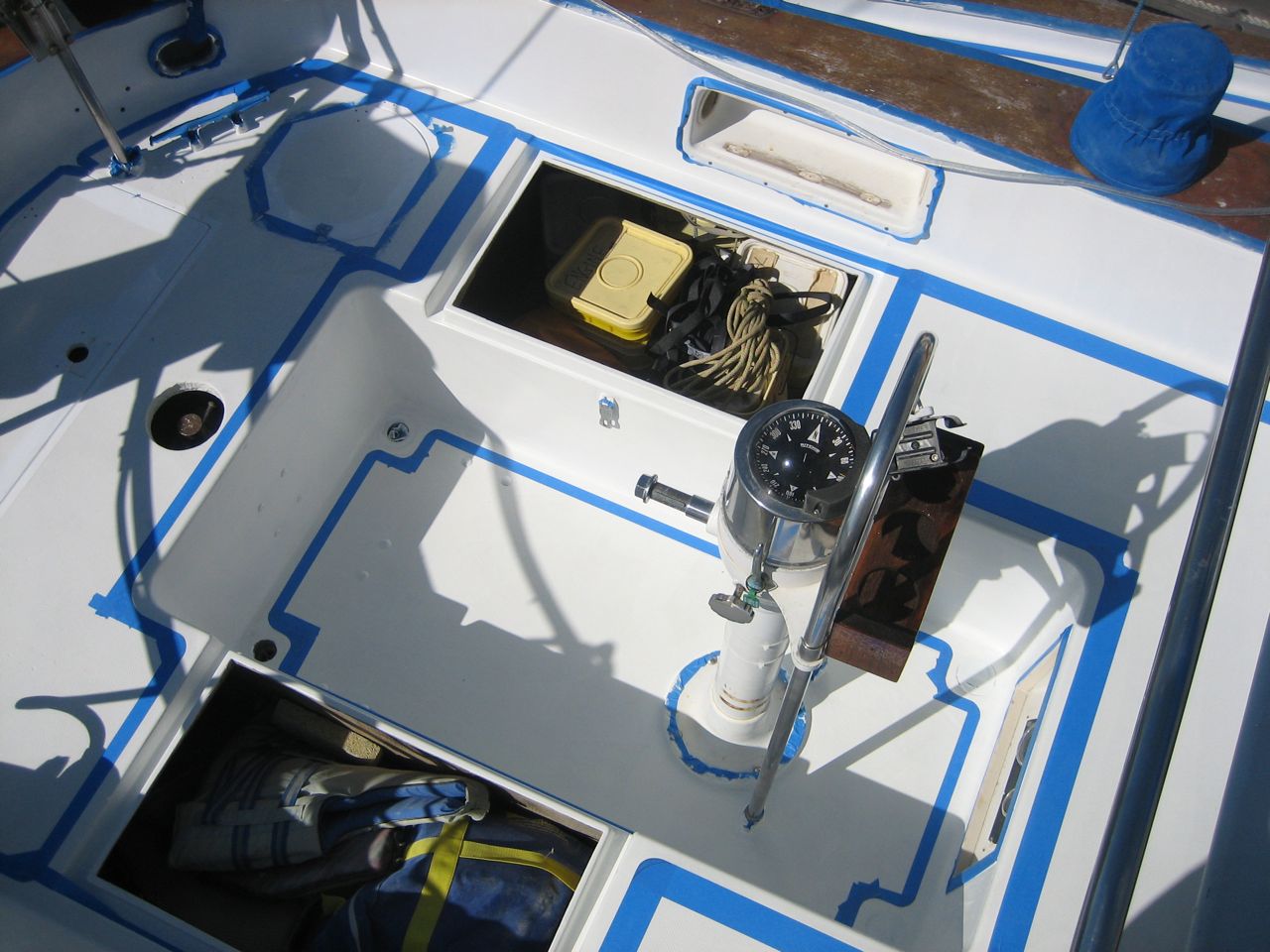
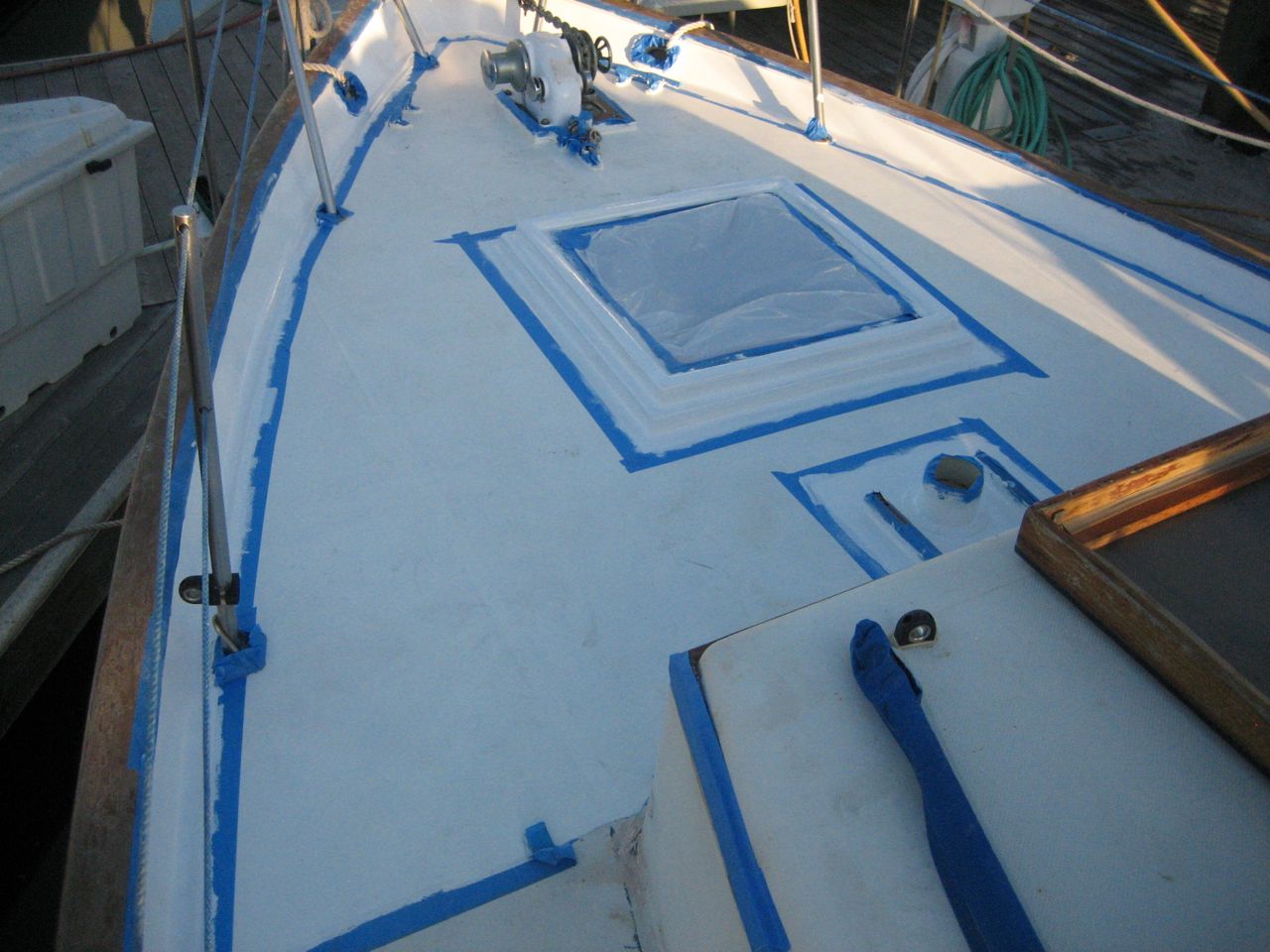
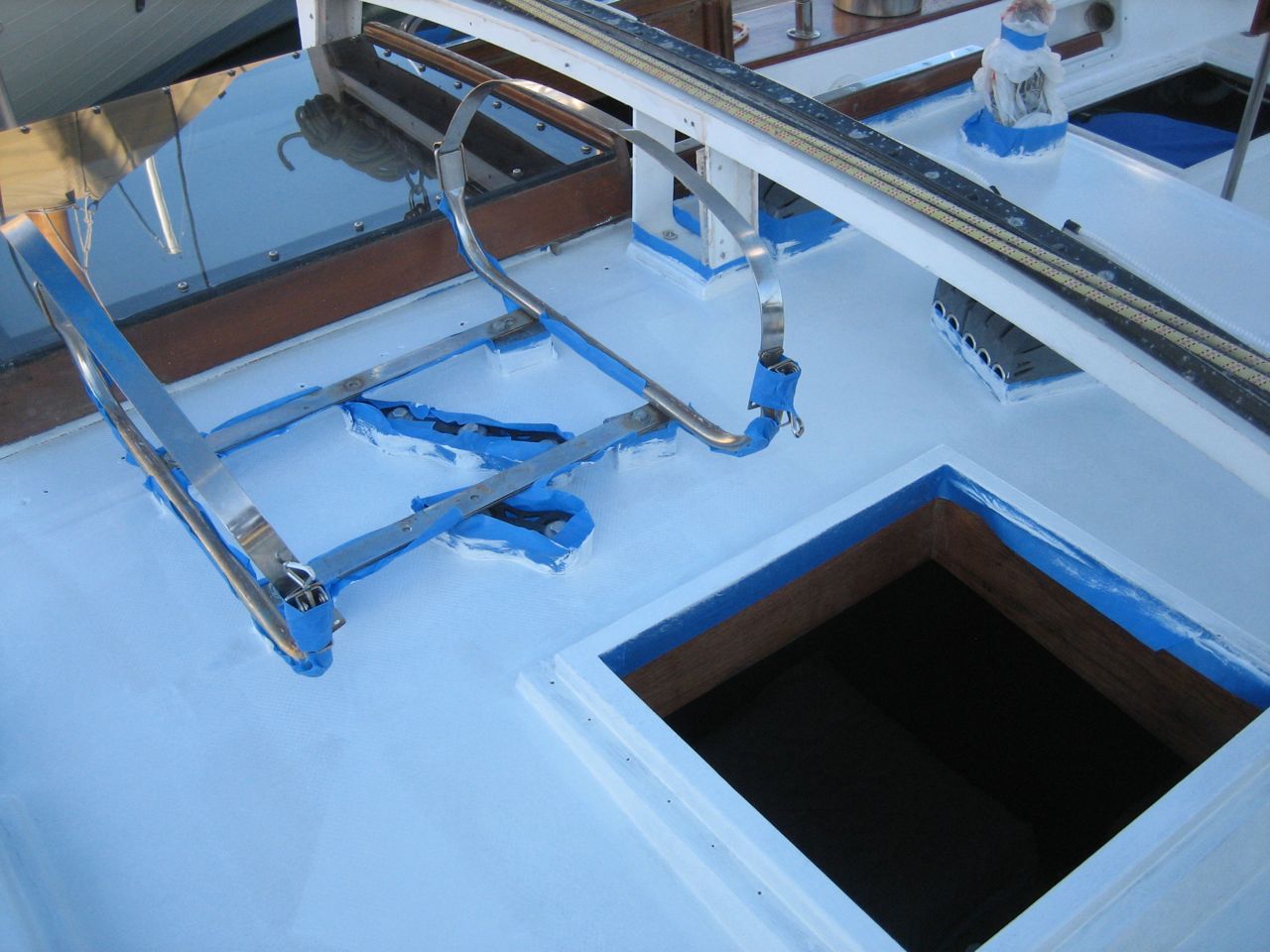
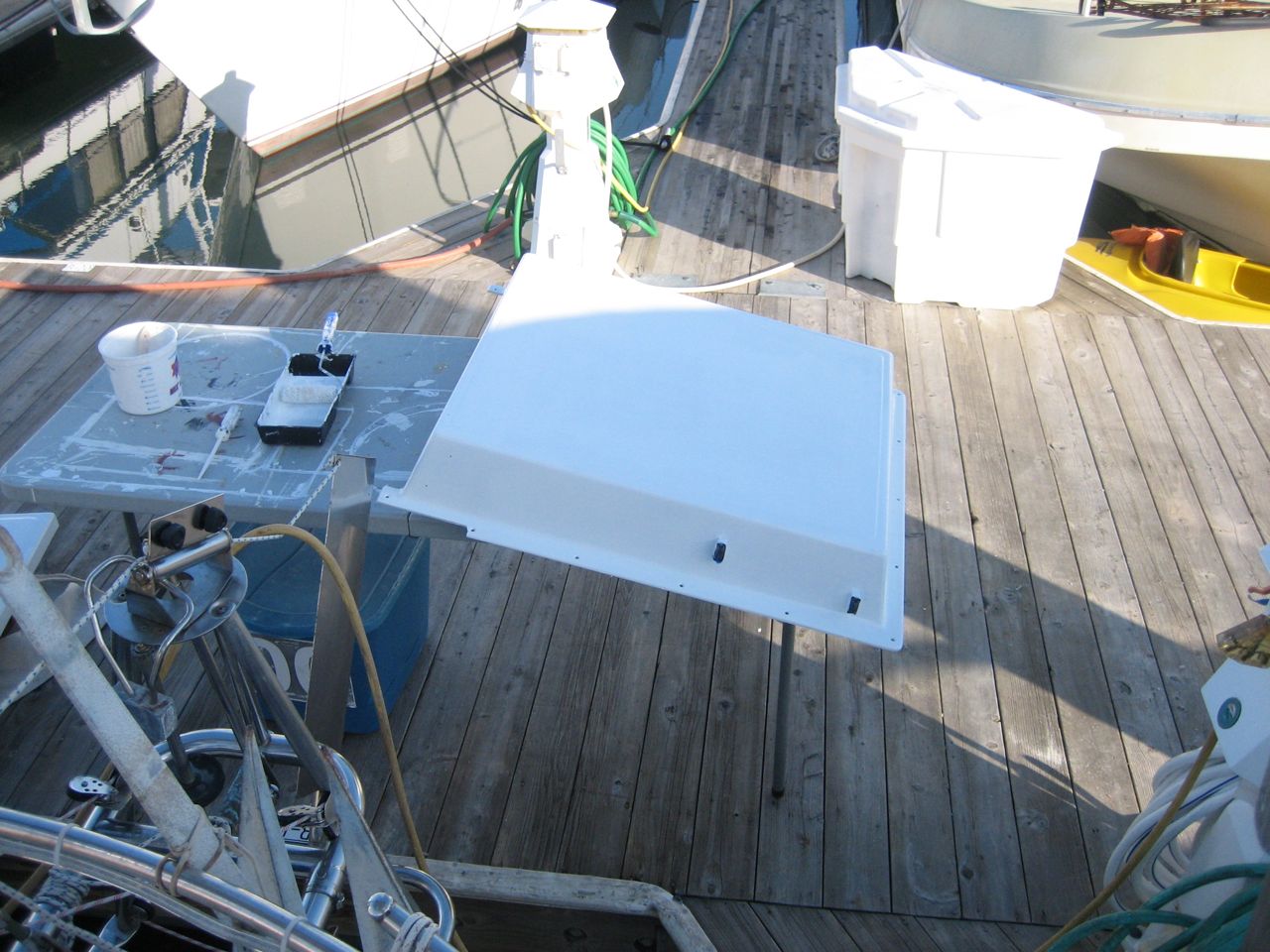
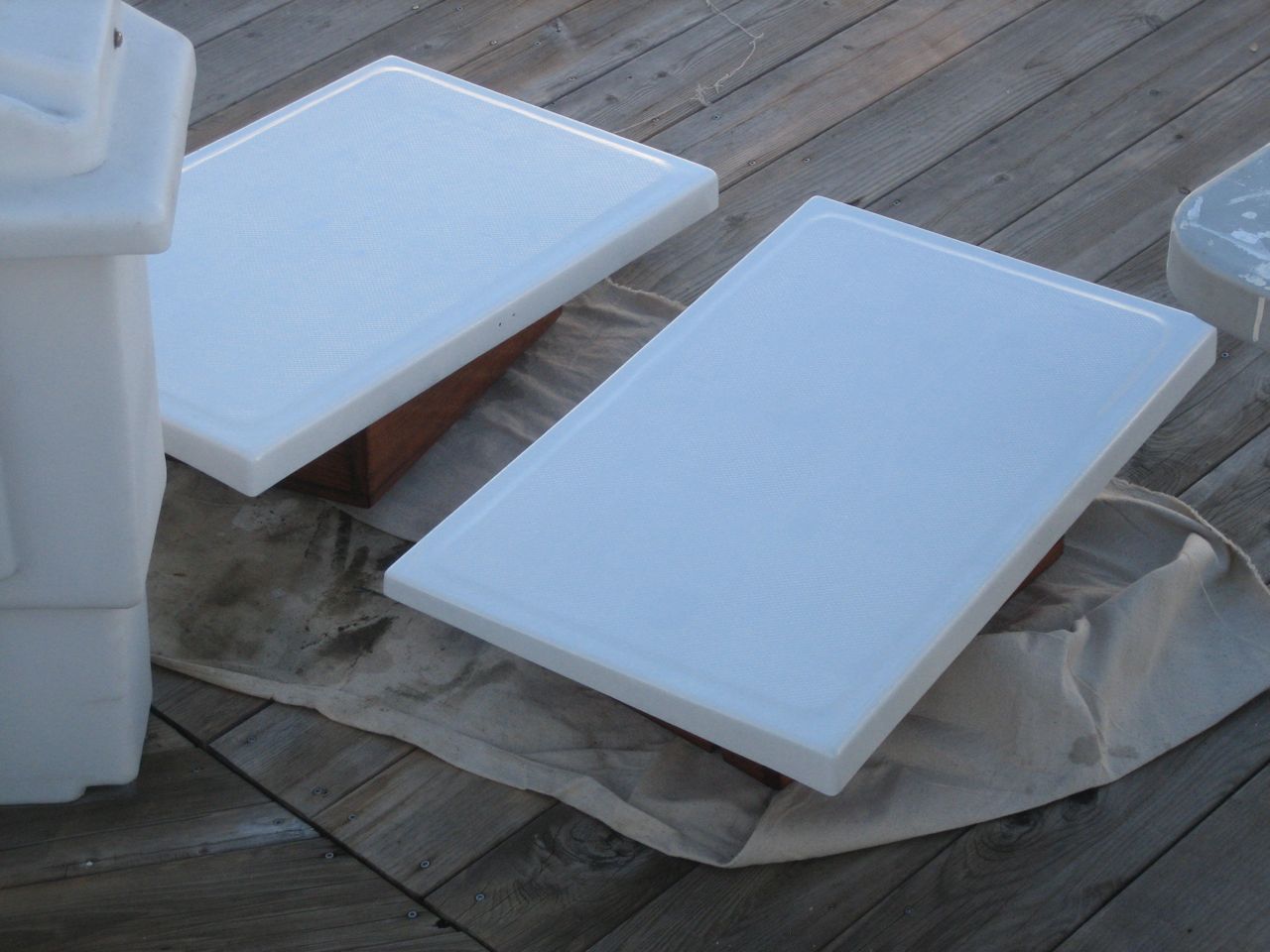
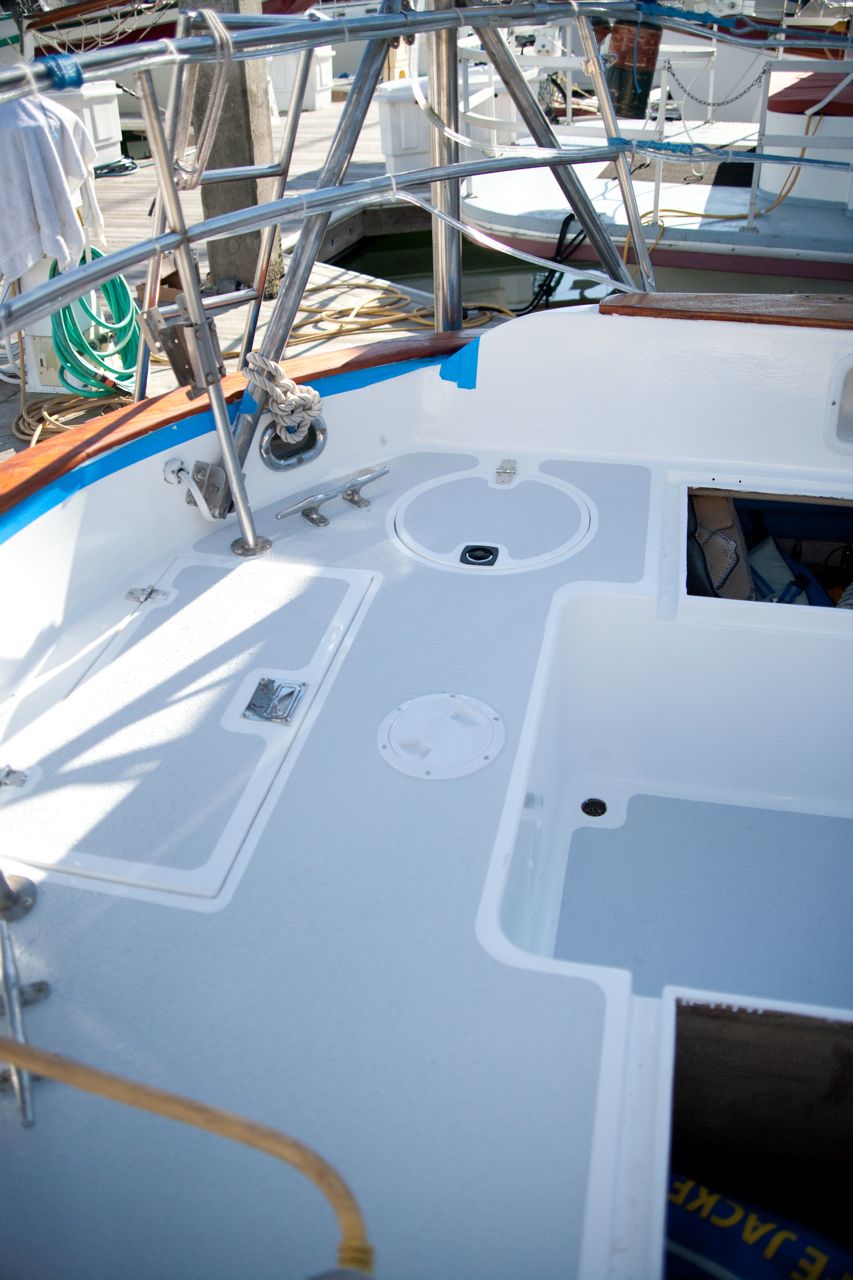
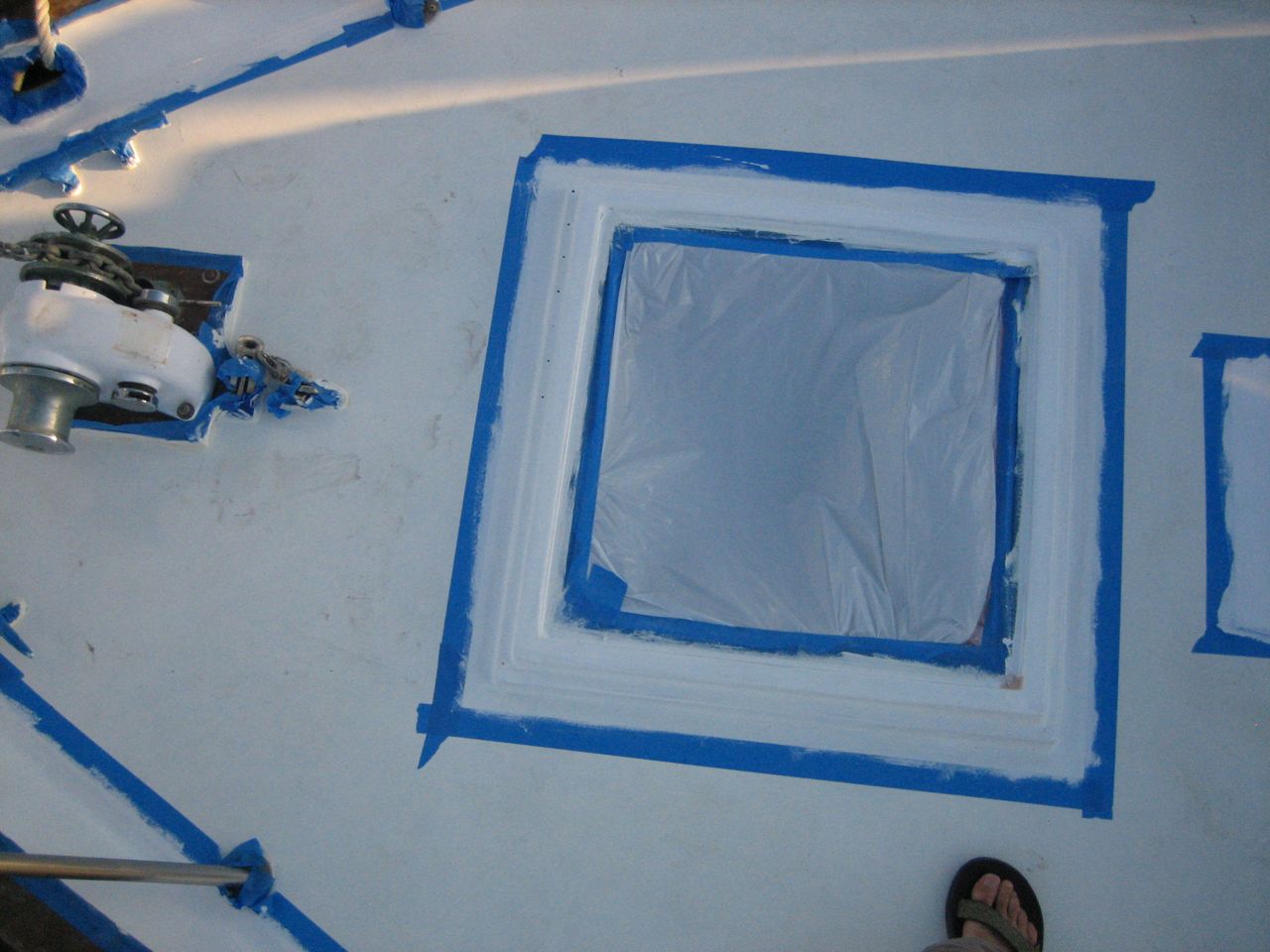
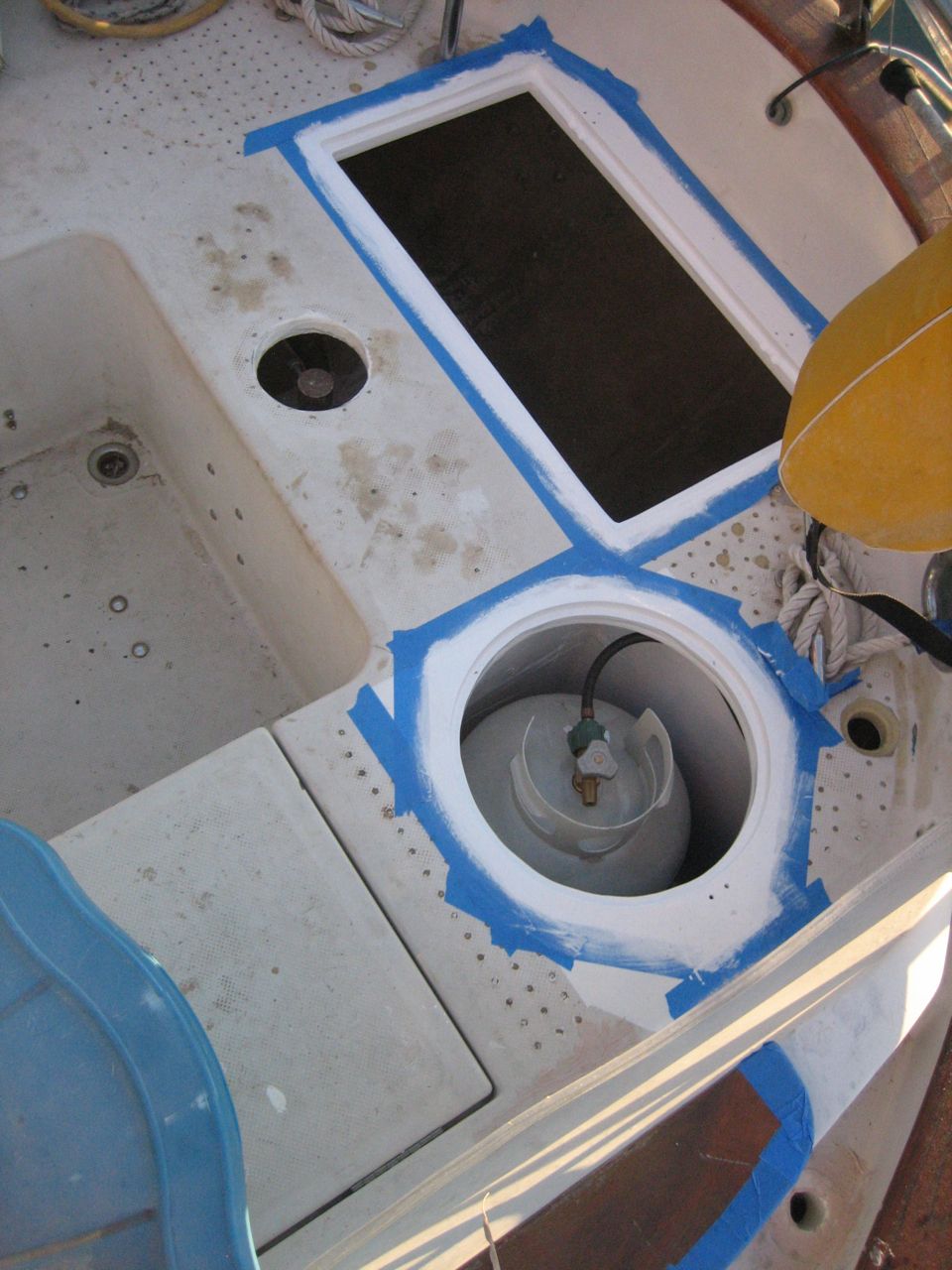
    The pictures in the galley are in chronological order of how the boat was painted.  I did not sand the whole boat, then mask the whole boat, etc.  I did it in pieces.  First I did the rims and lids of the propane locker and lazarette with the primer and LP, then I did the foredeck with primer, then masked for the LP, then remasked for the non-skid on the foredeck.  Then I ran out of kiwi-grip on the foredeck and ordered more.

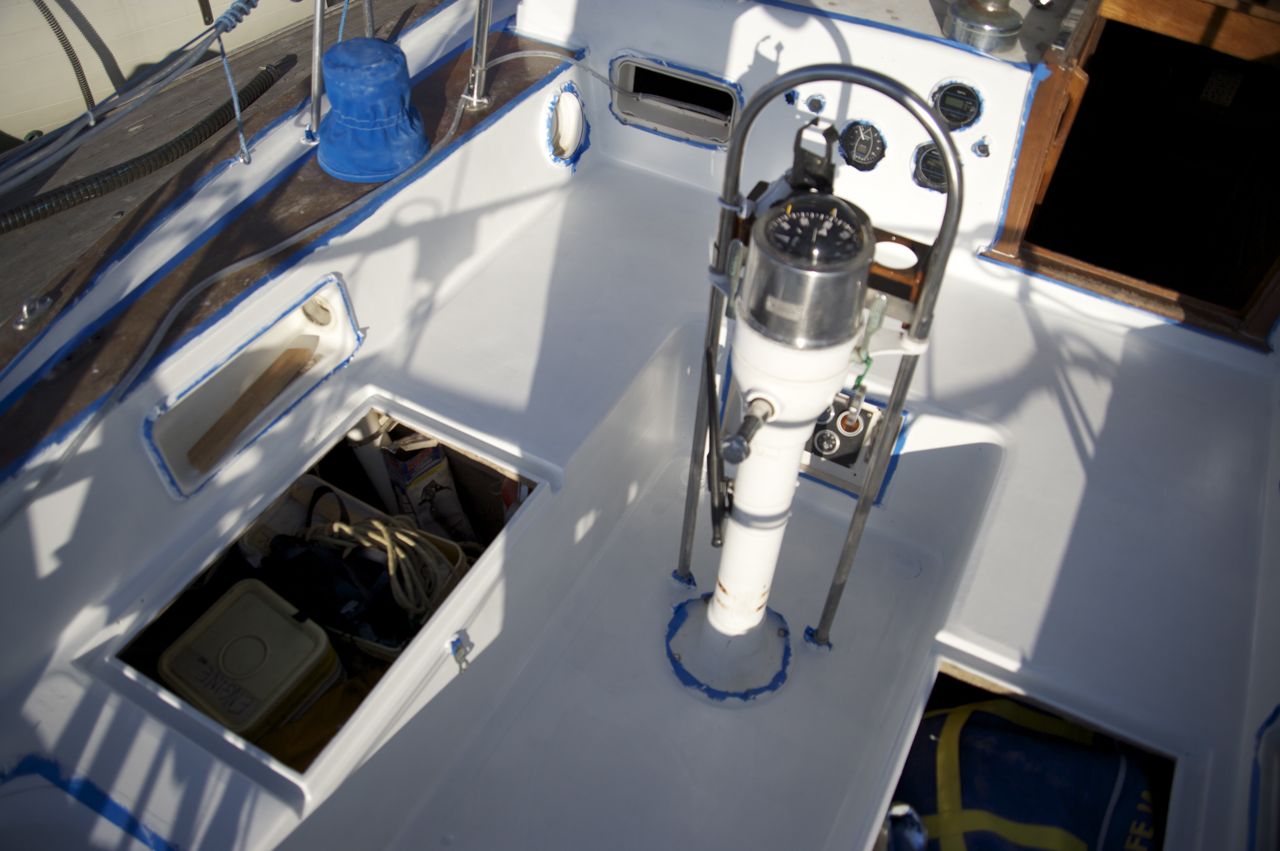
    I learned, from doing the foredeck to completion first as a proof-of-concept, that you don’t want to put kiwi-grip down over the LP (I had inexactly masked before painting the LP, assuming that the edge of the LP didn’t matter once I put kiwi-grip over it).  I knew better but forgot.  Two reasons not to let the kiwi-grip end up over top of any LP: 1) it won’t stick well to the LP 2) the LP will show through the kiwi-grip much more, being glossy bright white and whatnot.  So after that I masked perfectly for the LP, then masked perfectly right next to it for the kiwi-grip.

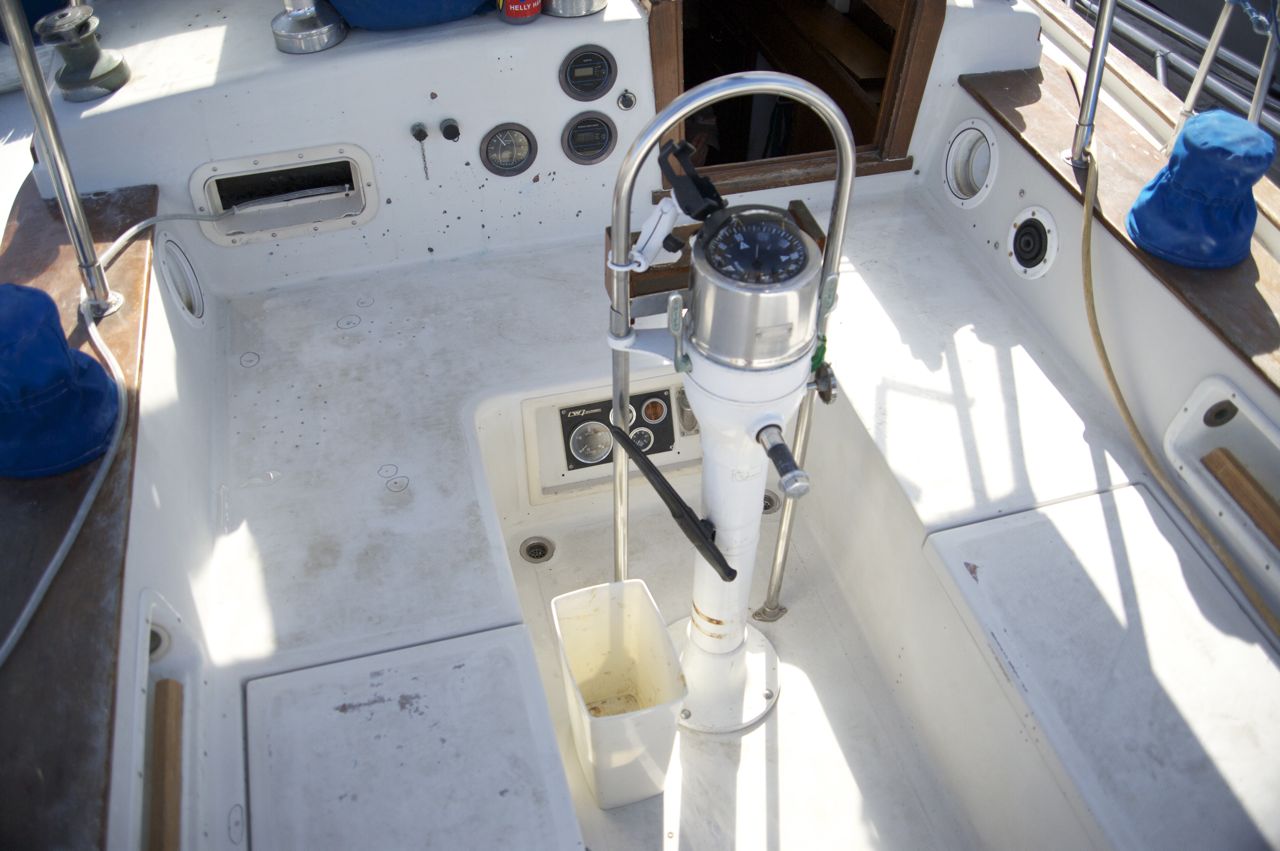
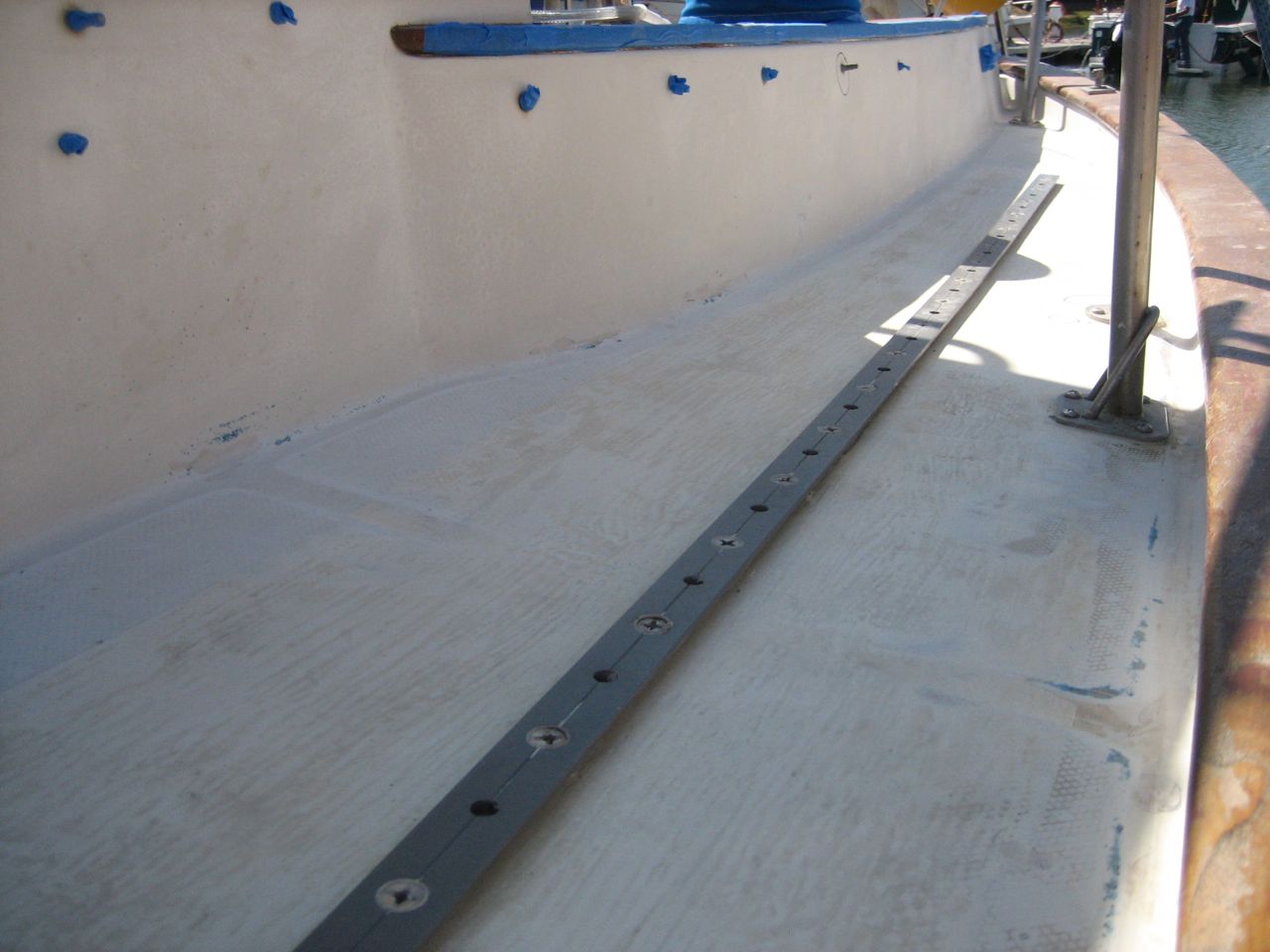
    After the foredeck, I did the port side deck and cockpit, more or less together.  I did it in pieces because it was just too overwhelming to try to do each stage over the entire boat all at once (actually, I did it in pieces because Karen convinced me to, and then I saw the wisdom of her reasoning).
  • Refinished wood on deck (scrape, sand, varnish)

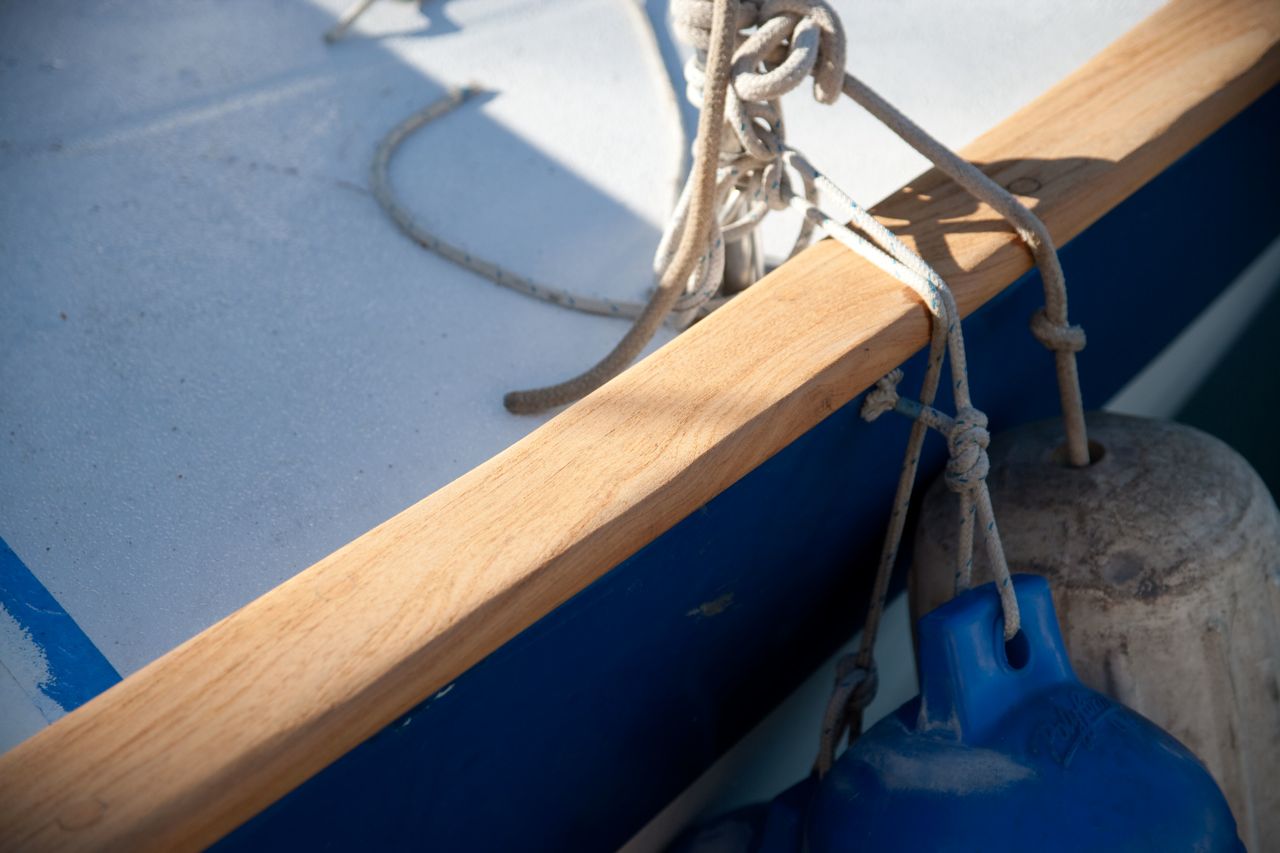
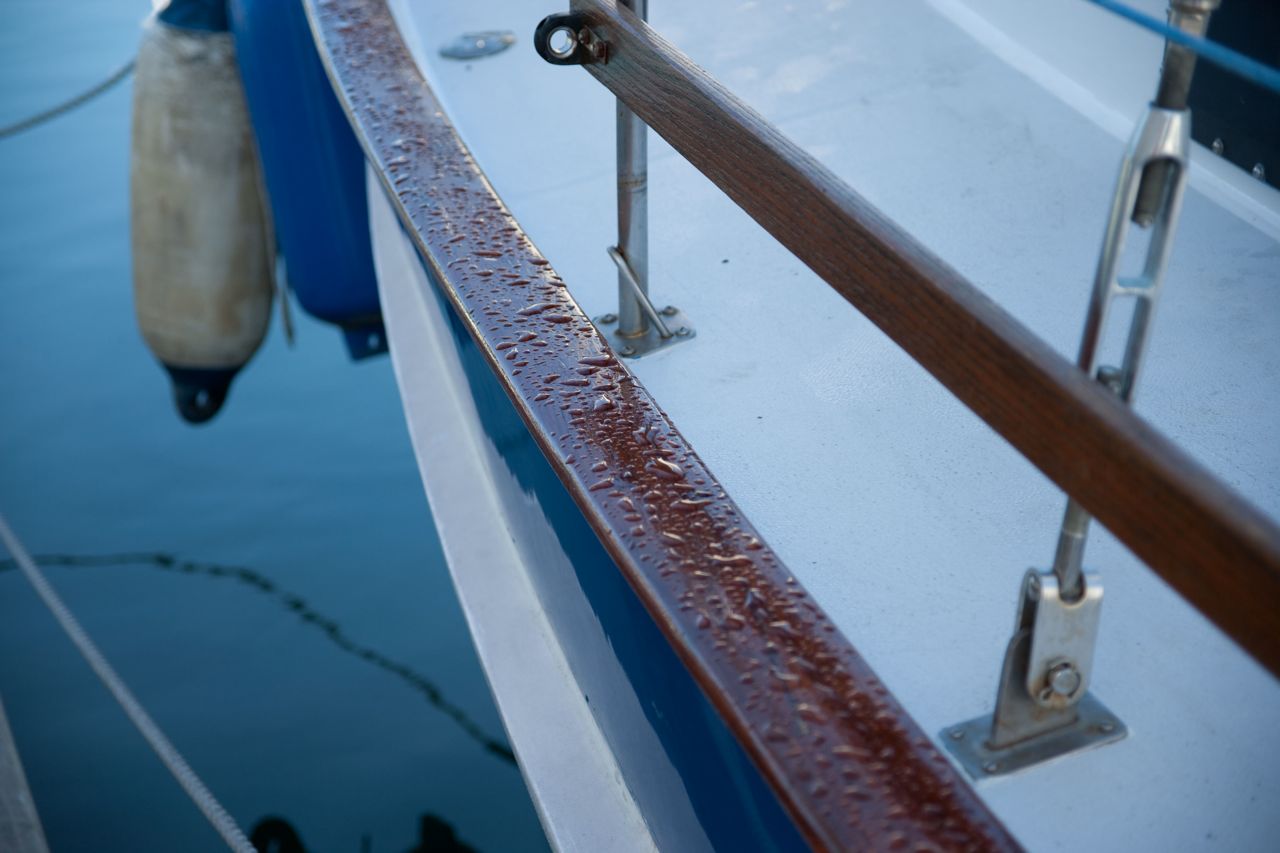
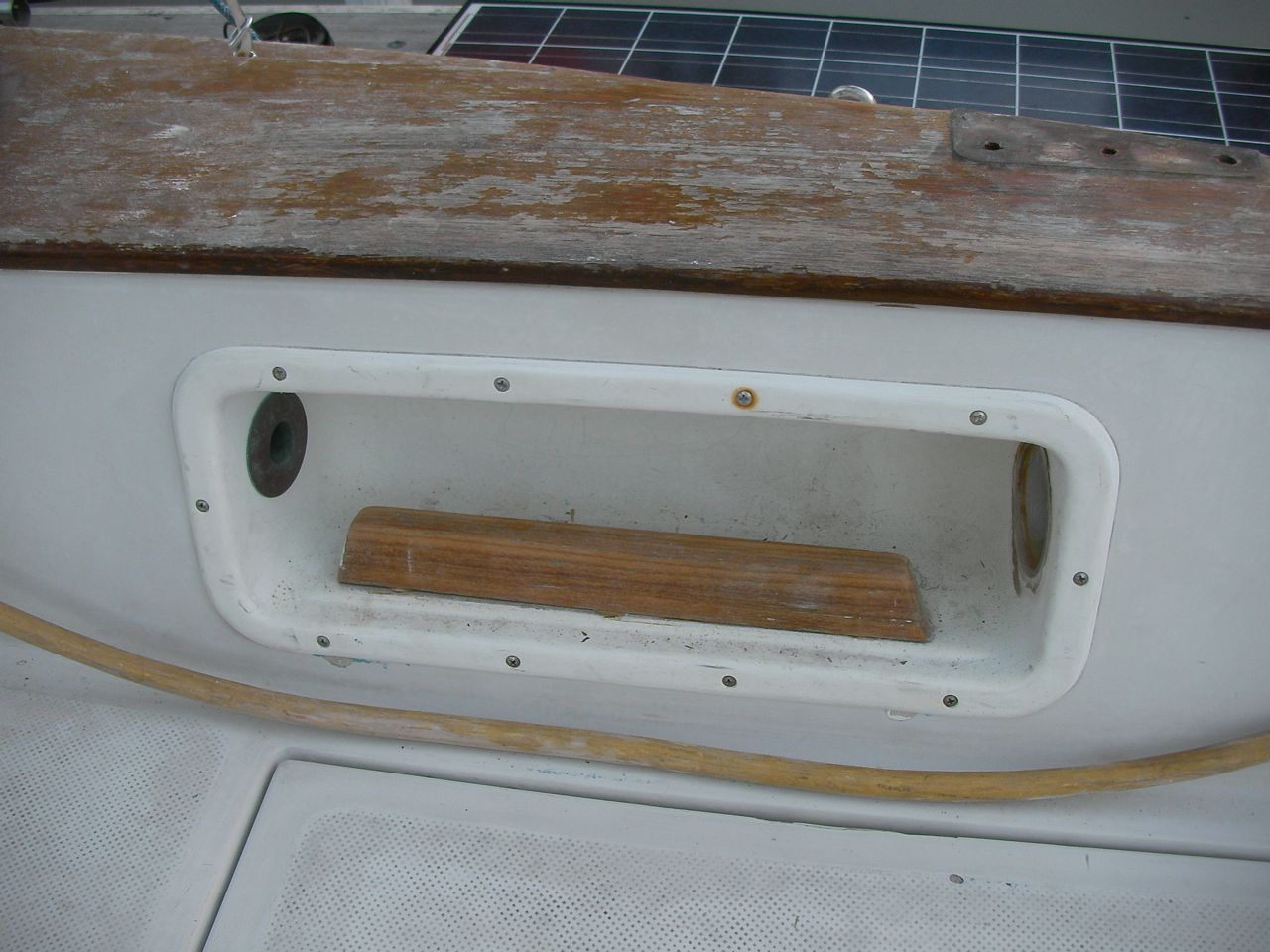
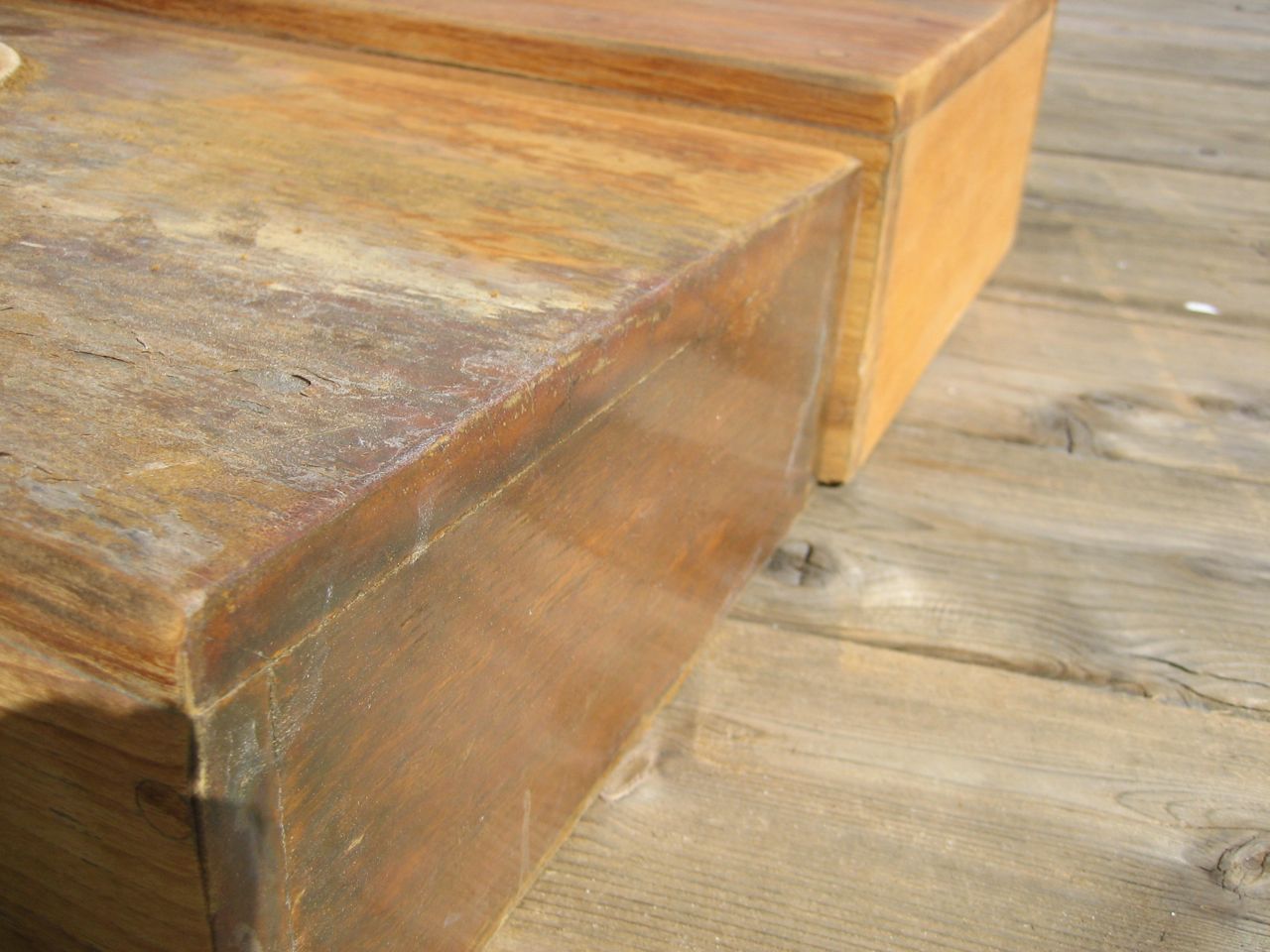
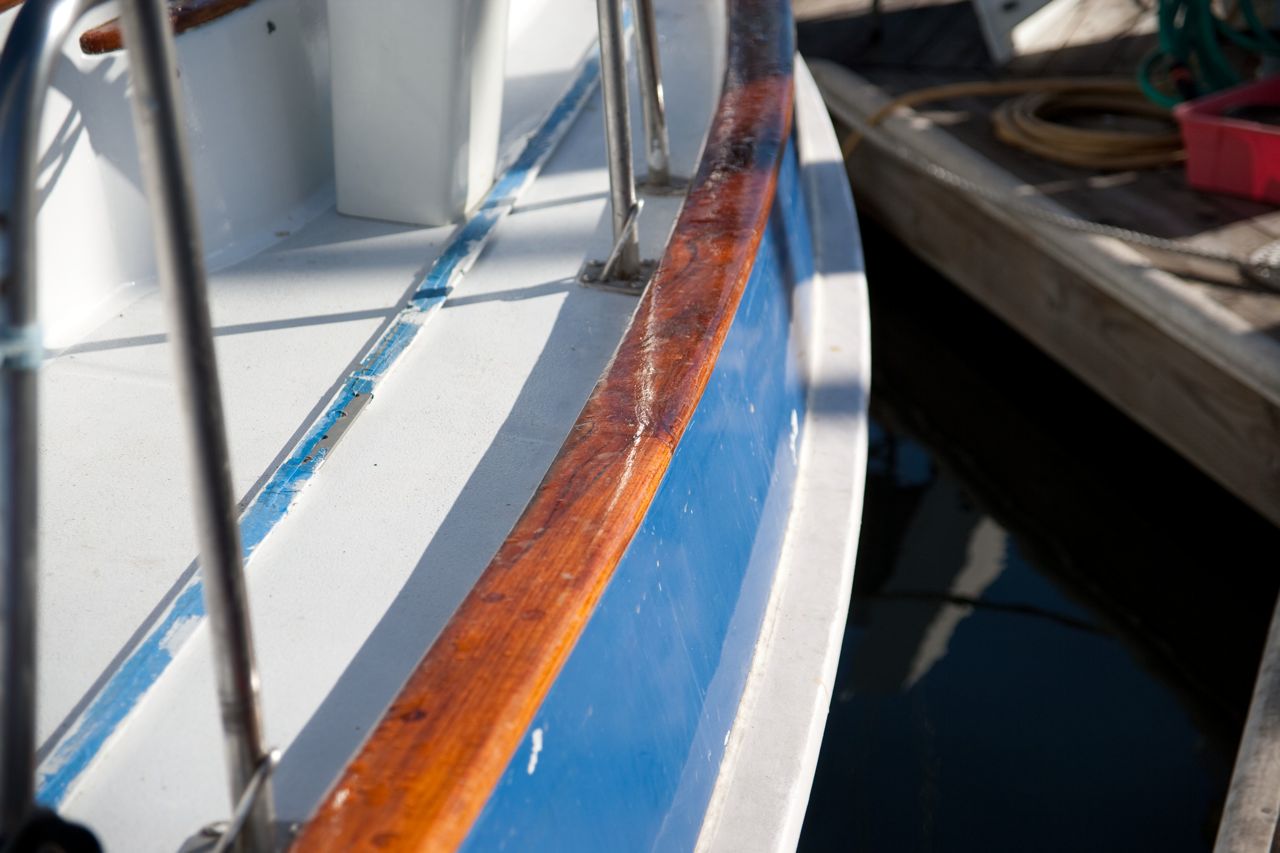
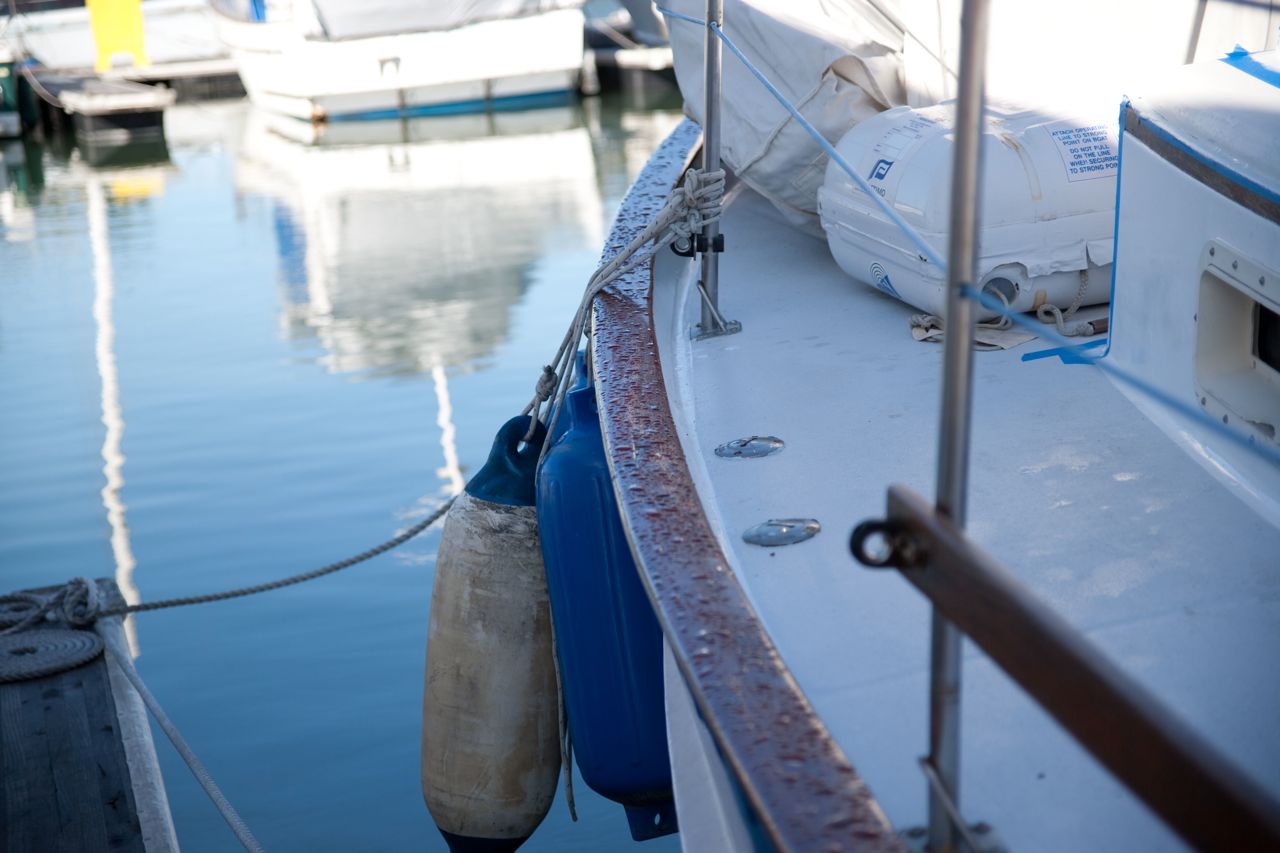
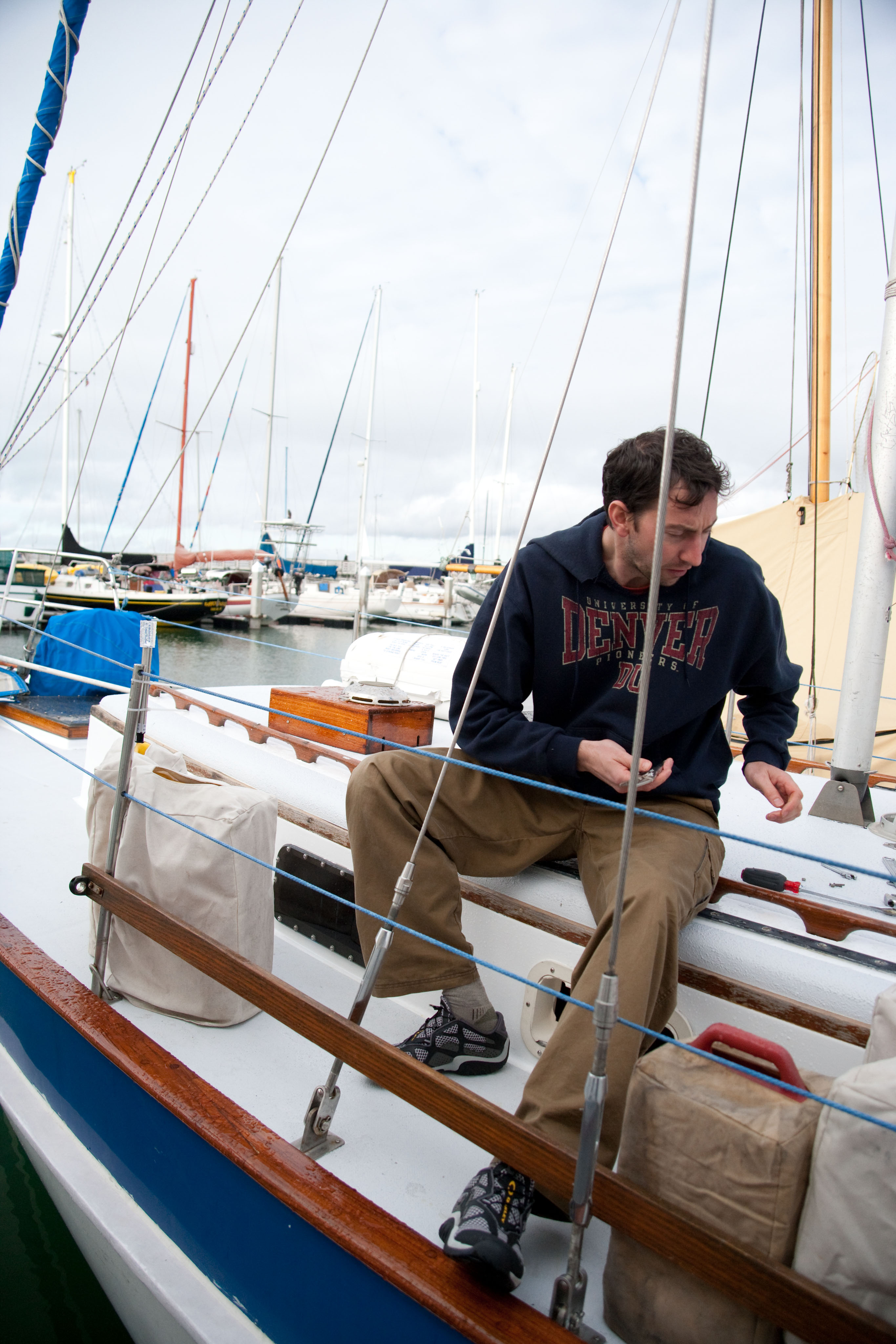
    . . . including dorade boxes, the hatch surrounds, cockpit coaming, and the caprail.  Jonny did this job.  I wish I had more pictures of the finished result, somehow forgot about that one.

    Jonny did 4 coats on each surface.  First coat was thinned 50% to penetrate, second coat was thinned 25%, all coats after that were un-thinned.  Varnish used was the Epifanes high-gloss.

  • Added solar panels to the arch

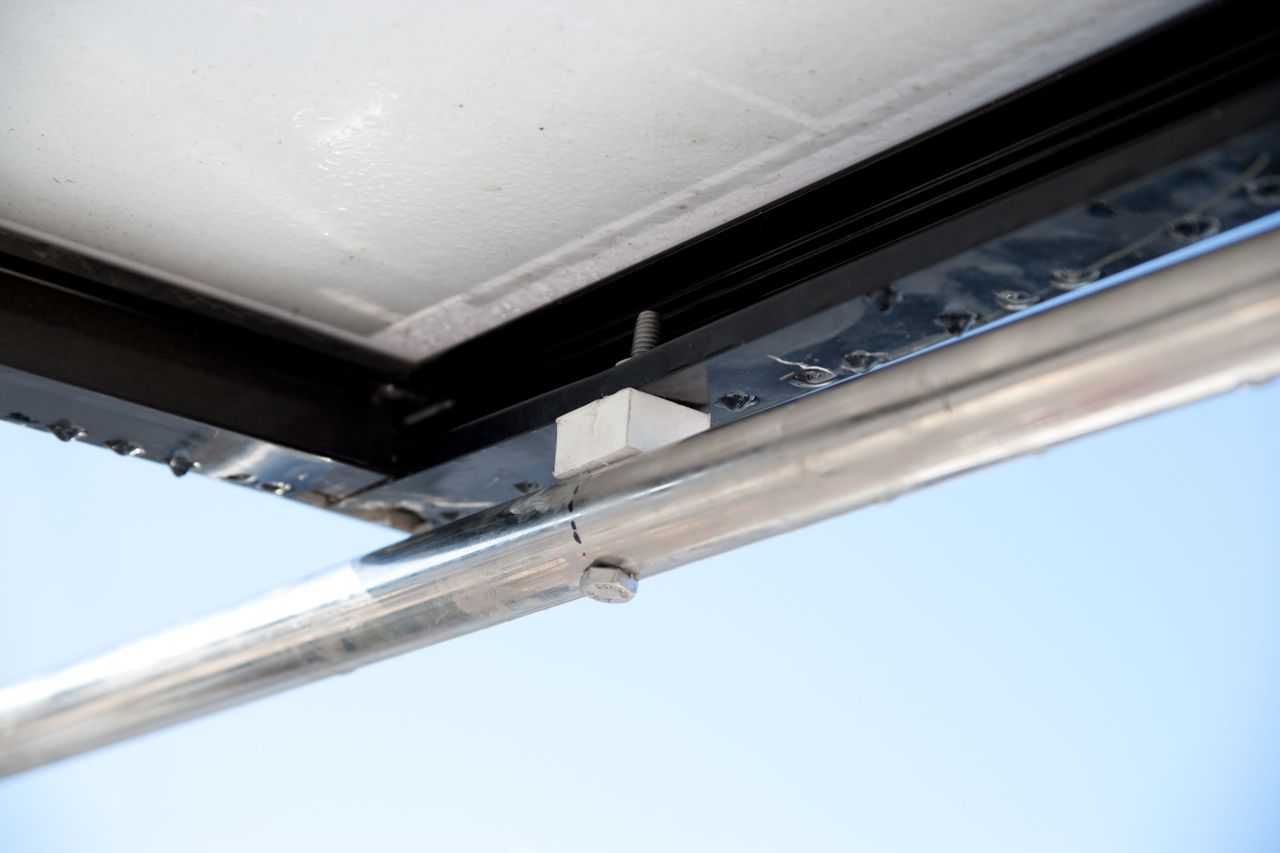
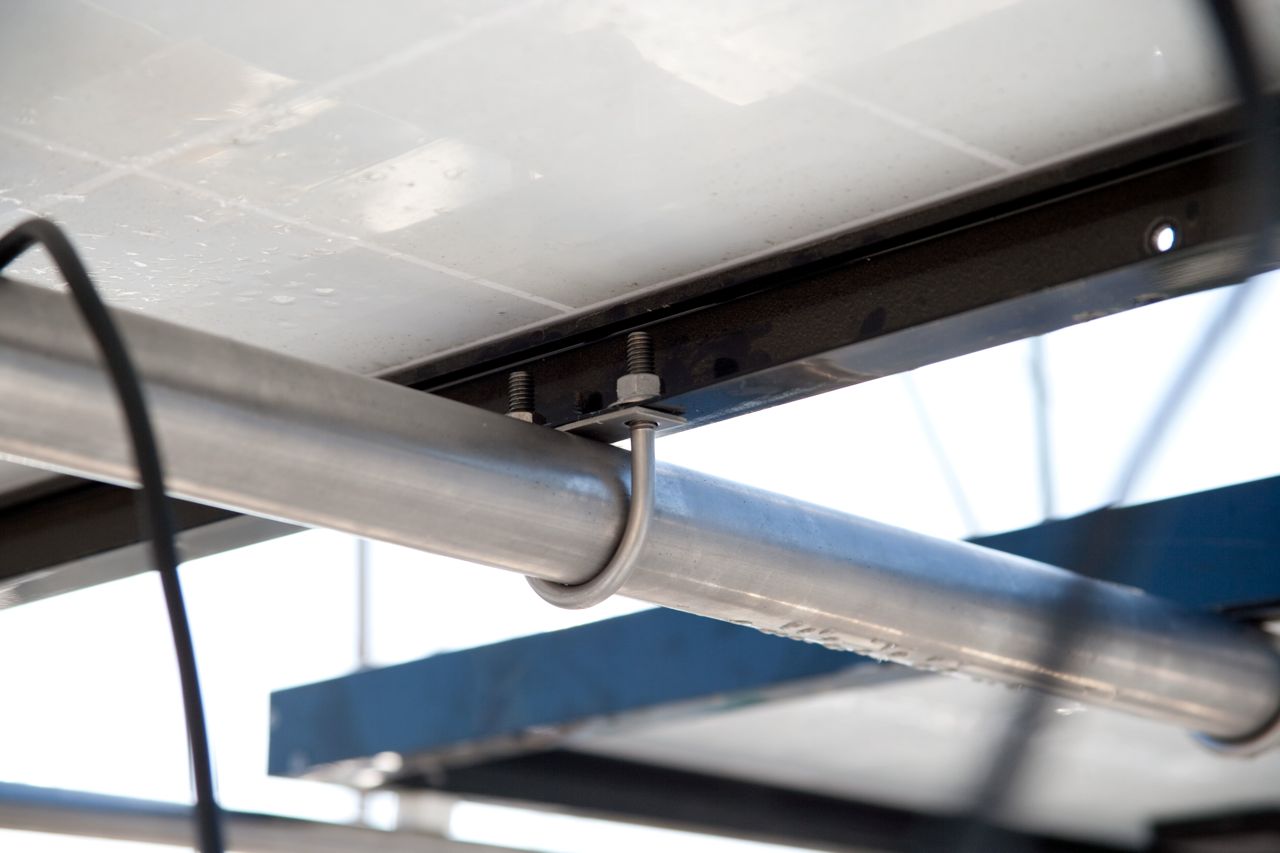
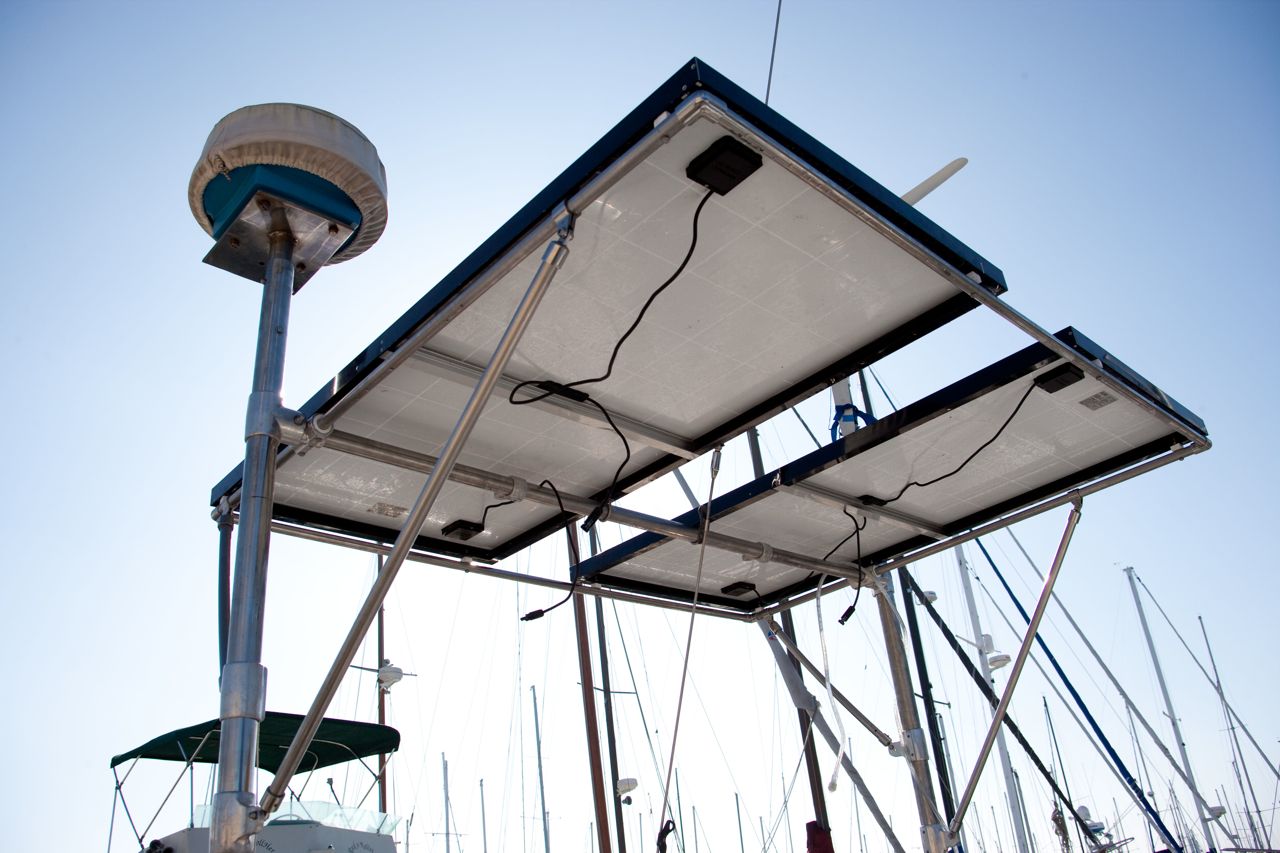
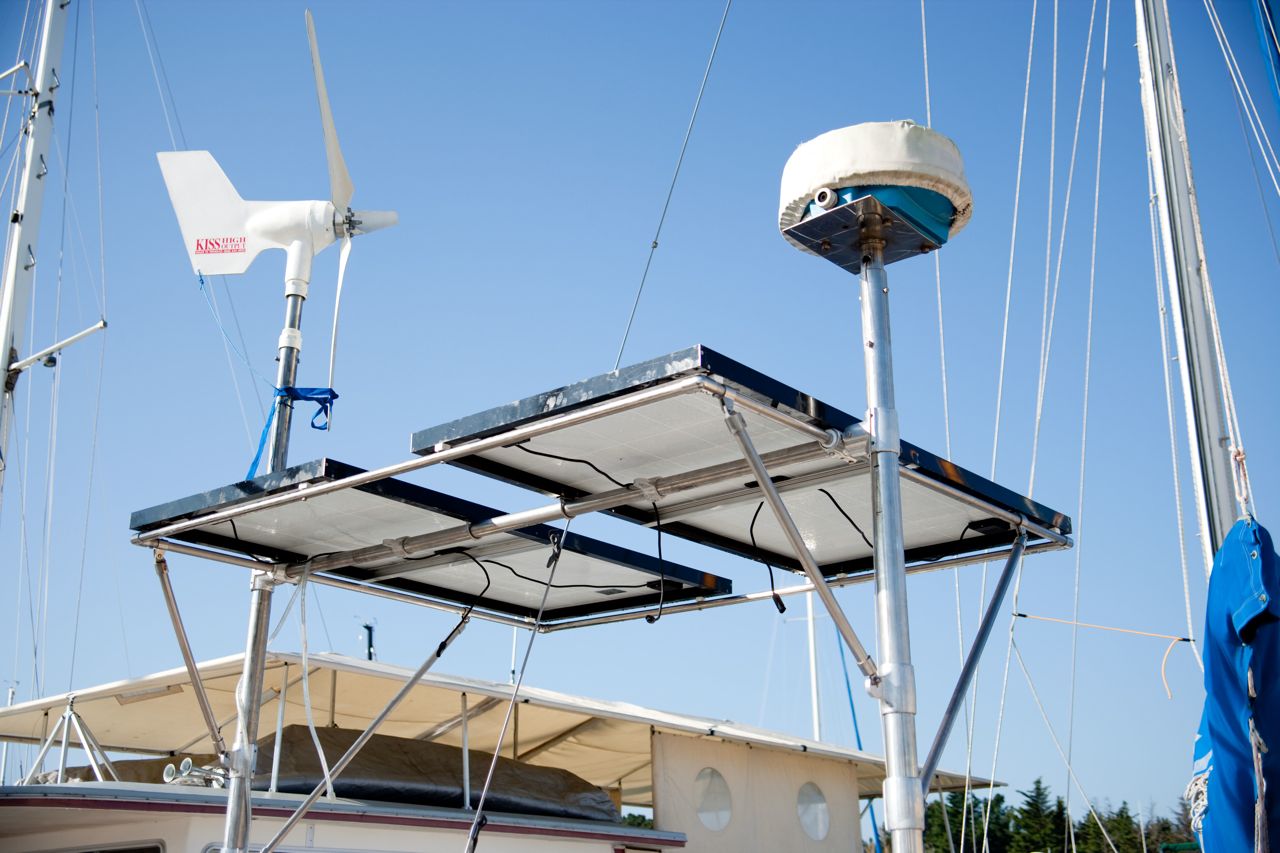
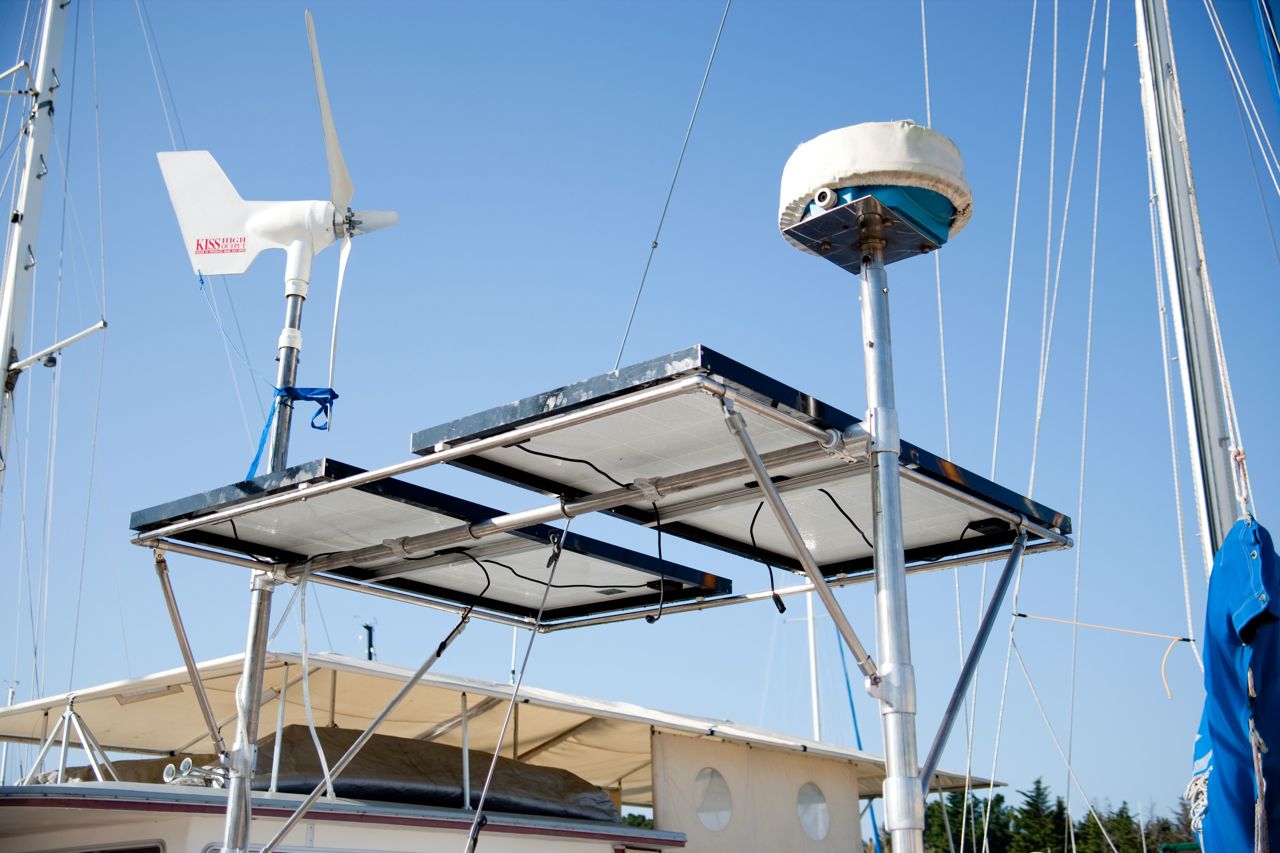
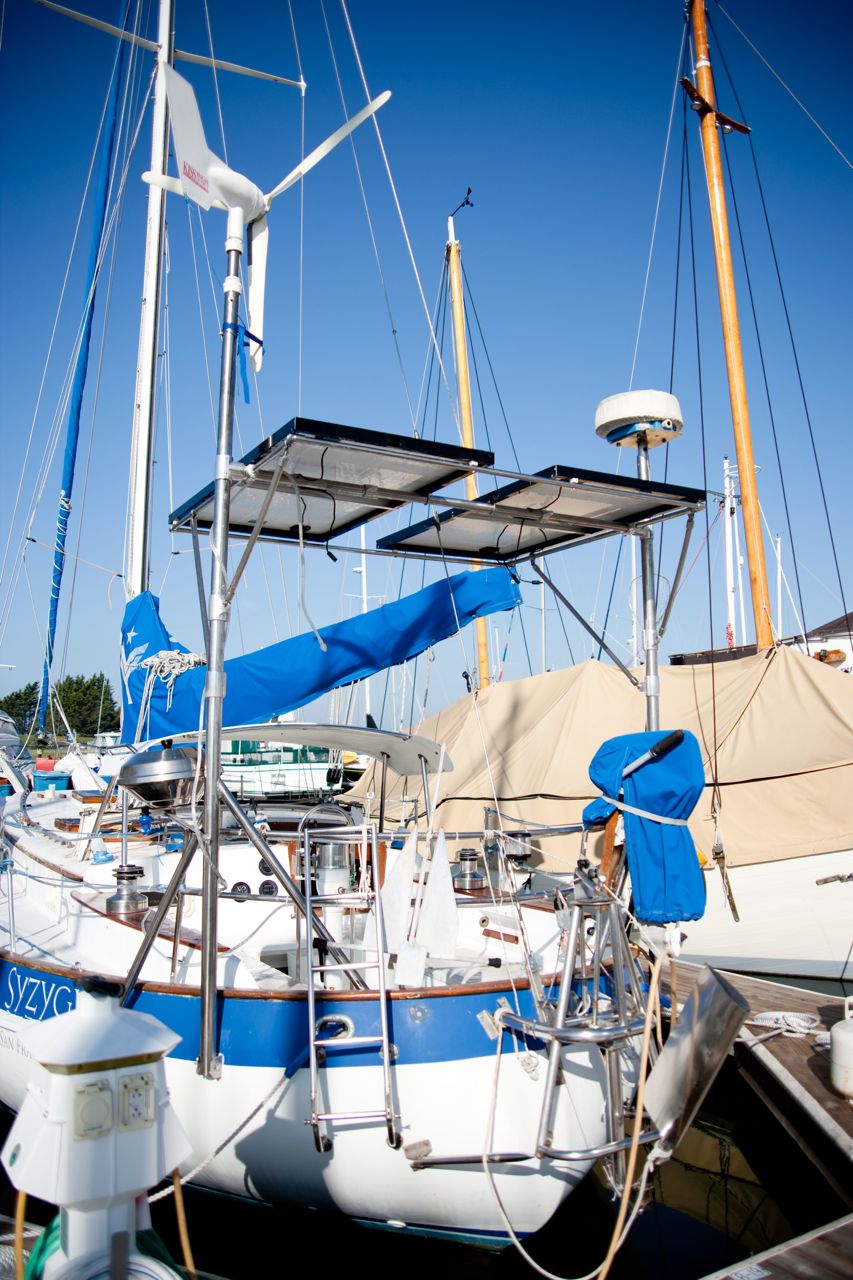
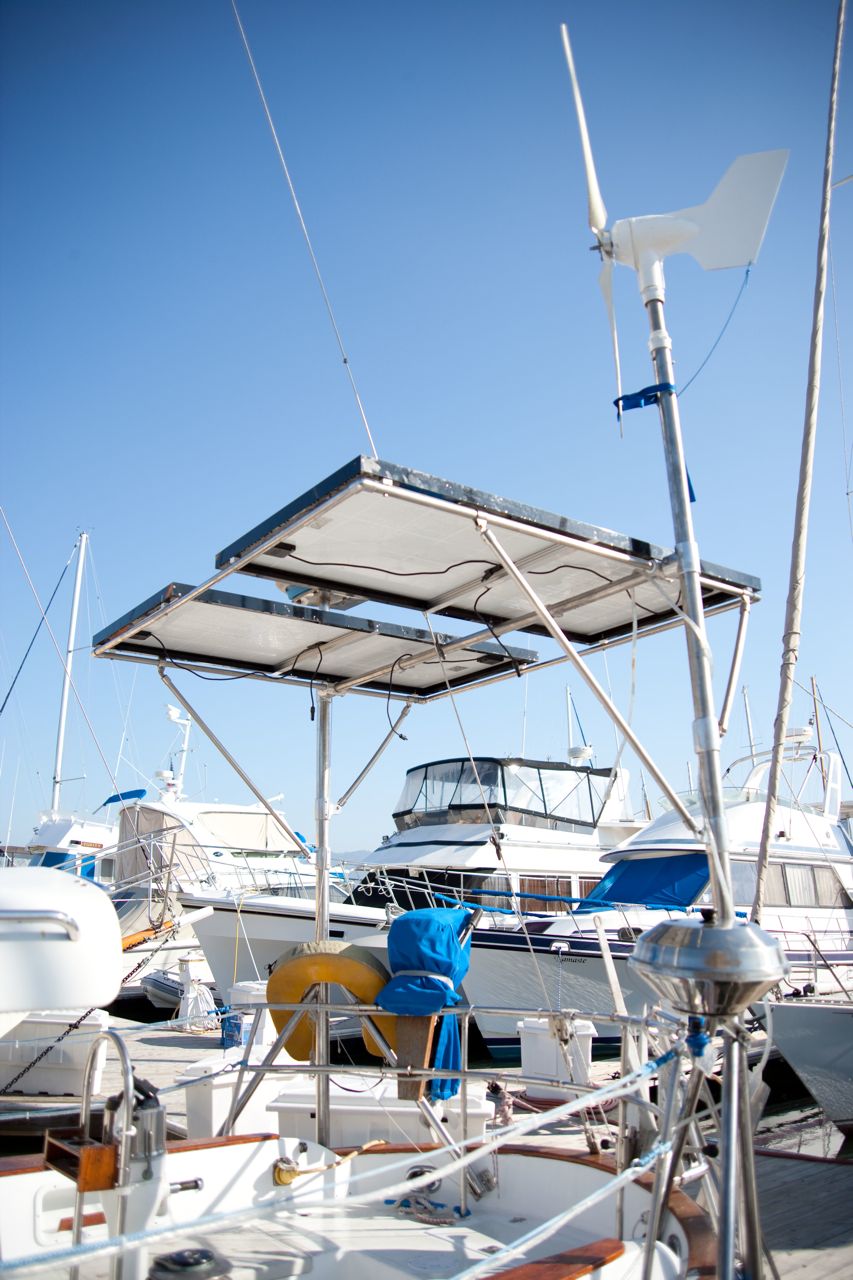
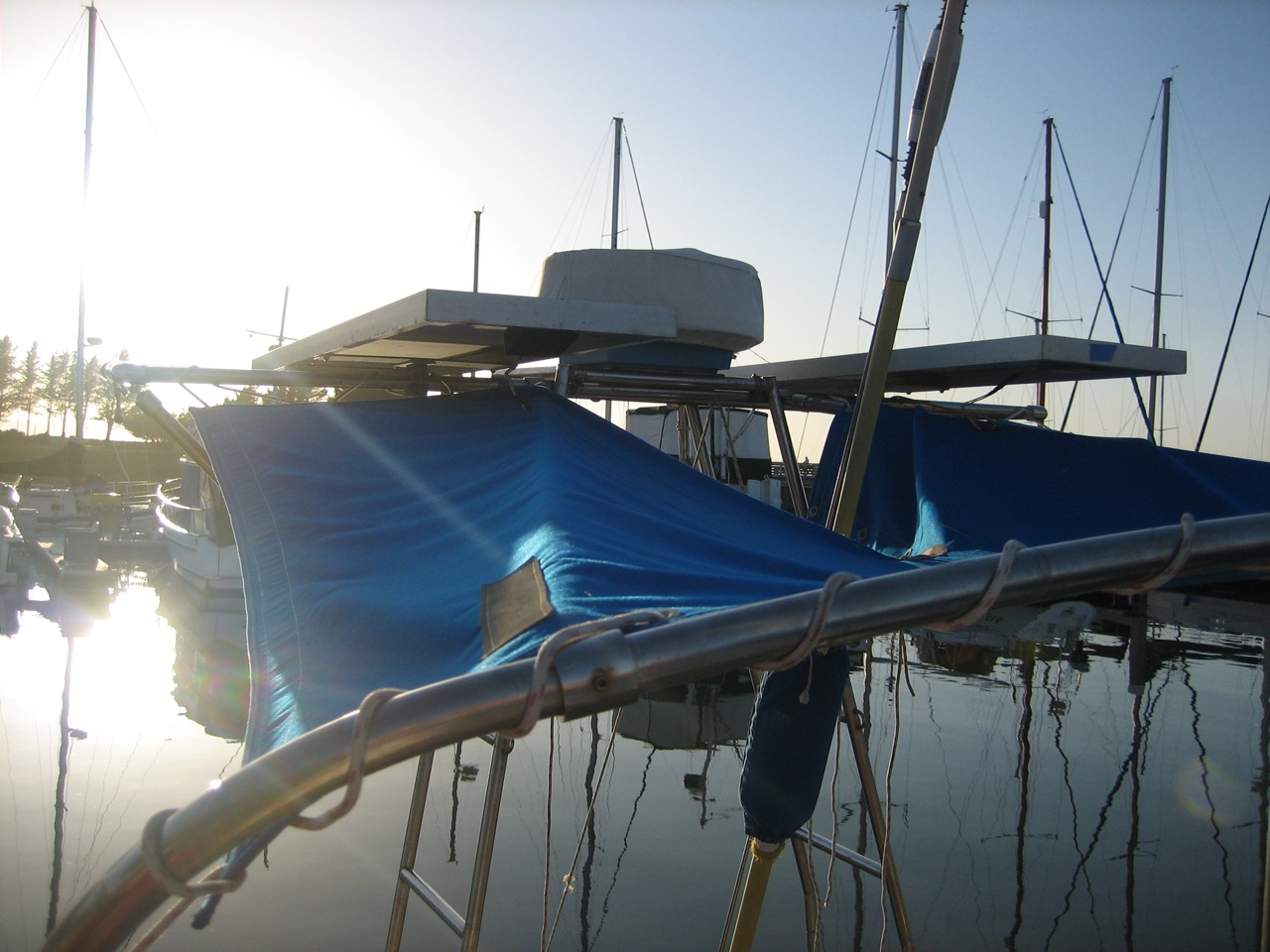
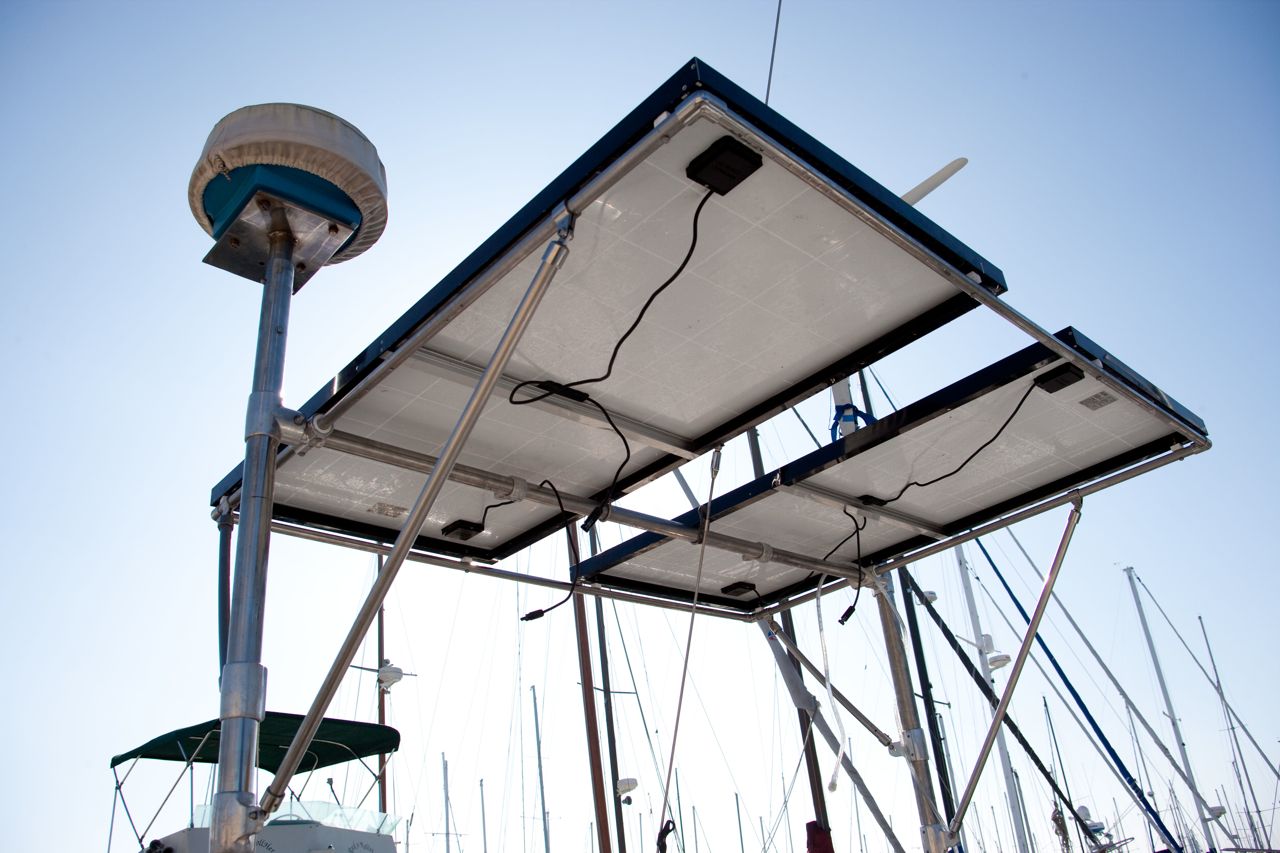
    We bought some solar panels from a guy in Berkeley, via craigslist: two 180W Mitsubishi panels for $360 apiece a total of 360W, for $720.  Exactly $2/W, which is a good price as far as I’m concerned.  Even better, they precisely fit the dimensions that I was seeking to fit in the space allotted for them on the radar arch.

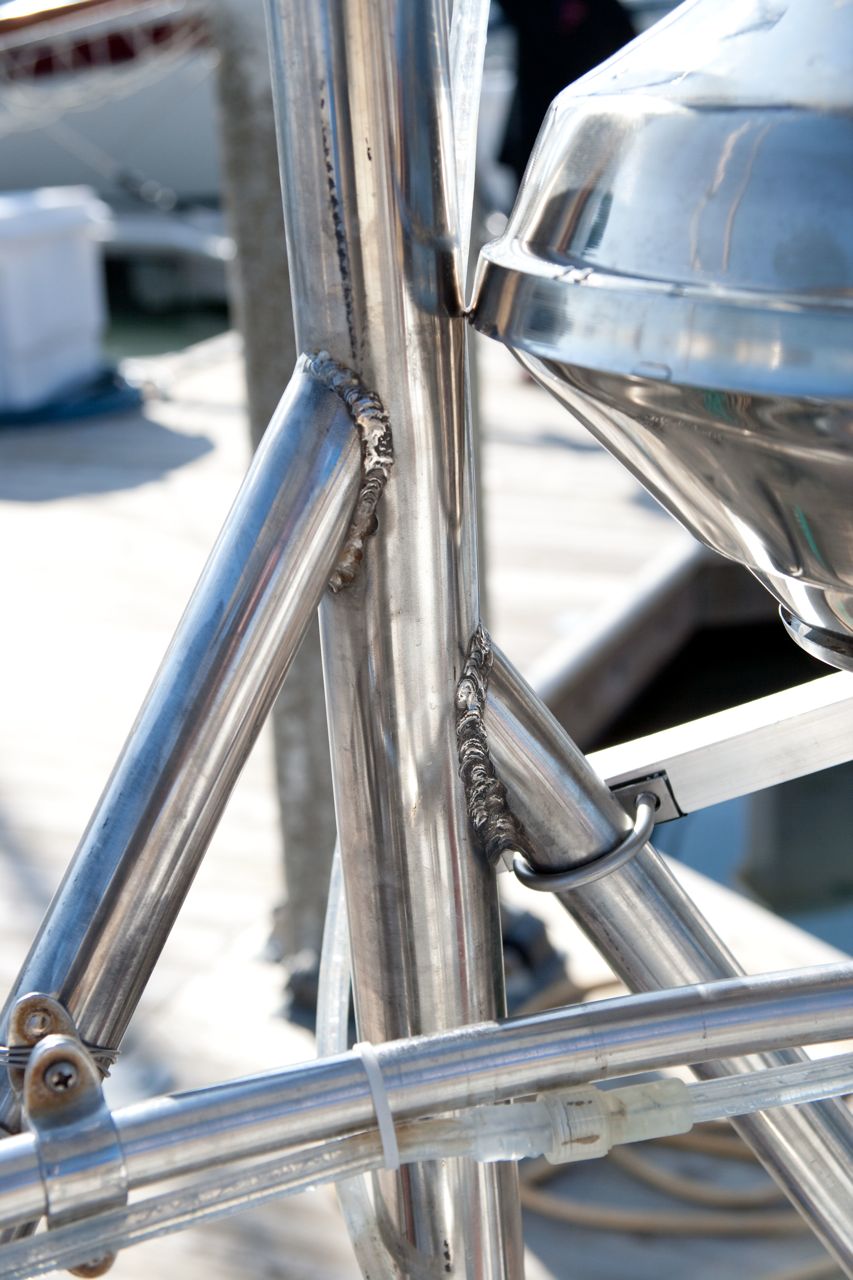
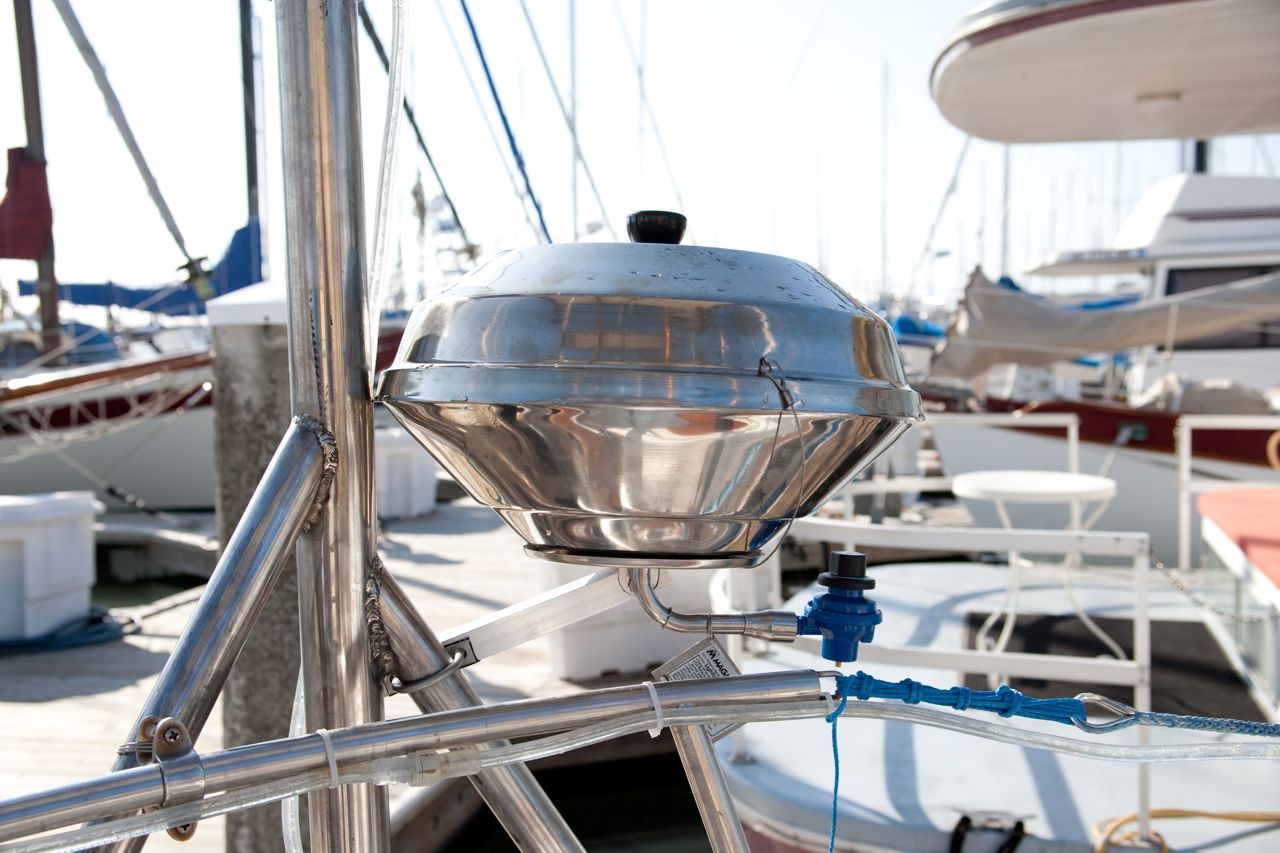
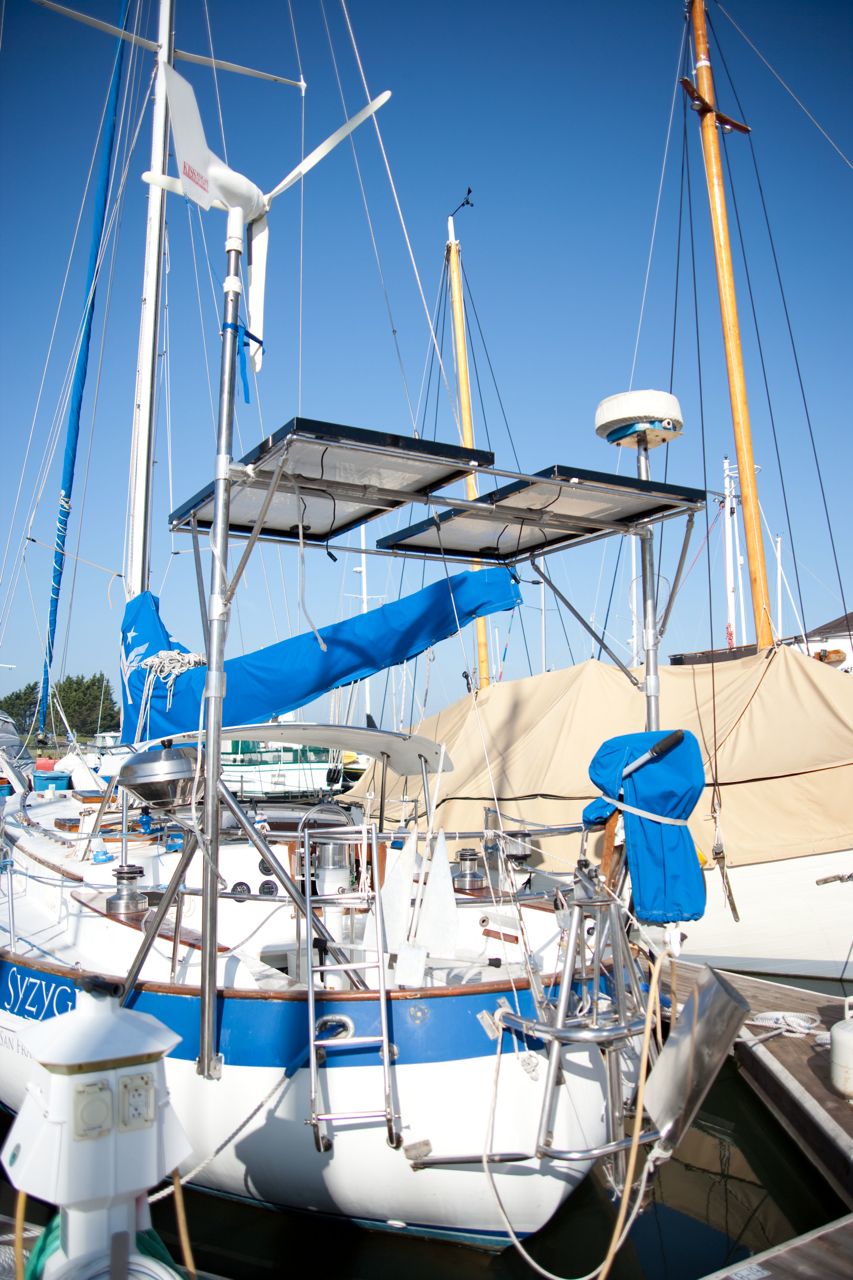
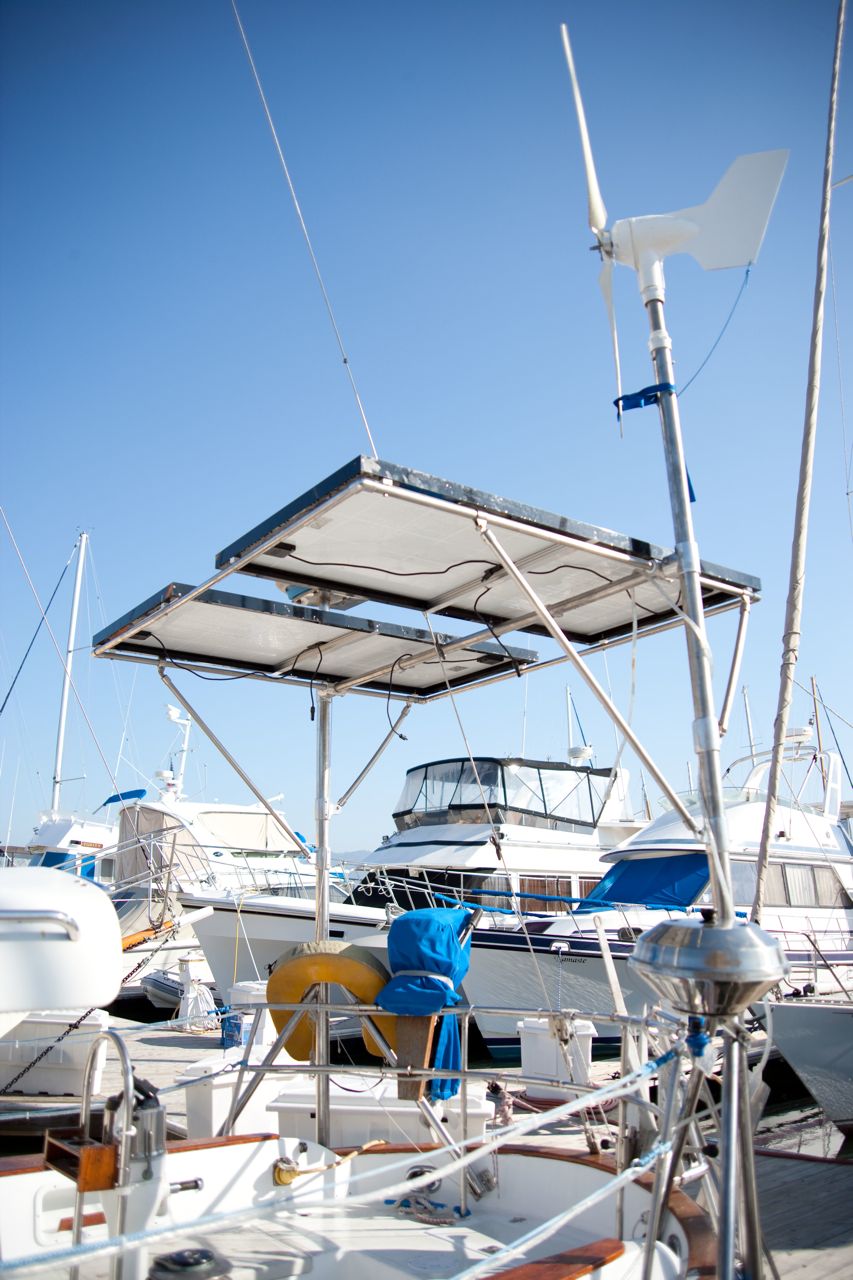
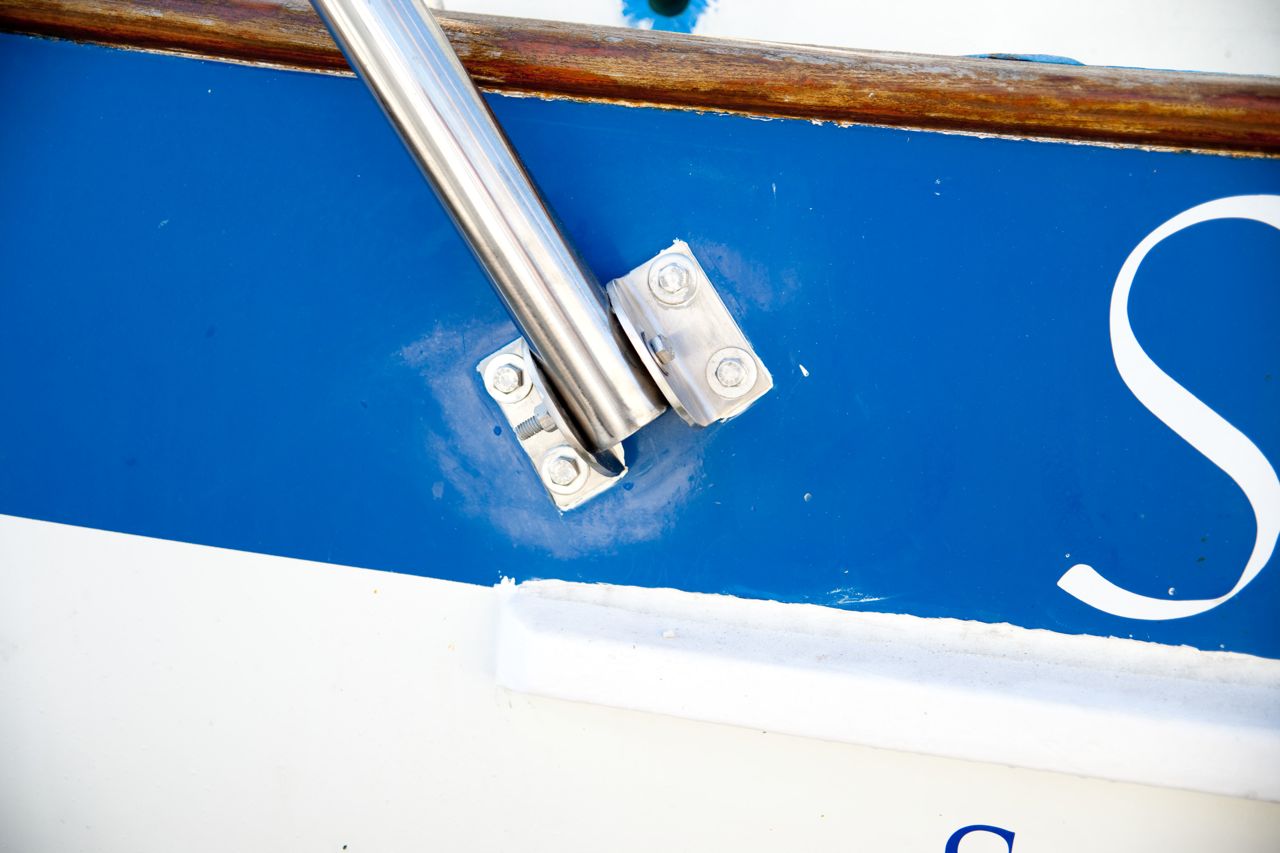
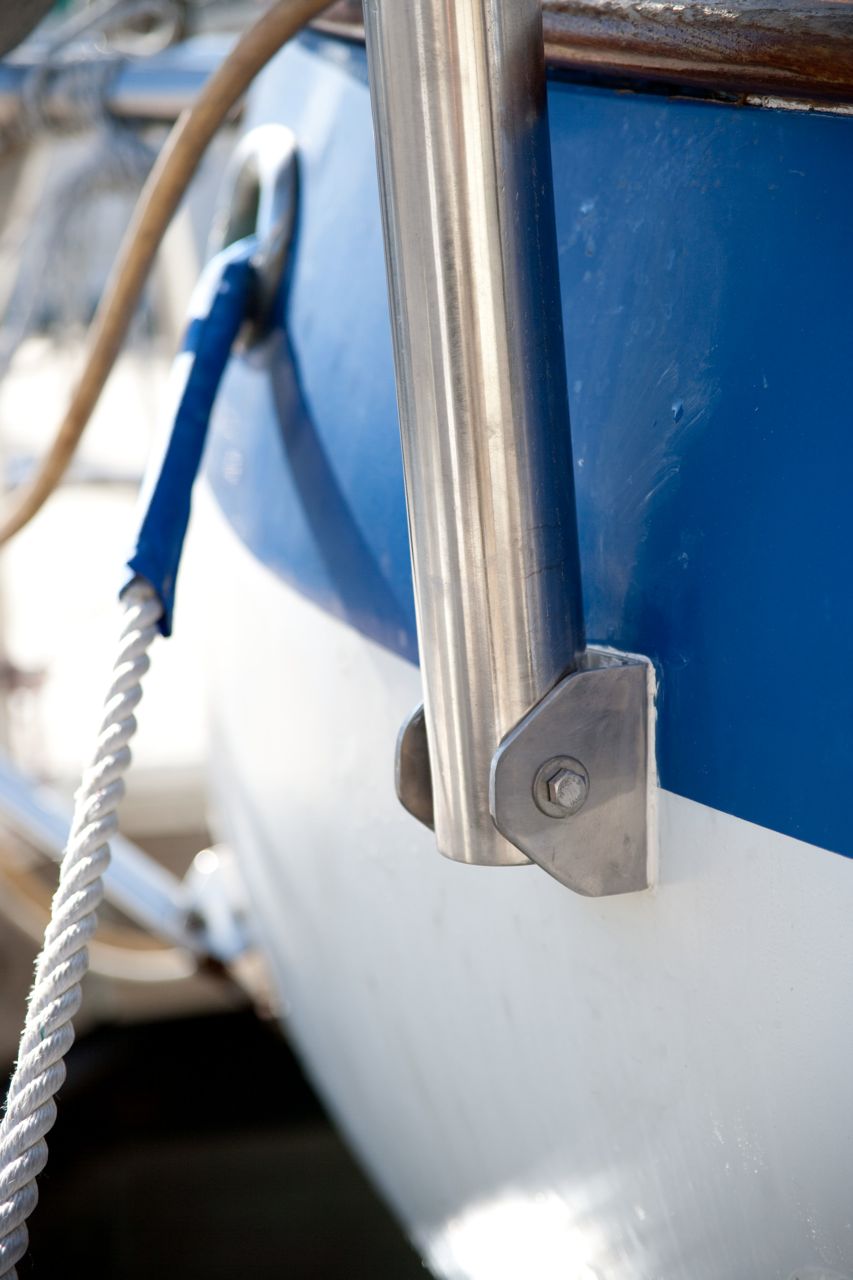
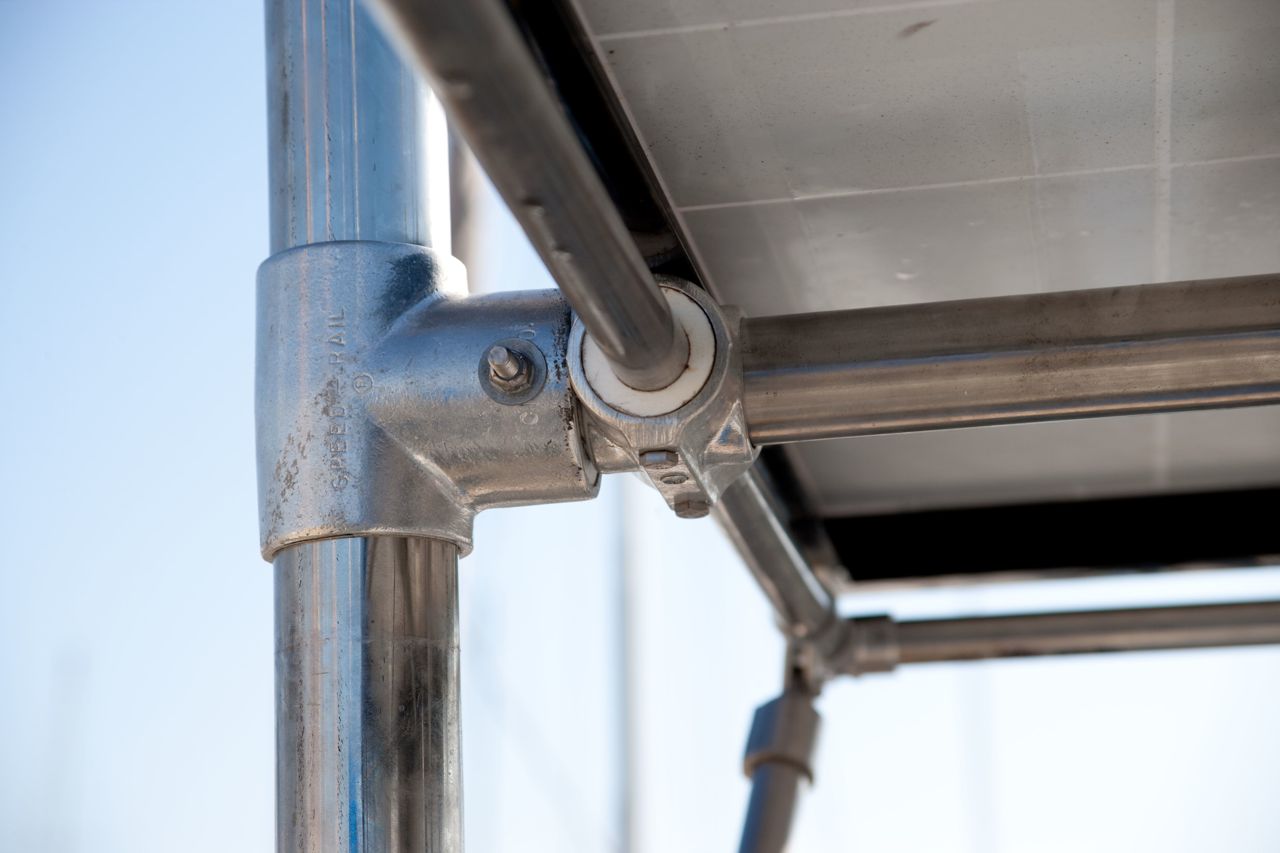
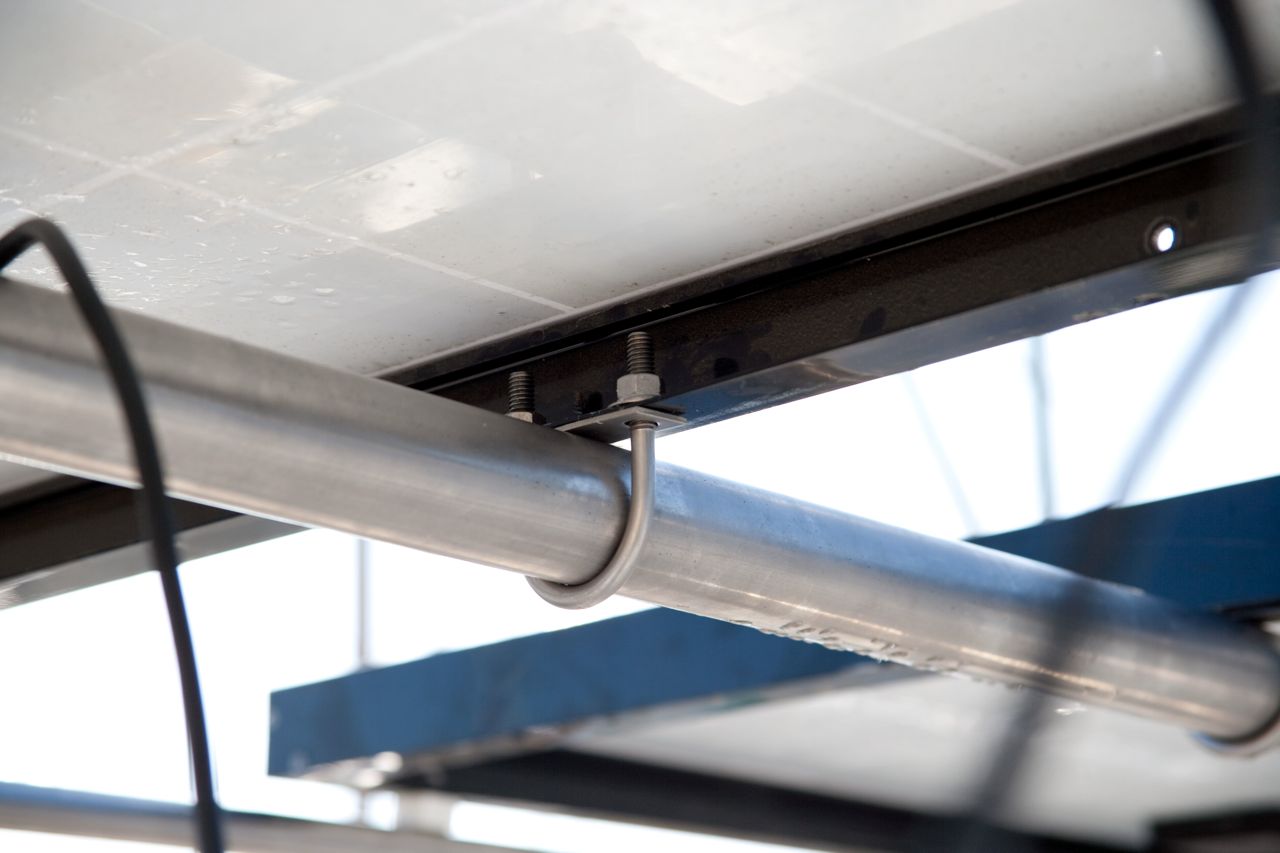
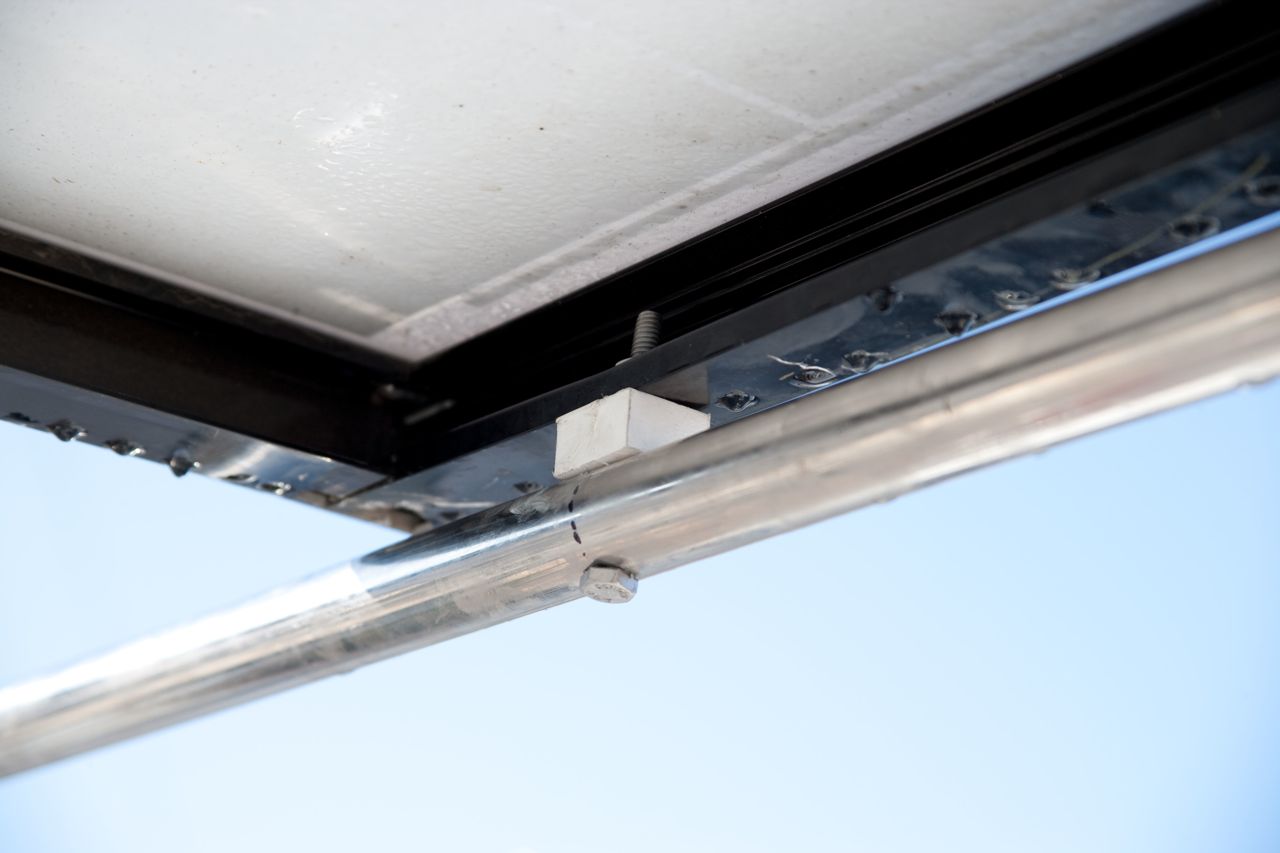
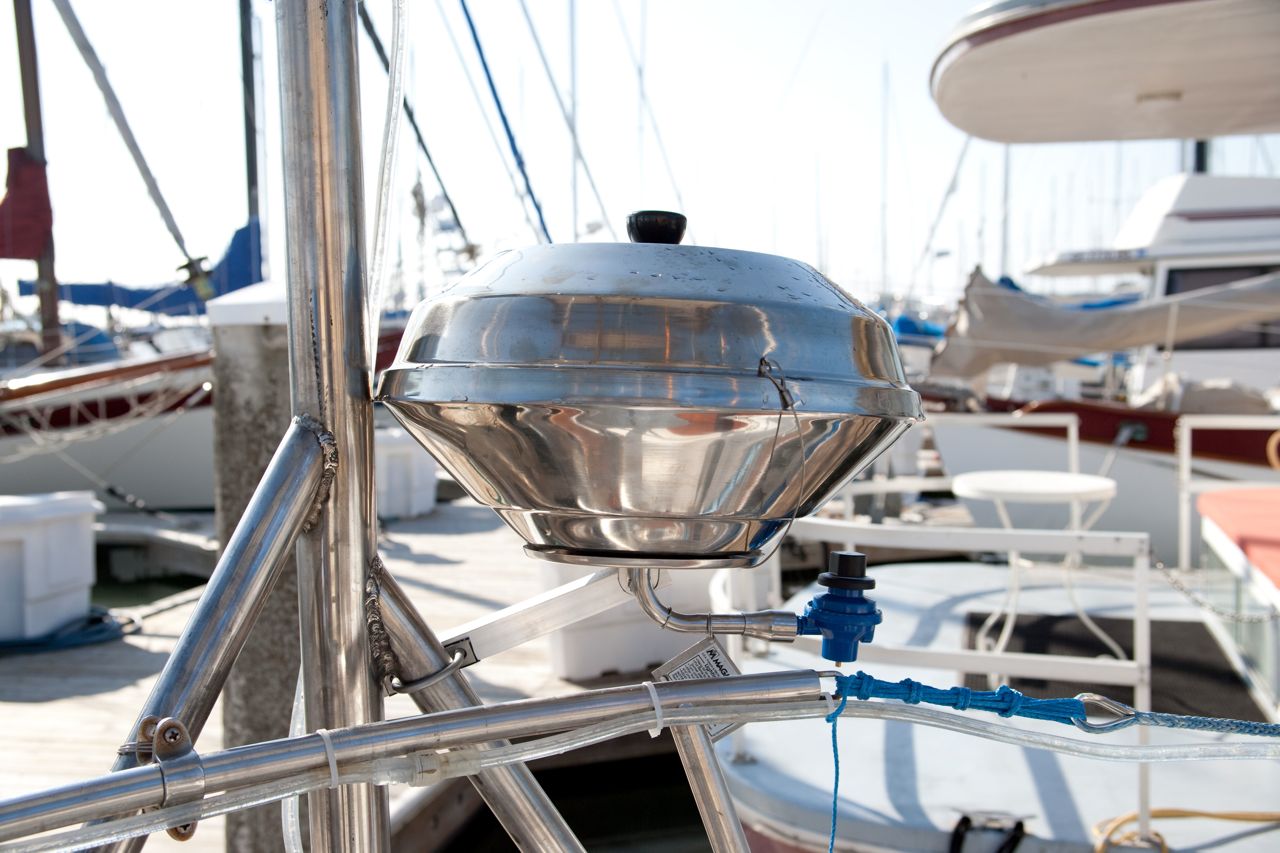
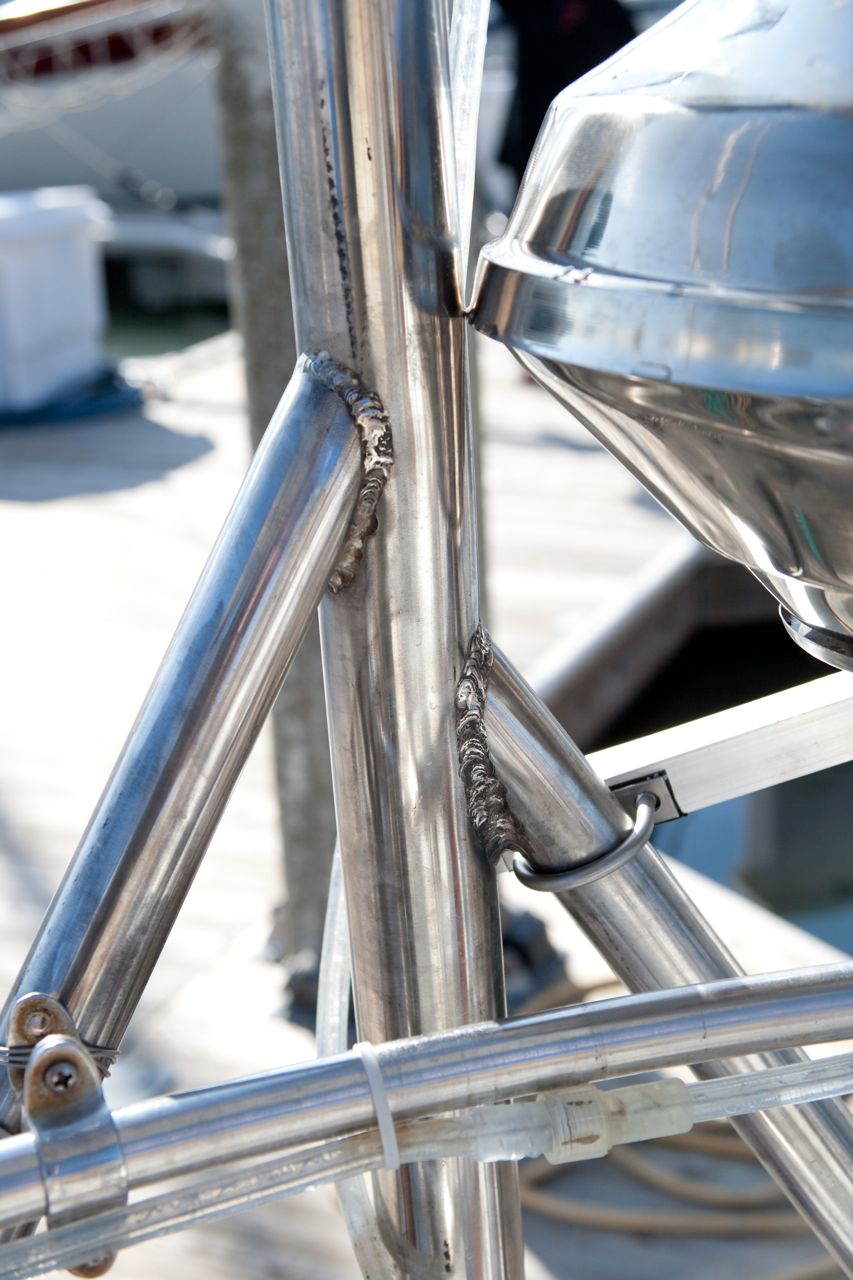
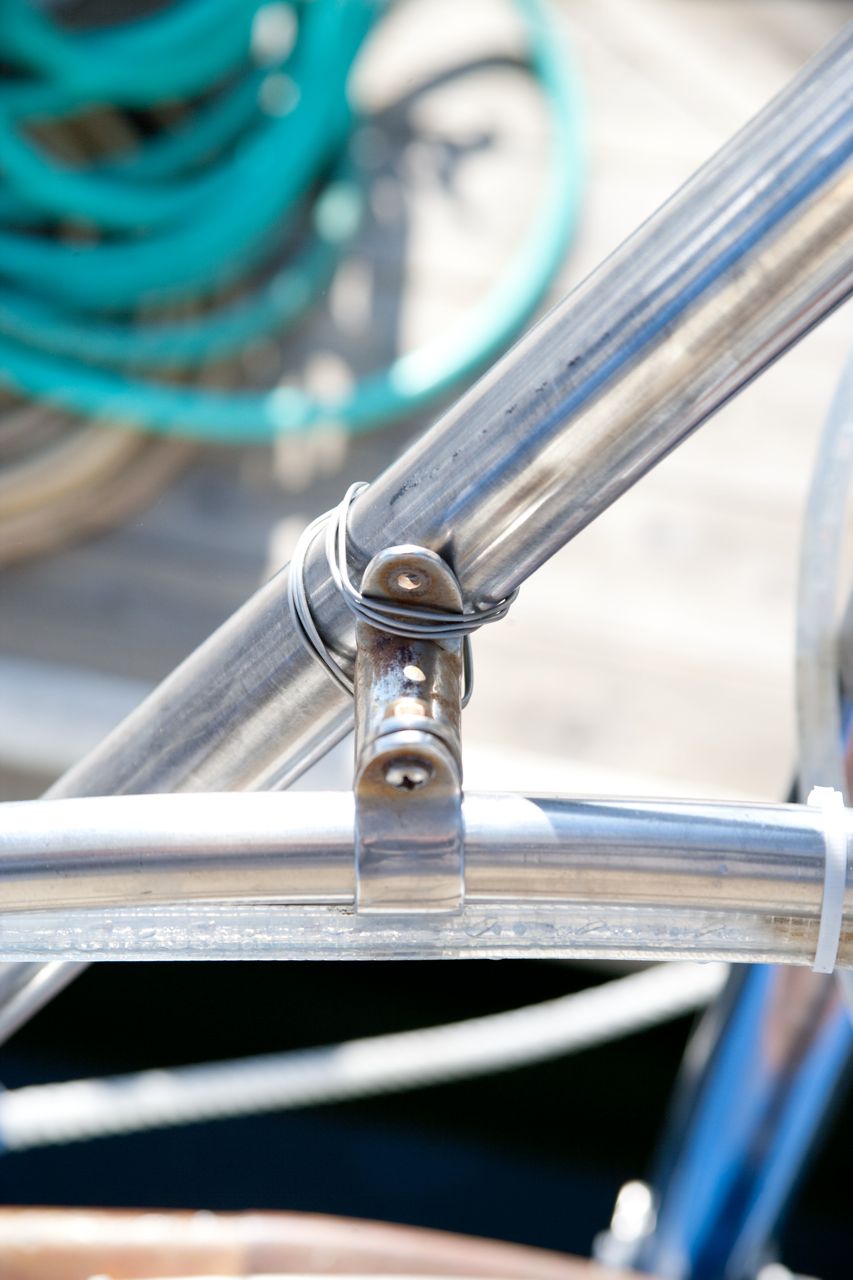
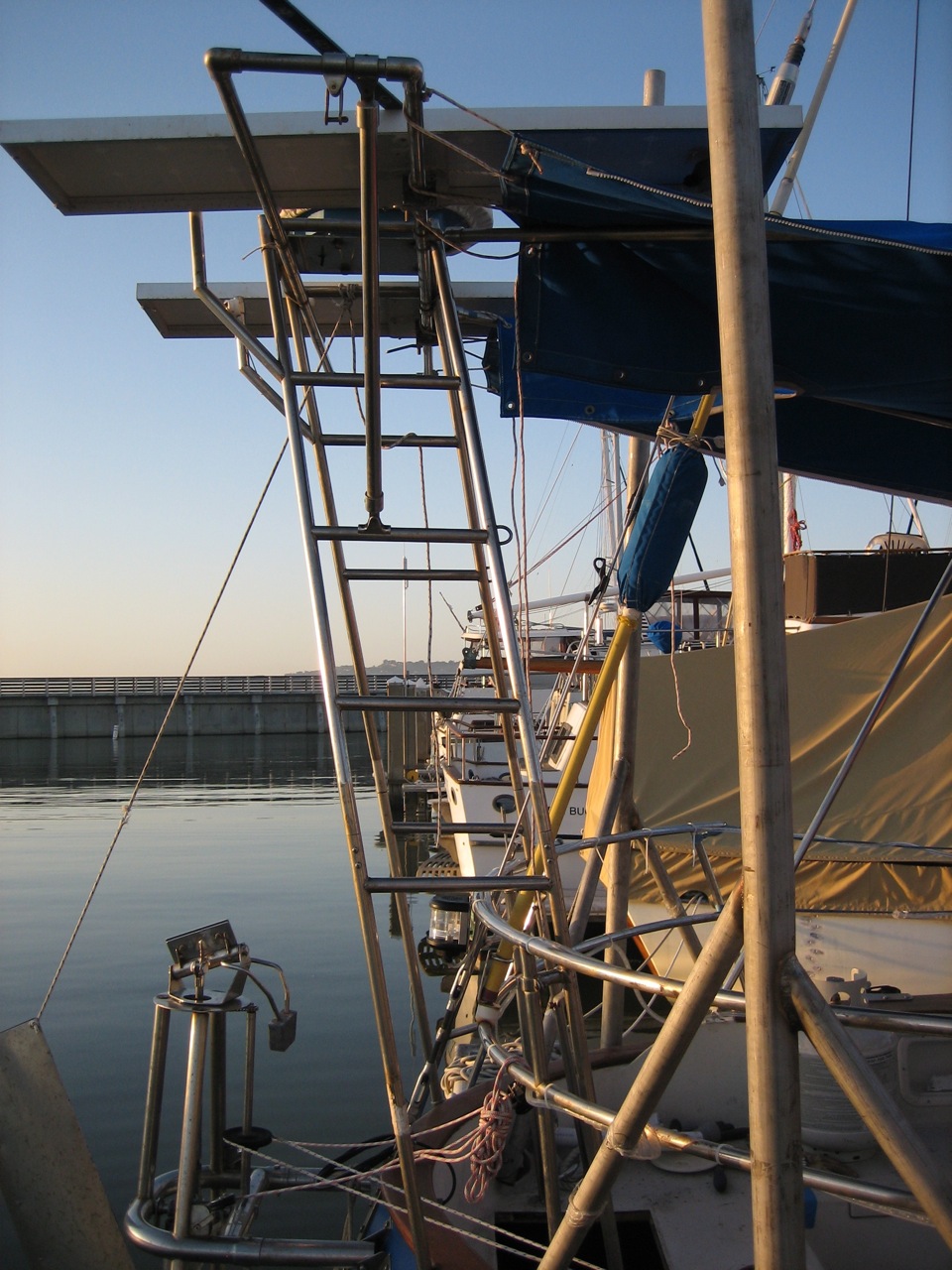
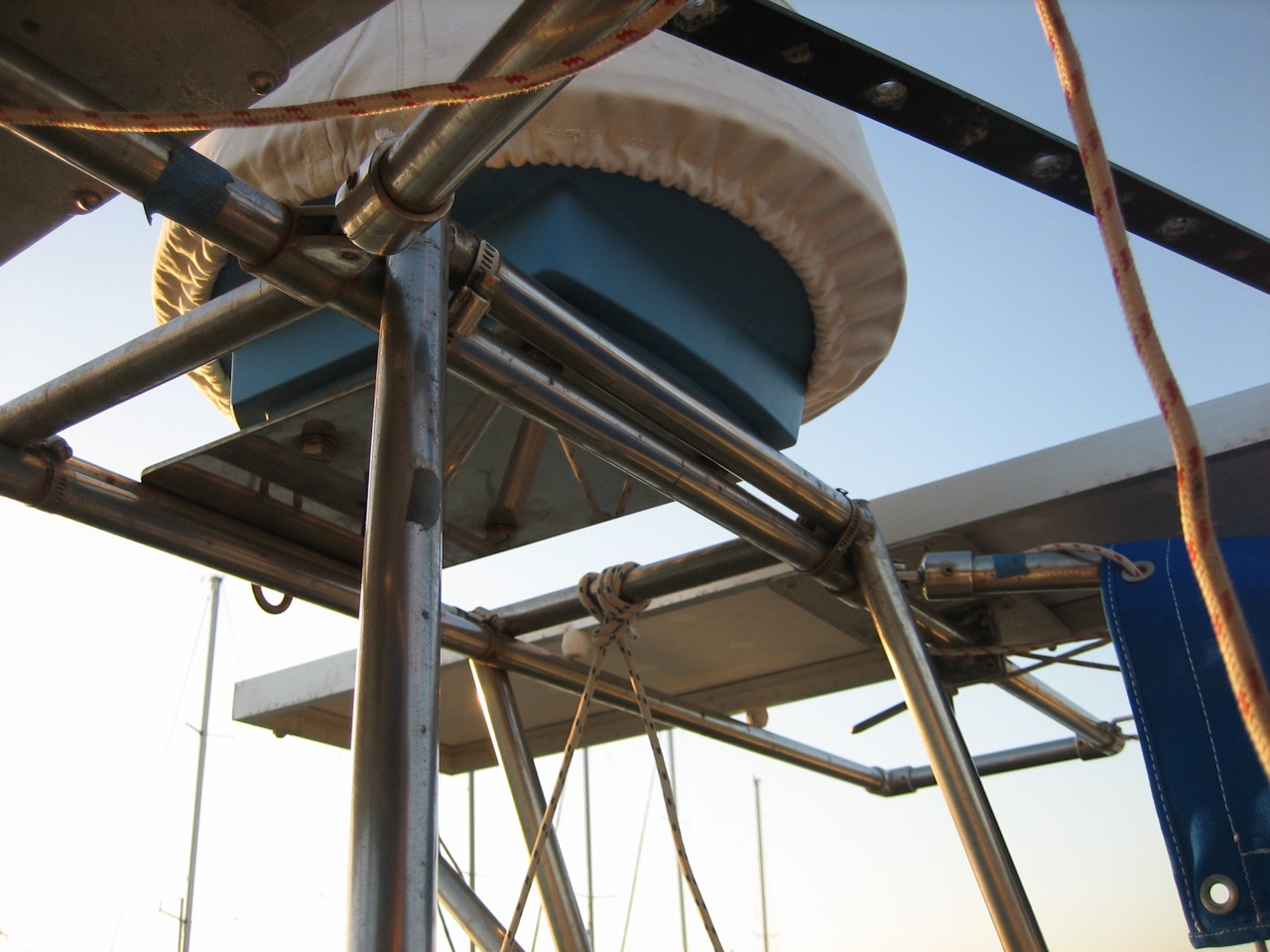
    Also, I included some additional photos detailing the arch mounting and construction.

  • Installed KISS wind generator

    I bid $600 for a three year old KISS wind generator on ebay, never thinking I would win it (the minimum bid was $600), but I did.  I was the only bidder; I believe it was because the seller didn’t want to ship it and was located in Pennsylvania (really nice guy though–Mike if you read this don’t worry I’m treating the wind generator to the usage it deserves!).  Conveniently, I happened to be driving back east to get married at the right time, so we just stopped off and picked it up.  Also conveniently, jonny ended up buying a car right before attending the wedding, so he was able to put it in his car to drive it back to the west coast.

    A few notes about the KISS: it is an AC alternator, so the power coming down the three lines out of the generator is three-phase AC.  The electrical box that is supplied with it is an on/off switch along with a rectifier.  Since the AC is more efficient than the DC, all other things being equal it is better to mount the electrical box closer to the batteries; i.e. use a longer run of cord for the AC and a shorter run after it is rectified to DC.

    When the switch is turned to the on position, the generator is under load producing amperage that is fed to the batteries (duh); when the generator is switched to the off position, the generator is shorted out such that it self-brakes.  This self-braking works only up to a certain wind-speed.

    There are thermal cutouts located in the alternator that will open-circuit the generator if it becomes to hot.  When the generator is open-circuited, the alternator can free-wheel and the blades can pick up speed.  As soon as the unit cools down enough, it restarts and puts the blades under load again.

    So, there are three possibilities: the unit can either be under load and feeding power to the batteries, shorted and braking itself as best as possible, or open-circuited and freewheeling.

    If the unit is free-wheeling faster than you are comfortable with (storm conditions), then you have to take a boat hook and use it to push on the tail to rotate the unit out of the wind.

    Other models of wind generator have more sophisticated safeguards in them to deal with excessive wind, and even built-in charge controllers to protect the battery from excessive current–I share the opinion of the KISS generator’s inventor, however, that those safeguards are not worth the additional cost and complexity.  If you understand how the generator works and how to deal with it in the infrequent situations that it is either producing too much power or speeding out of control, then I see no need to spend the extra money on extra stuff to break.

    I would recommend the use of Tef-gel on all the stainless to aluminum surfaces, i.e. the stainless bolts in the aluminum rotor hub, and the aluminum hub on the stainless rotor shaft–it seems to be by far the most lasting protection.

  • Fabricated new arch for radar, solar, wind generator

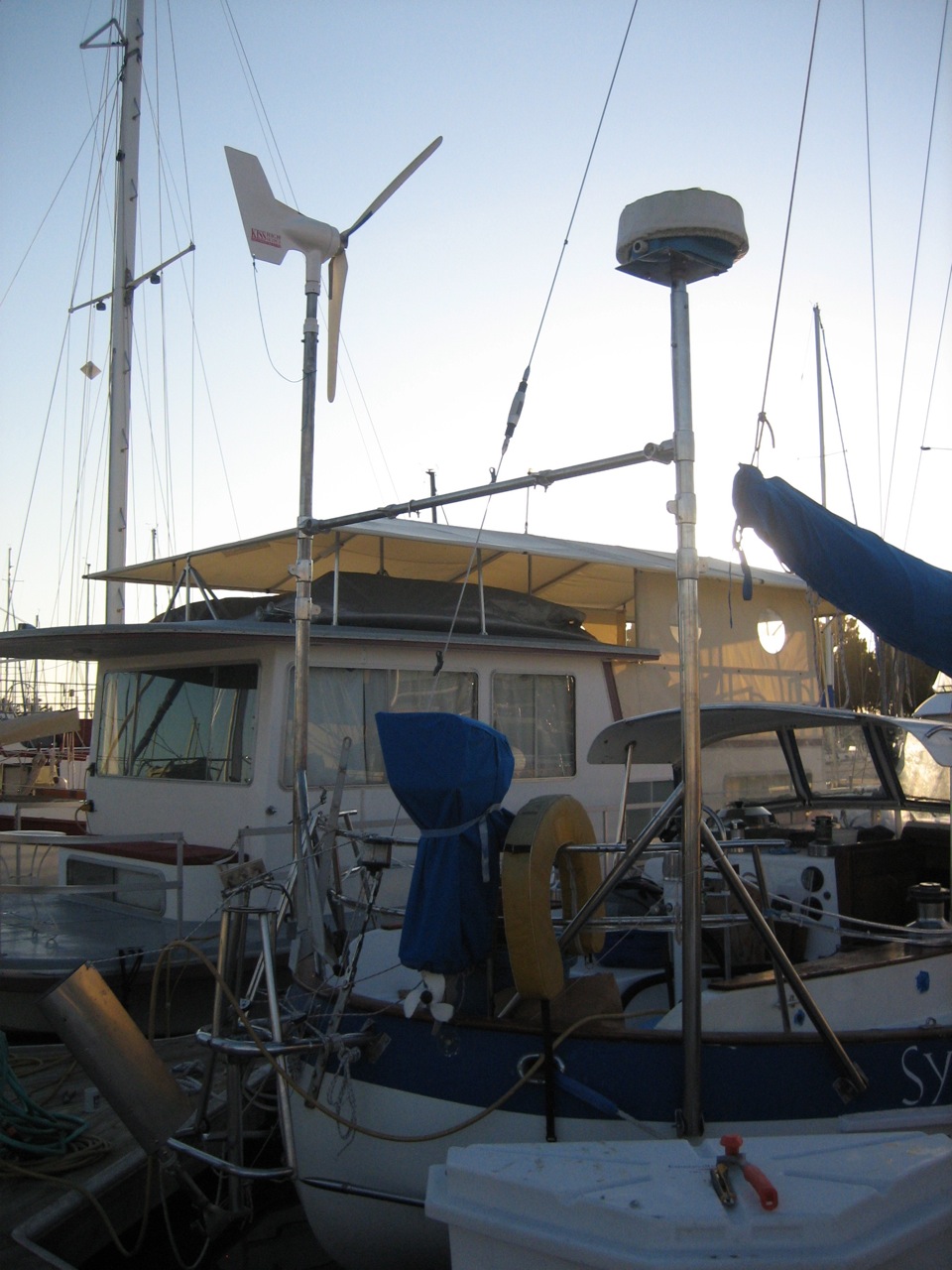
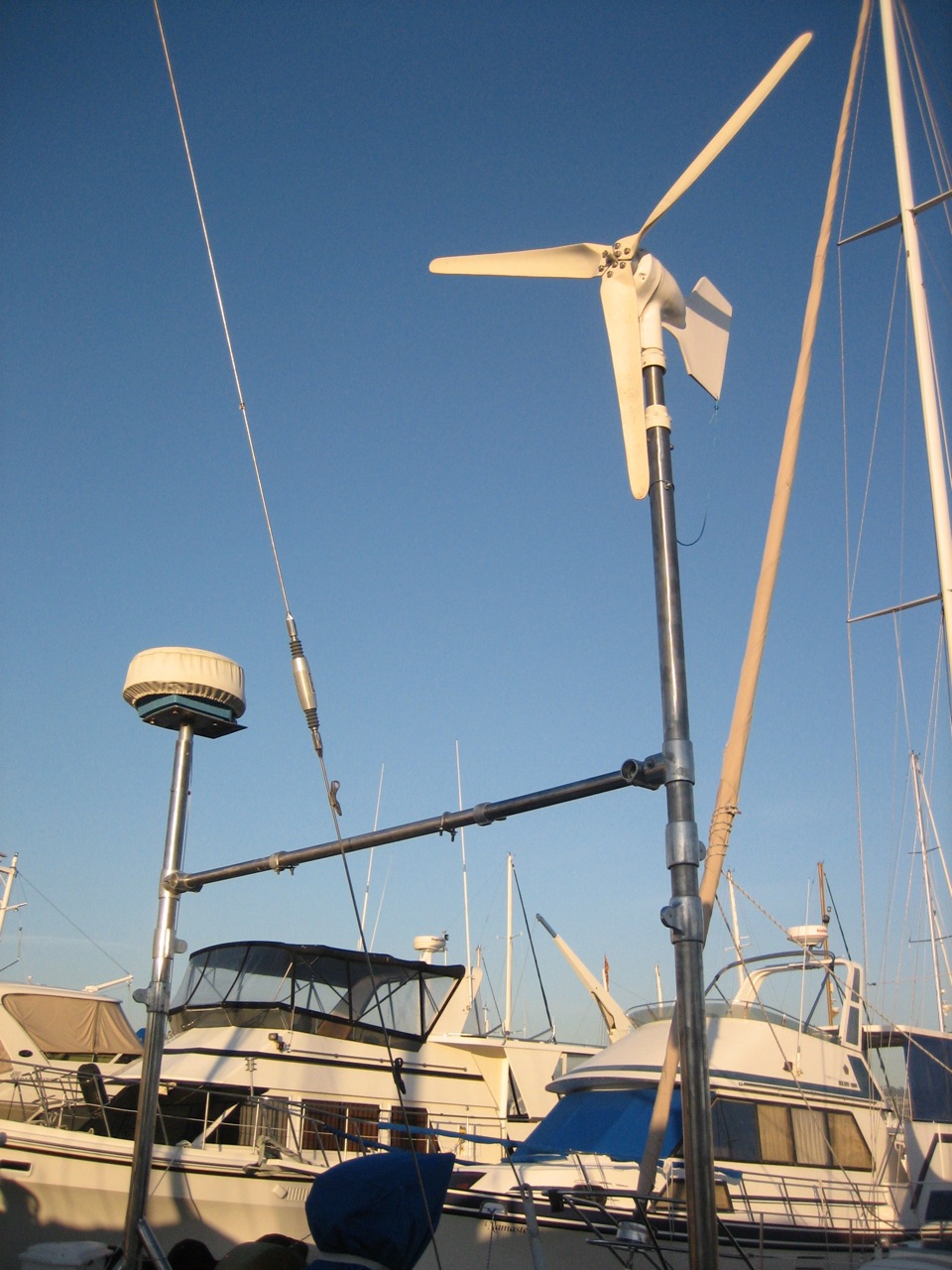
    The old radar arch on the stern was a lot of metal tubing accomplishing very little–a mount for the radar and two dinky solar panels.  We were going to need something more to mount our wind generator and larger solar panels anyway, so I got it in my head to build my own thing for the stern.  I envisioned two vertical poles, the wind generator on one and the radar on another, with a rectangular frame in between for the solar panels.

    First I was going to use aluminum, but I balked after my first attempt to weld aluminum ended with a weak joint in which I had no faith.  Then I was going to use cheap-ass galvanized pipe that you can get in any home depot.  But you have to be careful welding galvanized stuff–it’s poisonous when you burn it off–and it is only marginally corrosion resistant for a piece of metal that will be permanently mounted less than two feet from the salt water.  Then jonny convinced me to use stainless steel.  Initially I balked at that, because I knew that it would be ridiculously tedious to polish it up, and it needs to be polished up in order to be corrosion resistant.  But jonny convinced me by promising that he would do the polishing, and confidently proclaimed that it wouldn’t be that hard or take that long.

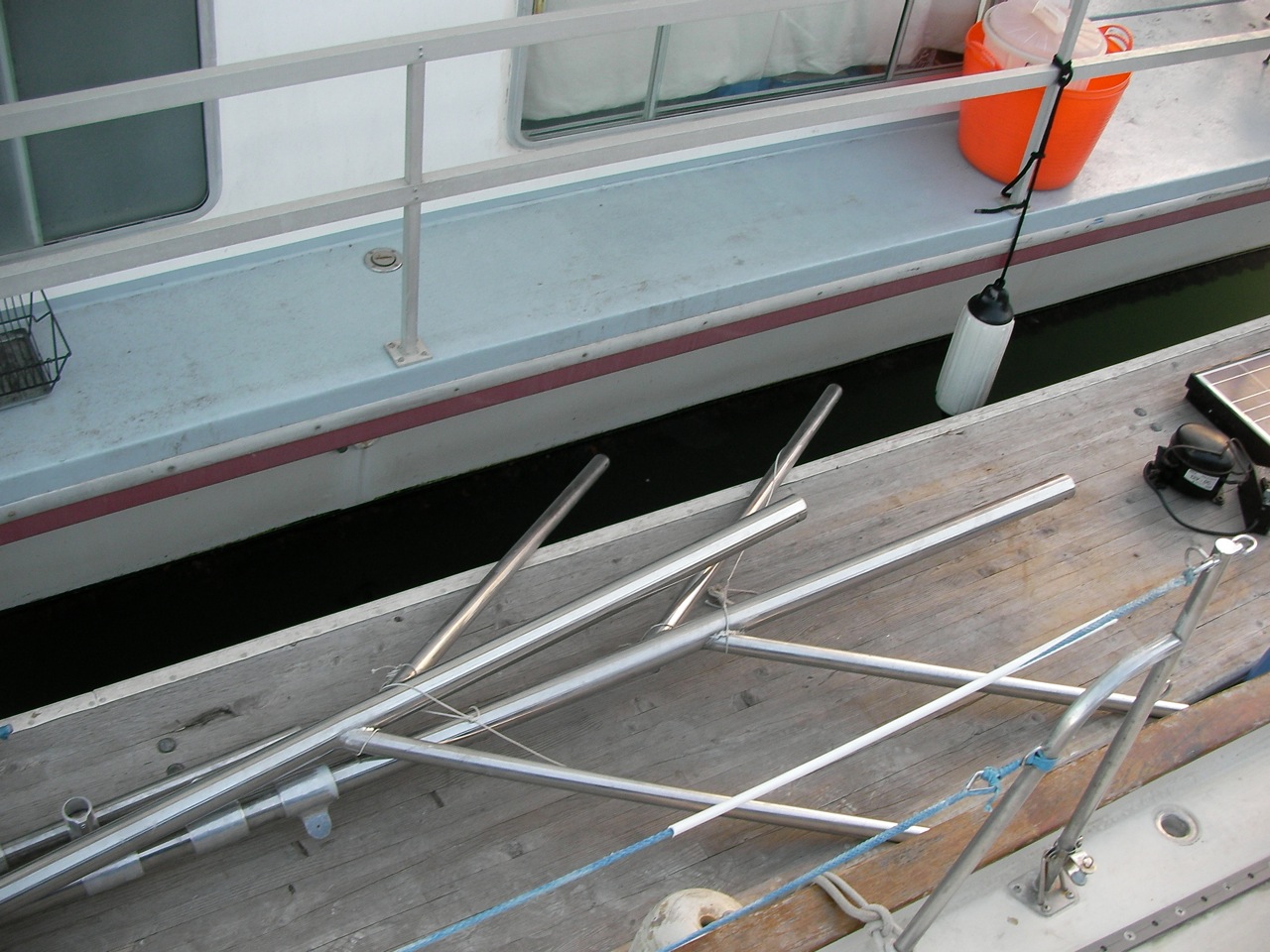
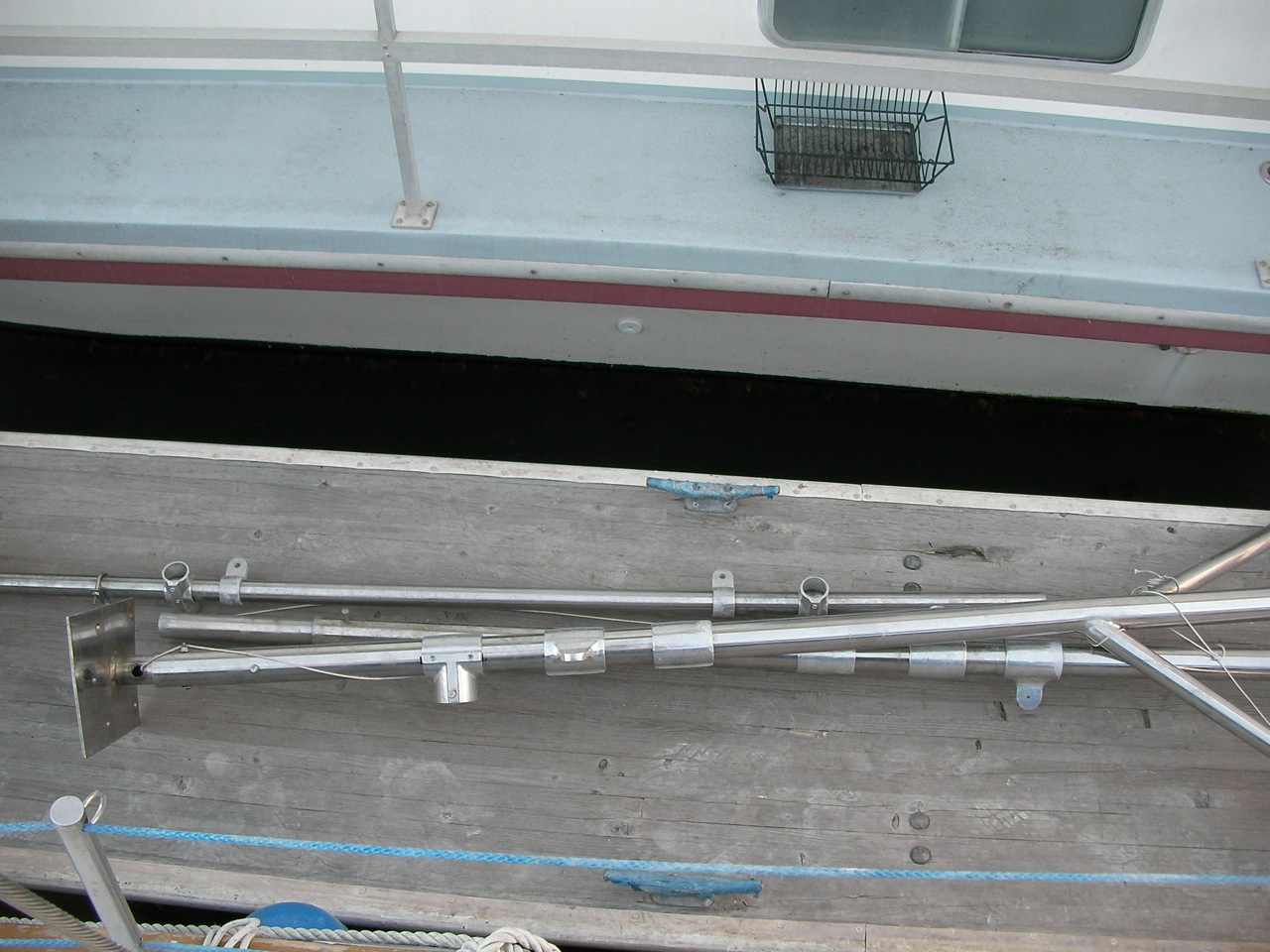
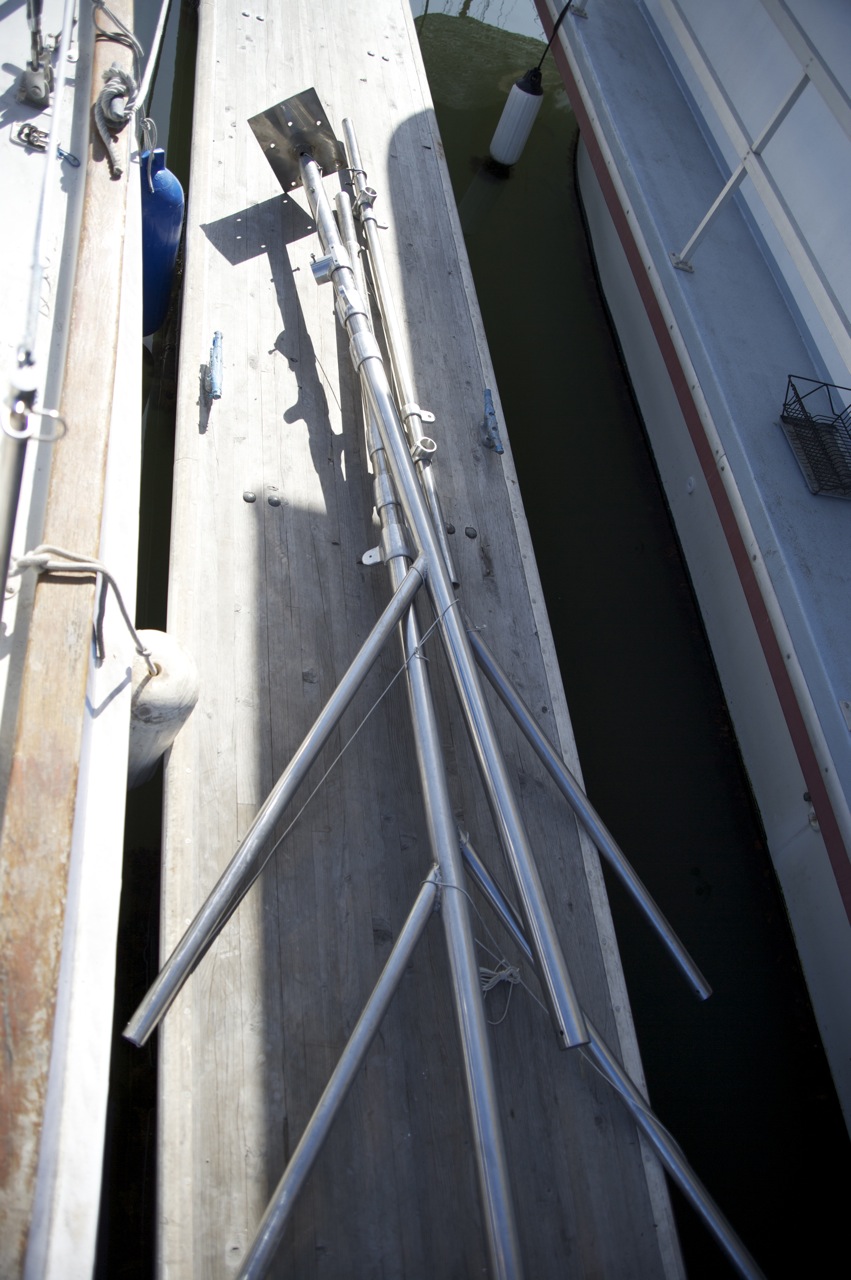
    Many months later, it is complete and polished and mounted.  For the past month the two poles have sat on the deck of the boat, waiting for me to finish the polishing job that jonny only half completed.  Can’t say that I was really surprised; half-assed is jonny’s m.o. for all things boat related, and overconfident proclamations come out of his mouth only slightly more often than I have been convinced to believe them–which is a failing that I am trying to rid myself of once and for all. If you have no intention to keep it for yourself, it’s time to start looking for the right boat dealers.

    Polishing the stainless was, as I predicted, a complete bitch.  We discovered via trial and error that the most efficient way to go from a flat matte grey finish to a mirror polish is to start with 220 grit sticky-backed sandpaper disks on the 7″ disc sanding pad on our milwaukee variable speed grinder (turned almost all the way down).  After sanding off all the matte grey, we used the stiffest buffing wheel we could find (the one with the most circles of stitching holding it together) combined with the coarsest rubbing compound–the type intended for “cutting or polishing of stainless steel”.  It takes absolutely FOREVER to get it to a decent polish.  In retrospect, I wish we had shopped around to hire the job out to some place.  Jonny did the majority of the work on them, then we mounted them temporarily to get measurements.  “Temporarily” turned into three weeks, and by that time there was already a patina of rust all over the areas of the pole that were not completely shiny.  It’s crevice corrosion, the bane of stainless steel; it happens wherever there is a scratch or a pit in the metal.  Keep it mirror shiny and it won’t develop a spot, but the rust will find the little scratches and make a home.

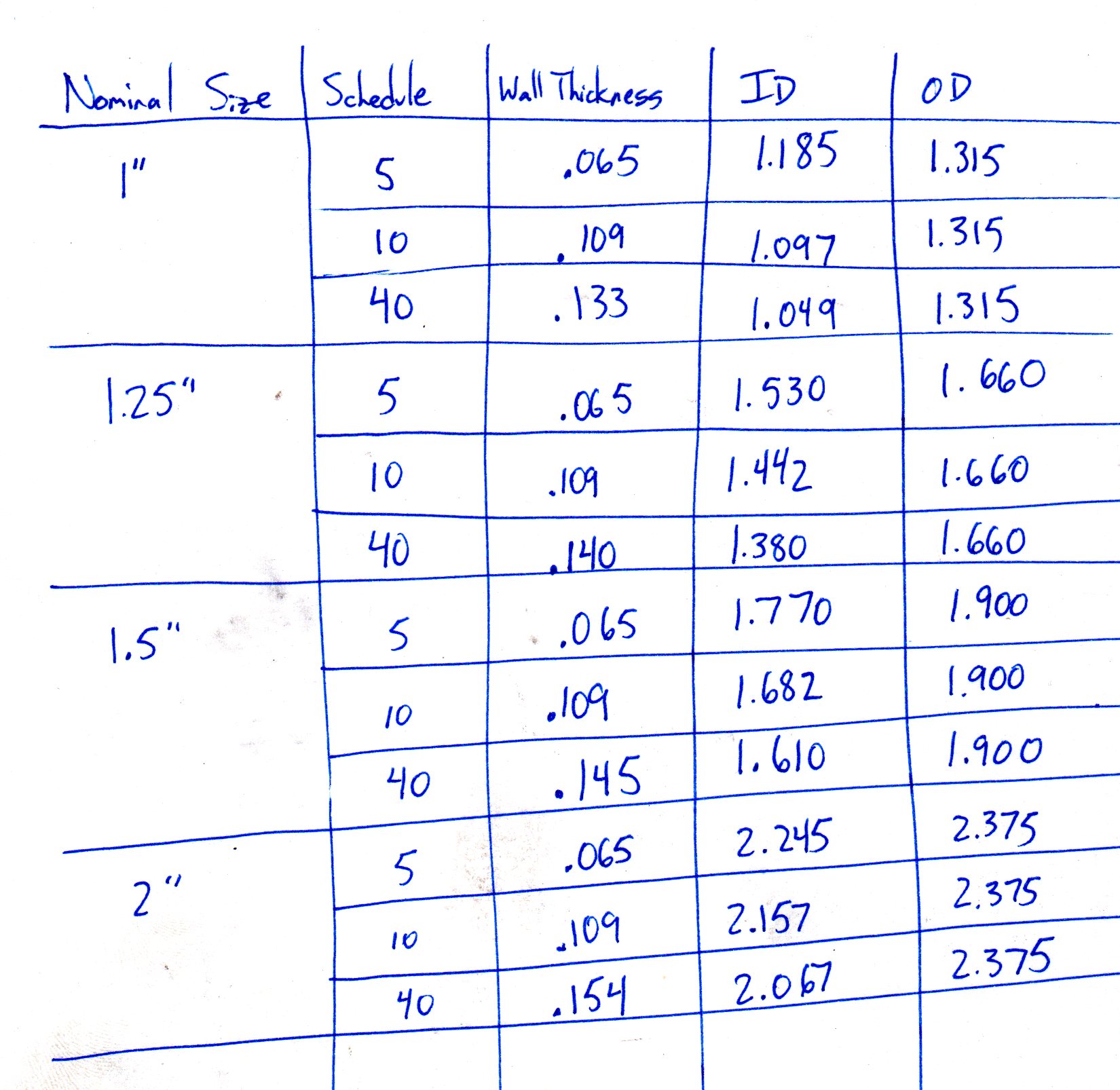
    I used 2″ nominal 304 stainless steel pipe, schedule 10 for the vertical uprights, obtained for a reasonable price (which I have blocked out of my memory because reasonable for stainless is still way too goddamned expensive) from Alco in San Leandro I think.  Pipe and tubing are measured differently.  2″ tubing has an outside diameter of exactly 2″.  2″ nominal pipe, schedule 10 (refers to a thickness of .109″), has an outside diameter of 2.375″ and an I.D. of 2.157″.  I used 1.25″ dia. nom. pipe for the support legs and the crossbar, and the top pipe inserts on which the radar and wind generator are mounted are 1.5″ nom. pipe.  All schedule 10, since that’s the thinnest I could get and isn’t as thin as I wish it would have been.  I made myself a little chart to keep track of all the diameters, because no one could ever identify their pipe for me so I had to carry around a set of calipers and measure them for myself:

    NominalPipeChart007

    I decided on a vertical post on each side, each supported by two struts.  I didn’t want the struts to rise above the height of the pulpit–a style consideration, I just didn’t want all that metal blocking the view or experience aft of the boat.  That, and I knew it wasn’t necessary for strength (especially considering how crazy strong the pipes are that we’re using).
    Jonny and I spent a whole morning fucking around with cardboard tubes and protractors trying to determine the exact angle that the struts needed to make (in both the horizontal and vertical planes around the vertical poles).  We used the average of all our measurements, and then I used the diameters of the two pipes and the angle between them to print out a “coping” diagram to use for cutting off the pipes, from this sweet website.  You print out the curve on a piece of paper, cut it out, wrap it around the pipe, then use a sharpie to draw the line on the pipe.  Then take the cutoff blade (or 5 of them) and a grinder, and painstakingly cut the pipe to match that curve.  Afterwards, the strut will rest against the vertical pipe just right.  Remarkably, it actually worked, and really well at that.

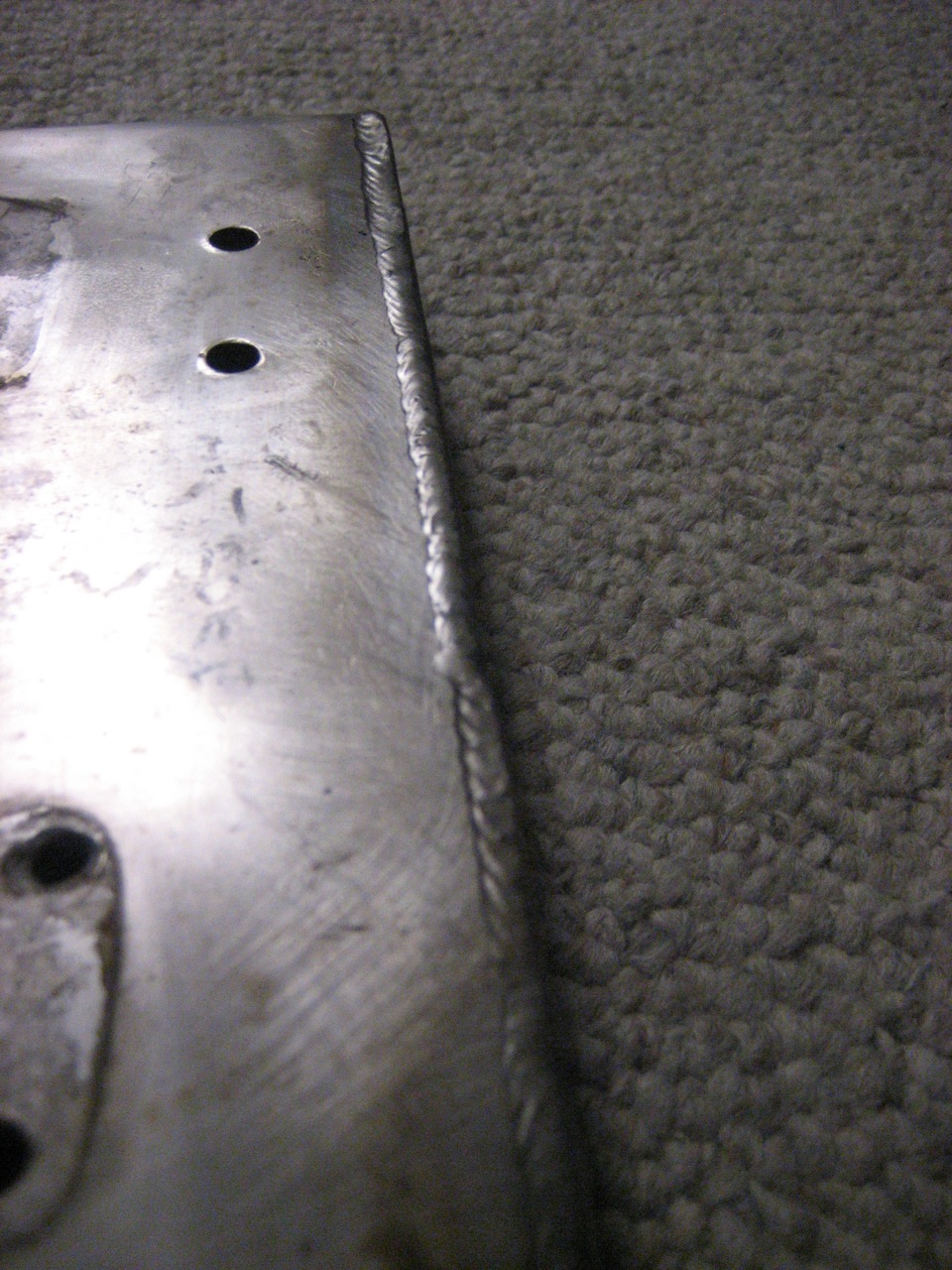
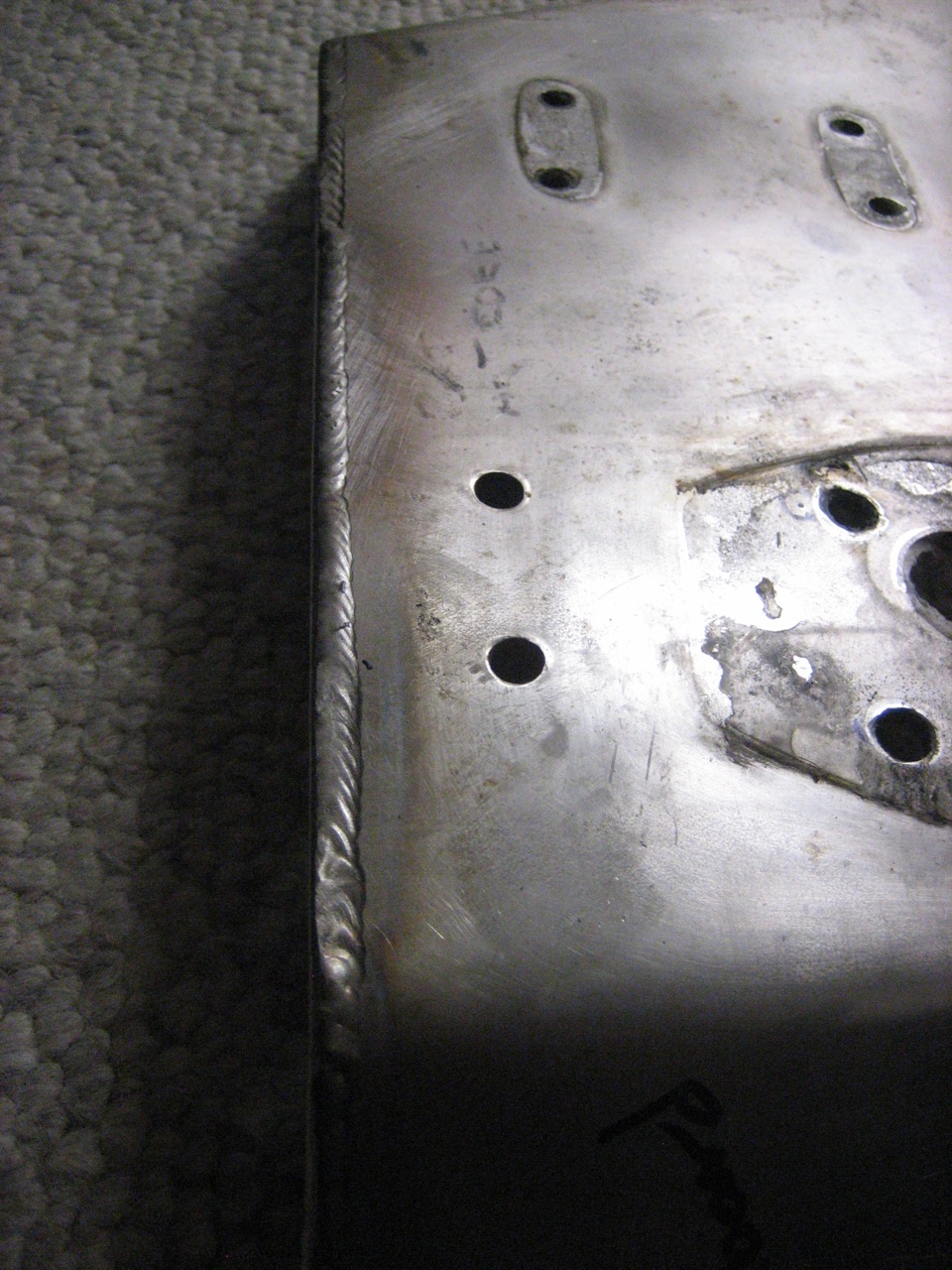
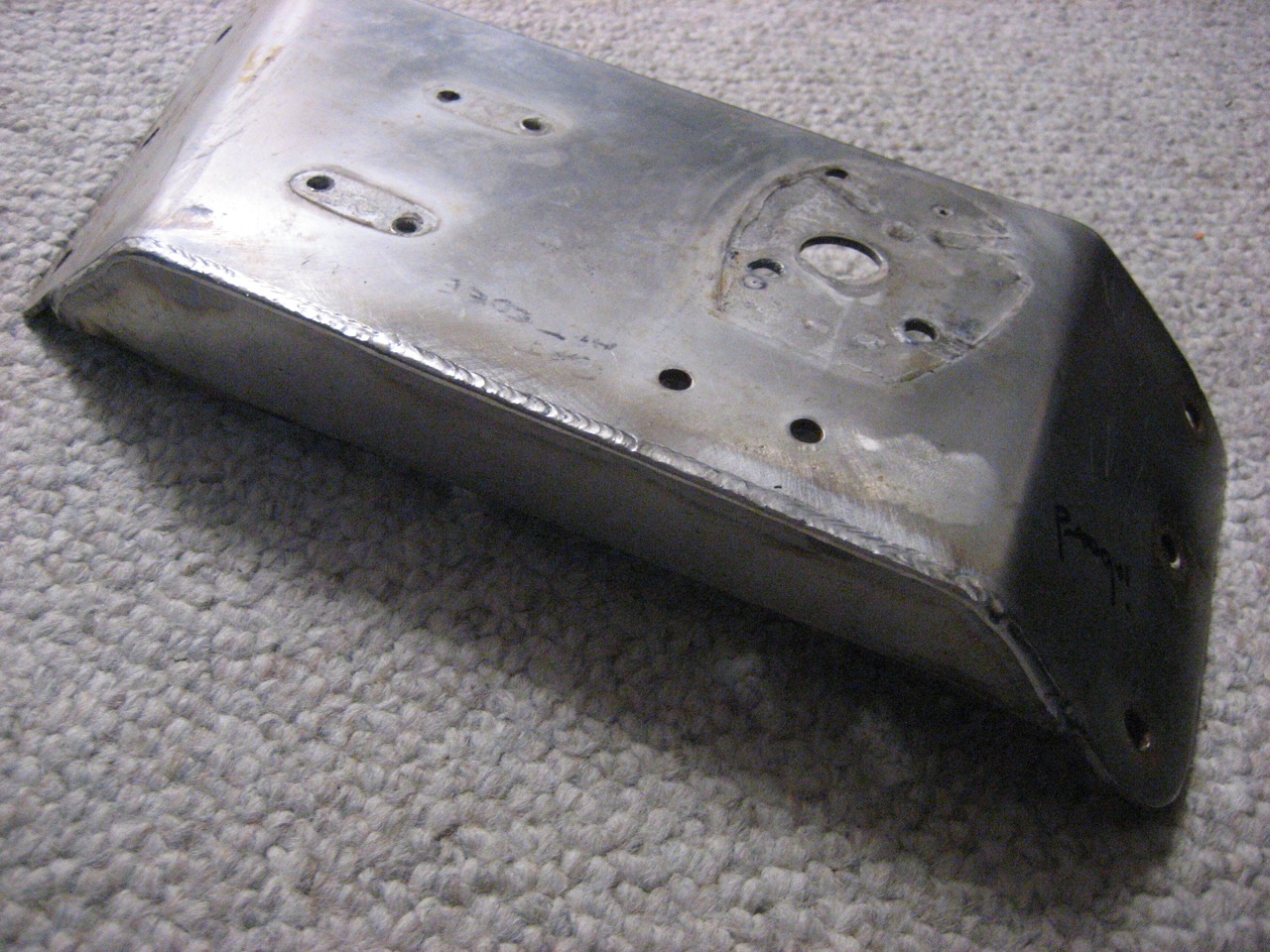
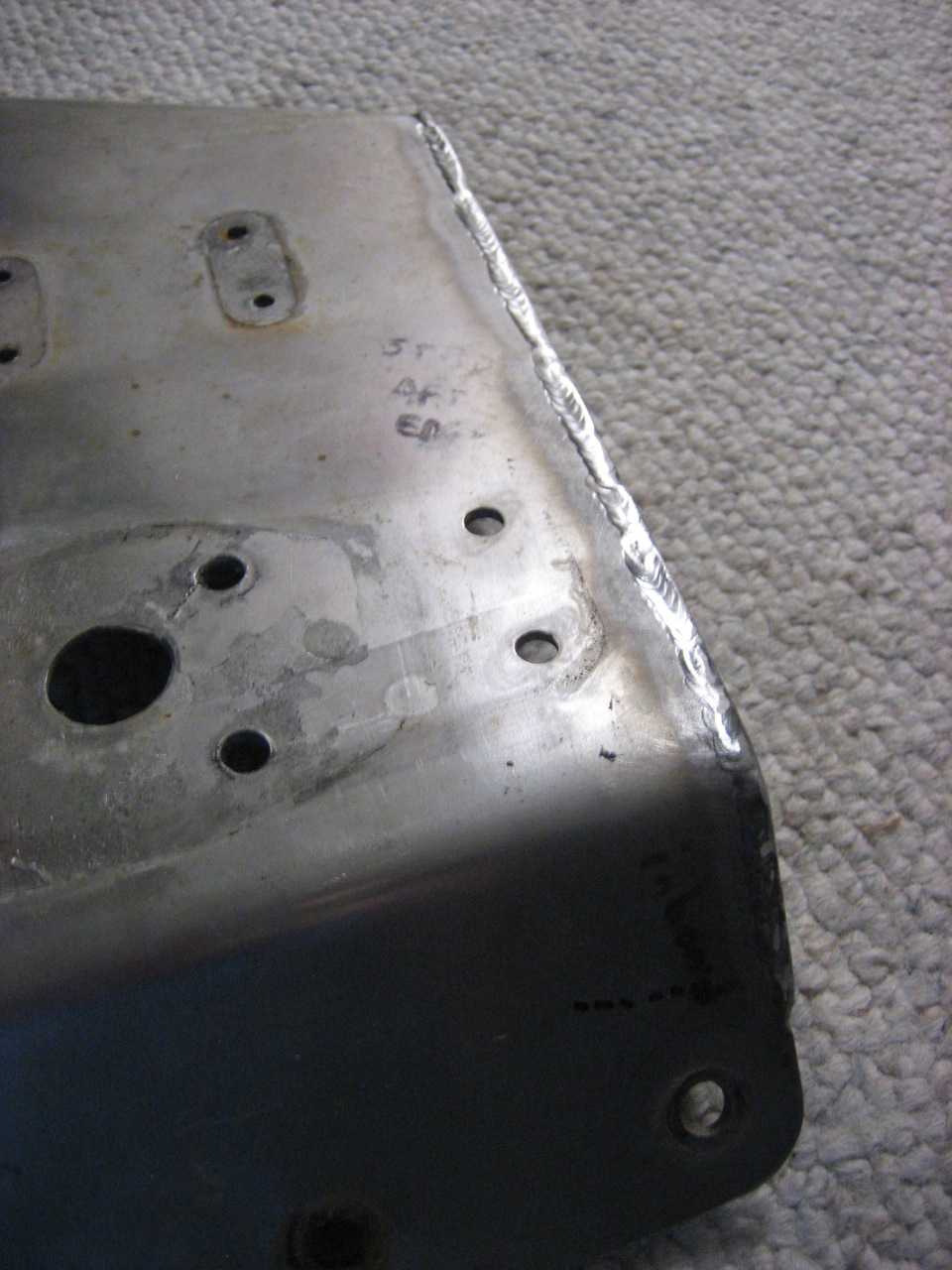
    Then I welded the struts to the vertical poles at the tech shop.  Essentially I learned to TIG weld just for this project, so I don’t have very much experience.  And it shows.  The weld job I did is acceptably strong, I hope, but it isn’t pretty and it is far from admirable to those who know welds.  In a nutshell, I went over it too many times, trying to make it look nice, and in the process heated the metal too much, causing the weld to be weaker and more prone to corrosion than it otherwise would be.  I’m not too hard on myself for it, because it’s still pretty good considering how little experience I have.

    I’m glad I was so anal about measuring the angles accurately, because the poles just barely fit in place.  In truth, on one side we needed to fabricate a shim to go between the strut and the hull because I didn’t get it quite right.  It was a tall order to get it even as close as we did, so I’m just thankful that it works.

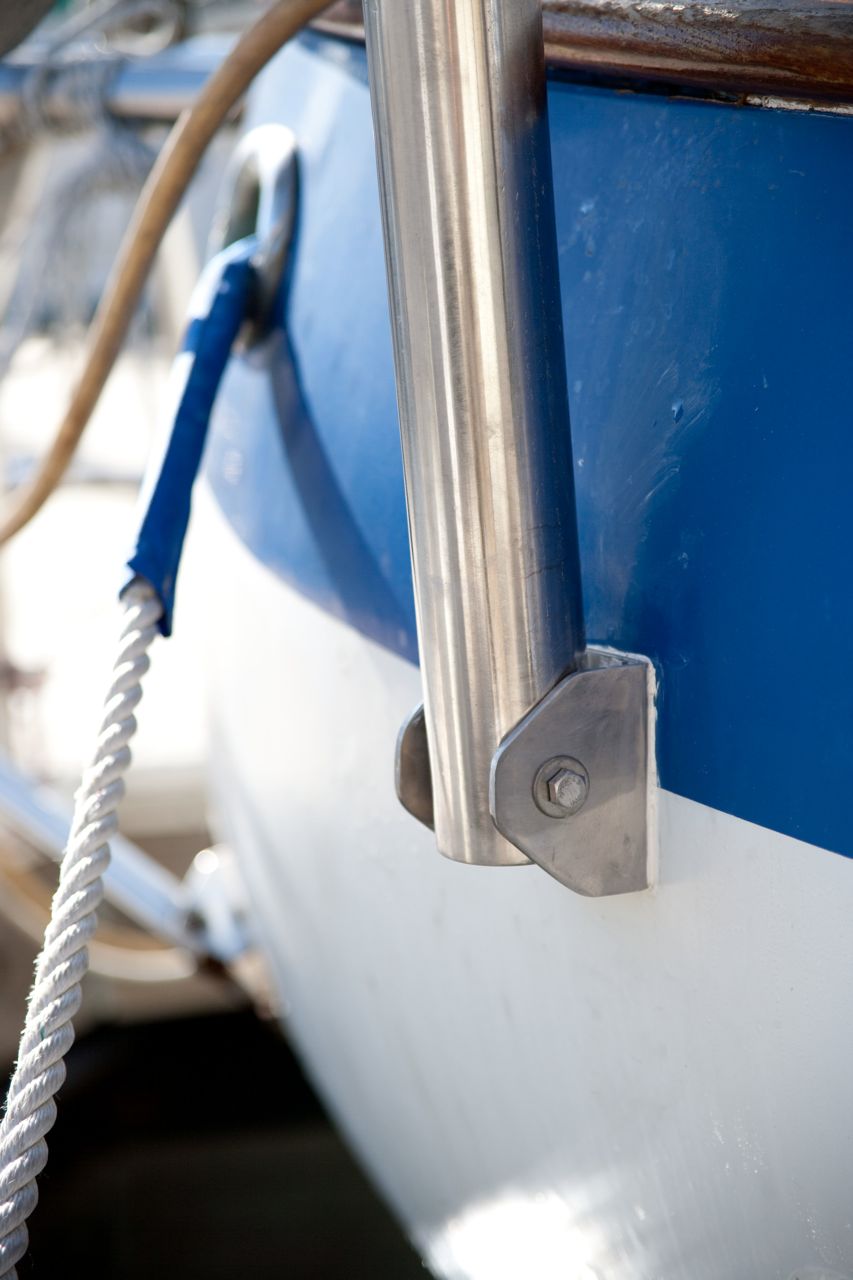
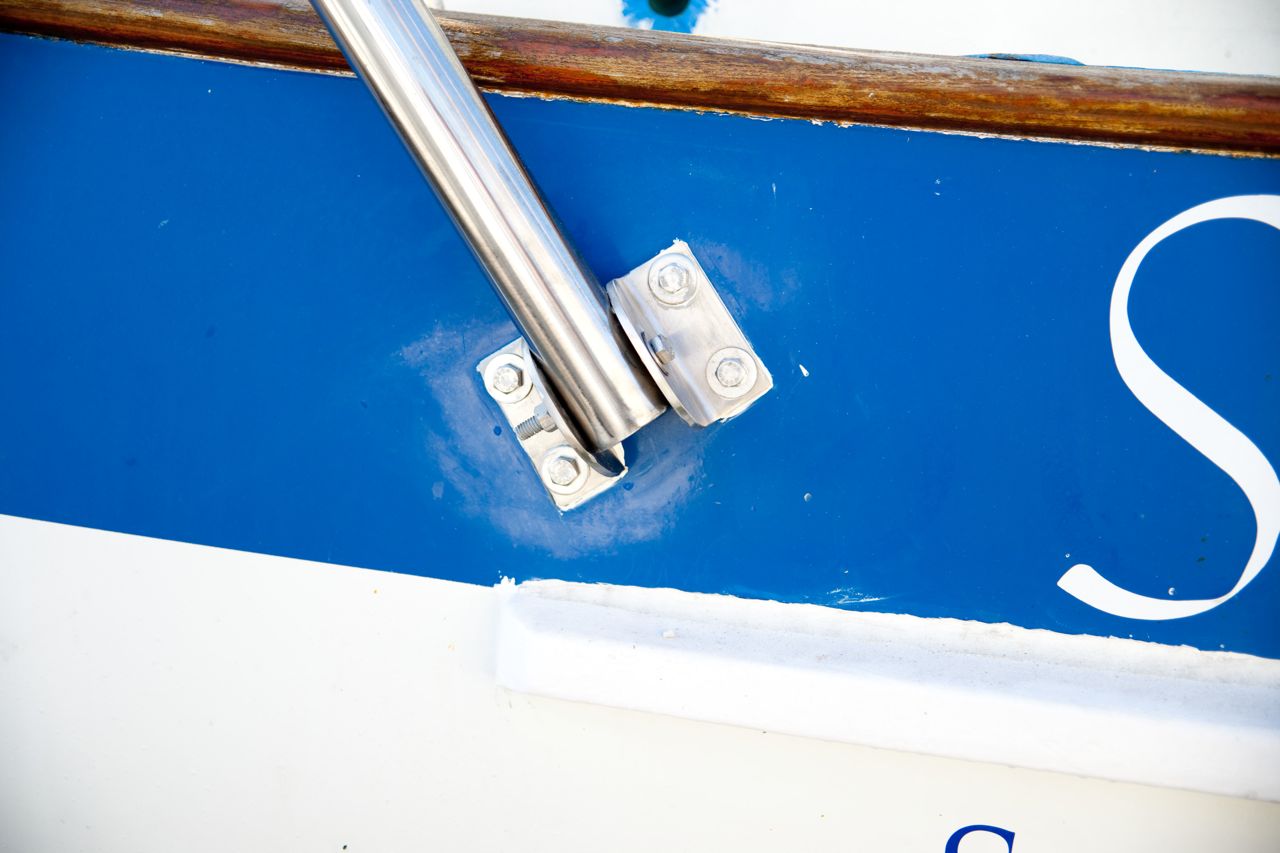
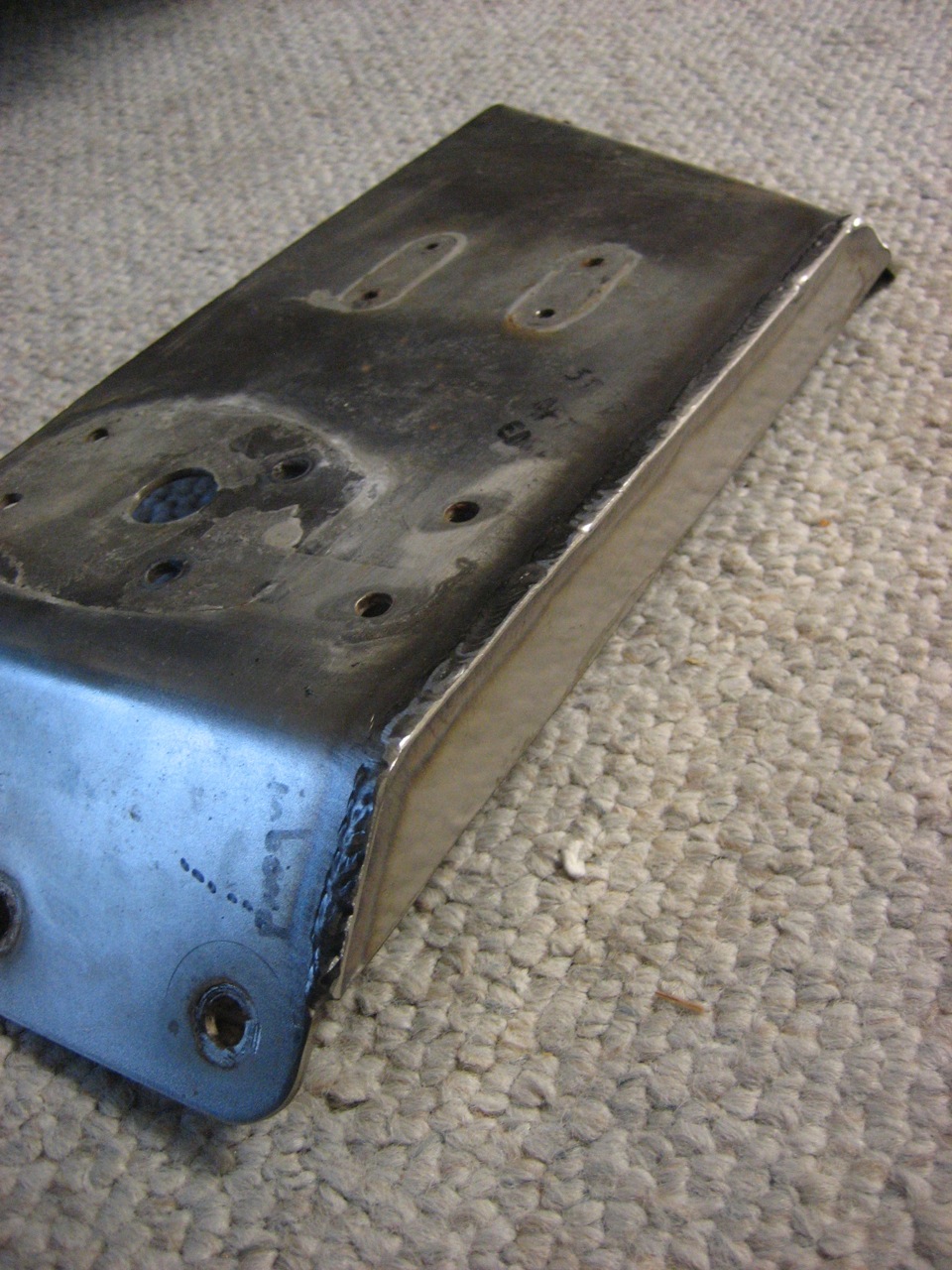
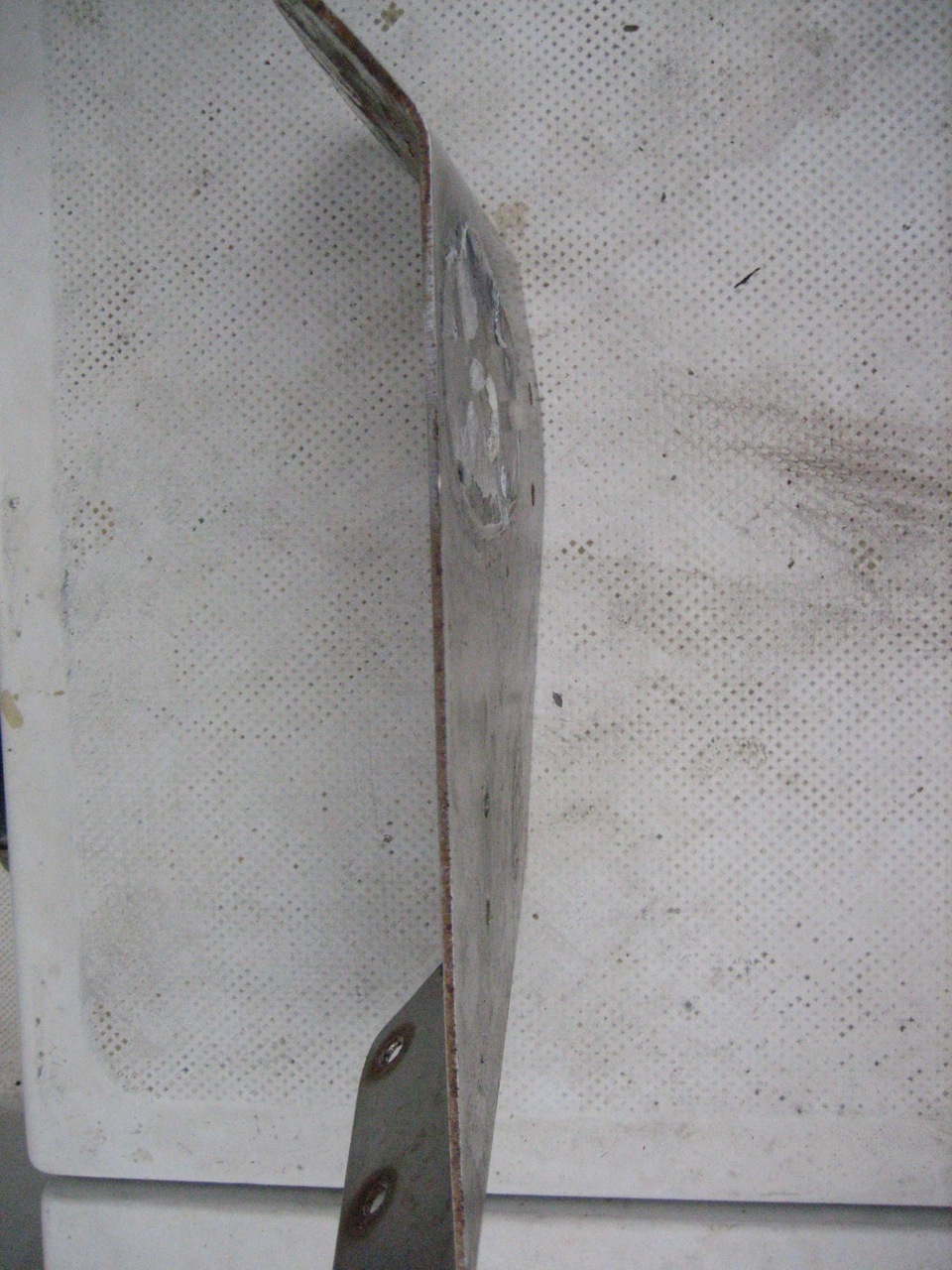
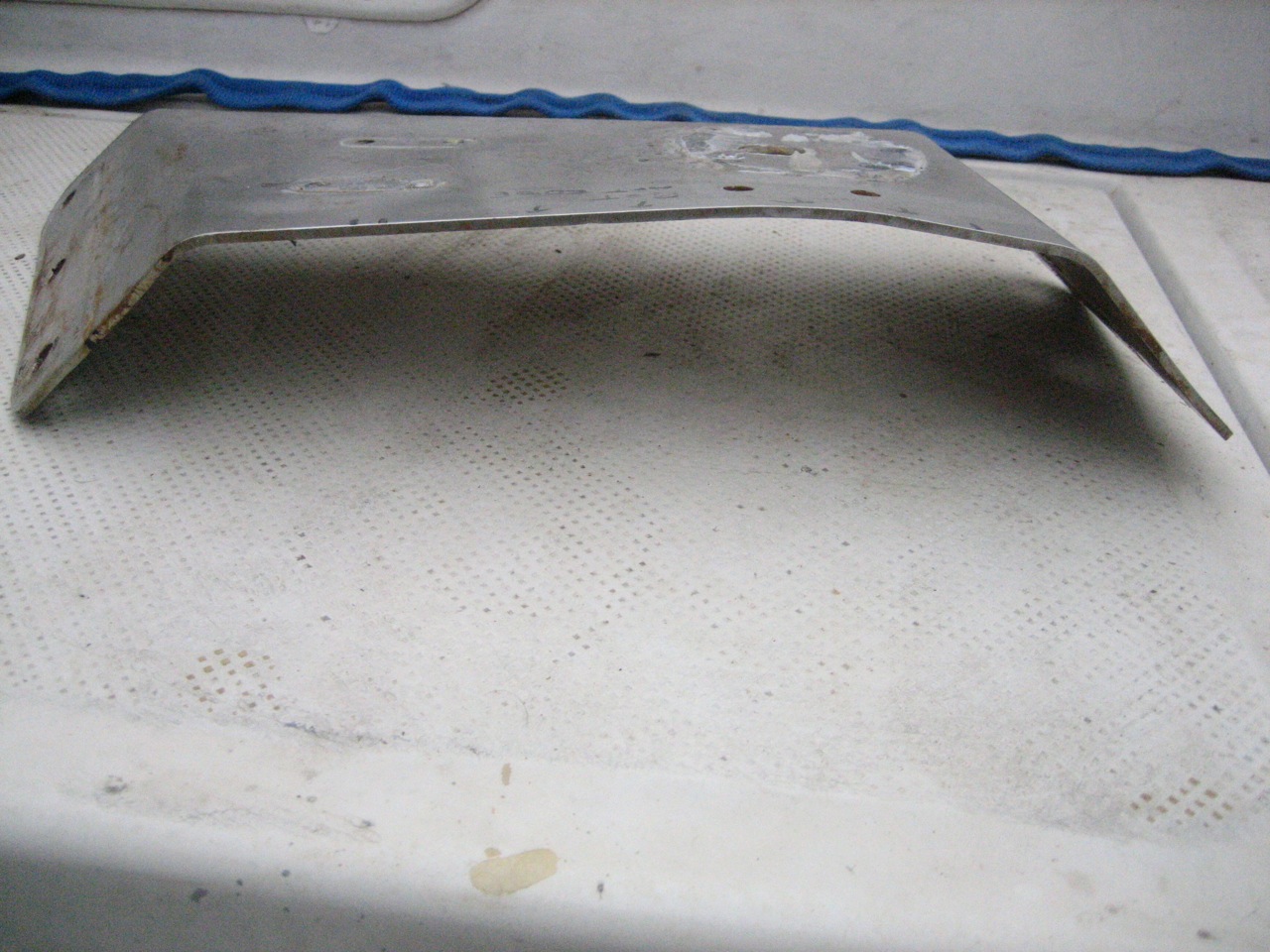
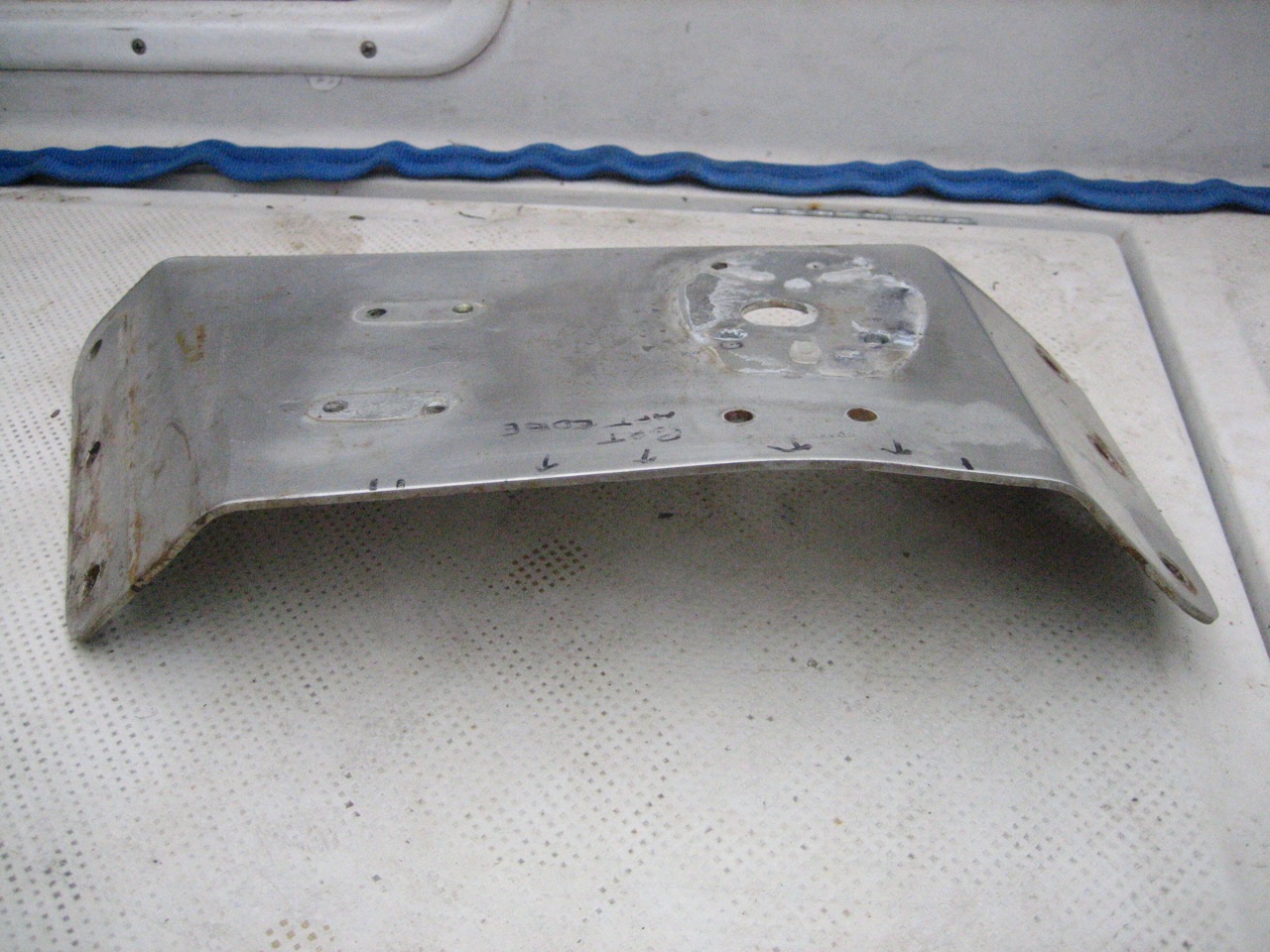
    I fabricated the brackets to mount it to the hull out of a scrap piece of stainless box iron: I cut the box in half and then in half again to get L-brackets.  Again, polishing these up was ridiculously tedious.

    I cut backing plates for the brackets out of a scrap piece of thick-ass stainless–1/4″ thick I think.  Two of the plates sat on a curved piece of the hull, and I was concerned that when we cranked down on it it could break the fiberglass, so Jonny puttied up the backside (the surface that the plates would sit on) with thickened epoxy and then smooshed the plates down onto it (with a piece of waxed paper between) to form a nice base for the plates to sit on.

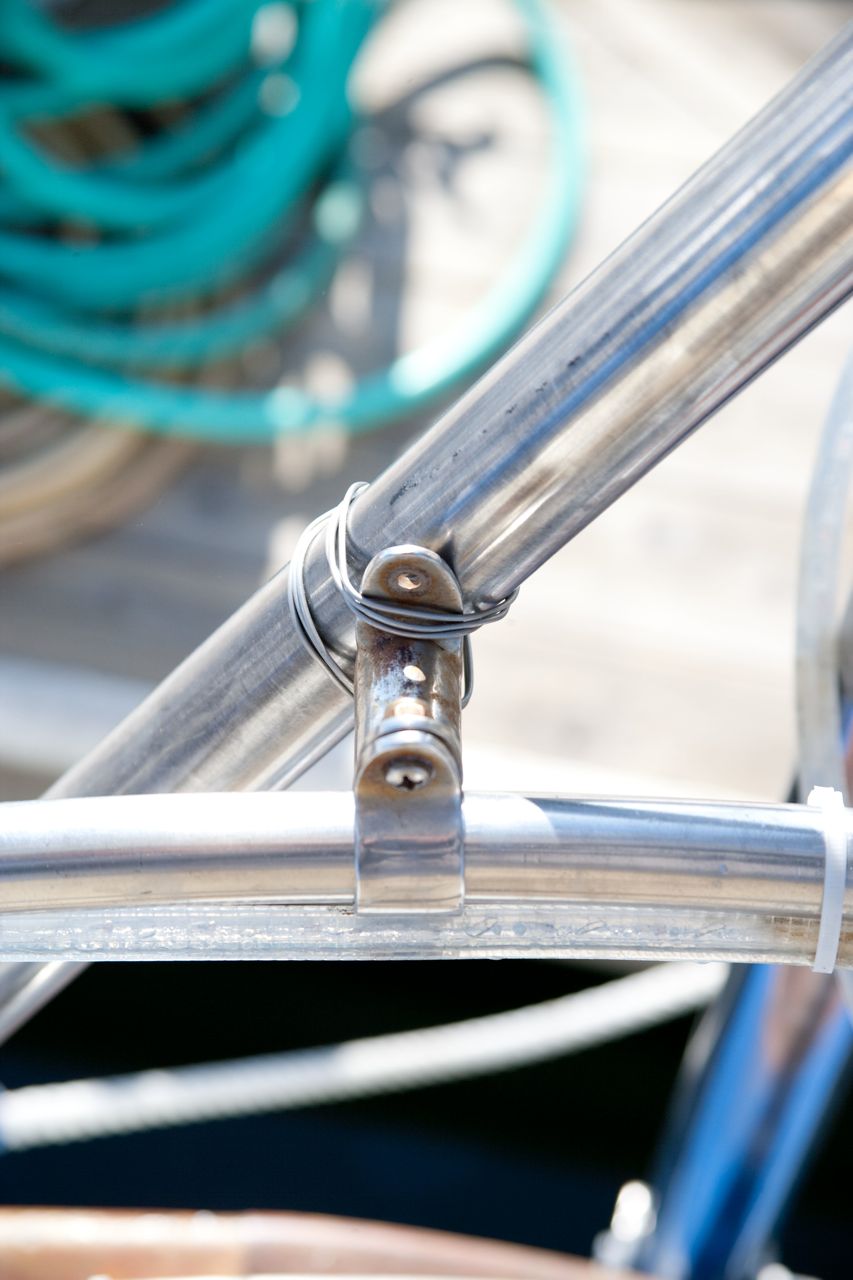
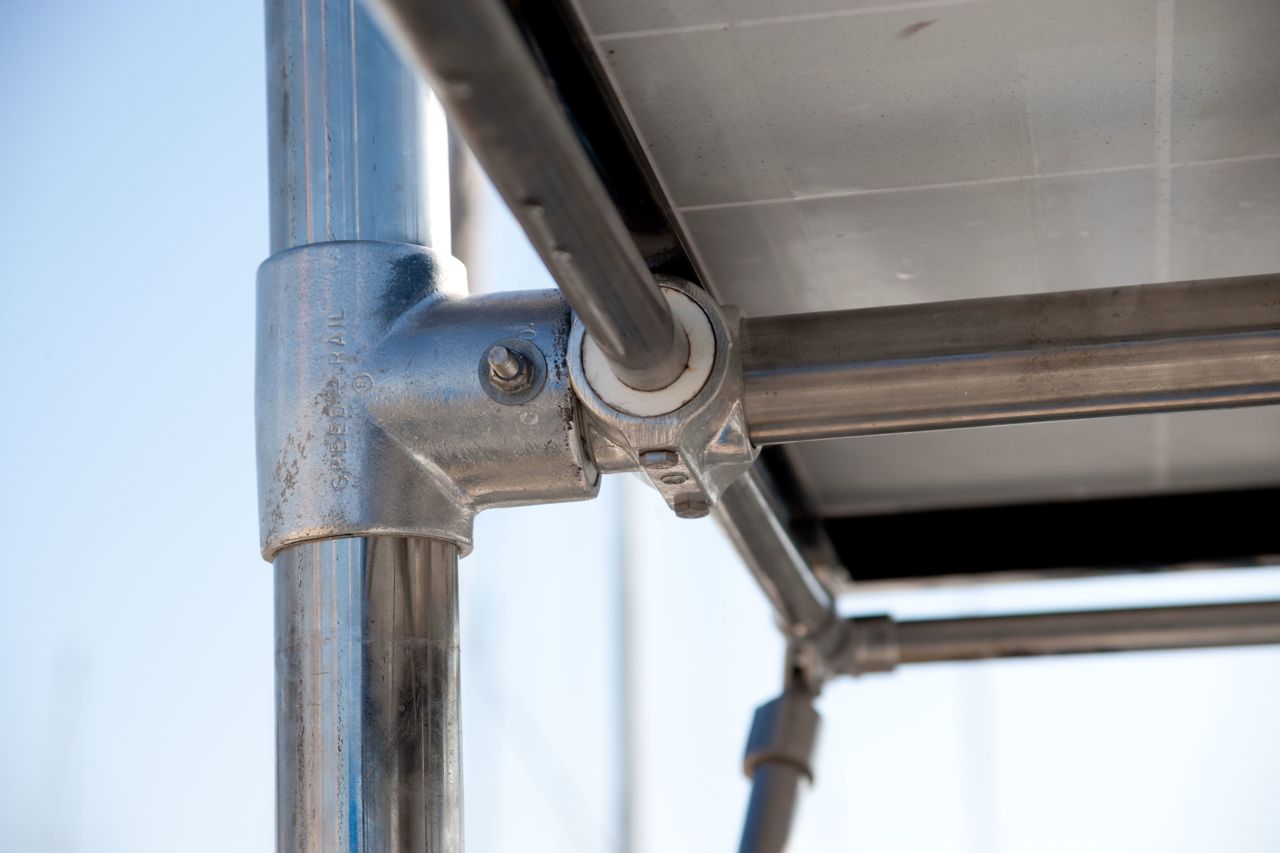
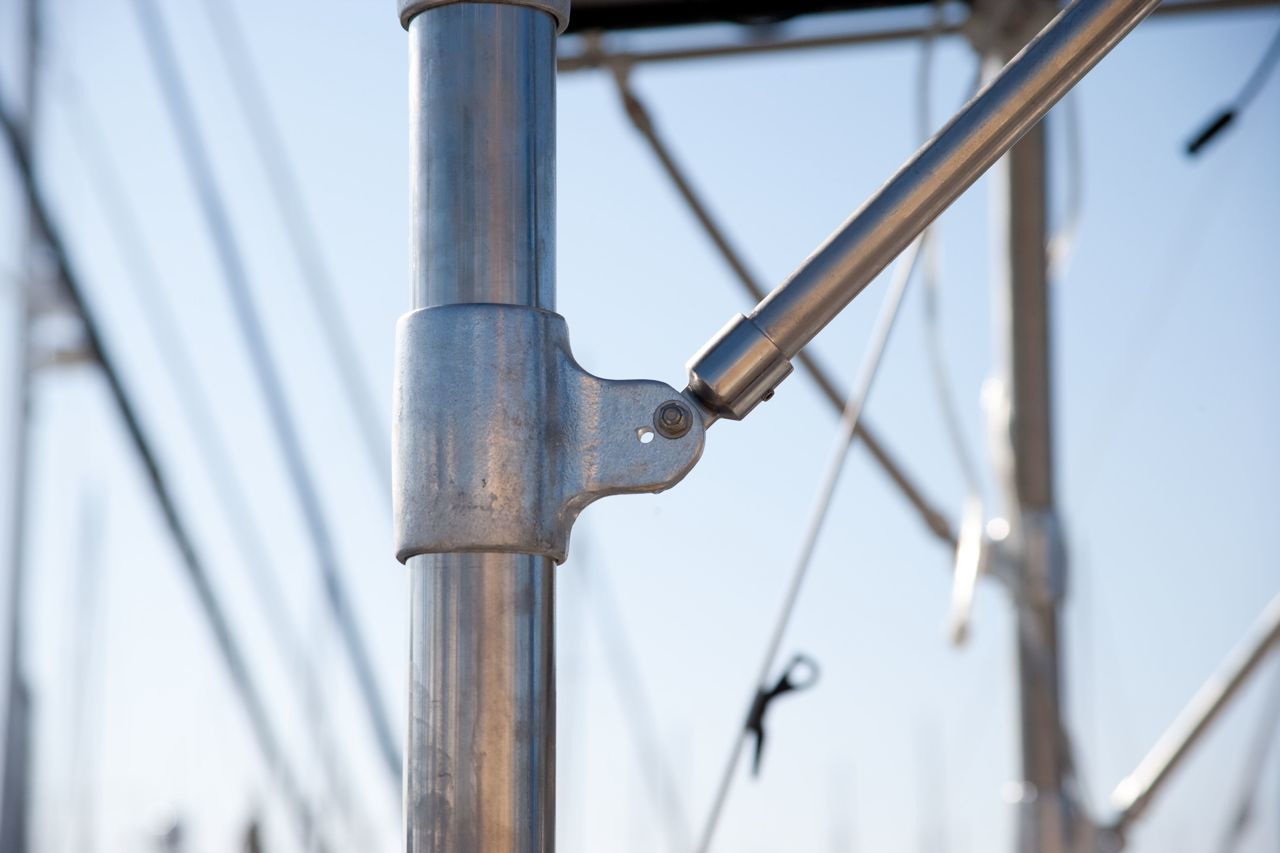
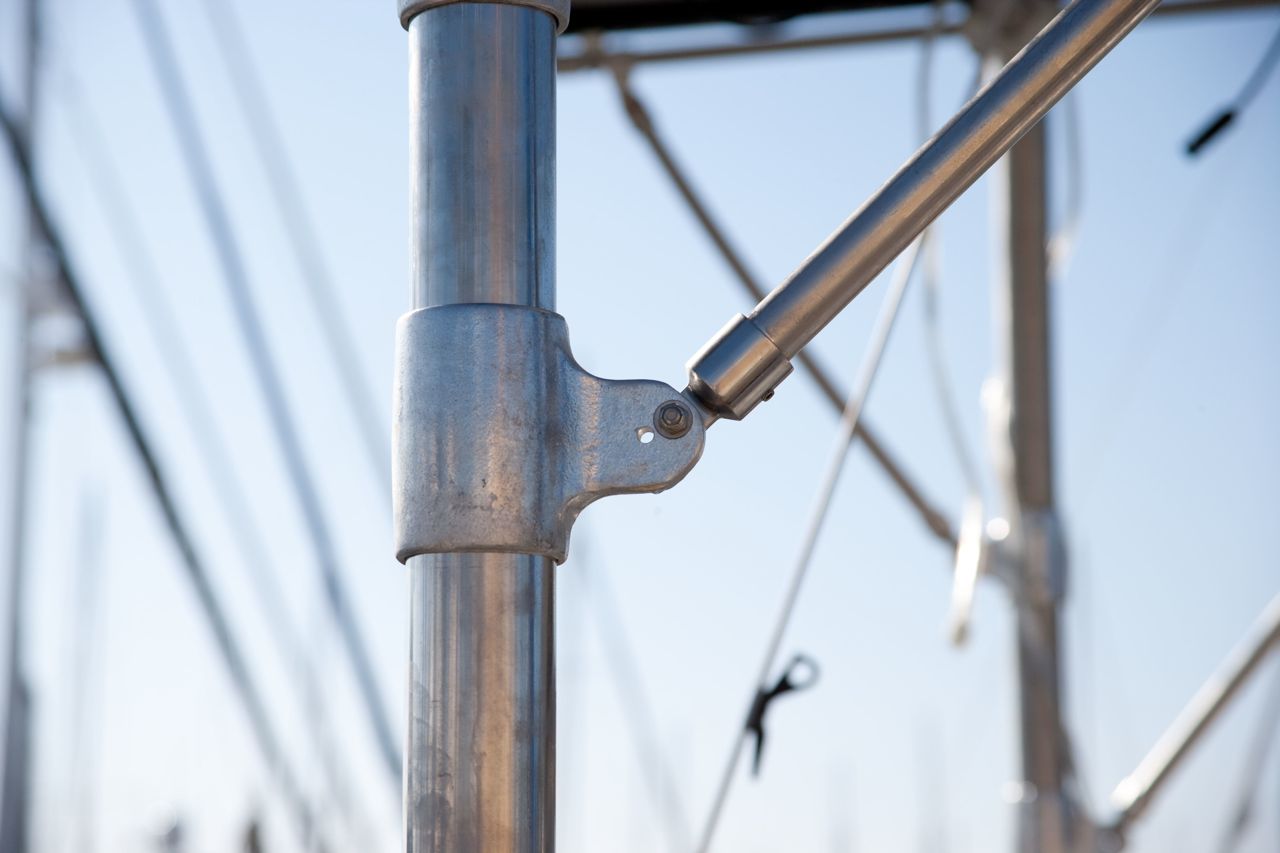
    So I welded the supports to the vertical pole, but I decided that I wanted to use fittings to mount the rest of the supports in place–I wanted them to be adjustable and removable if necessary.  I went with “speedrail” fittings for the pipe, then had TAP plastics fabricated some starboard bushings to mate our leftover 1″ stainless tube into the pipe fittings (I couldn’t find any commercially available adaptors, anywhere).  Our old bimini frame (1″ stainless tube) had been hanging off the bow for months; I cut almost all the pieces I needed for the solar panel frame out of the old bimini apparatus.

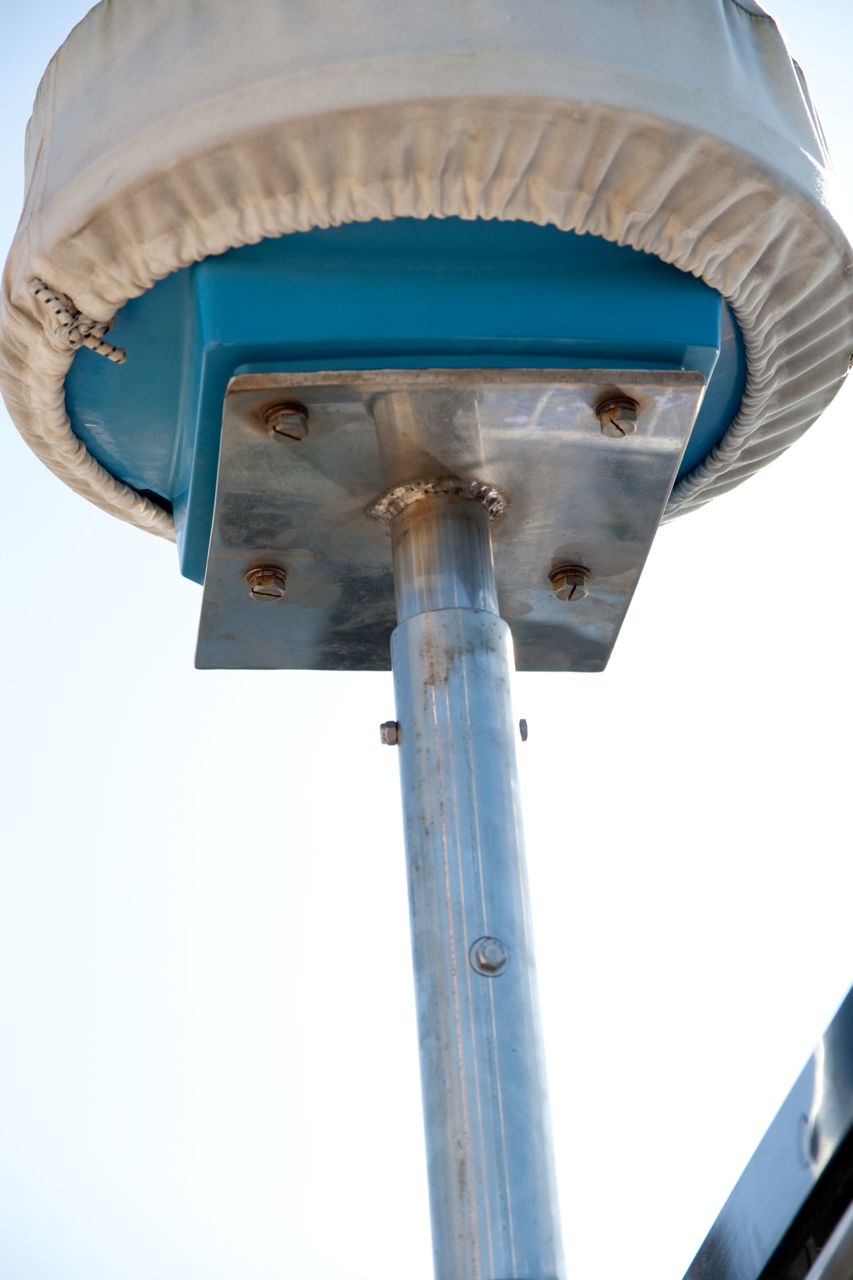
    At the top of each of the vertical poles I made a 1.25″ nom diameter pipe insert, that bolts inside.  I welded the radar mount to this insert (instead of directly to the top of the vertical pole) so that it can be removed with two bolts.  The wind generator got mounted to the insert on top of the other pole (the KISS wind generator is designed to be mounted onto either 1.5″nom pipe or 2″ tubing).
    The resulting framework is the strongest of any I’ve seen.  It is probably also the heaviest, but my intuition tells me that our mounting points on the hull are going to be strong enough to handle it all (I really hope we don’t have problems with it!).

  • Replaced Heat Exchanger; FIXED ENGINE OVERHEATING

    Finally!  After replacing nearly everything else in the cooling circuit, I decided the problem must be the heat exchanger, even though we already cleaned it out with muriatic acid.  I bought a new one from Transatlantic Diesel (they know their stuff over there) although I asked for a heat exchanger for a Perkins 4-108 instead of a Westerbeke and so they sent me the right one for the wrong engine (our Westerbeke engine uses a Perkins 4-108 block and so for most purposes it’s really a perkins 4-108).  I called them and they sent me the right one no problem.

    It took only a few hours to put it in.  Afterwards I ran the engine at an idle at the dock, then put it in gear and let it strain against the docklines a bit.  It never got above 185, whereas before it would overheat while sitting at the dock in idle.

    The new heat exchanger is a better design than the old one, as well: the new one has a bolt with metal end caps and a gasket underneath, so that it can be fully dismantled.  The old one had a single rubber endcap, allowing access only to the center of the tubes (one half of the circuit).

    Granted, we won’t know for SURE until we take her out and run it hard, but I’m optimistic that we finally fixed the problem.

    HeatExchangerNew1

  • Replaced seawater faucet (again)

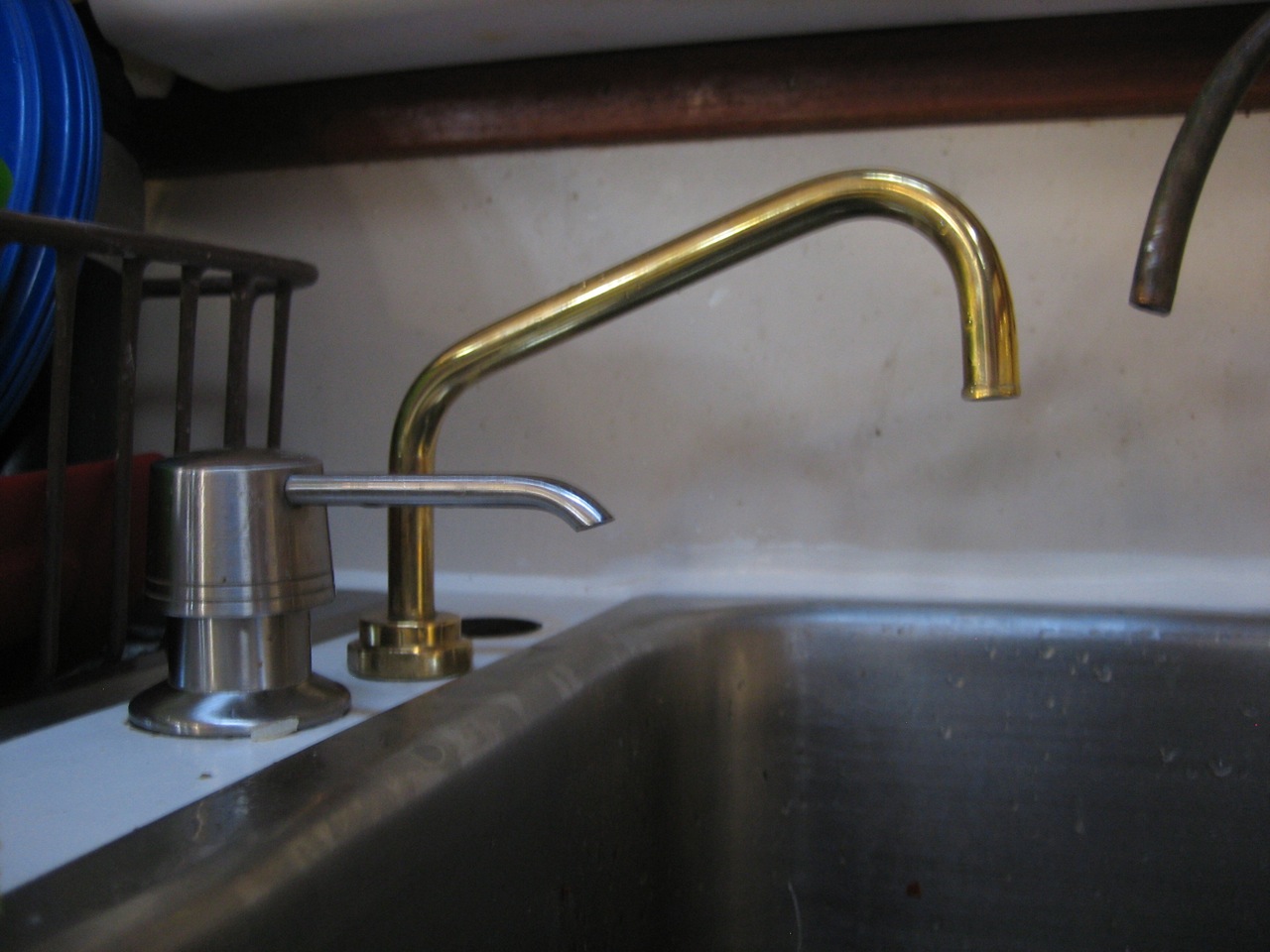
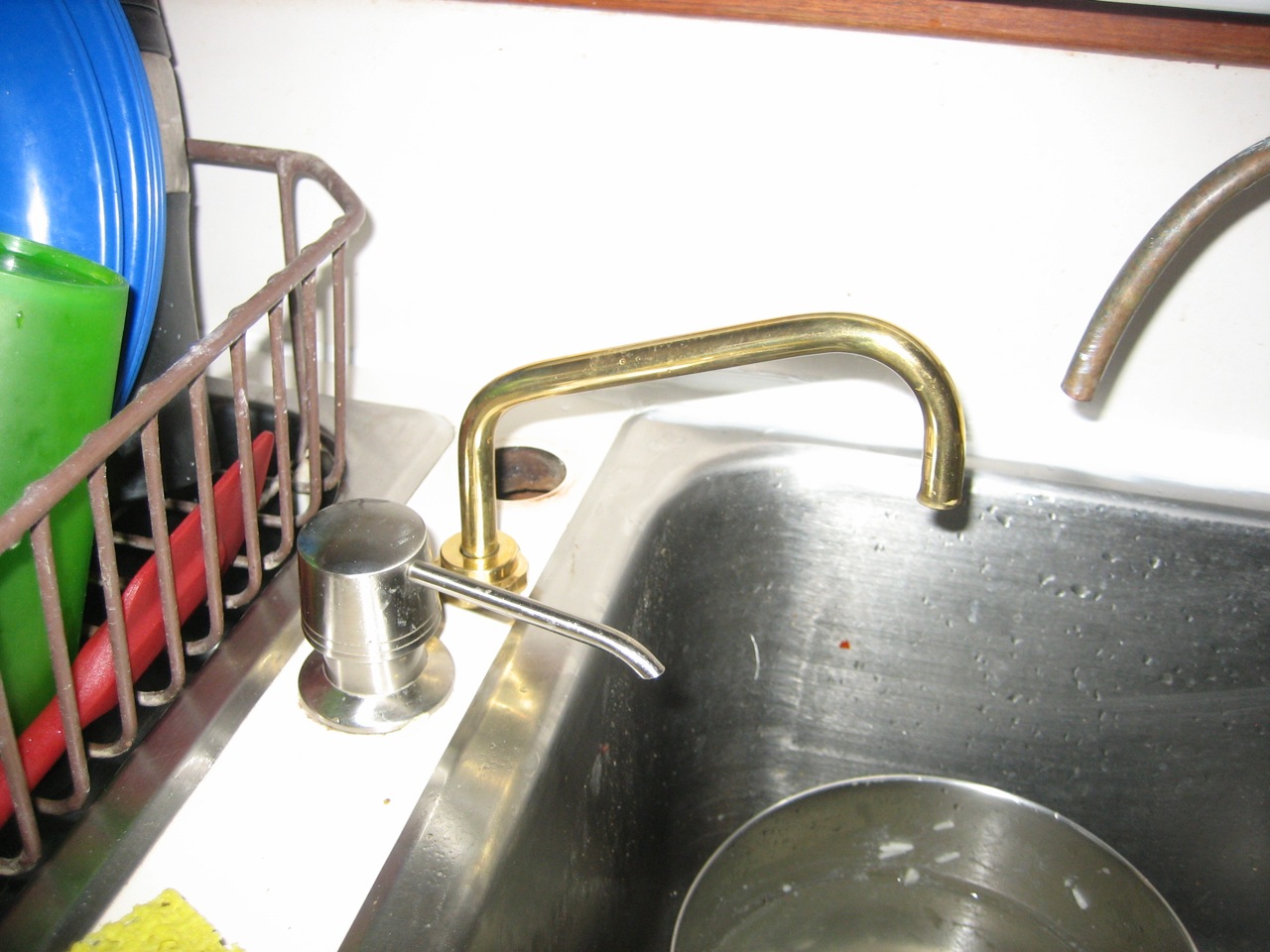
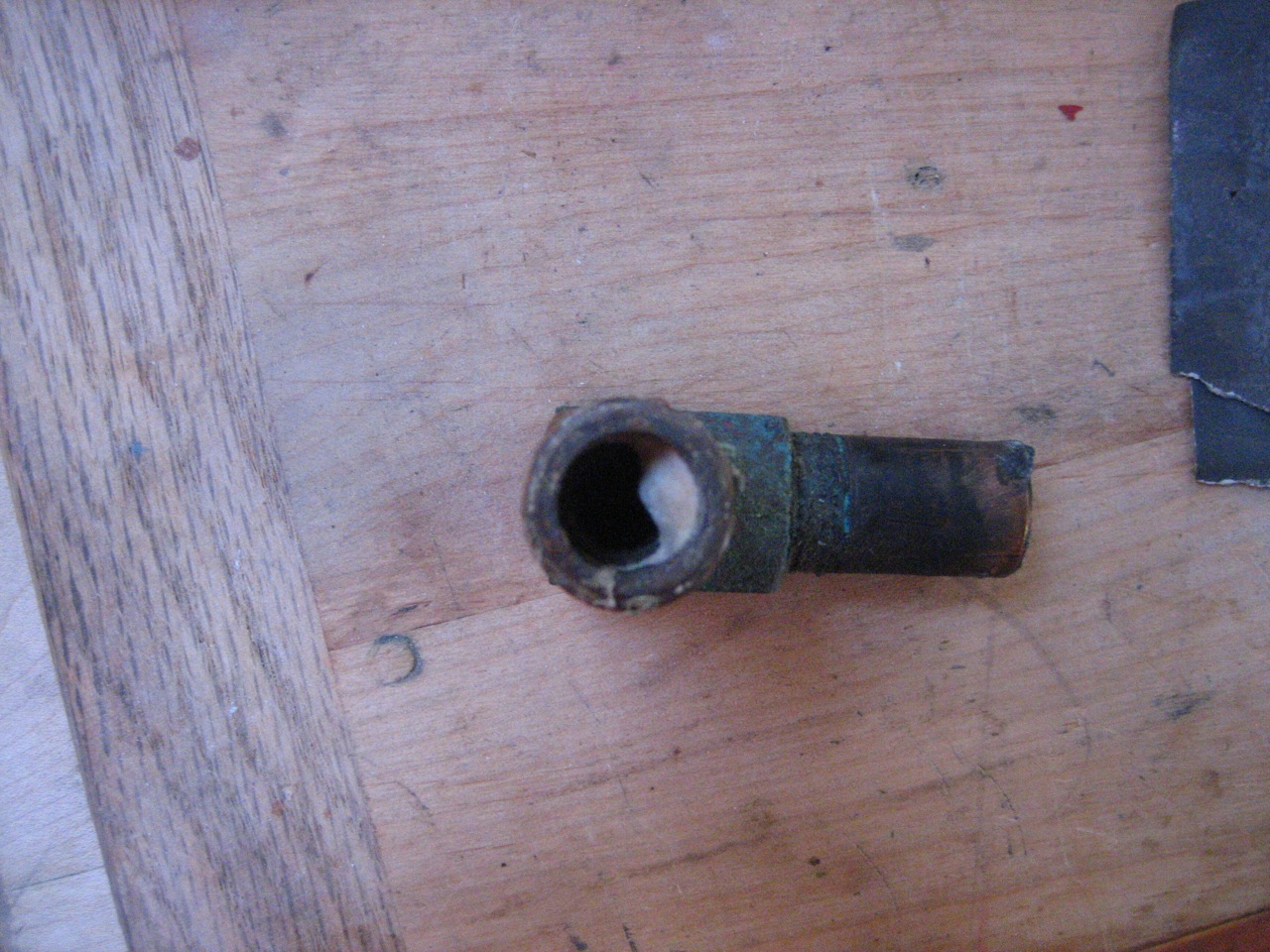
    When we took out the pressurized freshwater system, we removed the standard kitchen-style faucet that was in the galley and replaced it with a home-made faucet fashioned out of a piece of copper tubing, to use for the seawater foot pump we installed.  We spent a lot of time with various fittings and heat shrink tubing to make our own fixture that would be able to rotate yet not leak.  It worked for a few months, then one day I grabbed it and tried to rotate it out over the sink and the copper tubing just twisted on me.  Clearly it wasn’t going to be a lasting solution.  So I bit the bullet and bought a brass fixture from Svendsens.  Then of course I had to drill a new hole to accomodate it, since the old hole was way too big and there weren’t enough threads on the fixture to let me fit large washers.

  • Installed Battery Monitor

    After spending $1200 on new batteries, I want some simple way to monitor their state of charge, largely so that we have a better idea of when we need to run the engine to charge them back up.

    It is best to recharge a lead-acid battery before the charge drops below 50% (of the amp-hour capacity); if you discharge them too much you damage them.  And it is not practical to charge them all the way to 100% with the alternator each time–as the batteries approach full charge the charging process gets slower and slower.  When you are idling the engine only to charge the batteries, you want to limit the amount of time it runs.  So it is more practical to charge the batteries only to about 85%.  This means that in actual practice you will only use 85%-50% =35% of your total battery capacity during each charge cycle.  Our total battery capacity is 720Ah, so I expect that we’ll be able to use 250Ah before needing to turn on the engine–and hopefully the solar and wind and tow generator will keep up so that we never have to.

    If you let your batteries sit for 12 hours with no sources or sinks connected to them, then you can simply measure the voltage and know the state of charge (11.6V is 50% discharged; 12.7V is fully charged).  But while cruising we will never let our batteries rest without some device drawing power, so we cannot simply watch the voltage to know how charged they are.  Hence the battery monitor.

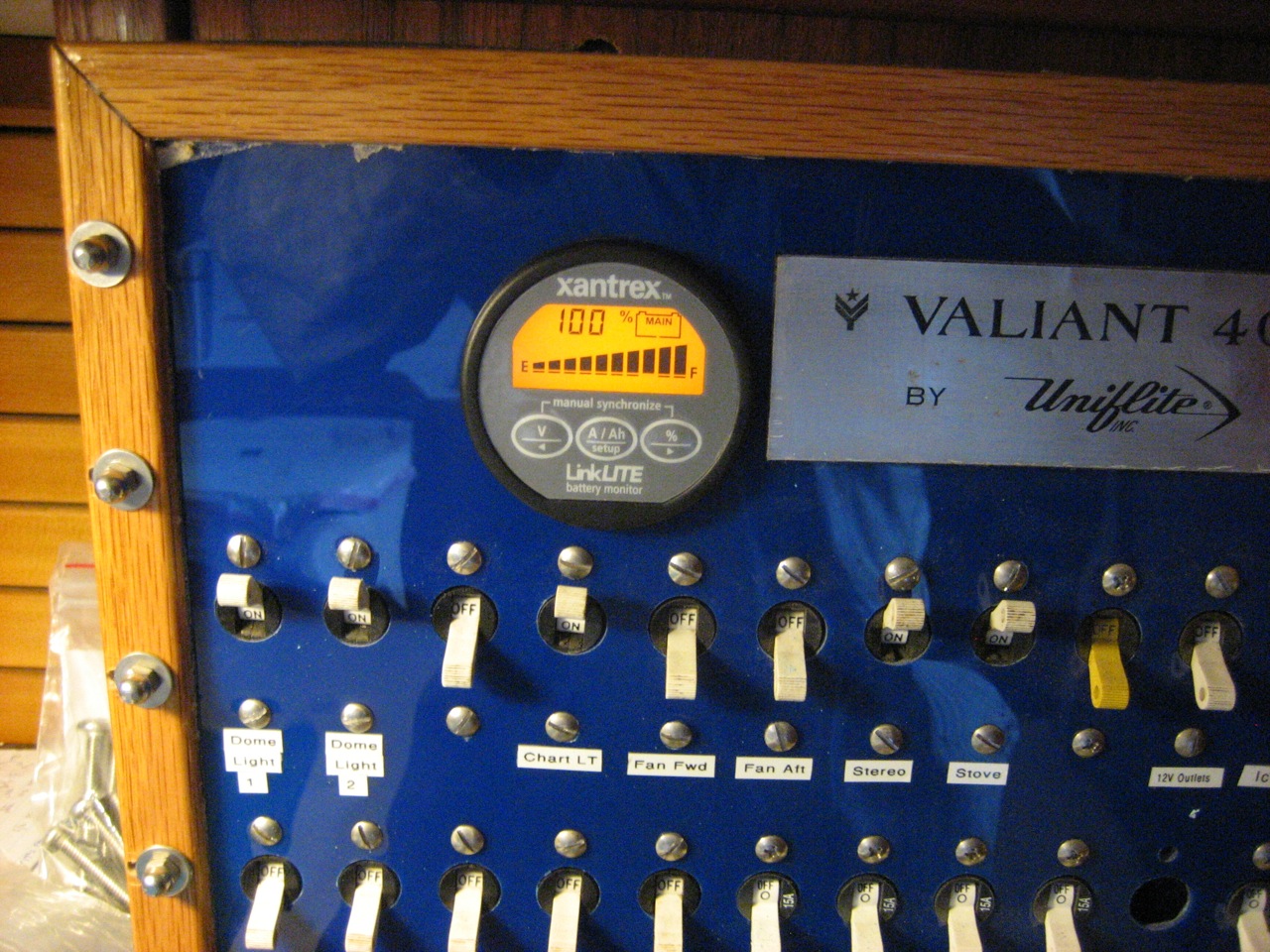
    I chose the Xantrex LinkLite, because Xantrex makes great stuff and we got a great deal on it at Svendsens.  It required a fair bit of wiring, since it uses a shunt installed in the battery negative (big-ass cable) to measure the current.

    I have been told by many people that the batteries need to be fully charged every once in a while (i.e. up to 100% not just 85%) in order to stay in sync.  I just put it in this past week so I can only comment on how pretty it looks in our electrical panel.

    BatteryMonitor1

  • Our first weeping blister

    Well I have been sanding the entire boat, piece by piece, to repaint.  Turns out the side of the cabintop has hundreds of small blisters, a very few of which started weeping after we sanded (or maybe before, but none of us noticed).

    These are the first of the infamous Valiant blisters that I have experienced, so I consider myself lucky.  The bulging ones can be ignored, but I feel the need to take care of the ones that are weeping, so that the paint will stick when I put it on.  Not like it will help much–those other hundred blisters will probably be weeping within a few months anyway–but it is after all only cosmetic so I’m going to get my painting finished and then call it good, and do my best to ignore the rest of the blisters that will surely come.

    I dig out the blister with a sanding tip on the dremel, until it looks like all the wet stuff is gone.  Then clean/dry with acetone on a rag.  Then mix up a small batch of quikfair and spread it on, trying to leave the surface of the quikfair a little high.  After it dries (sandable in about 5 hours) I sand it fair.  Then it’s ready for the normal painting procedure (two coats of epoxy primer, two coats of two-part polyurethane).

    blister1

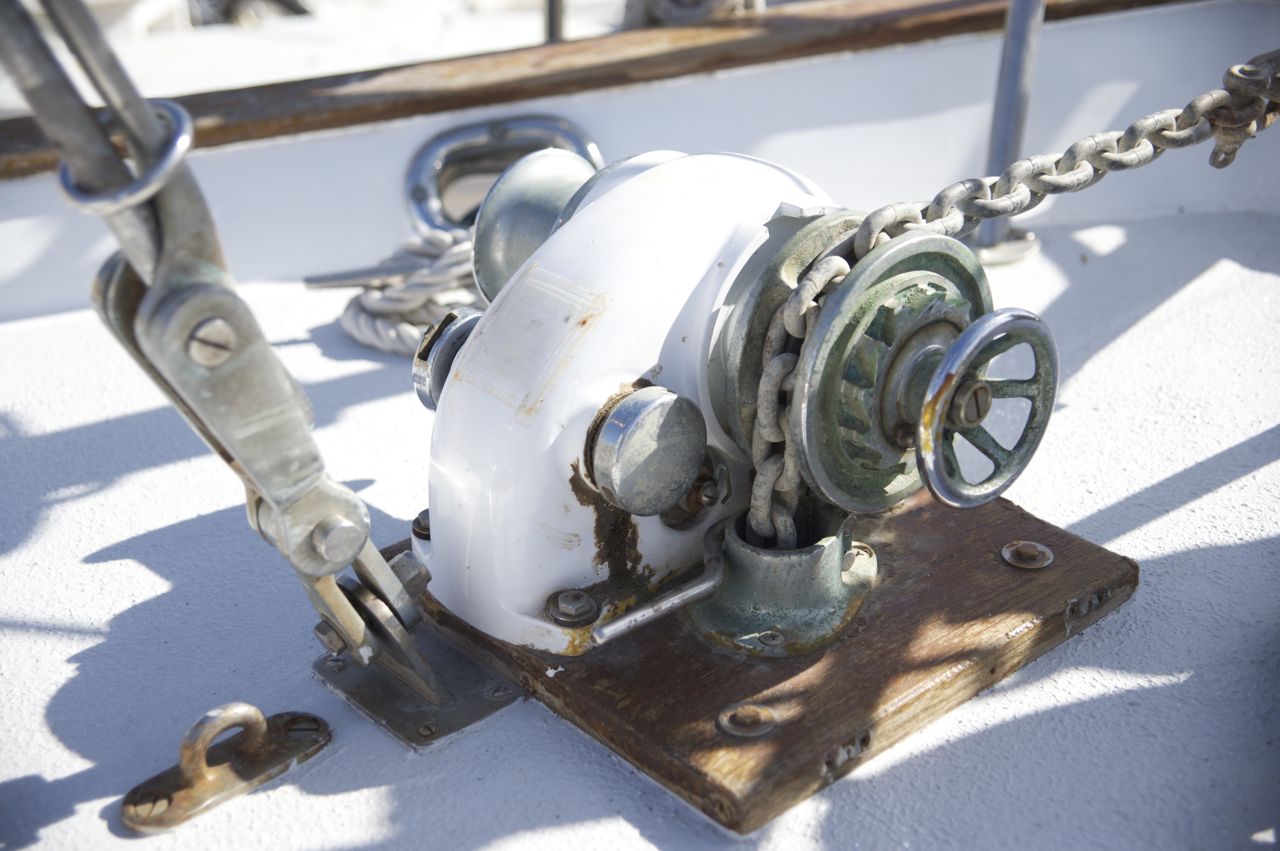
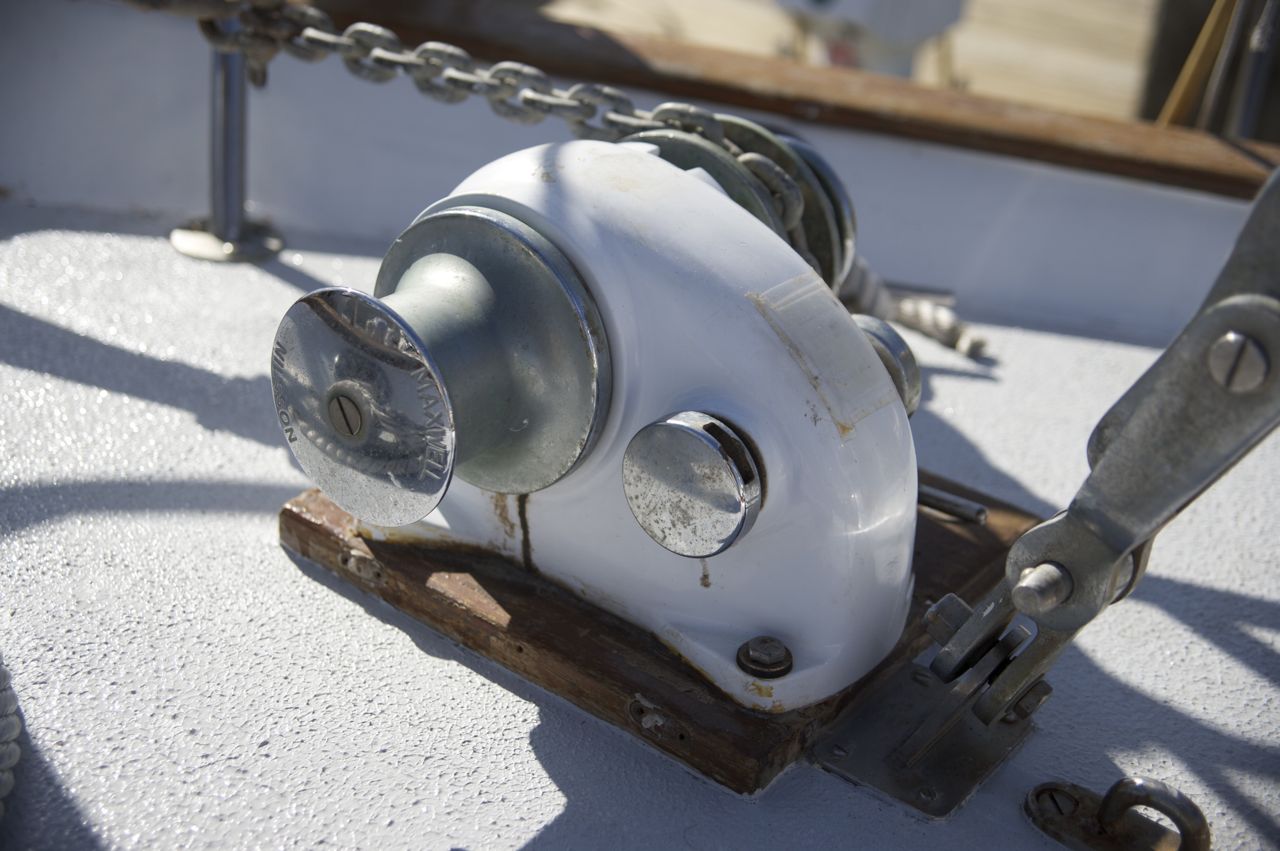
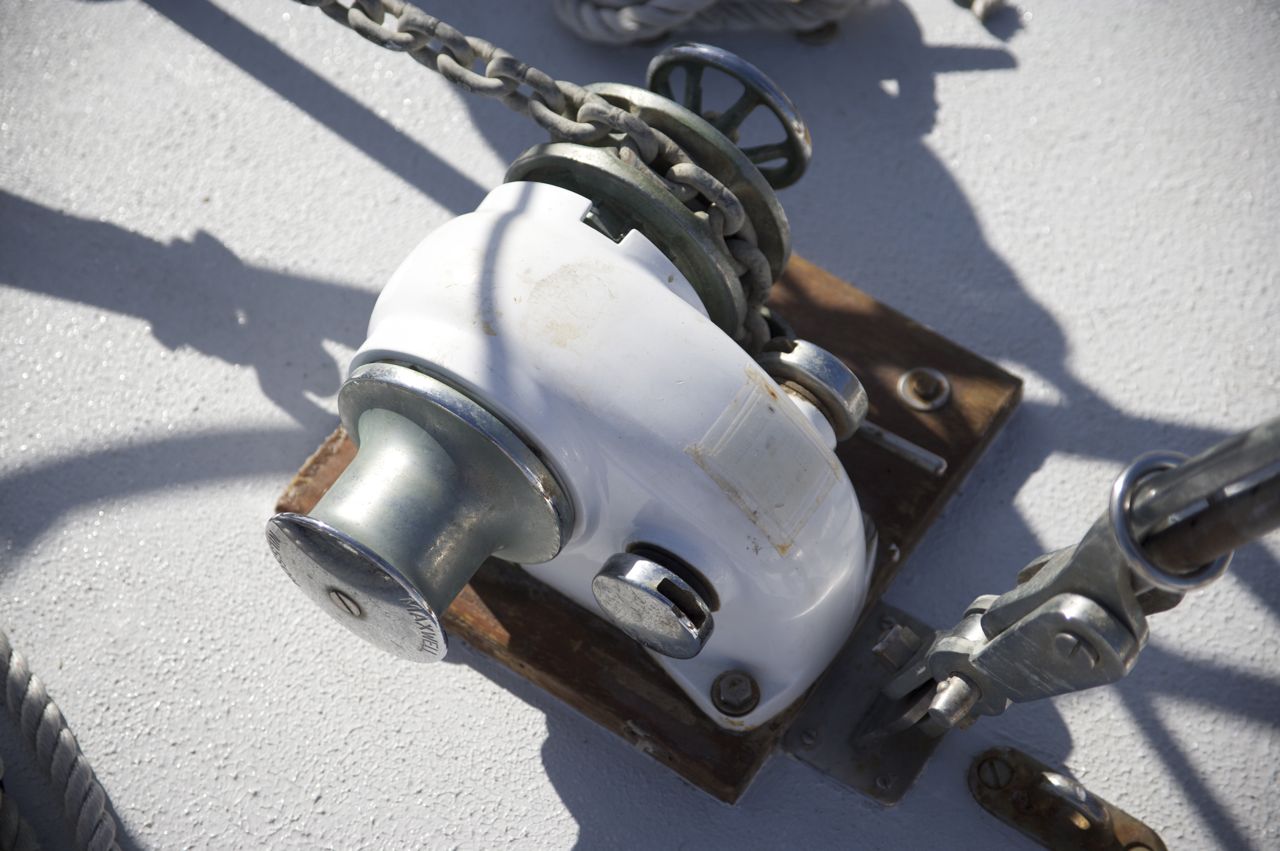
  • Can anyone identify this windlass?

    And give me a link to a manual for it?  I have no idea how to take it apart and service it.

    I know it needs servicing because every fifth crank or so I move the handle without anything happening.  It feels like the pawls don’t want to catch, or something.  Regardless, the windlass is important, and no doubt it looks like all hell inside, knowing my luck and having experienced everything else breaking on the boat.

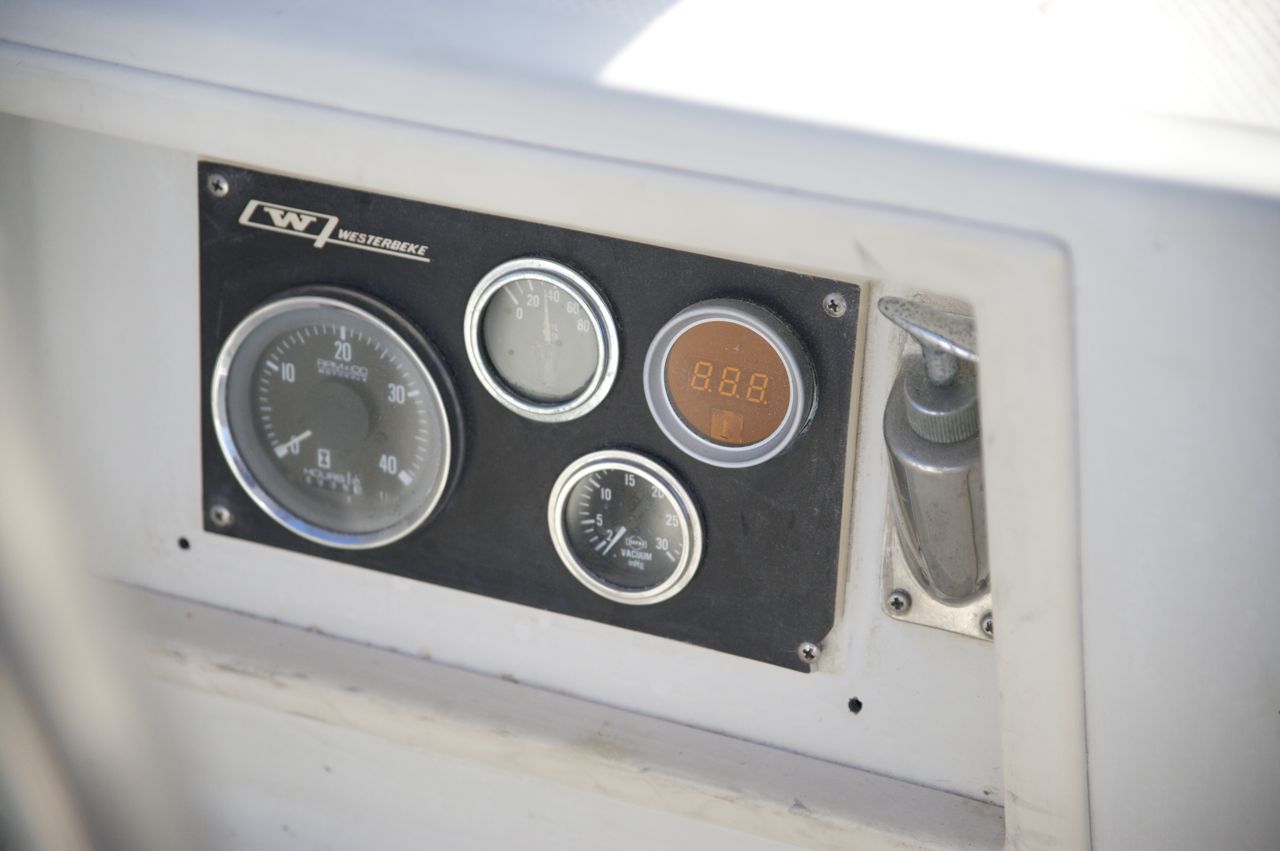
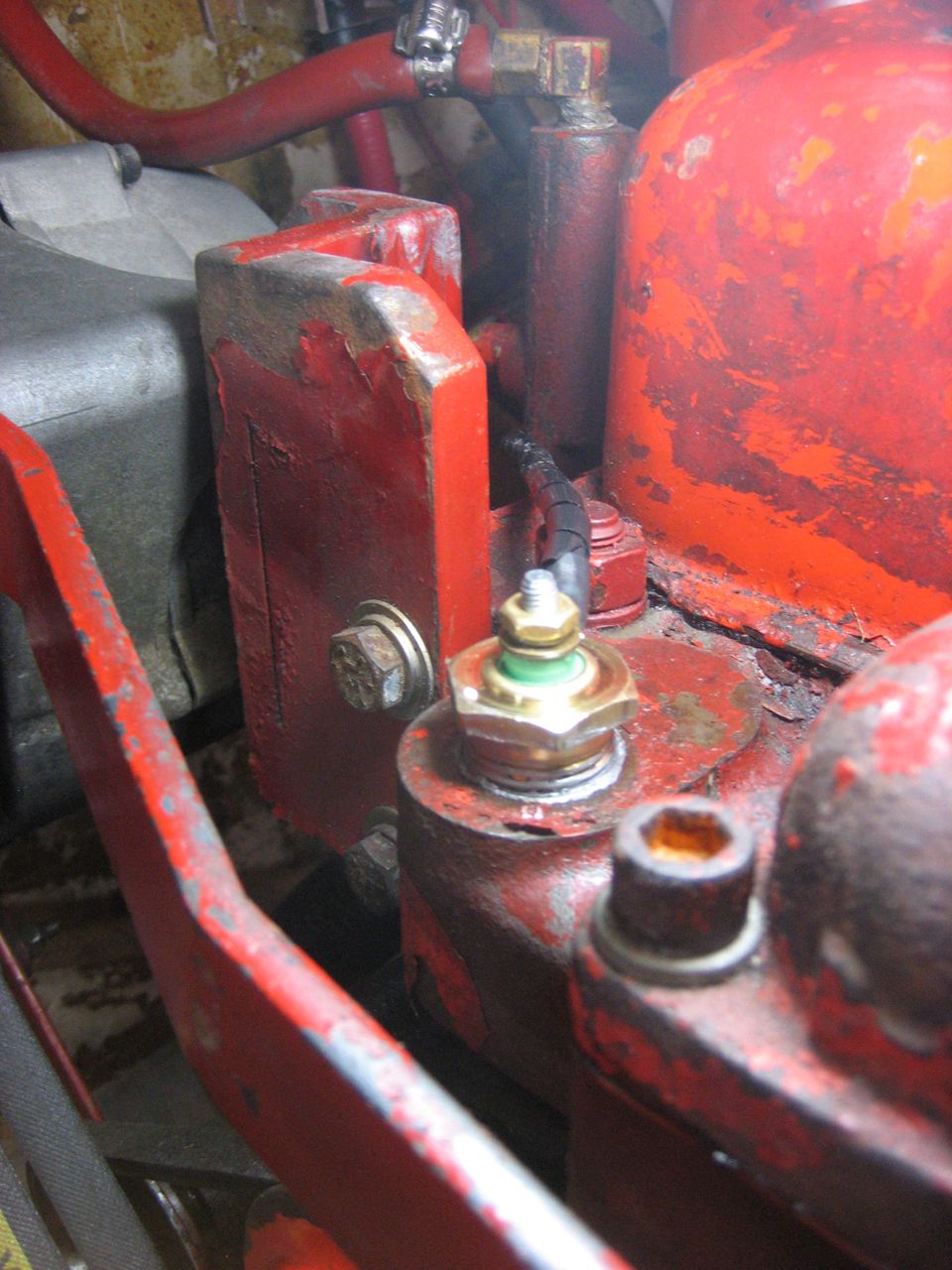
  • Replaced engine water temperature gauge and sender

    Not sure if the old gauge and sender were operational or not.  Even if it worked, I hated the old gauge because it had one uncentered tick mark between 180 and 240 degrees, so it was impossible to tell what the actual temperature was.  What good is that?  I only care about the temperature in that range anyway!

    I was under the impression that the gauge and sender have to be matched to each other or else they won’t be accurate.  I still don’t know whether or not this is the case, though I have since discovered that there is a standard for the senders (separate for american and european) so that in theory any american sender should work with an american gauge.  Regardless, I didn’t want to take a chance so I just ordered them as a set from Sherri at Transatlantic Diesel.  When they showed up I was frustrated, because the gauge had the same shitty problem as the original one, and I was disgusted by the idea of replacing our old gauge with one that was equally useless.  So I bought another one, a digital one off the internet that came with its own sender.  Of course when it showed up I discovered that the sender is too small to fit in our 1/2″ npt spot for it on the engine, and even though I have an adaptor that accepted it, it still wouldn’t work because the sensing tip on the sender was too short to protrude through the adaptor plug.  Just figures.  So I borrowed Jim’s thermocouple (Jim’s on Kanga down the dock from us) and set up a jury-rigged little science experiment in the galley, consisting of a pot of water on the stove, with the thermocouple and the sender in it, wired up to the gauge, which was jury-rigged to the back of the electrical panel to give it some power, and then I sat there over the stove, holding the sender in the water in one hand and the thermocouple in the other while the pot of water heated up, and tried not to burn myself as the water got all the way up to boiling.  Crude, but the experiment convinced me that the gauge and sender are compatible.  The gauge appeared to be reading ~8 degrees low, or else only a few degrees low and just lagged behind the response of the thermocouple.  I should have waited to see what it read while the water dropped also (to resolve that question) but I was out of patience and in the middle of a shitty conversation with jonny.  So I am satisfied with that level of accuracy for now, and I’ll use the thermocouple in the holding tank of the engine eventually to check it again.

    So I mounted and wired the temperature gauge into the panel.  Now of course I have to change around my master wiring diagram because it’s pretty different from what it used to be (I had to move around a number of the hot and gnd supplies for the other gauges, since they had been piggybacked onto the old temperature gauge).  But anyway I have faith in the temperature gauge and I’m ready to start the engine back up and see if we still have an overheating problem, or whether either the new cam in the seawater pump or else the new gauge have resolved the issue.

    fyi Gordon May’s info on testing engine gauges is extremely well written and valuable advice.  I have uploaded the pdf “GaugeTesting” to my site, so that it still exists when the original post goes away.

  • Tried to repair delamination; made a mess

    There was one remaining area of the cabintop just forward of the hatch over the galley that was  delaminated when we bought the boat, and never got around to fixing it.  My sense was that the delam was not due to water penetration, but rather just a spot where the deck came unglued from the core, and that’s why it wasn’t a top priority on my list.

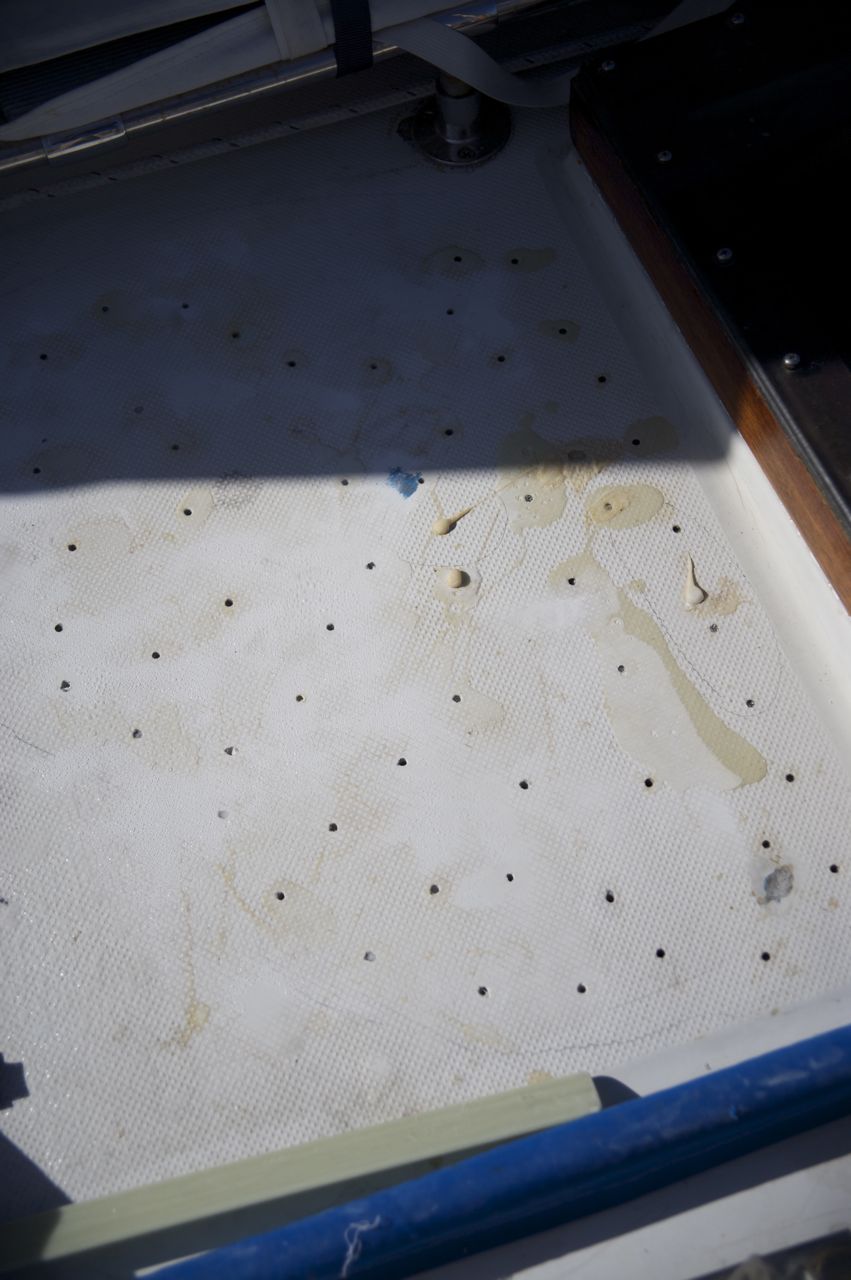
    Since we are currently refinishing the deck, it is time to take care of it now.  I learned about Merritt Supply and bought all necessary reparation equipment. I took the hammer around and tapped in a few other spots and found more delamination (big surprise–go looking for a problem on a boat and you are bound to find it).  I took a pencil and the hammer and circled the area that was sounding hollow.  Then I selected a drill bit sized to the syringe that I have for injecting the epoxy, and I drilled a number of holes all over the place in the area.  Then Karen and I mixed up bowl after bowl of epoxy and injected it into the area.  Karen jumped down below to make sure it wasn’t finding a way into the boat, and saw nothing.

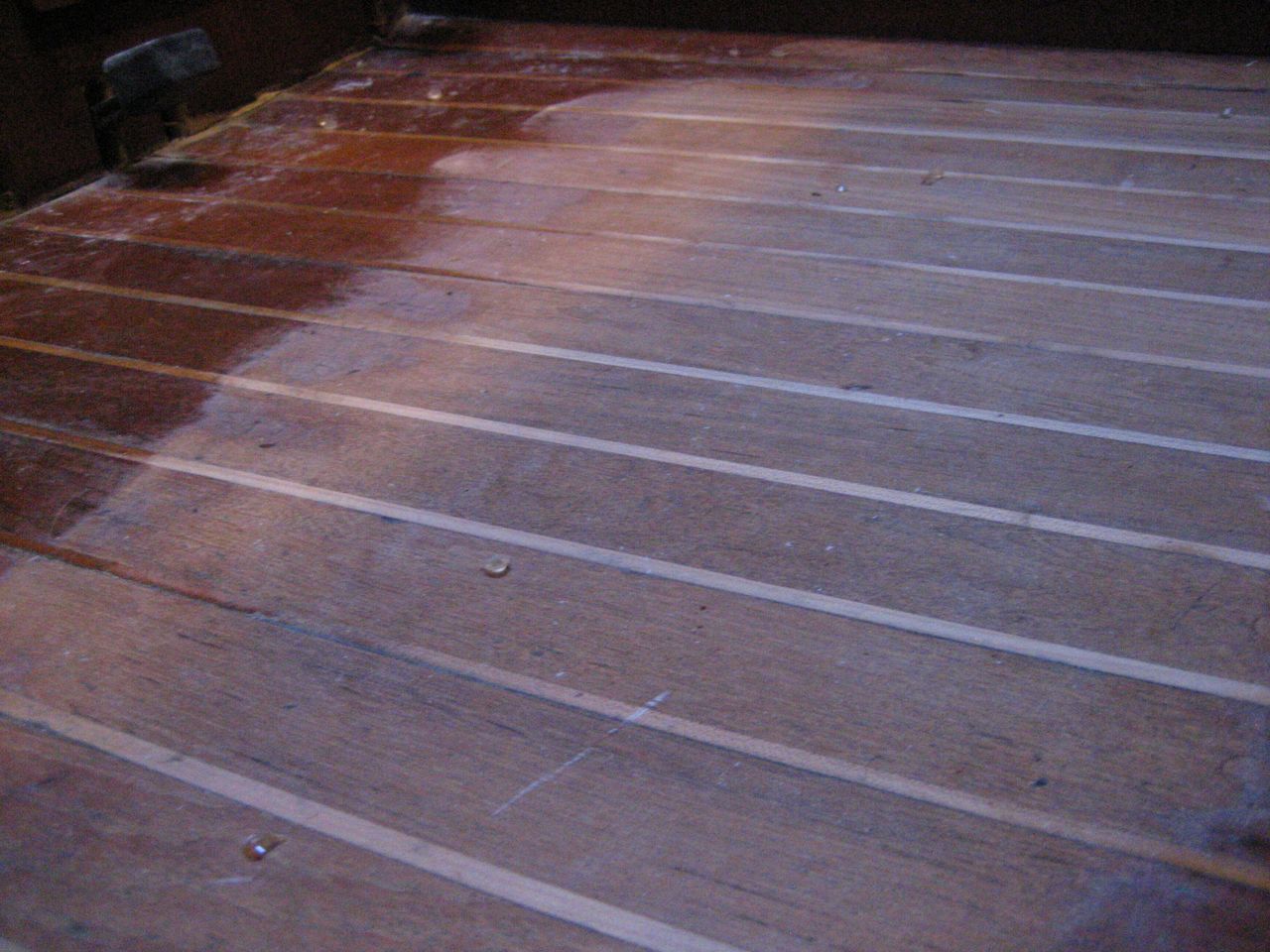
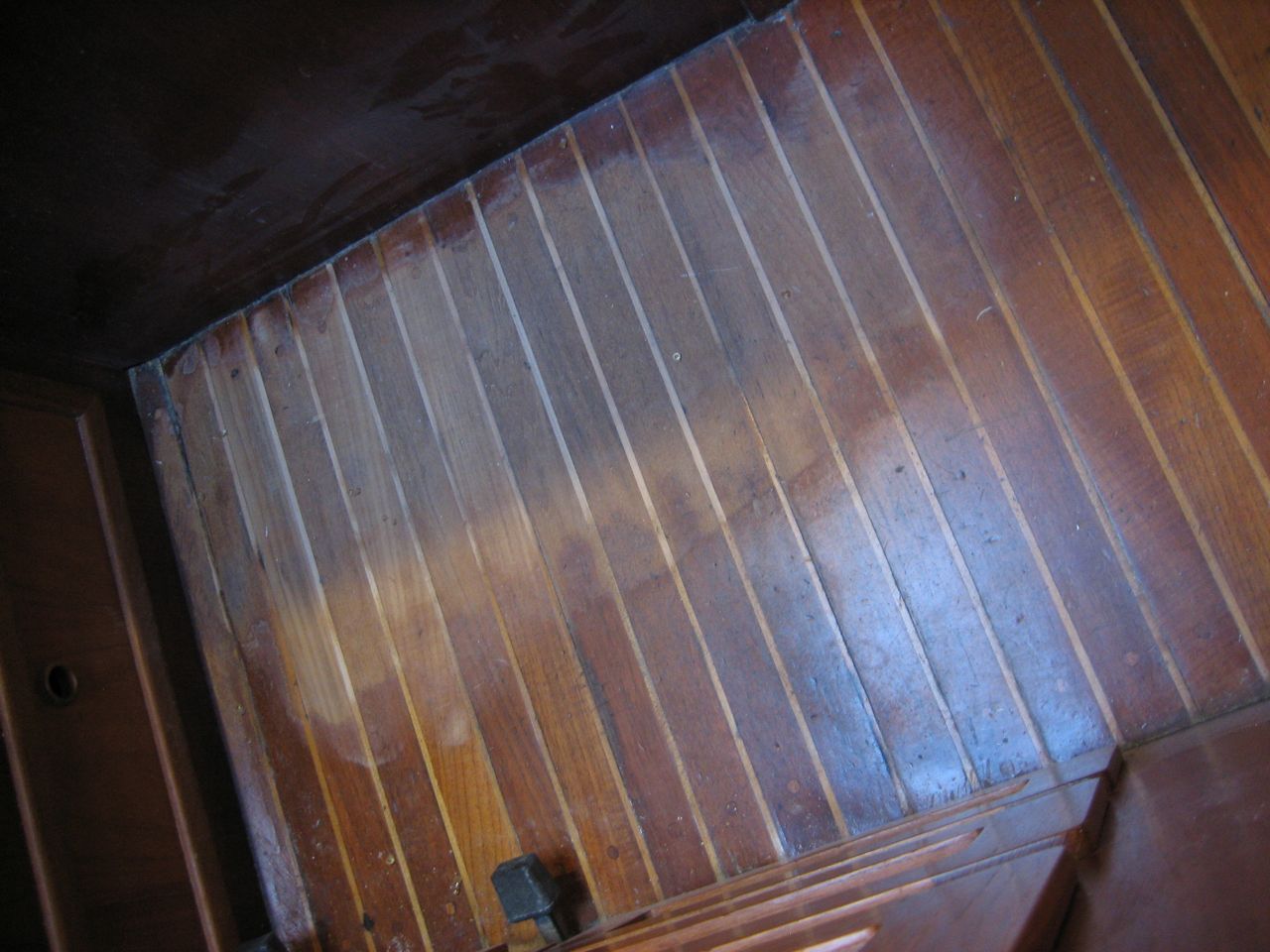
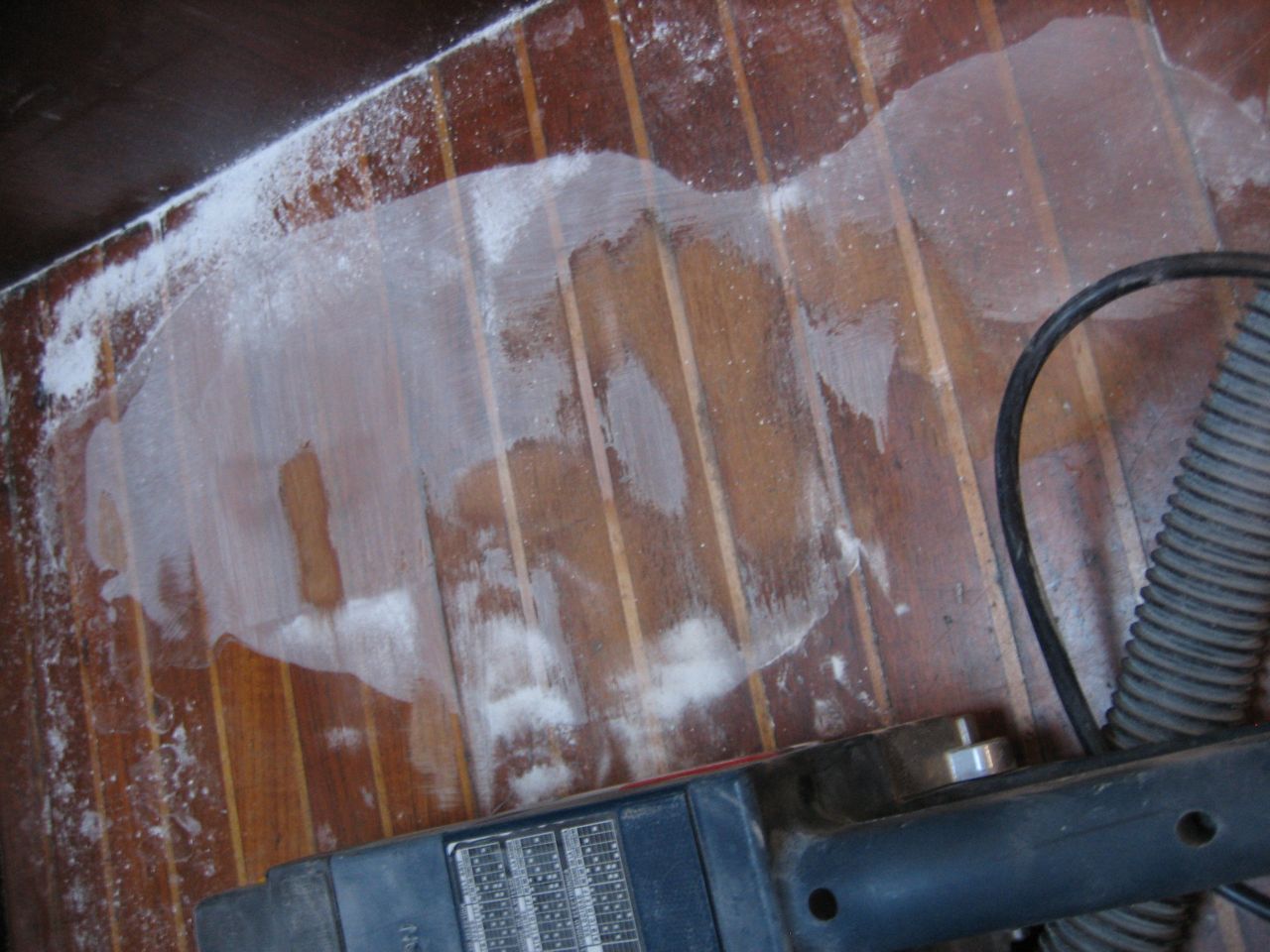
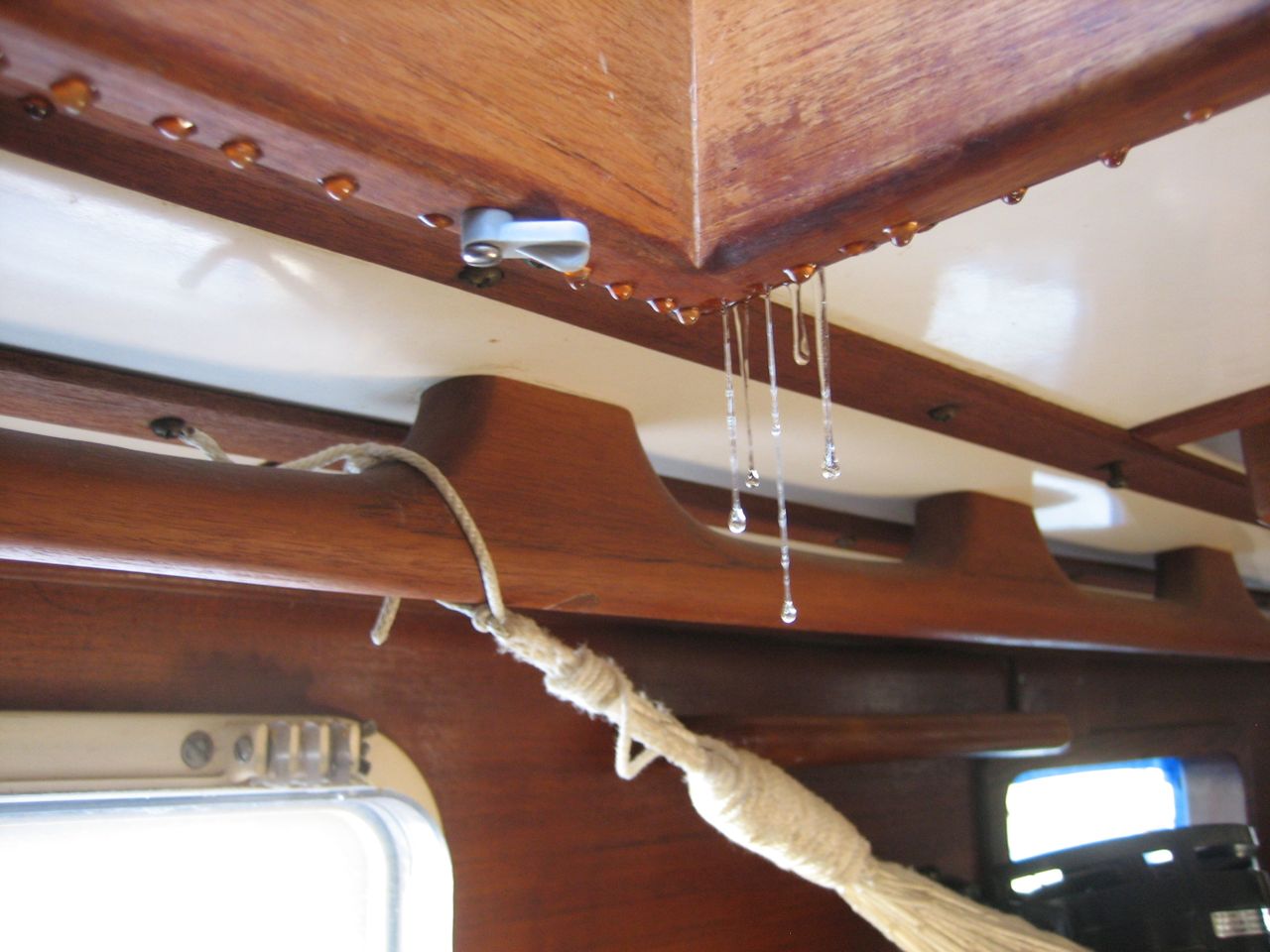
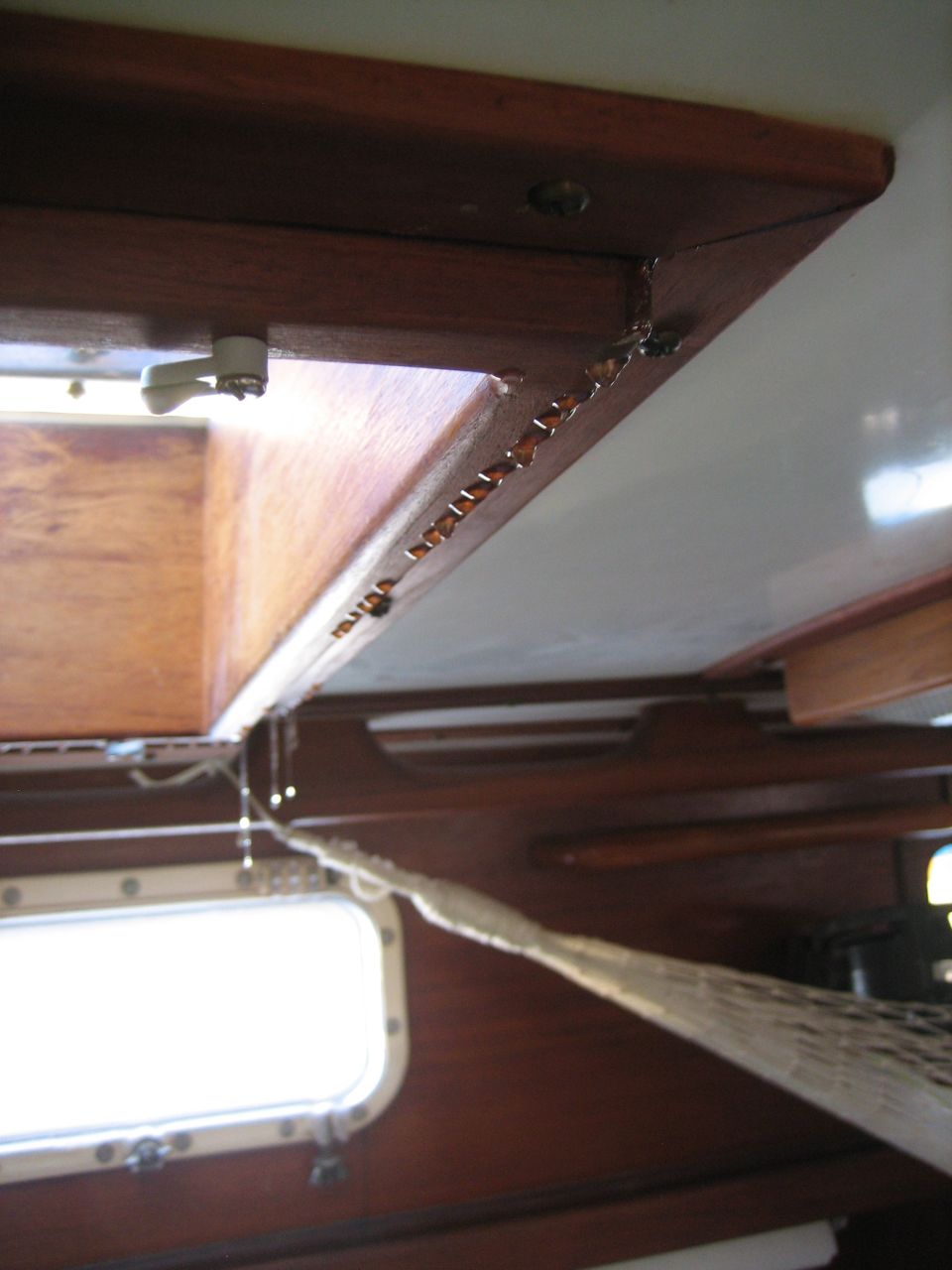
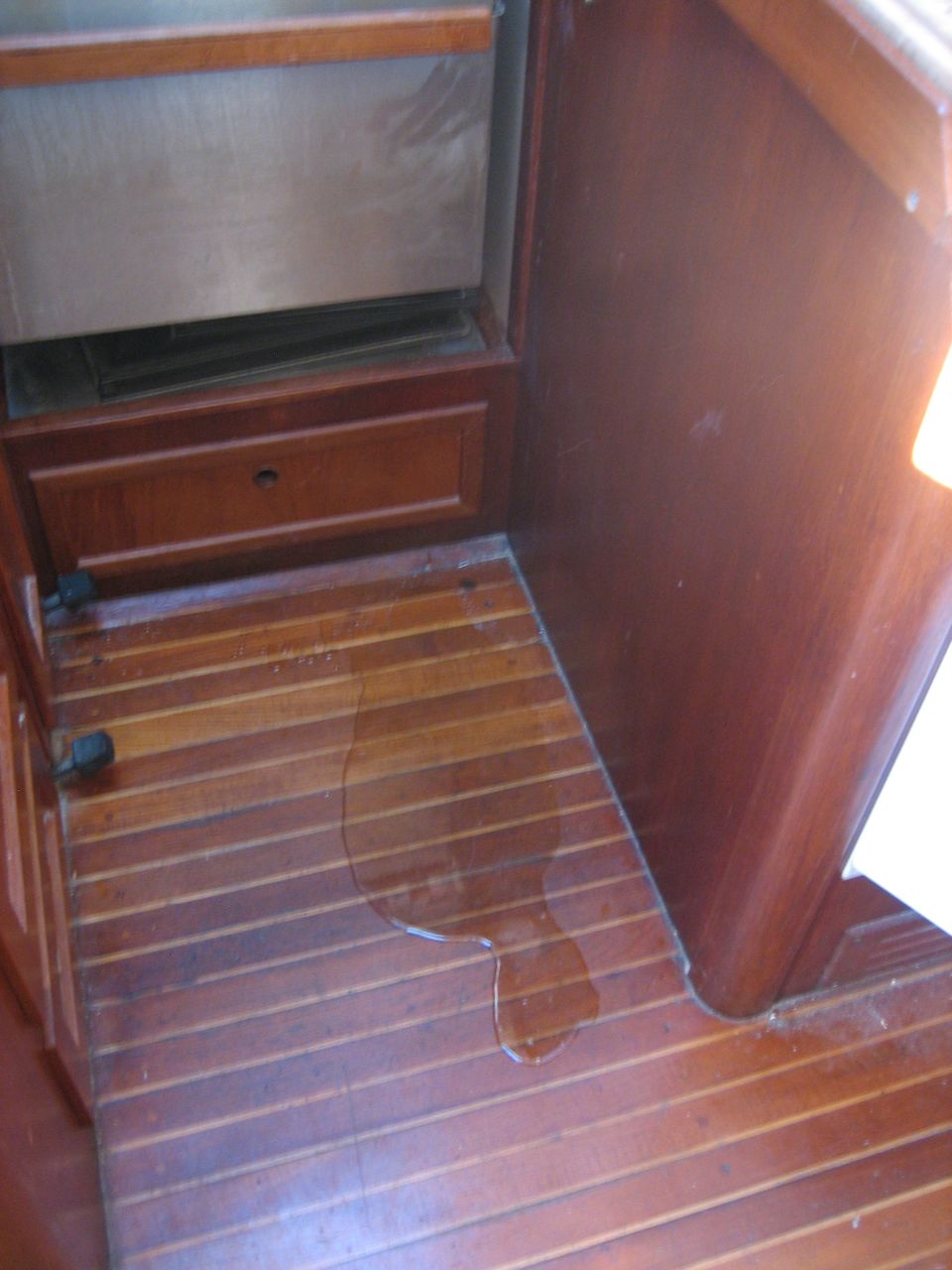
    The next day I showed up at the boat to discover a cured puddle of resin covering the galley sole, and stalagtites of resin around the hatch above the puddle.  I spent an hour and a half grinding the resin off the floor with the belt sander (36 grit) and another hour and a half chiseling apart the ceiling trim and panels.  Now the floor of our galley has a large spot of ugly bare wood that I need to polyurethane, and I still haven’t successfully fixed the delamination on the deck.  That sucked.

  • Replaced cam in seawater pump

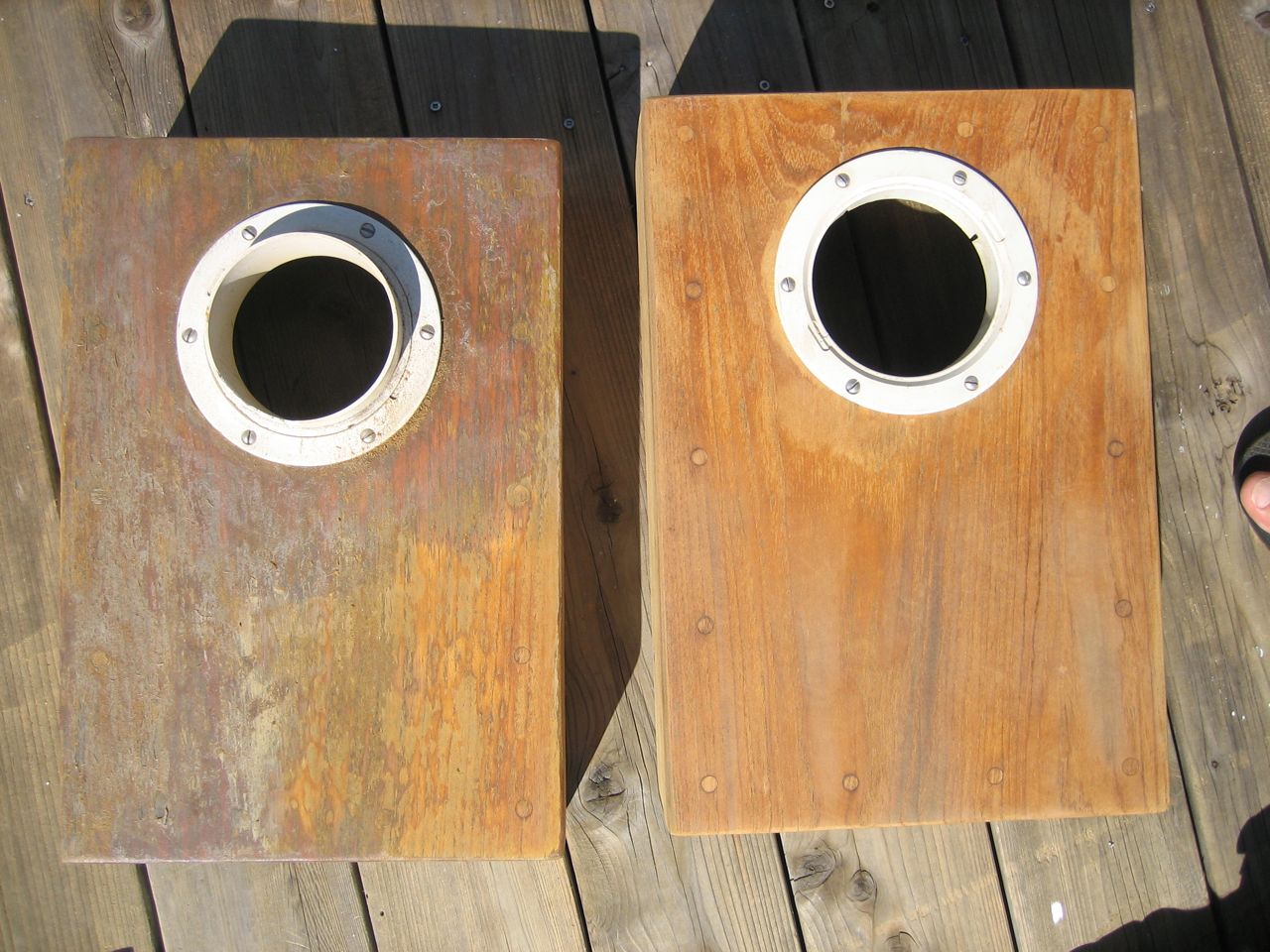
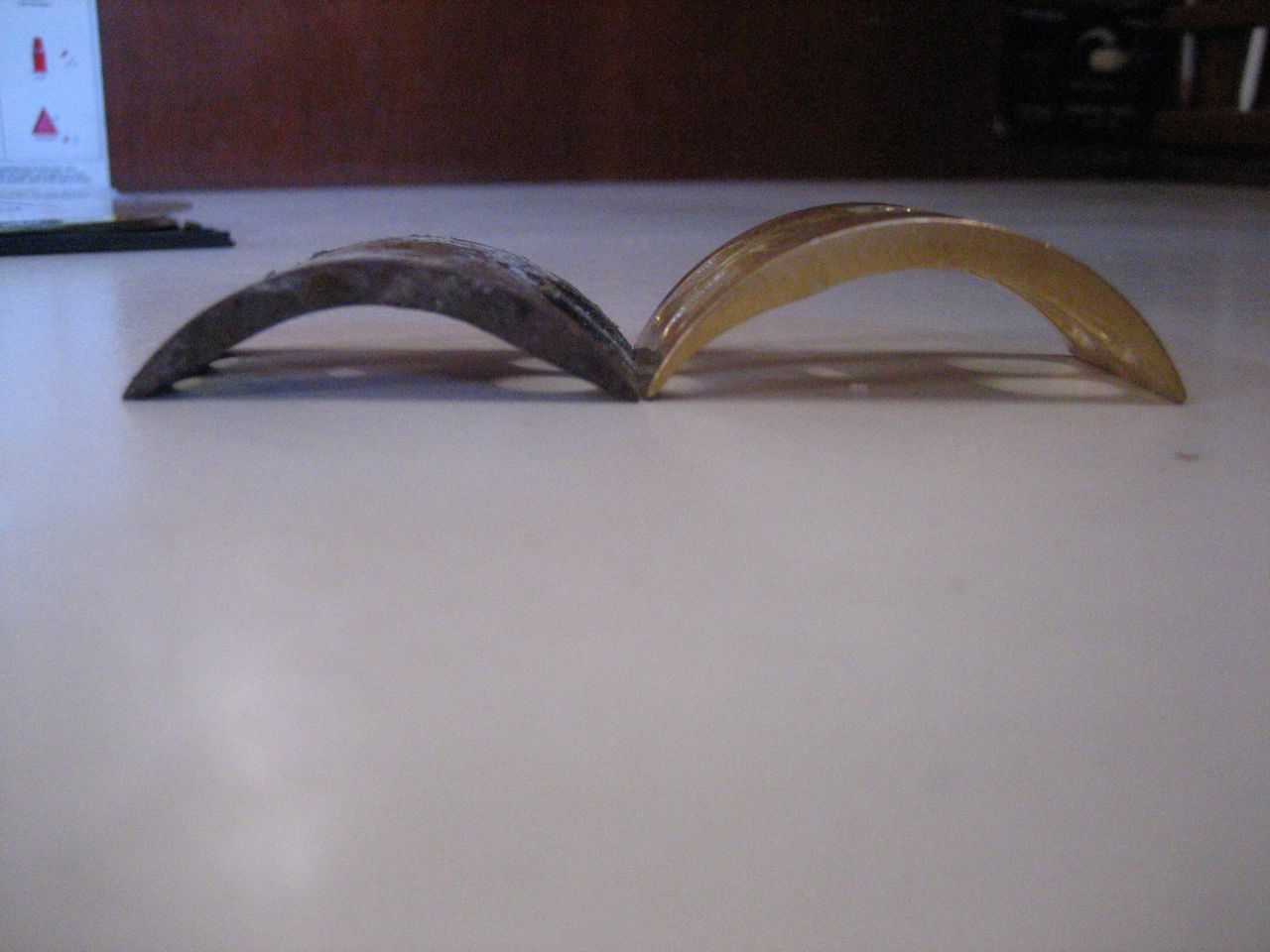
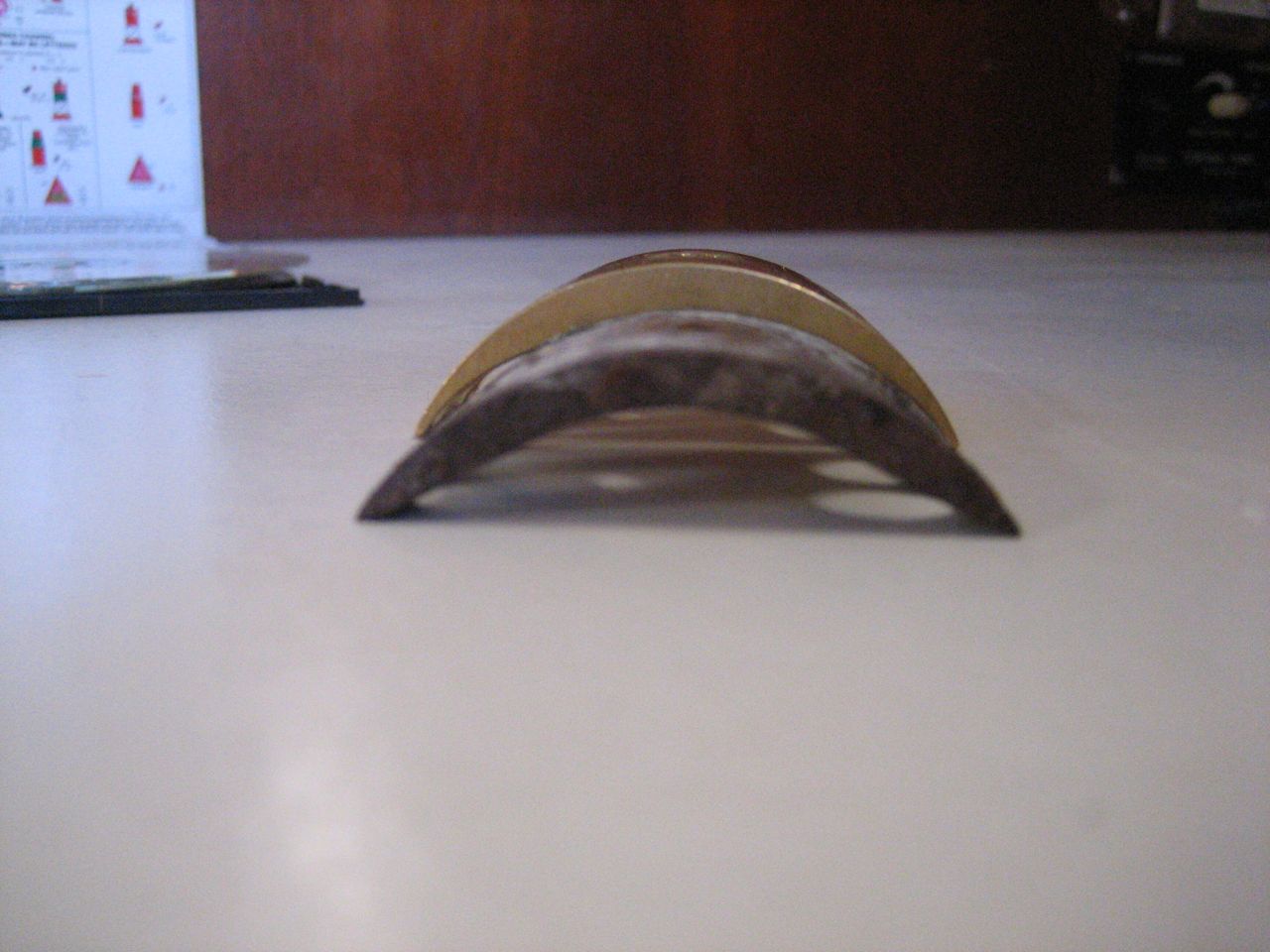
    As mentioned a few posts ago, I pulled the seawater pump off the engine expecting to notice wear on the back plate.  I didn’t find that, but I did notice that the cam appeared worn.  For $50 I got us a new one and installed it.  Haven’t run the engine yet to know if this will help with the overheating.  You tell me, does it look like the old one was that bad?

  • Refrigeration, pt 5 (FINAL)

    Pt 1
    Pt 2
    Pt 3
    Pt 4

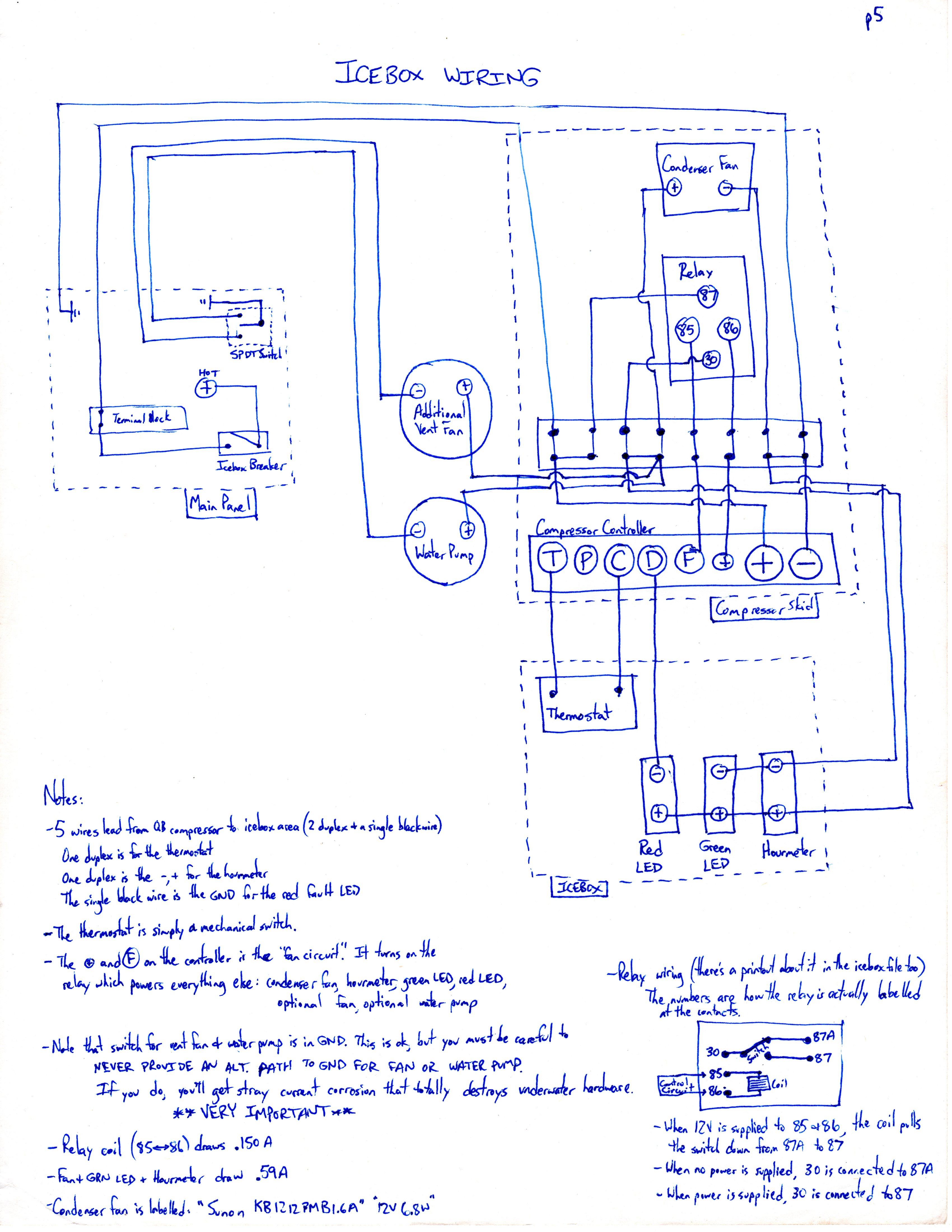
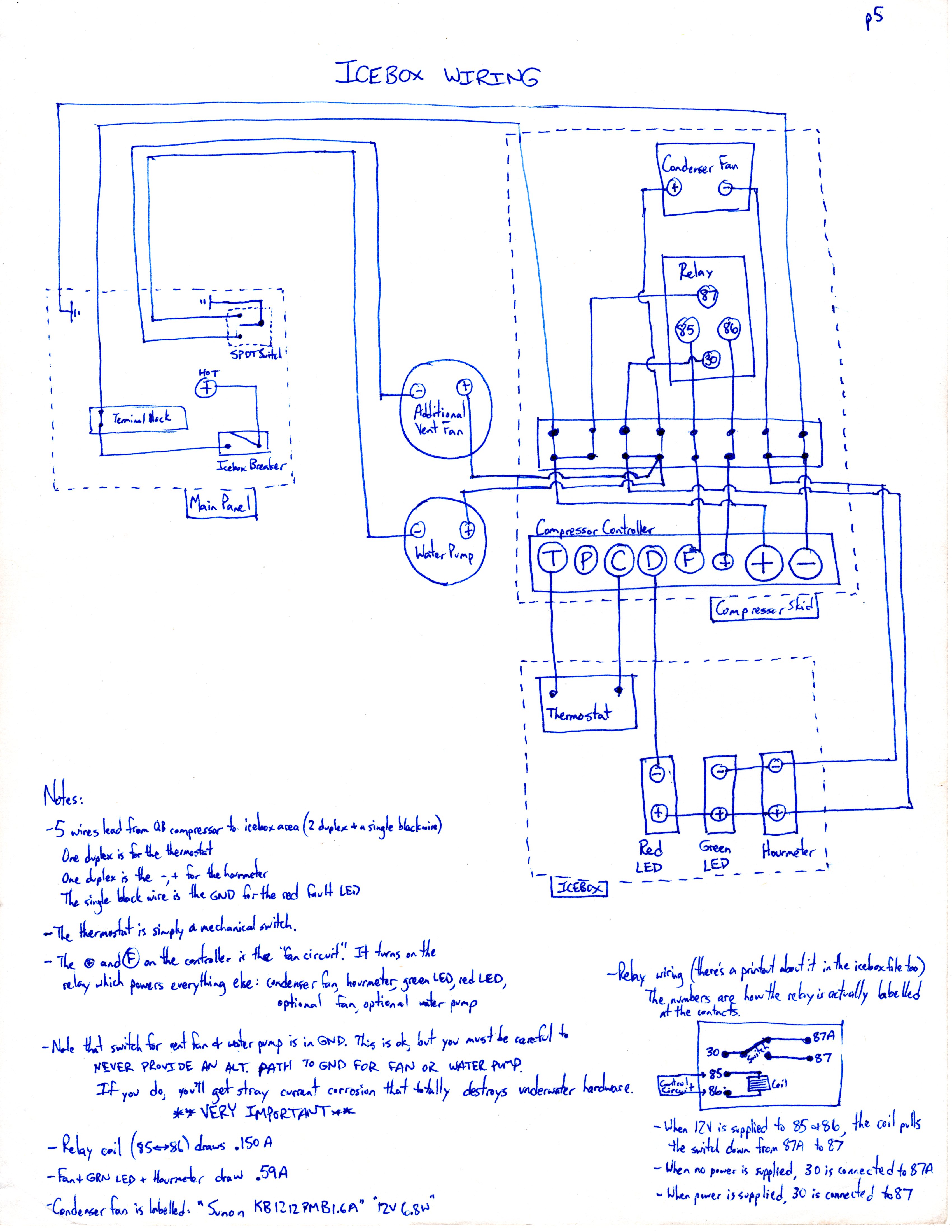
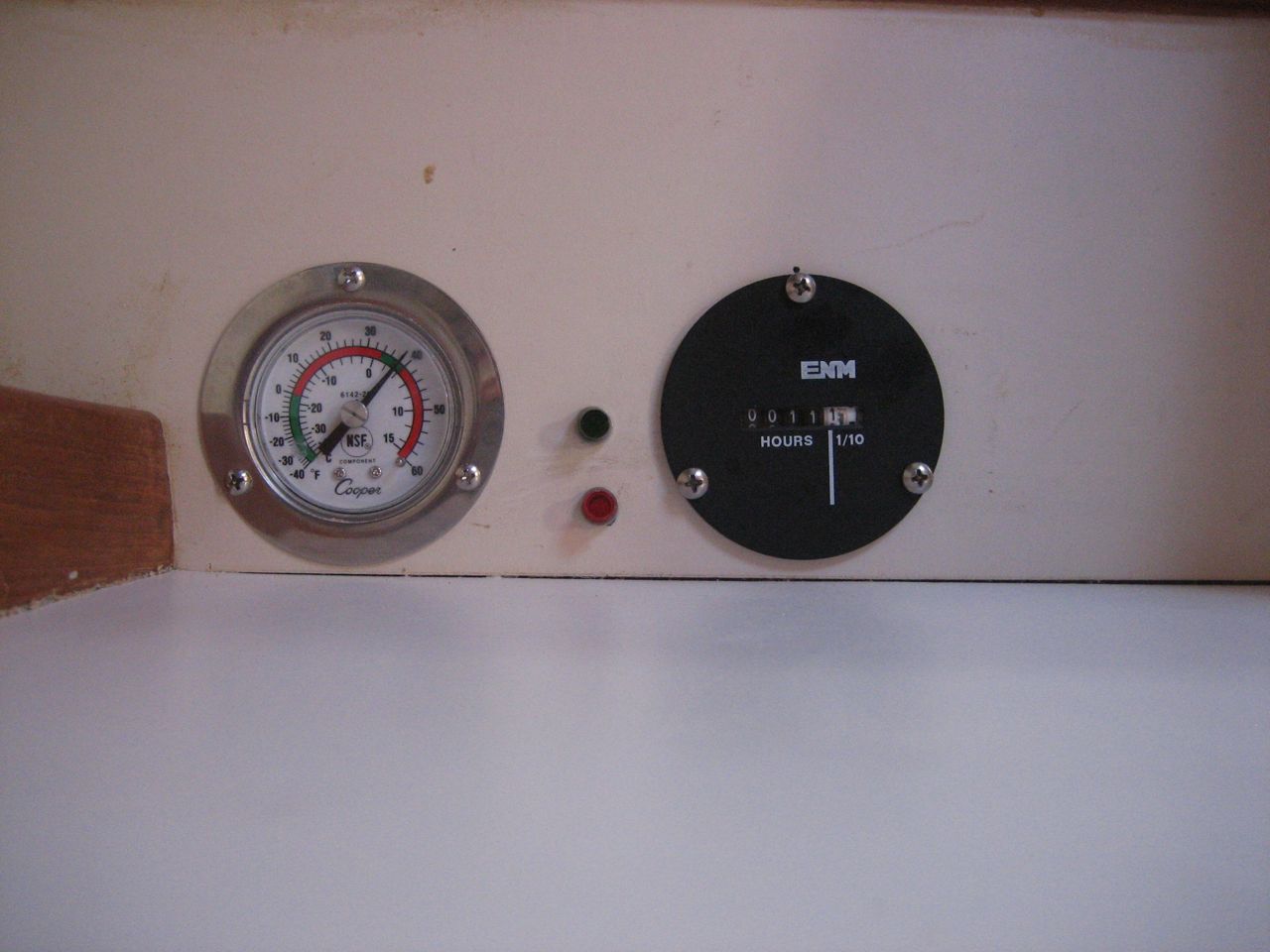
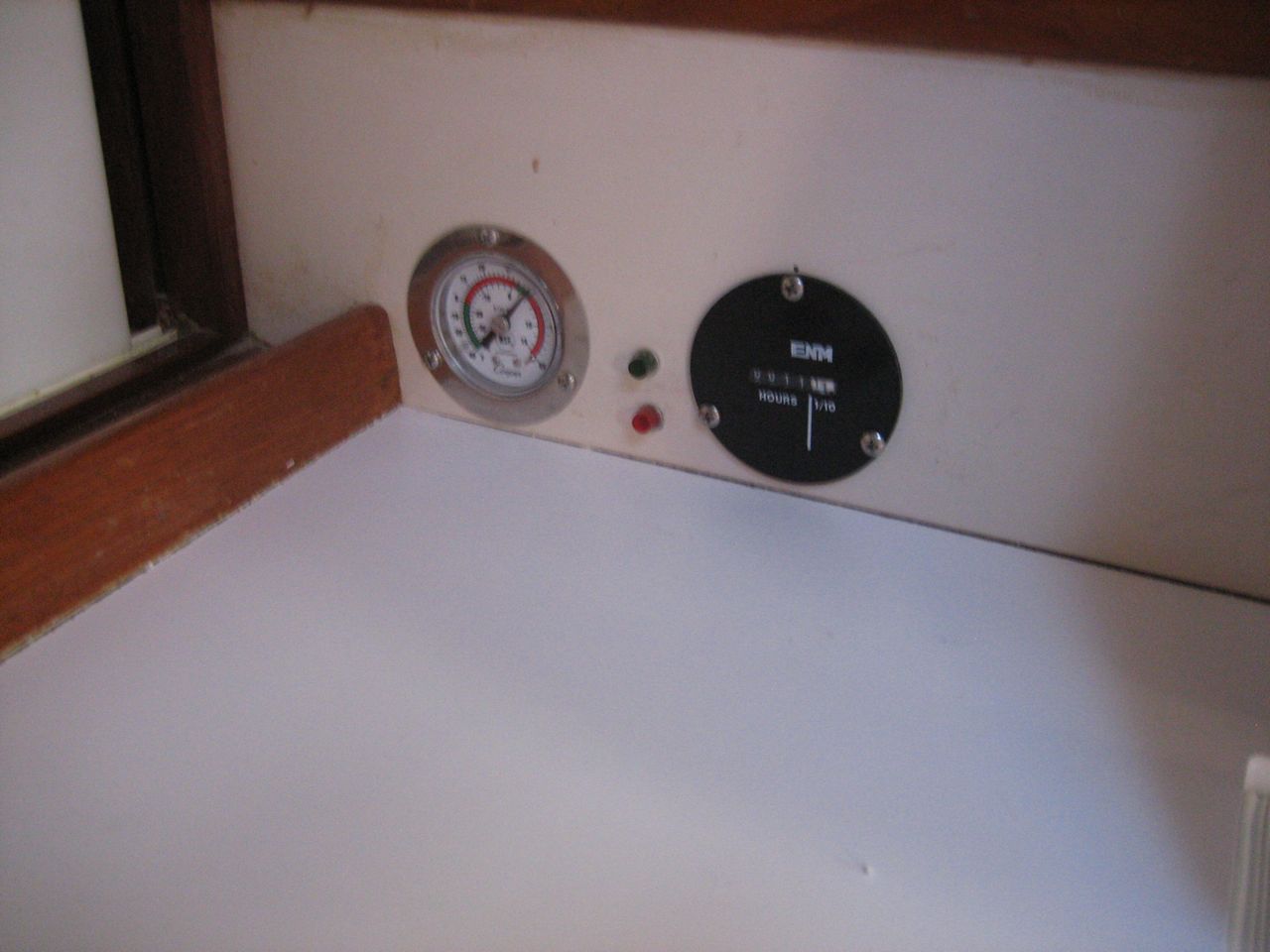
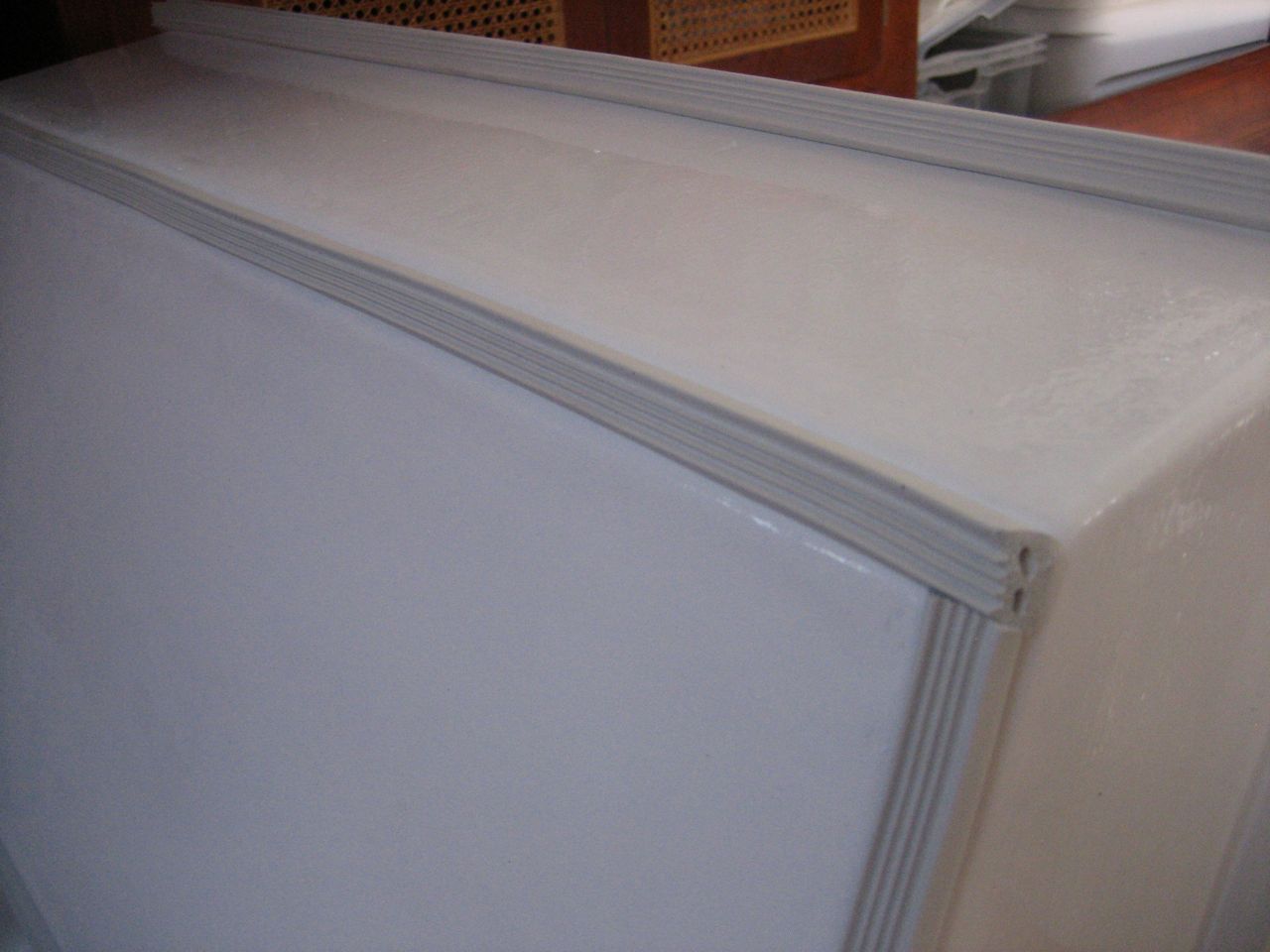
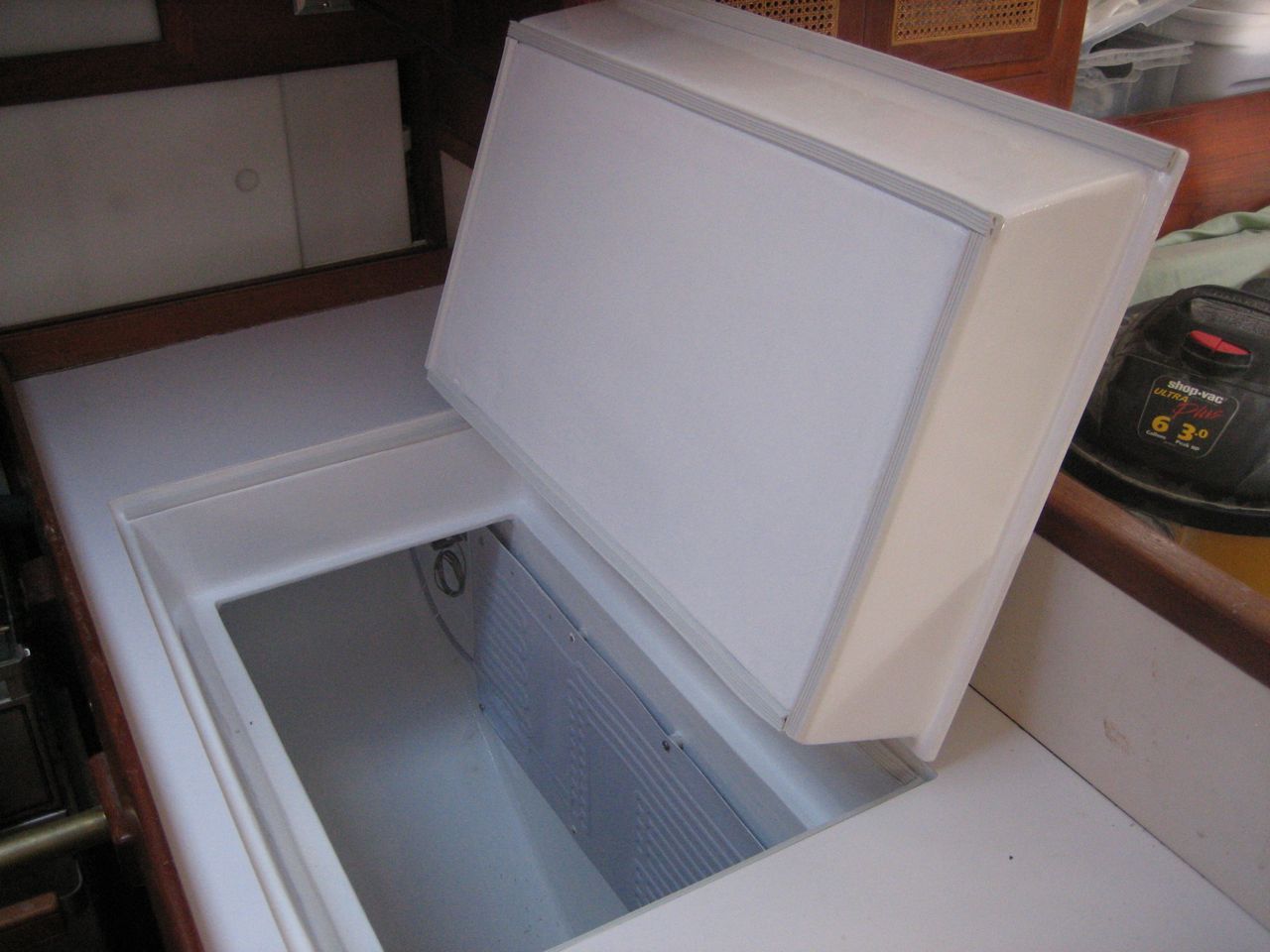
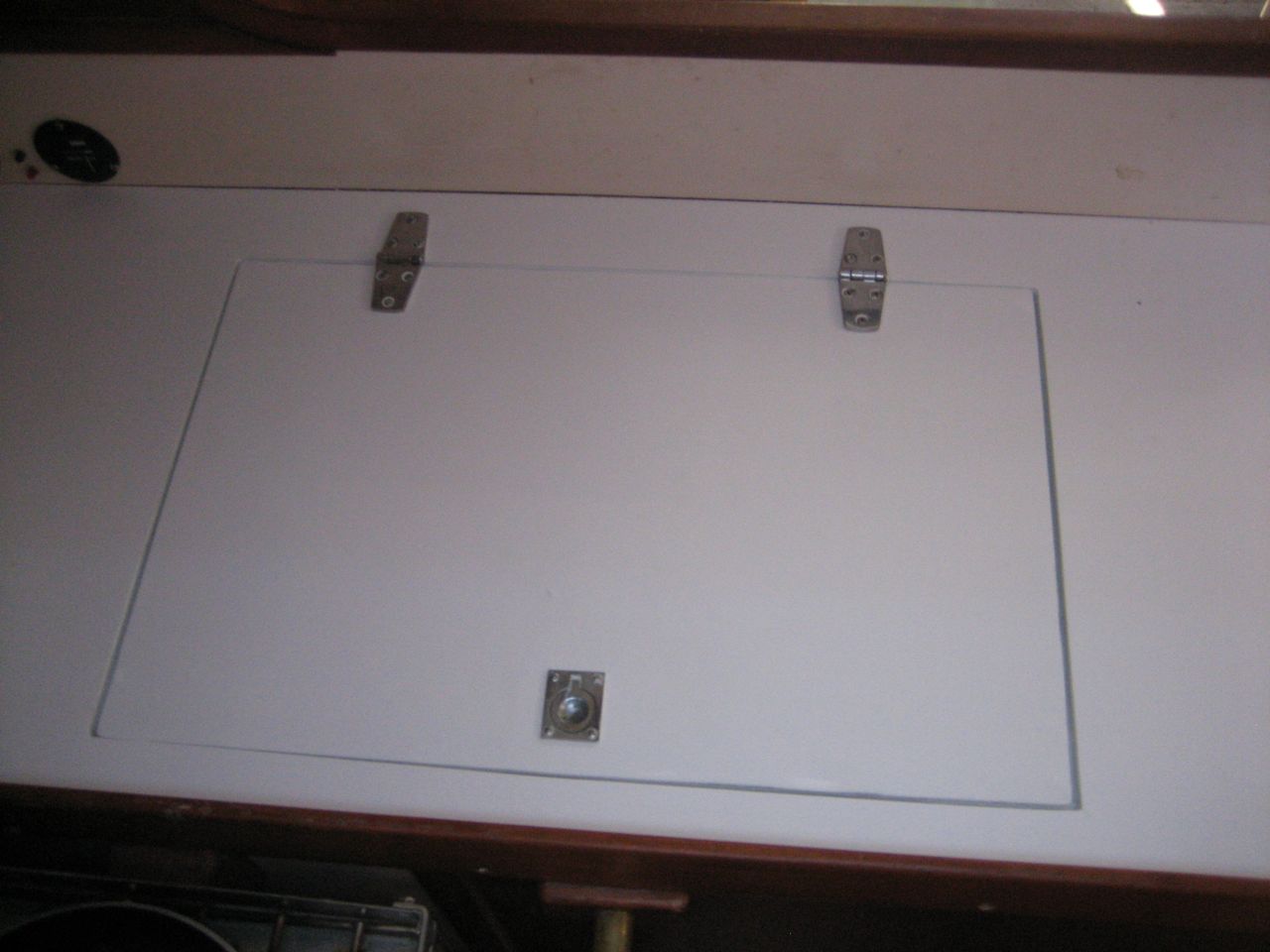
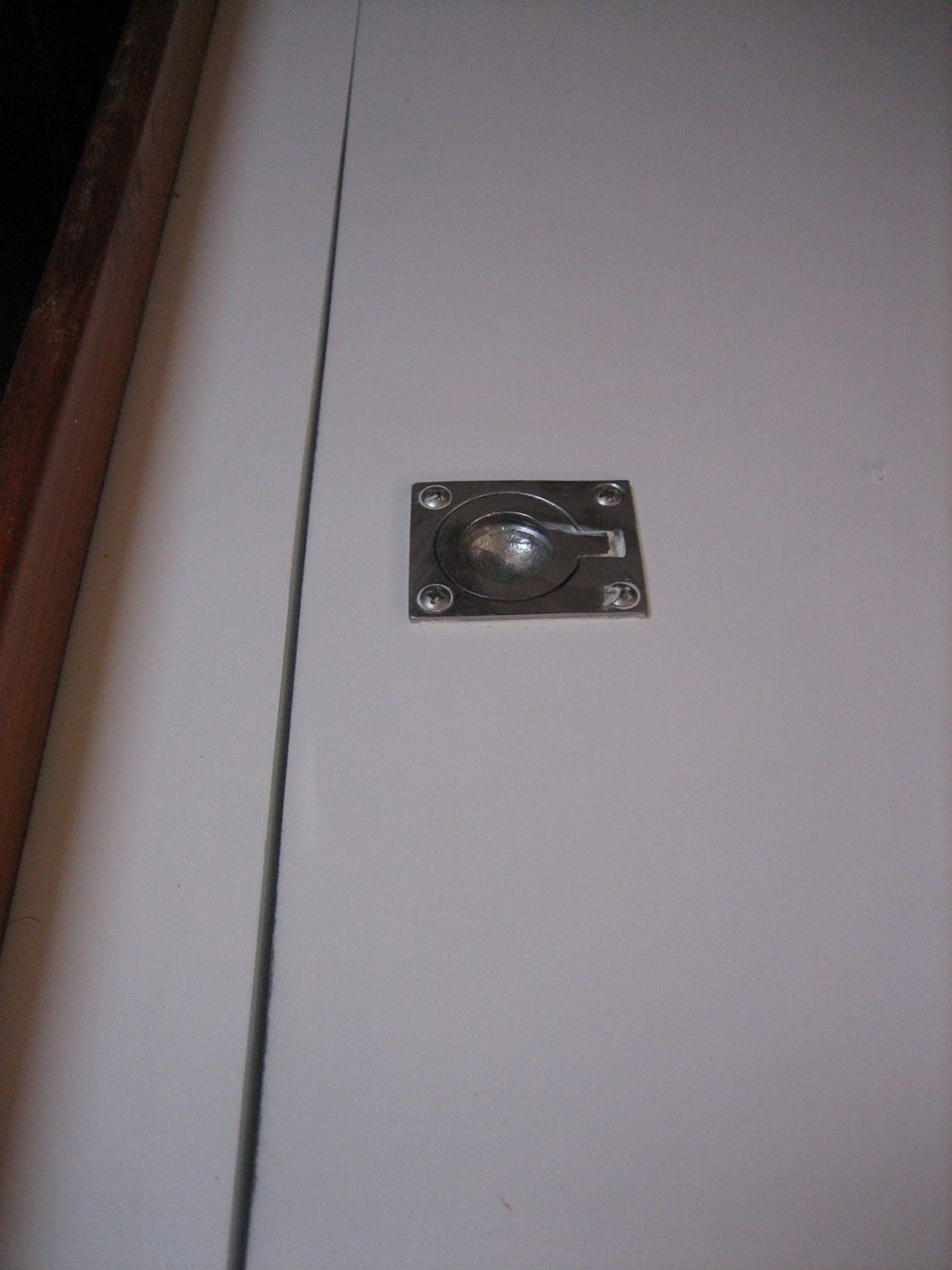
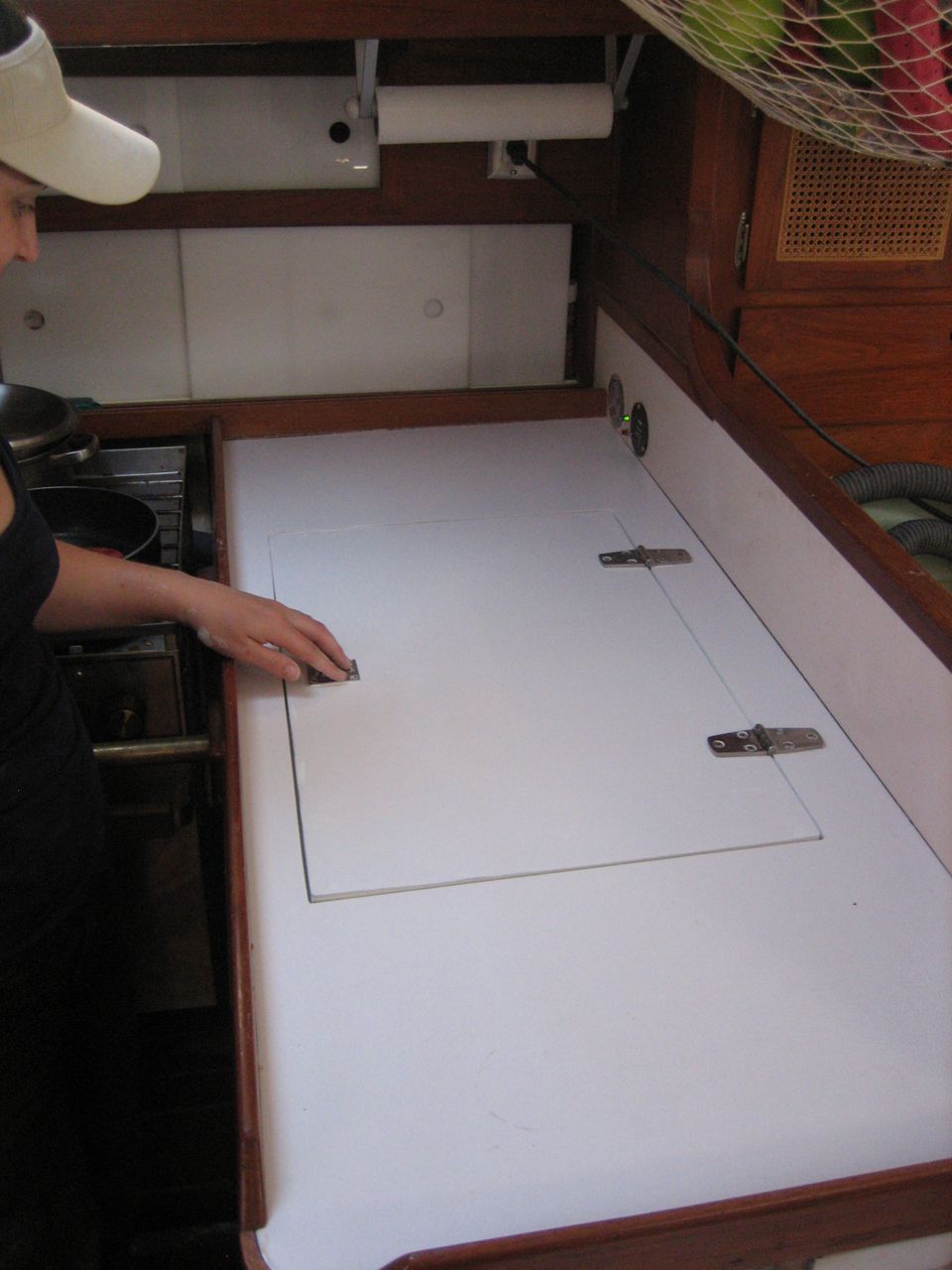
    I installed gauges in the countertop above the icebox: a thermometer (convenient to have one outside the fridge so you don’t have to open the box to check), a green LED that lights up whenever the compressor is running, a red LED to show faults, and an hourmeter to use in measuring the duty cycle.

    Here is the wiring diagram for my system:

    IceboxWiring

    Also, here is a pdf for the Danfoss BD50F_compressor.

    I did not install the plumbing or the pump for the water-cooled condenser–I’m going to wait to buy that stuff until hotter climates (other projects take priority).  Up in the bay area the air-cooled condenser is more than adequate, and more efficient than running the water-cooled condenser anyway.

    The whole box is painted with two coats of Primekote and two coats of Perfection.

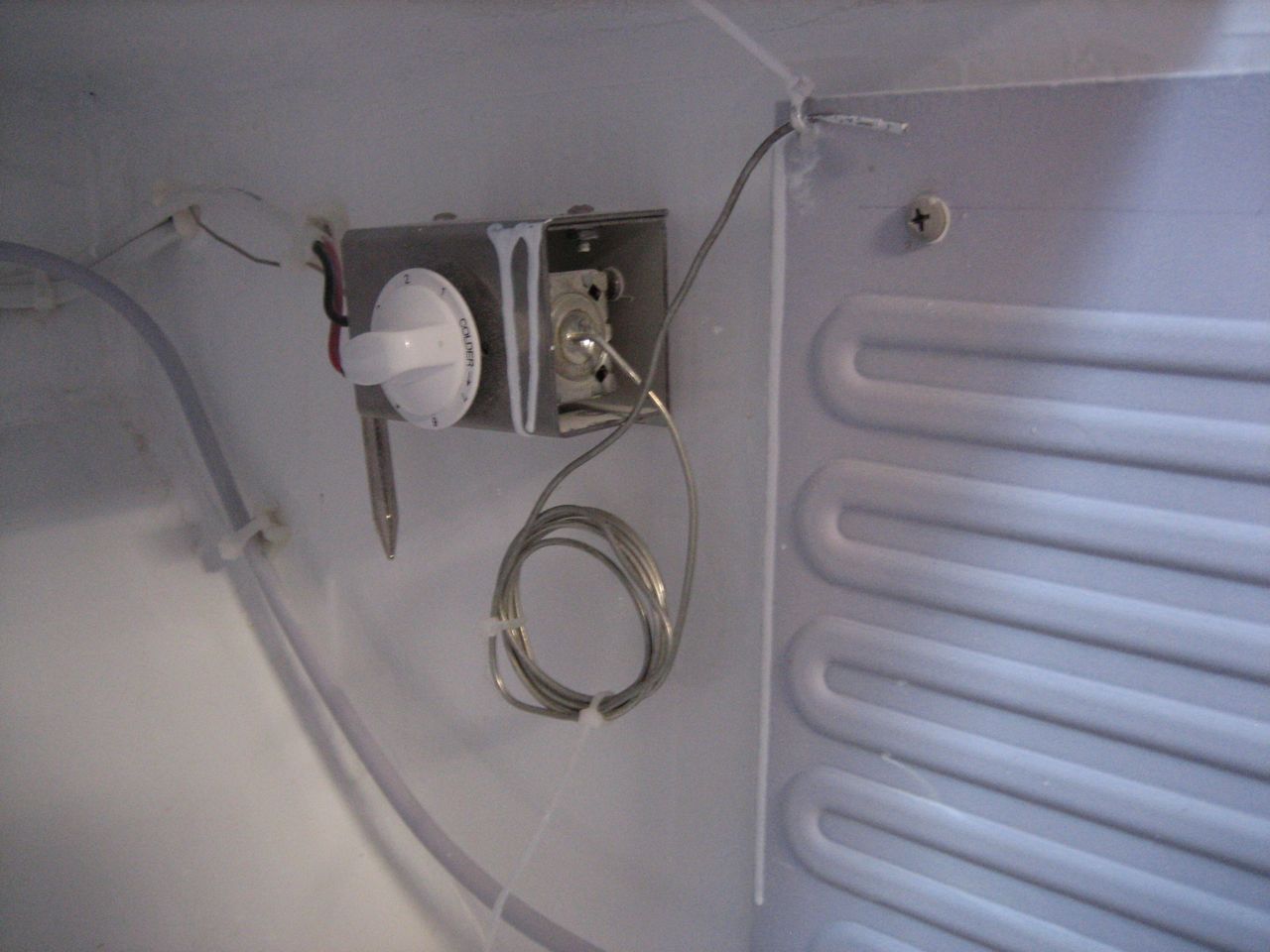
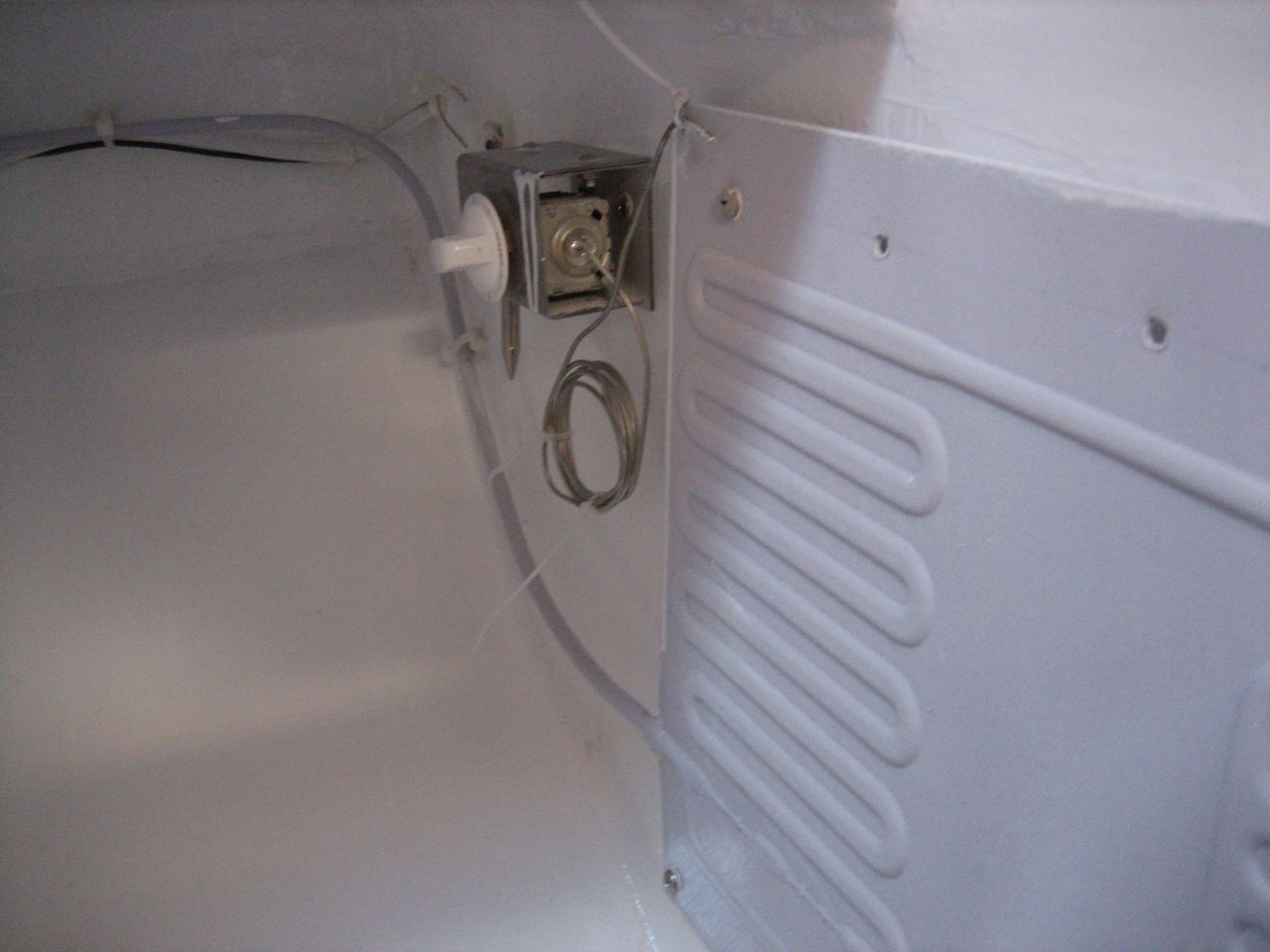
    The icebox has stayed 32-38 for the past three weeks, so it’s working well.  We have been having some issues with the compressor short-cycling (coming on for two minutes, going off for three, back on, etc).  The situation started to worry me when we started getting the intermittent fault code of three red blinks: indicating “rotor blocked or pressure differential too high”.  I speculate that the compressor was trying to turn on again too quickly–before the pressure differential had sufficient time to equalize through the evaporator plate.  My research on kollman’s forum and the rparts forum tells me that the short-cycling is a result of too much of the thermostat sensor touching the evaporator plate.  I have pulled all but an inch of the sensor tubing off of the plate, coiled up a few inches away from it.  It seems to be working better, but I haven’t got a trustworthy data set yet to be sure.  Aside from that, the box is totally finished:

  • Replaced batteries in house bank

    Two of the old batteries wouldn’t hold a charge, and the other two were low capacity, unfortunately mostly due to neglect (not being kept topped off with water).

    The old ones were 4 Rolls-Surrette EIGH 262, each of which is 6V and 262Ah (at the 20hr rate).

    The new ones are 4 Rolls-Surrette S460 (pdf datasheet here), each of which is 6V and 350Ah (20 hr rate).  They are marketed to the solar energy crowd, which is why they quote the capacity at 460Ah at a 100hr rate, which just isn’t the way us sailboat people measure it.

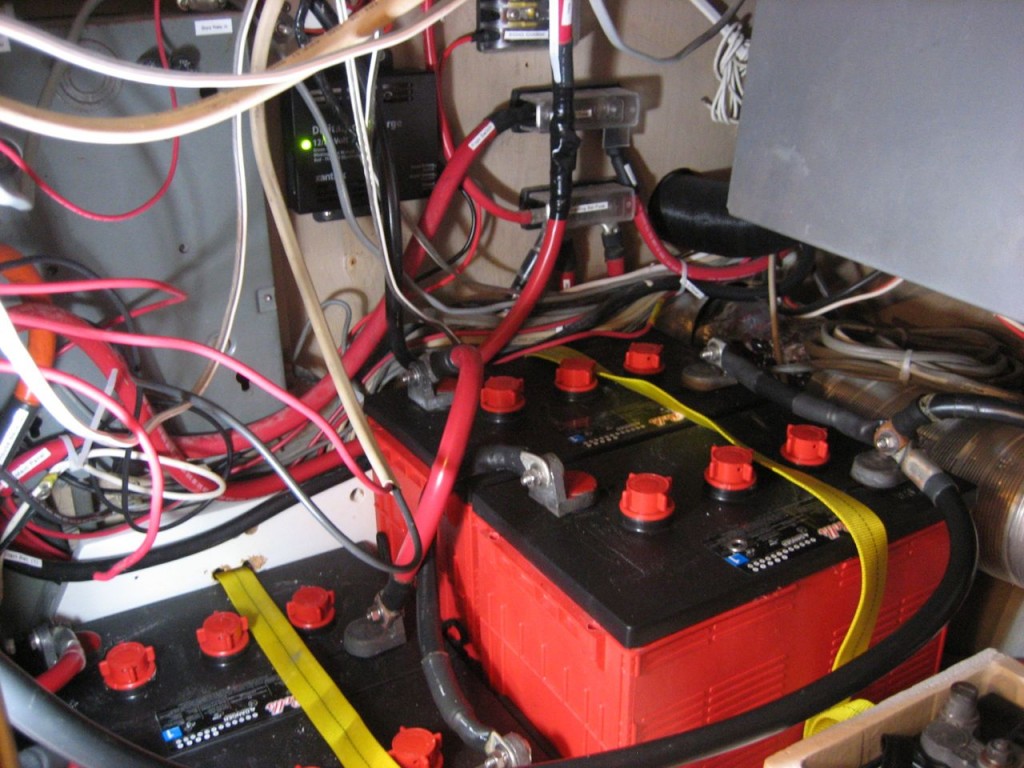
    The new batteries are exactly the same footprint as the old ones, but about 5 inches taller.  As a result, we had to remove the old battery box and modify it to allow for more headroom (there are things mounted over the batteries close enough to have prevented them from fitting).  I cut out the bottom of the box on the left side and dropped it down, cut side pieces, lightly screwed it together, then jonny glassed over it, then we painted it with a couple coats of Primekote epoxy paint.
    Remaining: fabricate new acrylic cover to go over the top (to protect against tools, or the furnace cover, from shorting out on top of the batteries), and add buckles to the webbing straps.

  • Installed echo charger

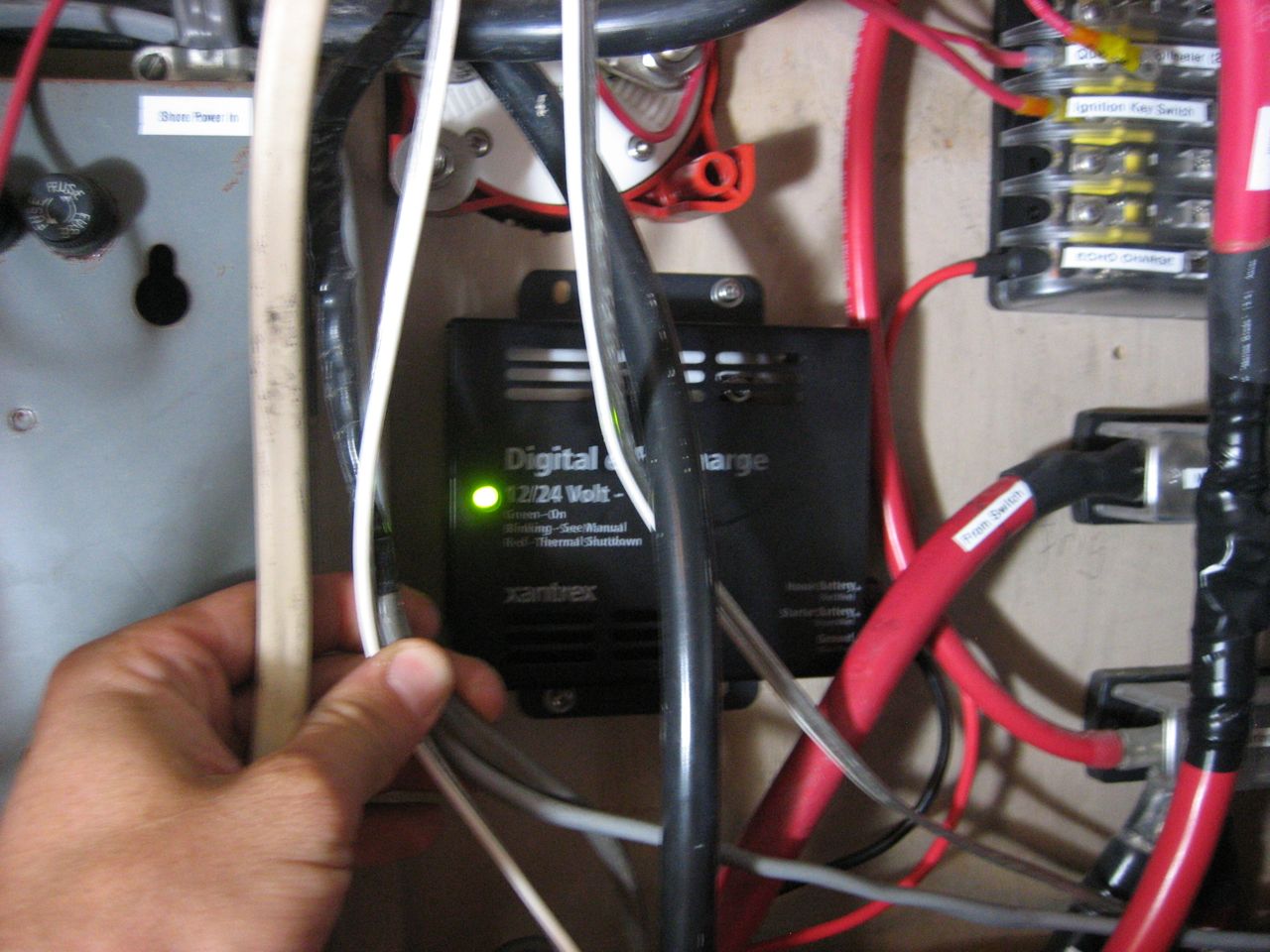
    The echo charger siphons charge from the house bank to the starting battery, up to 15A.  It follows the voltage of the charging source, and cuts the circuit whenever it is below ~13V (a one-way valve to keep the starting battery from draining, and charged up).
    We have a Xantrex Freedom 20 inverter/charger that has a built-in echo charger.  After we installed the starting battery a year ago I wired this up to the starting battery.  However, at some point it stopped working, and it would cost more to pull out the large unit and ship it off to be fixed than to buy a new echo charge ($120).
    I mounted the new stand-alone echo charge above the batteries in the engine room; so far it is working as it should.
    IMG_2582

  • discovered lumps

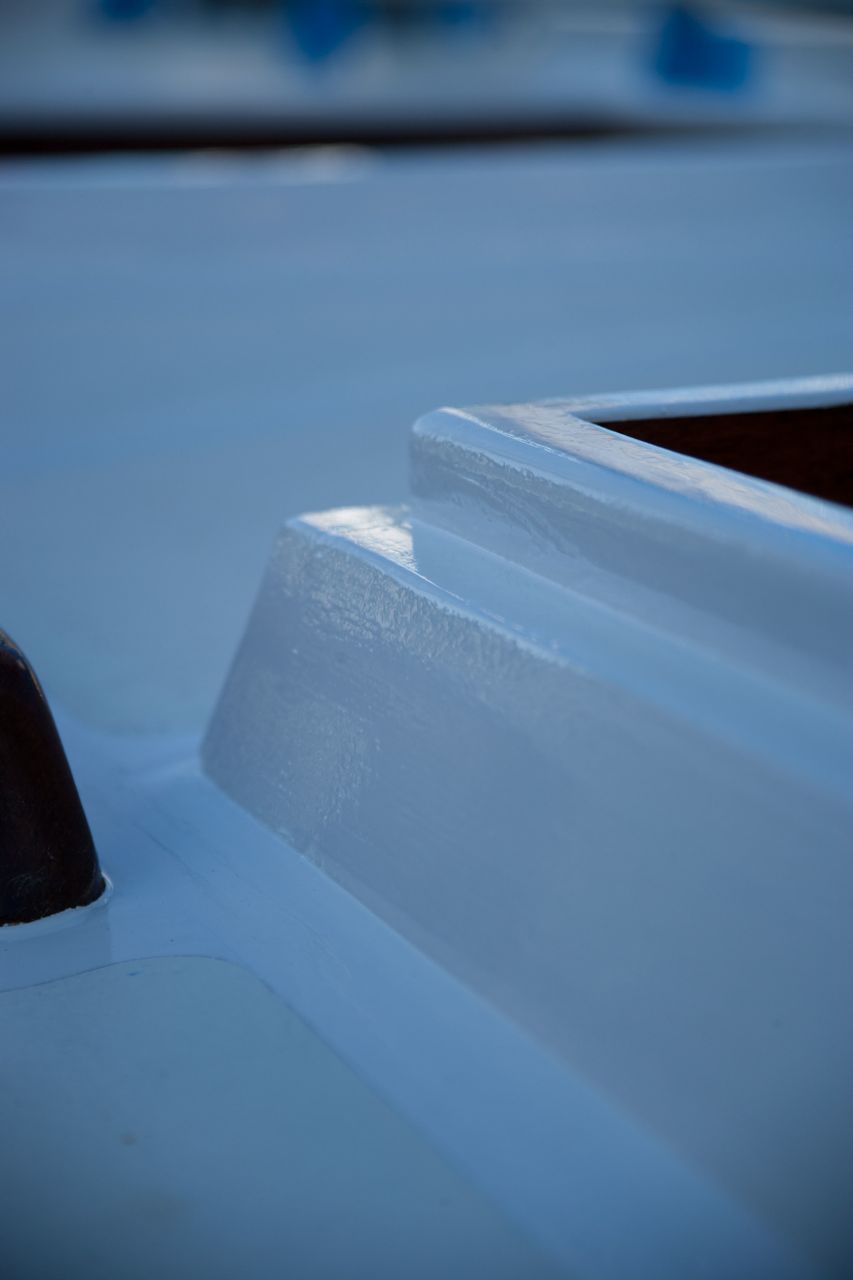
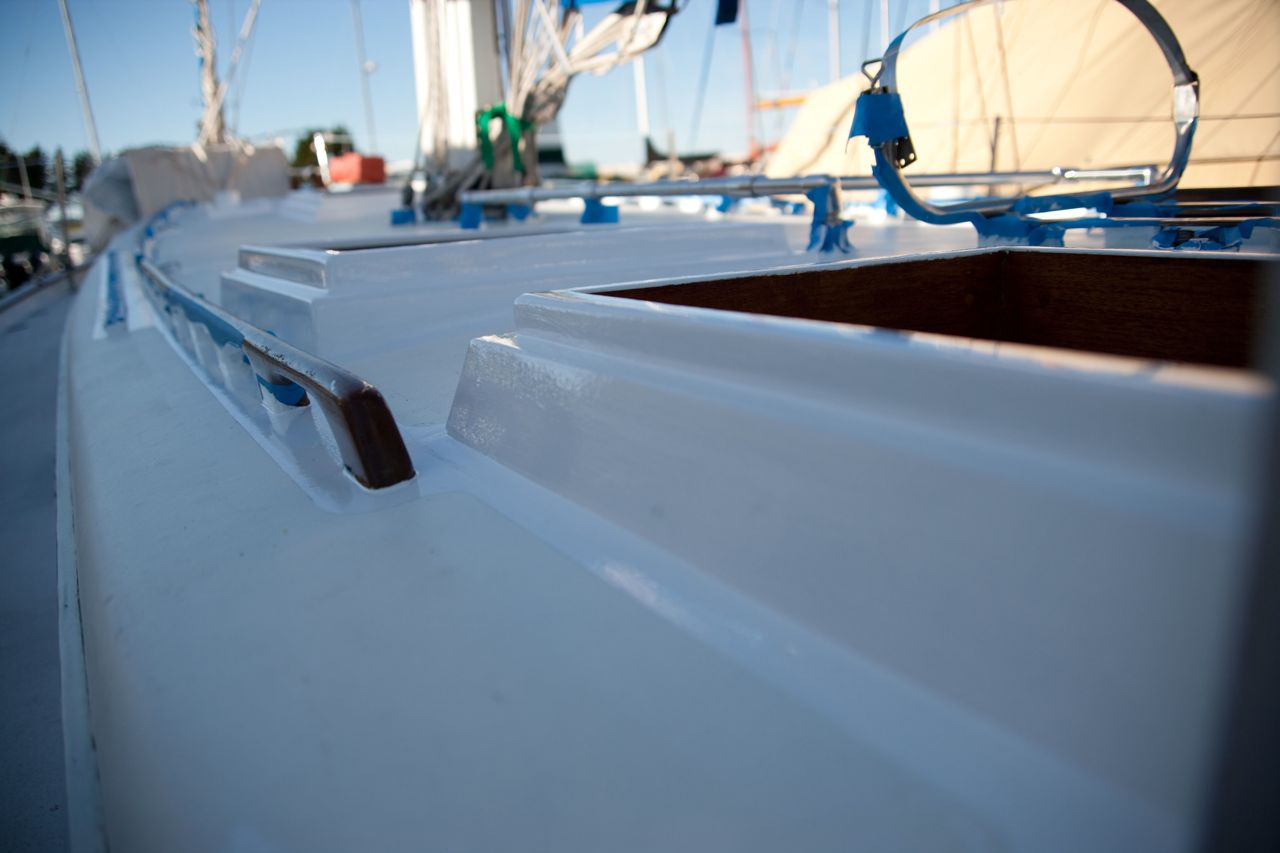
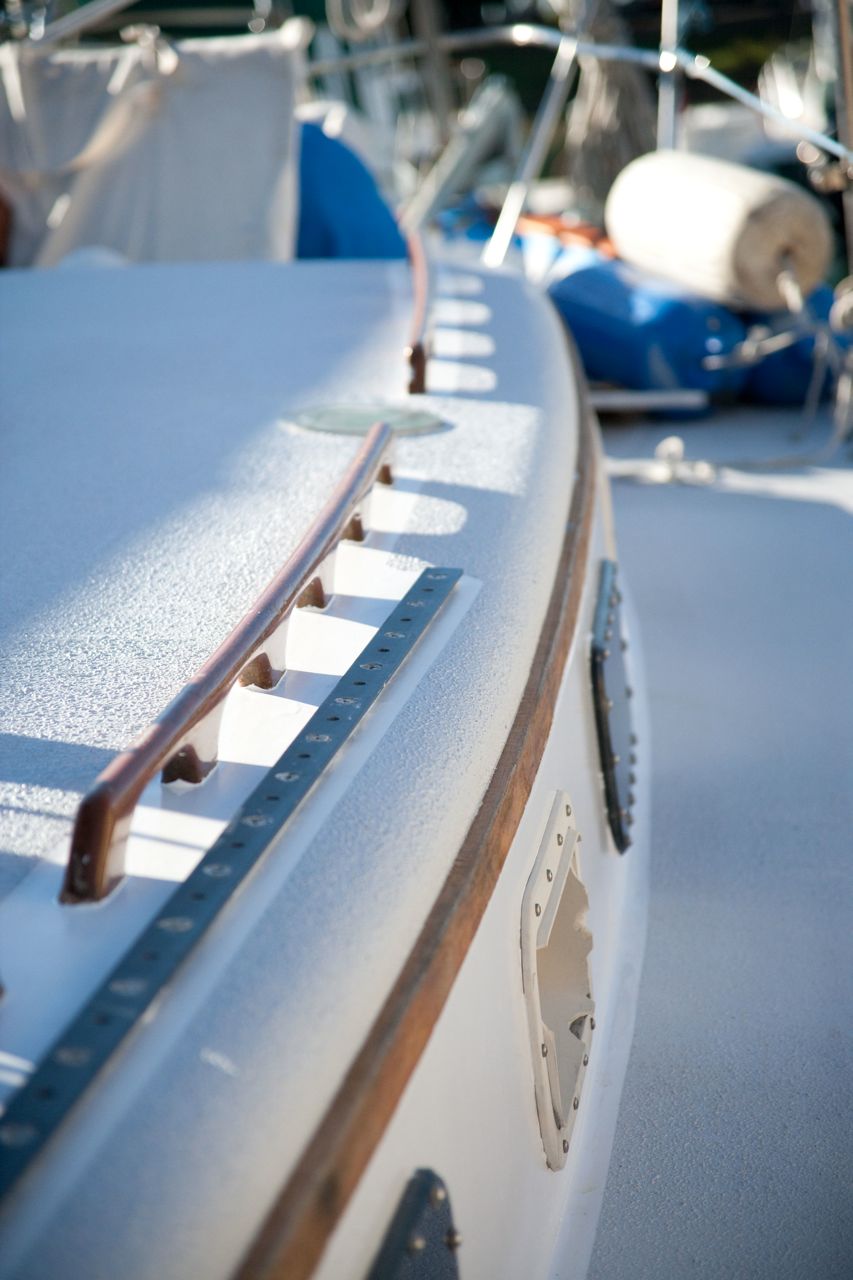
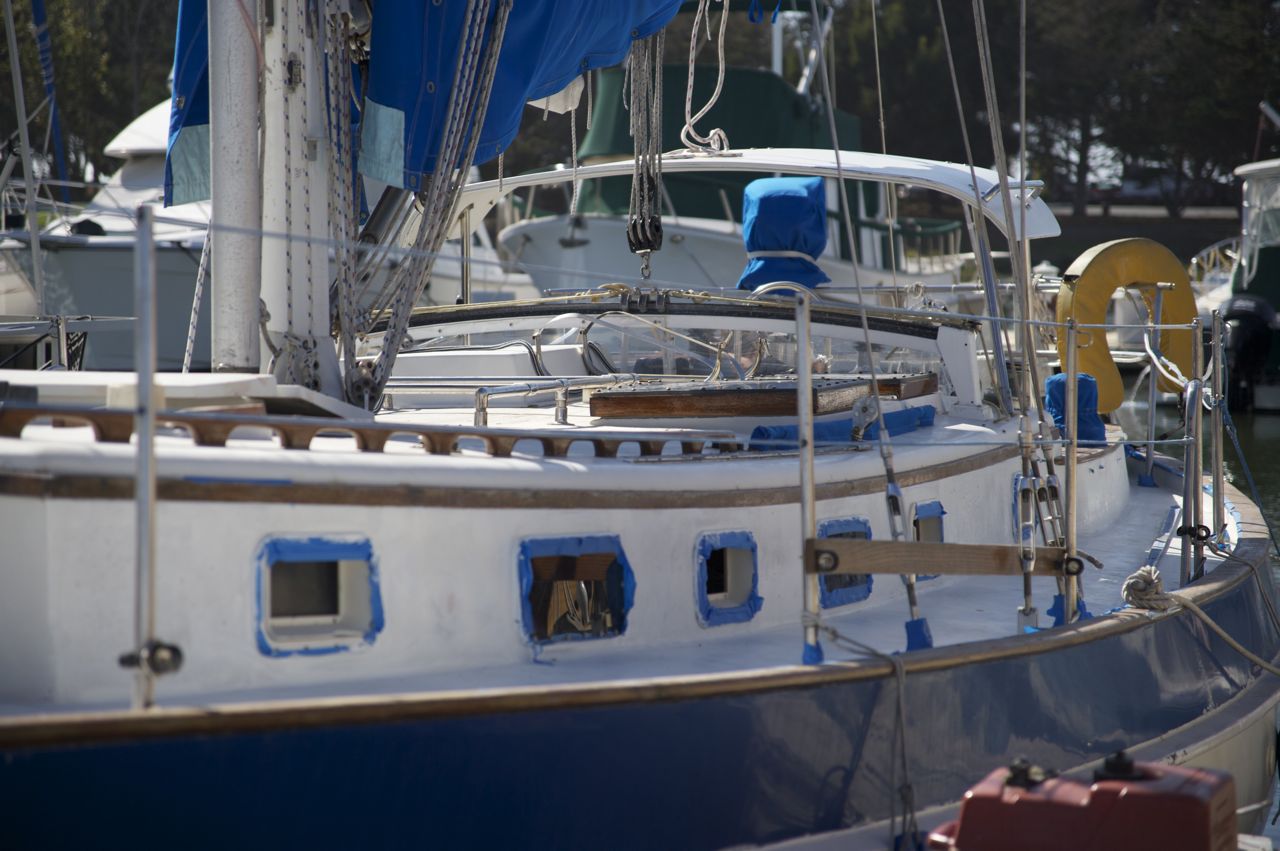
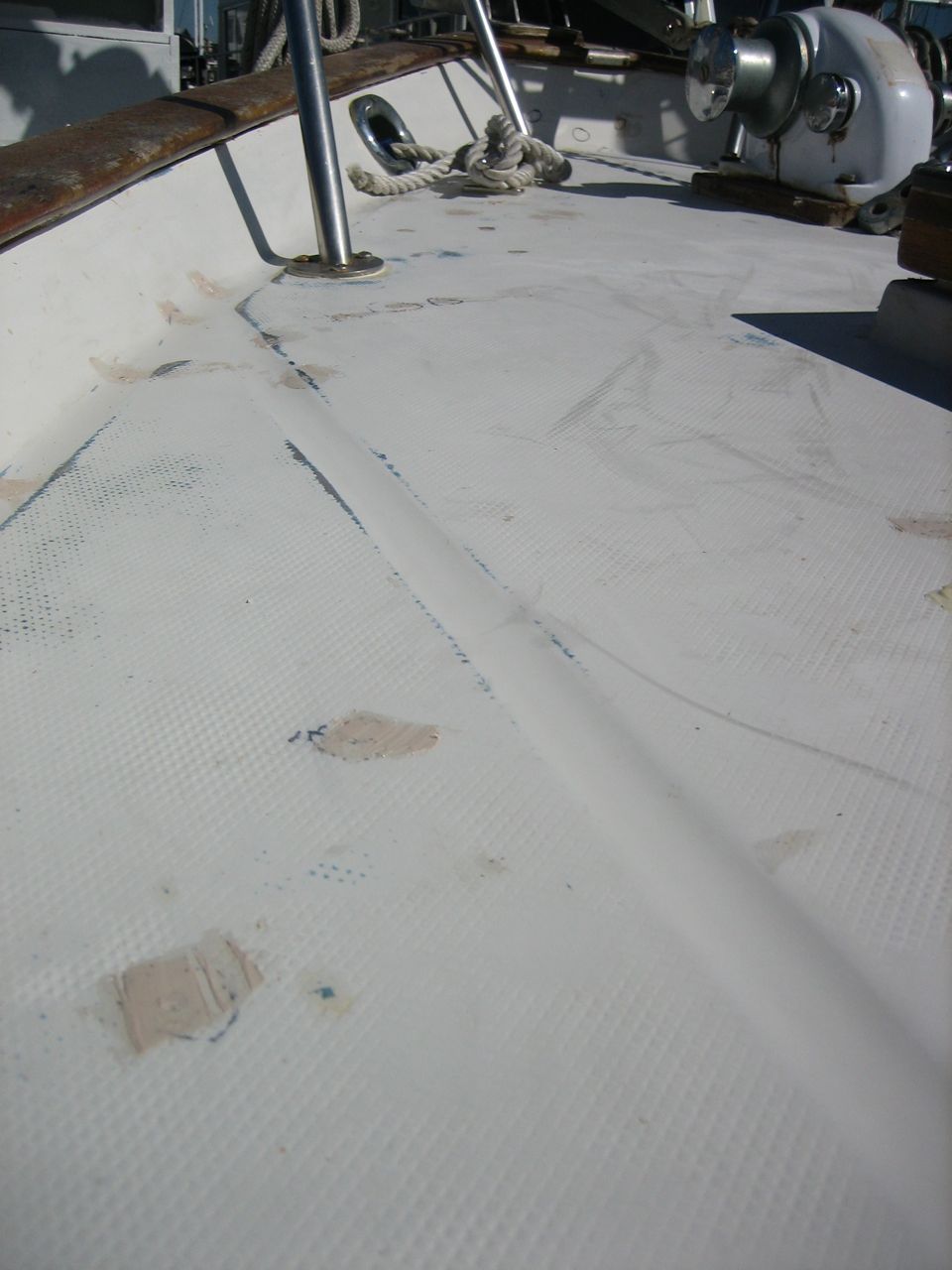
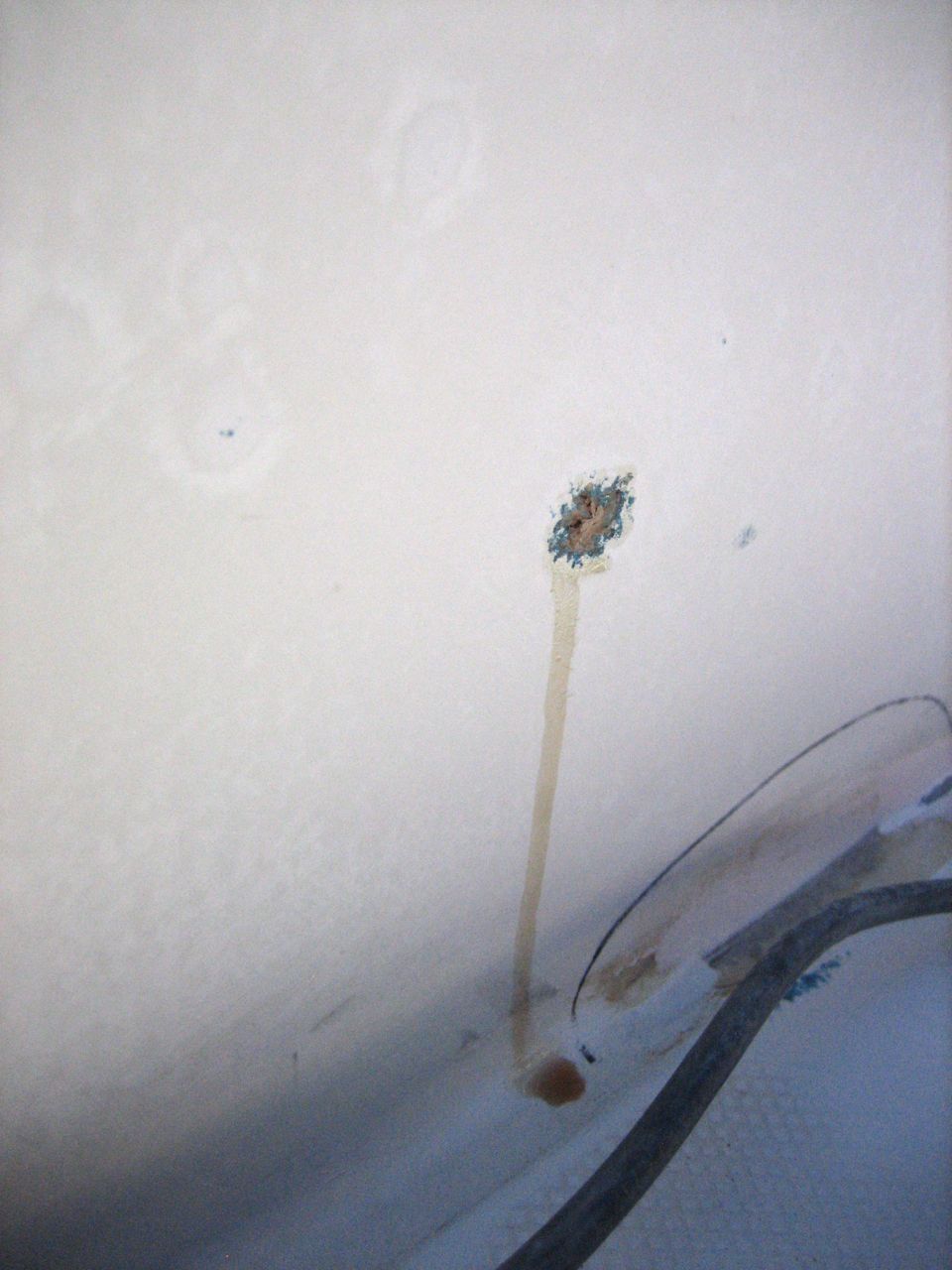
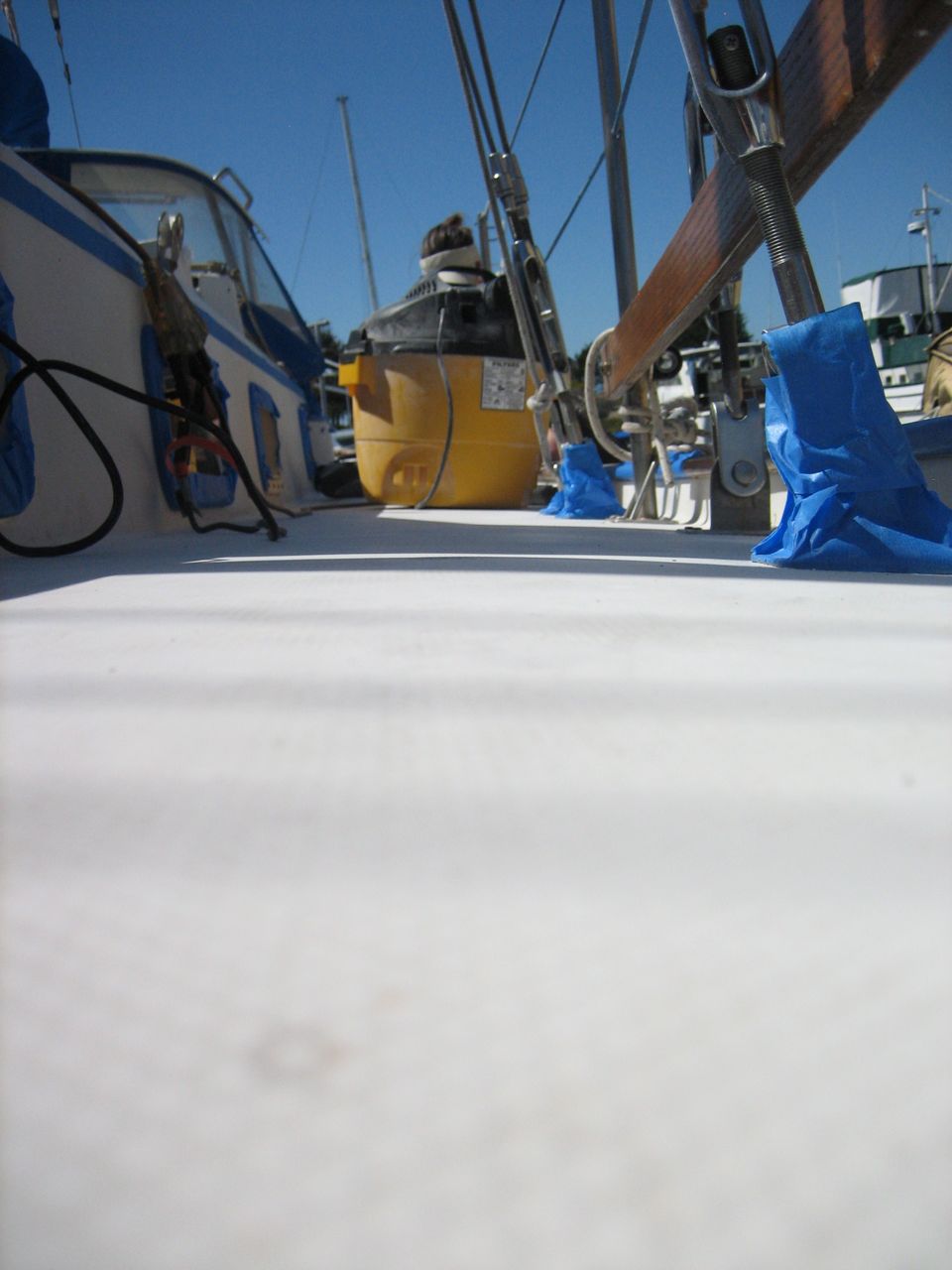
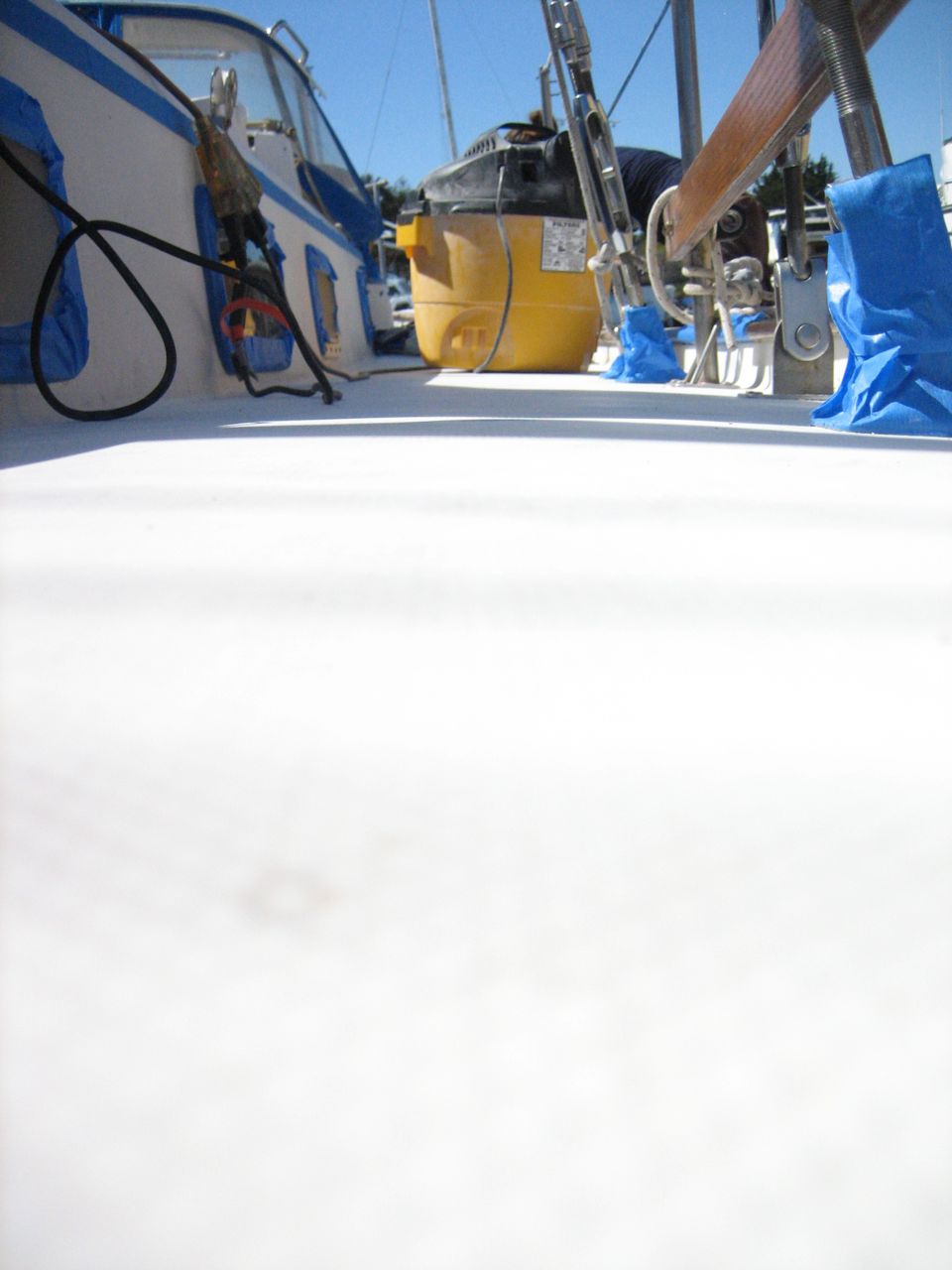
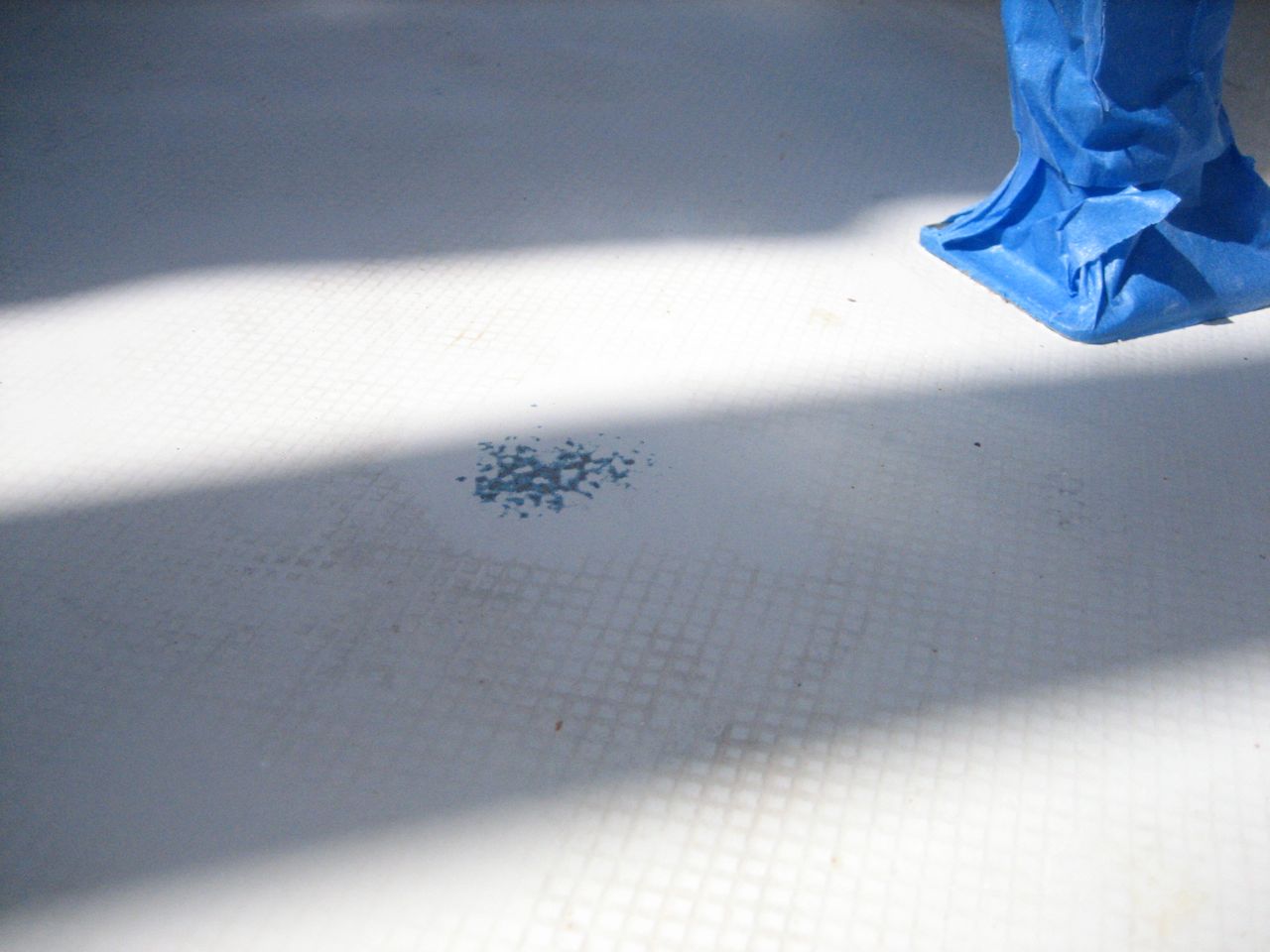
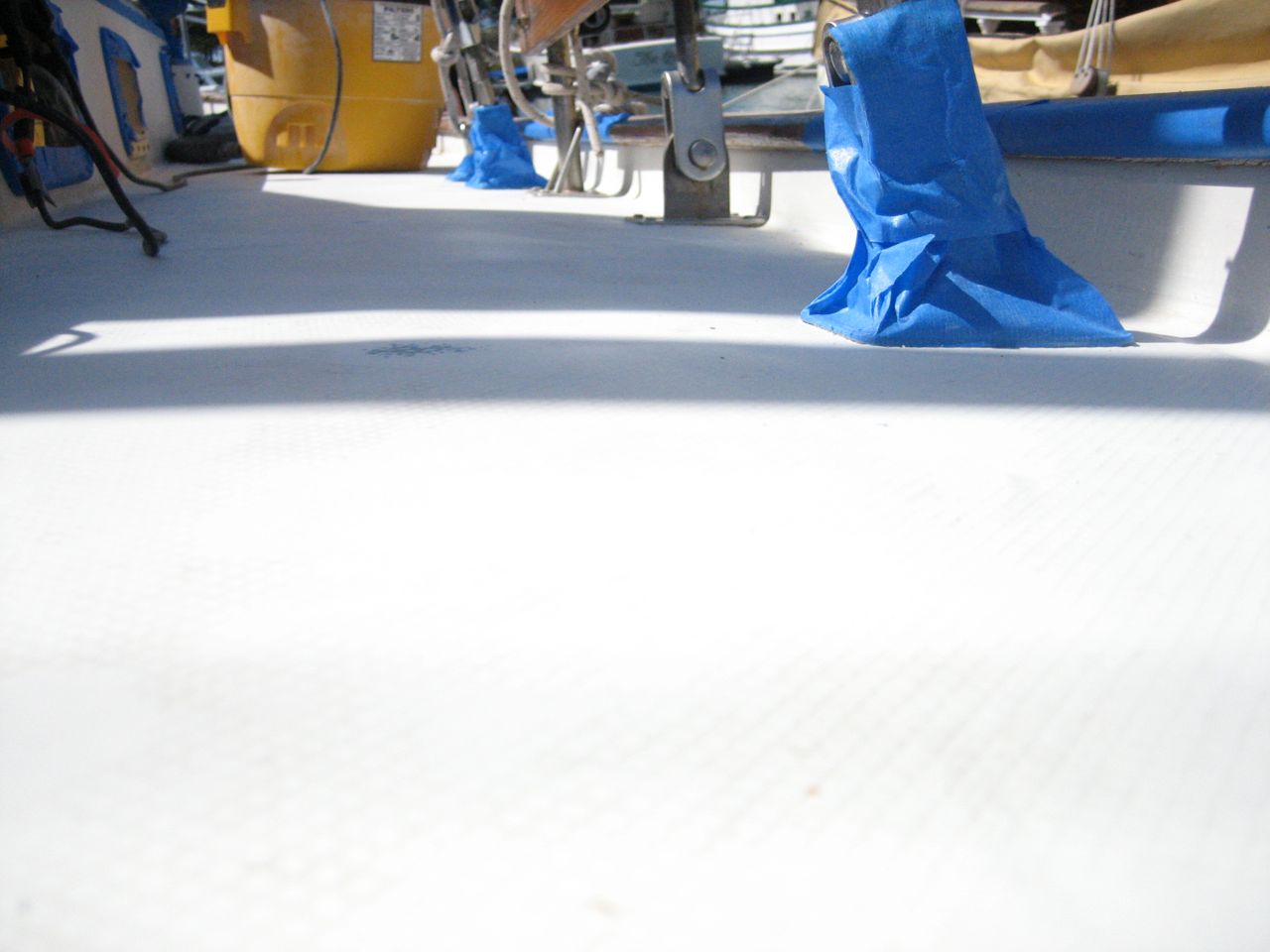
    While sanding the boat pre-painting, we discovered three lumps (one starboard, two on port) inboard of the shrouds, where the knees underneath are exerting upward pressure on the deck.  No word yet on whether this should be cause for alarm.  Here are some pictures; it’s hard to see.  The blue is where I sanded through the gelcoat on the lump.

  • repaired jib sheet foot blocks

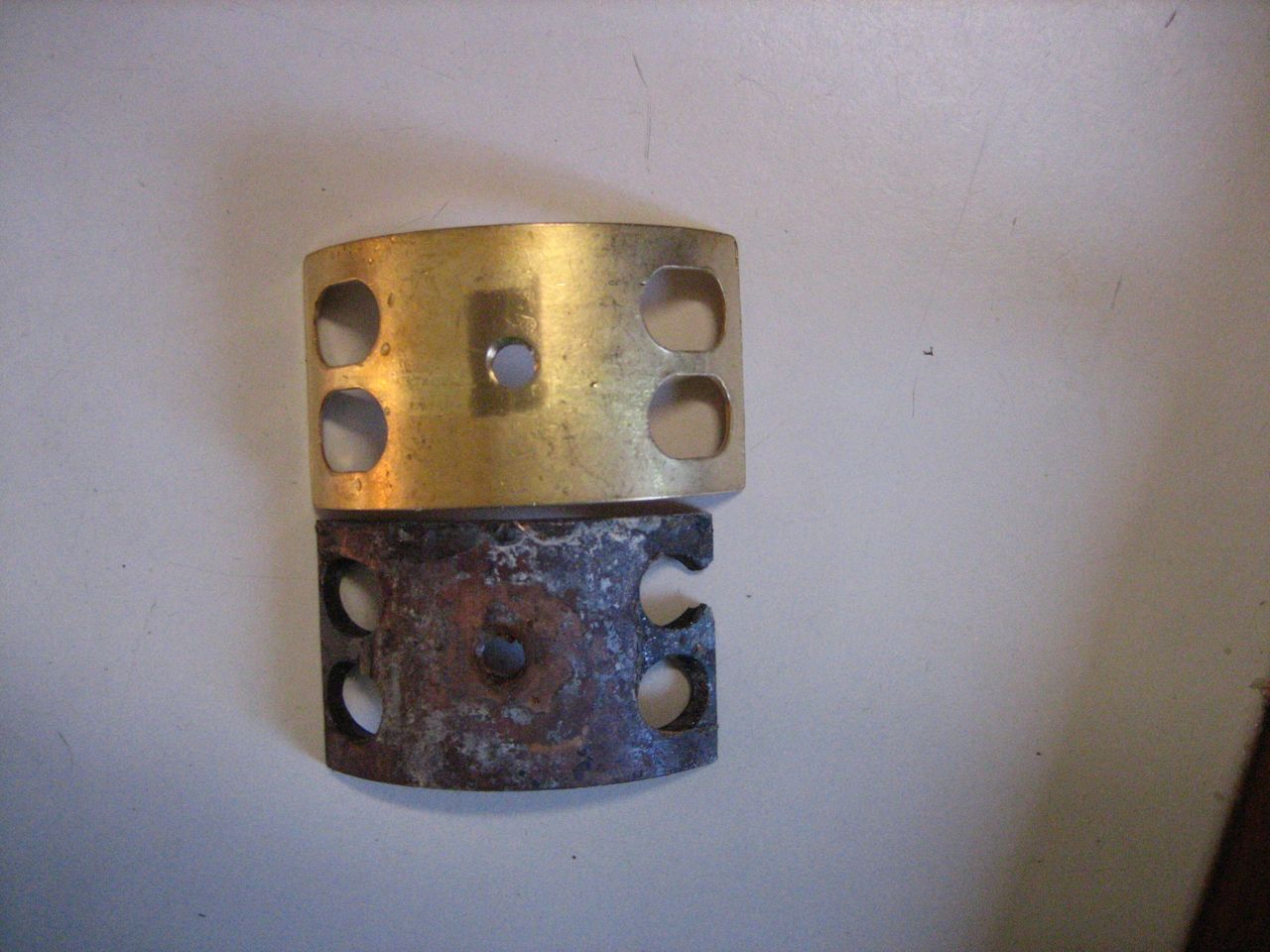
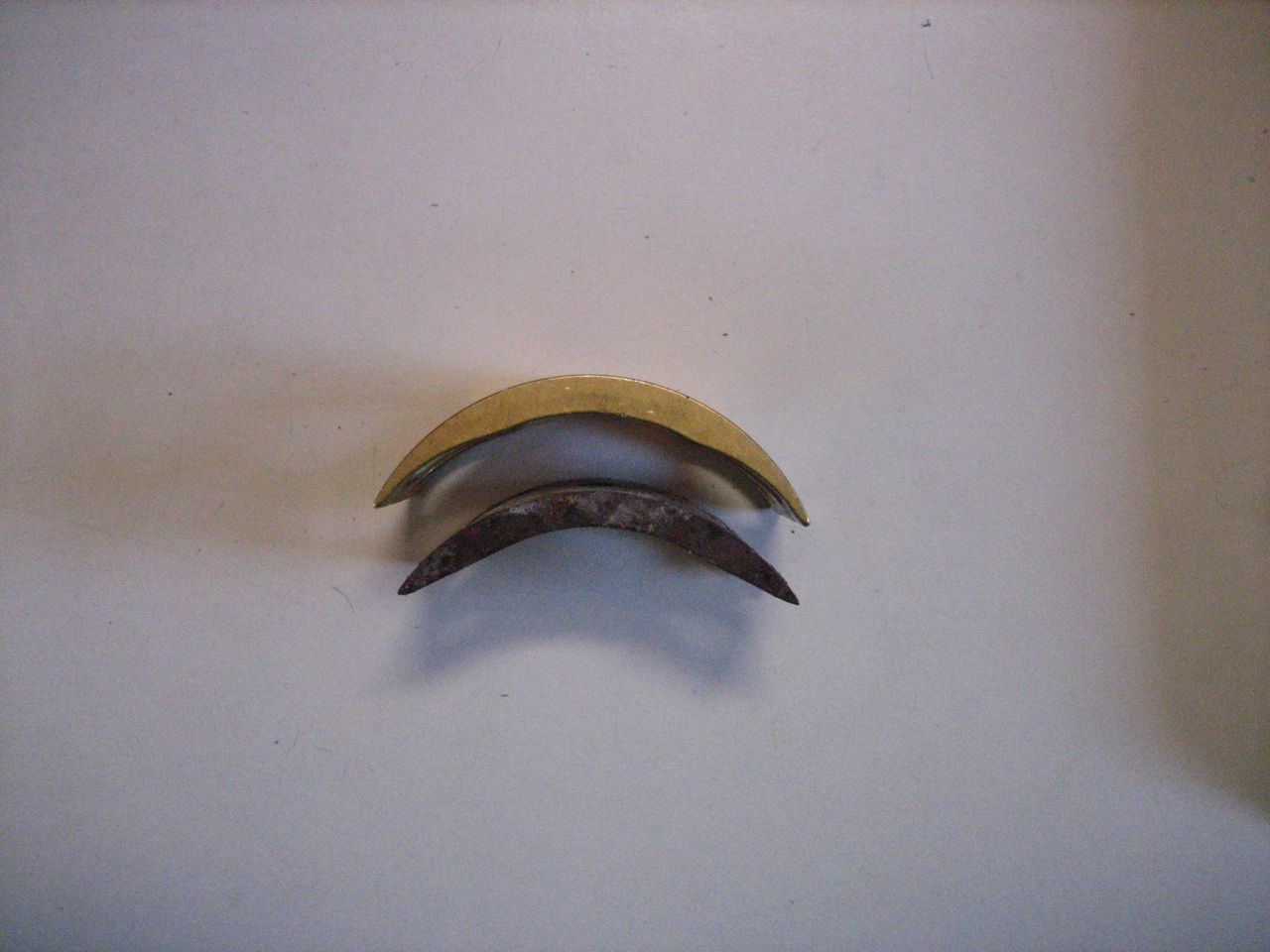
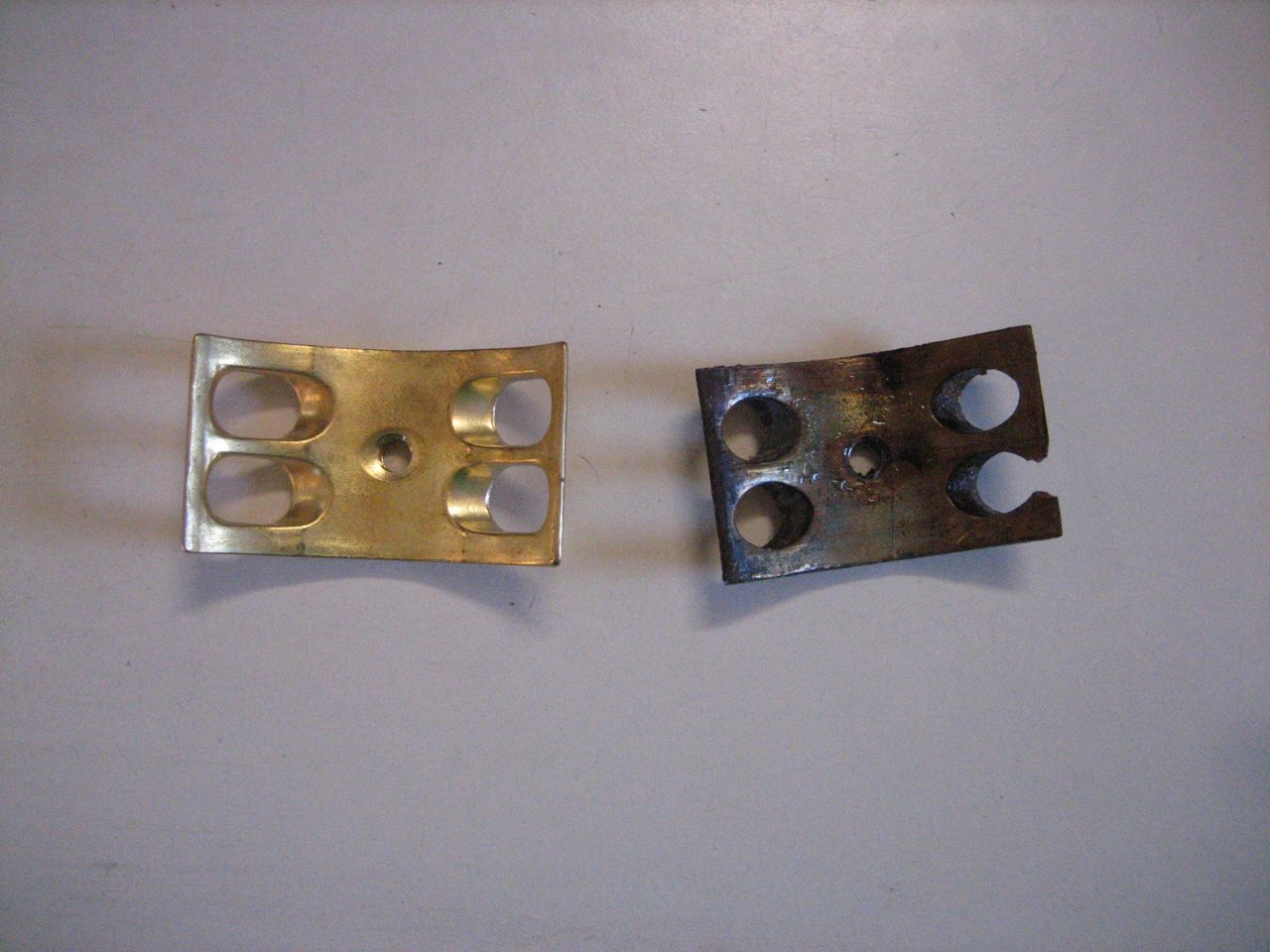
    The jib sheet runs aft to a turning block, turns 180, and leads to the winch.  The last sail we were close-hauled in decent wind and I noticed that the bracket on the port side was bending–starting to rotate forward under the force.  We pulled the brackets from the boat, I fabricated a couple of support struts from the spare sheet of 316 stainless we have, and then I welded them up down at the tech shop.  Jonny shined them up and we’ll put them back on after we paint the deck (hopefully in the next two weeks).

  • latest engine overheating frustrations

    Possible Reasons for Reduced Capacity Engine Cooling, a list compiled from advice from members of the Valiant Owner’s Group:

    1. prop fouled–try cleaning prop :: recently the diver checked our zincs and confirmed that our prop is not fouled
    2. strainer outside boat clogged; remove hose from sea strainer and see how fast :: did that, sea comes in plenty fast the ocean comes into the boat (should be quite alarmingly fast)
    3. sea strainer could be clogged beneath the basket even though it looks clear–take it off and run something through to check :: the test we performed for #2 should confirm that things are ok
    4. the gasket on the cap of the sea strainer may not be air tight–we might be sucking in air as well as water
    5. oil cooler could be partially plugged with impeller blades
    6. even partial blockage in heat exchanger could cause the problem
    7. cam in seawater pump may be worn out (difficult to tell by looking it it with amateur eye)
    8. impeller might be sheered between hub and blades, even though it looks perfectly fine :: removed impeller to check–it’s ok
    9. gauge might not be properly calibrated; get an infrared thermometer to check
    10. fragments may be lodged in hoses or exit from raw water pump, or heat exchangers; remove hoses and sight down them to double check, try flushing with garden hose
    11. clamps on raw water side might be loose; anything allowing air to be sucked in will mess up the cooling
    12. back plate of raw water pump may be worn out–check to see if there is noticeable wear or grooves where the impeller has worn into the back plate :: checked–looks ok
    13. cooling system may have an air-lock, especially with the hot water heater installation; try bleeding air from petcock on top of heat exchanger (is that high enough to take care of it?) :: removed our hot water heater setup and bled from the top of the heat exchanger (though the header tank is the highest point anyway)
    14. thermostat could be the wrong temp, or not working properly  :: we replaced the thermostat (and checked both the new and old in a pot of boiling water beforehand)
    15. heat exchanger, oil cooler, tranny oil cooler could be scaled up  :: we removed them and thoroughly cleaned them in a bath of muriatic acid)

    The last time we went out (two weekends ago) the engine reached 180 on the gauge within 10 minutes, and was reading 230 around 20 minutes.  We were lightly motoring, barely above an idle.  Water was coming out of the engine exhaust (enough, I can’t tell).  I used the infrared thermometer on various spots of the engine.  The housing over the thermostat read ~190, the head next to the temperature sender read ~190, most all the spots on the head read ~190.  A spot next to the #1 fuel injector read 220.  I took this as a sign of overheating, though I’m not sure how to interpret the data.  The exhaust pipe (galvanized elbow) read 240.

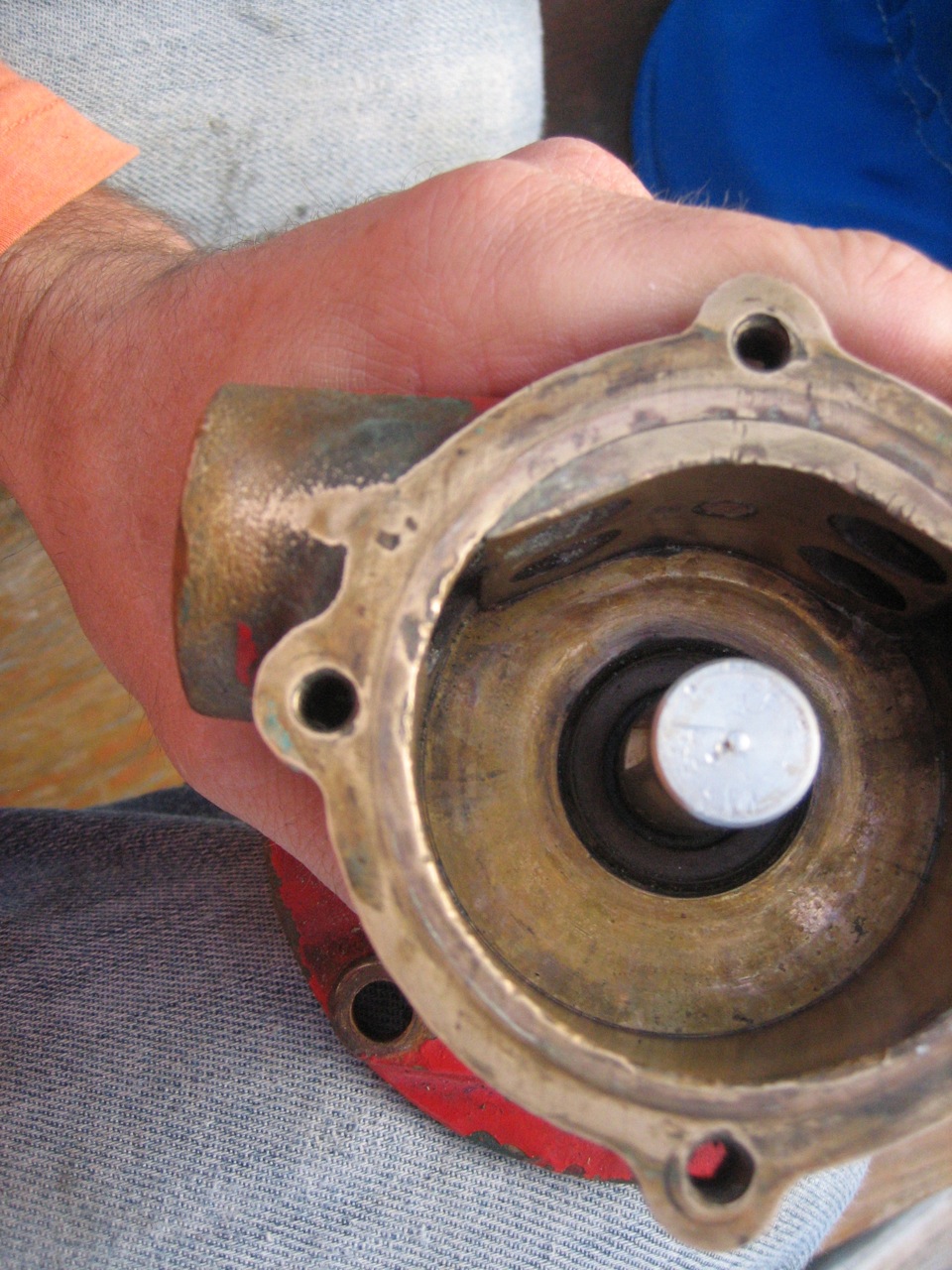
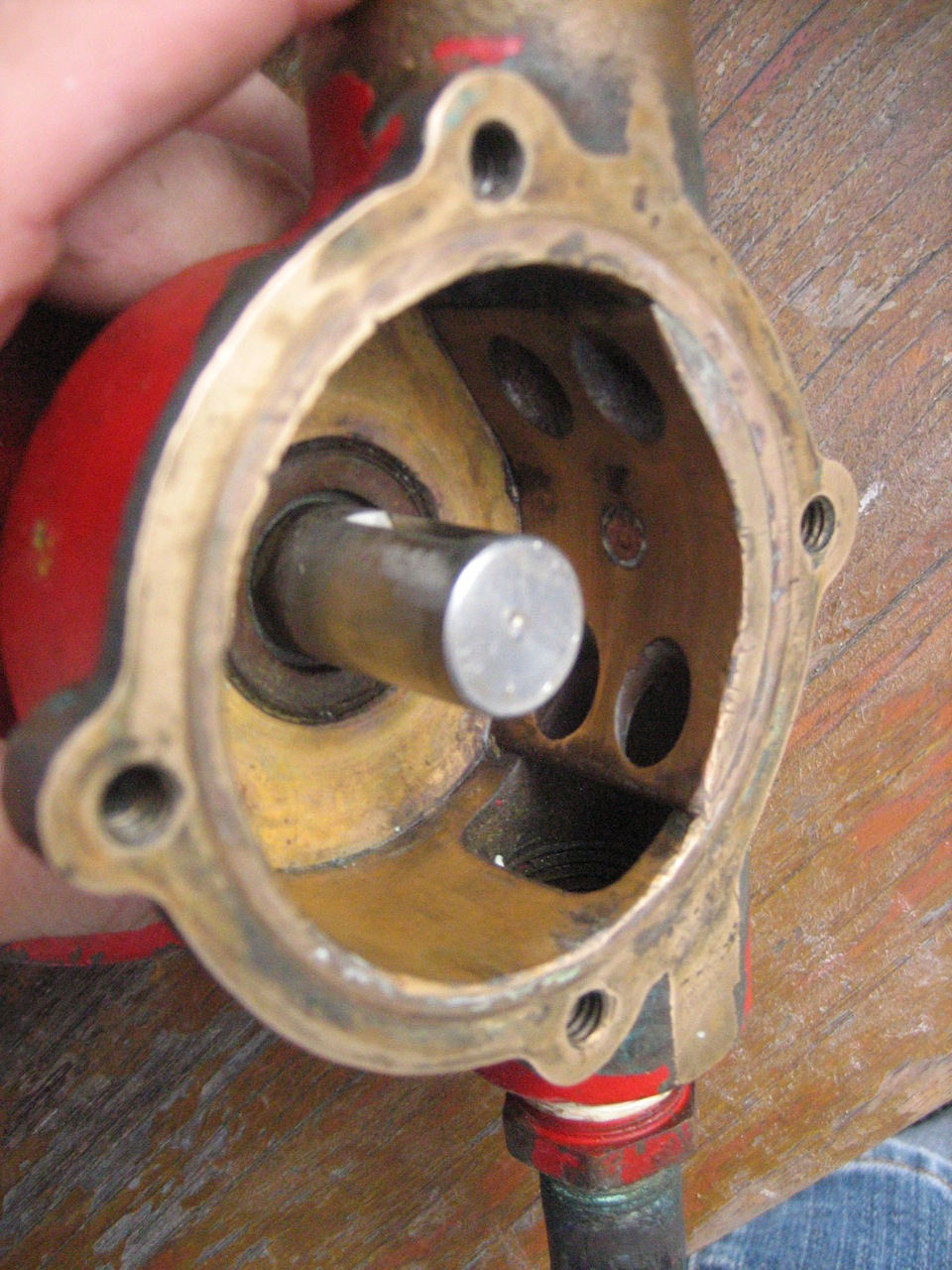
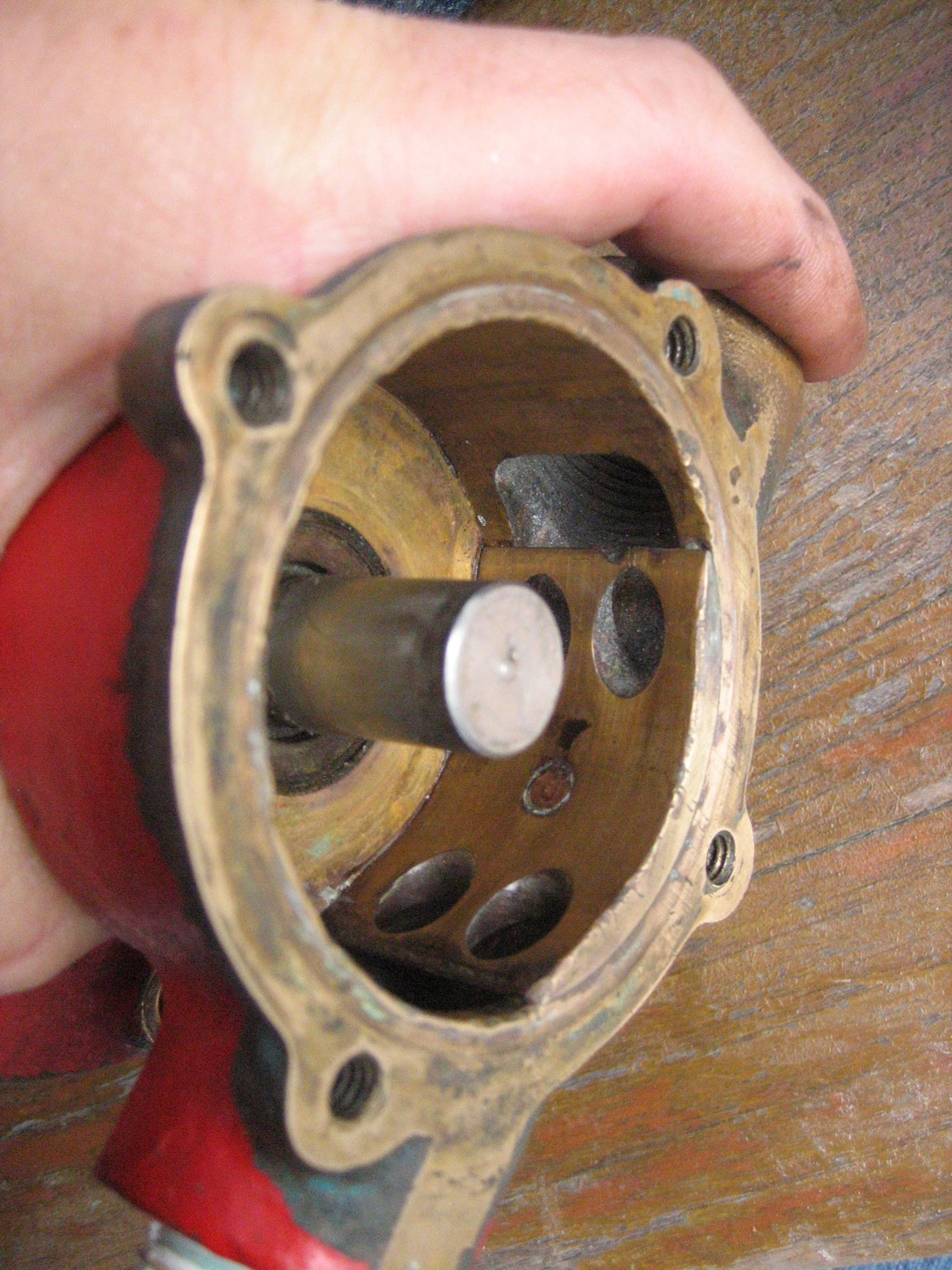
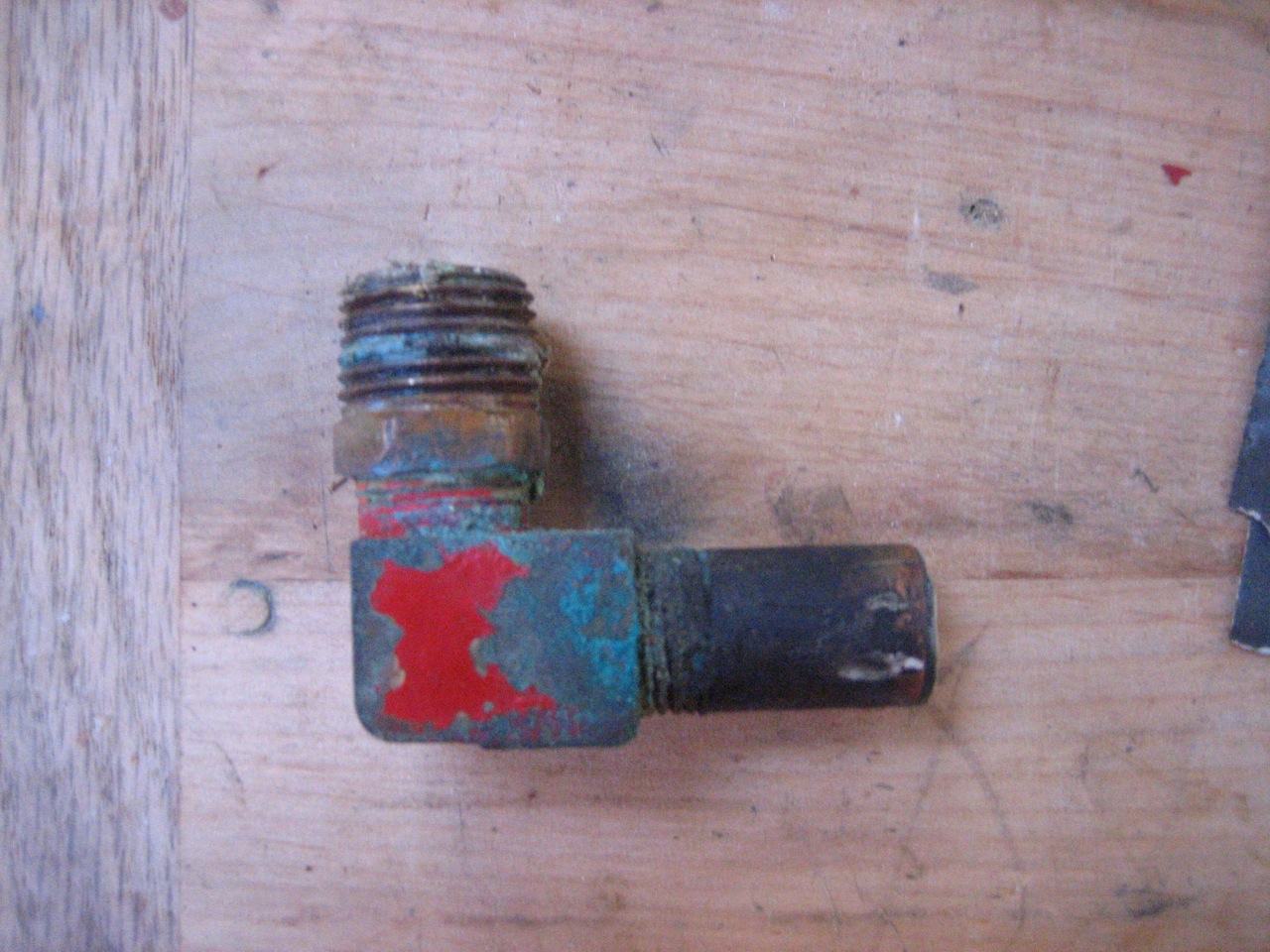
    I pulled off the seawater pump (again) to see if the back plate had any wear.  Doesn’t appear to.  Though it does look like the cam has some wear, and I found a salt deposit partially blocking one of the fittings.  So I ordered a new temp gauge, sender, cam for the seawater pump, and heat exchanger from Sherry at TA diesel.