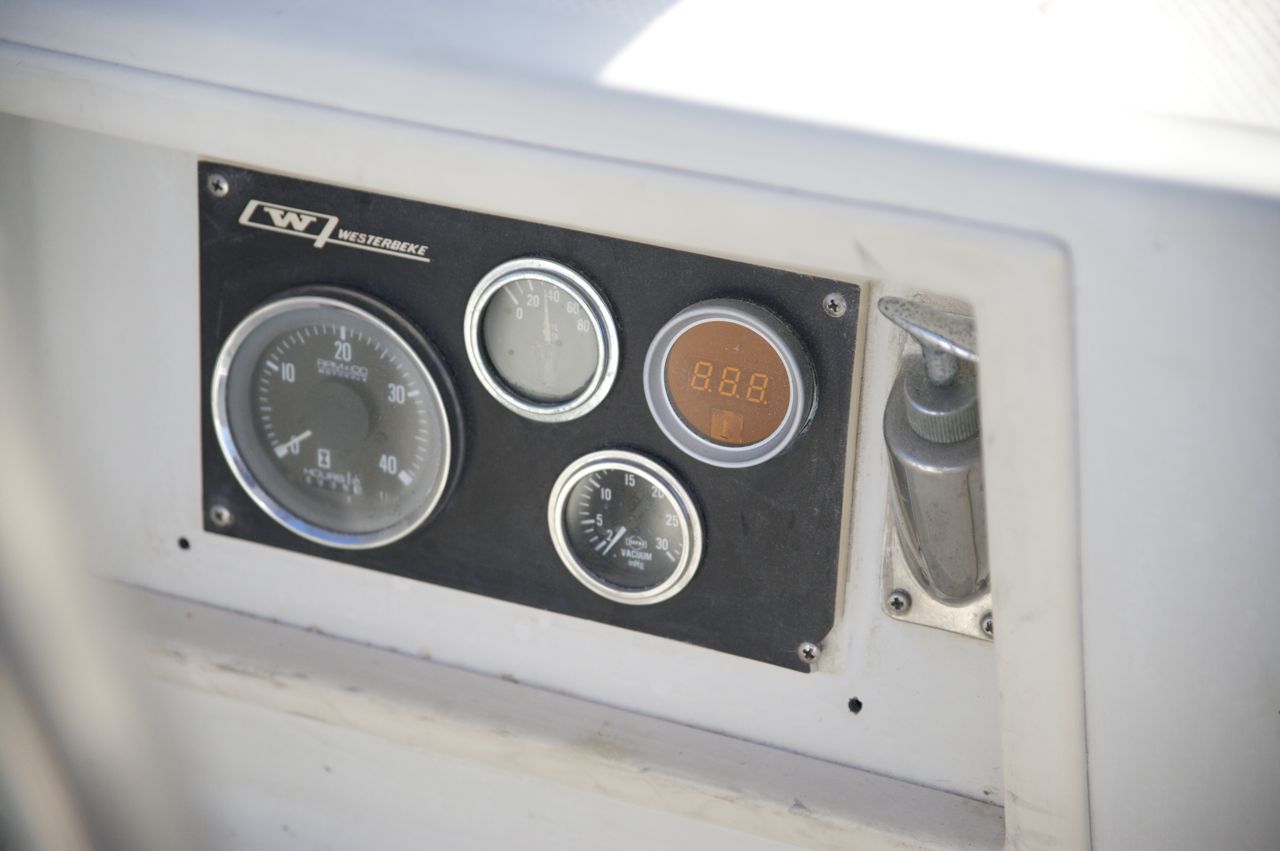
Not sure if the old gauge and sender were operational or not. Even if it worked, I hated the old gauge because it had one uncentered tick mark between 180 and 240 degrees, so it was impossible to tell what the actual temperature was. What good is that? I only care about the temperature in that range anyway!
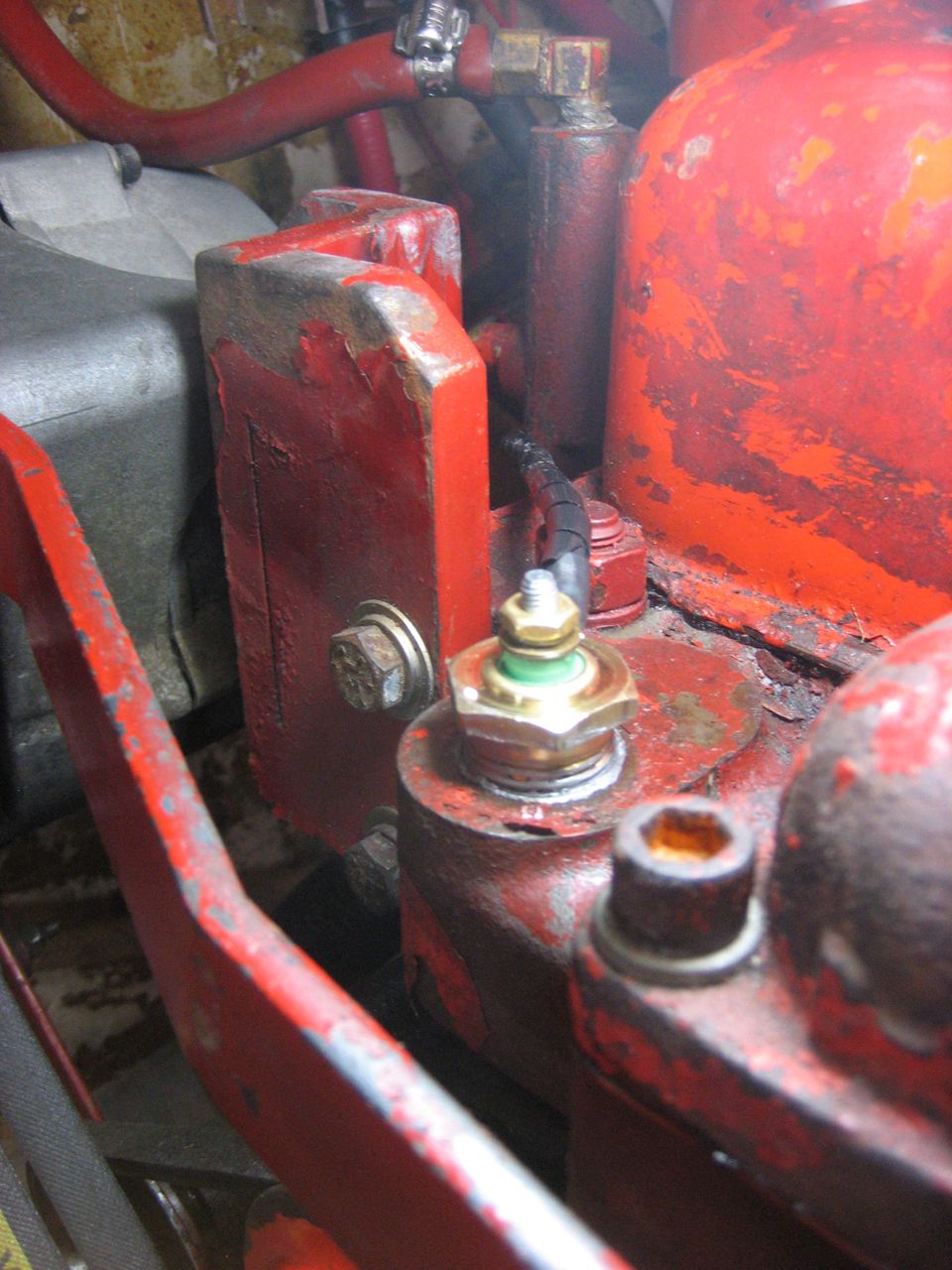
I was under the impression that the gauge and sender have to be matched to each other or else they won’t be accurate. I still don’t know whether or not this is the case, though I have since discovered that there is a standard for the senders (separate for american and european) so that in theory any american sender should work with an american gauge. Regardless, I didn’t want to take a chance so I just ordered them as a set from Sherri at Transatlantic Diesel. When they showed up I was frustrated, because the gauge had the same shitty problem as the original one, and I was disgusted by the idea of replacing our old gauge with one that was equally useless. So I bought another one, a digital one off the internet that came with its own sender. Of course when it showed up I discovered that the sender is too small to fit in our 1/2″ npt spot for it on the engine, and even though I have an adaptor that accepted it, it still wouldn’t work because the sensing tip on the sender was too short to protrude through the adaptor plug. Just figures. So I borrowed Jim’s thermocouple (Jim’s on Kanga down the dock from us) and set up a jury-rigged little science experiment in the galley, consisting of a pot of water on the stove, with the thermocouple and the sender in it, wired up to the gauge, which was jury-rigged to the back of the electrical panel to give it some power, and then I sat there over the stove, holding the sender in the water in one hand and the thermocouple in the other while the pot of water heated up, and tried not to burn myself as the water got all the way up to boiling. Crude, but the experiment convinced me that the gauge and sender are compatible. The gauge appeared to be reading ~8 degrees low, or else only a few degrees low and just lagged behind the response of the thermocouple. I should have waited to see what it read while the water dropped also (to resolve that question) but I was out of patience and in the middle of a shitty conversation with jonny. So I am satisfied with that level of accuracy for now, and I’ll use the thermocouple in the holding tank of the engine eventually to check it again.
So I mounted and wired the temperature gauge into the panel. Now of course I have to change around my master wiring diagram because it’s pretty different from what it used to be (I had to move around a number of the hot and gnd supplies for the other gauges, since they had been piggybacked onto the old temperature gauge). But anyway I have faith in the temperature gauge and I’m ready to start the engine back up and see if we still have an overheating problem, or whether either the new cam in the seawater pump or else the new gauge have resolved the issue.
fyi Gordon May’s info on testing engine gauges is extremely well written and valuable advice. I have uploaded the pdf “GaugeTesting” to my site, so that it still exists when the original post goes away.
Leave a Reply