Possible Reasons for Reduced Capacity Engine Cooling, a list compiled from advice from members of the Valiant Owner’s Group:
1. prop fouled–try cleaning prop :: recently the diver checked our zincs and confirmed that our prop is not fouled
2. strainer outside boat clogged; remove hose from sea strainer and see how fast :: did that, sea comes in plenty fast the ocean comes into the boat (should be quite alarmingly fast)
3. sea strainer could be clogged beneath the basket even though it looks clear–take it off and run something through to check :: the test we performed for #2 should confirm that things are ok
4. the gasket on the cap of the sea strainer may not be air tight–we might be sucking in air as well as water
5. oil cooler could be partially plugged with impeller blades
6. even partial blockage in heat exchanger could cause the problem
7. cam in seawater pump may be worn out (difficult to tell by looking it it with amateur eye)
8. impeller might be sheered between hub and blades, even though it looks perfectly fine :: removed impeller to check–it’s ok
9. gauge might not be properly calibrated; get an infrared thermometer to check
10. fragments may be lodged in hoses or exit from raw water pump, or heat exchangers; remove hoses and sight down them to double check, try flushing with garden hose
11. clamps on raw water side might be loose; anything allowing air to be sucked in will mess up the cooling
12. back plate of raw water pump may be worn out–check to see if there is noticeable wear or grooves where the impeller has worn into the back plate :: checked–looks ok
13. cooling system may have an air-lock, especially with the hot water heater installation; try bleeding air from petcock on top of heat exchanger (is that high enough to take care of it?) :: removed our hot water heater setup and bled from the top of the heat exchanger (though the header tank is the highest point anyway)
14. thermostat could be the wrong temp, or not working properly :: we replaced the thermostat (and checked both the new and old in a pot of boiling water beforehand)
15. heat exchanger, oil cooler, tranny oil cooler could be scaled up :: we removed them and thoroughly cleaned them in a bath of muriatic acid)
The last time we went out (two weekends ago) the engine reached 180 on the gauge within 10 minutes, and was reading 230 around 20 minutes. We were lightly motoring, barely above an idle. Water was coming out of the engine exhaust (enough, I can’t tell). I used the infrared thermometer on various spots of the engine. The housing over the thermostat read ~190, the head next to the temperature sender read ~190, most all the spots on the head read ~190. A spot next to the #1 fuel injector read 220. I took this as a sign of overheating, though I’m not sure how to interpret the data. The exhaust pipe (galvanized elbow) read 240.
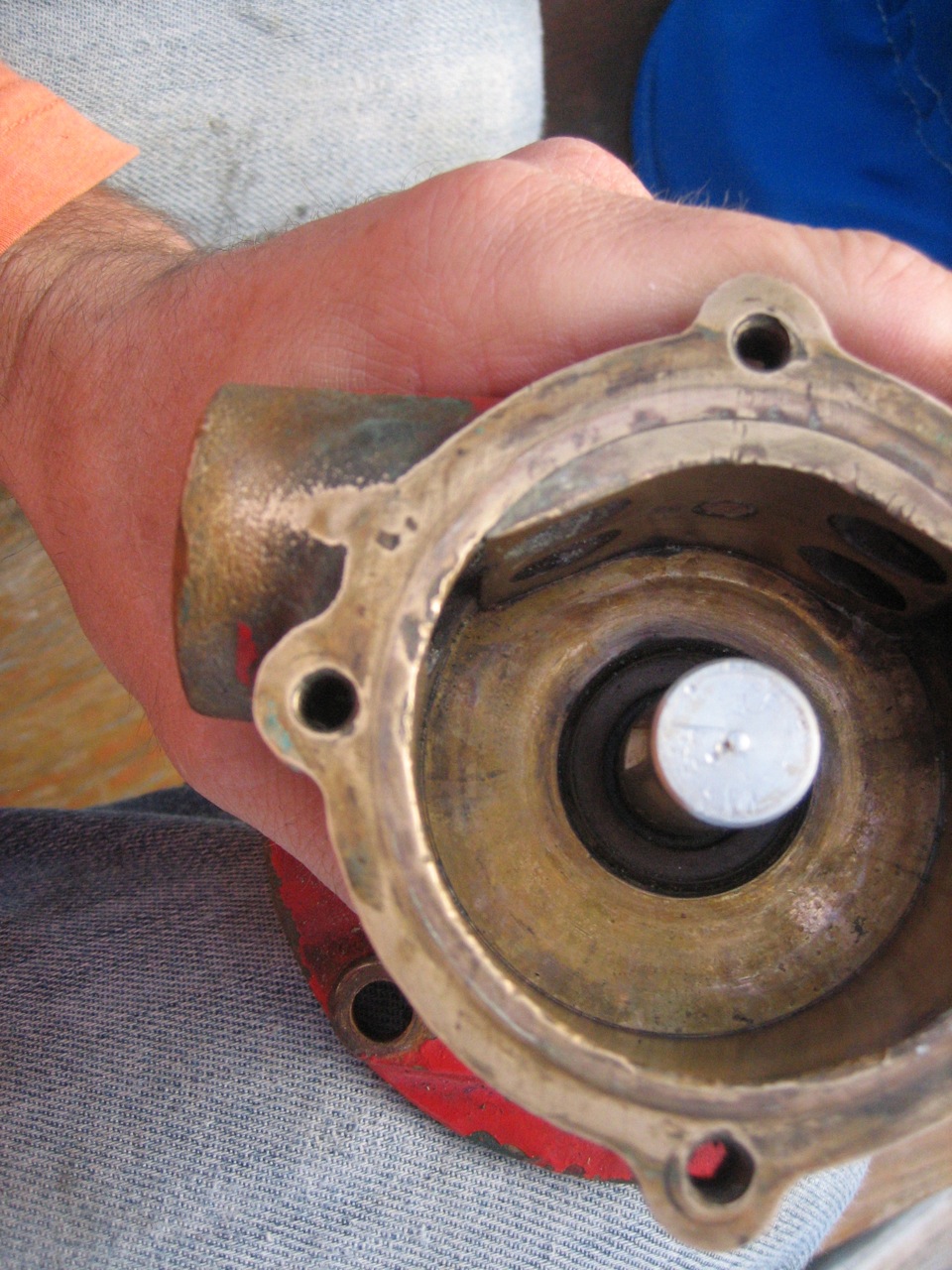
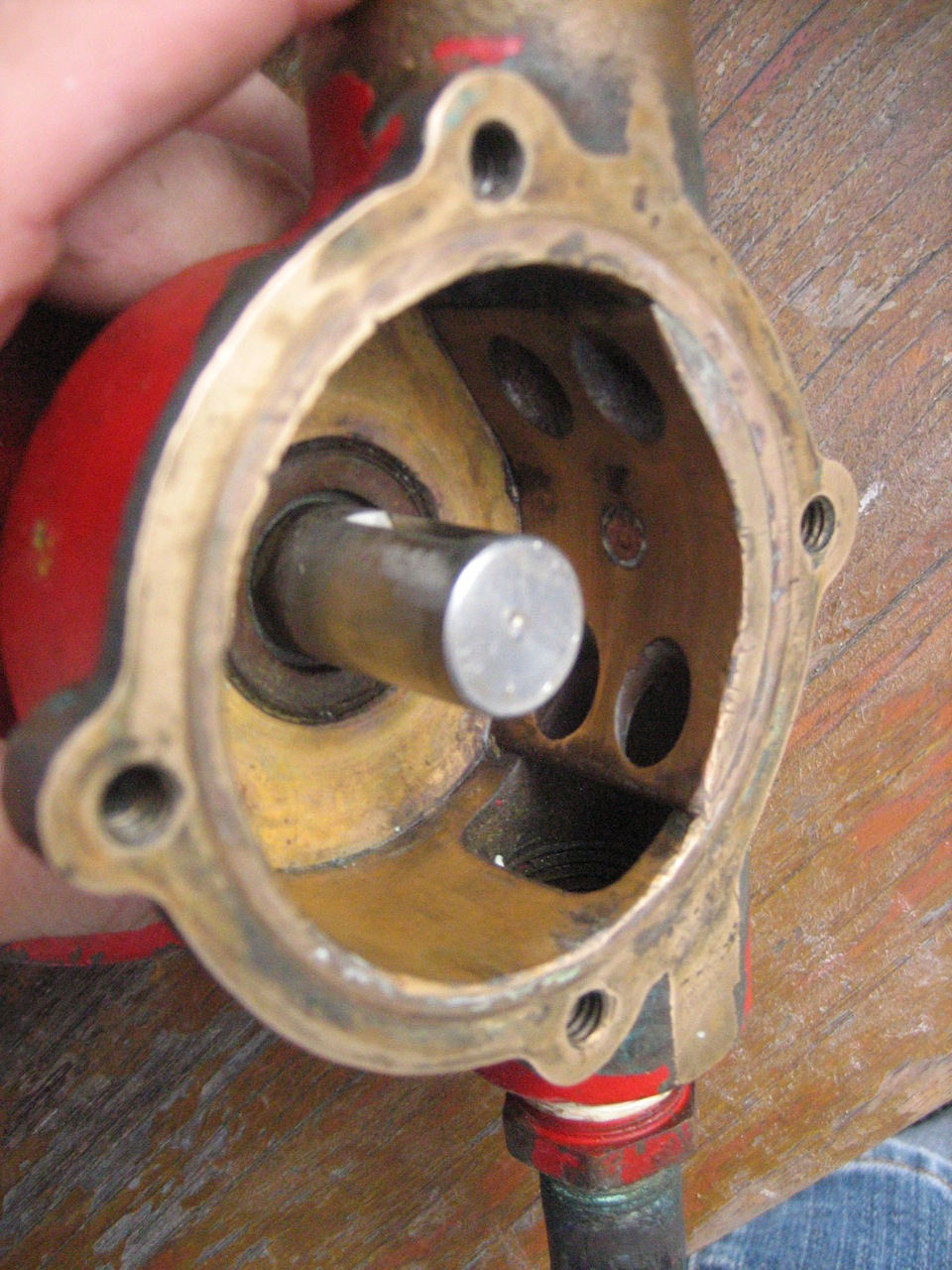
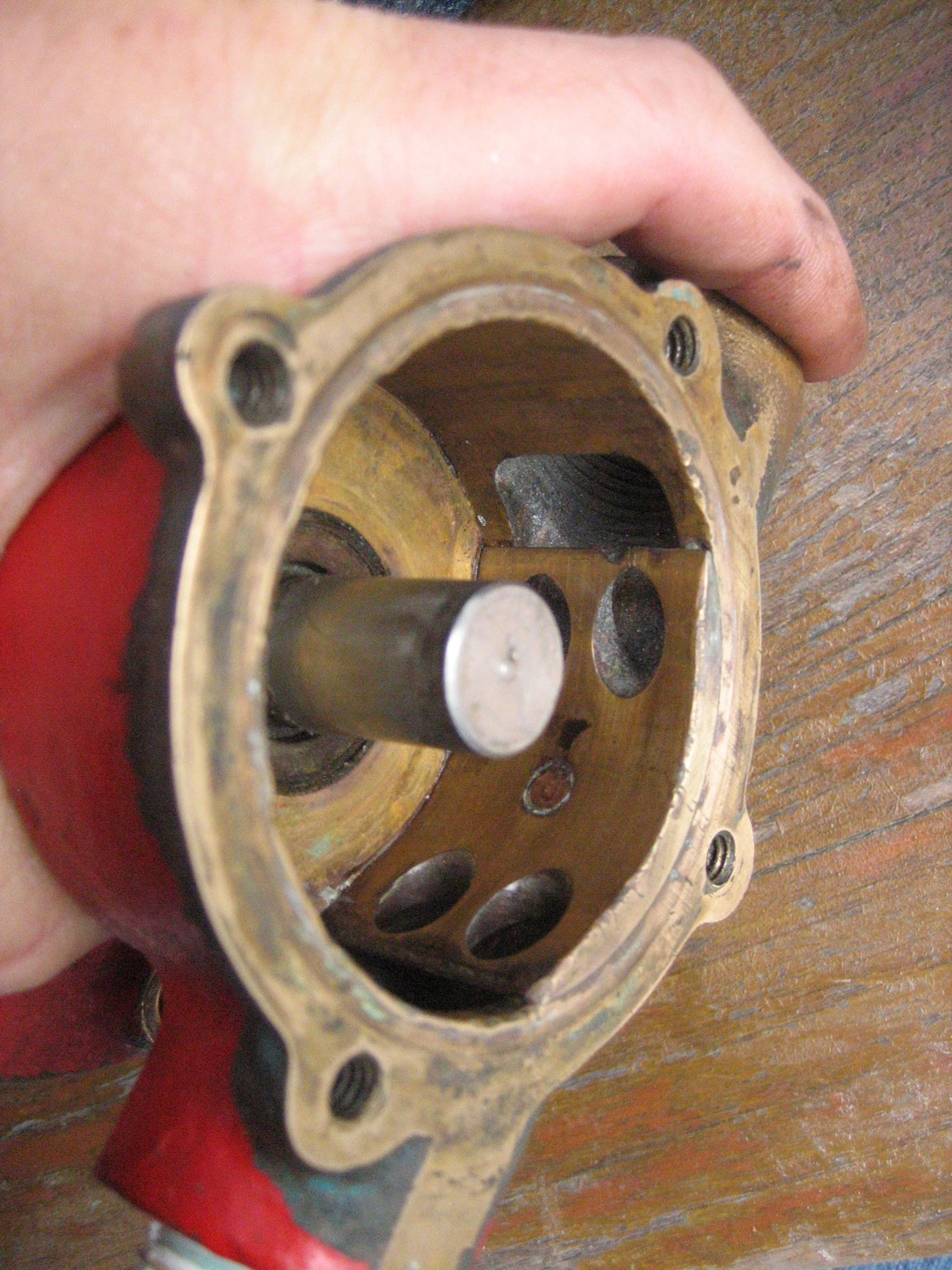
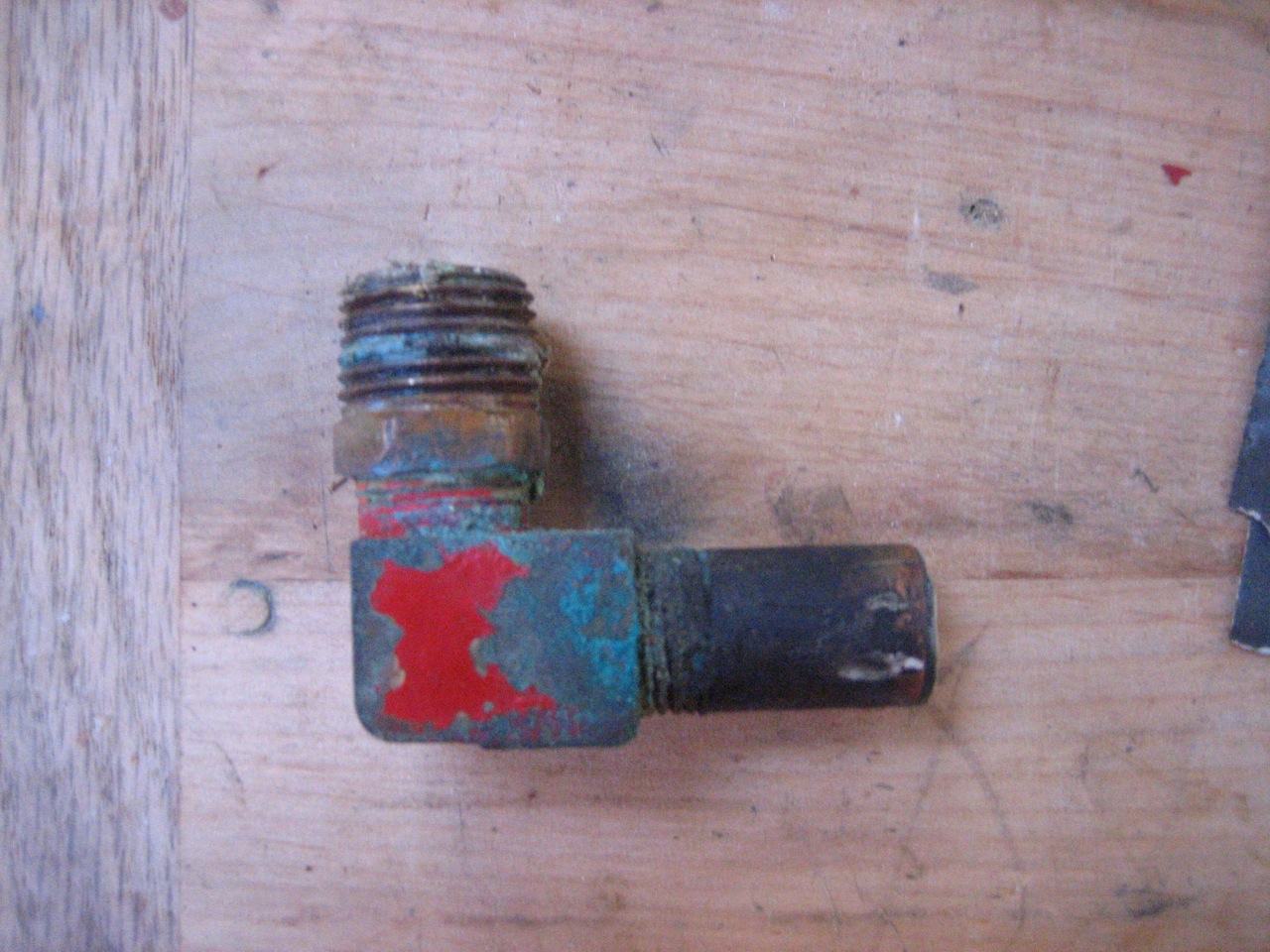
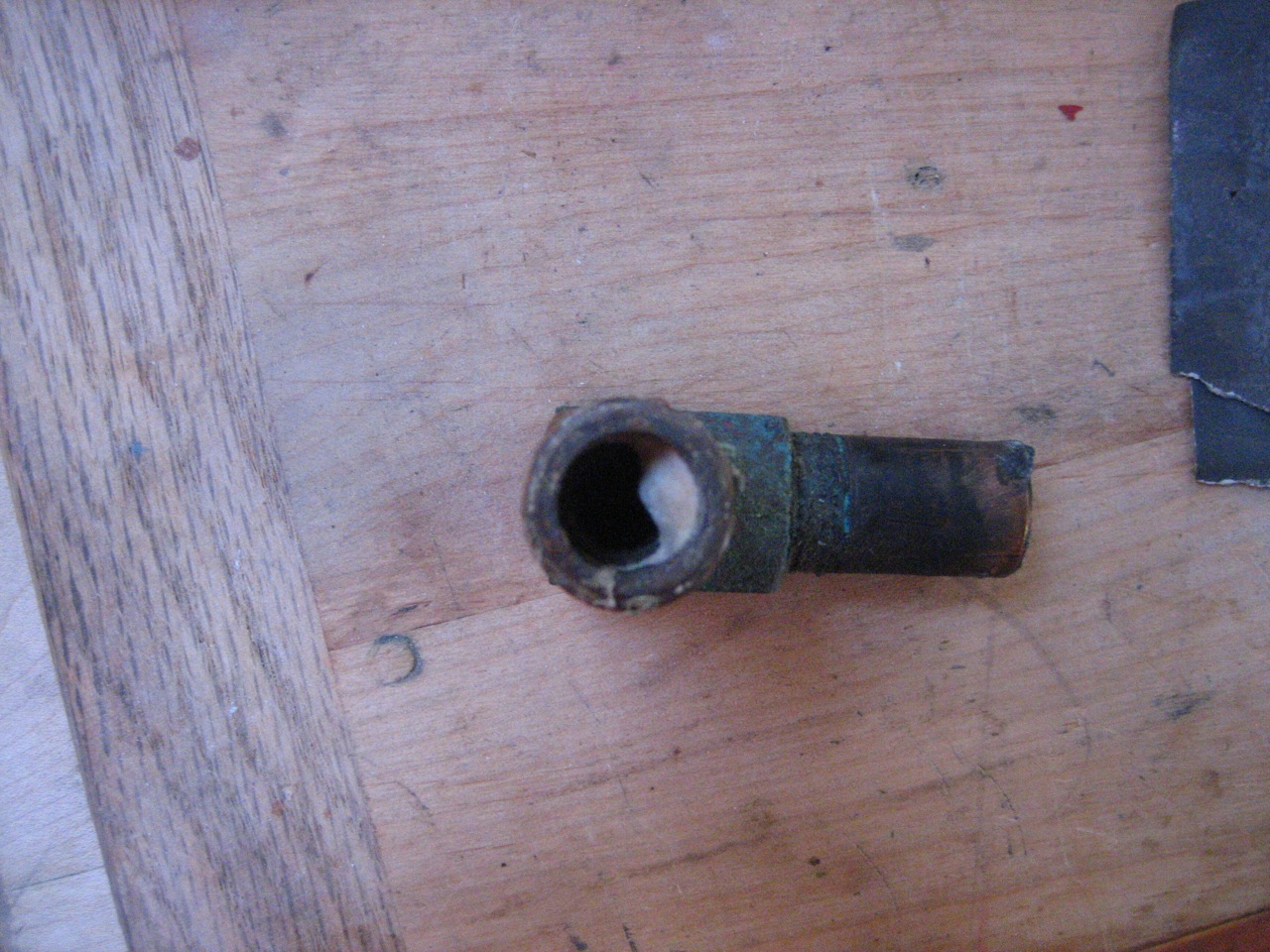
I pulled off the seawater pump (again) to see if the back plate had any wear. Doesn’t appear to. Though it does look like the cam has some wear, and I found a salt deposit partially blocking one of the fittings. So I ordered a new temp gauge, sender, cam for the seawater pump, and heat exchanger from Sherry at TA diesel.
Leave a Reply