After spending $1200 on new batteries, I want some simple way to monitor their state of charge, largely so that we have a better idea of when we need to run the engine to charge them back up.
It is best to recharge a lead-acid battery before the charge drops below 50% (of the amp-hour capacity); if you discharge them too much you damage them. And it is not practical to charge them all the way to 100% with the alternator each time–as the batteries approach full charge the charging process gets slower and slower. When you are idling the engine only to charge the batteries, you want to limit the amount of time it runs. So it is more practical to charge the batteries only to about 85%. This means that in actual practice you will only use 85%-50% =35% of your total battery capacity during each charge cycle. Our total battery capacity is 720Ah, so I expect that we’ll be able to use 250Ah before needing to turn on the engine–and hopefully the solar and wind and tow generator will keep up so that we never have to.
If you let your batteries sit for 12 hours with no sources or sinks connected to them, then you can simply measure the voltage and know the state of charge (11.6V is 50% discharged; 12.7V is fully charged). But while cruising we will never let our batteries rest without some device drawing power, so we cannot simply watch the voltage to know how charged they are. Hence the battery monitor.
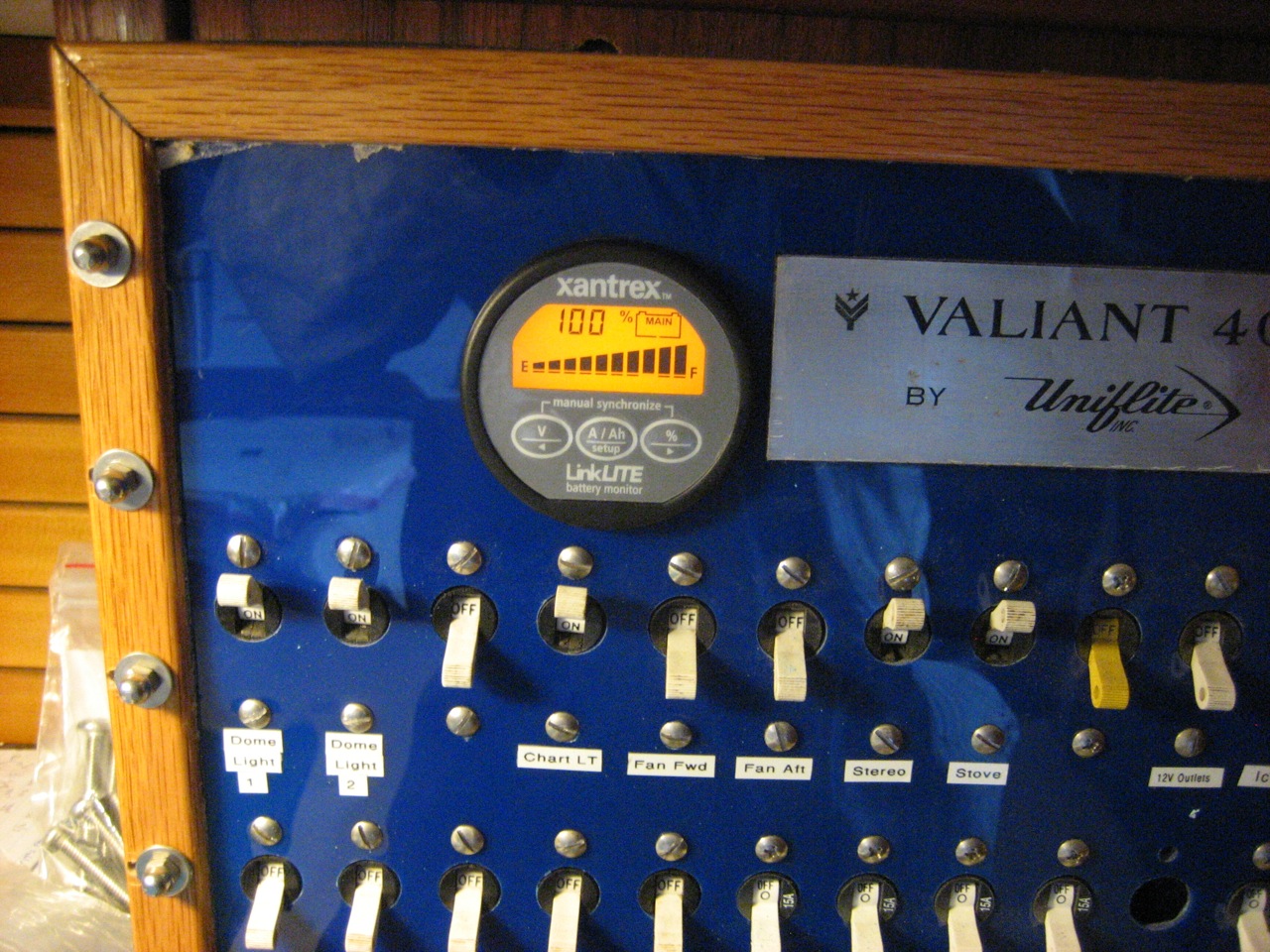
I chose the Xantrex LinkLite, because Xantrex makes great stuff and we got a great deal on it at Svendsens. It required a fair bit of wiring, since it uses a shunt installed in the battery negative (big-ass cable) to measure the current.
I have been told by many people that the batteries need to be fully charged every once in a while (i.e. up to 100% not just 85%) in order to stay in sync. I just put it in this past week so I can only comment on how pretty it looks in our electrical panel.
Leave a Reply