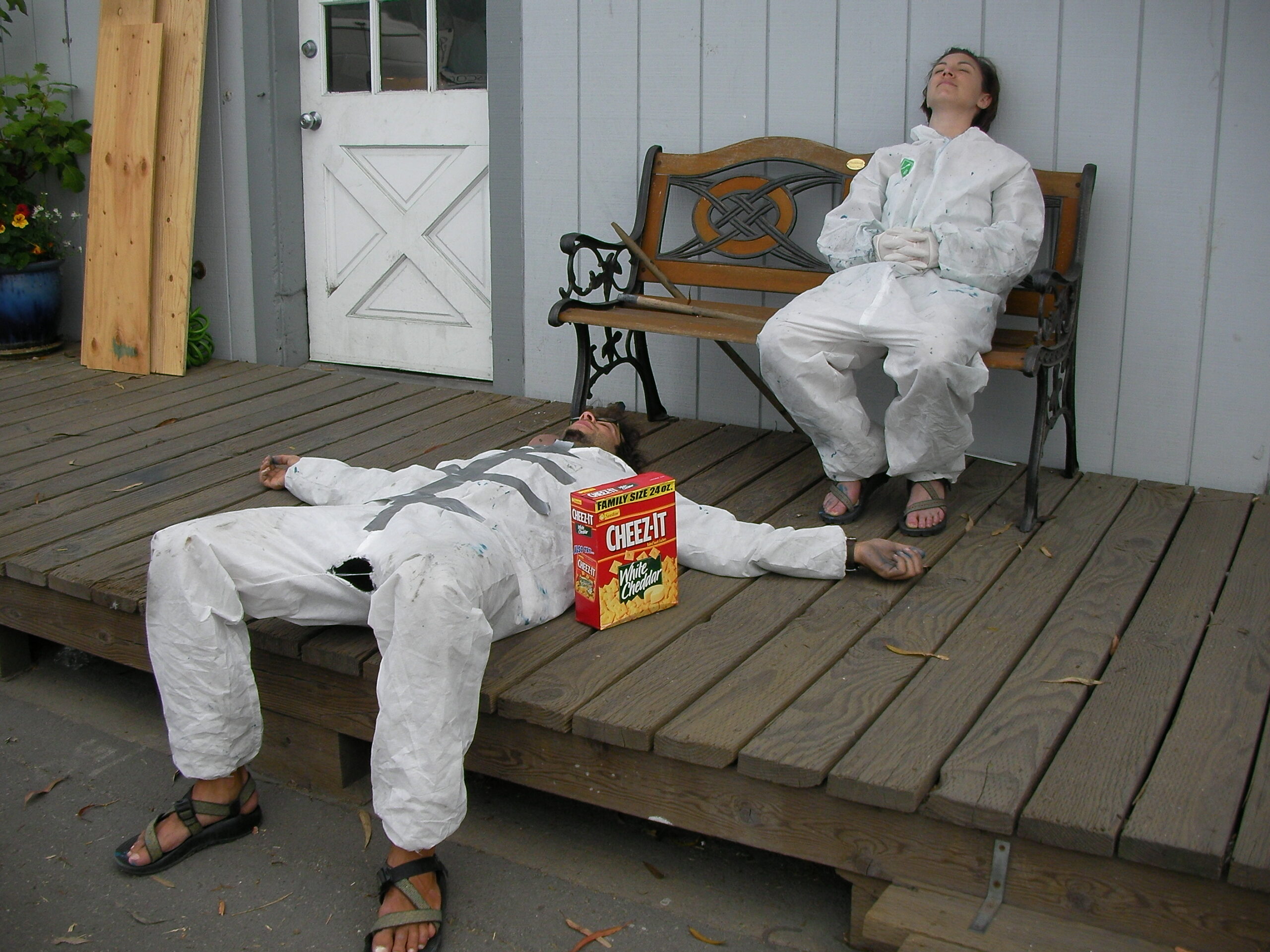
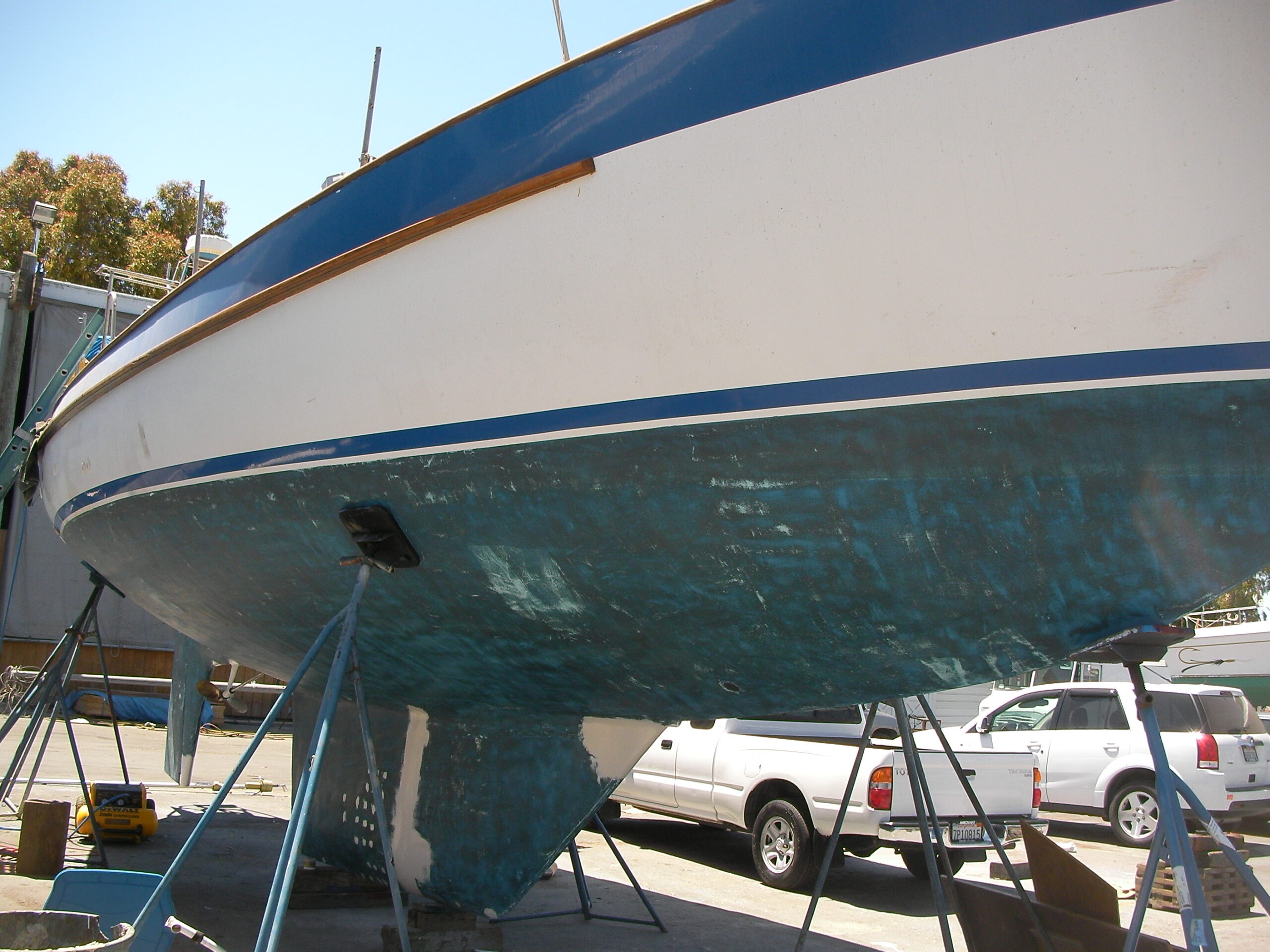
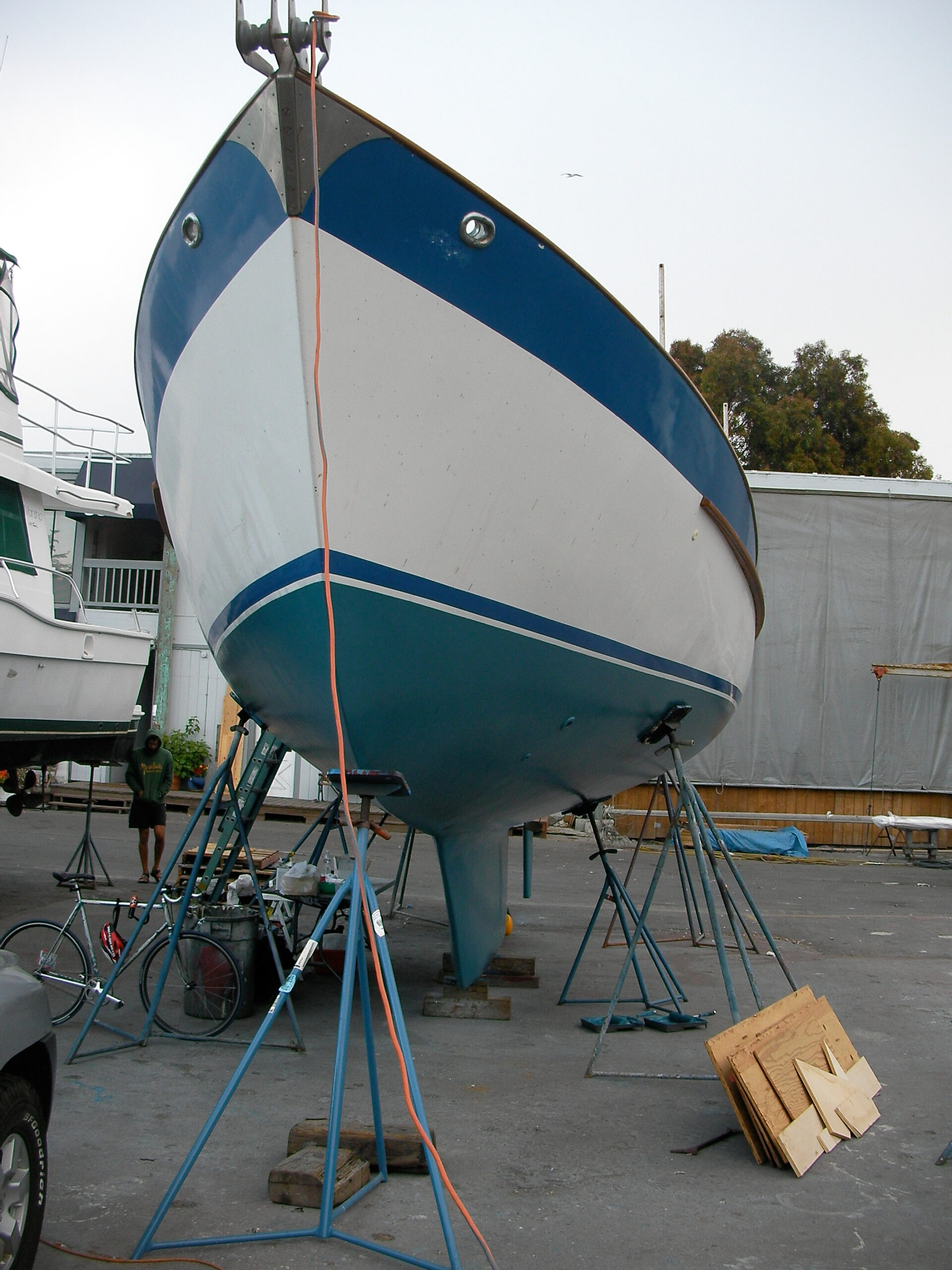
Jonny sanded the starboard side, I sanded the port side. That took a day, and was tiring work. We used the yard’s special vacuum sanders ($15 rental/day) which are required by law to help suck up the toxic old paint. We went through a dozen 80 grit pads. I spackled our keel fiberglassing projects with QuikFair, a really great two-part filler designed exactly for this task, and sanded it fair afterwards.
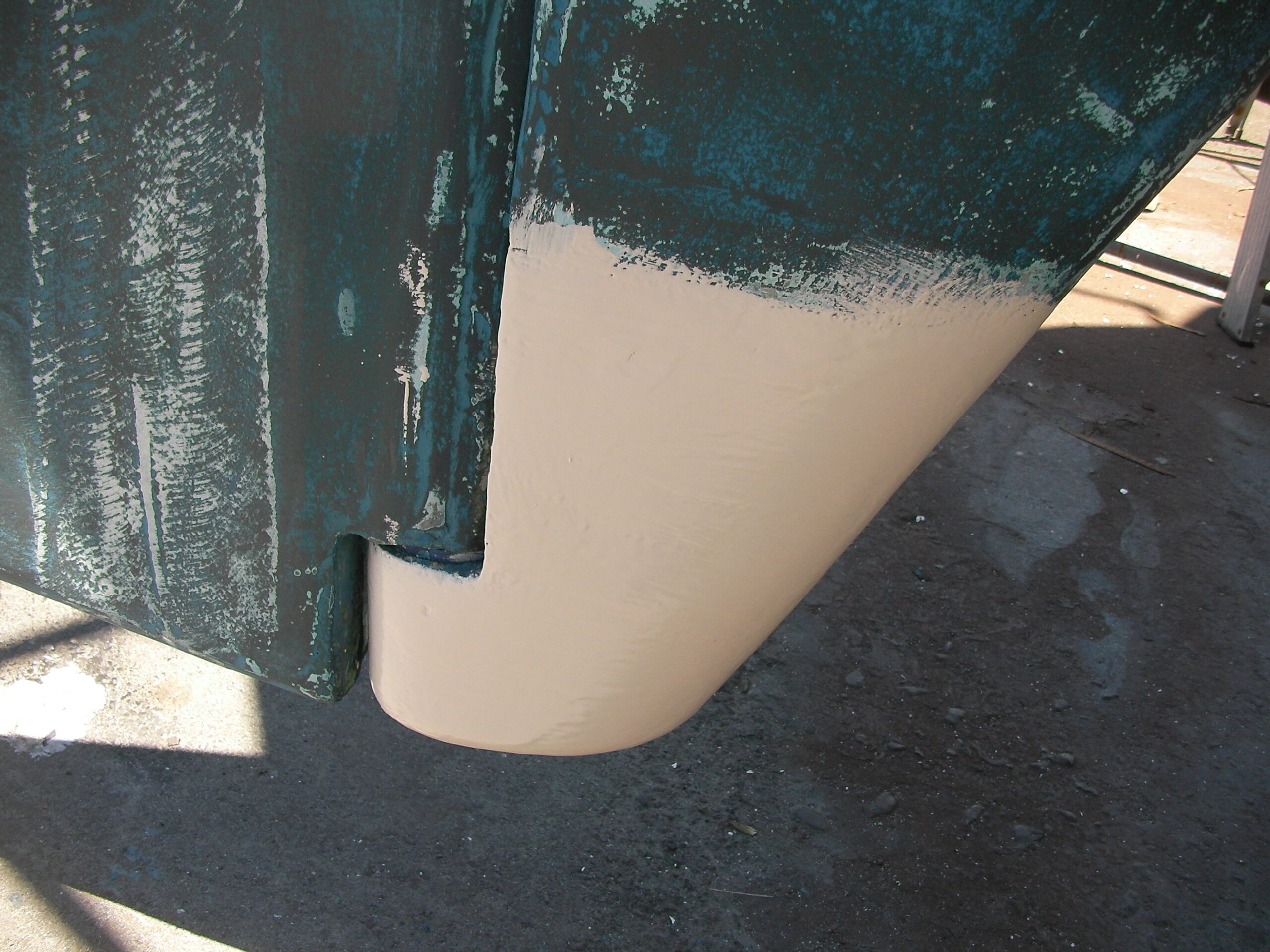
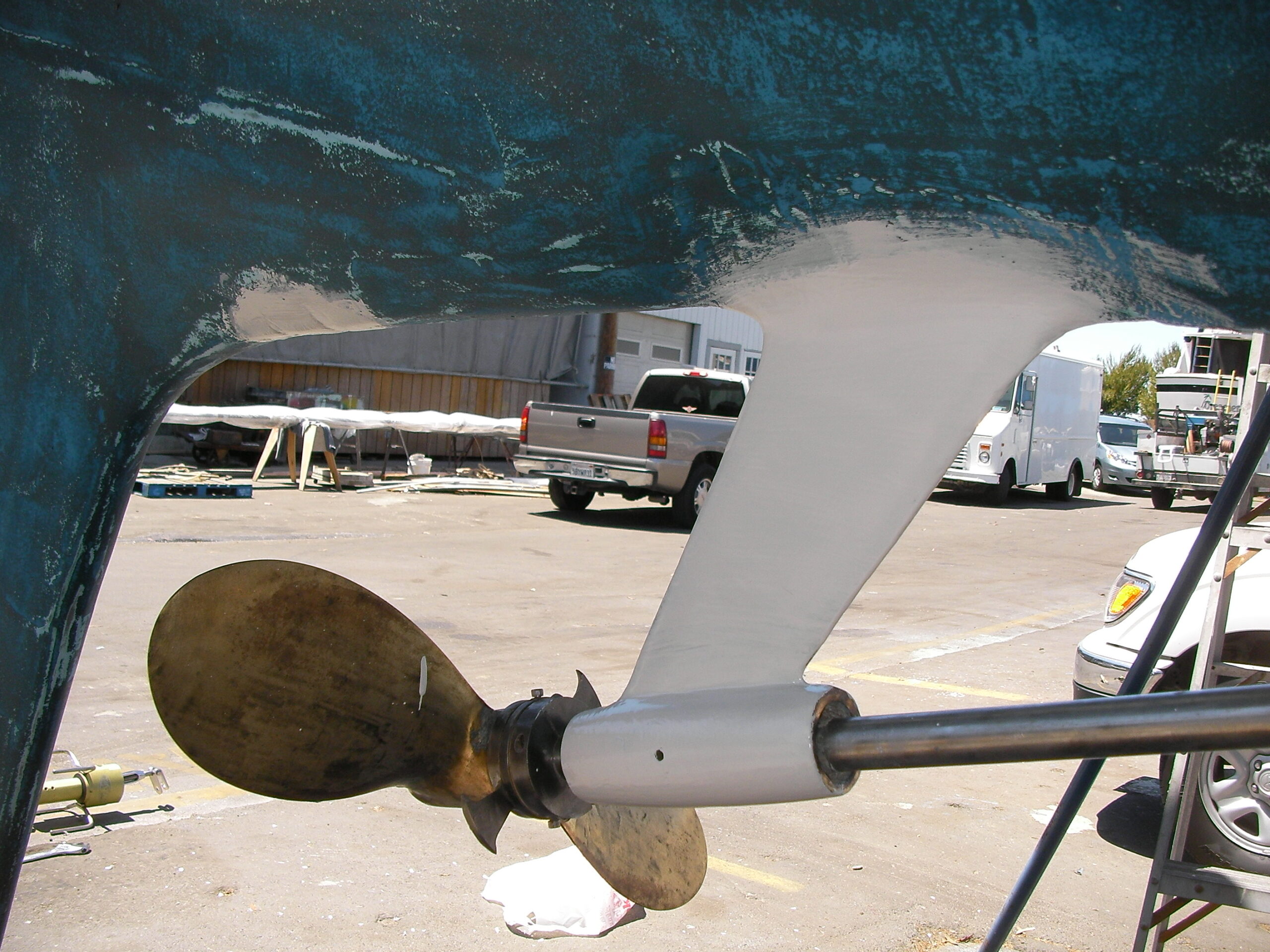
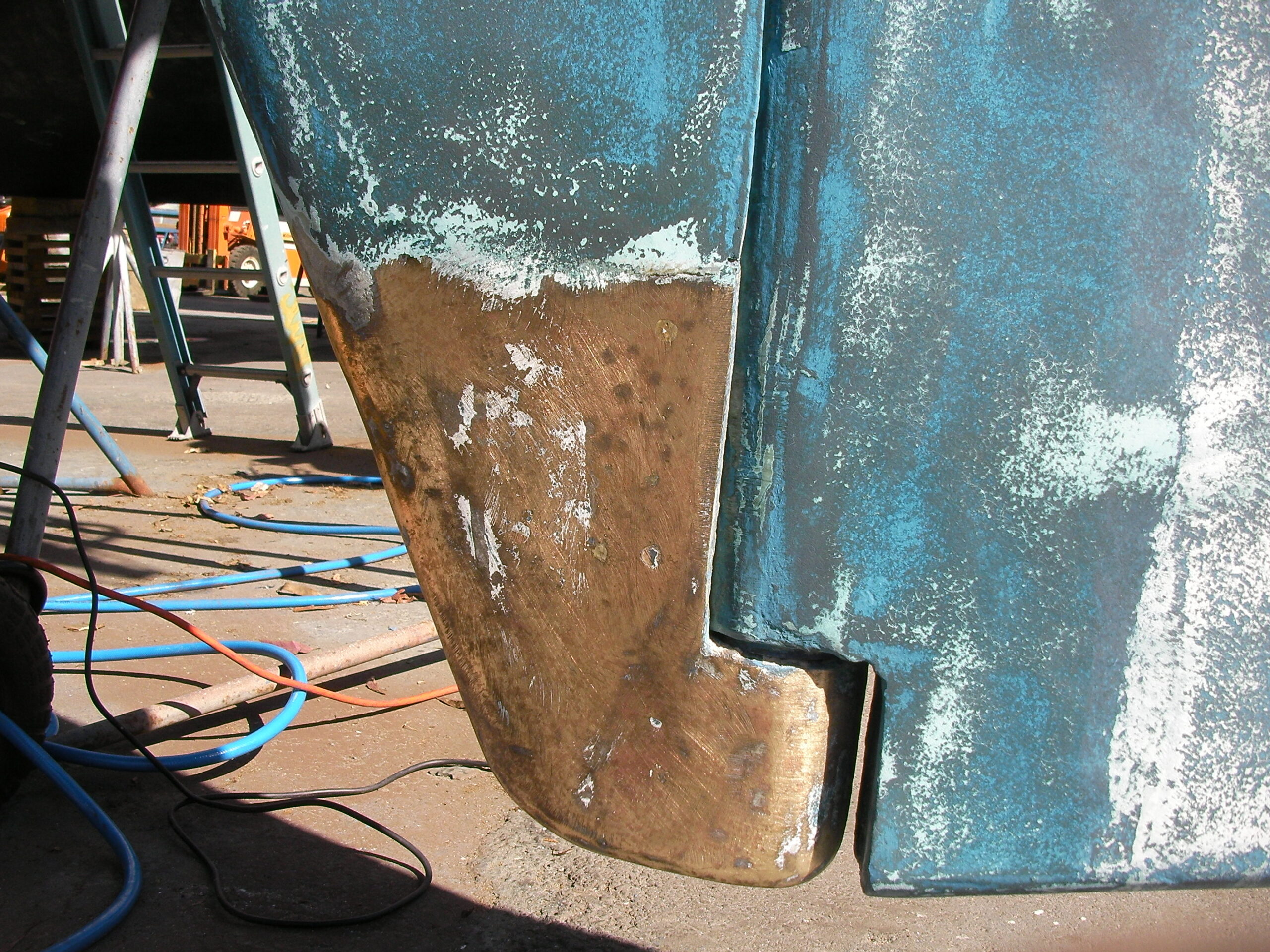
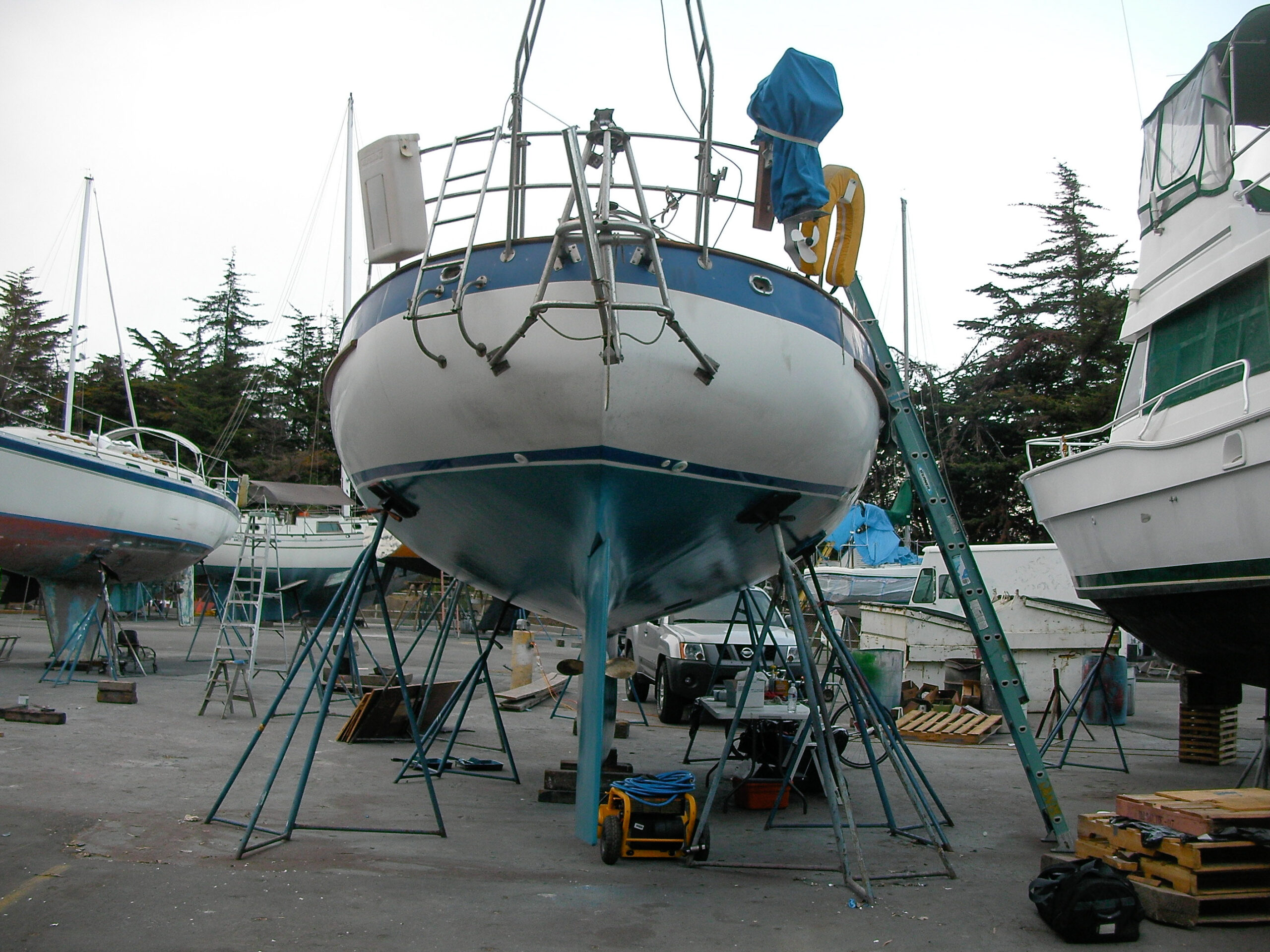
Then we painted over all exposed fiberglass (from our various keel/through-hull projects), and the bronze skeg shoe, and the bronze shaft strut, with 4 coats of Interlux Interprotect 3000E epoxy primer. It is high build (read: thick). It is my hope that this will both seal the fiberglass and help paint stick to the bronze.
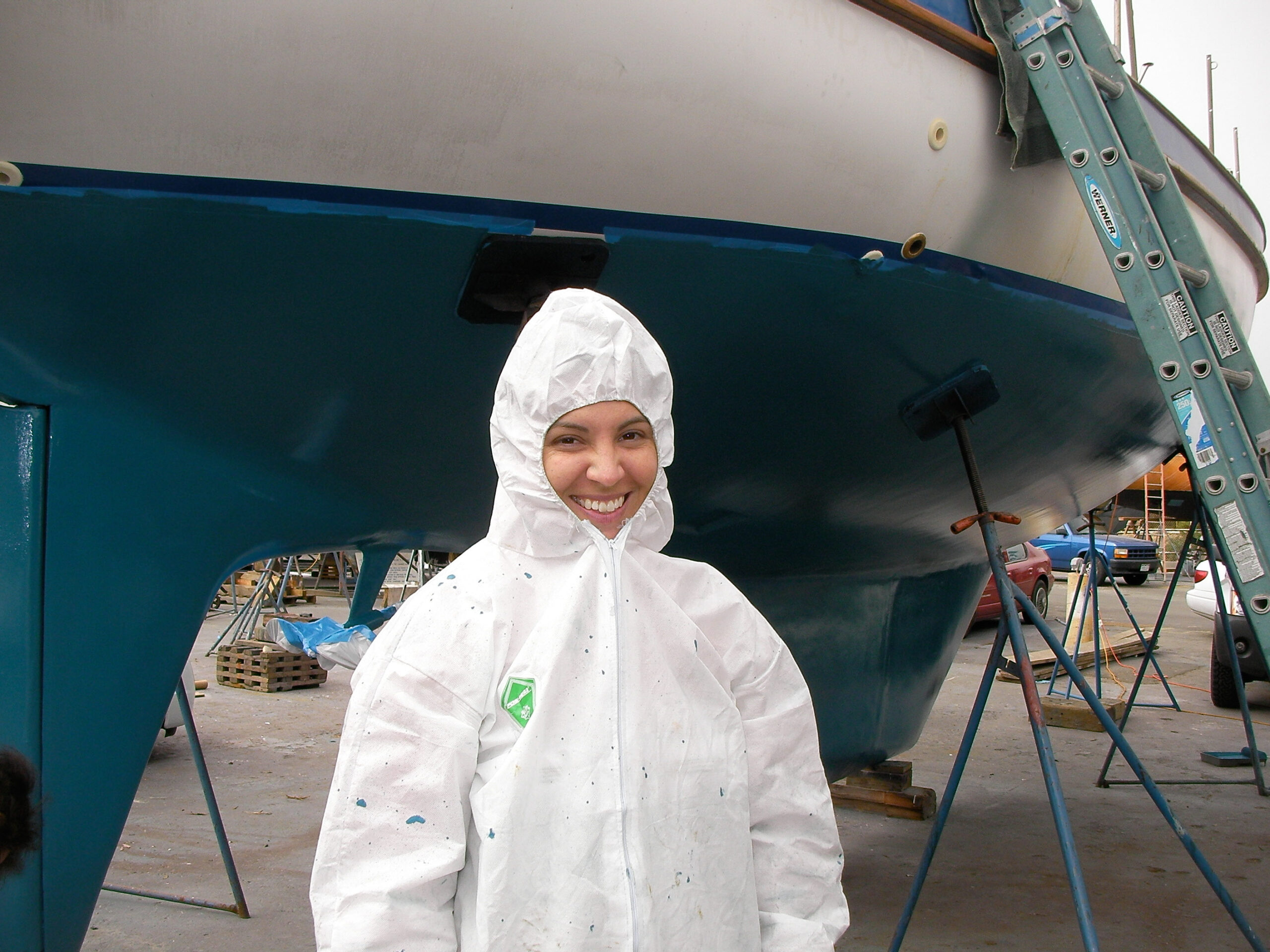
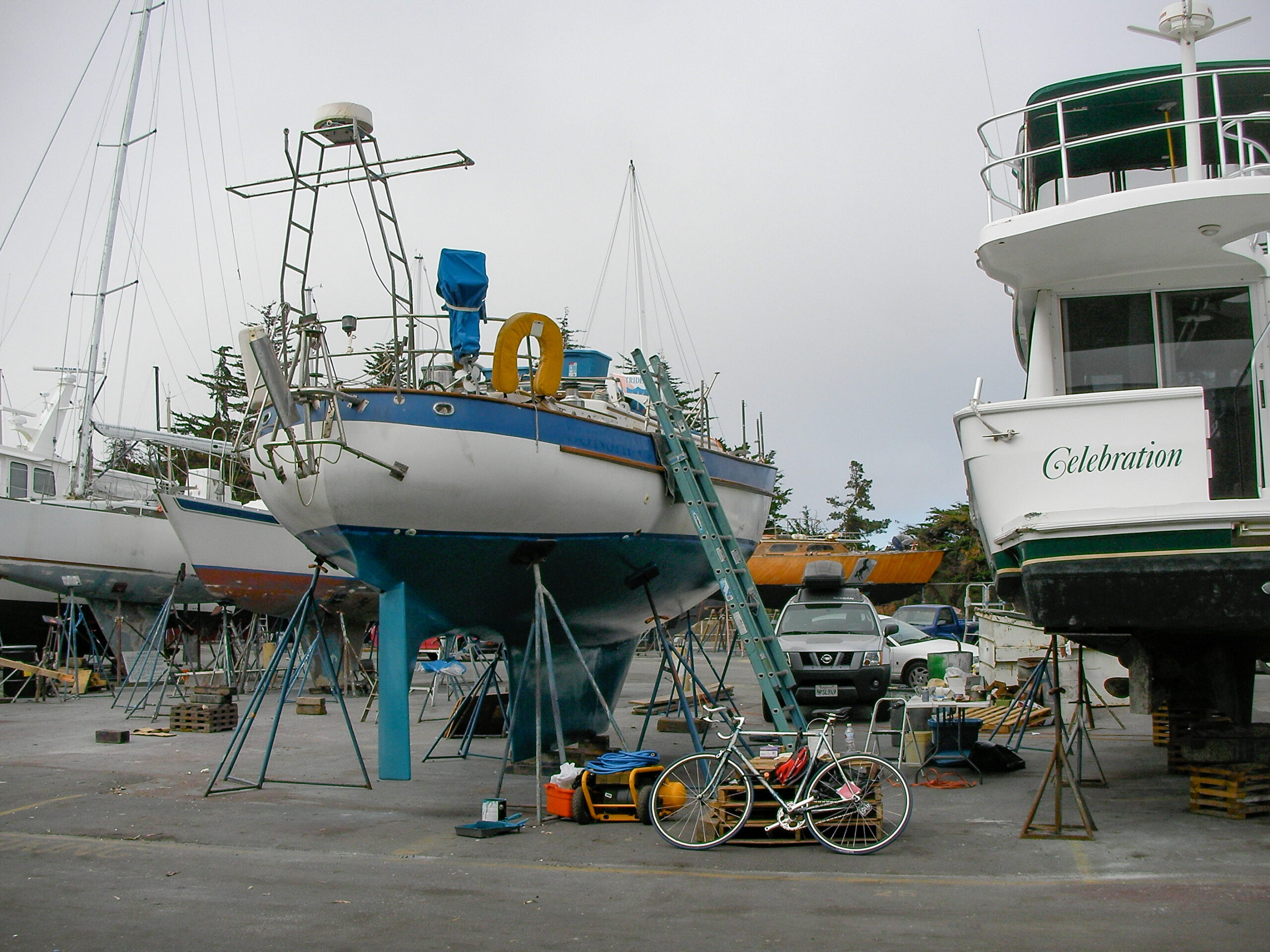
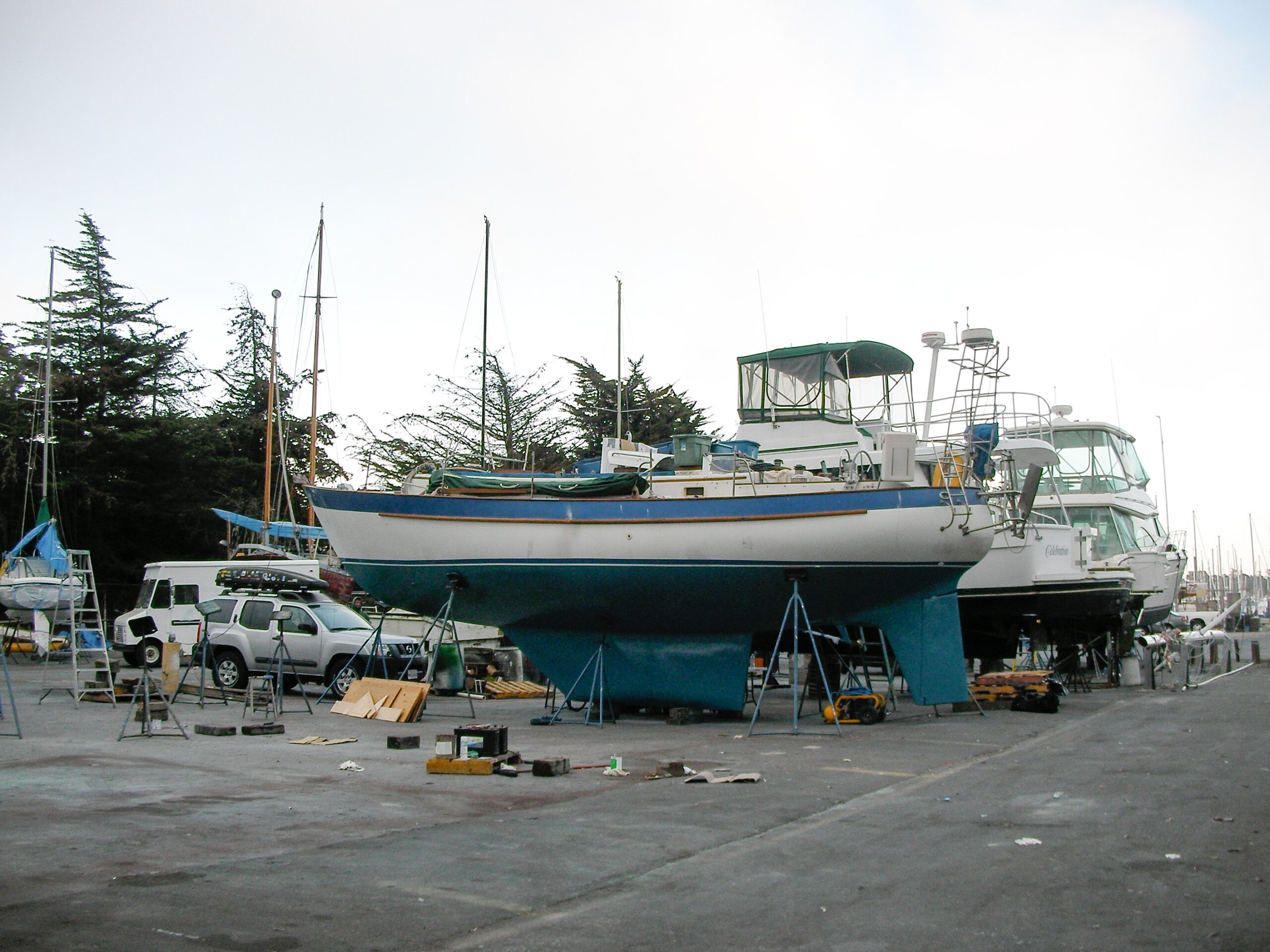
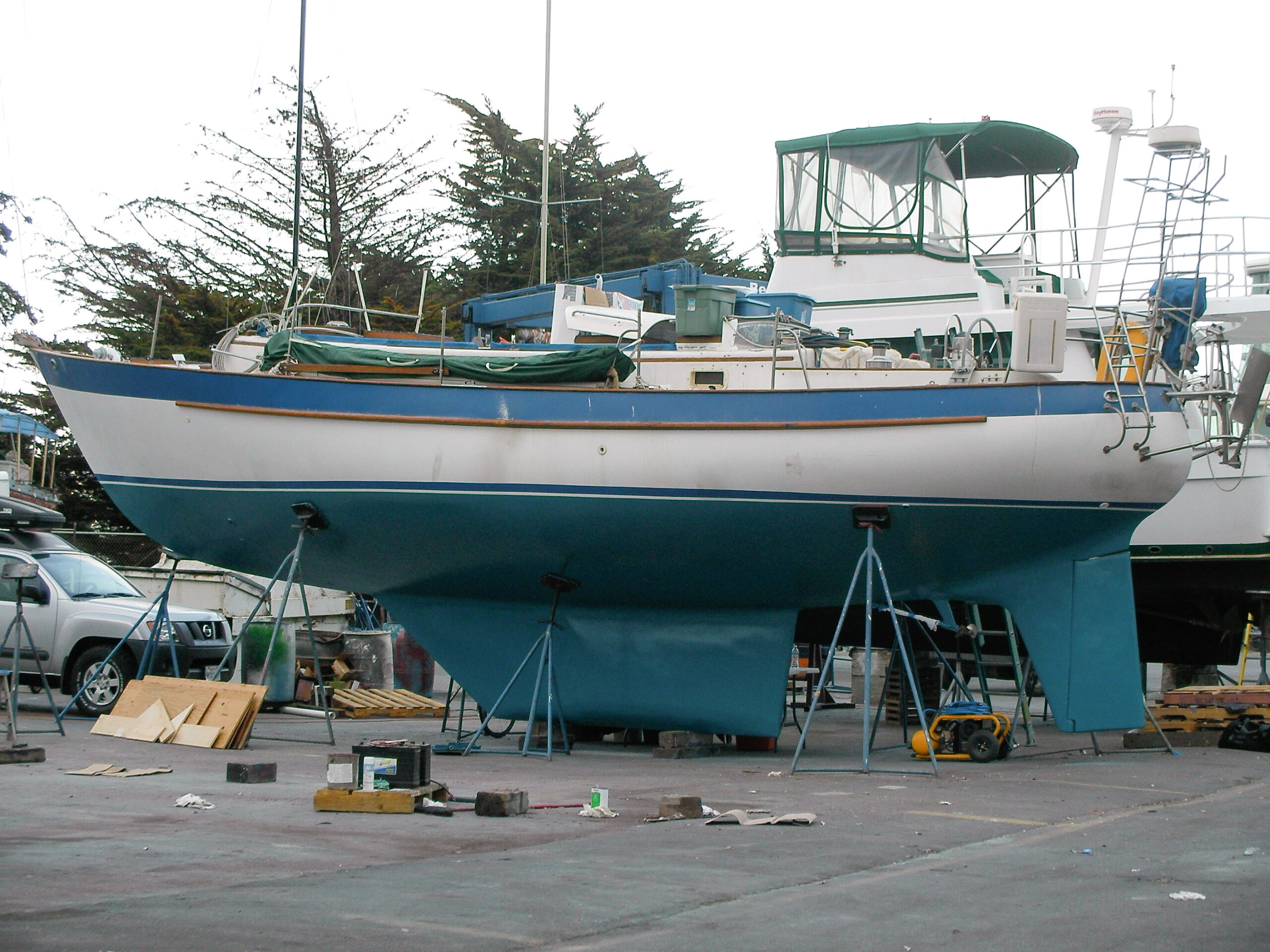
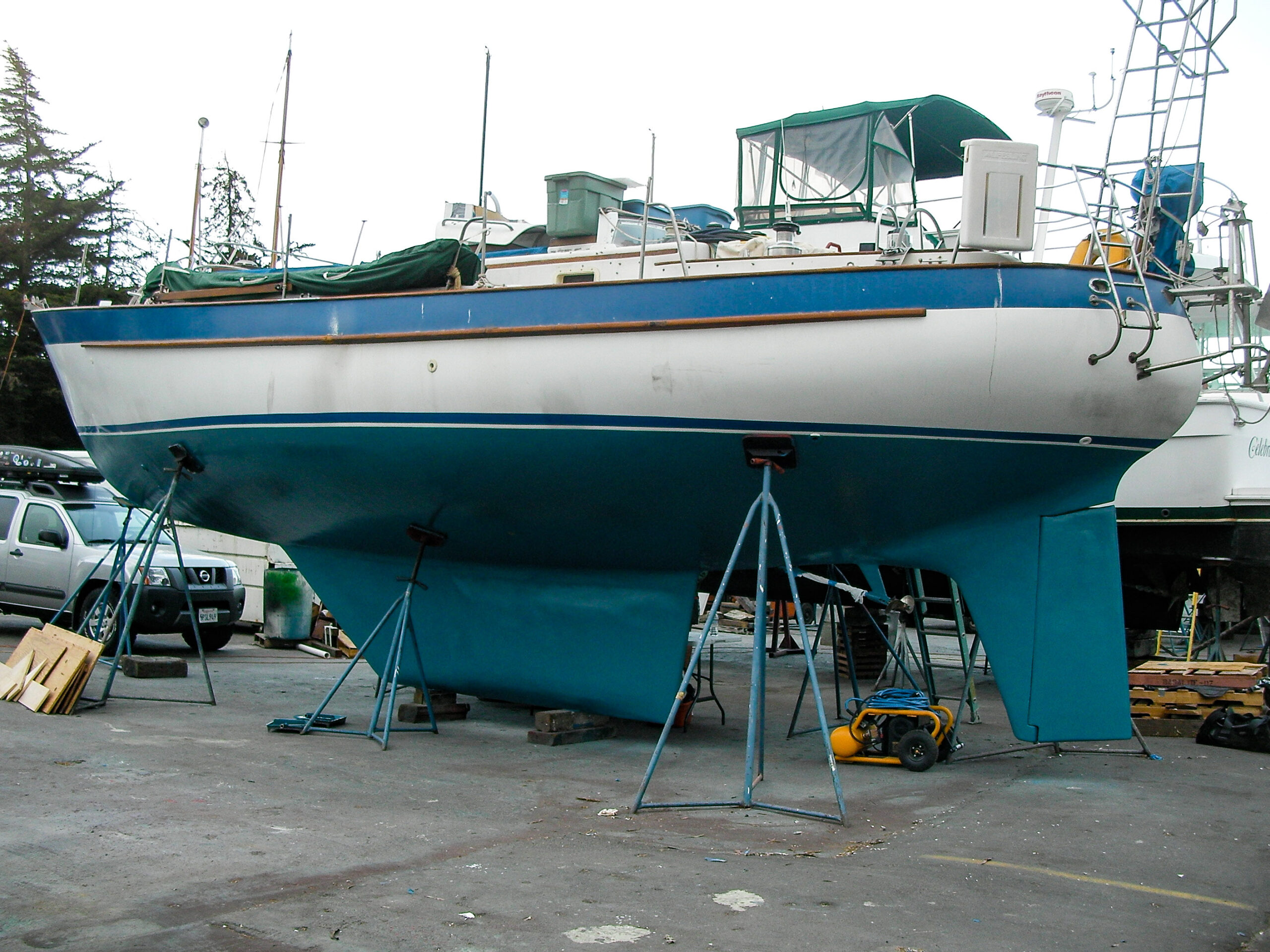
Then we applied 4 coats of Pettit Premium Antifouling Bottom Paint. It is an ablative paint, which means that it sheds off over time. The previous paint was an ablative, and you can’t put a hard paint over an ablative, and we weren’t going to sand all the way down to the barrier coat, so it was an easy choice to pick an ablative. The “Premium” that we got is one of the cheapest bottom paints available ($75/gallon); Practical Sailor gave it a best buy, and after reading a lot about the different bottom paints, I couldn’t shake the feeling that the expensive stuff is a hoax. We bought 4 gallons, and used 3.5 to do the 4 coats. Jonny and Karen did all the painting 🙂 lucky me.
Four coats is maybe a bit excessive (most people do 2 or 3 at most), but we’re not going to save the paint for next time and the paint works by wearing off over time, so the more the better, right? We didn’t bother trying to make it super pretty, but it came out pretty slick regardless.
Leave a Reply