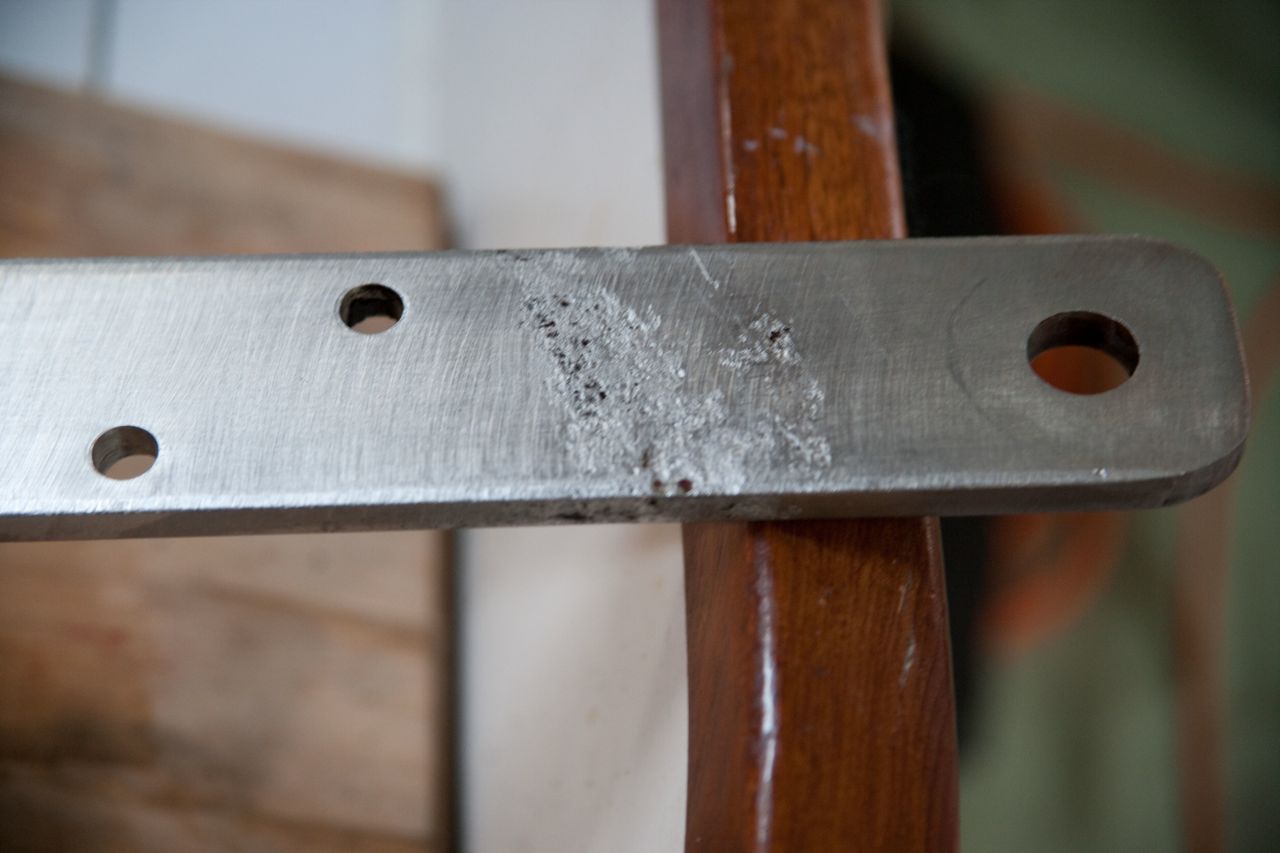
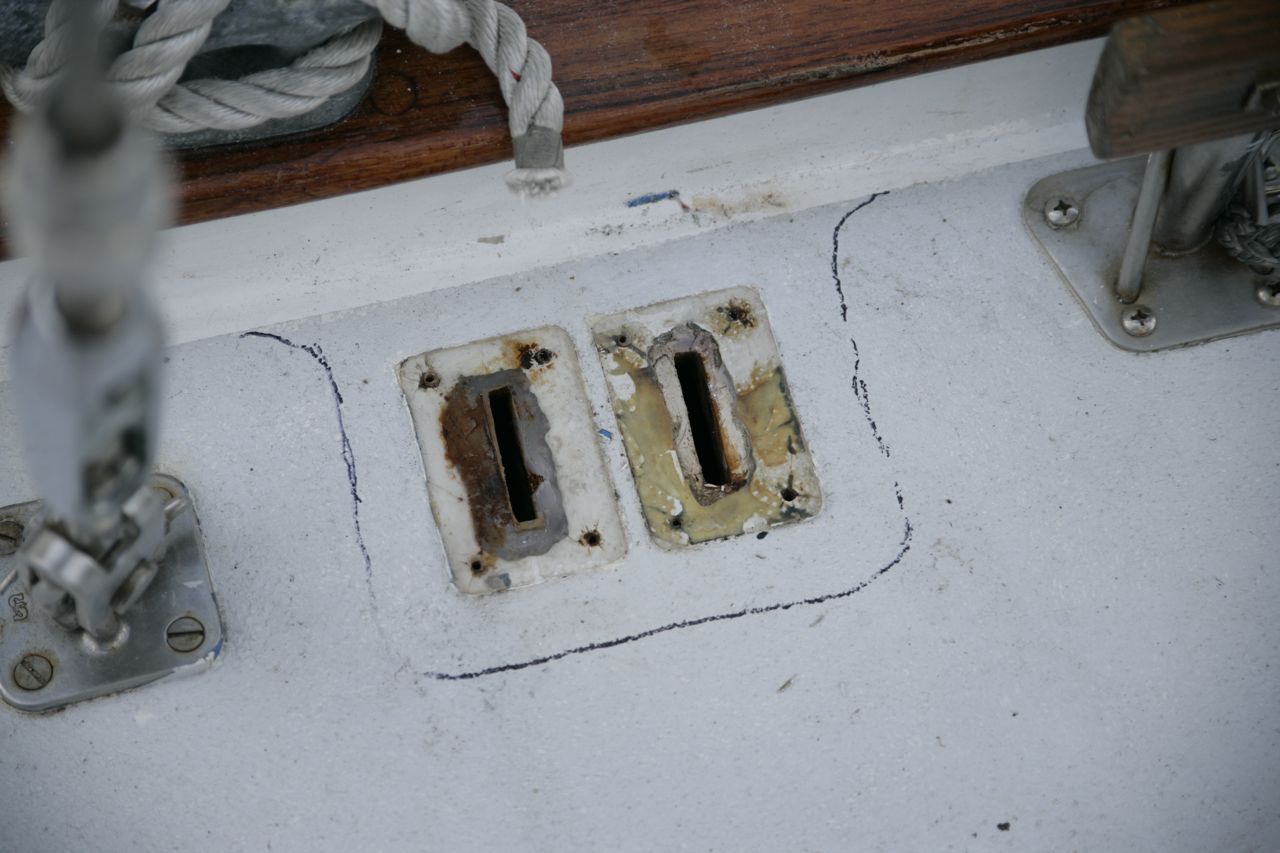
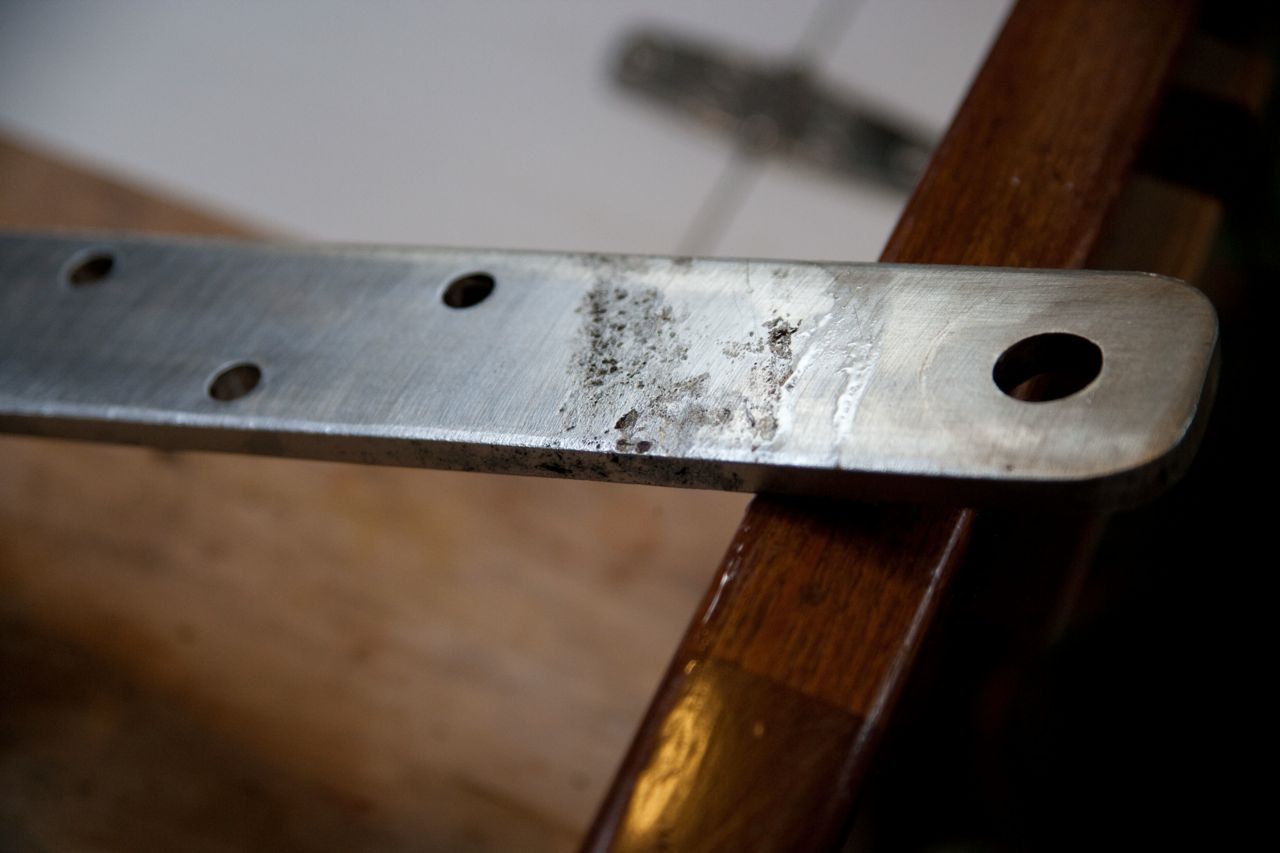
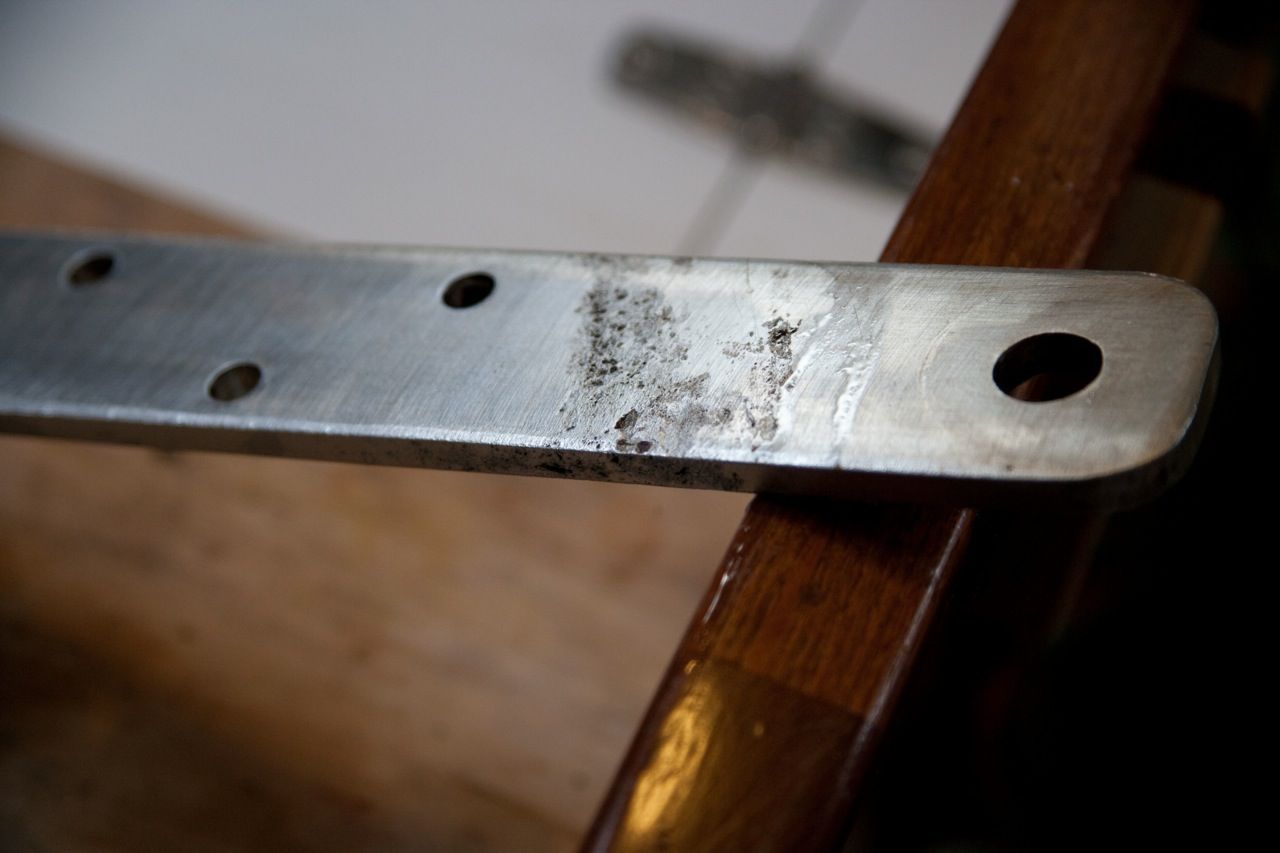
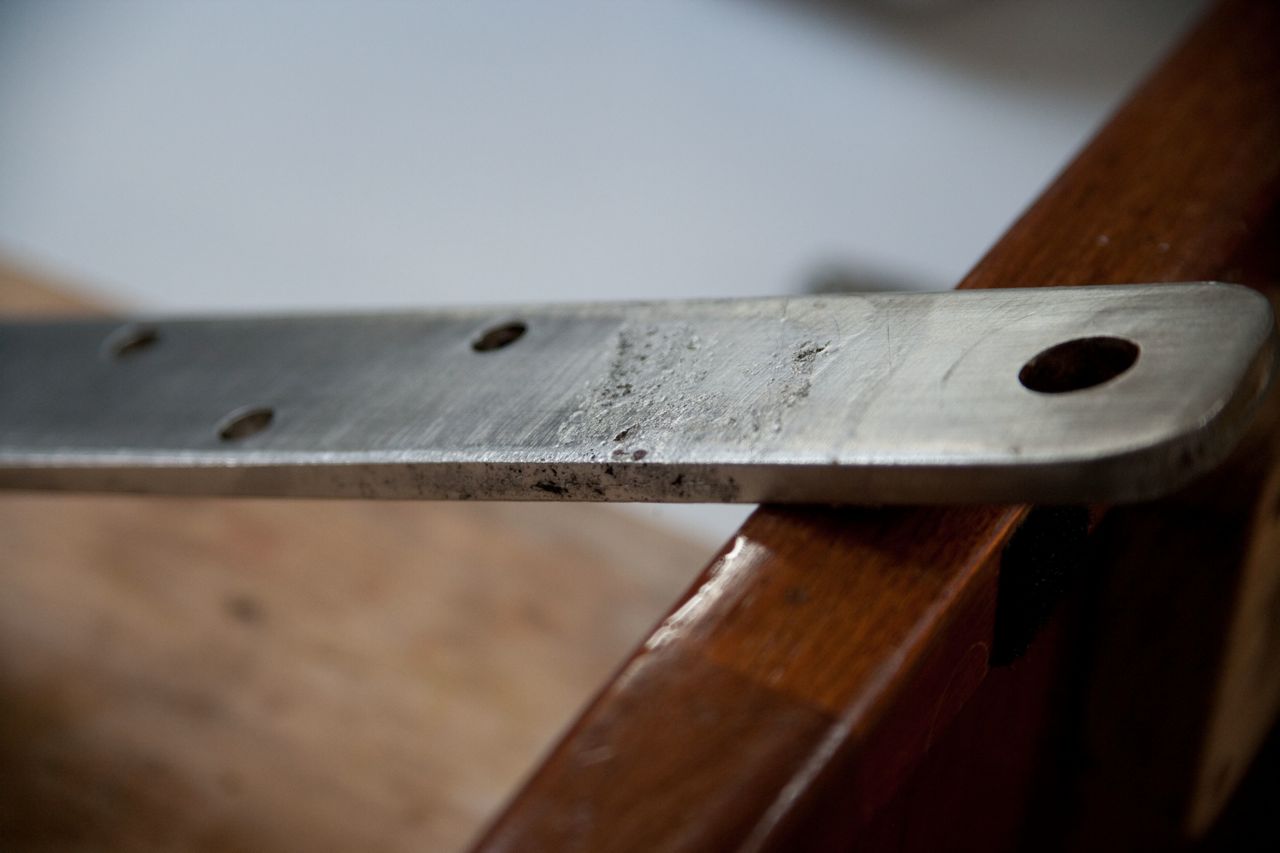
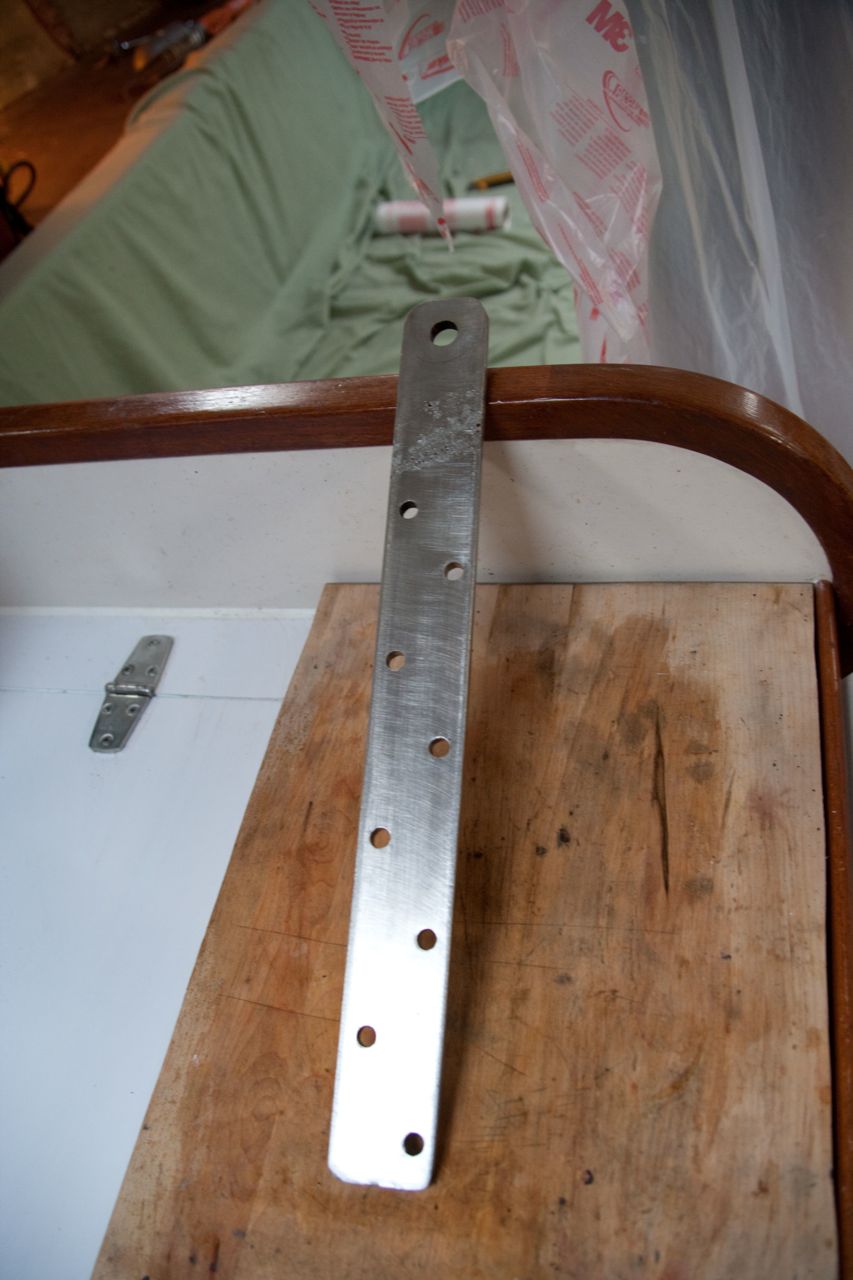
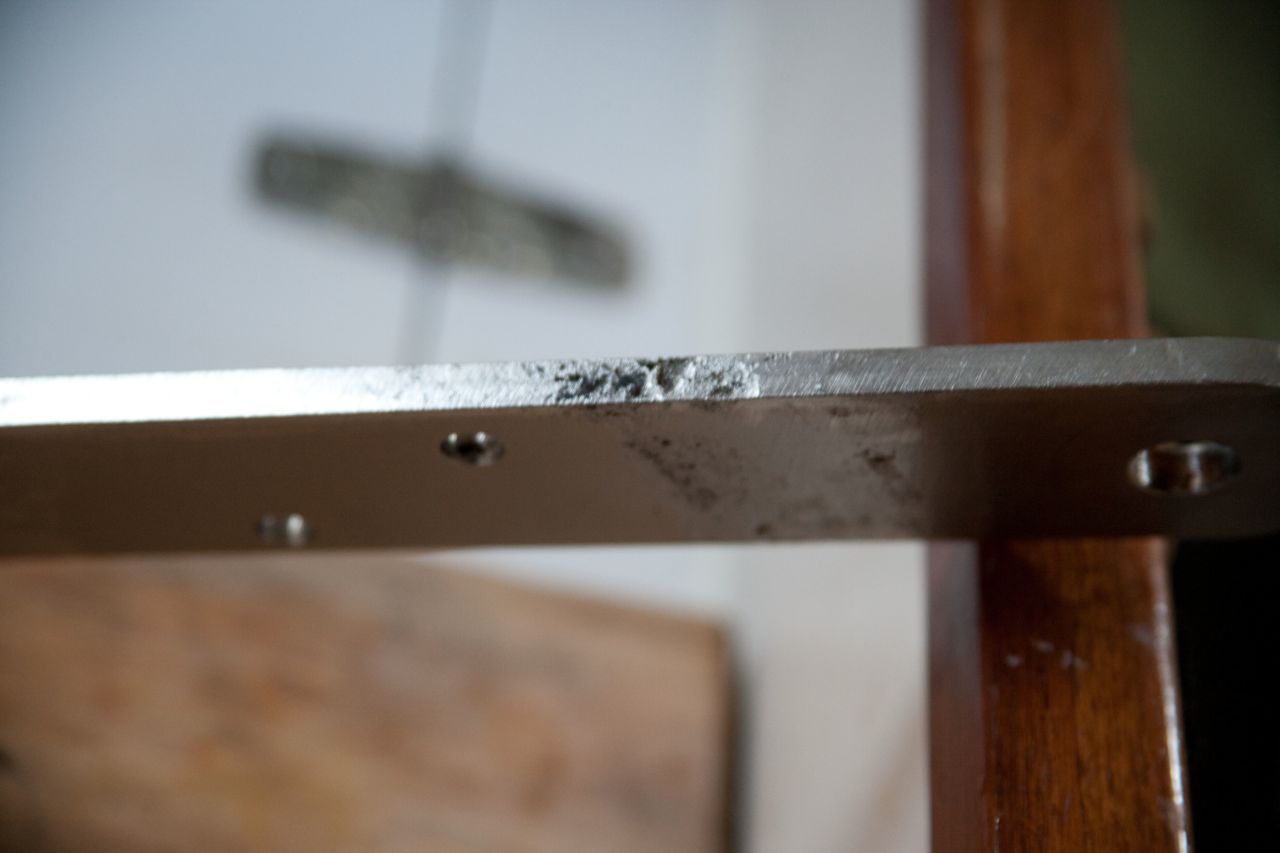
In the process of re-glassing the knees to the hull, we decided that it would be prudent to replace the chainplates as well. Most of the old ones looked okay, though when Jonny cleaned one up really well for inspection there was clear signs of pitting right where the plate passes through the deck (see the pictures). The nature of stainless is that it fails without much more warning that that, and we already had everything apart, and Pete was willing and able to fabricate a new set for me, so it was a no brainer.
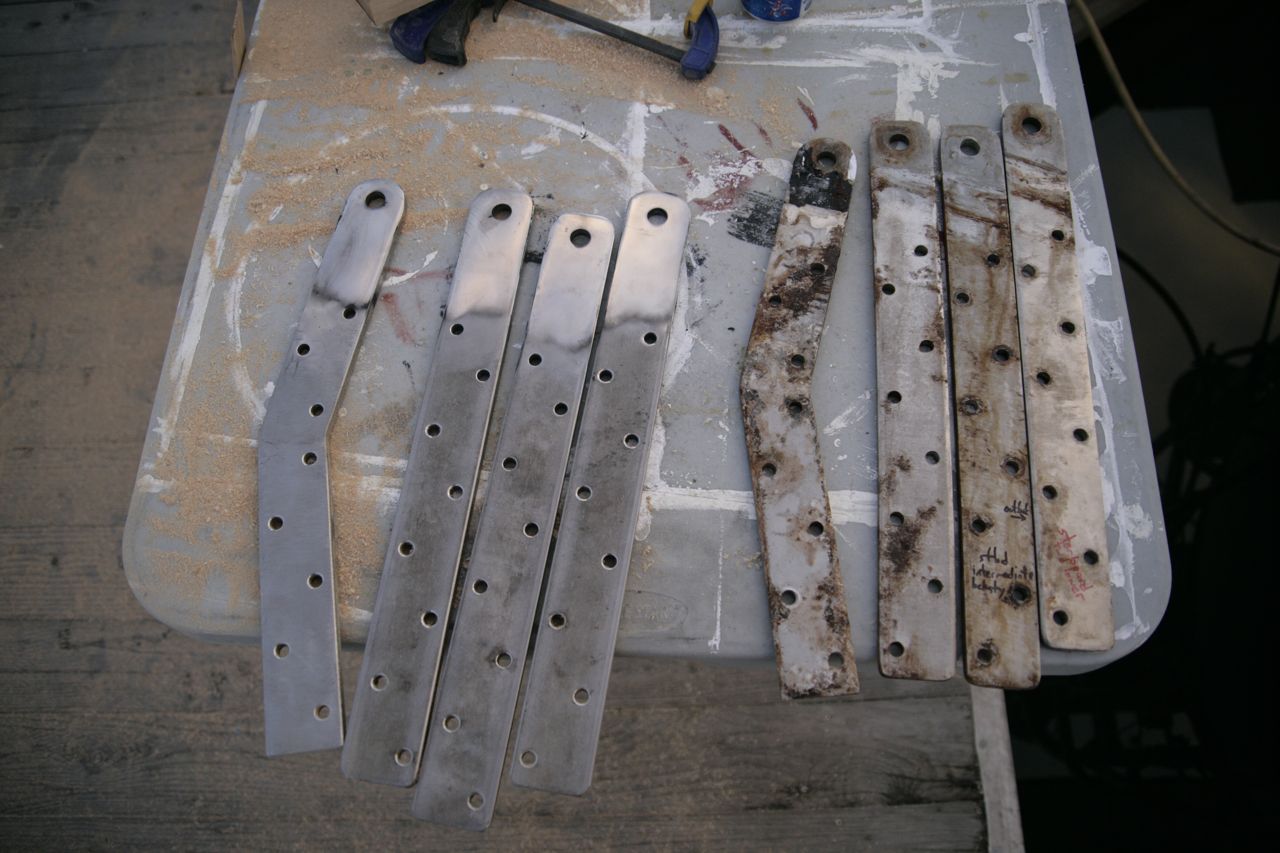
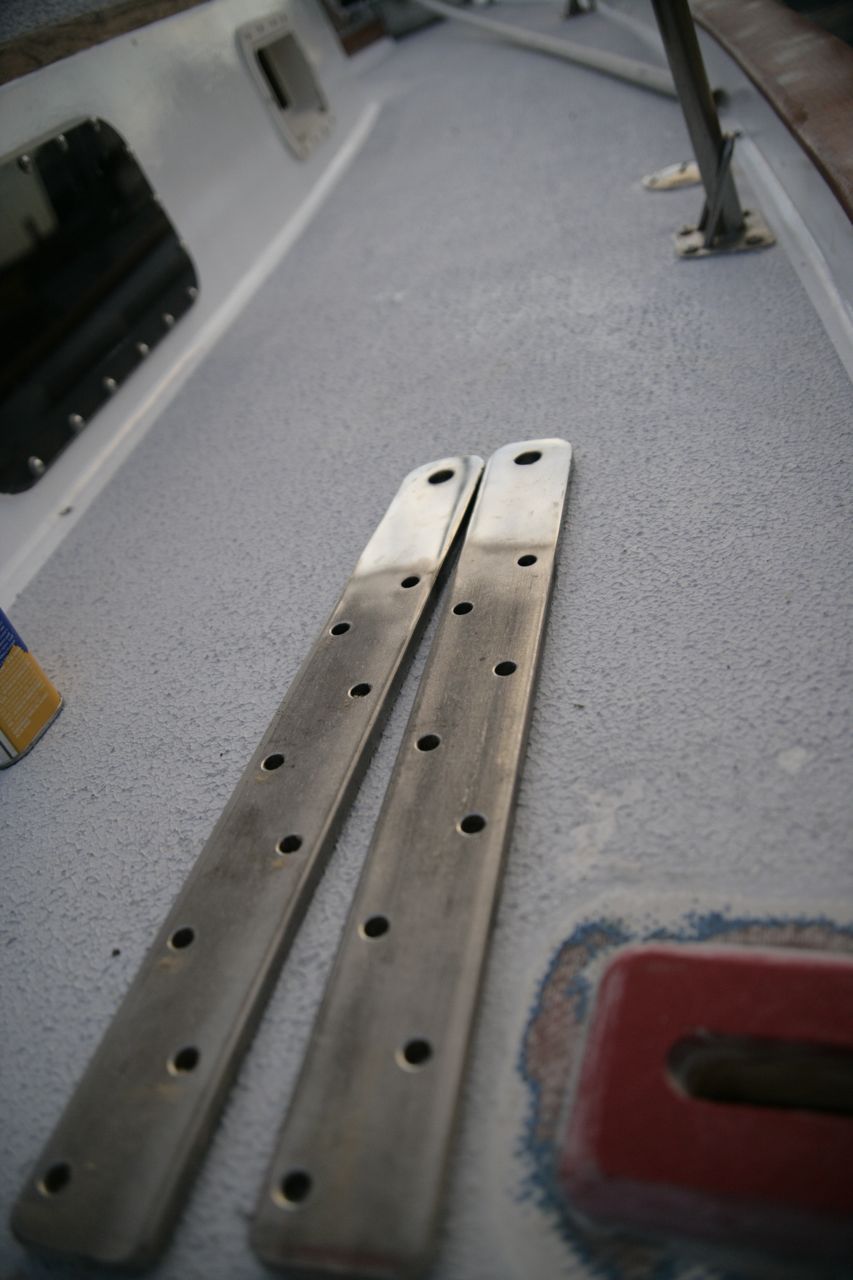
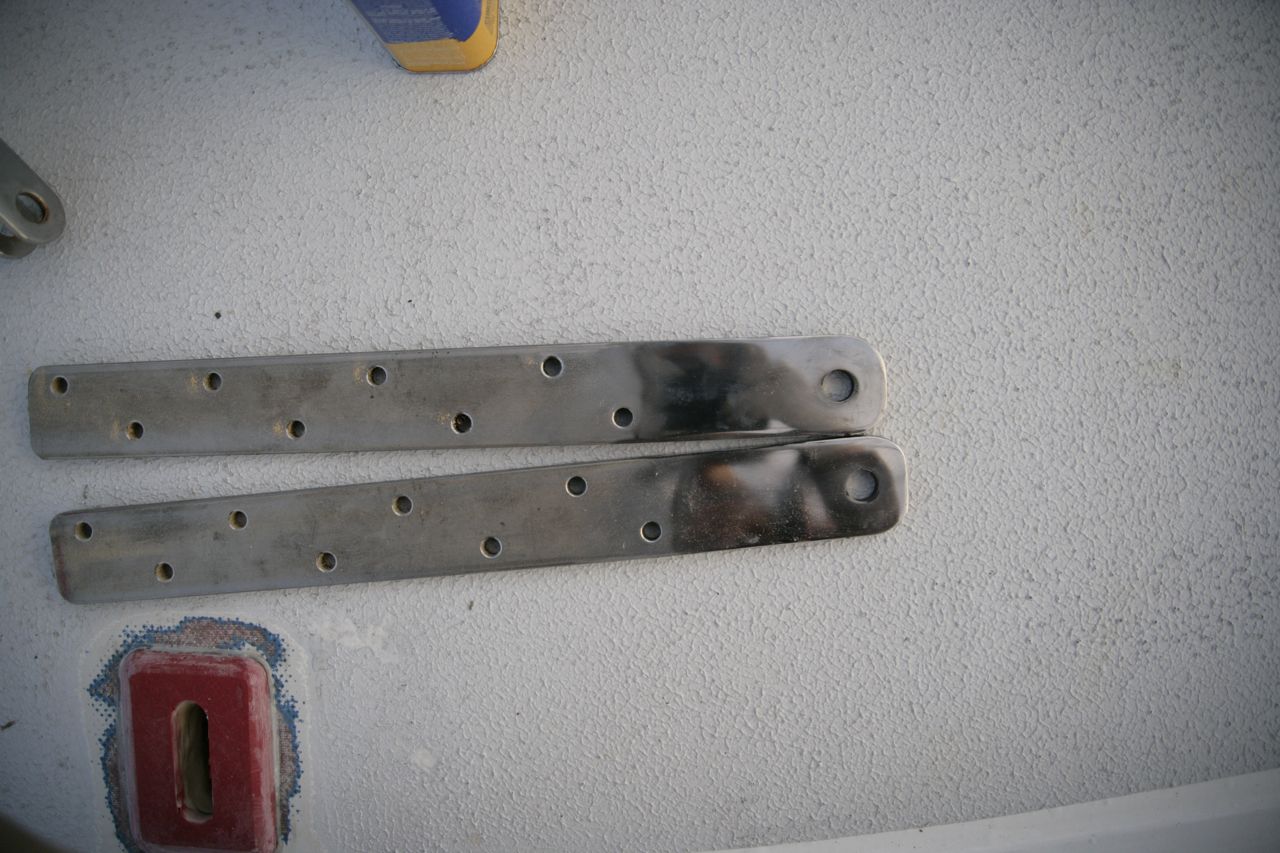
The old plates were 5/16″ thick, the metal yard had 3/8″, so we went up a size. The yard cut the plates to length and Pete drilled the holes and rounded the ends. The metal was mill-finished from the yard, i.e. a roughish matte gray texture, and stainless corrodes where it isn’t polished, so I spent 2/3rds of a day polishing just the upper 4 inches of each plate–the portion that lives through the deck and above deck. If we weren’t two weeks away from departure, I would have done the whole surface, because I finally figured out the fastest way to do the polishing (after a few years and many different stainless polishing project attempts) and goddamn the mirror finish on that stainless is gorgeous. There is an immense satisfaction in taking a gray flat metal and taking it to the point where you can see yourself in the reflection. But there is no functional reason to polish to portion that is below deck–it’s only the portion inside and above deck that is susceptible to the corrosion.
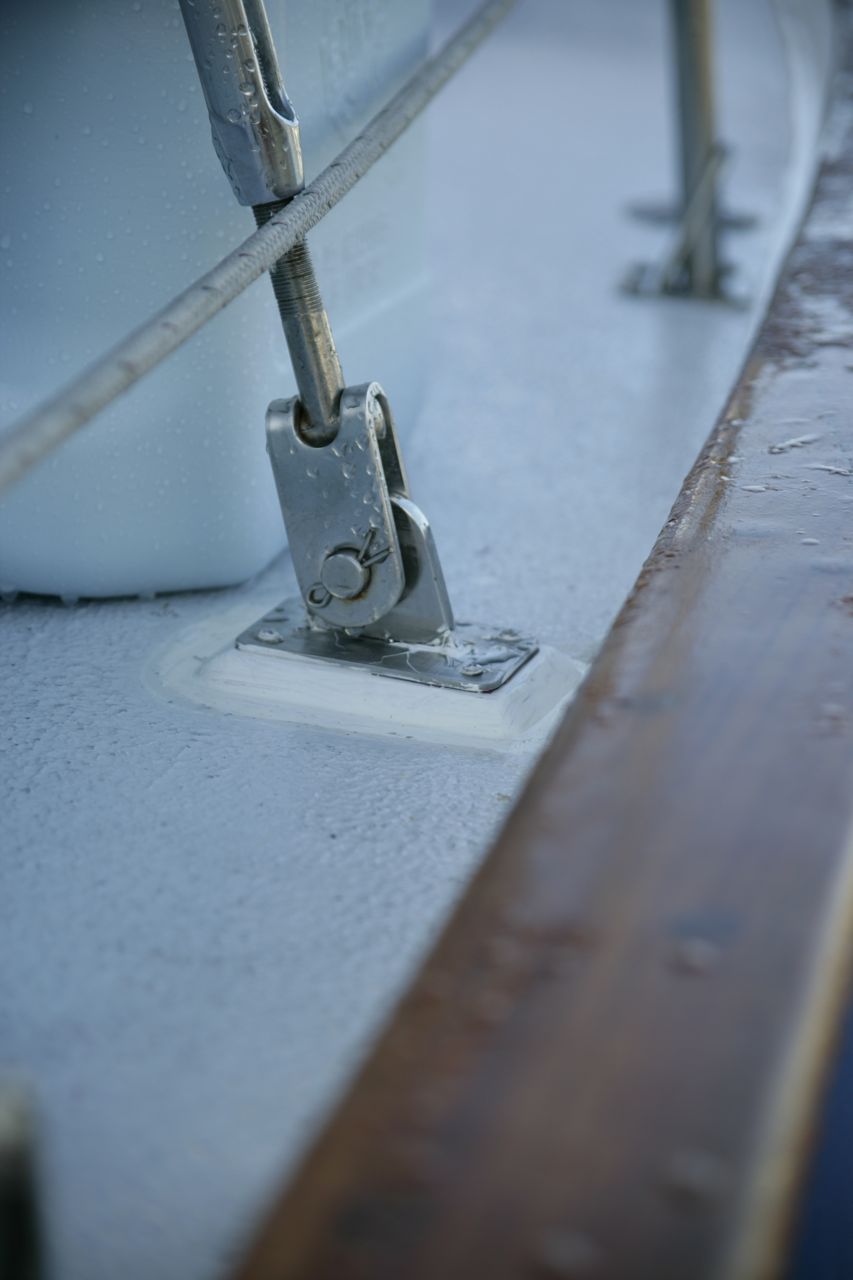
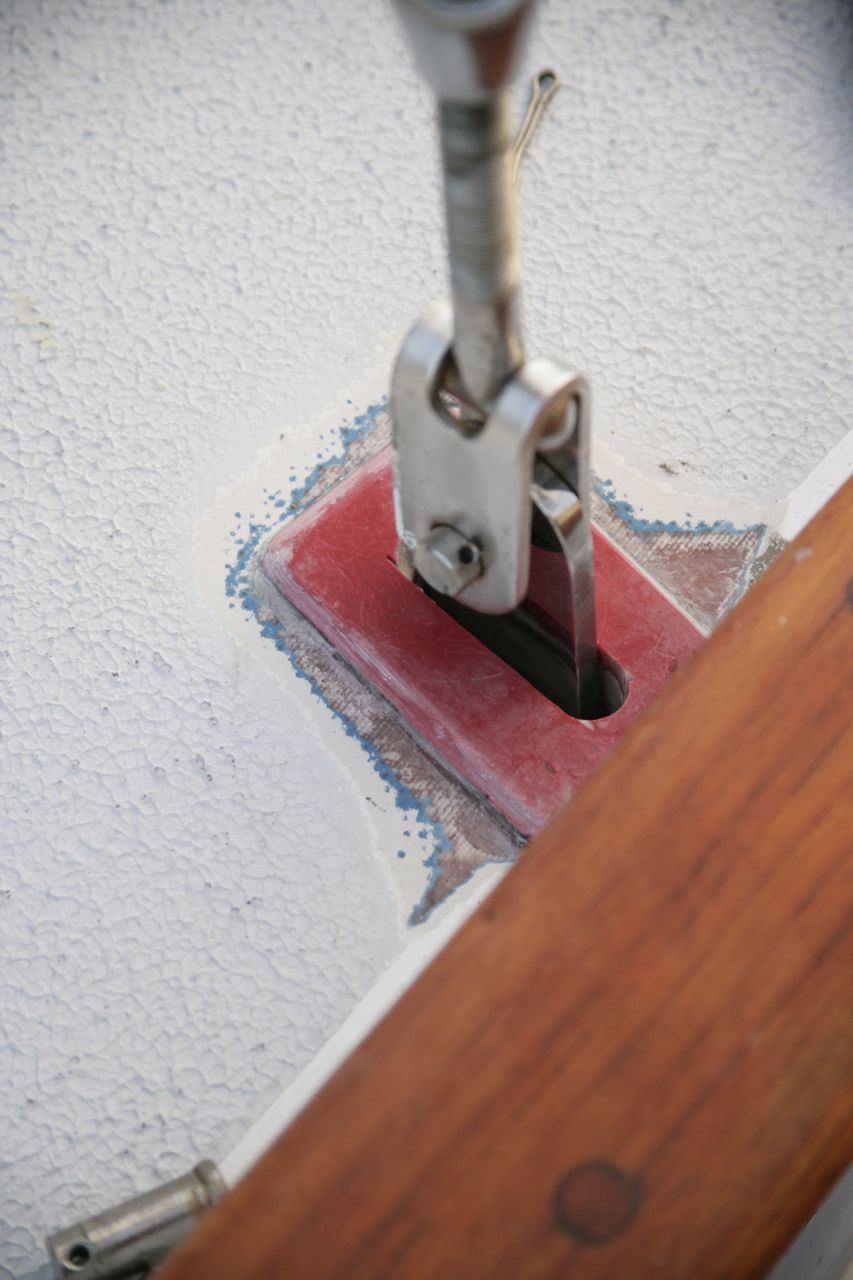
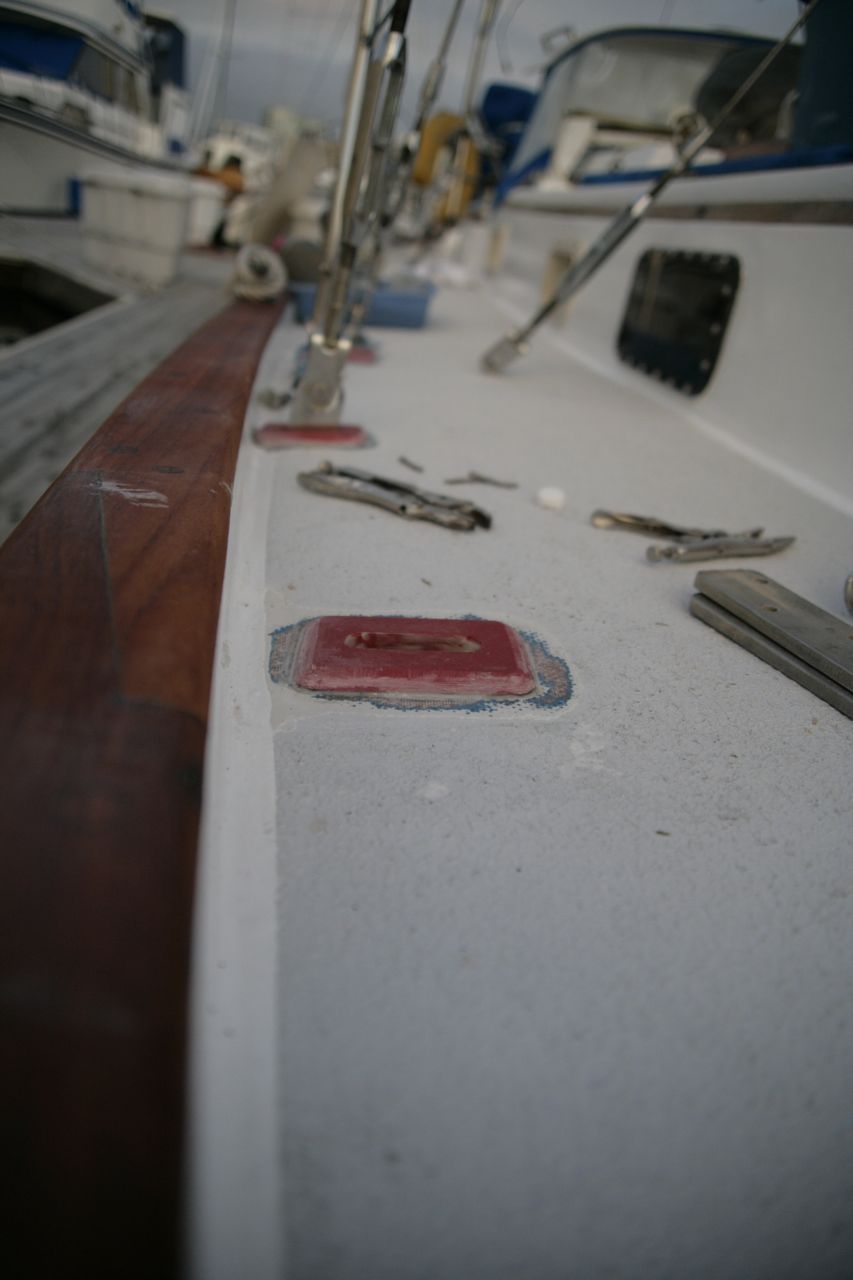
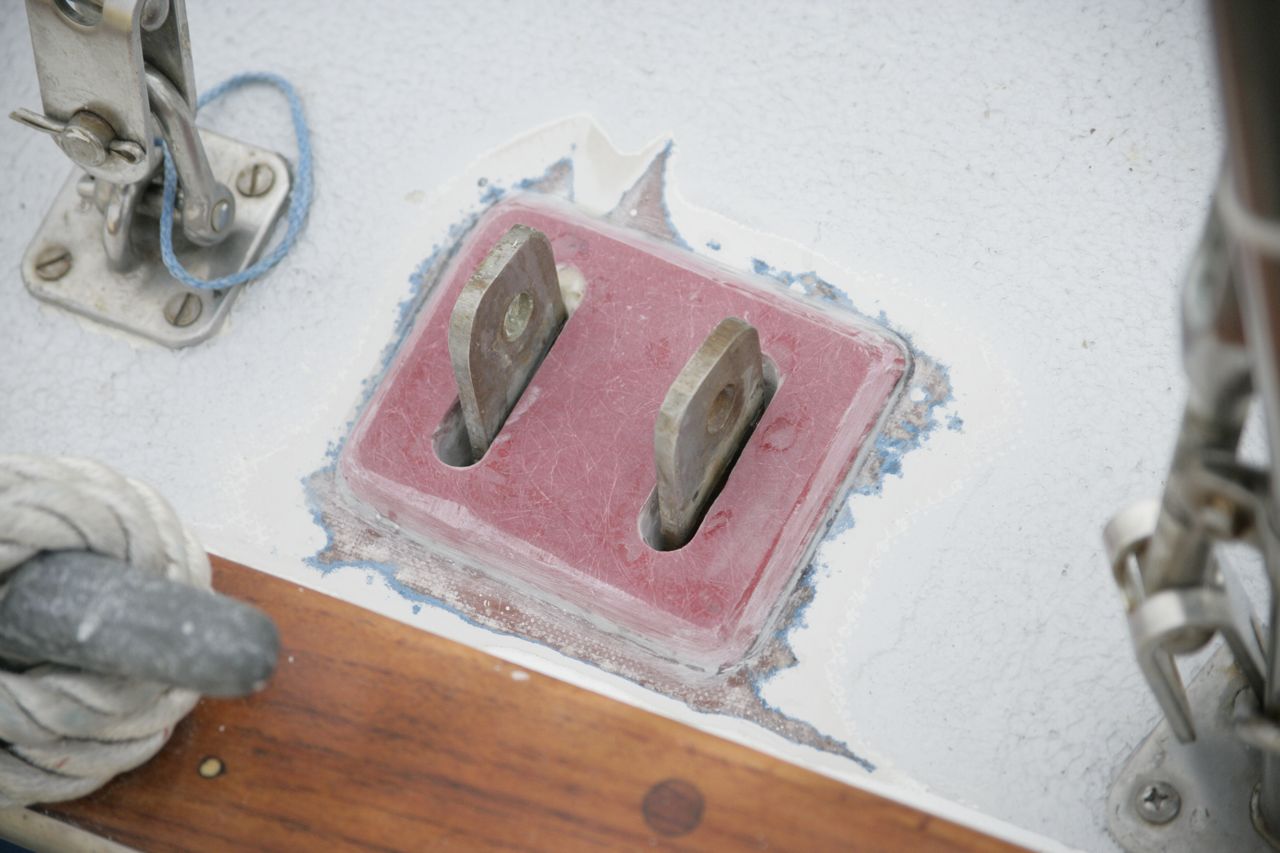
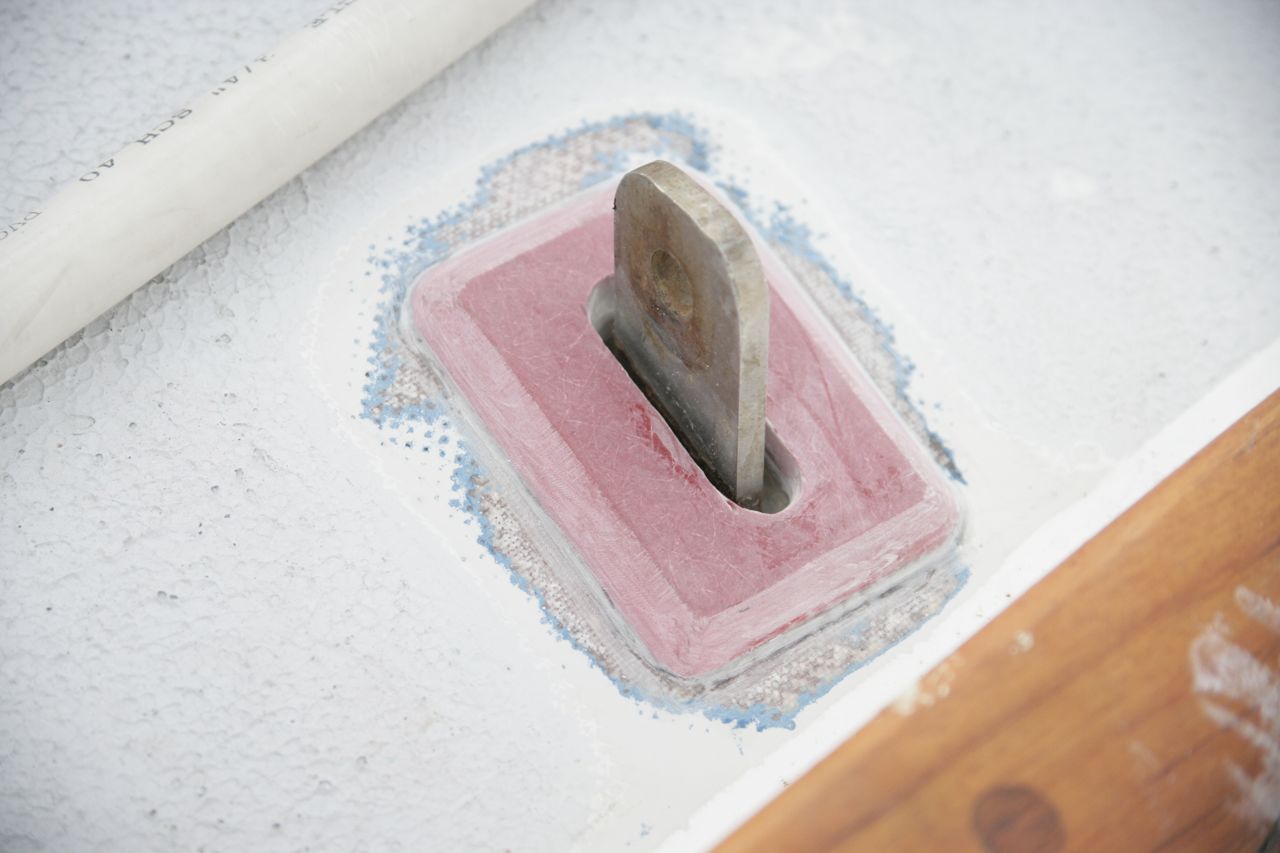
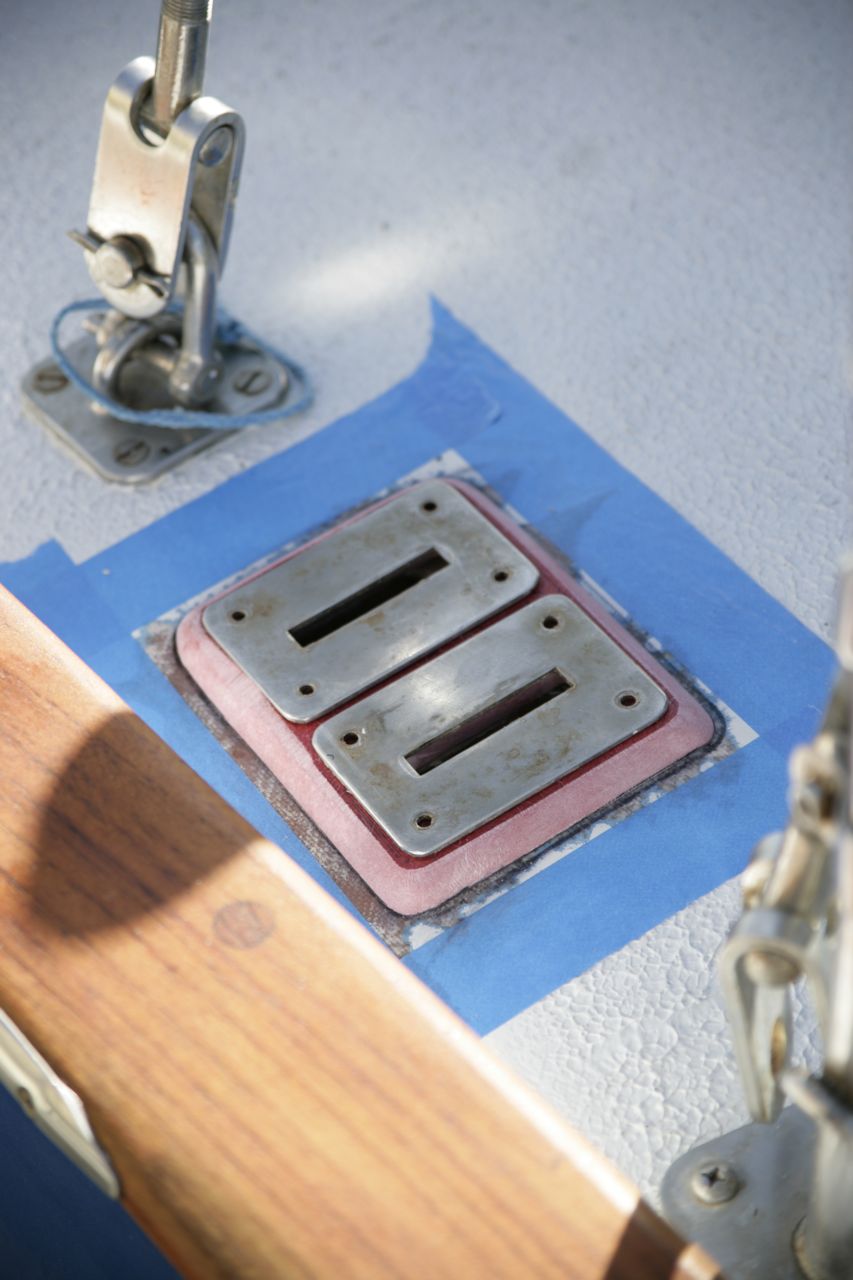
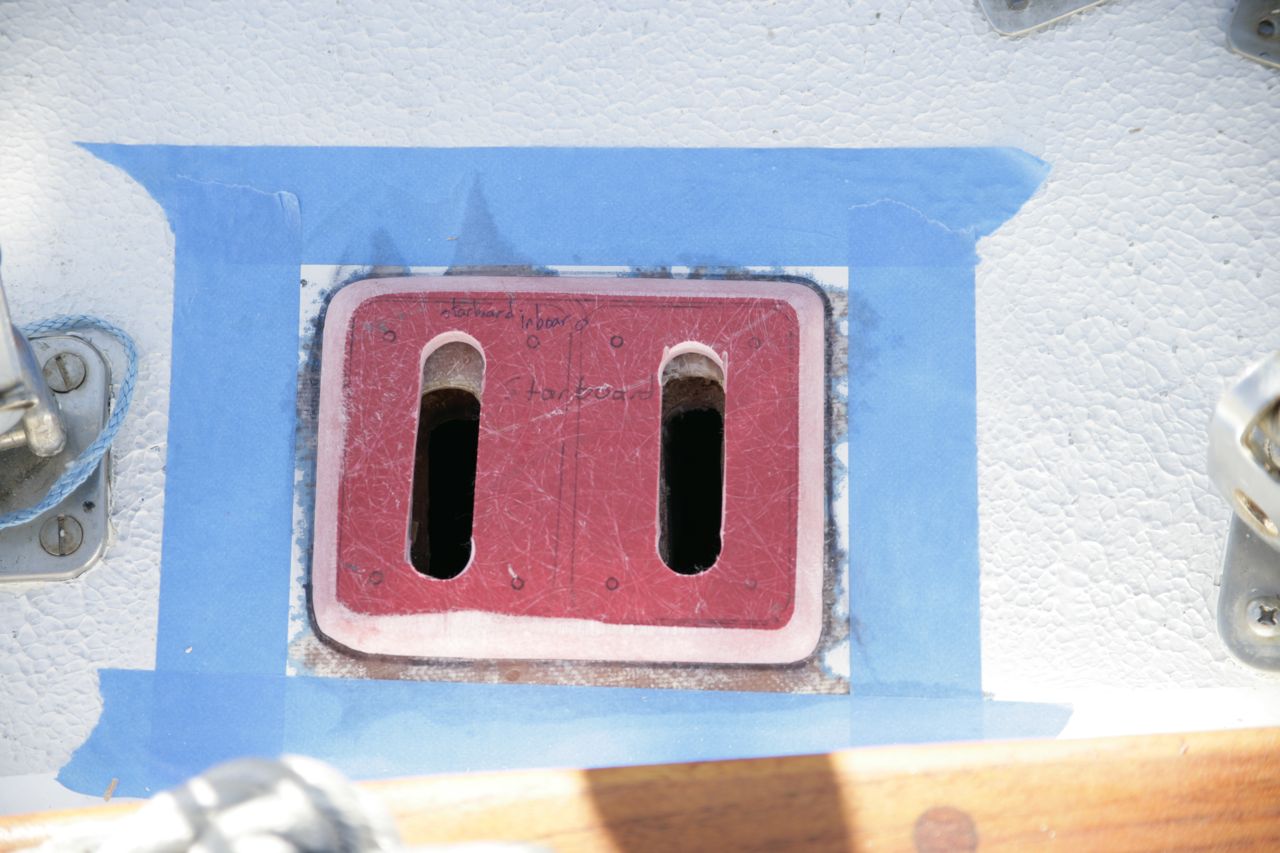
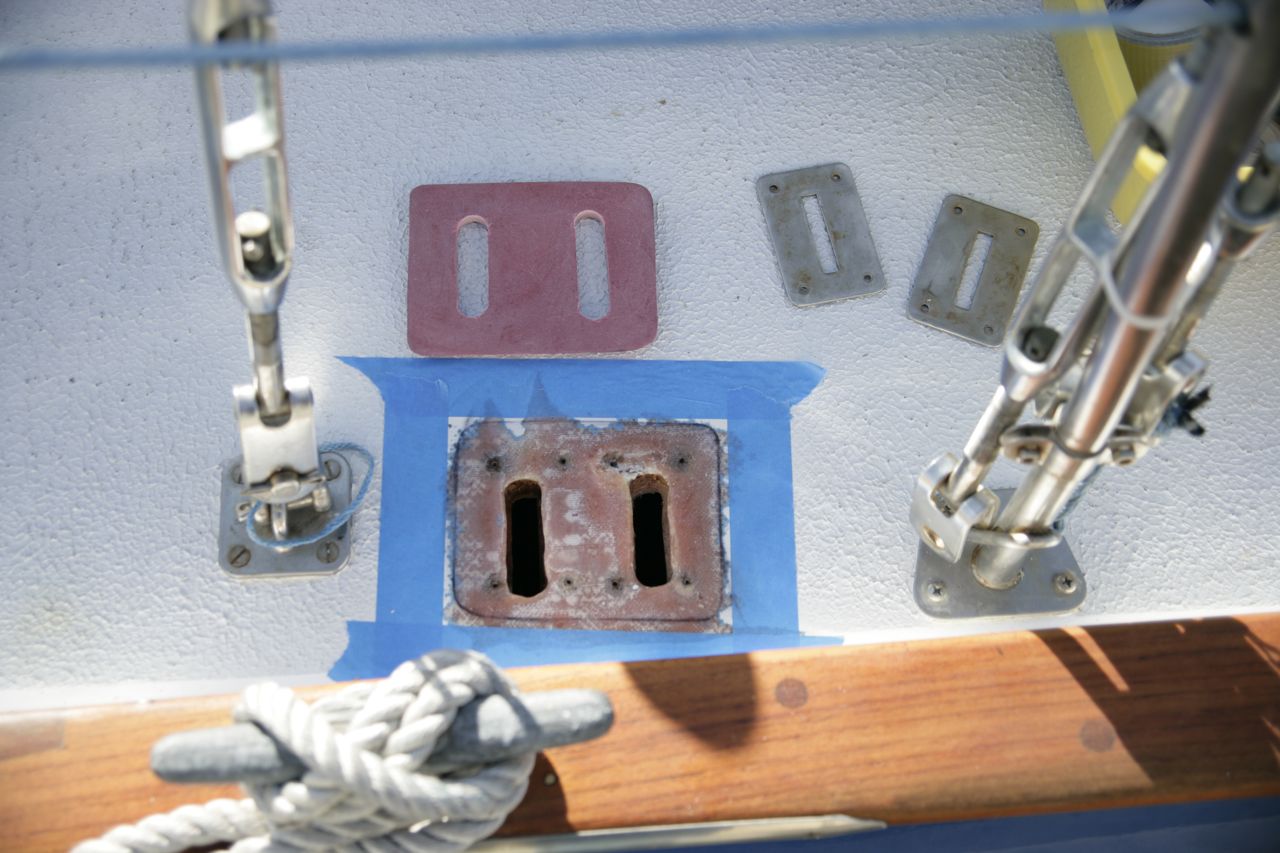
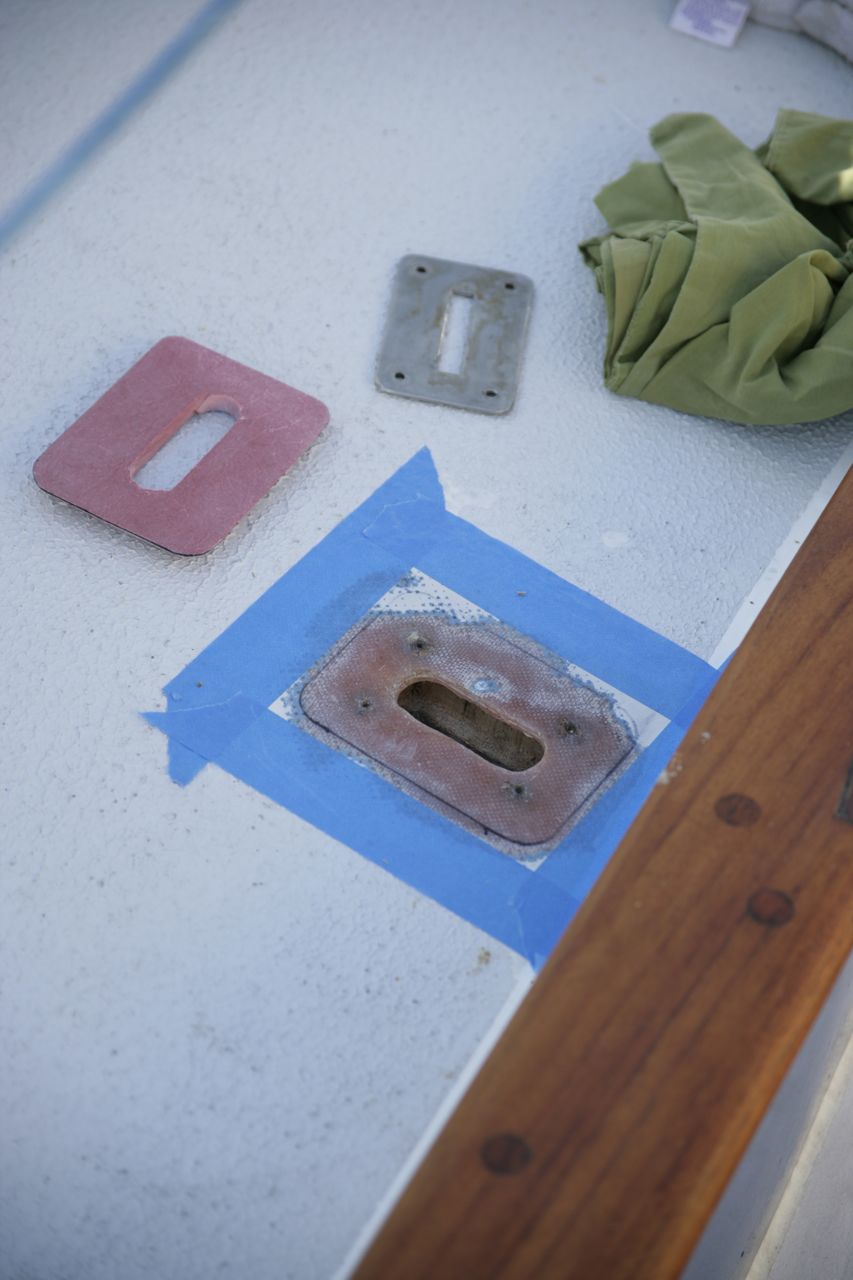
Jim Hassberger from Kanga suggested that we add plinths to the deck, through which the chainplates protrude, in order to prevent the plates from ever sitting in water. At first I didn’t want to do the extra work, but good sense prevailed and we took the extra time to do it. Jon cut rectangles from a leftover piece of 3/8″ thick FRP (pre-made sheet of fiberglass) from McMaster-Carr that we had used in the construction of the lazarette and propane locker lids. He ground a bevel into each side, then I cut an overlarge slot down through the center to admit the plates. I temporarily mounted the chainplates (two bolts each loosely connected), then marked the position of the plinths. Then I removed the chainplates and glassed the plinths to the deck with slightly thickened epoxy (after having sanded down the area under them to bare glass).
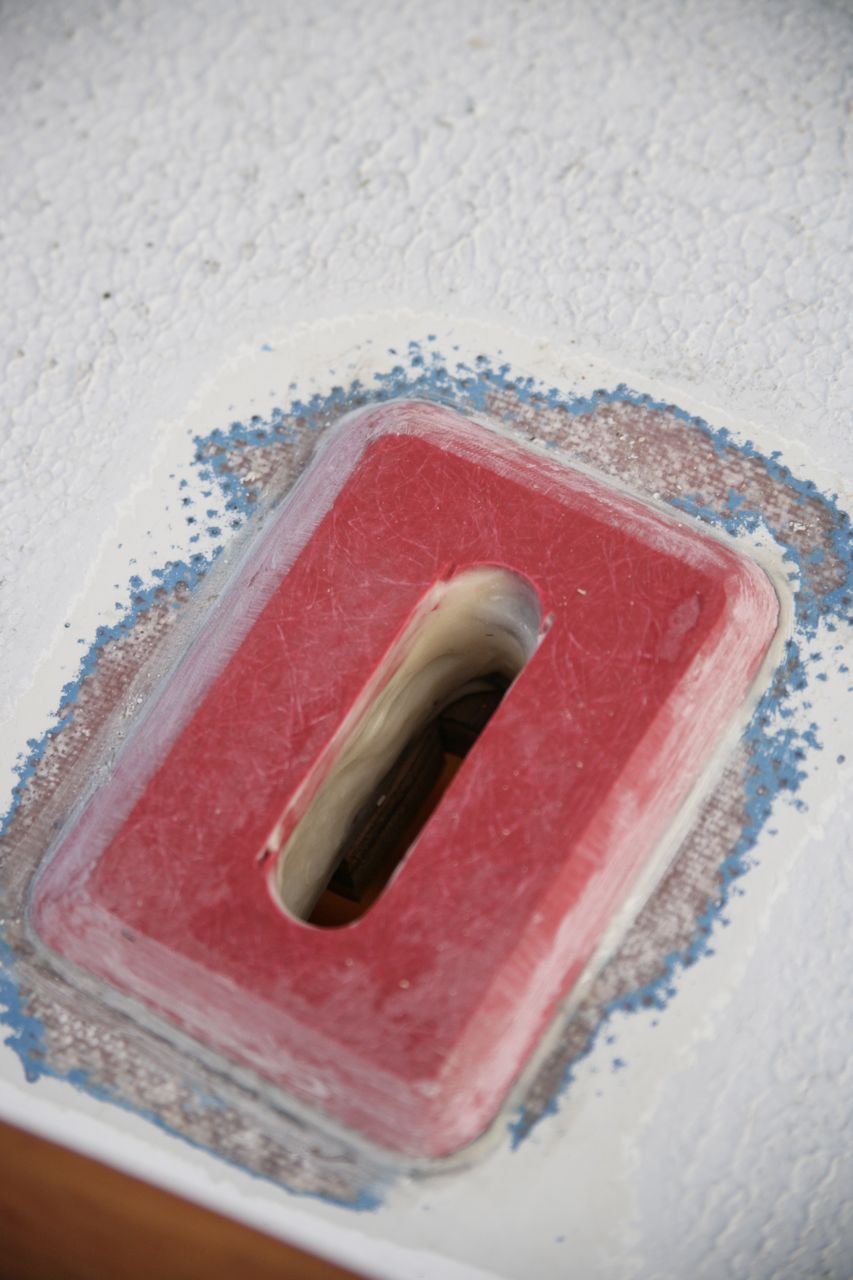
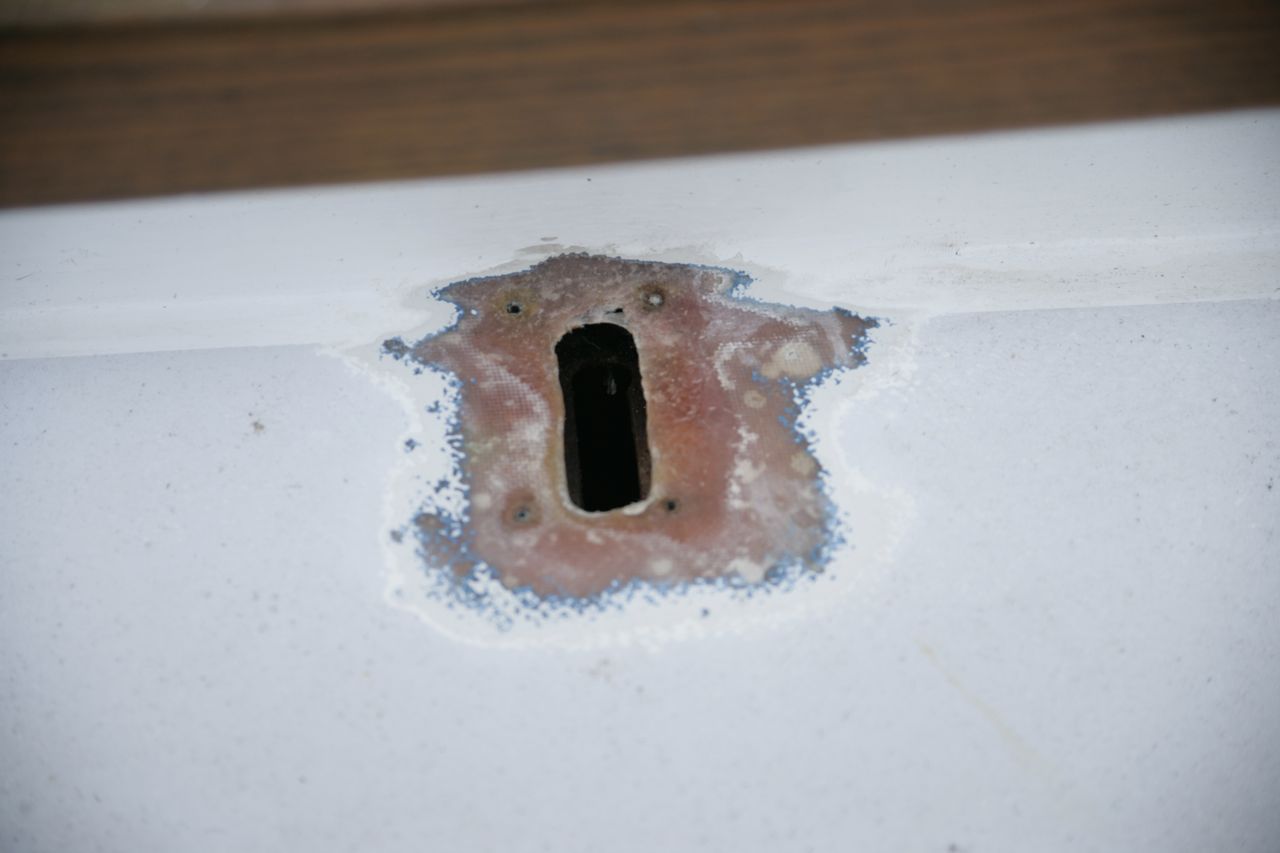
While epoxying the plinths to the deck, I filled the voided core area underneath them (from which I had removed the balsa) with thickened epoxy as well. I used a putty knife and my fingers to jam the thick epoxy in the gaps, and roughly shaped the slot with my finger. After it cured I came back with the dremel and cleaned up the slot. Now, if any water penetrates the sealant around the chainplate, it will enter the ceiling of the boat (and be visible) rather than rotting out the core of the deck, to which it has no access.
The plinths didn’t end up adding that much time and effort, and didn’t cost anything since we already had the extra fiberglass plates sitting around, so I’m glad we did it.
I used new bolts/nuts/lockwashers on the chainplates, stainless of course, and bedded them onto the side of the knees with a light layer of silicon to prevent water from wicking into that joint to corrode them (Pete’s suggestion).
Leave a Reply