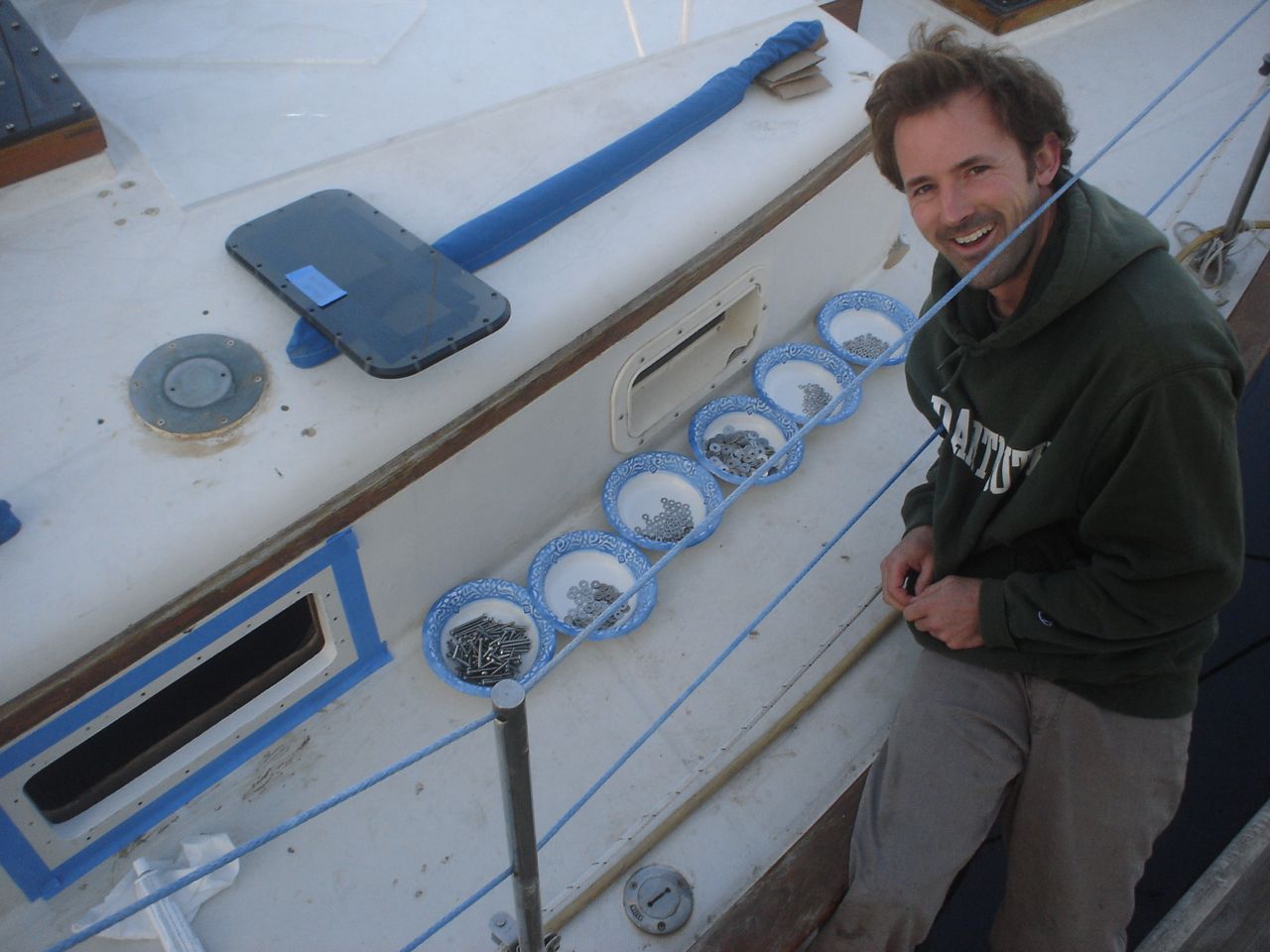
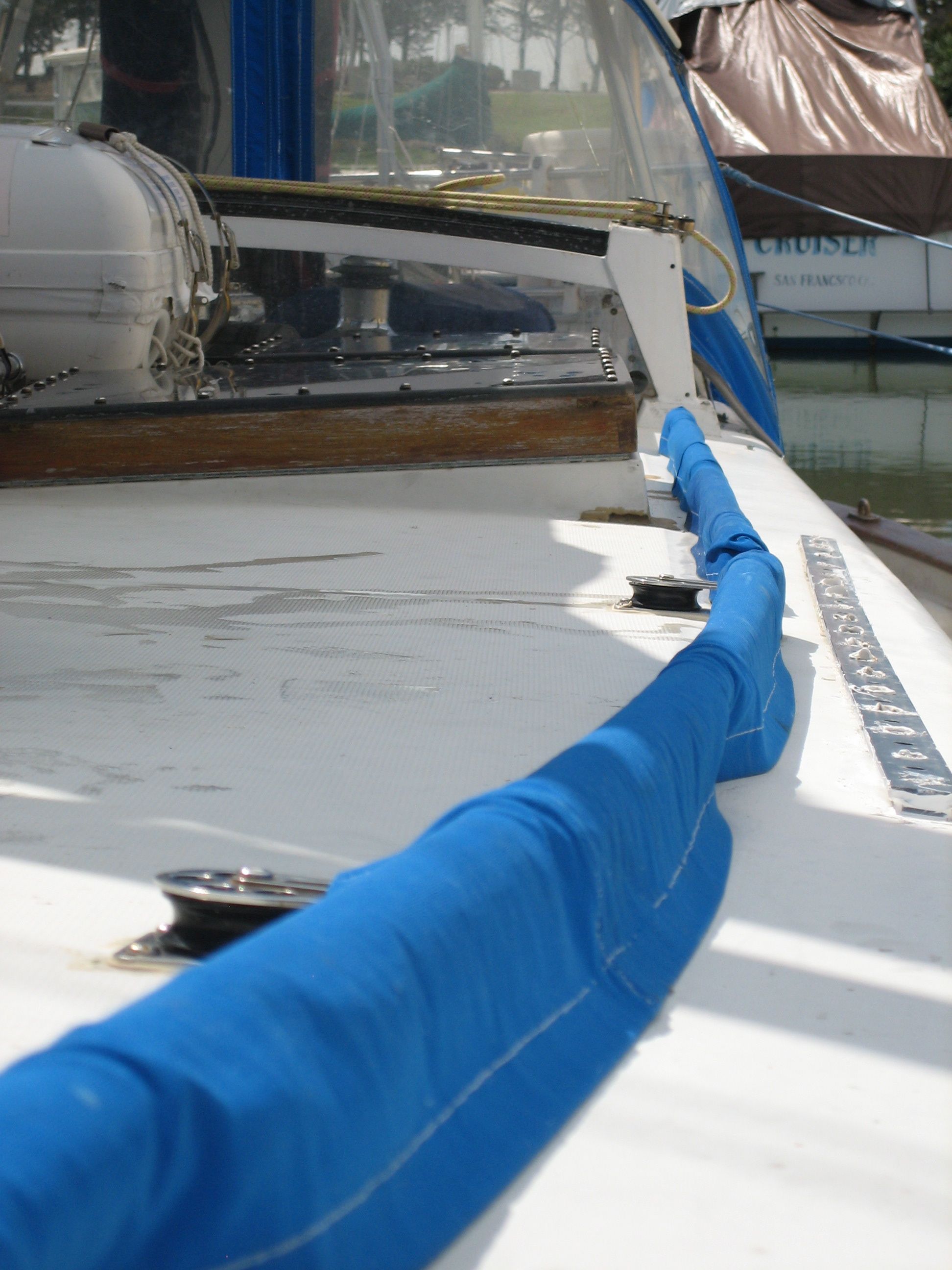
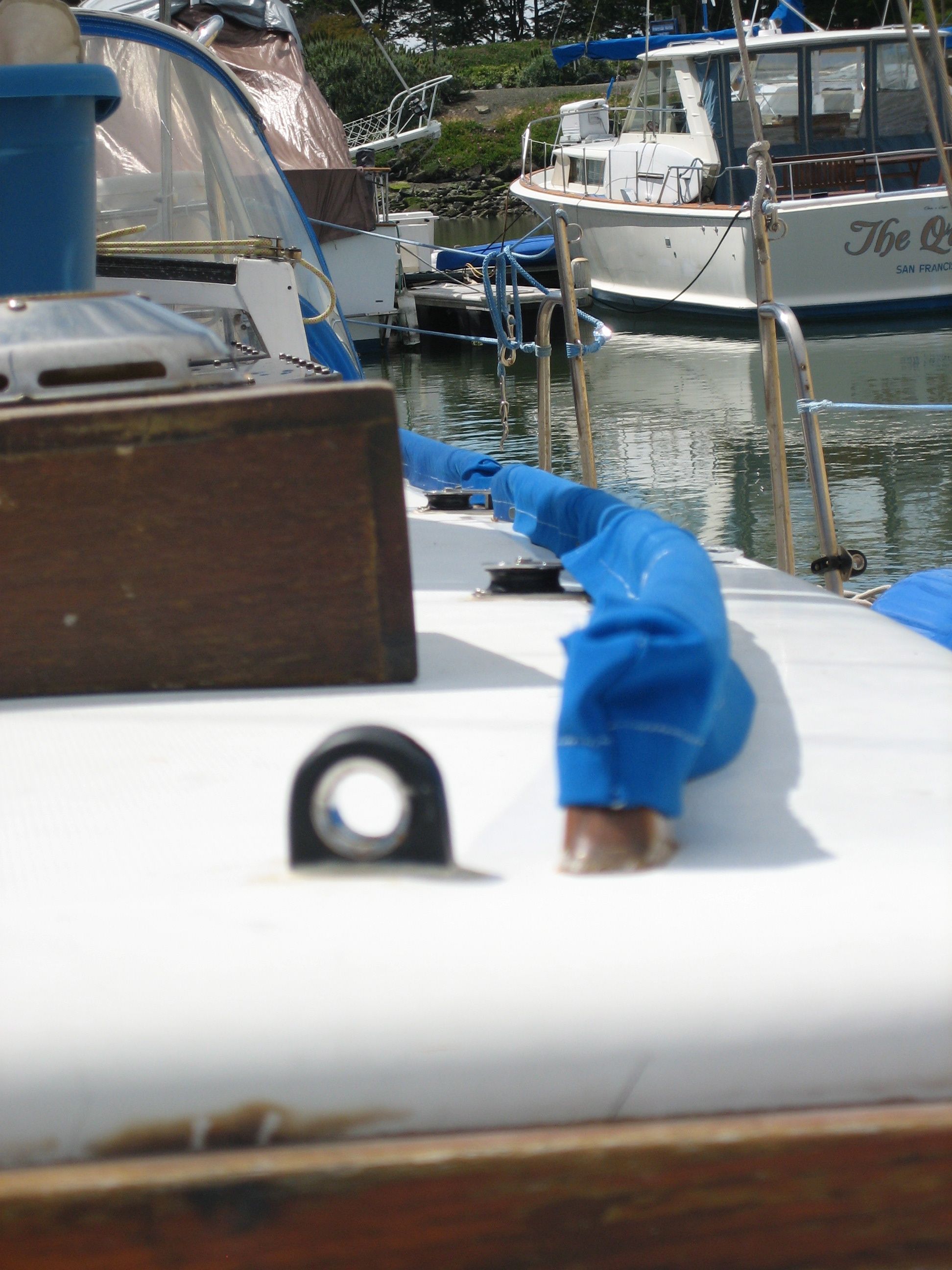
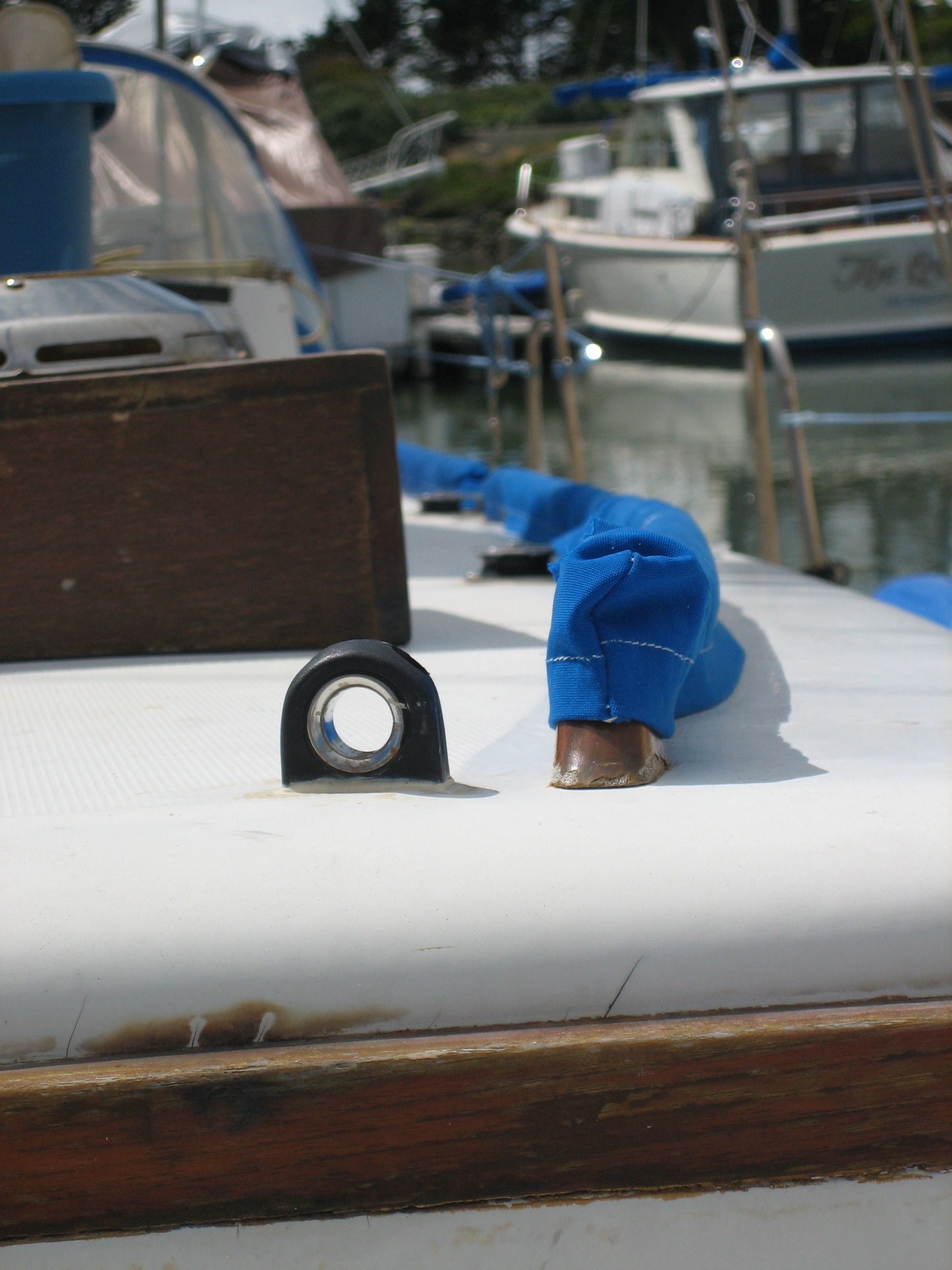
I had been imagining that this task would involve annoying labor over a period of months, but Jonny decided the issue by removing all the stanchions on Monday. Since we wanted to sail on the weekend, we got our act in gear.
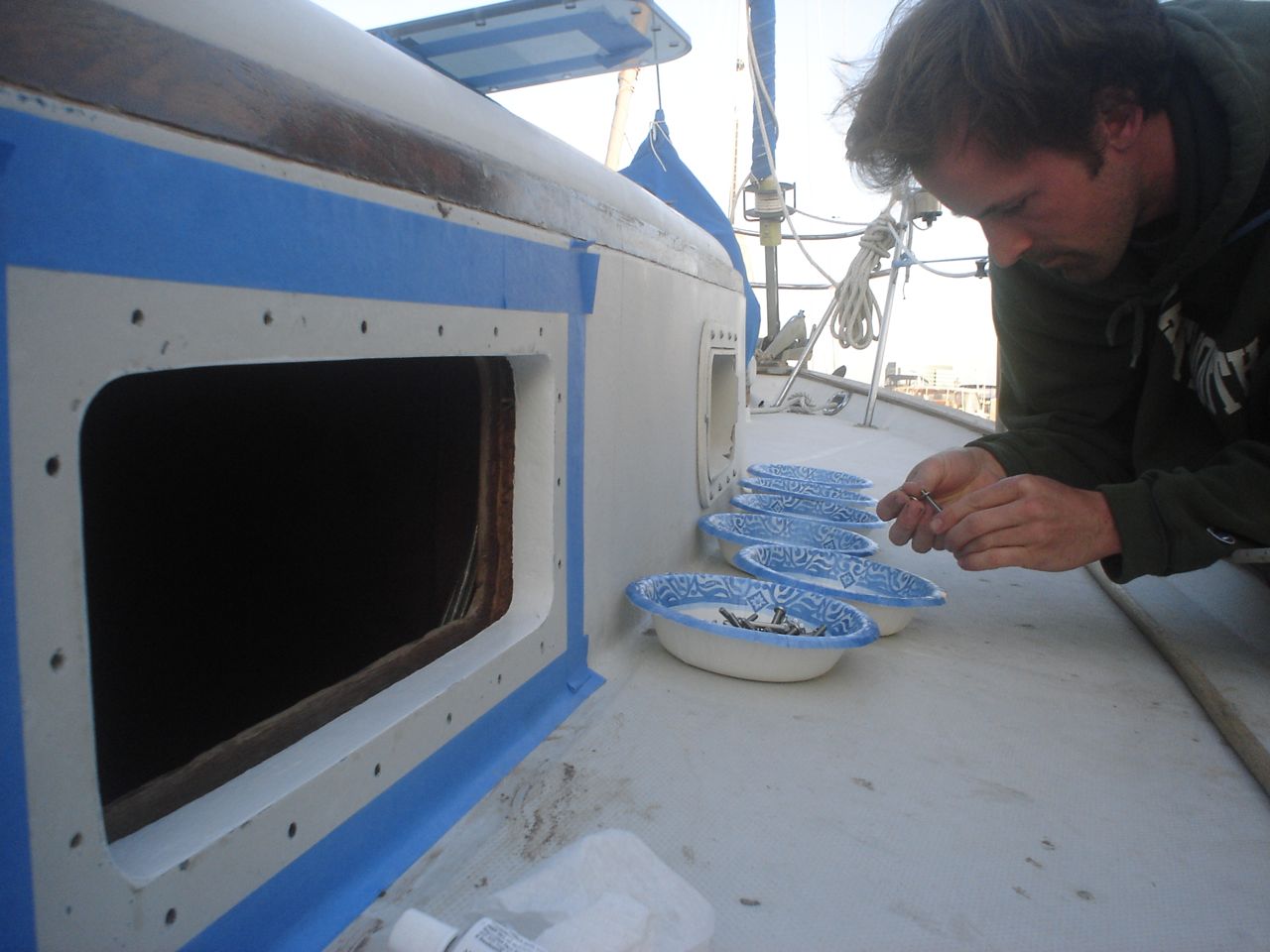
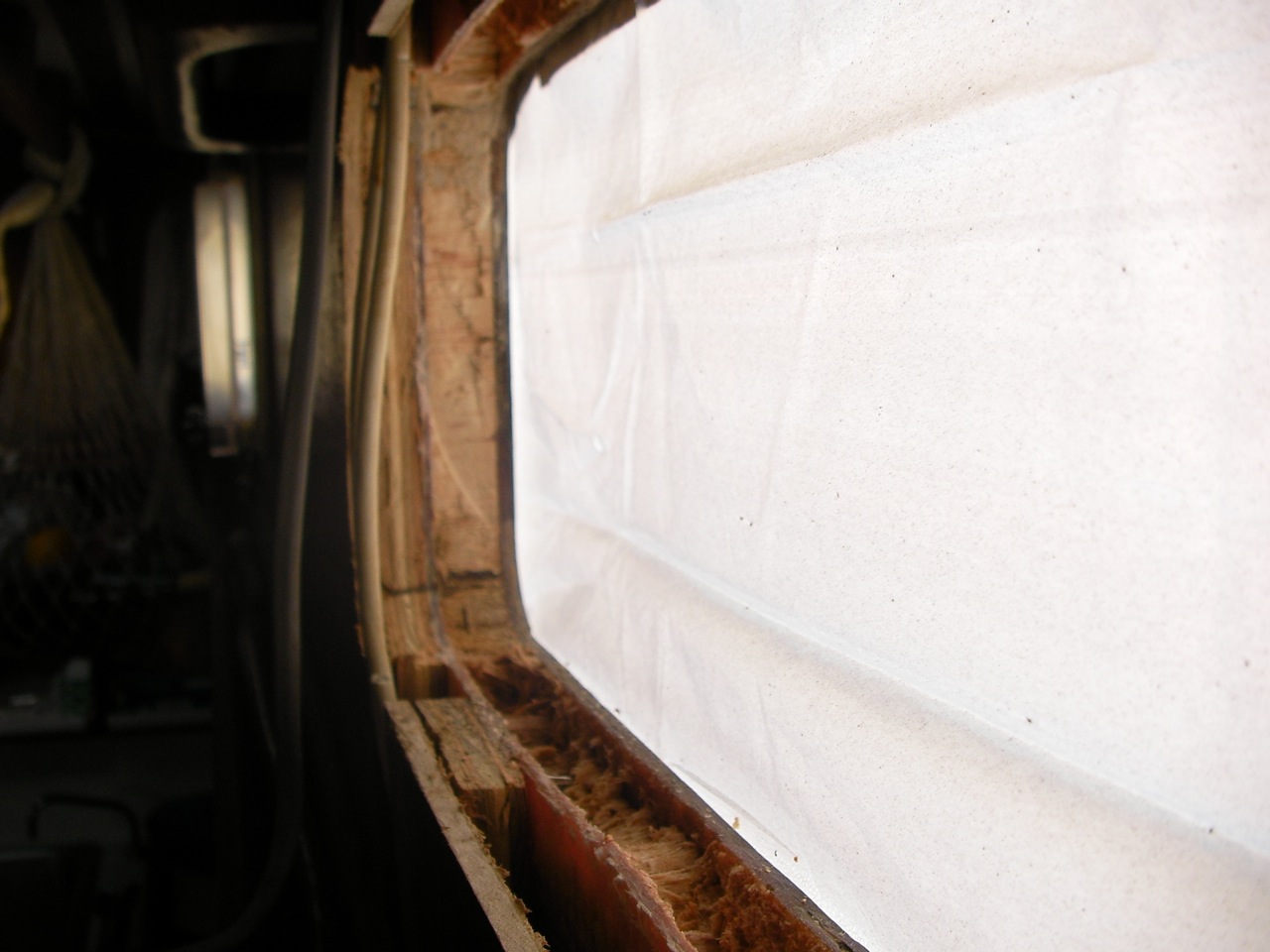
We drilled out the holes, cored out the deck a little ways back inside each hole (more on the gates since we wanted a larger load bearing plug of epoxy), taped the bottoms of the holes, and filled them with thickened epoxy. When the epoxy cured it left little mounds on top of each hole (we slightly overfill) which I then sanded down. I’ve taken to duct taping the shop vac to our orbital sander and using 36 grit paper–it is an extremely efficient and clean way to fair off the excess epoxy, without the danger of accidentally grinding off the gelcoat (which seems to happen everytime I turn on the grinder).
Then we drilled out new holes through the center of each epoxy plug, and remounted the stanchions using 3M 4200UV fast cure as the sealant. We used to use Lifecaulk, but it takes too long to cure. See, this is the thing: in order to do it right, you need to not tighten the bolts all the way, but leave a gap in which the sealant can cure, then you tighten the bolts fully and it’s a perfect gasket since the squeezing expands the rubbery sealant to fill all gaps. But if you use a slow drying sealant, it is too tempting to skip that step and just tighten it fully, rationalizing that the seal will be good enough. But it’s not true. We did this exact thing–used lifecaulk and tightened before it dried–when we remounted the bow pulpit after trucking it up from Mexico (we should have cored and epoxied then, but we forgot). And this time when we pulled it up, the forward starboard plate very clearly had water penetrating beneath it. Bummer. The fast cure dries in 24 hours, so use the fast cure and leave everything loose for just one more day because it’s worth it.
We still have to rebed the stern pushpit.