Category: Comfort

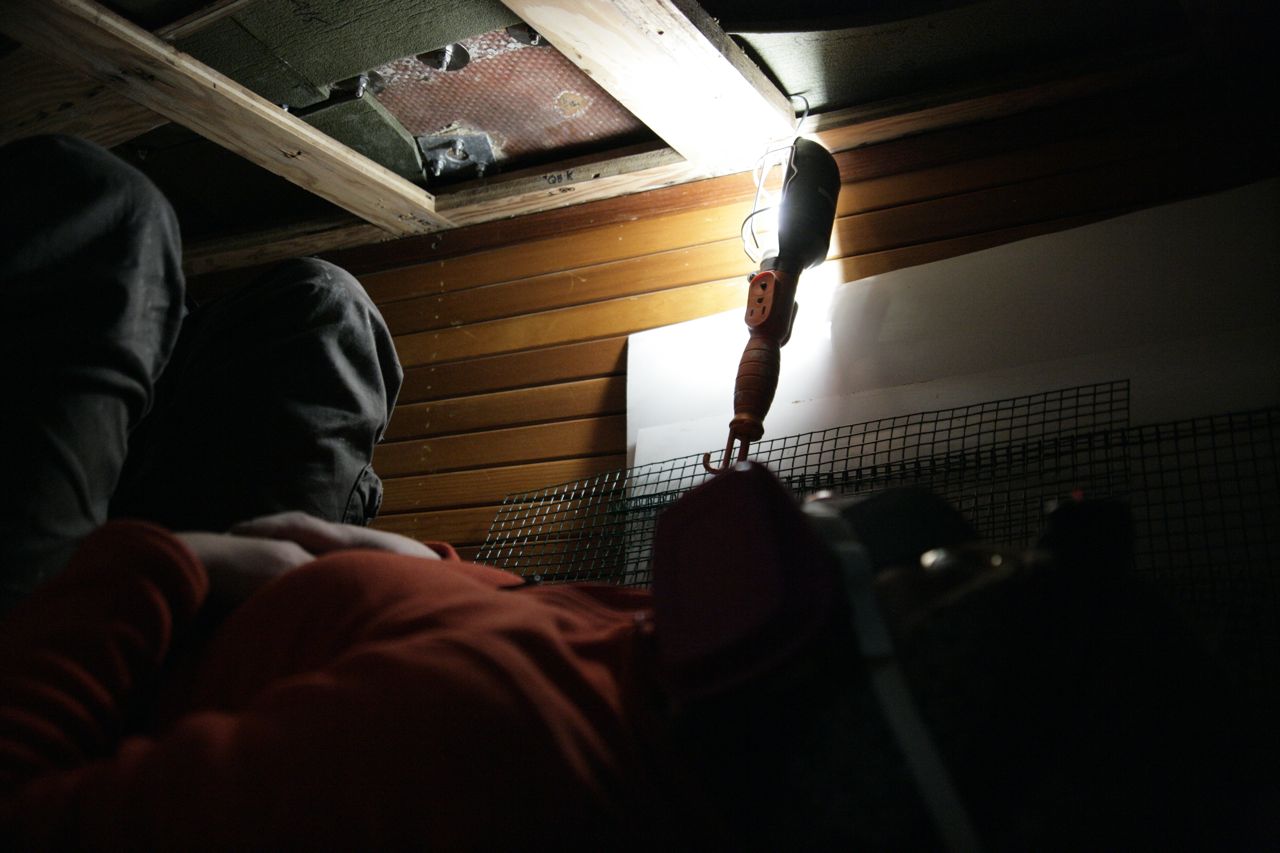
  • Replaced insulation in ceiling, salon outboard & quarterberth

    Since moving onto the boat, I have been shocked by the amount of condensation and mildew generated just by our breathing (and cooking plays a part too I guess).  The weather has been chilly and wet, magnifying the problem.  At night we would get dripped on by a solution of condensation mixed with uncured boat resin from somewhere in the ceiling–nasty stuff.

    We had the salon ceiling (outboard parts that is) off for the knee project, so I took the opportunity to cut pieces from our leftover ensolite foam to fit in the gaps (leftover from insulating hull after knee repair).  We bought the ensolite as old sleeping pads from the army surplus store (army green!)  Two layers of the foam were the perfect thickness, and if I was careful with the sizing, they would fit up in there and stay all by themselves, without bothering with the contact cement.

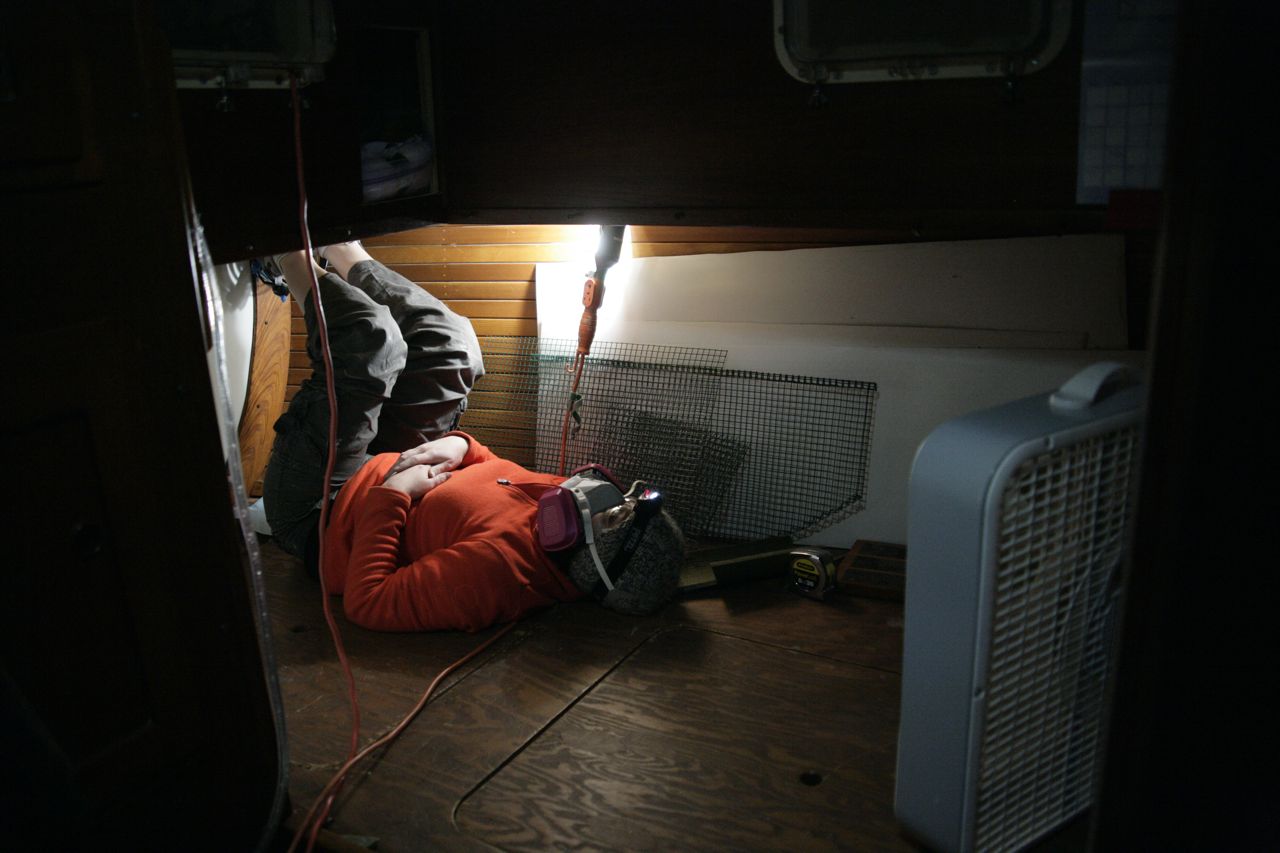
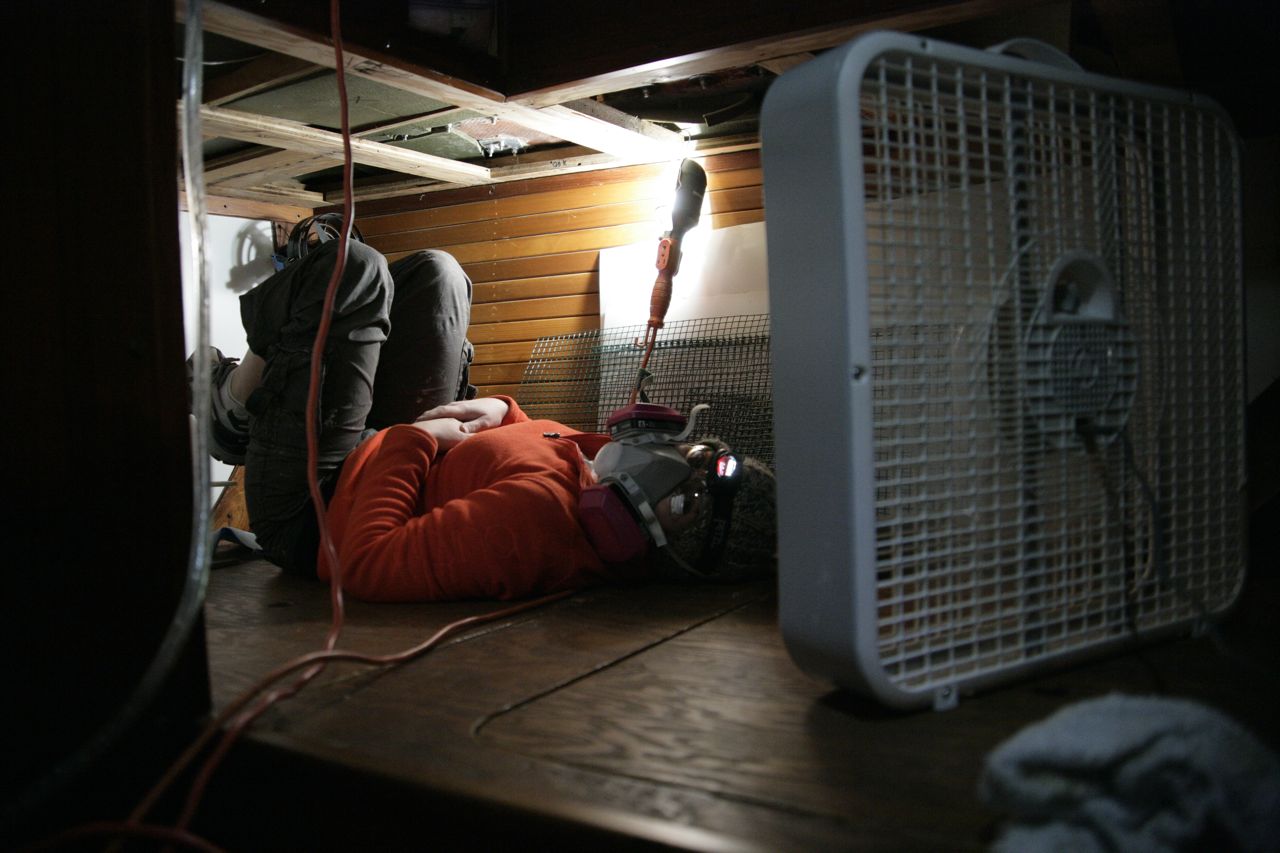
    In the quarterberth all the pieces had to be glued in place; Karen spent an arduous day in the respirator with the box fan ventilating the quarterberth, coating pieces and the ceiling with contact cement and trying to get them to stick.

    We have had no dripping, or water droplets forming on the ceiling over our heads, since then.

  • Built storage shelves for icebox

    It quickly became clear that a wide open, deep icebox is extremely difficult to use efficiently–you spend all of your time rummaging through a stack of food, or have to remove everything to get what you want, or discover that containers have tipped over and spilled their contents.

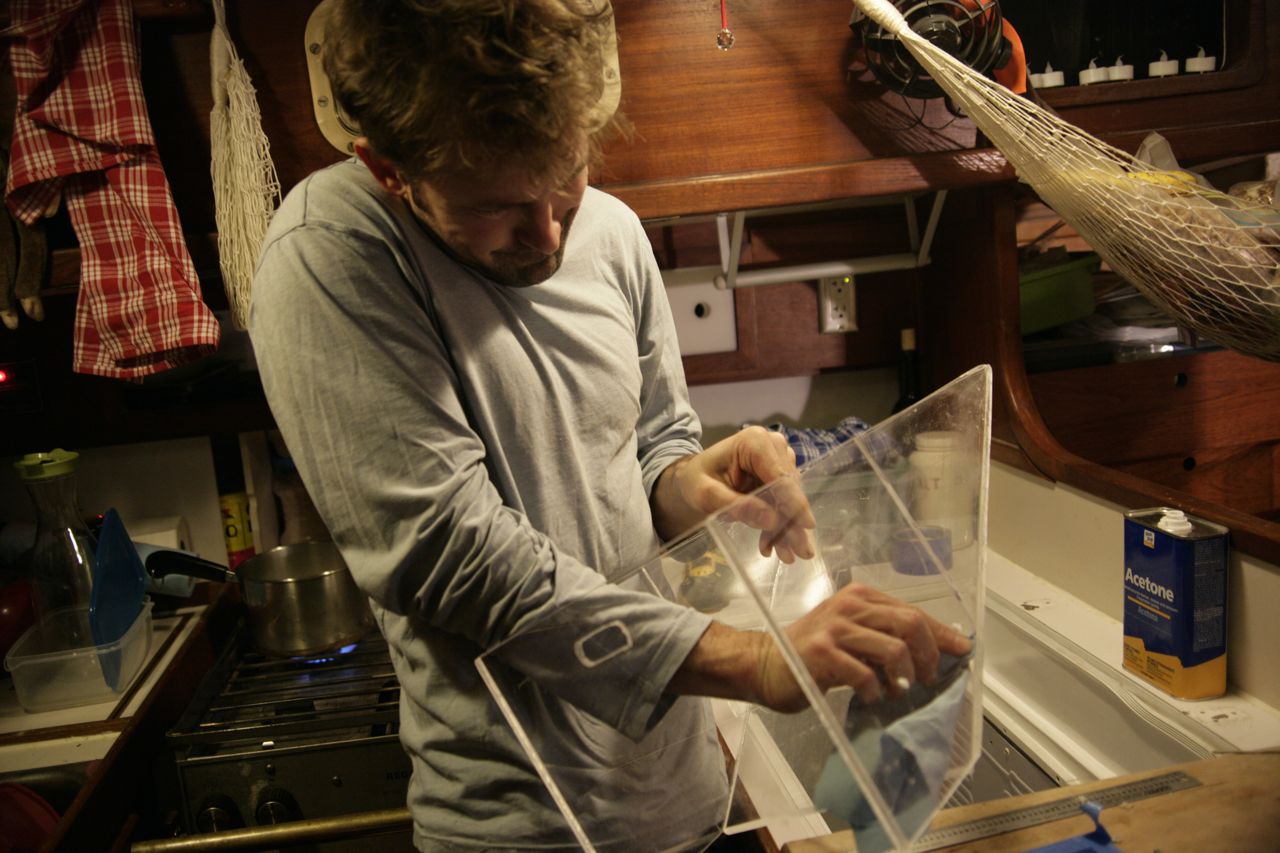
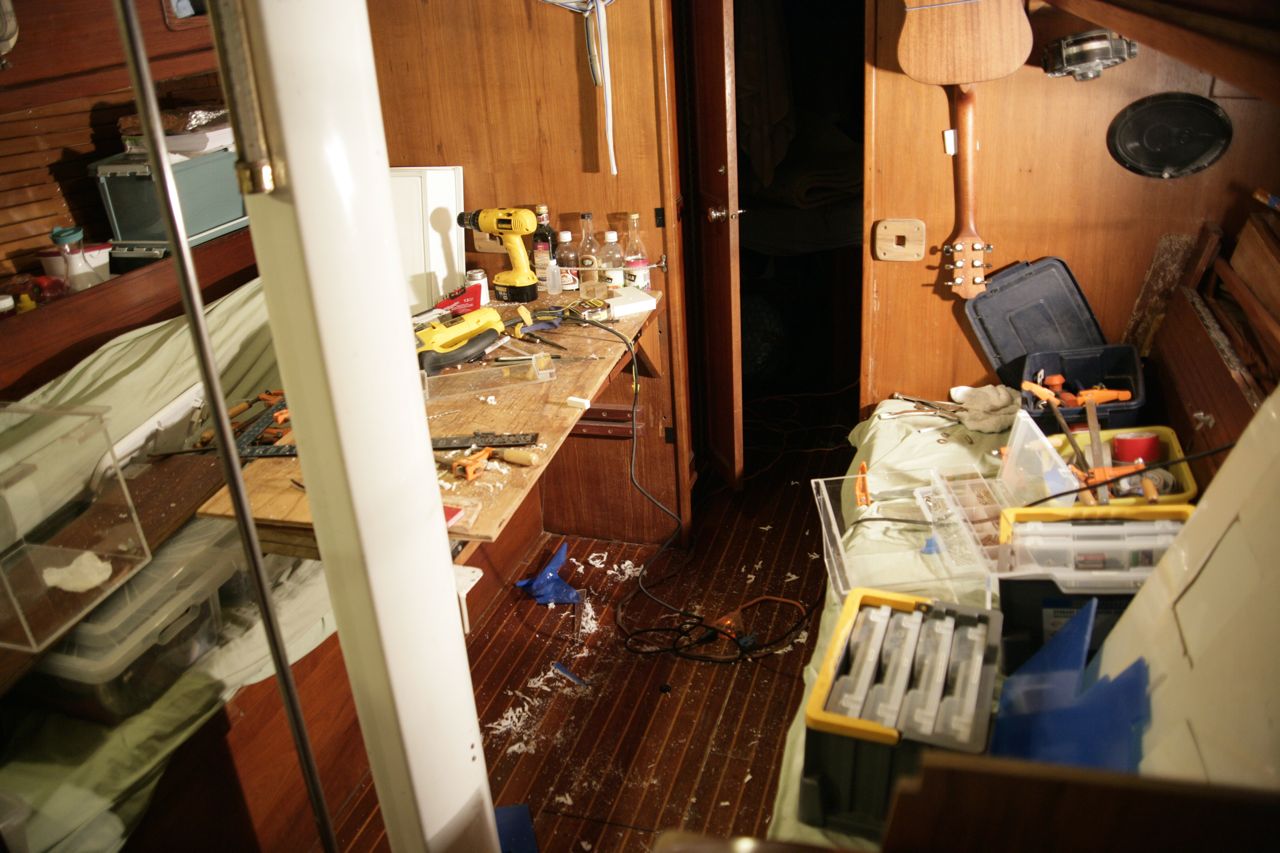
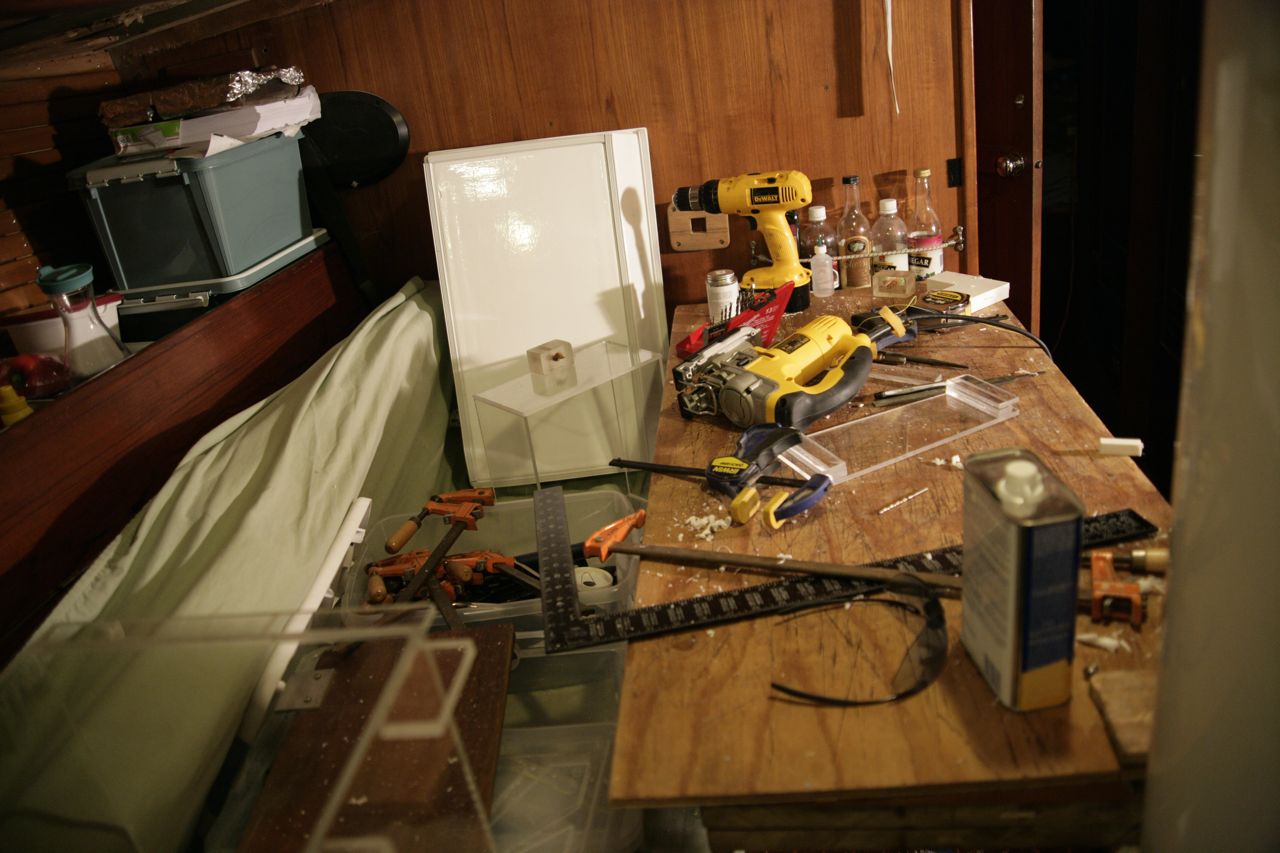
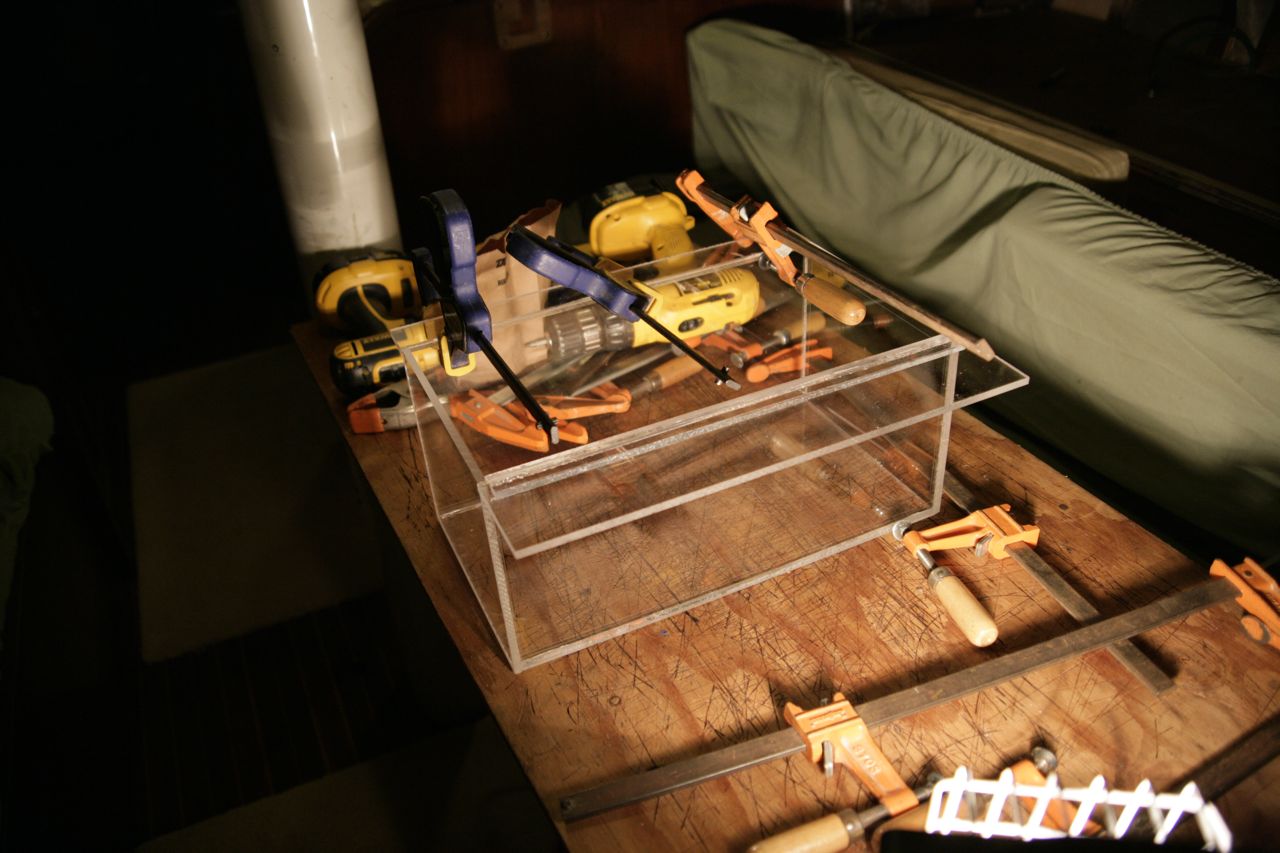
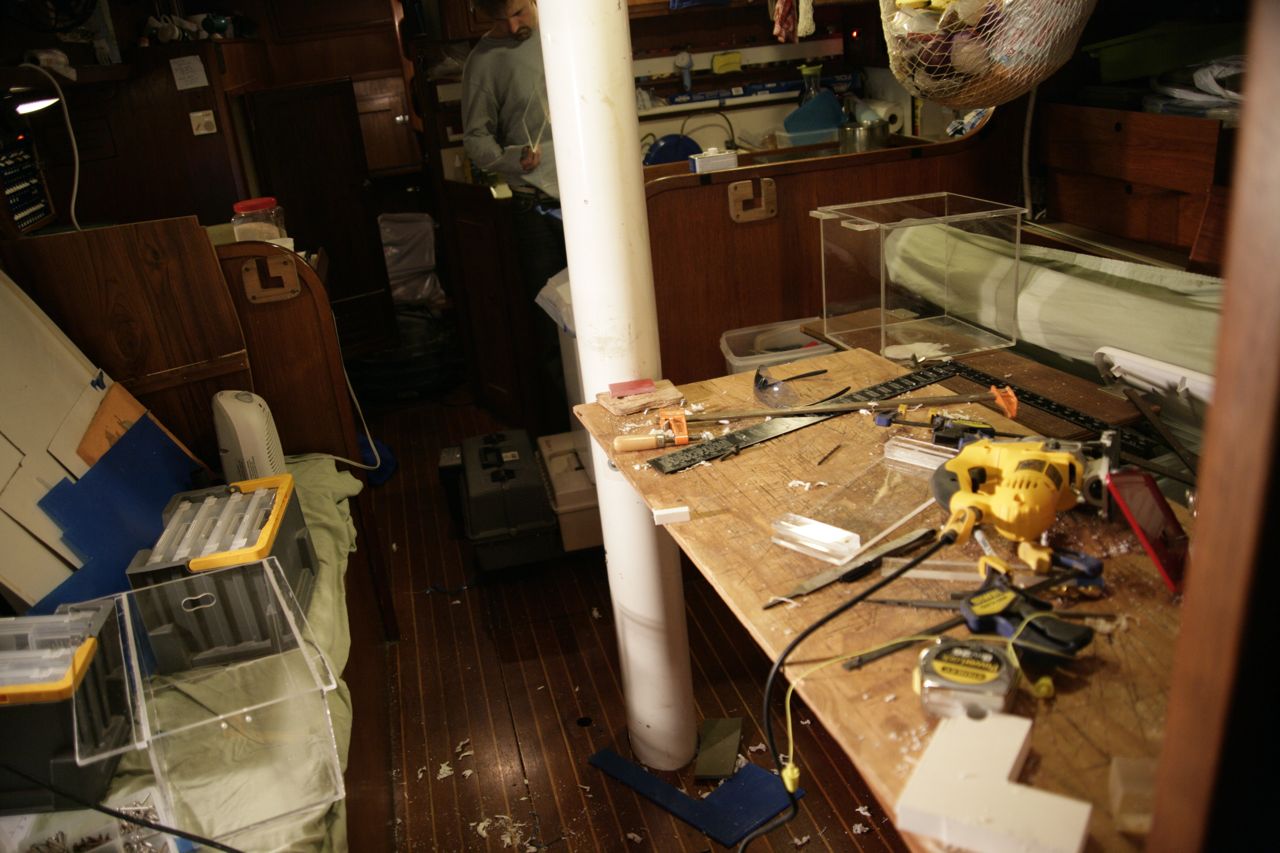
    I decided to built boxes out of acrylic, using the jigsaw to cut the pieces, the sander to take off the sharp edges, and the methylene chloride toxic stuff to weld it all together.

    This is a process that I have used a couple of times now on the boat for working with acrylic, I believe I explained more of the details earlier.  Some of the details worth mentioning: cutting the acrylic with the jigsaw is frustrating, but doable with care and patience.  I use the wood scrolling blades; the metal blades seem to get gummed up and stall.  The blade just melts a path through the acrylic, which re-seals itself in places after you pass.  So then you have to go over the same cut a second time to free it up.  The blades get super hot and eventually snap, so you need quite a few of them.  There are special blades designed for cutting acrylic, but honestly I can’t tell the difference between them and the wood blades–perhaps they’re a bit more heat-resistant.

    The methylene chloride is a nasty solvent, extremely volatile (evaporates very quickly), and very thin.  A respirator and good ventilation is a must, or you will surely kill brain cells.  The deal is that the methylene chloride melts the acrylic, which then rebonds as the solvent evaporates; the result is literally a weld–continuous acrylic–rather than a glue job.  It is important to get the surfaces as flush as possible along the entire length of the seam, which can be difficult when cutting with a jigsaw.  Because the solvent doesn’t fill in any gaps whatsoever; so only the areas where the surfaces directly touch will contribute to the strength of the bond.

    There is a trick for applying the methylene chloride.   You use a little plastic bottle with a syringe cap.  You squeeze out the air in the plastic bottle, invert it and stick it into the container of methylene chloride, then let go and it will suck up into the plastic container.  You don’t need very much.  The you use the same method for applying: hold the syringe bottle upright, squeeze out a decent amount of air, then let go and invert the bottle.  While the bottle is sucking air, no solvent will come out even though it’s inverted.  Then you take the syringe and run it down the seam you’re welding, squeezing the bottle slightly to let the solvent drain out.  You will have 10 seconds or more to apply the solvent before the container refills with air and starts to leak out.

    It’s best to clamp the two pieces of acrylic together.  But, if you have a second person and steady hands, you can sometimes just hold the two pieces together while you weld them; it should only take about 45 seconds for the bond to set.

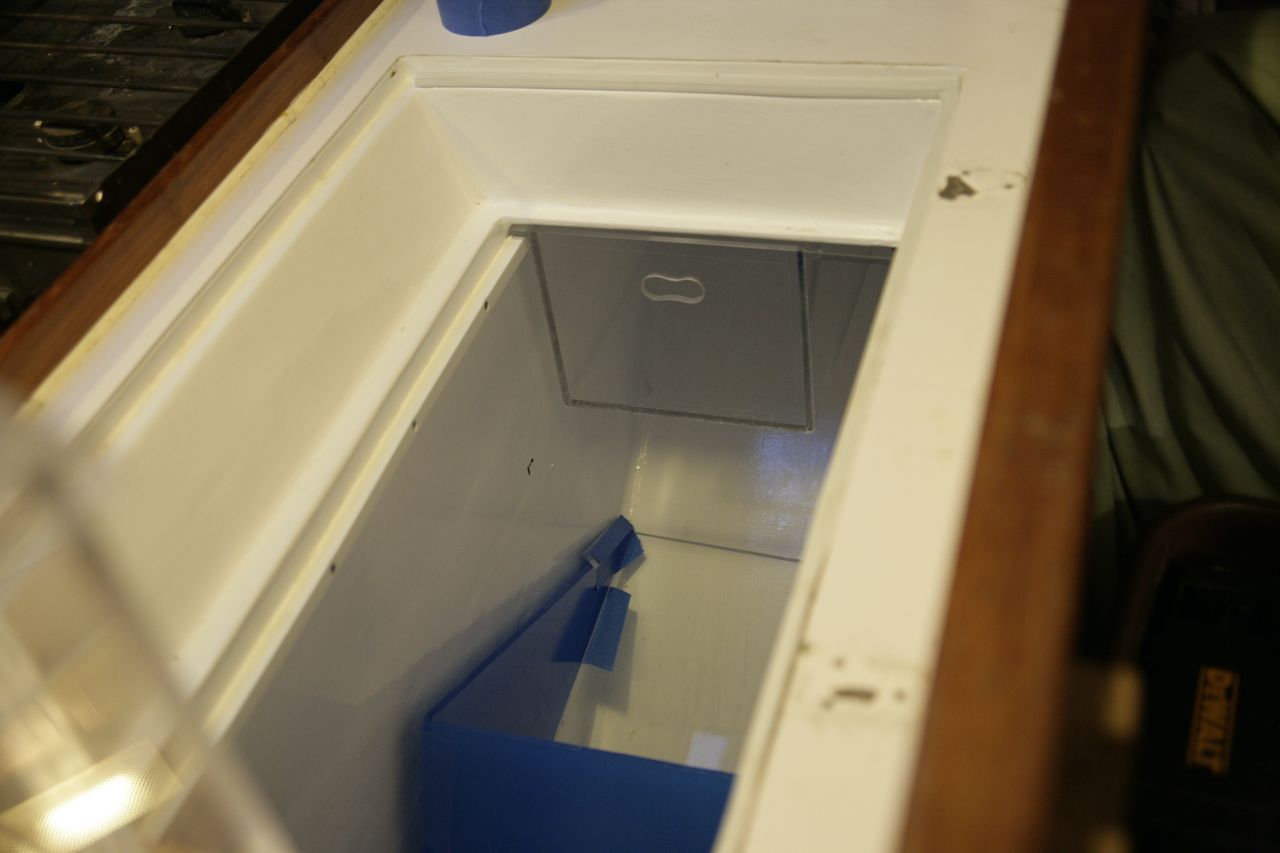
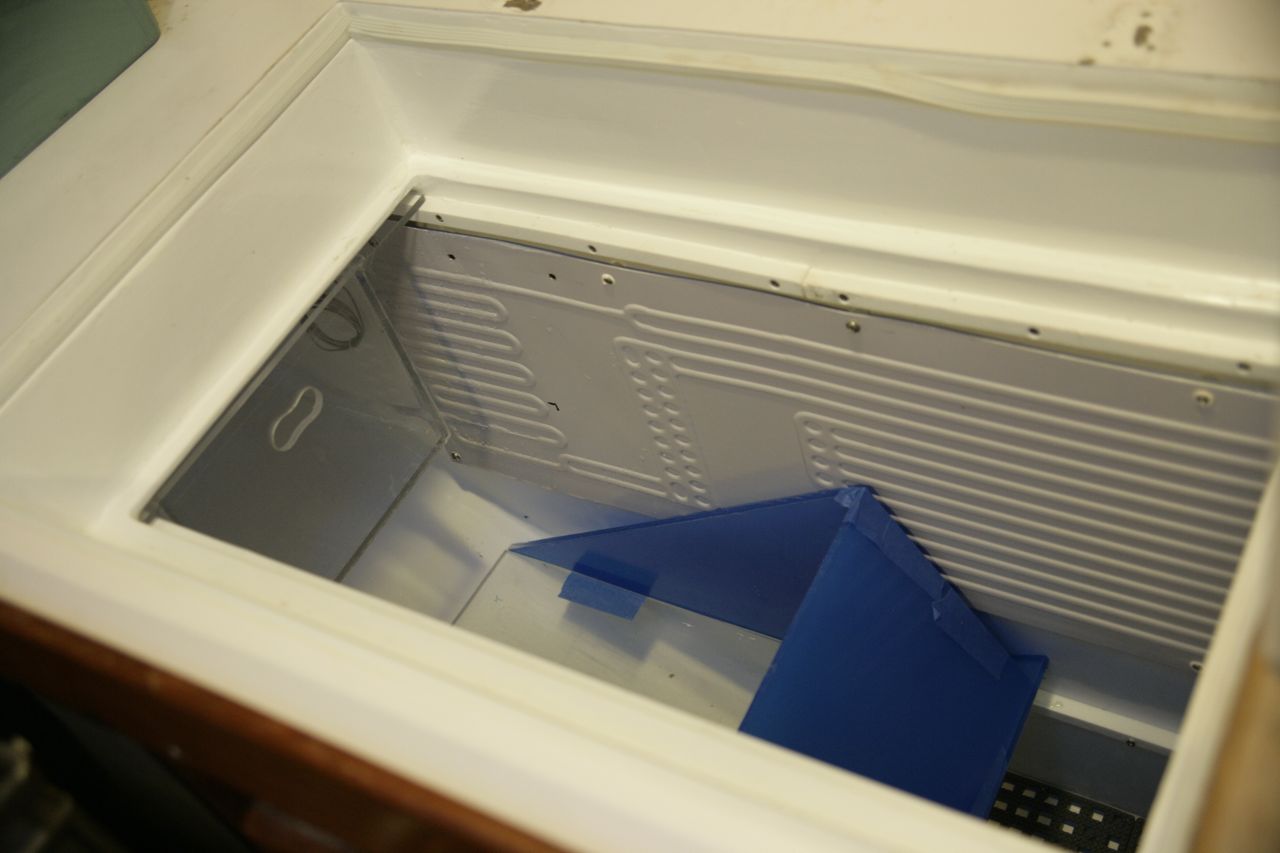
    It was a challenging problem, to figure out how to build the boxes such that they would fit down in the icebox.  At least one of the boxes I had to finish assembling inside the icebox–so that one will never come out without breaking it apart.  I put all of the boxes on rails–I used strips of starboard for this, nice and slick–so they slide back underneath the inaccessible sides of the box.  And I was paranoid about the box banging on the evaporator plate and damaging it, so I put extra effort into making blocks and stops that would prevent the acrylic from touching the evaporator plate.  After our first sail I discovered that I also needed to come up with a way to prevent the boxes from sliding back and forth while the boat rocked, so I used some cotter pins with keeper cords–works like a charm.  All in all, a very successful project.  No space is wasted and the system is easy to use.  It took a damn long time, but what’s new.
  • Expanded port settee bed

    Jonny built a plywood platform that slides out in tracks mounted on the bulkheads.  It slides out to the mast, and greatly increases the area of the port settee for sleeping.  The plywood is 3/4″ thick and the tracks are pieces of 1″x1″, above and below the plywood, and secured with screws every ~3″.  The most important aspect is the trim piece on the leading edge.  We used the same piece that was on the settee.  It needs to be strong, in order to provide rigidity to that edge.  Ours is still a little wobbly, but I think that if we put a half dozen more screws up into the trim from the bottom (right now it is only screwed in through the front) it will fix it.

    The design was based on notes gleaned from the Valiant Owner’s Group, and a huge thanks to all who gave advice on that topic.  It was a reasonably easy job and is a HUGE improvement in the sleeping comfort in the salon.

  • Modified salon table

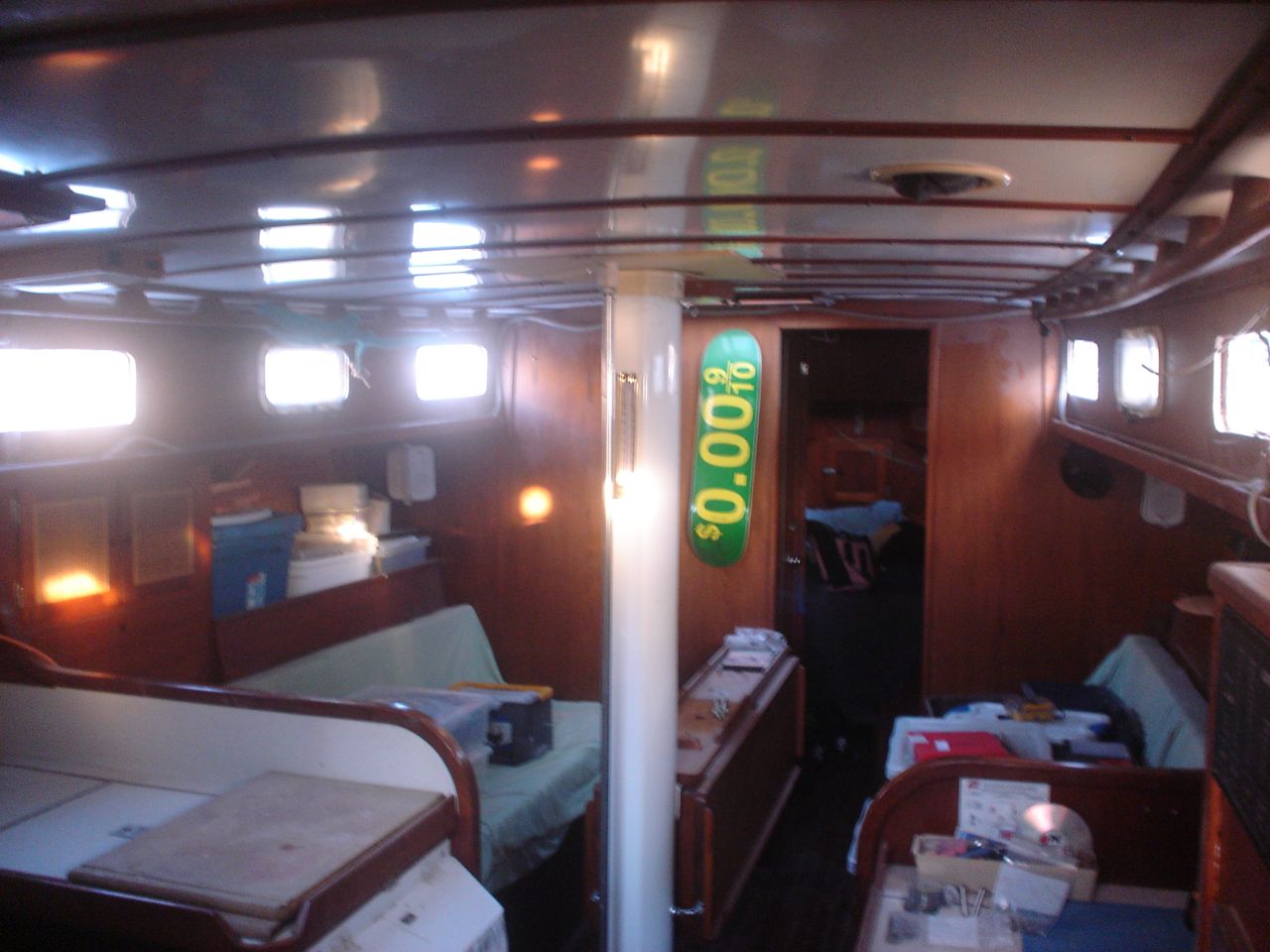
    The original salon table was a 40 lb monstrosity that was permanently attached between the mast and the forward bulkhead of the salon.  It had leaves on each side that would fold up; in this fully activated postion the table was so large that one couldn’t walk around it, and even sliding in the seat to be at the table was challenging.  Even with the leaves down, the large wooden box in the middle of the boat took up all the space.

    Jonny removed the old table and salvaged pieces of it to fabricate a folding table that stows upright against the bulkhead.  This was not an entirely original idea: most Valiants shipped with tables like this.  Our situation was slightly complicated by the fact that the distance between the mast and bulkhead is about 7″ greater than the distance available to stow it vertically against the wall, so Jonny constructed a solid platform mounted on the bulkhead that extends into the cabin sufficiently to allow the table to fold up.  The resulting table is extremely solid, and the greatly increased space and convenience have made this one of our favorite improvements.

  • Added 4 fixed portlights

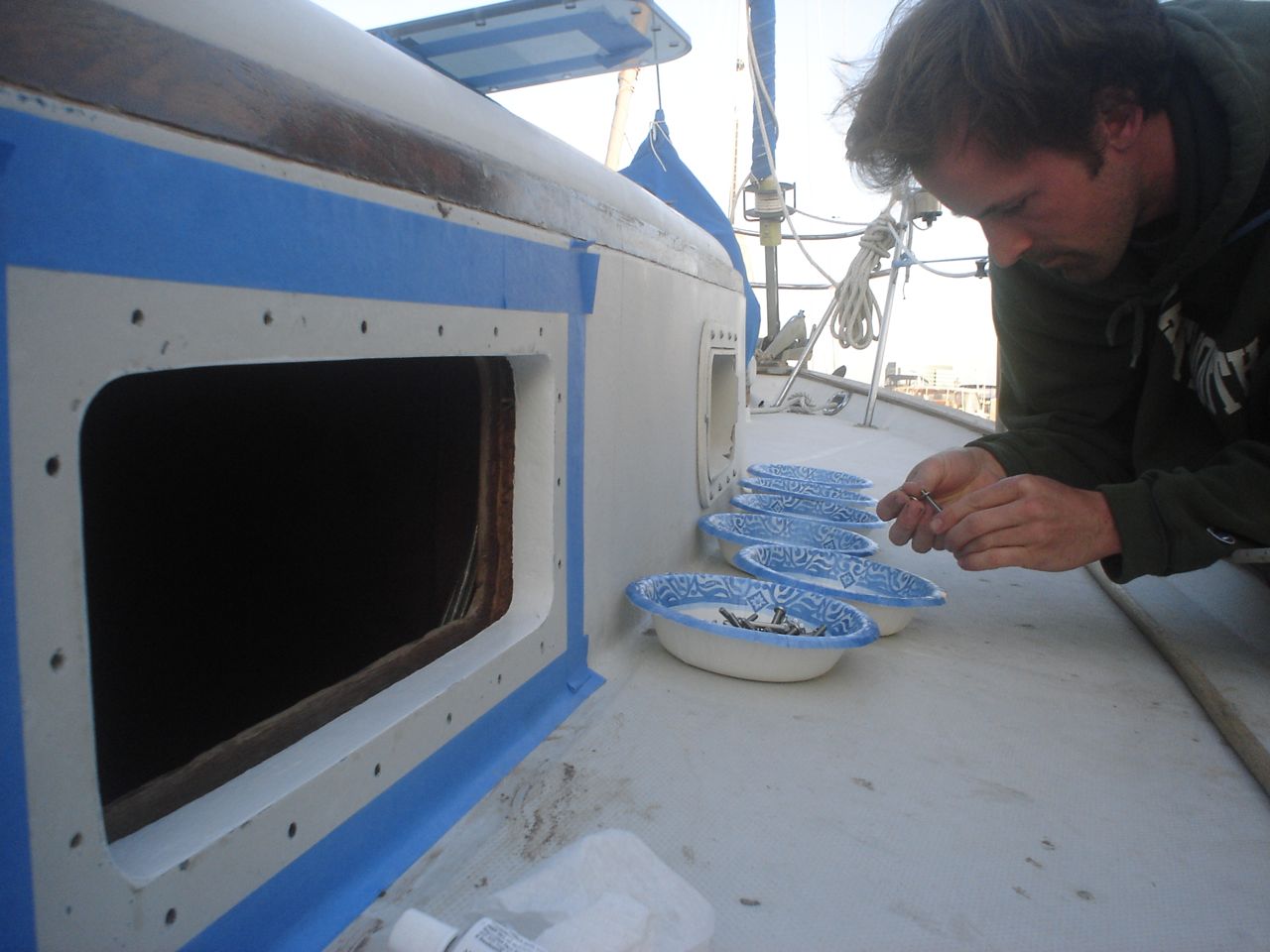
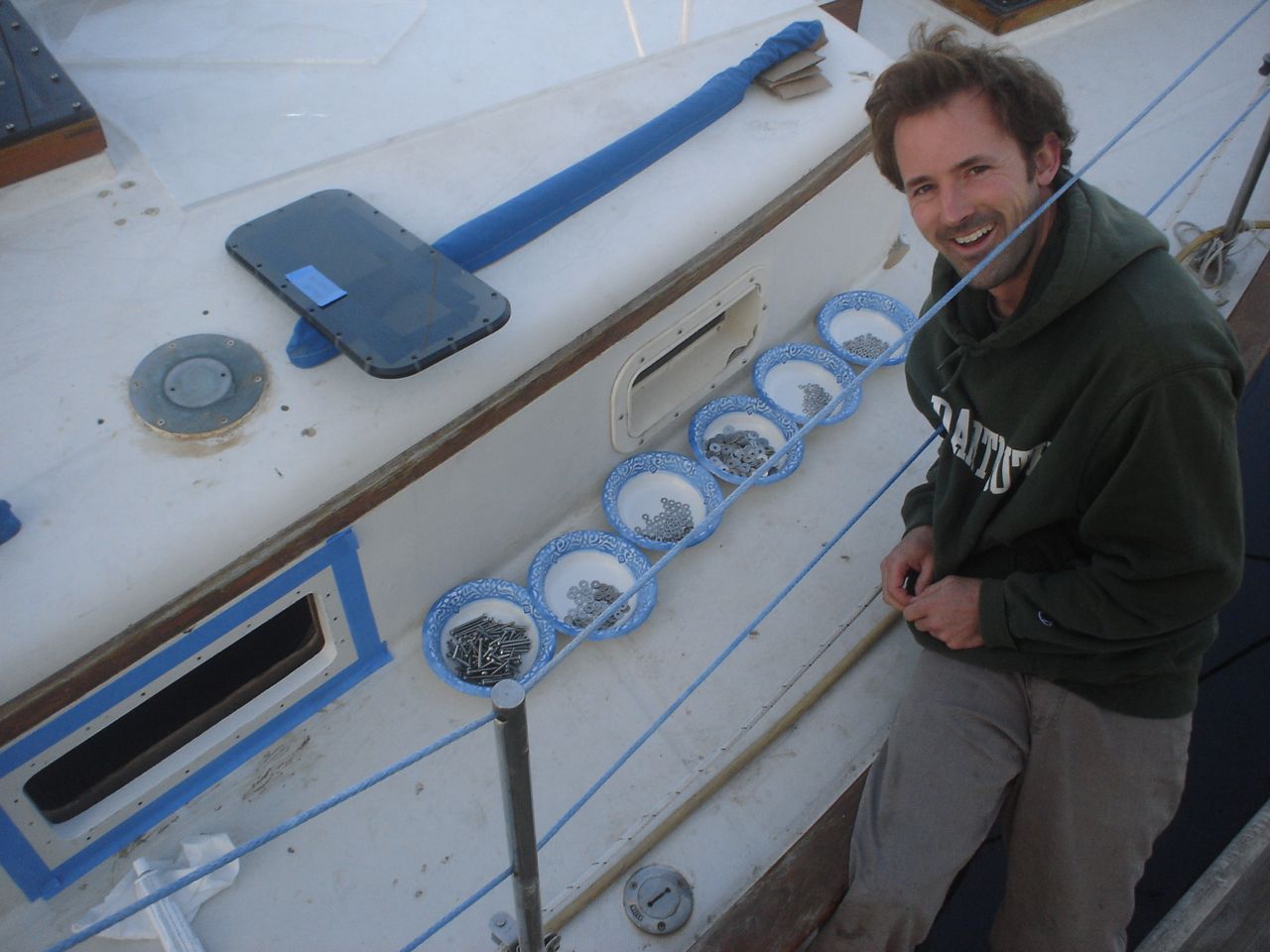
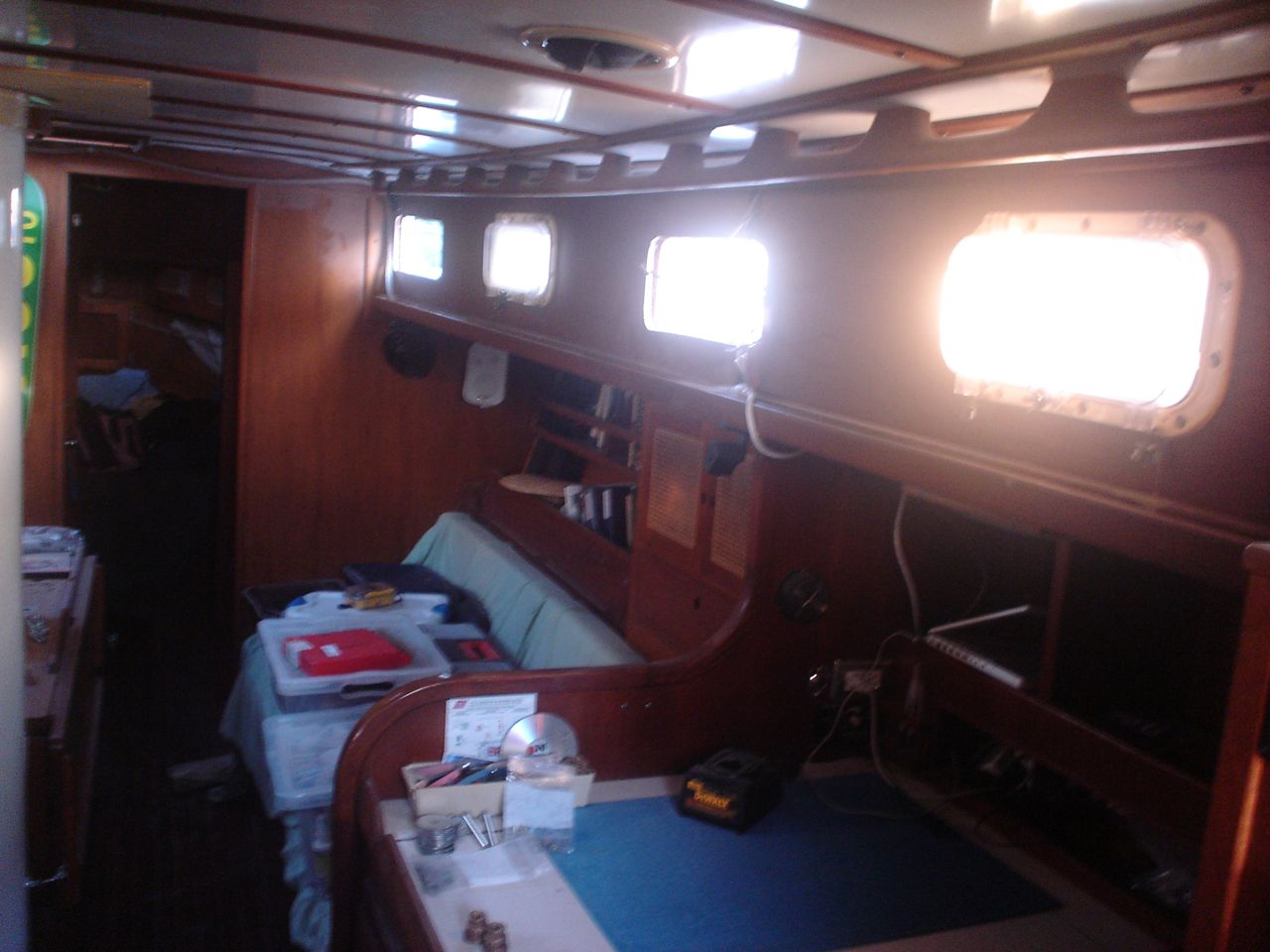
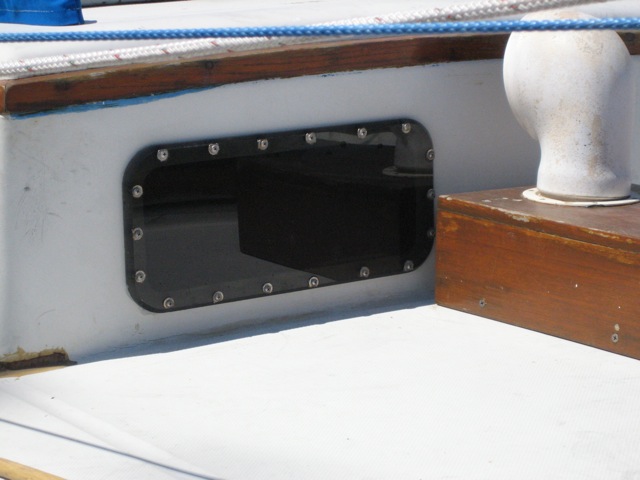
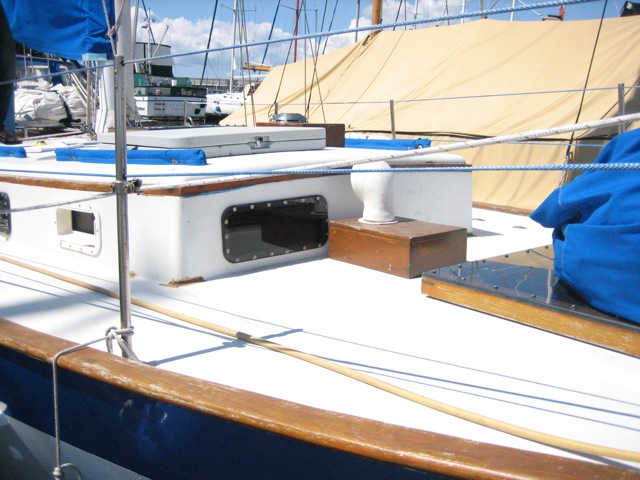
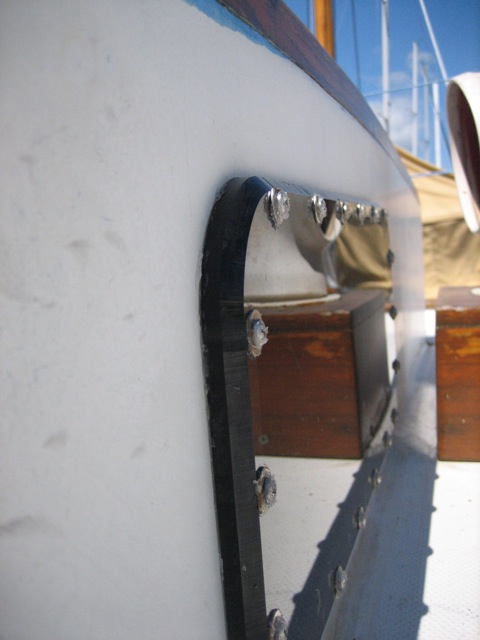
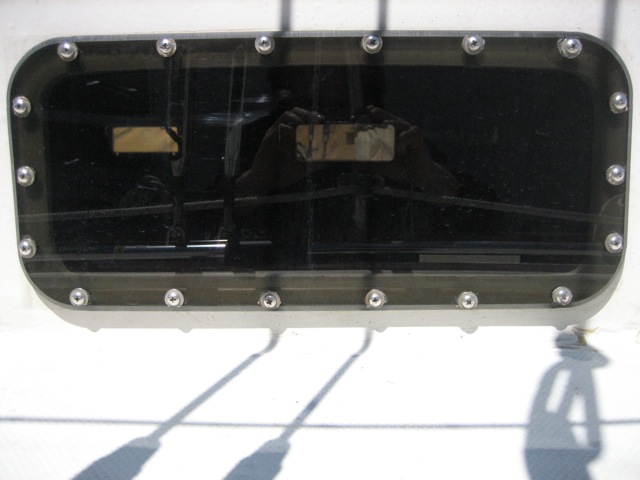
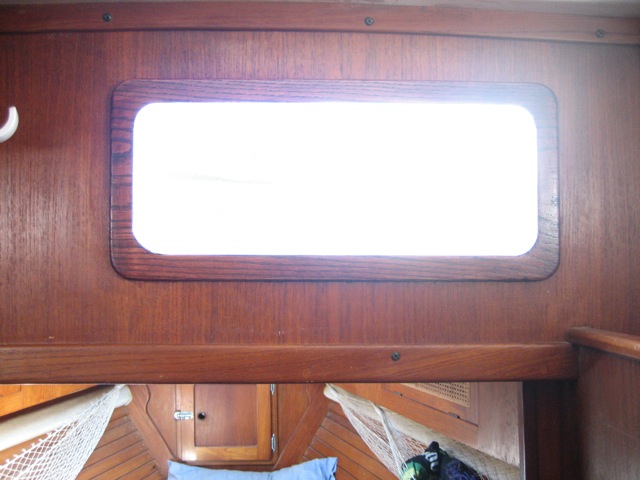
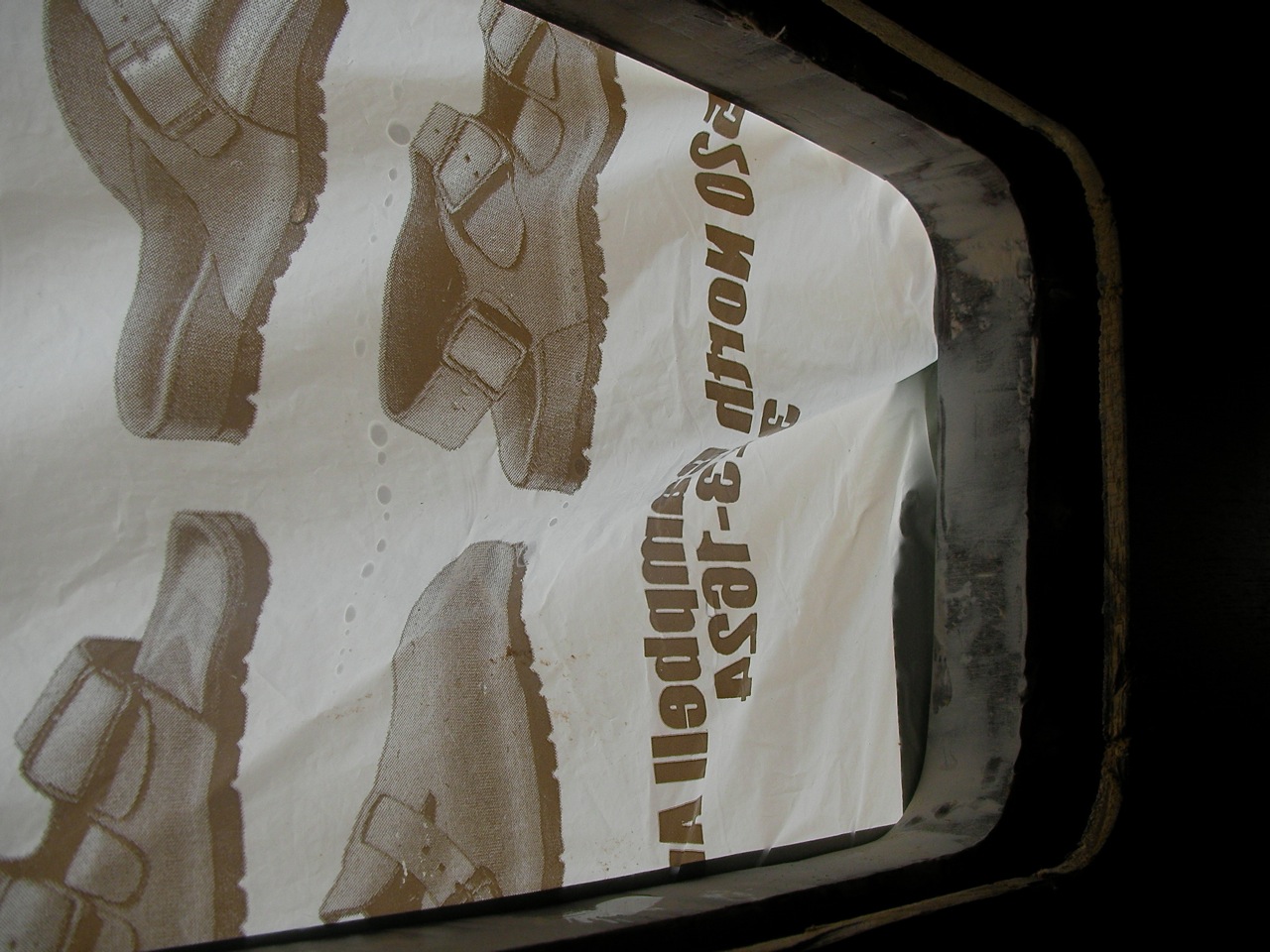
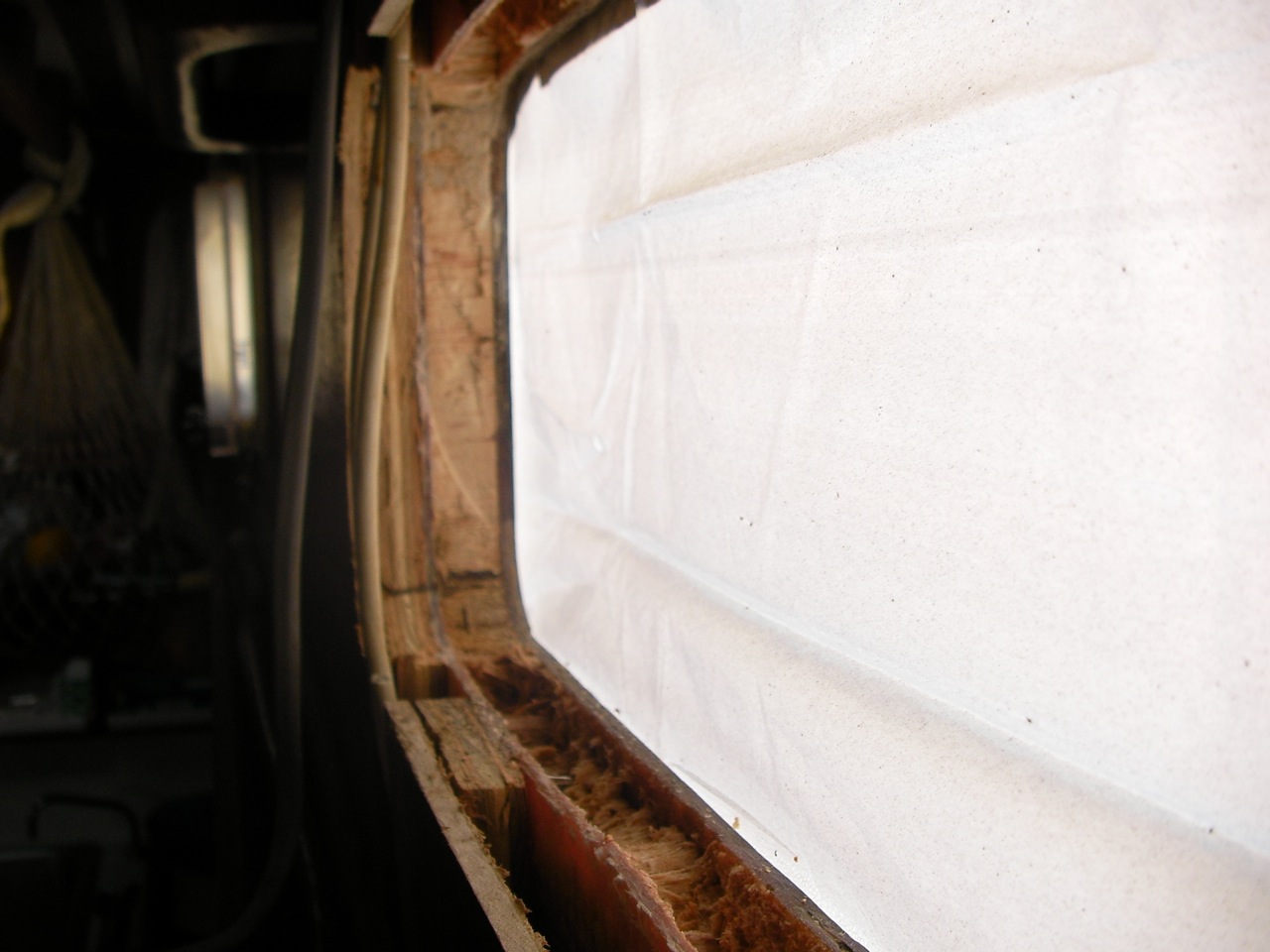
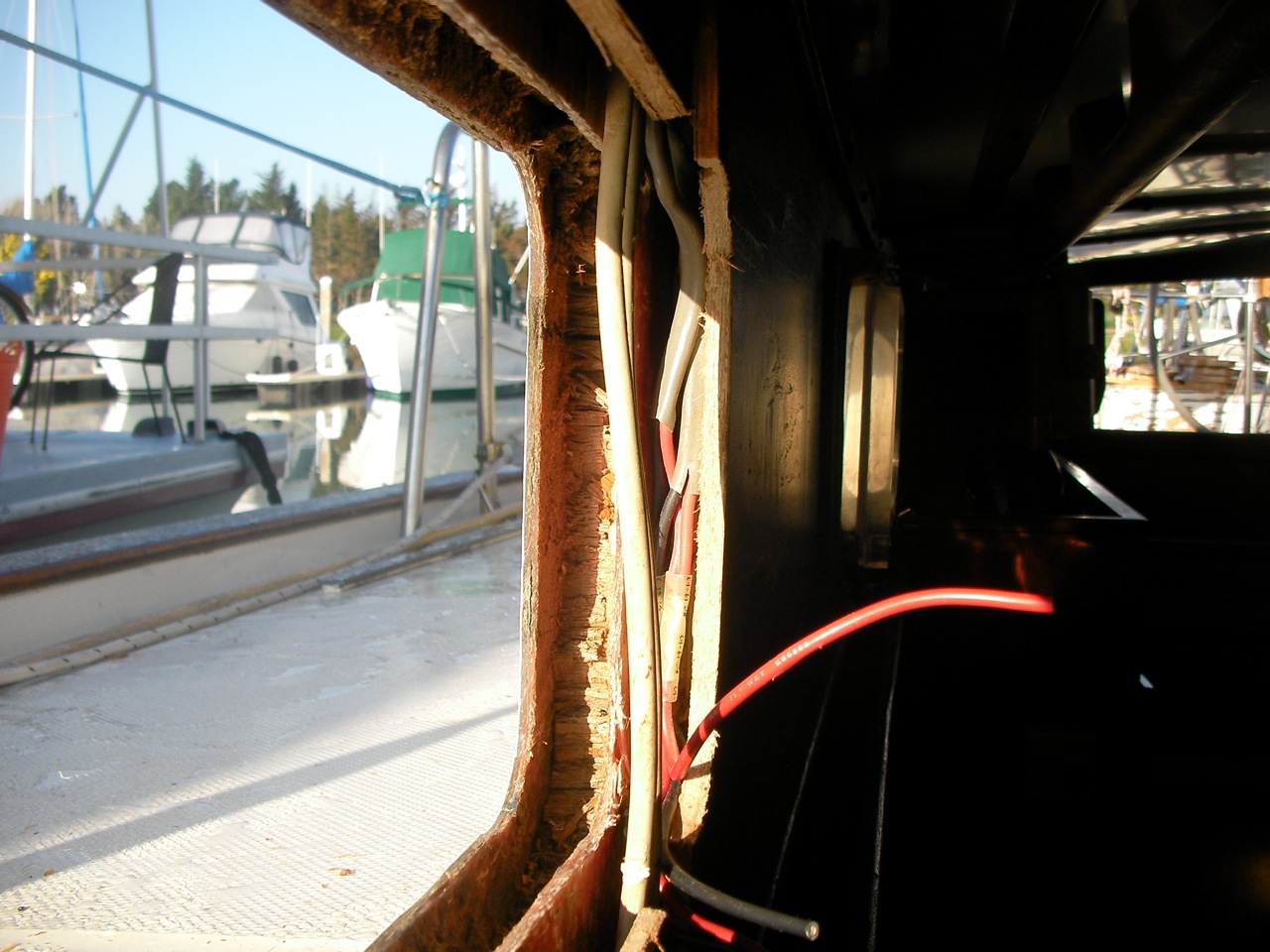
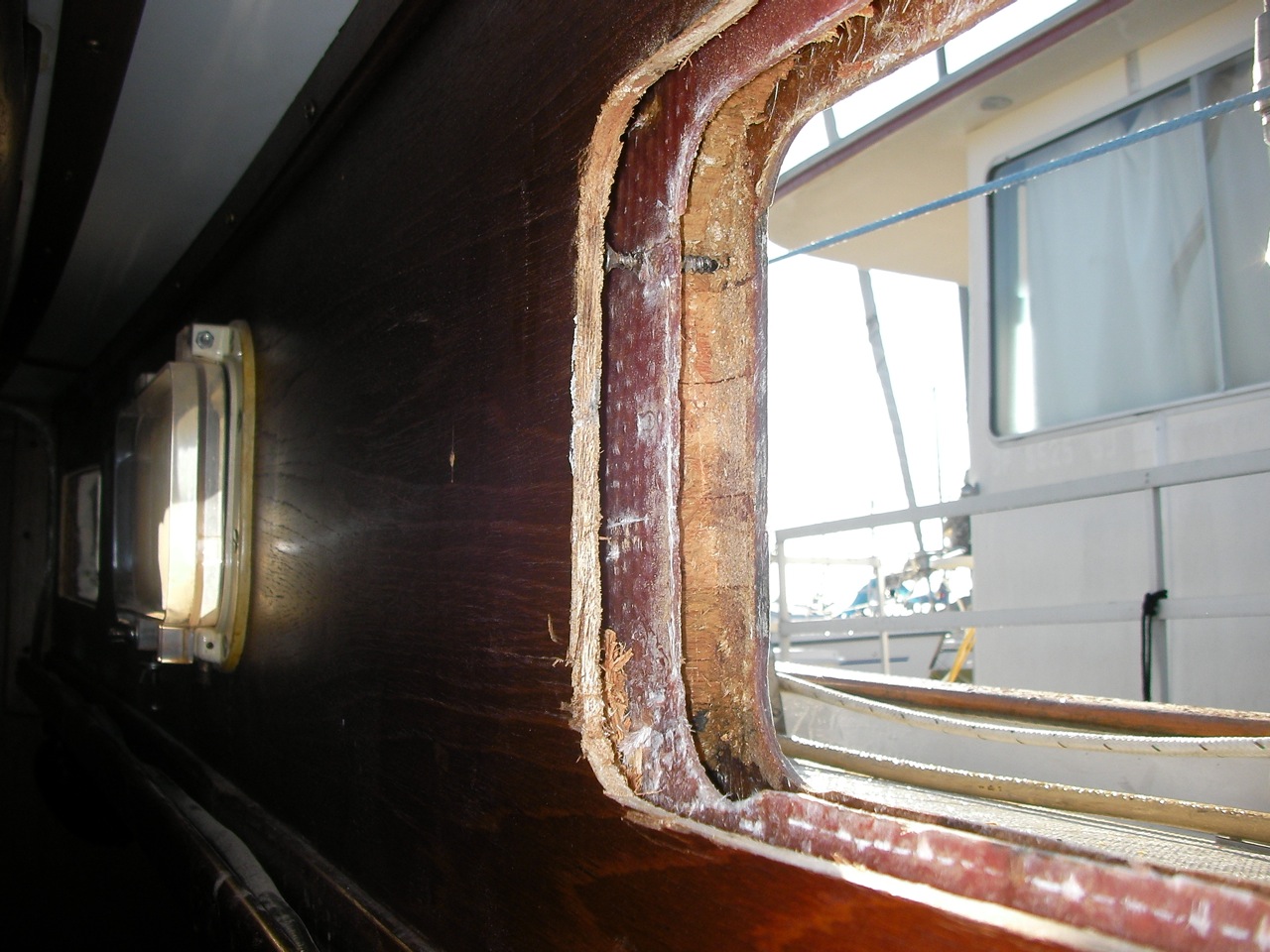
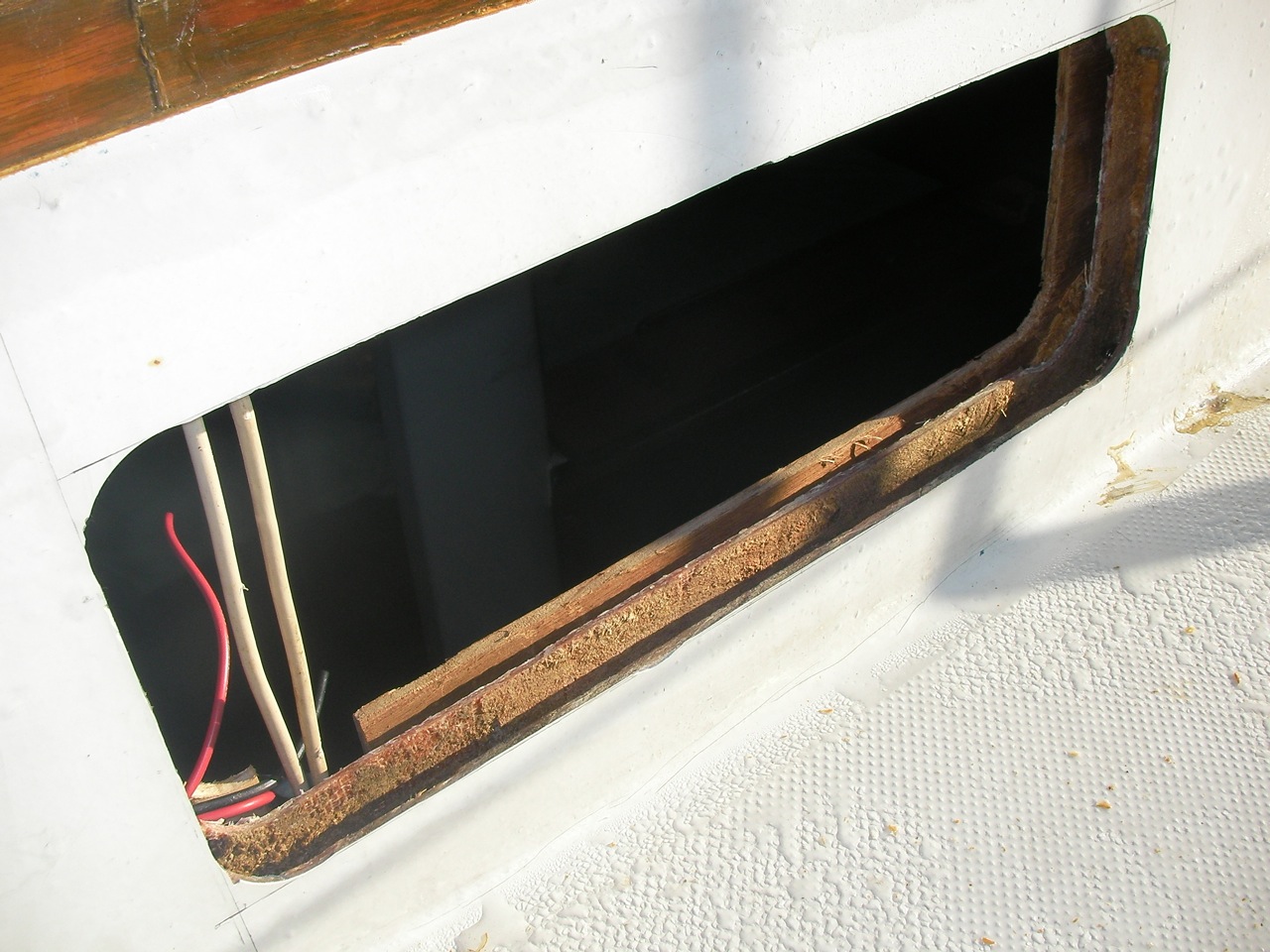
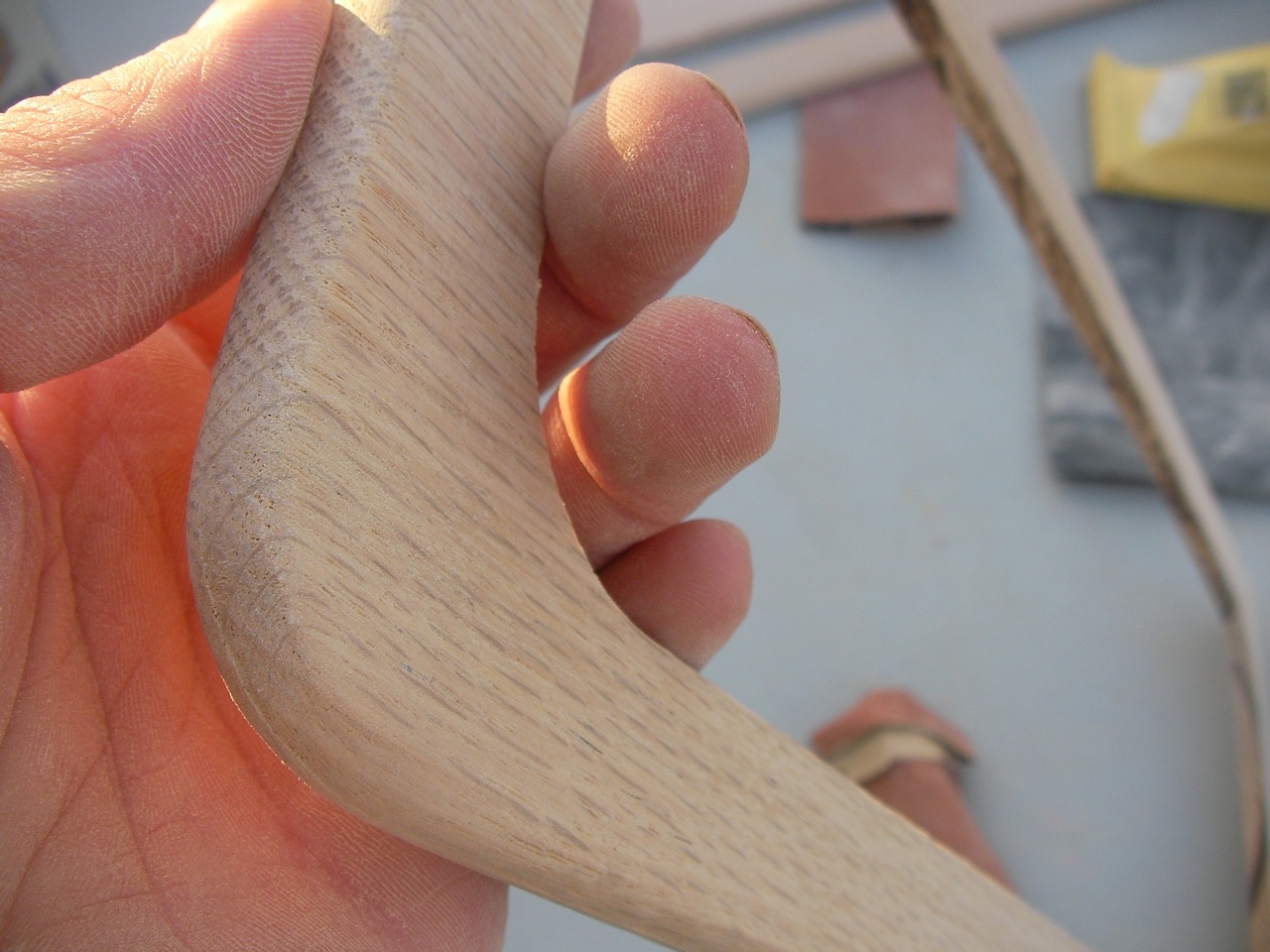
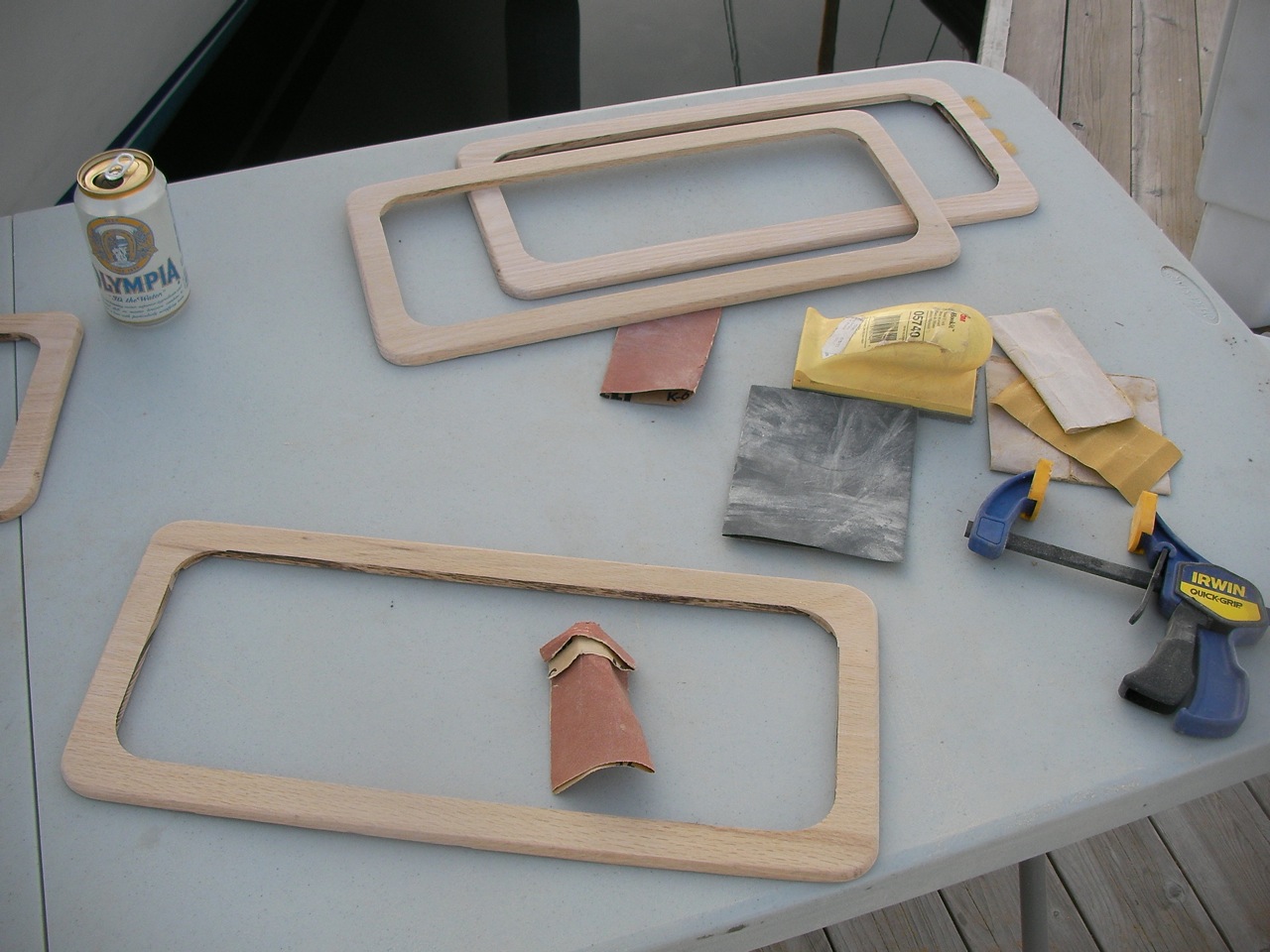
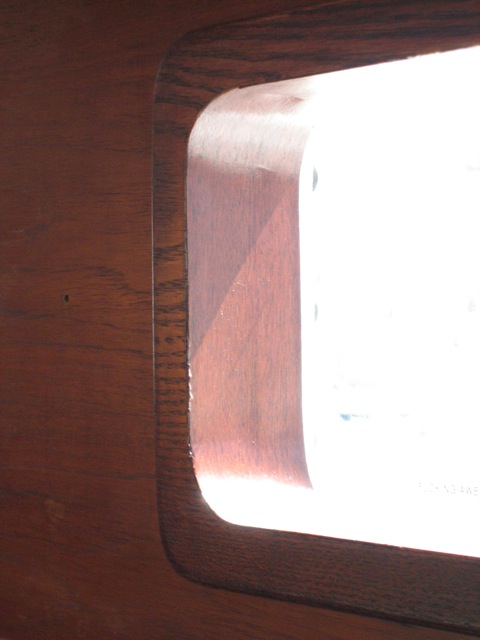
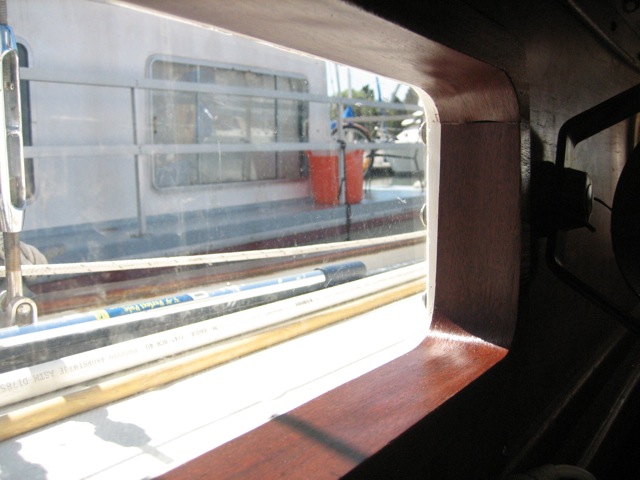
    I drew up a pattern and had TAP plastic (we are very fortunate to have one right down the road from us in El Cerrito) make us four 8″ x 18″ portlights out of 1/2″ acrylic, with 2″ radius rounded corners, a half-bevel edge all around, and a ton of screw holes.  The portlights overlapped the cabintop by an inch all around, so the actual size of the cutout was 6″ x 16″.  We cut the holes in the cabintop using a hole saw followed by the cutoff blade on the grinder followed by the Fein tool.  We dug out the balsa core to a 1″ depth all around the cutout, then filled it with thickened epoxy.  I stopped by a local lumber yard and collected a brown paper bag of sawdust from under one of their saws, and I used this sawdust as filler for the epoxy–it was a hell of a lot cheaper than the West System stuff.  Although I did have to resort to the West System filler for the top gap, because the sawdust stuff wasn’t sticky enough, it would fall out of the top. After the epoxy cured, I ground it off fair, then used Quik Fair to fair it smooth.  After the quik fair cured I sanded it smooth, then we put a couple layers of paint on it.  We mounted the portlights with #10 machine screws, through-bolted.  I had TAP plastics drill the holes in the acrylic oversized, so that there is room for expansion without the acrylic cracking.  We mounted the acrylic with a washer (one each bolt) between the acrylic and the cabintop, to leave room for the silicon so it wouldn’t all squeeze out. Finishing the inside–keeping it pretty-was the hardest part.  The layers of our coachroof were as follows, from the outside in: fiberglass-balsa core-fiberglass-airgap-veneered trim plywood.  The whole thickness was ~2-1/4″.  I did the trim in two pieces: first a ring made out of 18″ wide 5/16″ thick plank of white oak that is usually used for flooring.  Some great guys at the set building studio at work cut the frame out of it for me, and I never would have been able to keep it looking good myself, so I owe them big time.  Then I used 2″ wide mahogany veneer that I bought from MacBeath’s hardwood nearby for the inside surface.  I put a pretty dark stain followed by three coats of polyurethane on all of it.  The trim ring was glued in place with wood glue, clamped with about 10 a-clamps from home depot.  The veneer has glue on the back already; you use an iron to iron the veneer on. The resulting portlights are completely bomber, and still look pretty good on the inside.  We could have used fewer bolts, but I don’t regret our design.  I would do the same thing again. Jonny has some GREAT videos (1, 2, 3) of the process.