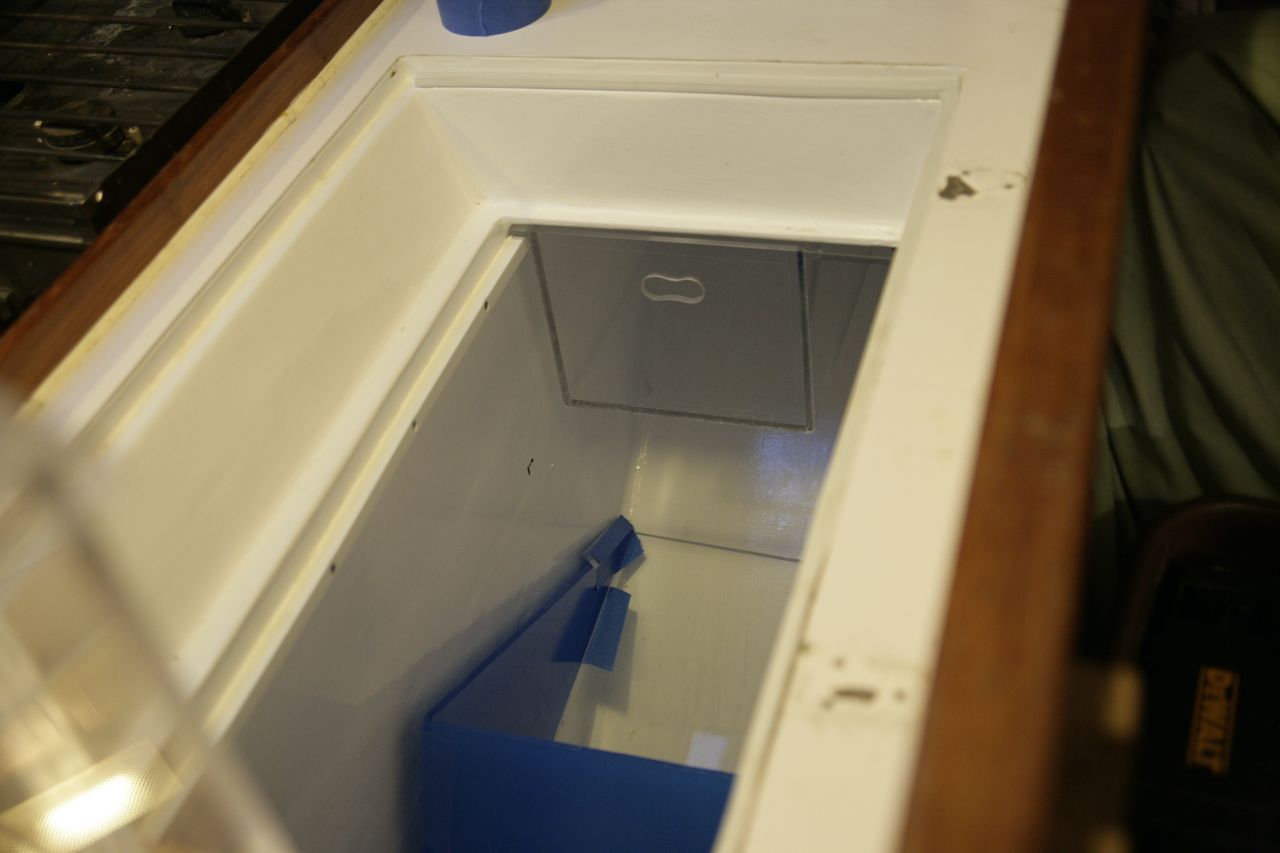
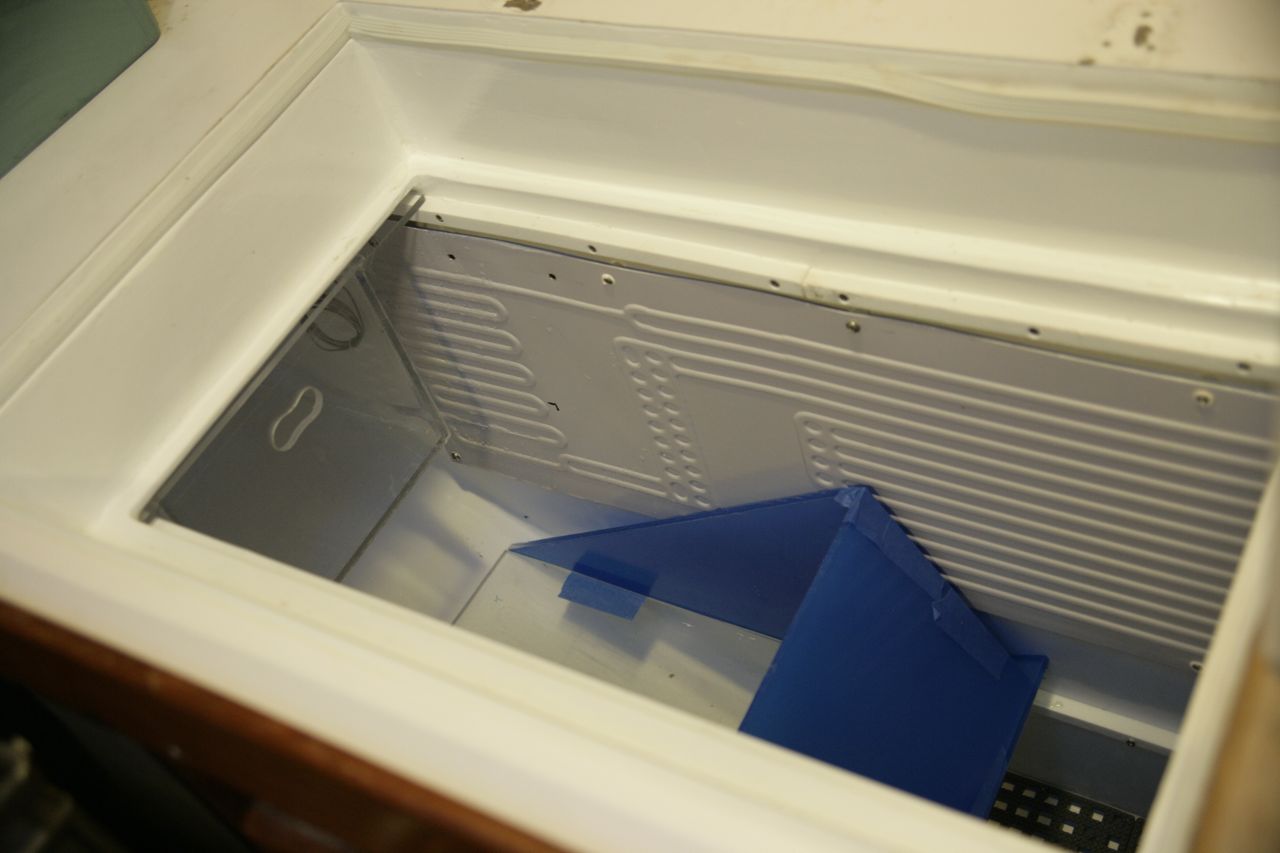
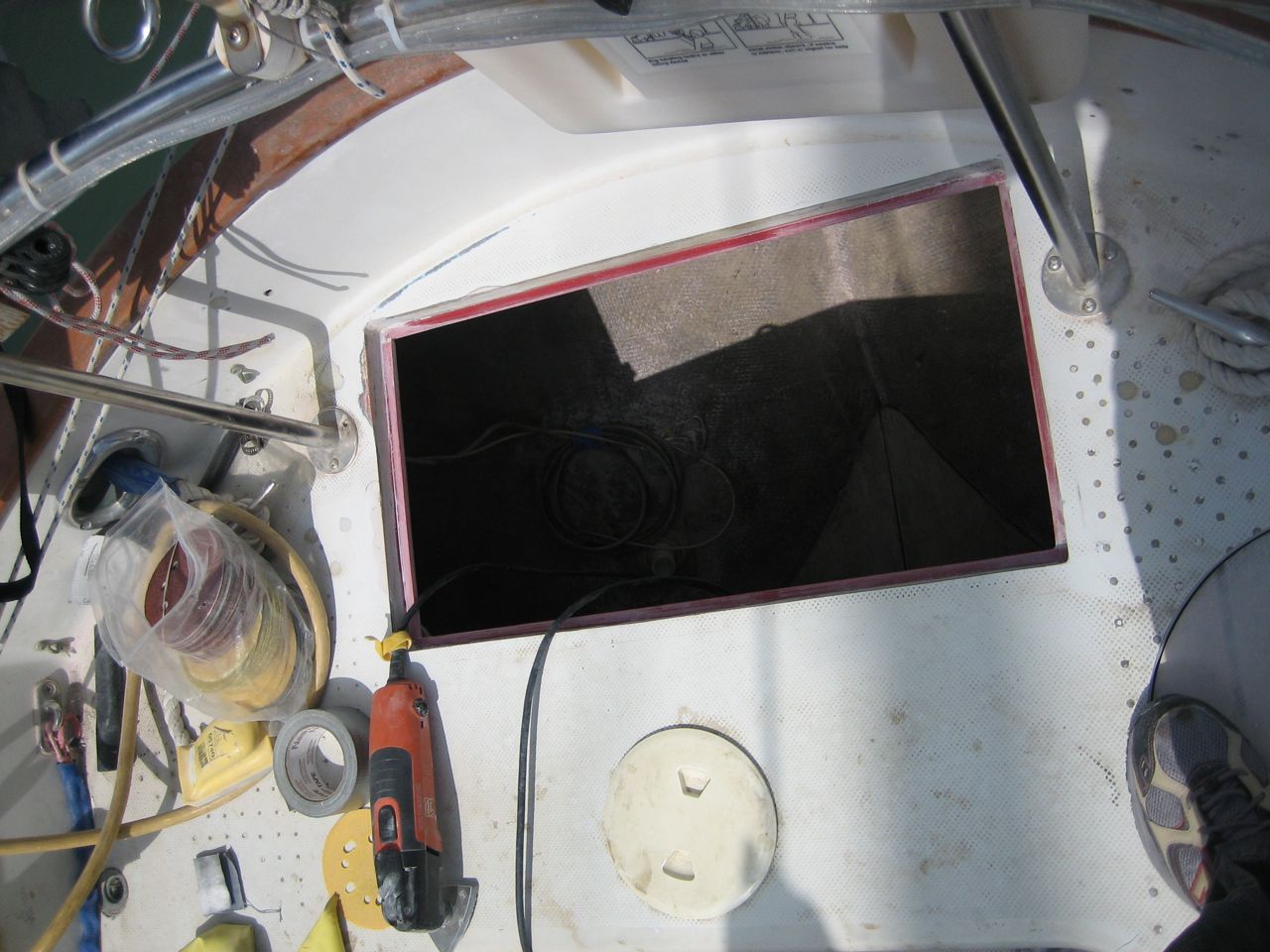
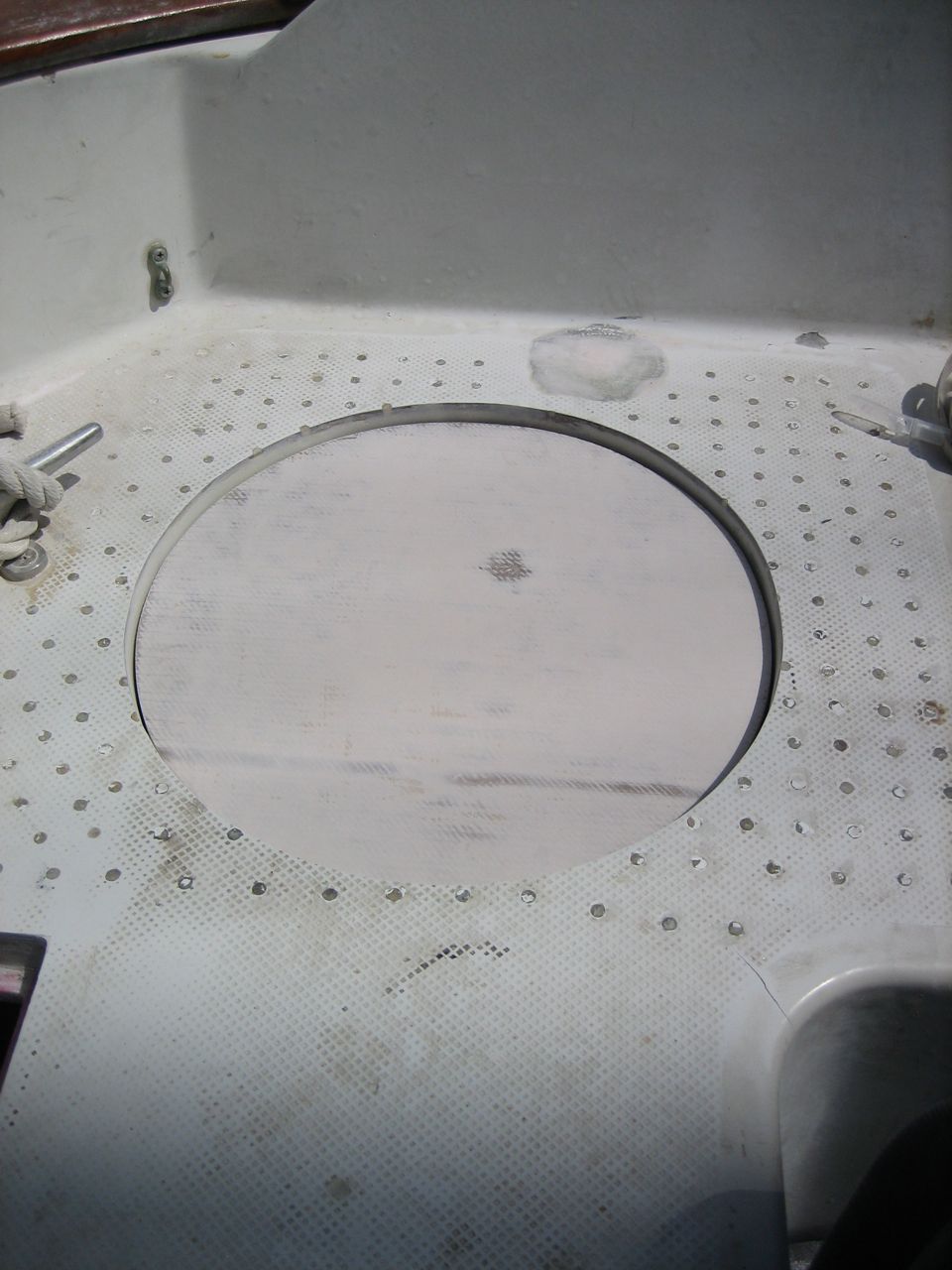
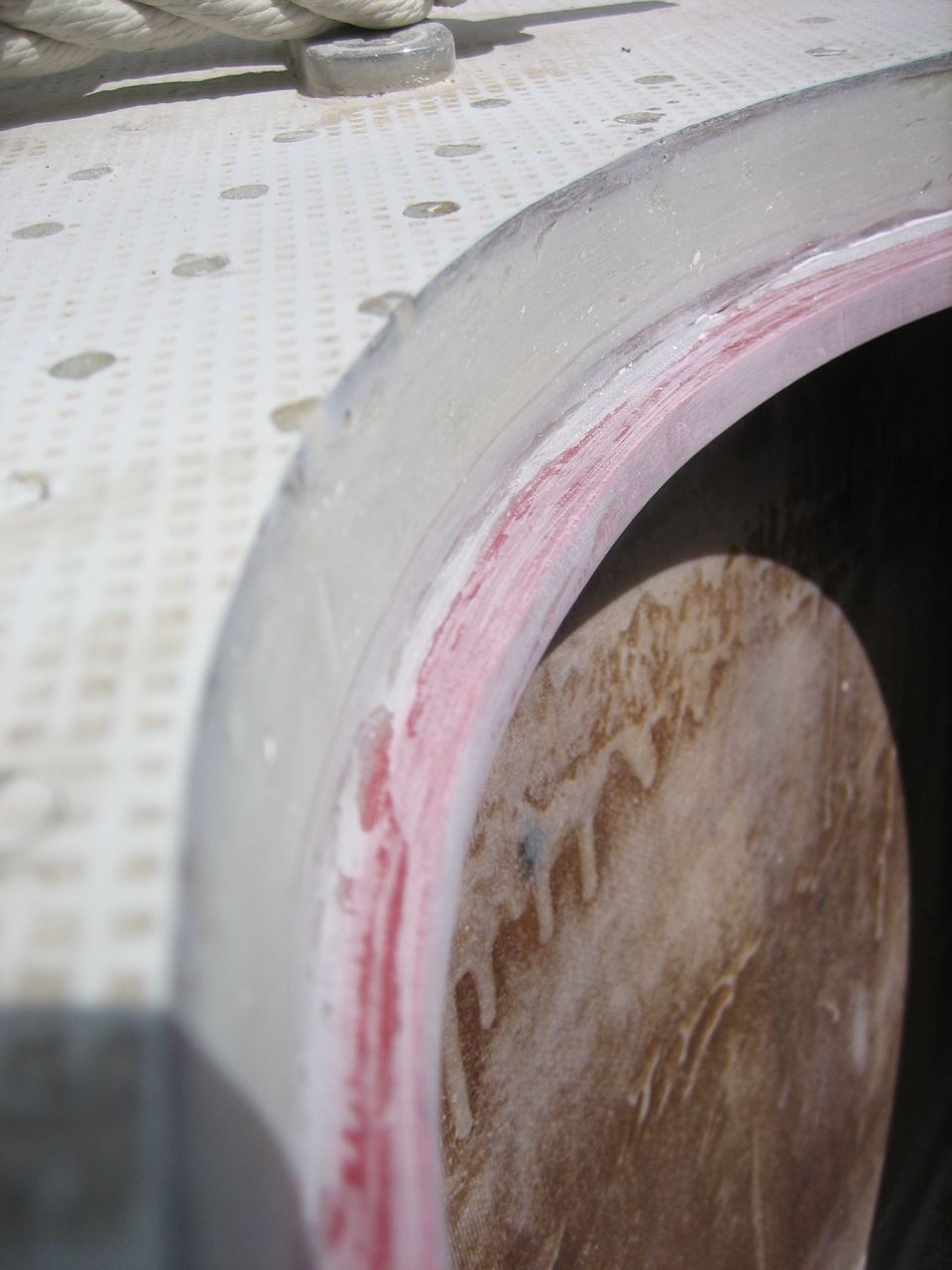
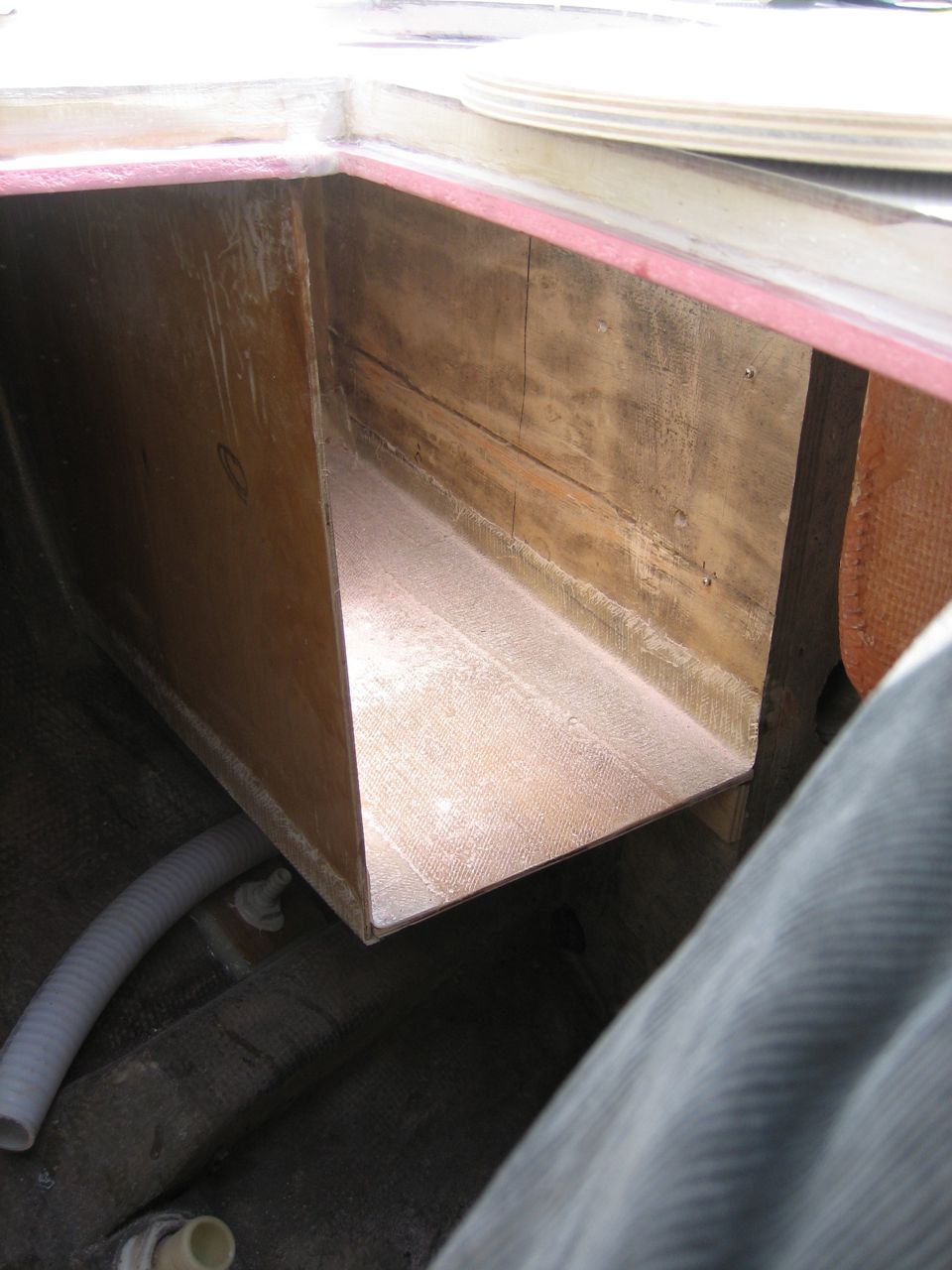
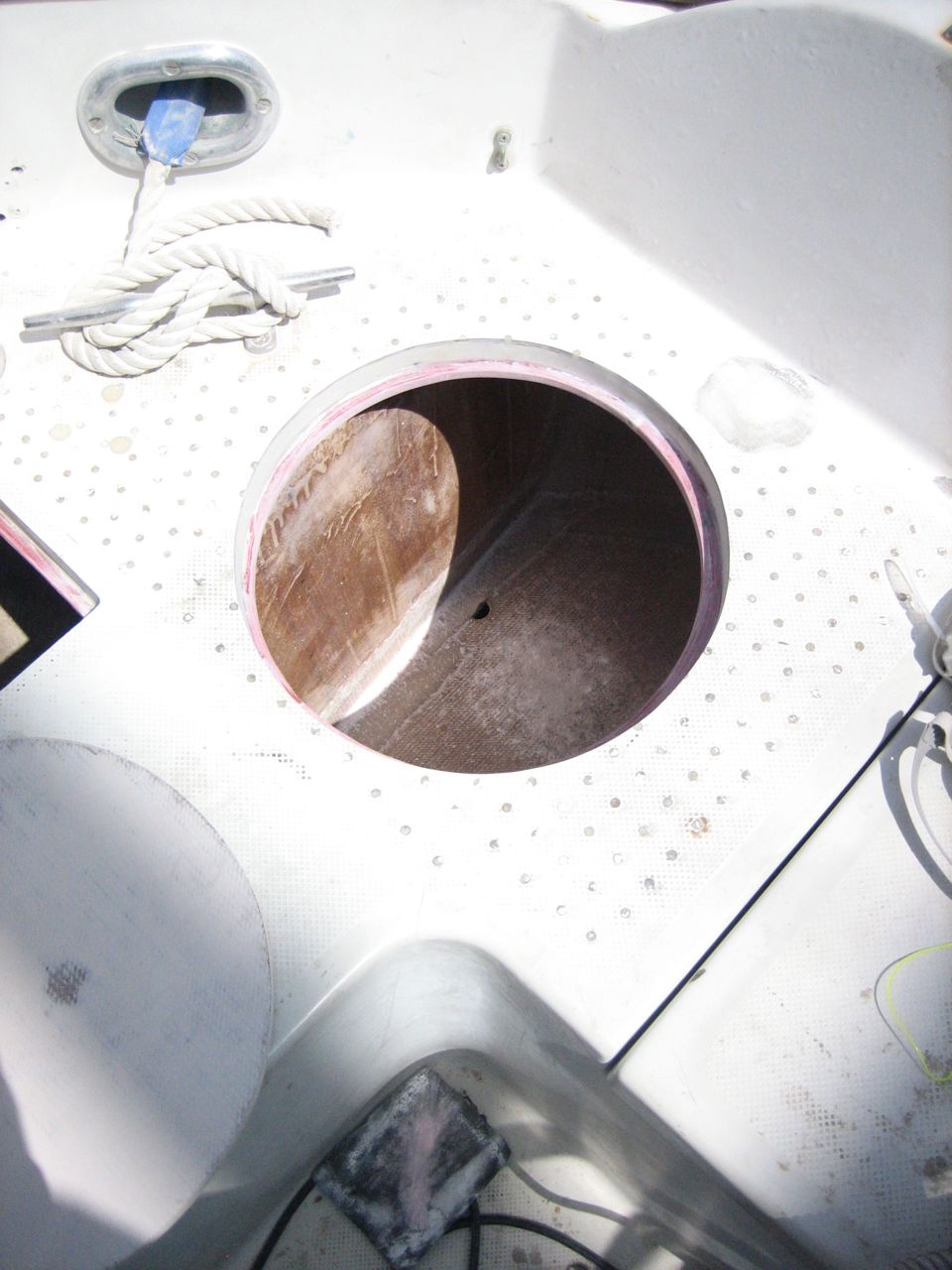
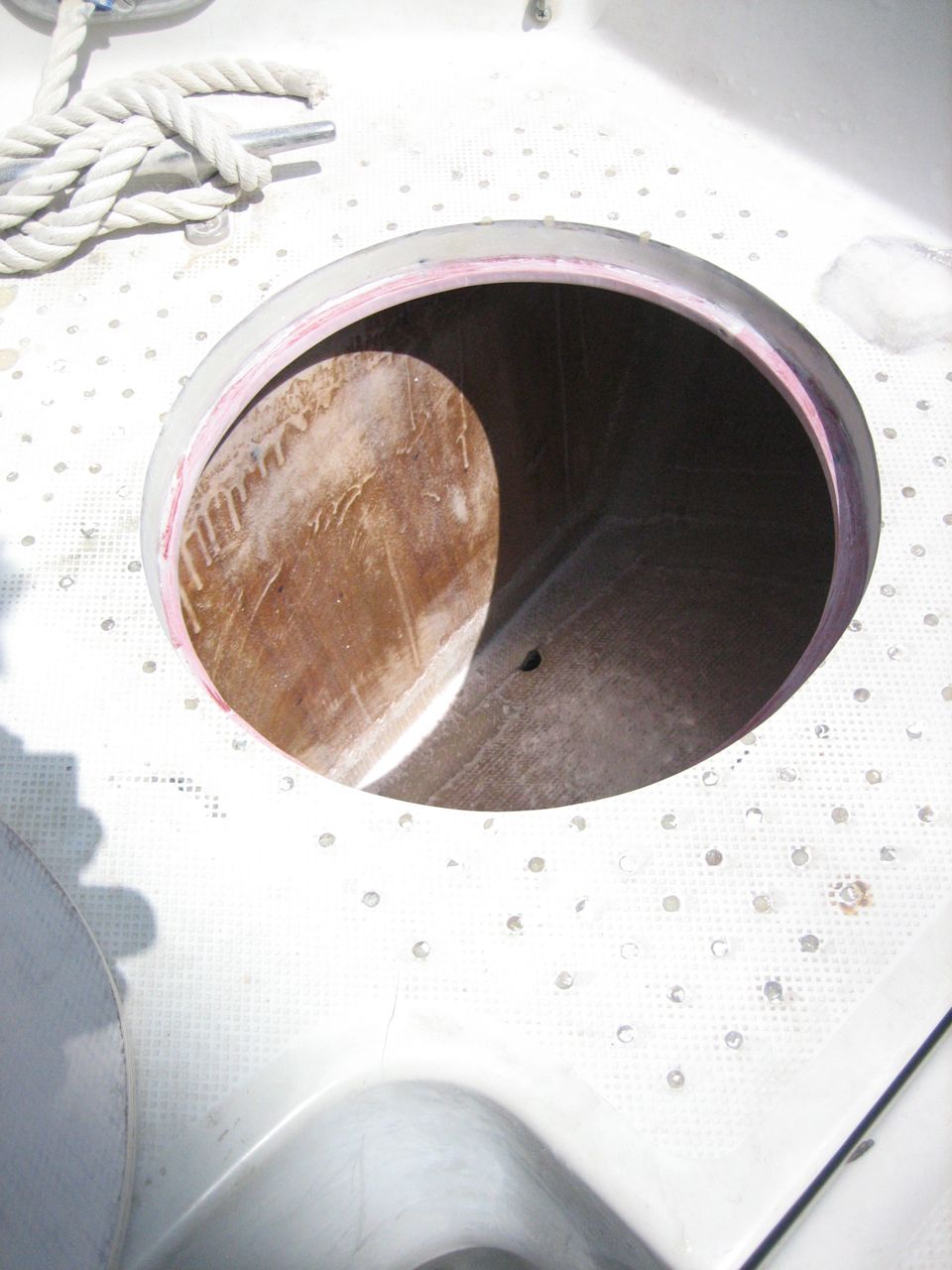
It quickly became clear that a wide open, deep icebox is extremely difficult to use efficiently–you spend all of your time rummaging through a stack of food, or have to remove everything to get what you want, or discover that containers have tipped over and spilled their contents.
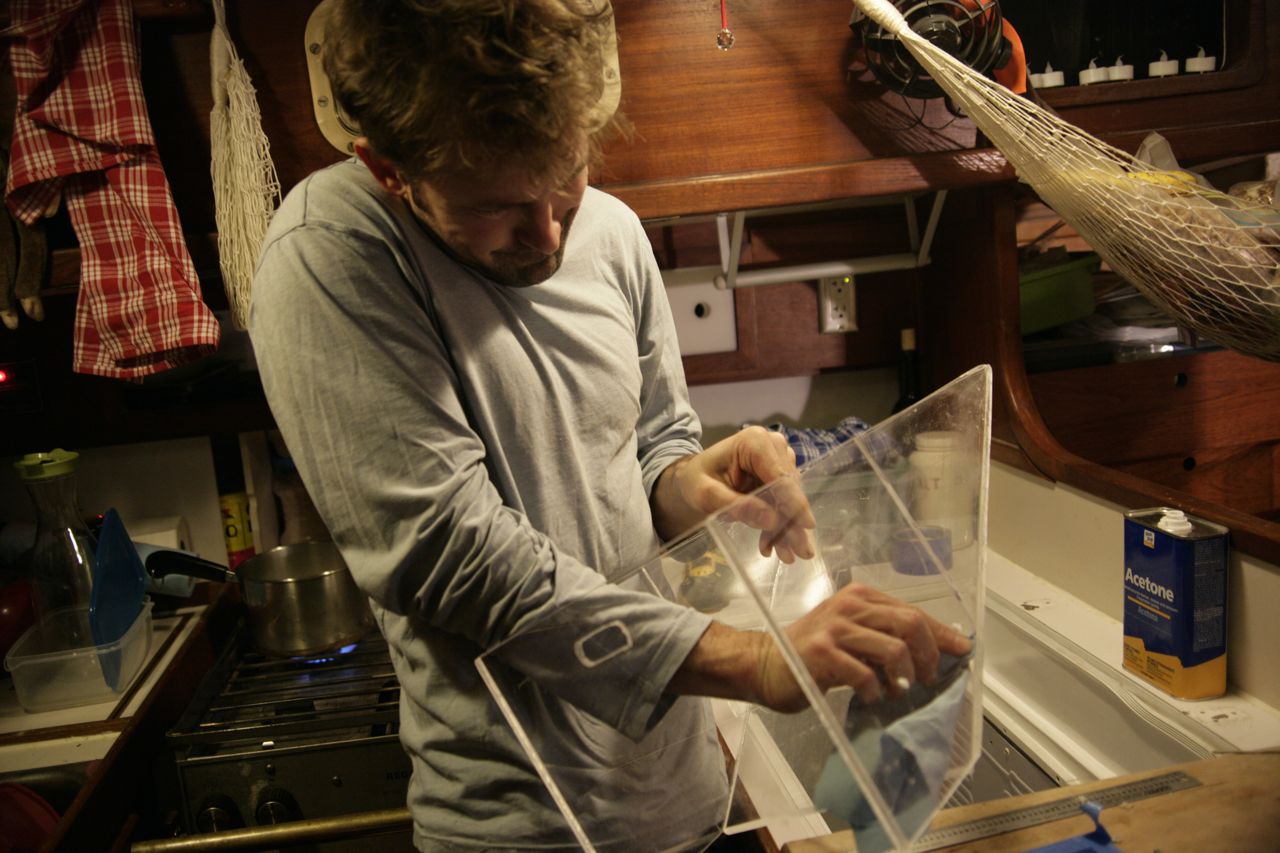
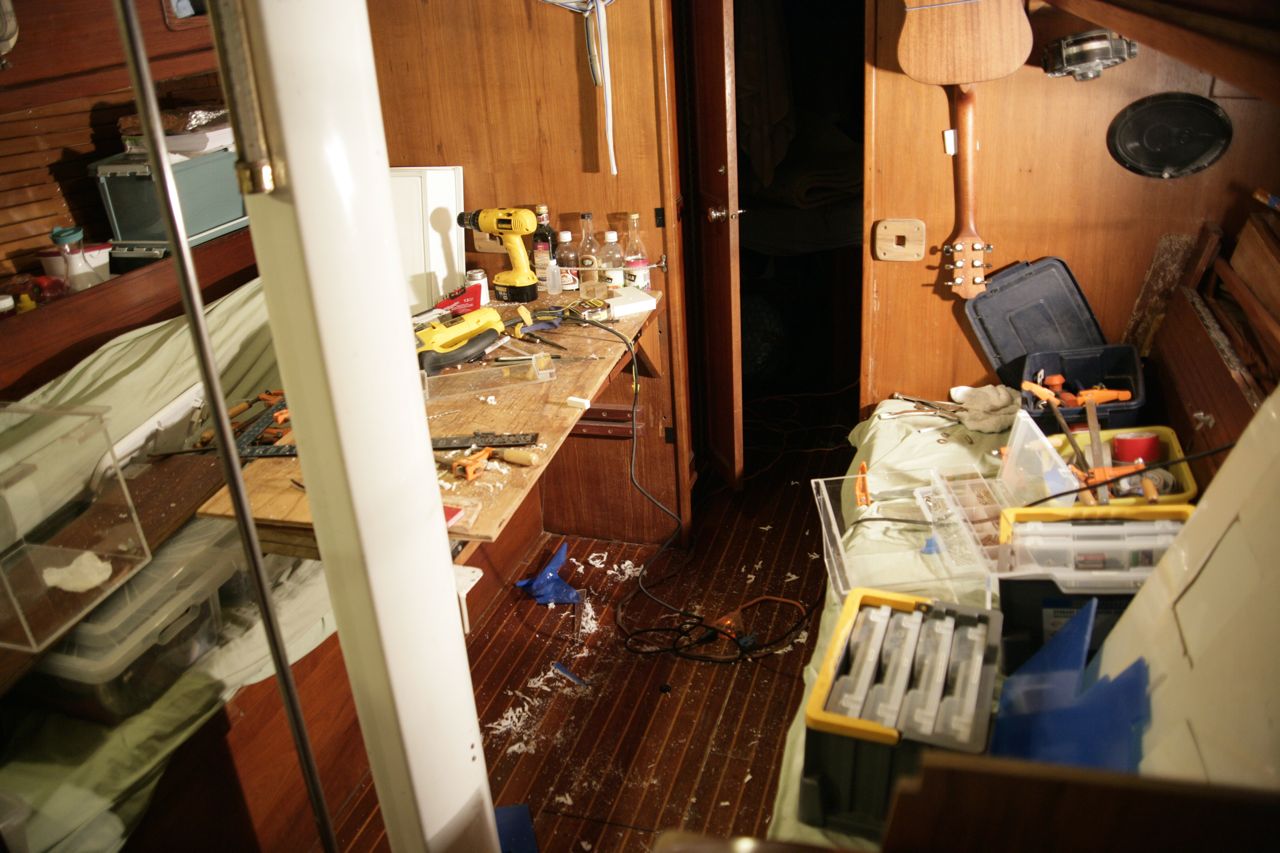
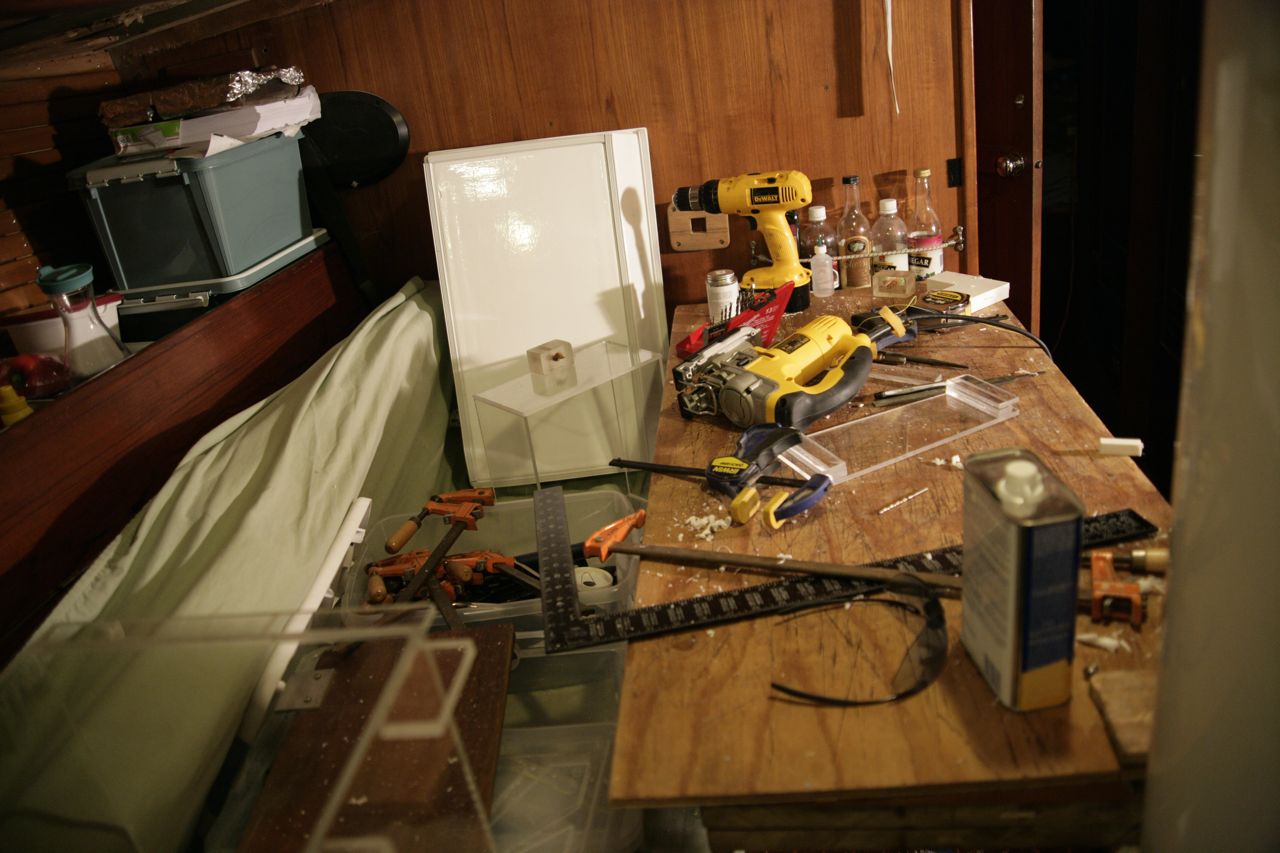
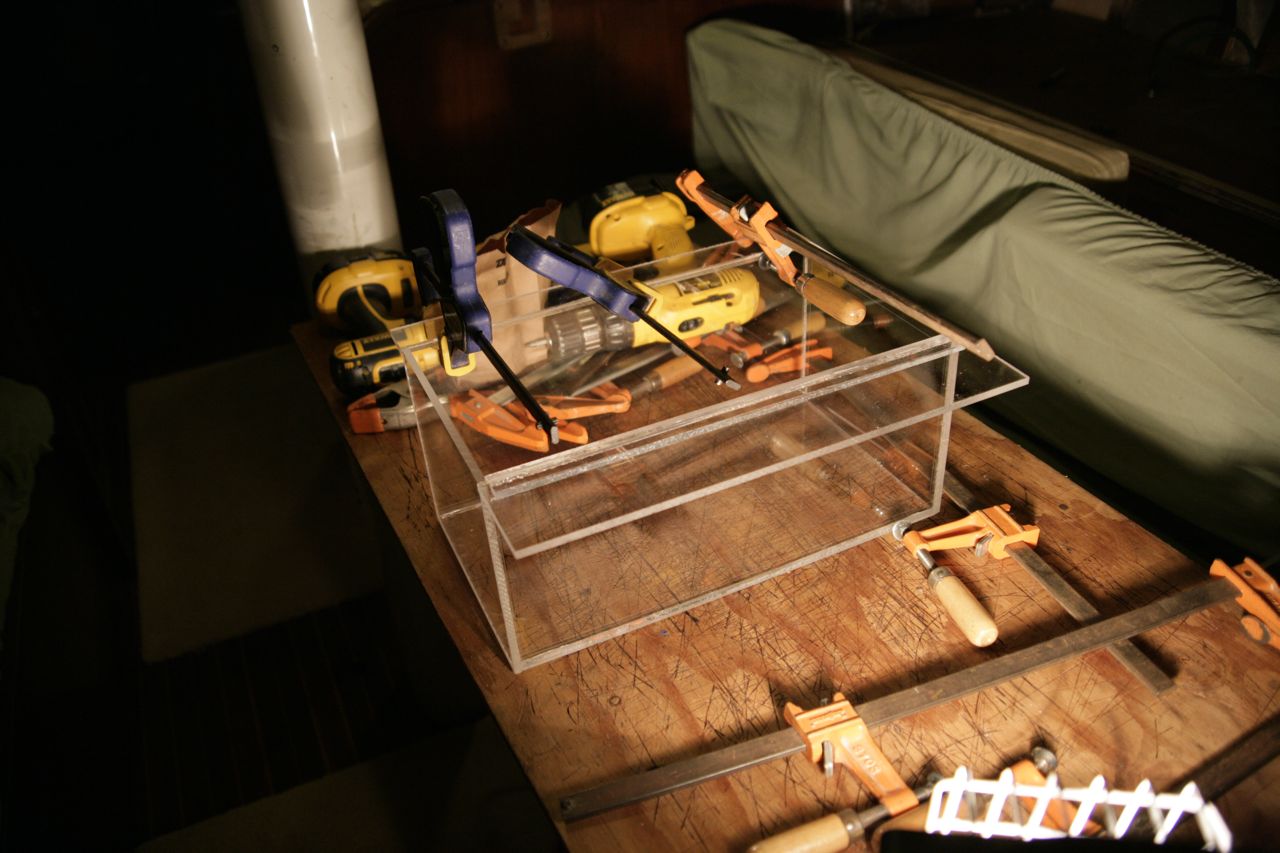
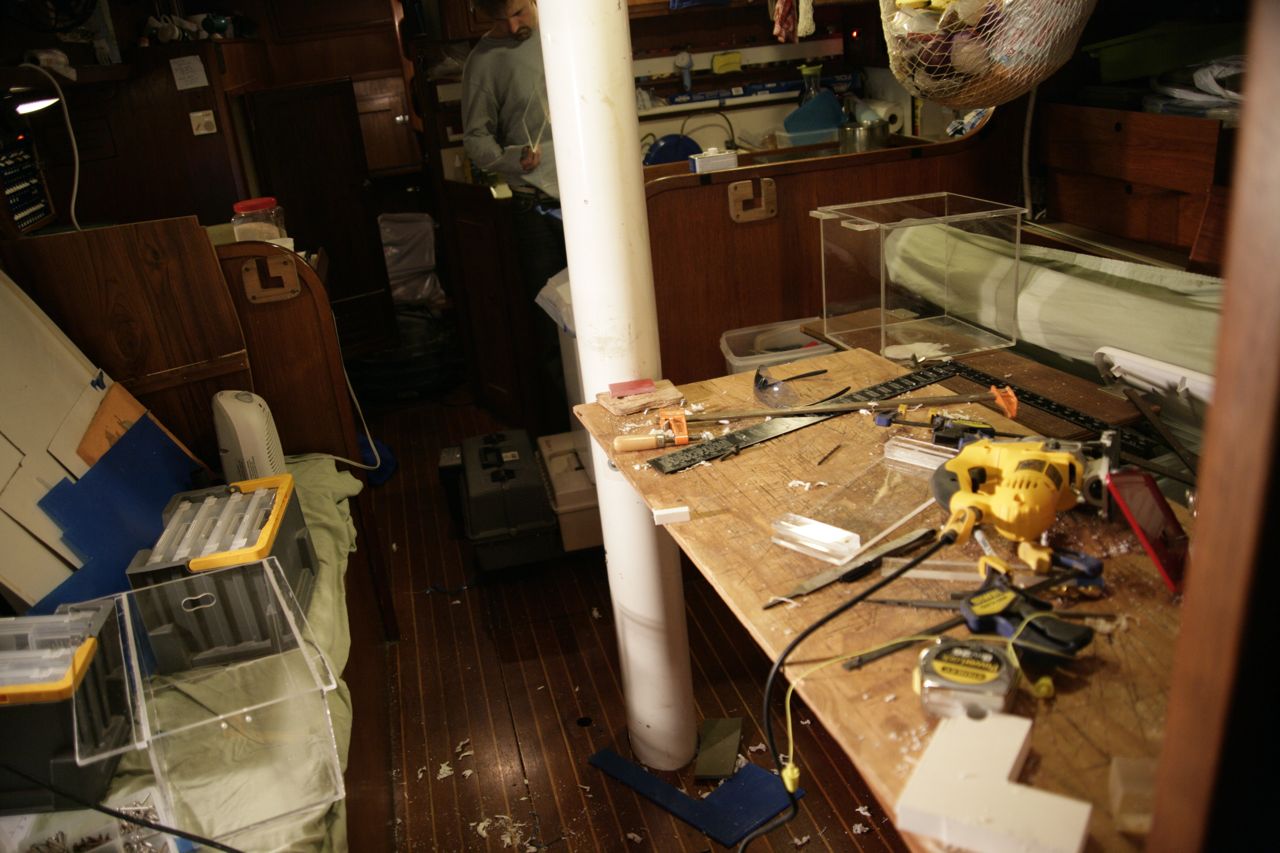
I decided to built boxes out of acrylic, using the jigsaw to cut the pieces, the sander to take off the sharp edges, and the methylene chloride toxic stuff to weld it all together.
This is a process that I have used a couple of times now on the boat for working with acrylic, I believe I explained more of the details earlier. Some of the details worth mentioning: cutting the acrylic with the jigsaw is frustrating, but doable with care and patience. I use the wood scrolling blades; the metal blades seem to get gummed up and stall. The blade just melts a path through the acrylic, which re-seals itself in places after you pass. So then you have to go over the same cut a second time to free it up. The blades get super hot and eventually snap, so you need quite a few of them. There are special blades designed for cutting acrylic, but honestly I can’t tell the difference between them and the wood blades–perhaps they’re a bit more heat-resistant.
The methylene chloride is a nasty solvent, extremely volatile (evaporates very quickly), and very thin. A respirator and good ventilation is a must, or you will surely kill brain cells. The deal is that the methylene chloride melts the acrylic, which then rebonds as the solvent evaporates; the result is literally a weld–continuous acrylic–rather than a glue job. It is important to get the surfaces as flush as possible along the entire length of the seam, which can be difficult when cutting with a jigsaw. Because the solvent doesn’t fill in any gaps whatsoever; so only the areas where the surfaces directly touch will contribute to the strength of the bond.
There is a trick for applying the methylene chloride. You use a little plastic bottle with a syringe cap. You squeeze out the air in the plastic bottle, invert it and stick it into the container of methylene chloride, then let go and it will suck up into the plastic container. You don’t need very much. The you use the same method for applying: hold the syringe bottle upright, squeeze out a decent amount of air, then let go and invert the bottle. While the bottle is sucking air, no solvent will come out even though it’s inverted. Then you take the syringe and run it down the seam you’re welding, squeezing the bottle slightly to let the solvent drain out. You will have 10 seconds or more to apply the solvent before the container refills with air and starts to leak out.
It’s best to clamp the two pieces of acrylic together. But, if you have a second person and steady hands, you can sometimes just hold the two pieces together while you weld them; it should only take about 45 seconds for the bond to set.
It was a challenging problem, to figure out how to build the boxes such that they would fit down in the icebox. At least one of the boxes I had to finish assembling inside the icebox–so that one will never come out without breaking it apart. I put all of the boxes on rails–I used strips of starboard for this, nice and slick–so they slide back underneath the inaccessible sides of the box. And I was paranoid about the box banging on the evaporator plate and damaging it, so I put extra effort into making blocks and stops that would prevent the acrylic from touching the evaporator plate. After our first sail I discovered that I also needed to come up with a way to prevent the boxes from sliding back and forth while the boat rocked, so I used some cotter pins with keeper cords–works like a charm. All in all, a very successful project. No space is wasted and the system is easy to use. It took a damn long time, but what’s new.