Category: safety

  • Knees Broken (Part 1)

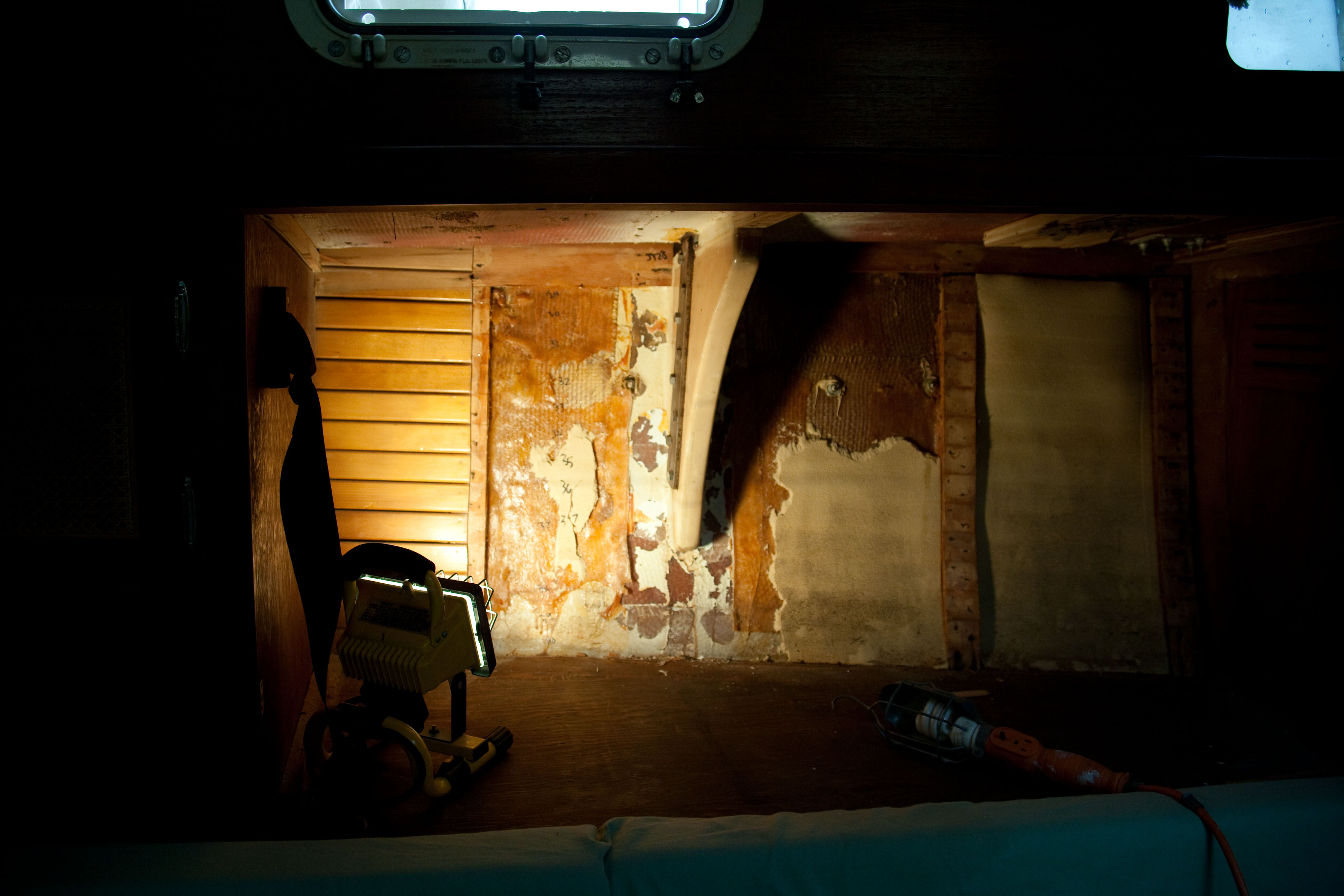
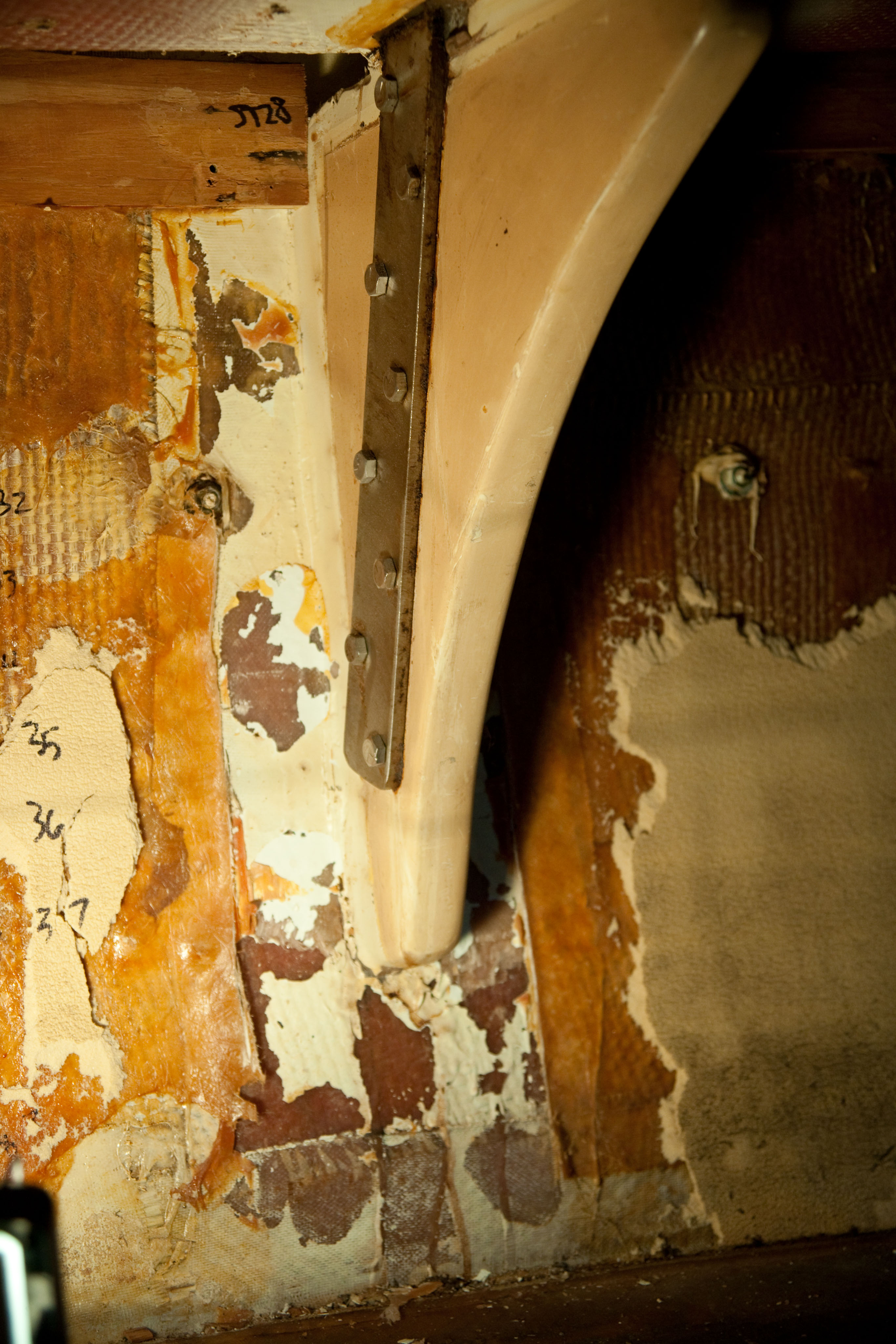
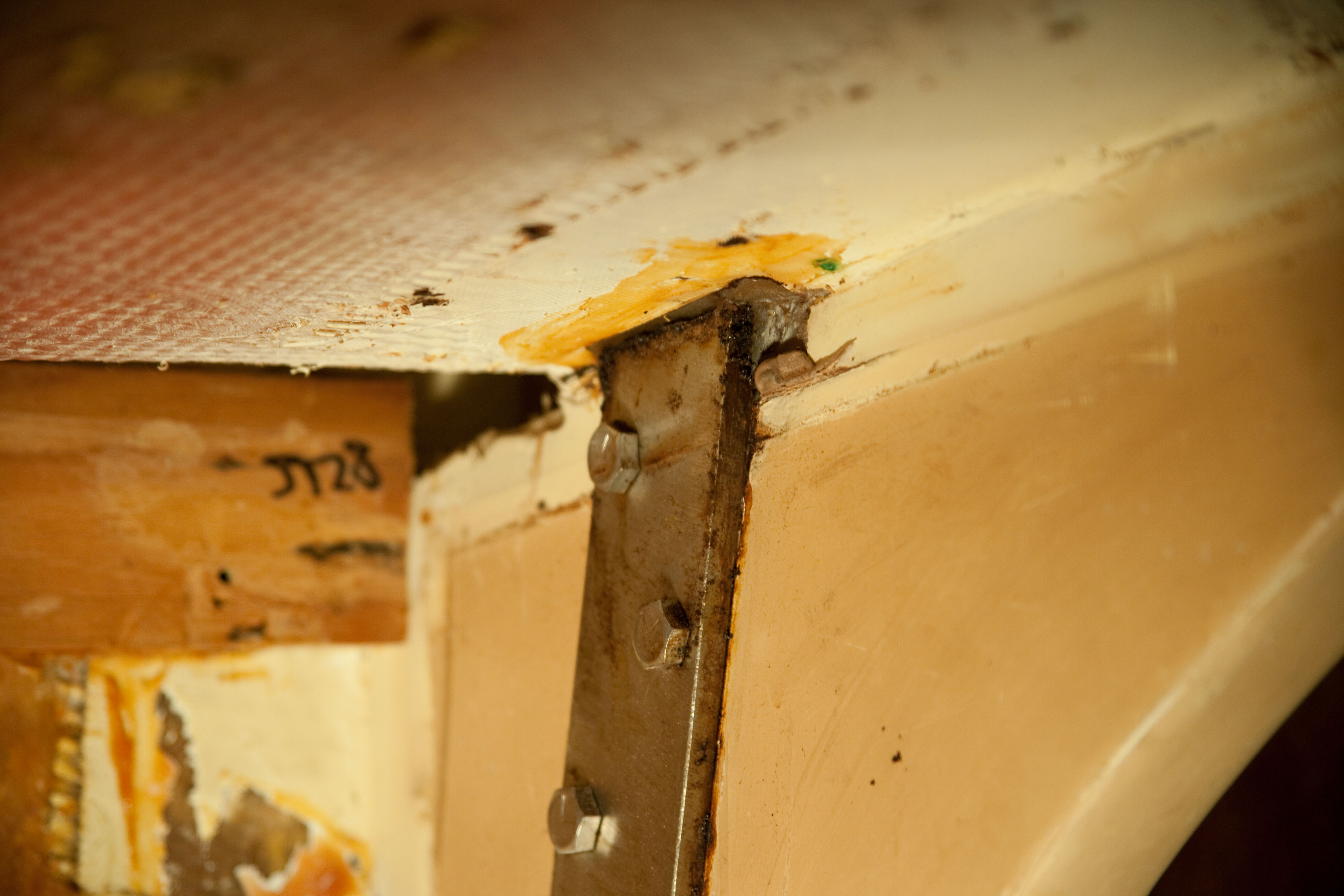
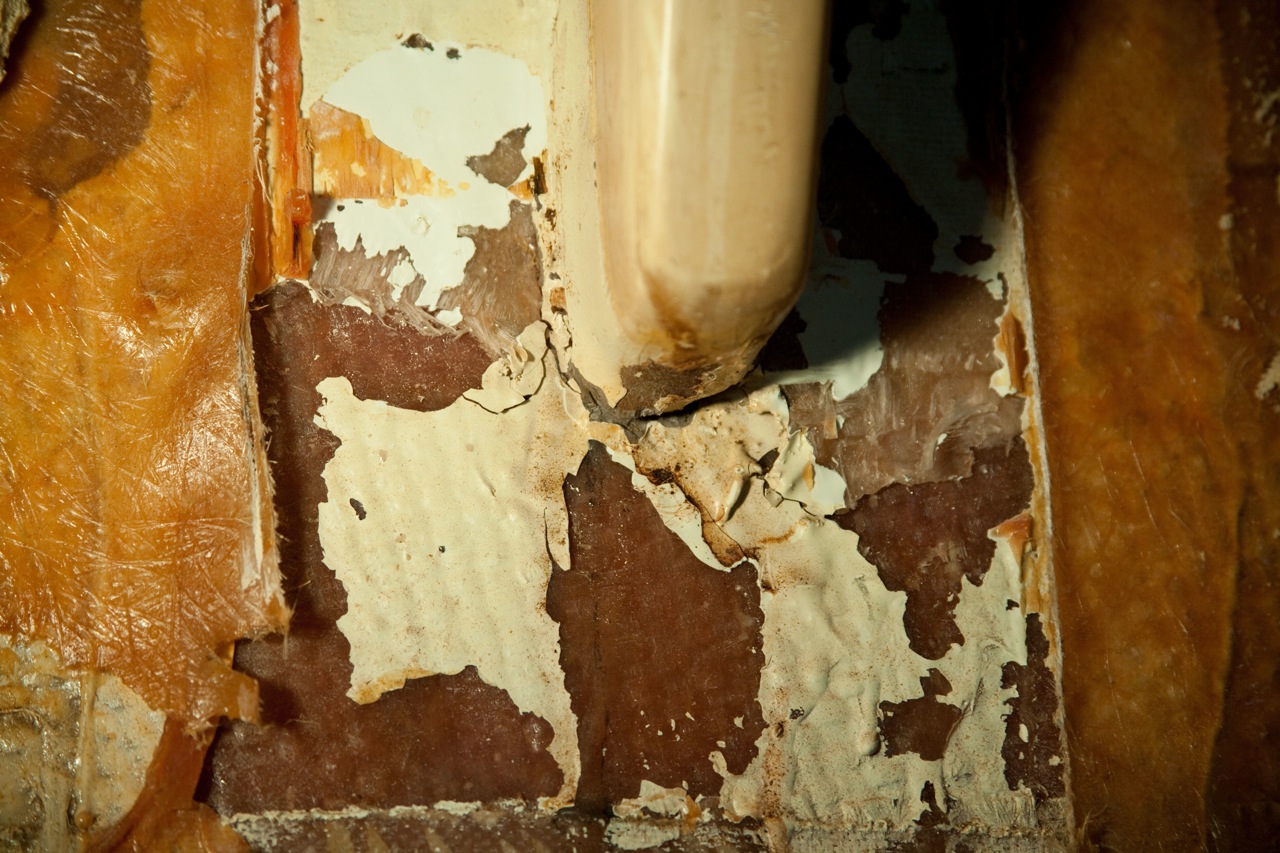
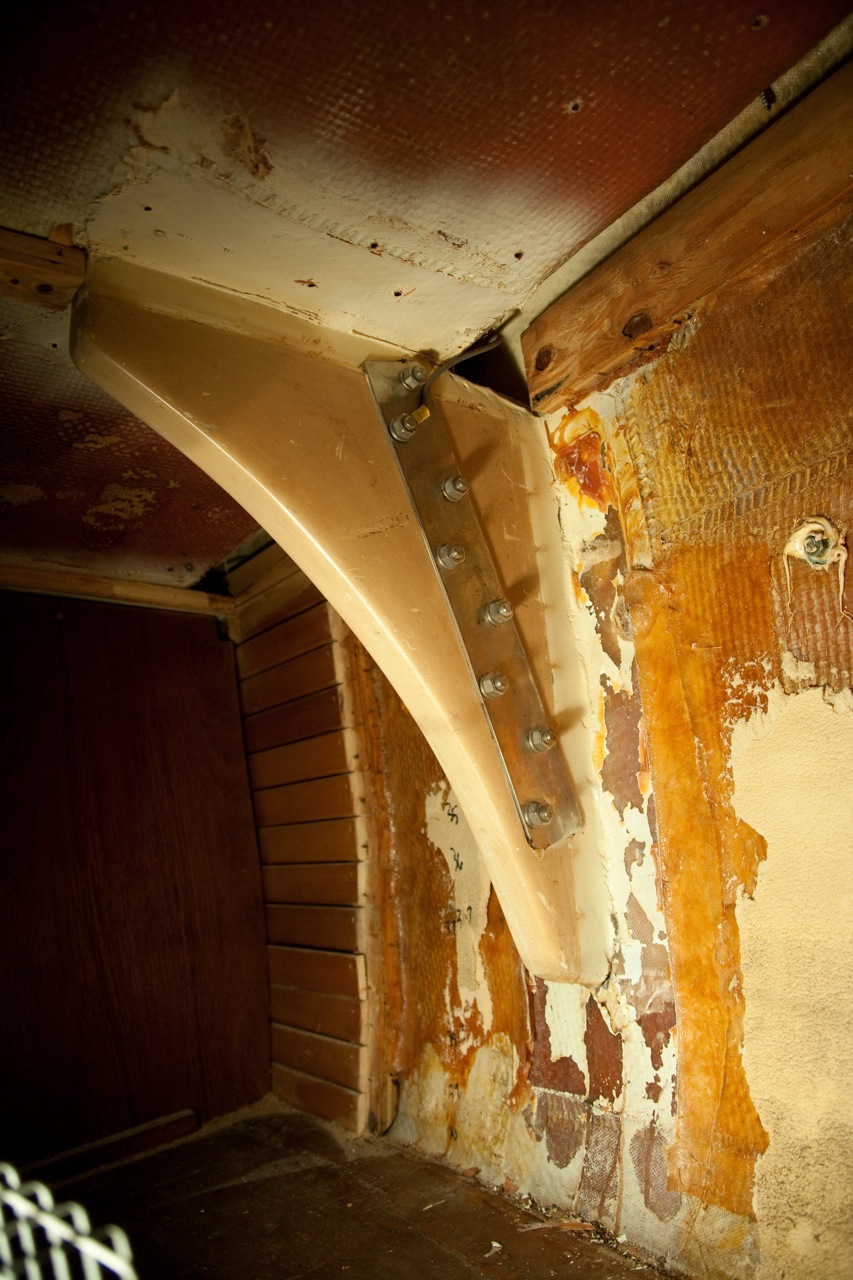
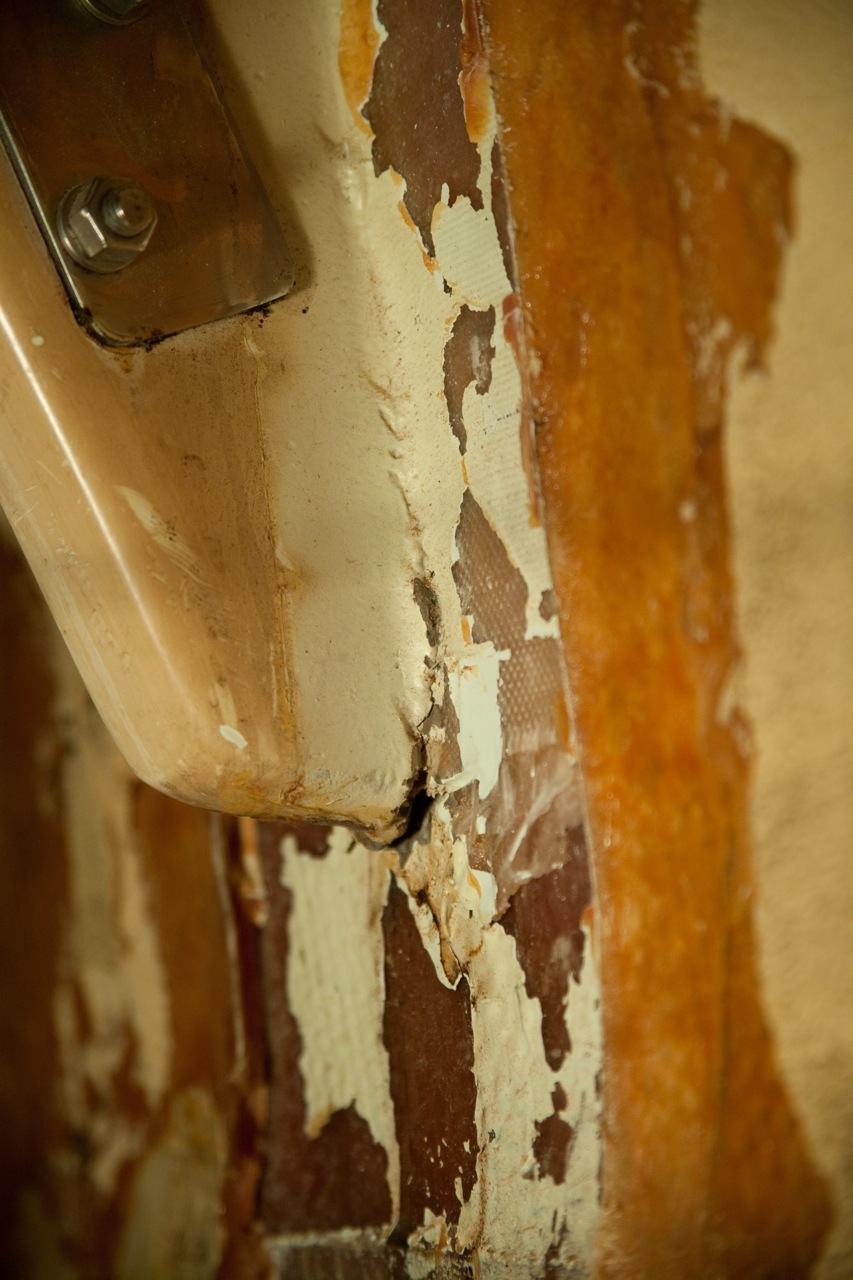
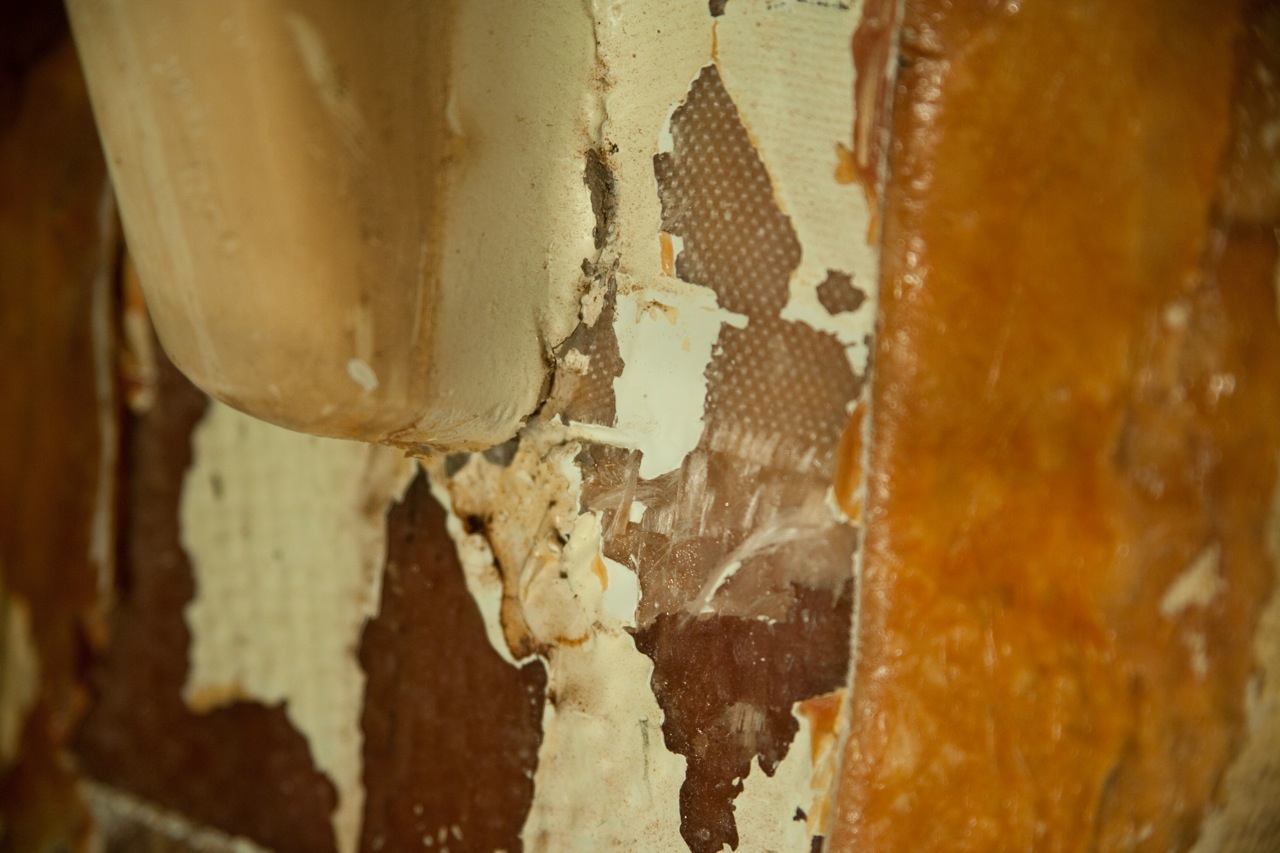
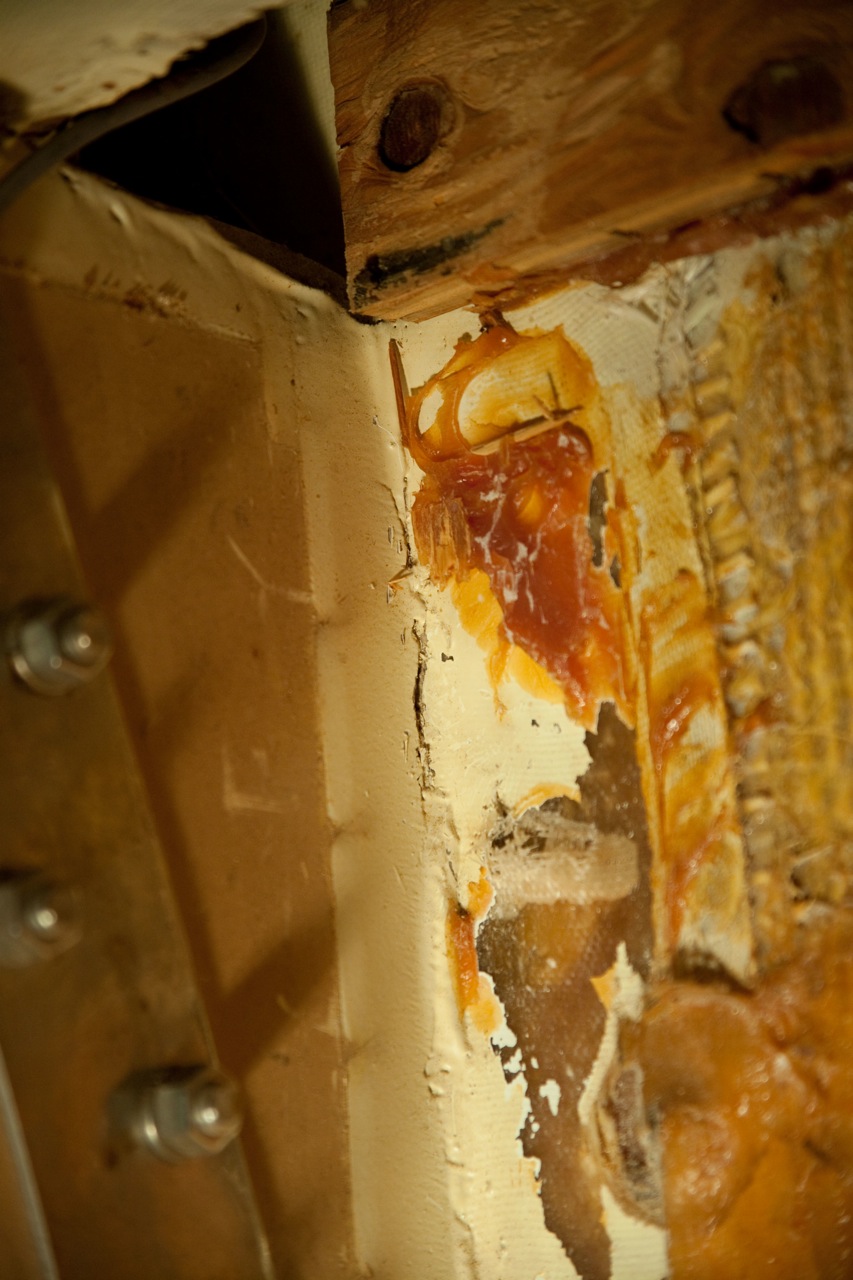
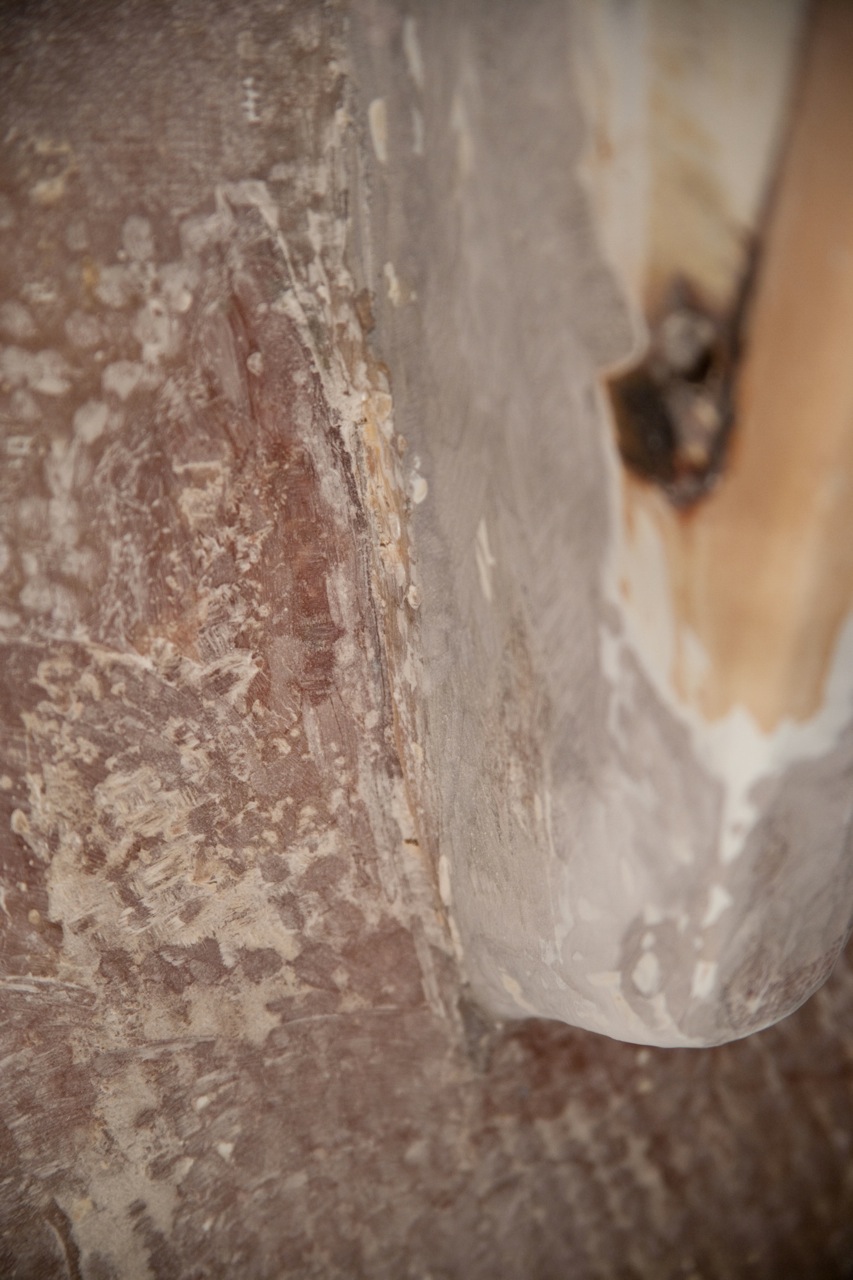
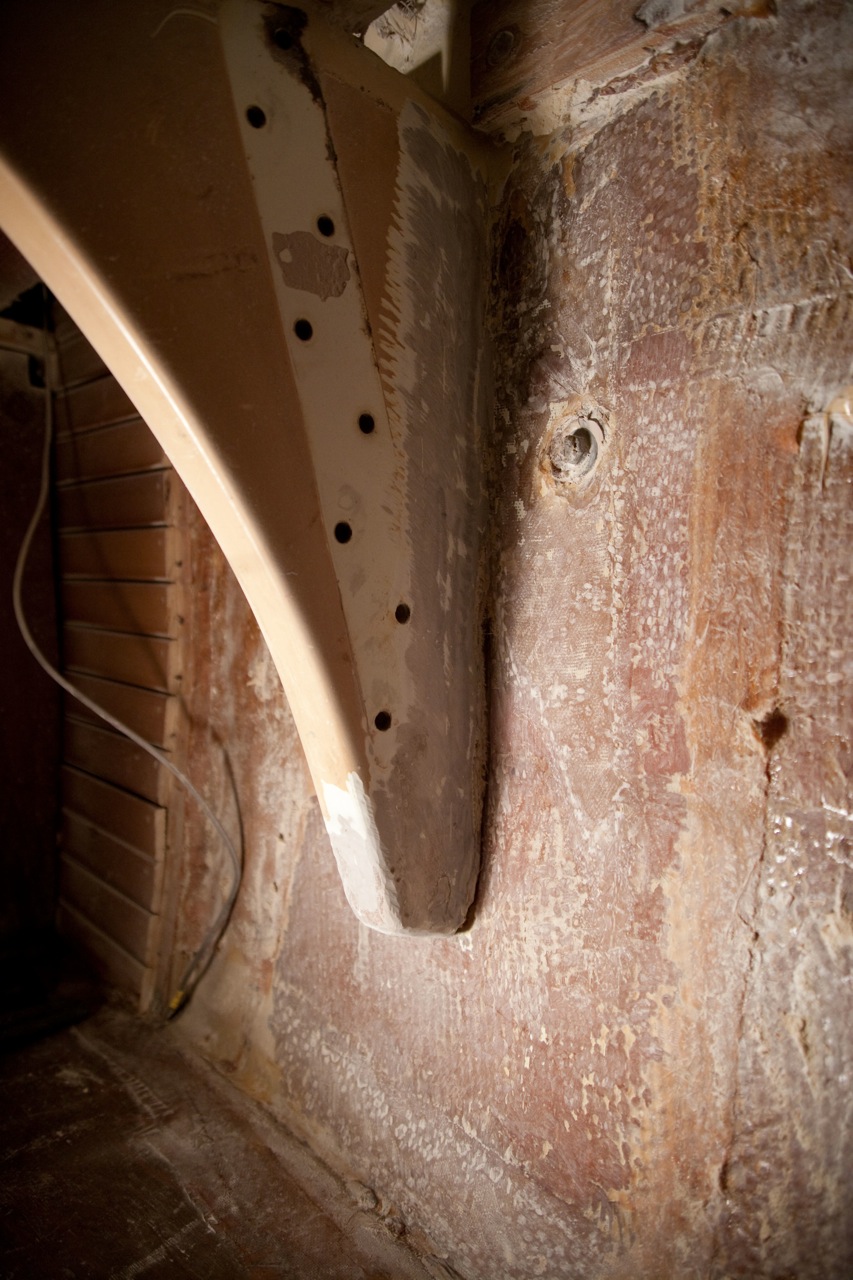
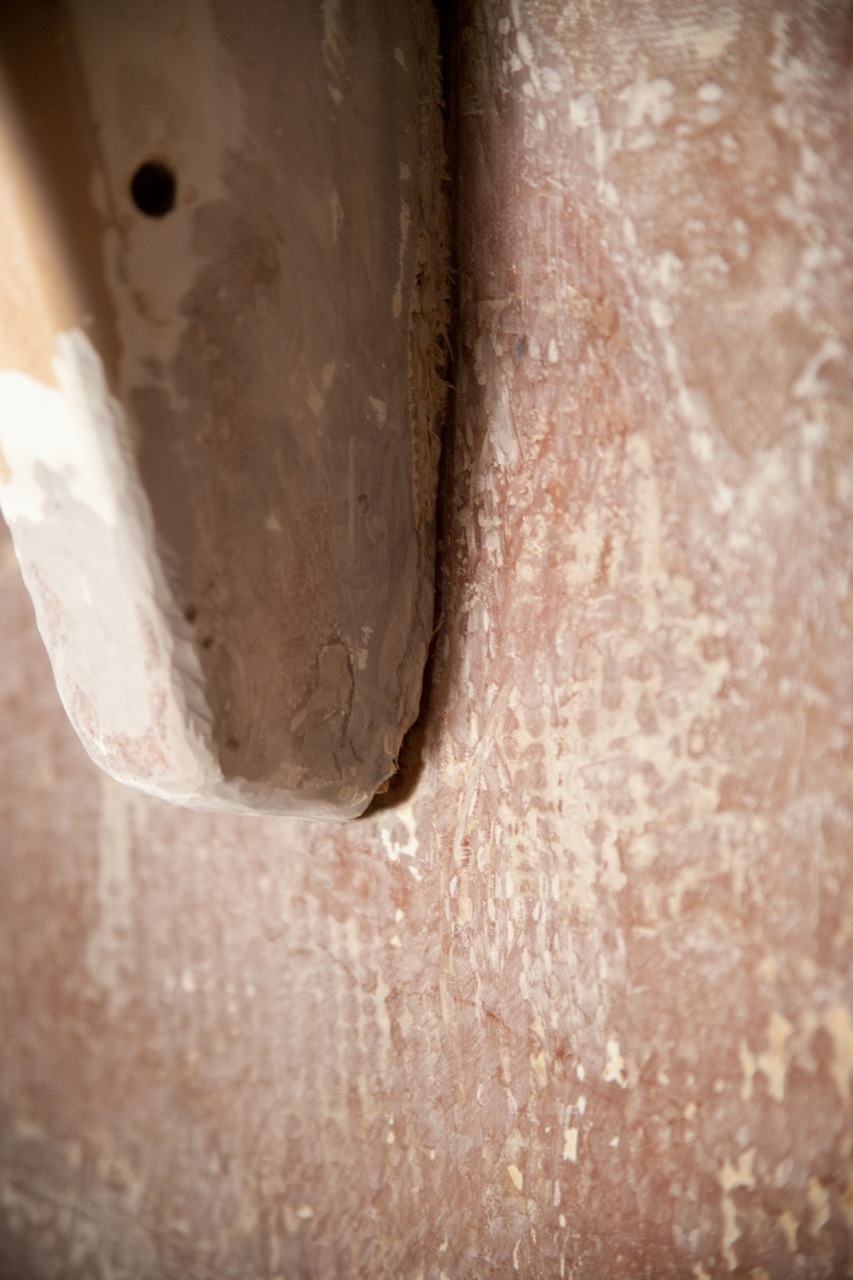
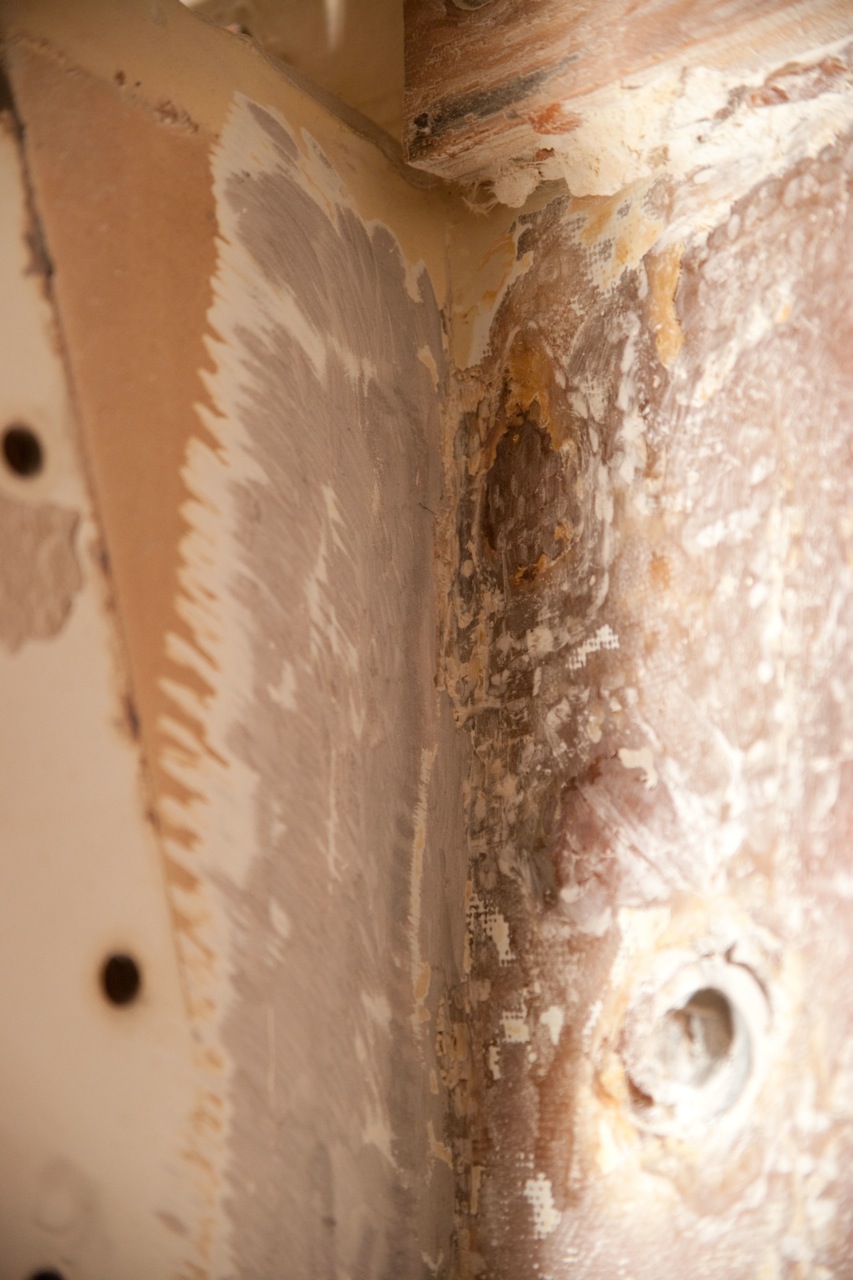
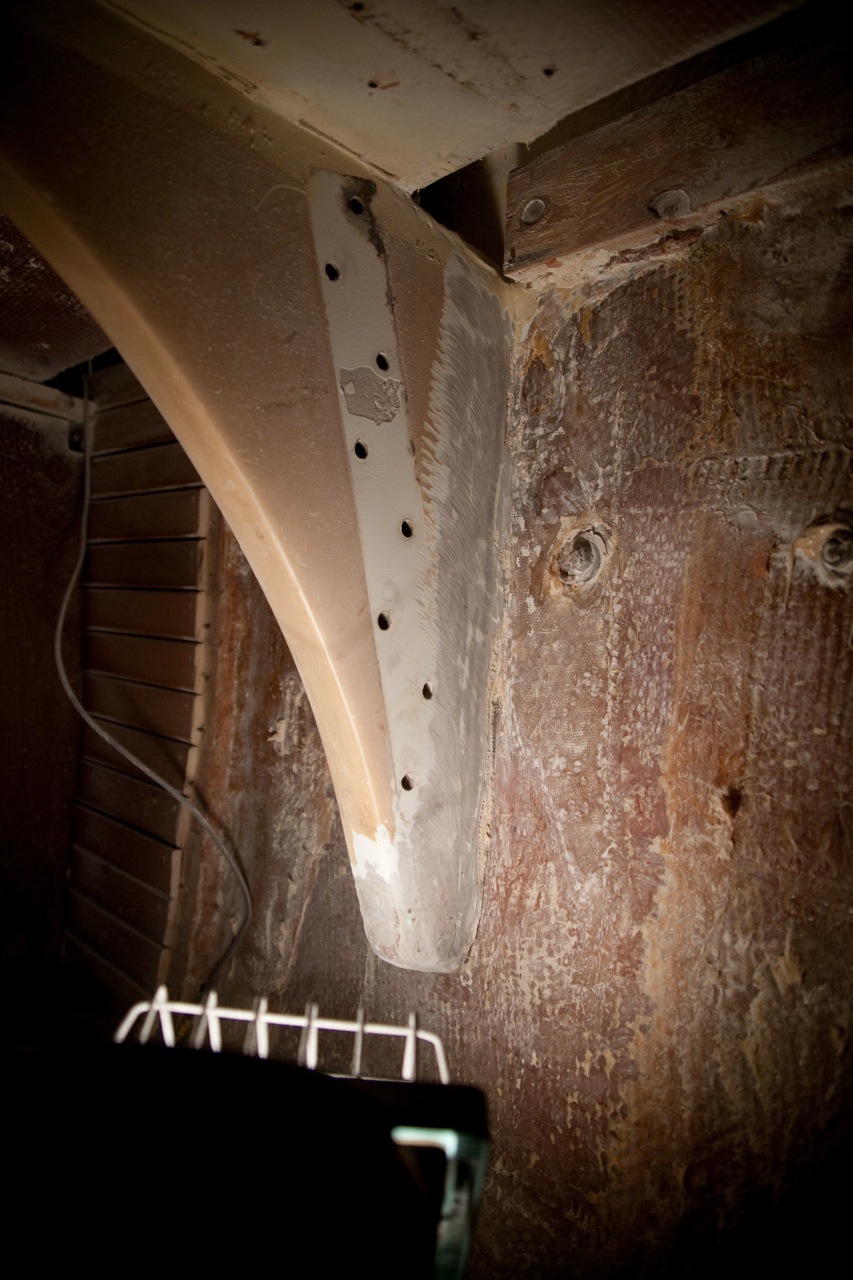
    My worst fears have come true: the raised lumps on the deck that we discovered while refinishing are caused by the knees, which have separated from the hull and are rotating up and pushing on the deck inboard of the chainplates.  Three out of four knees have ~1/8″ to 1/4″ gaps at their bottom ends, and the tabbing towards the bottom is colored white, further indicating delamination from the hull.

    We were intending to depart in January; I don’t see how that’s possible now with this job thrown into my lap at the last minute.  Karen and I just moved onto the boat, and I’m going to have to rip out the cabinets and do a massive fiberglass grinding and repair.

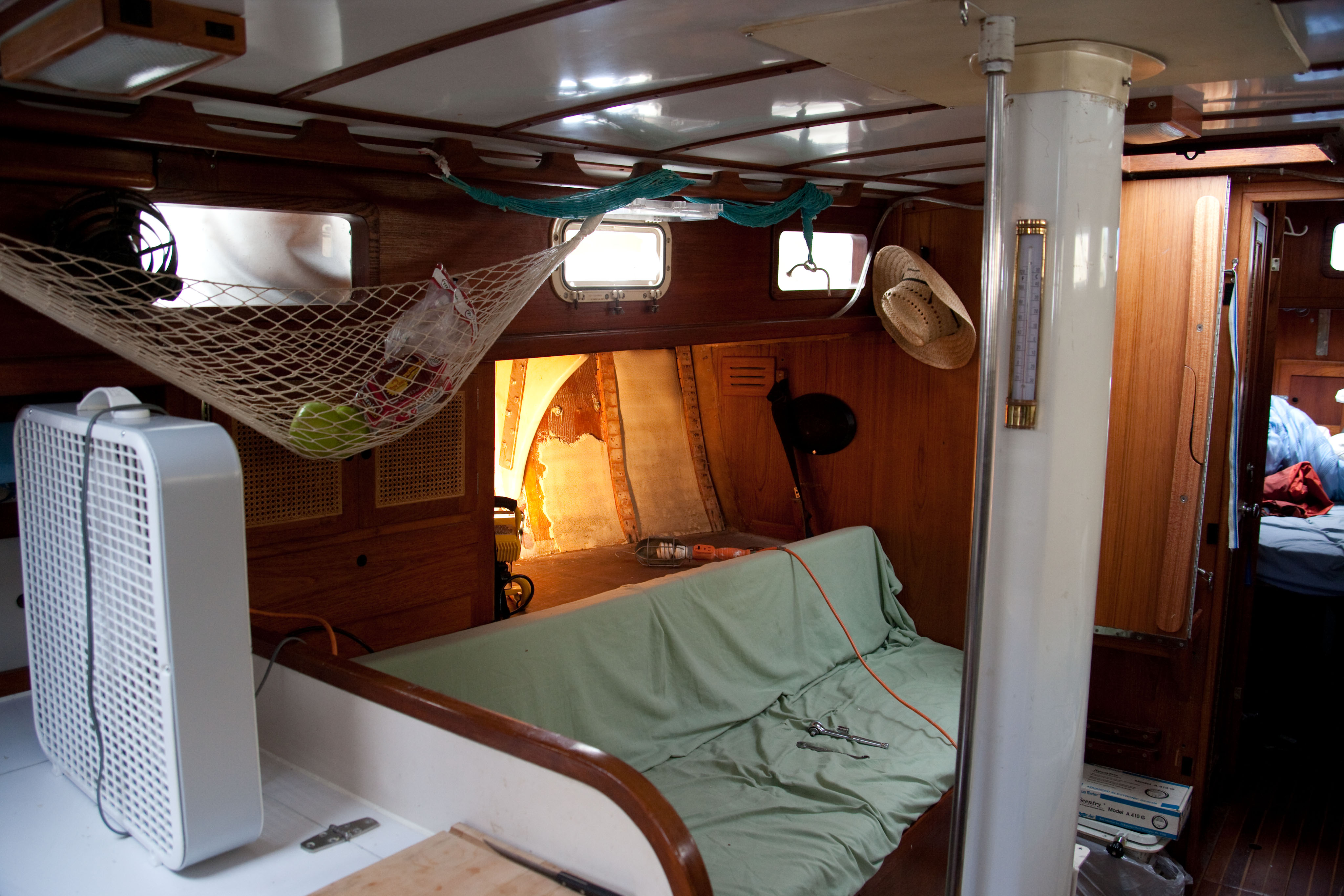
    I removed the slats that hide the port forward lower; I chose to tackle this one first because it doesn’t require removing cabinets to access it.

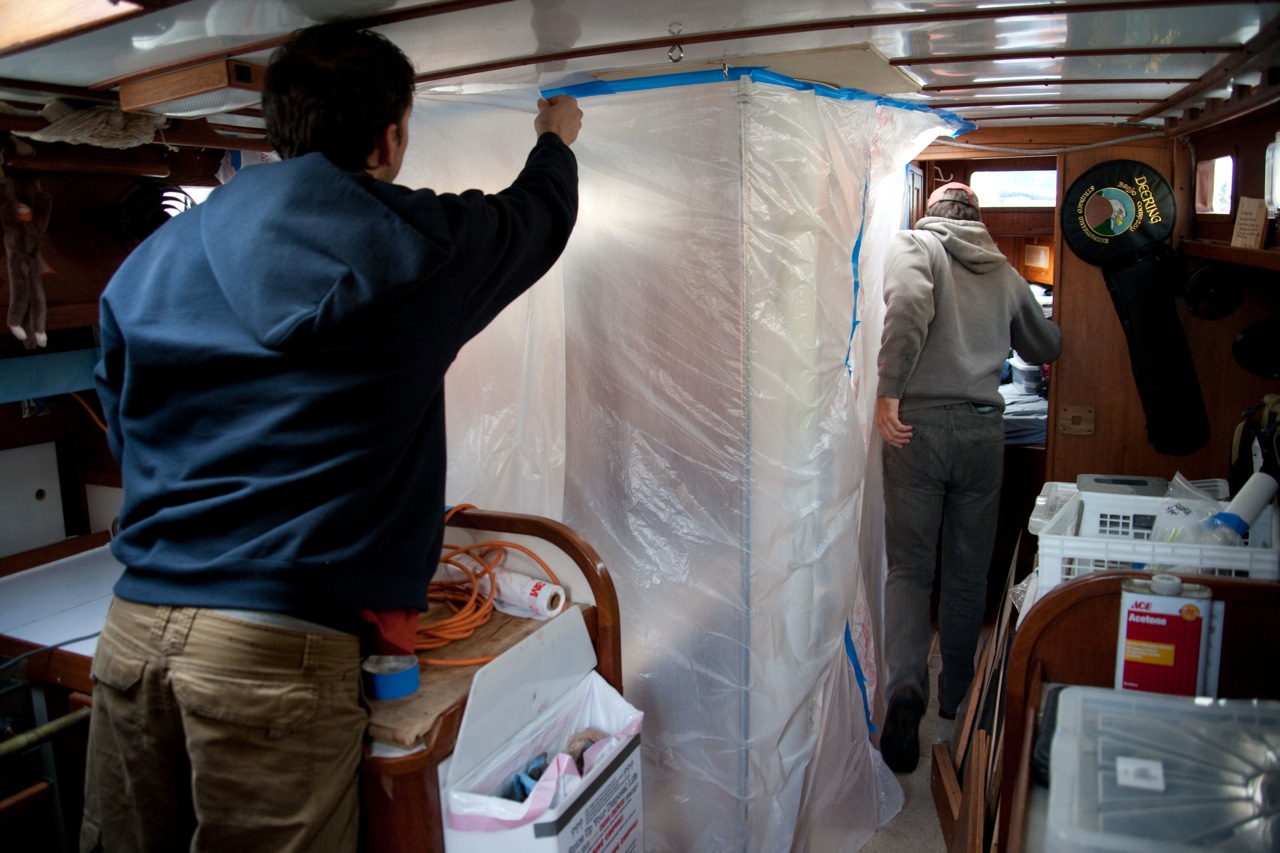
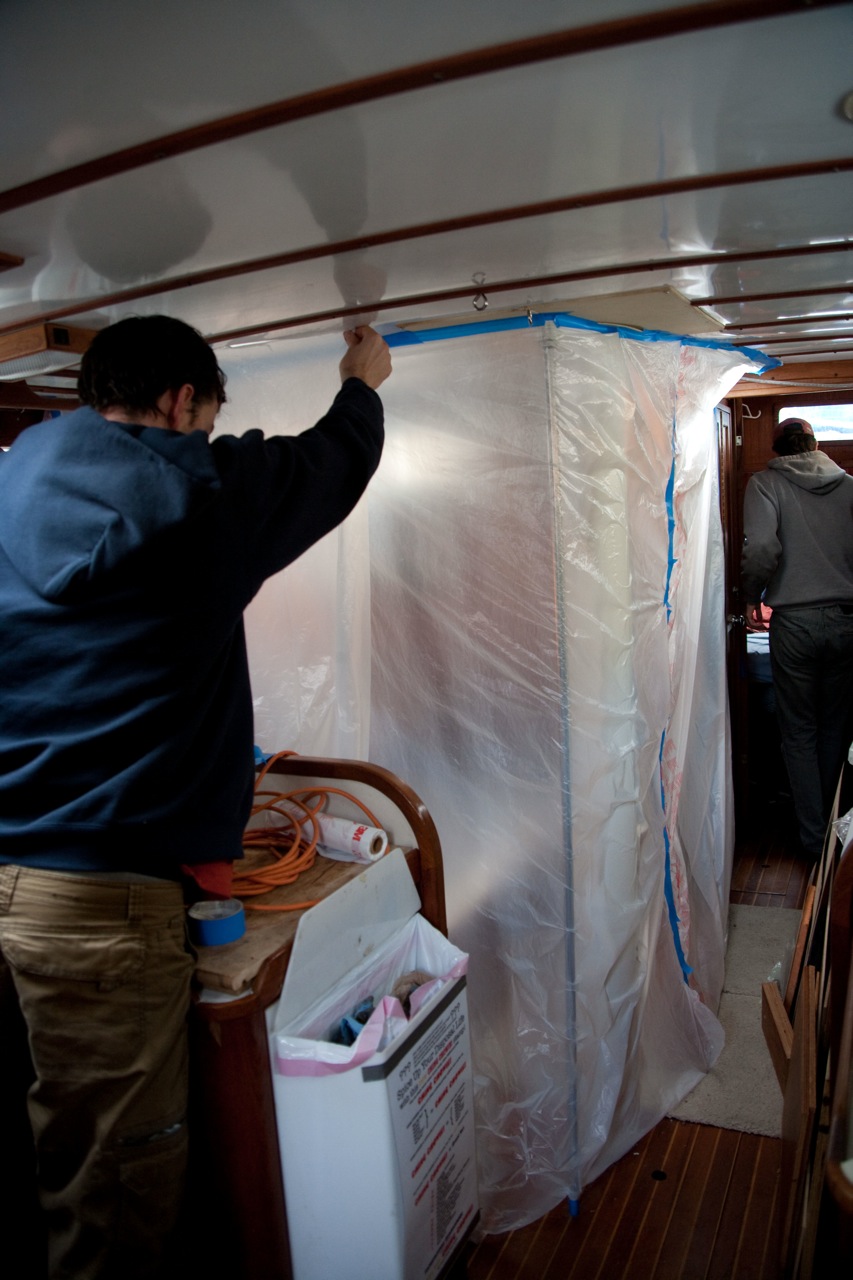
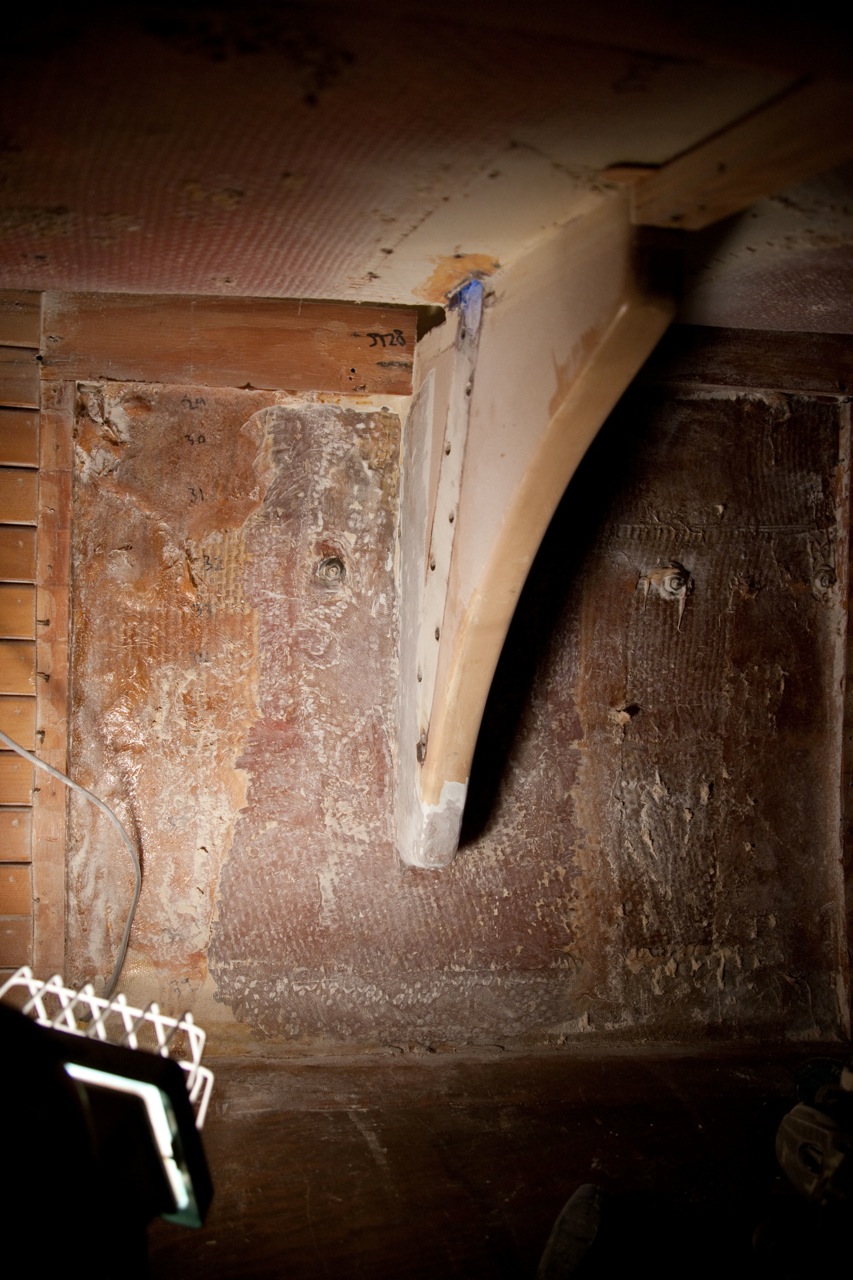
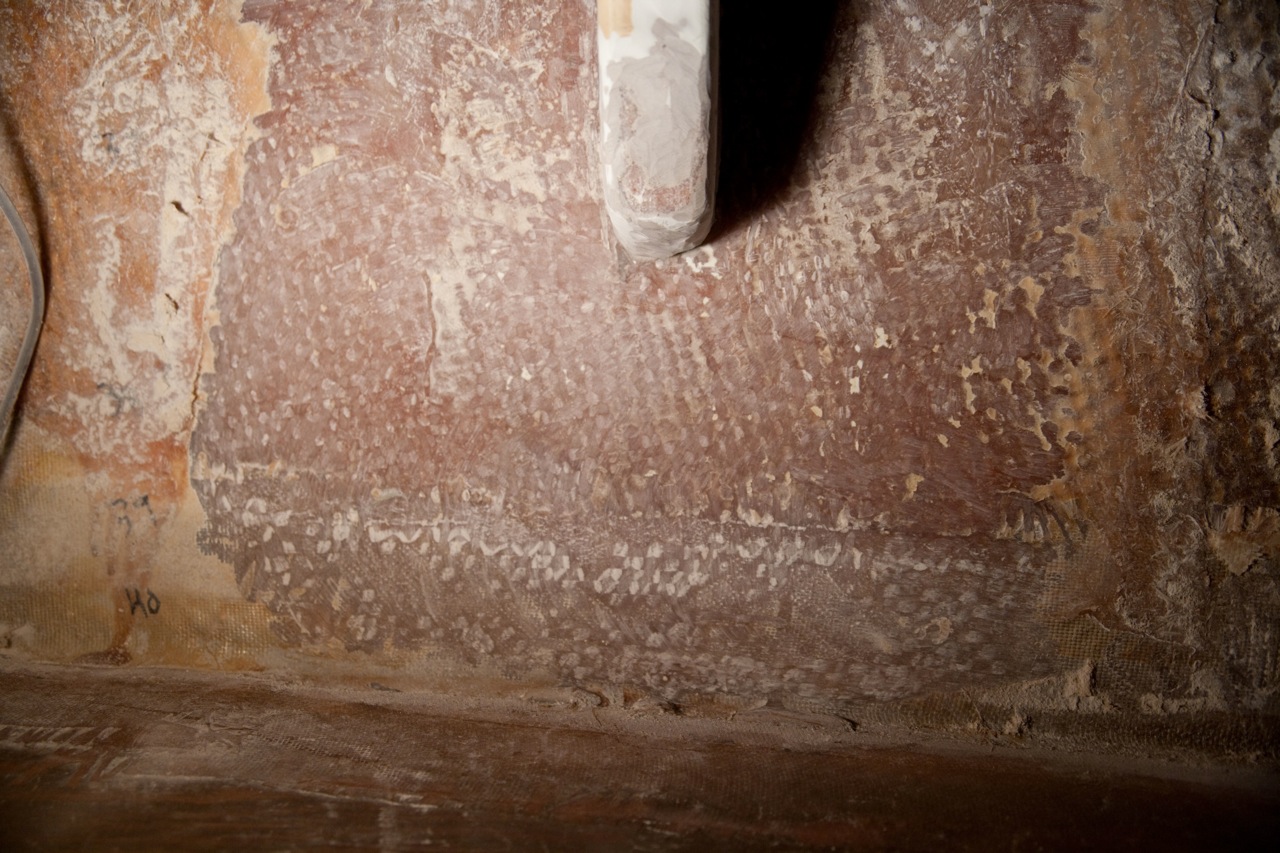
    I used plastic to tape off the entire area.  I wore a bunny suit, full facemask, and respirator.  I ground the fiberglass tabbing off until reaching clean, solid glass.  That part really sucks, the grinding.
  • discovered lumps

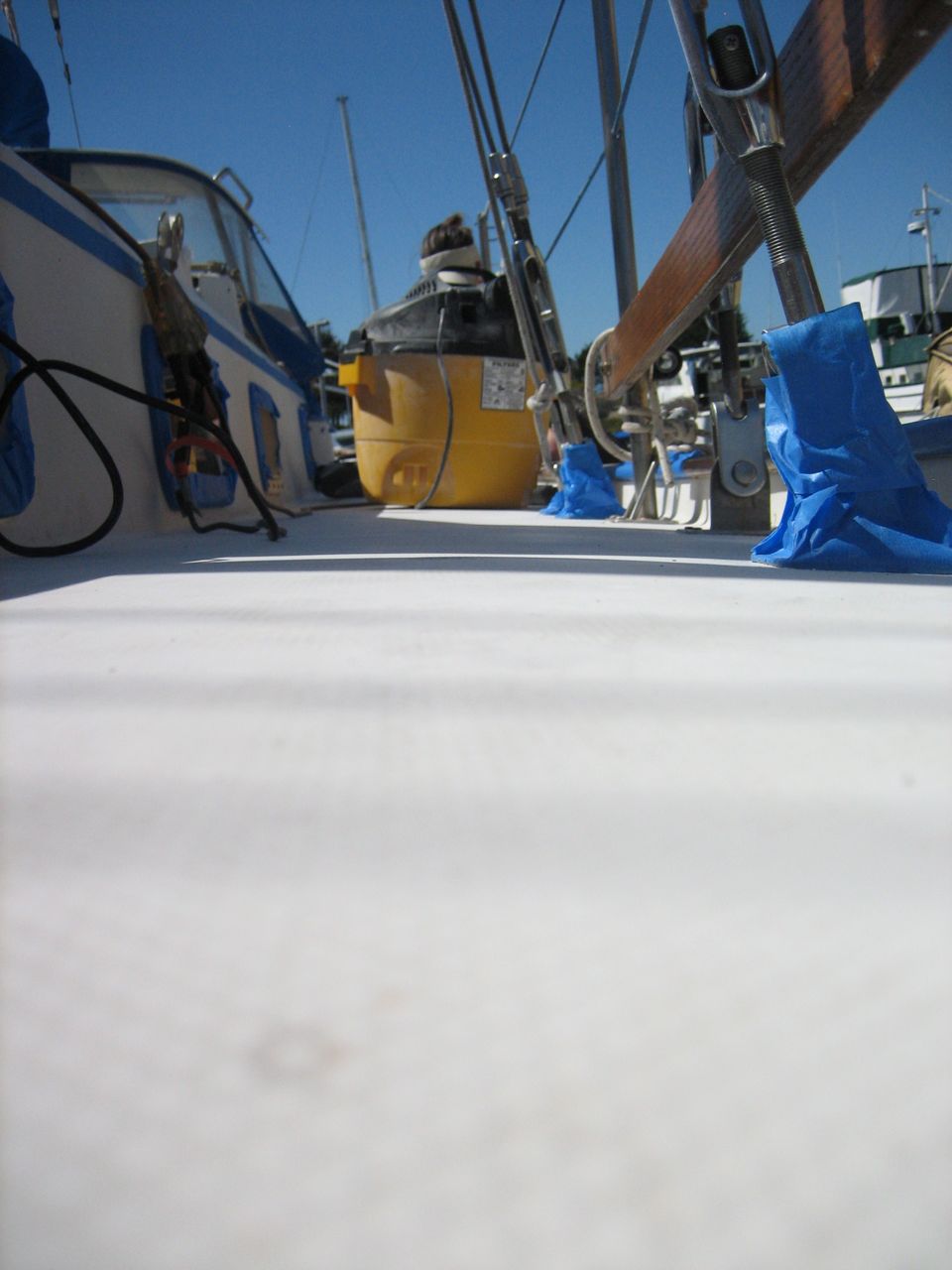
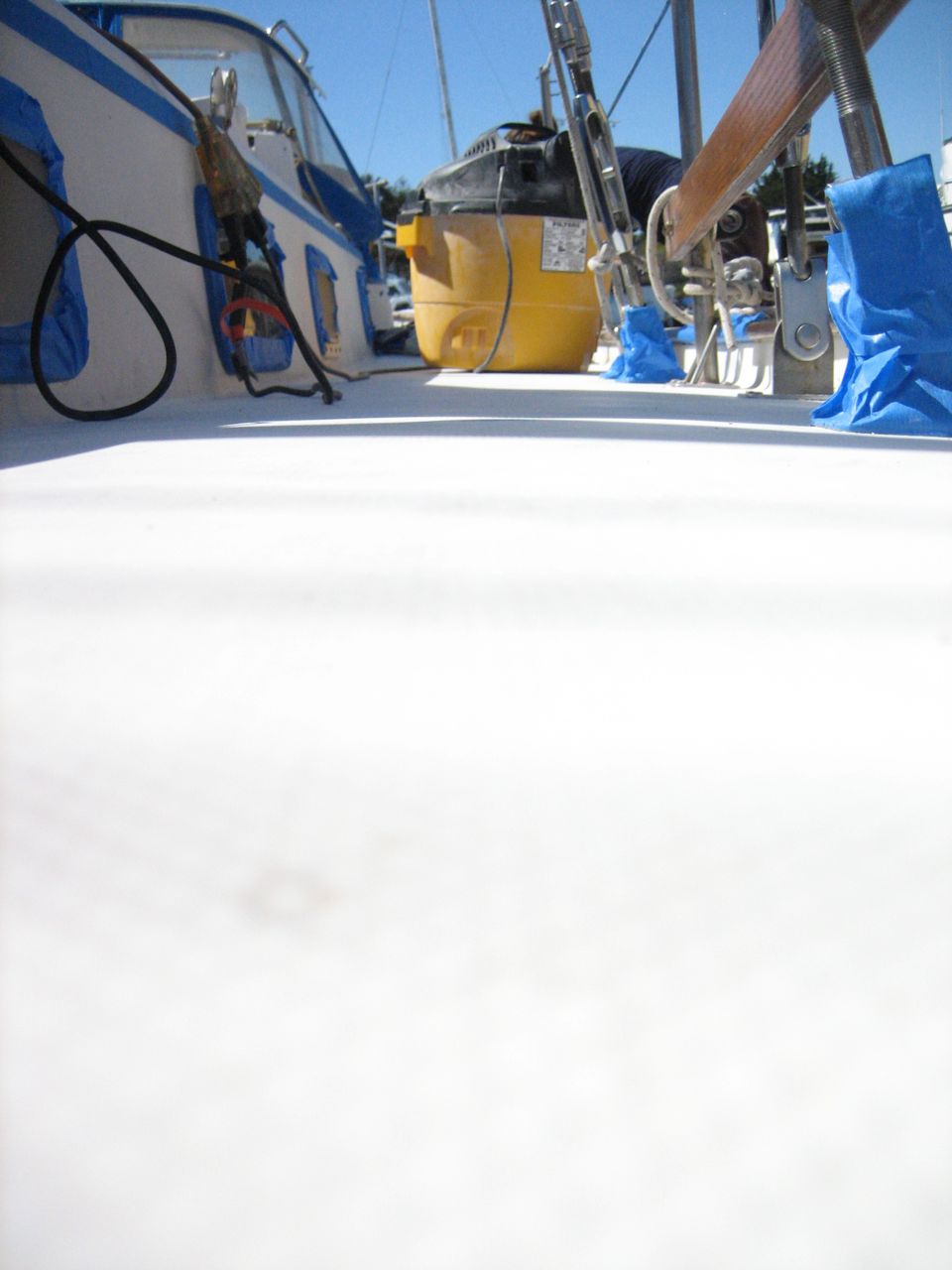
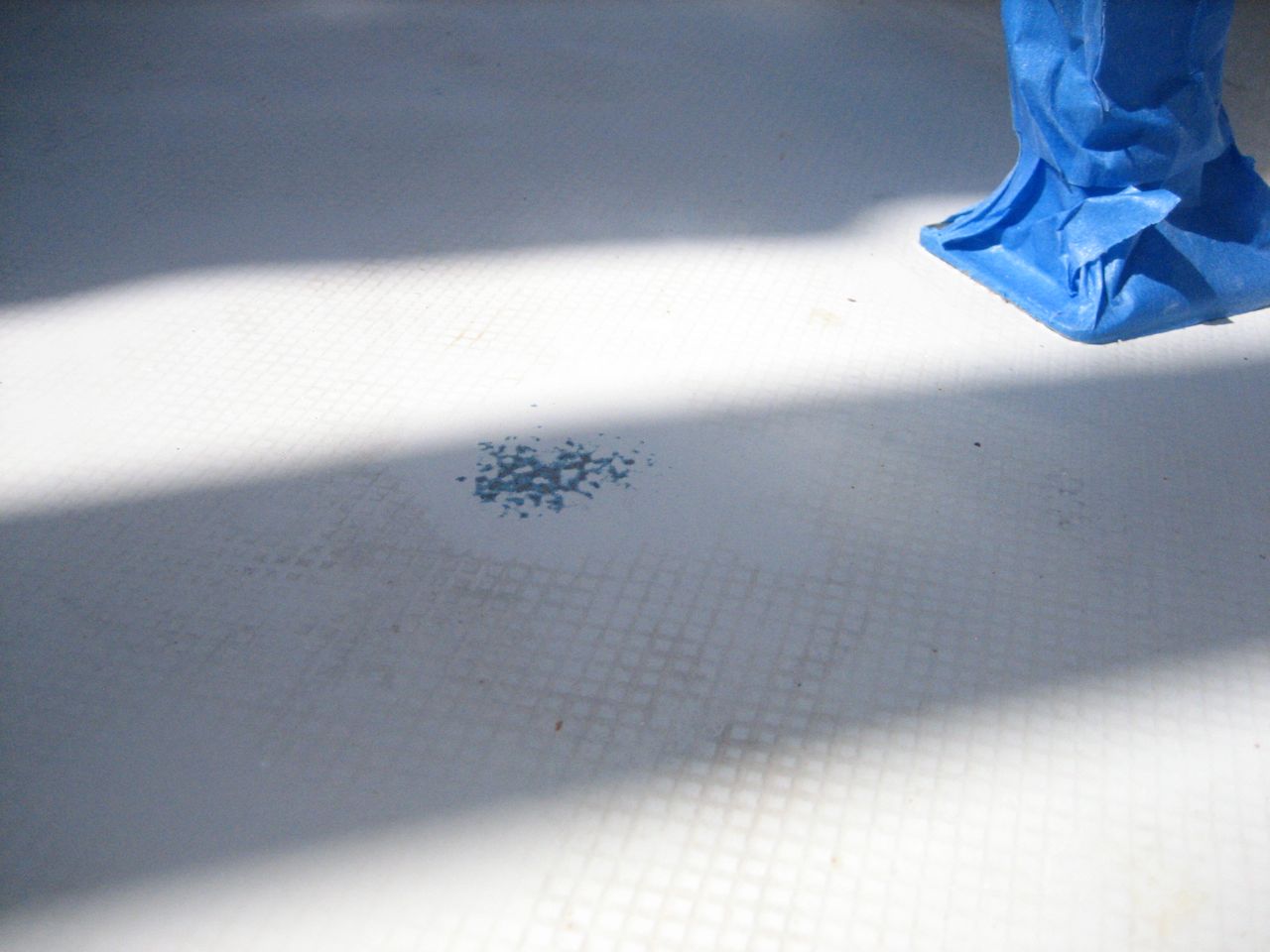
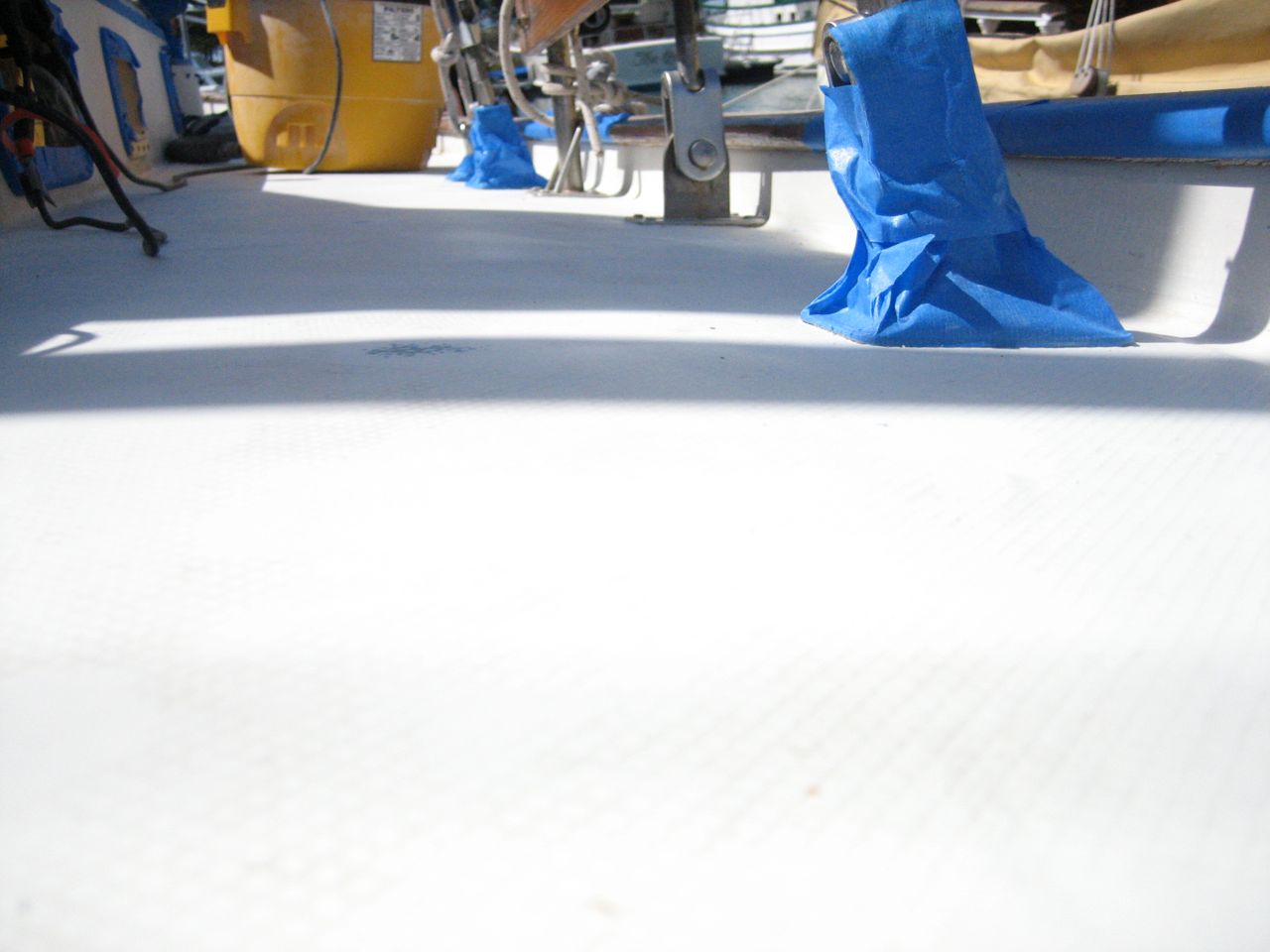
    While sanding the boat pre-painting, we discovered three lumps (one starboard, two on port) inboard of the shrouds, where the knees underneath are exerting upward pressure on the deck.  No word yet on whether this should be cause for alarm.  Here are some pictures; it’s hard to see.  The blue is where I sanded through the gelcoat on the lump.

  • Fabricated battery covers

    It is unforgiveable that I didn’t do this long ago–all it would have taken would be to drop a wrench onto the batteries just once and some really bad shit would have gone down–and I’m constantly working with screwdrivers and wrenches over the batteries.

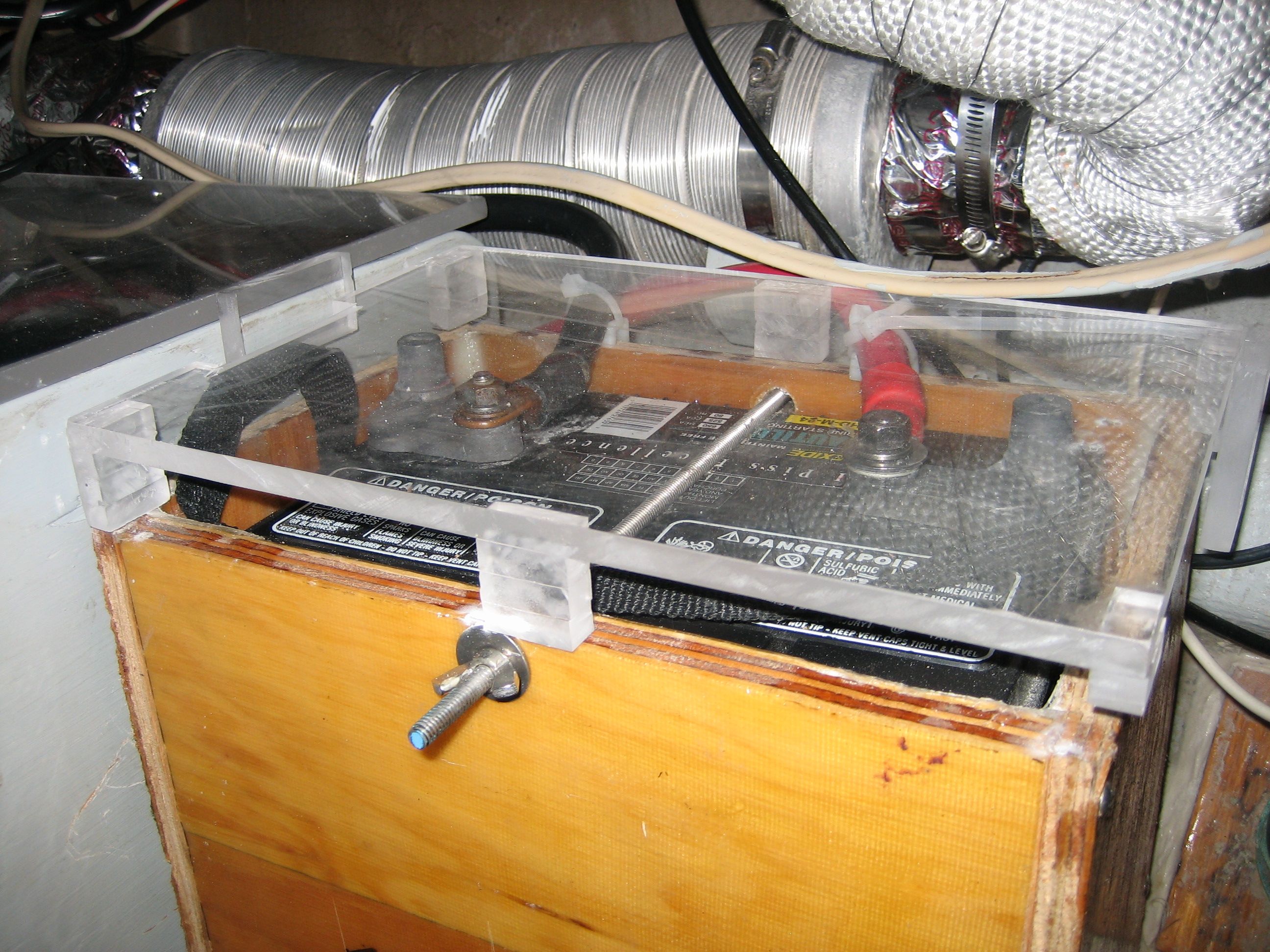
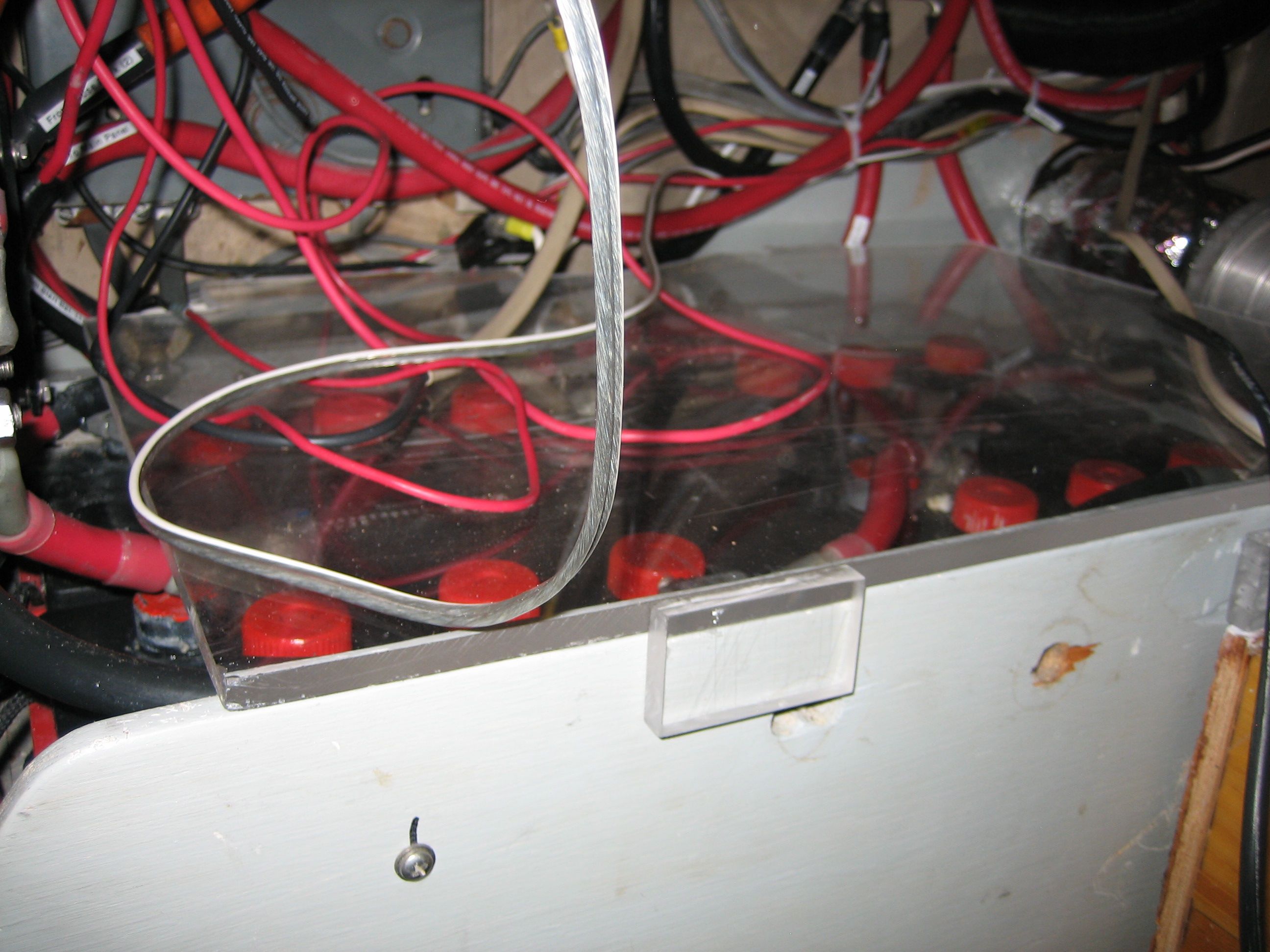
    I made covers out of an extra sheet of 3/8″ clear acrylic that we had.  I cut out the pieces of acrylic with the cutoff blade on the grinder, and it is DEFINITELY the best way to do it among the tools we have.  I’ve tried using the jig saw and the fein tool, and both are annoying and inferior.  I glued a few tabs around the edges to seat the cover on properly with methylene chloride–TAP plastics sells it for just this purpose.

    It is a convenient feature for the covers to be clear so we can what’s going on with the batteries.  Also,  the covers now form a great table for placing tools while working in the engine room :-).

    The covers remain unfinished–I stopped messing with them when I realized that when we put the new batteries in they will need to be modified.

  • Installed carbon monoxide detector

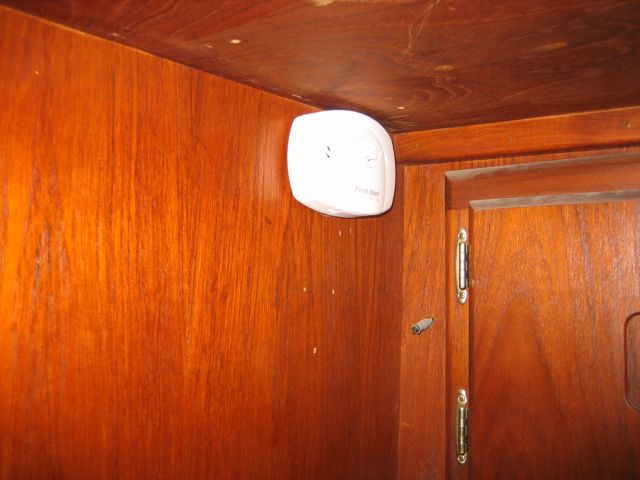
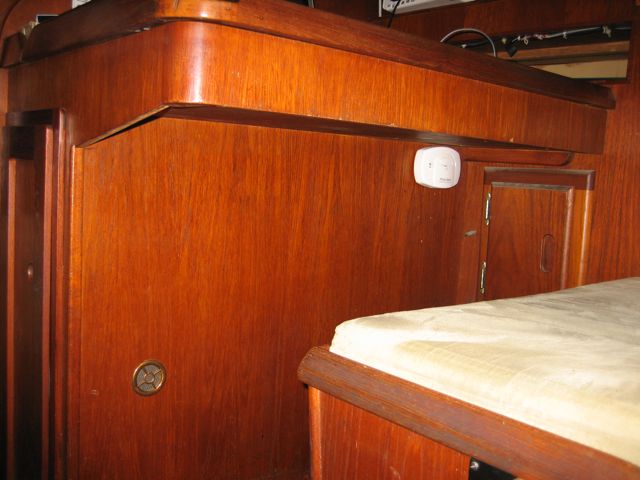
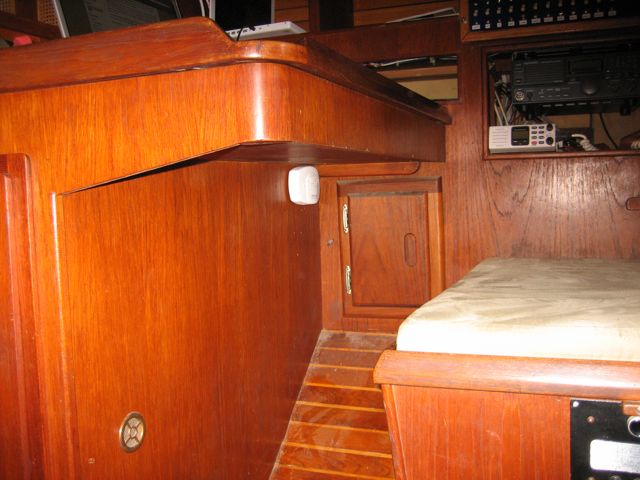
    Due diligence.  Found a battery (2 AAs) operated one for $20 from Ace hardware.  Jonny mounted it up underneath the nav table in the corner where our knees don’t reach.  We briefly looked into whether CO rises or falls–mount at the ceiling or floor–and discovered that it is the same density, so it will rise if it’s hotter, fall if it’s cooler, so it doesn’t matter where you mount the detector.  We chose to mount it under the nav table, up in the corner.

  • Replaced Lifelines

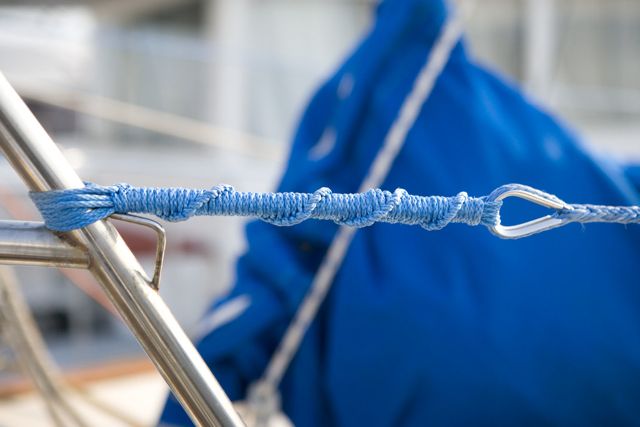
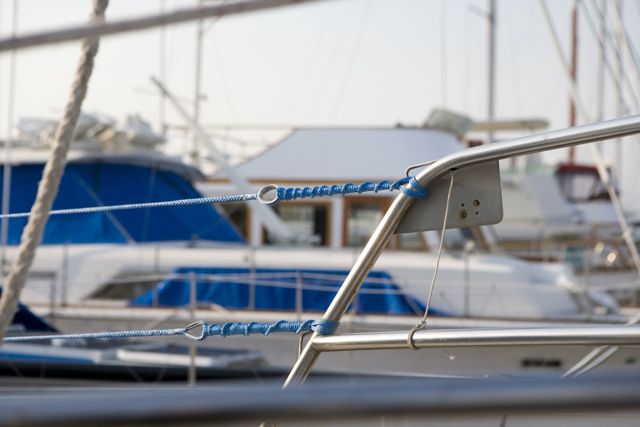
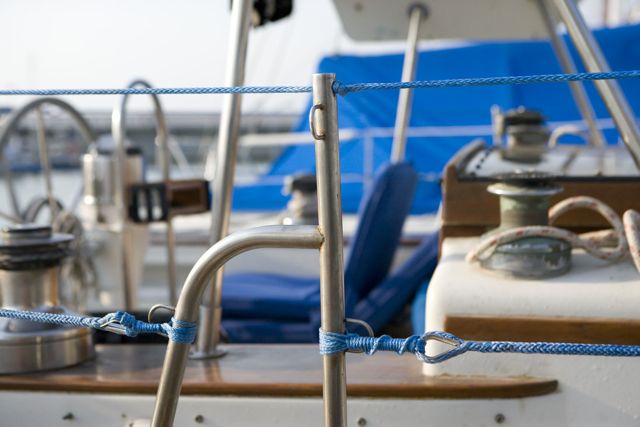
    I read on Brion Toss’s forum spartalk about using HM (high-modulus) line–amsteel is my brand name of choice right now–for lifelines. This idea appeals for many reasons:

    1) Much cheaper–no need to have ends swaged, no need for mini (yet still expensive) turnbuckles

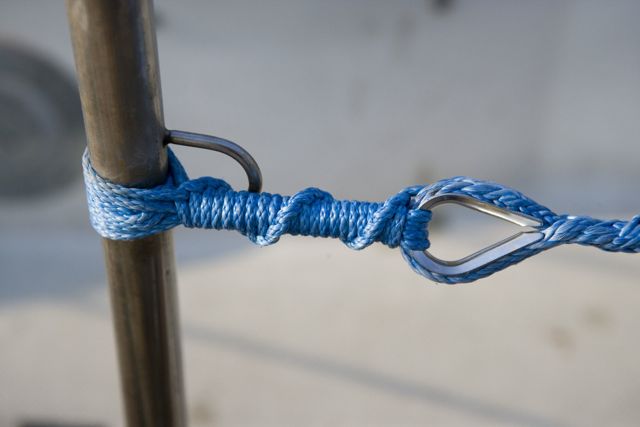
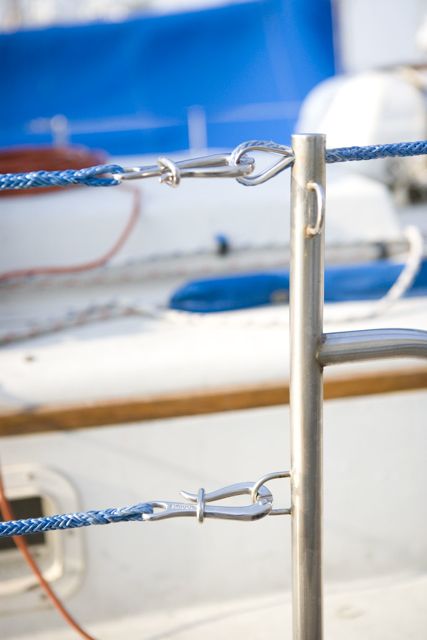
    2) Much easier–we can splice the eyes ourselves, and use lashings for the ends, making it simple to maintain them ourselves

    3) Stronger–for it’s diameter, stronger than wire

    4) Prettier–we used amsteel blue, which nicely matches our boat. It’s unusual to see blue lifelines, and it’s cool.

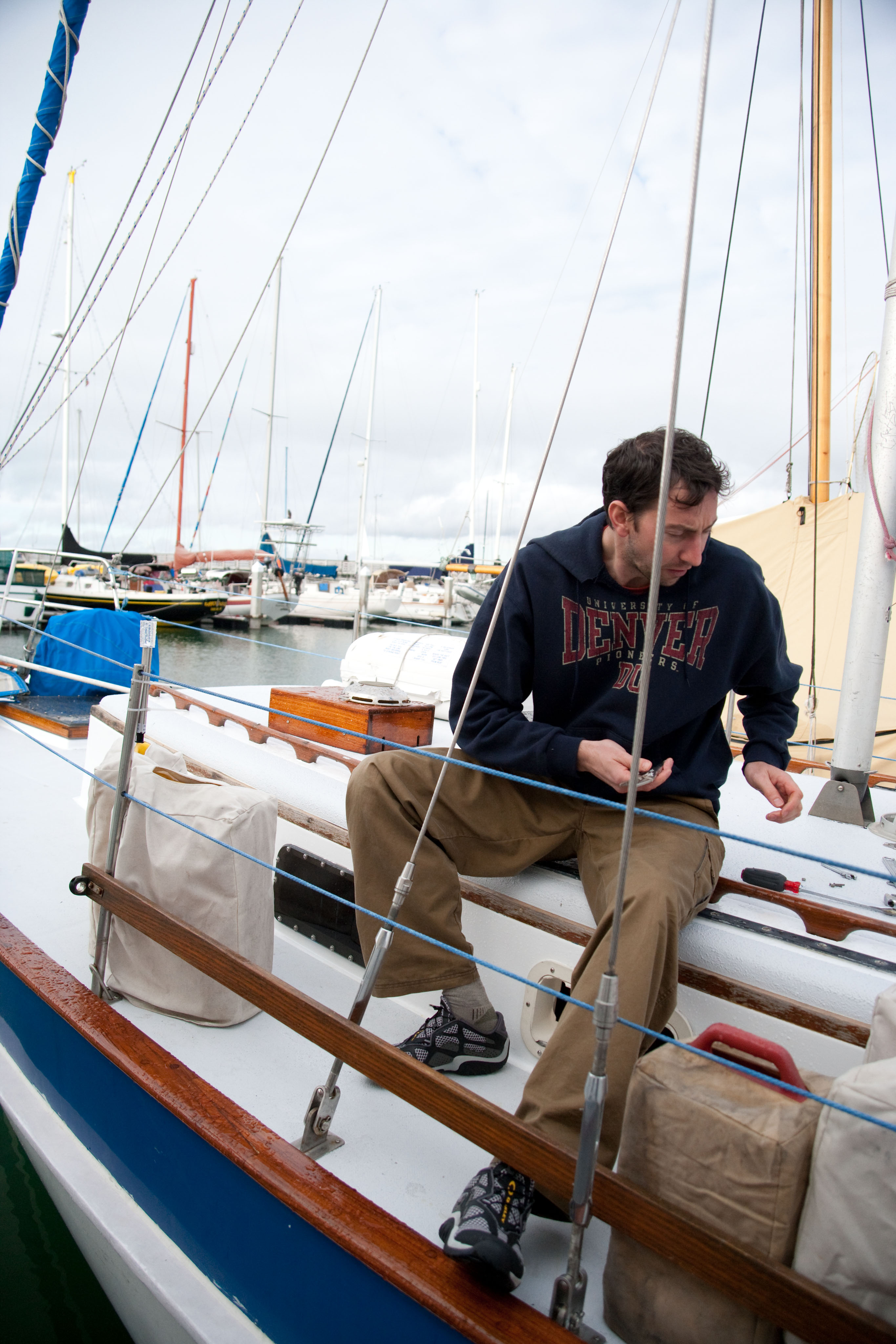
    It took over two weeks to finish this task, working on it an hour or so a day on average.  Mainly because we didn’t have all the materials on hand, then ran out of some stuff, dropped one of the latches in the water, couldn’t decide how we wanted to do the lashings, etc.  But now everything is finished and we’re satisfied with the result.  My only concern is that the blue is going to wash right off the amsteel, and then it won’t look as cool.

  • Replaced Propane Locker Drain

    The drain for the propane locker was completely clogged, and the locker itself was full of rust colored junk (clearly the hatch gasket is not working and will need to be replaced). Jonny and I cleaned the locker and replaced the drain one dark night in mexico.

  • Assembled new jacklines & tethers

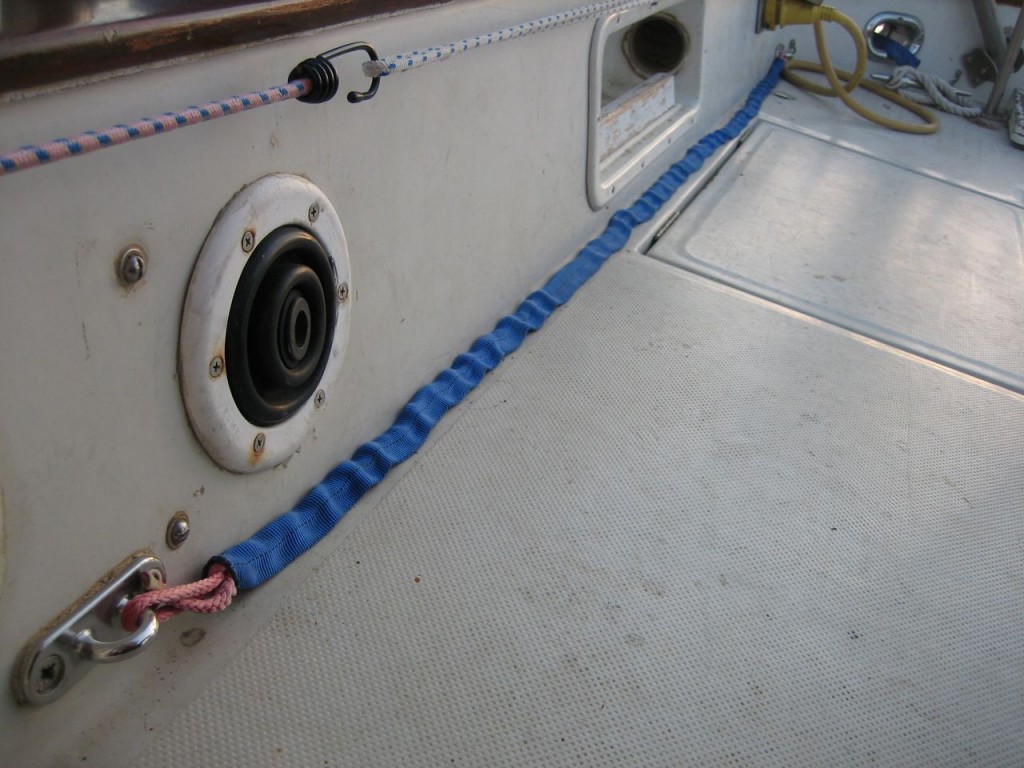
    Webbing is nice for jacklines because it doesn’t roll under the feet. But it degrades in the sun and the strength goes to shit. Somewhere I read a good idea–thread line down through the center of the tubular webbing and have the advantages of both. So that’s what we did. I bought blue 1″ tubular webbing and 1/4″ amsteel, and jonny did the deed of threading the amsteel through the 40ft lengths of webbing. We made our own tethers by threading shockcord through tubular webbing; one end gets a trigger release snap-shackle (that will be the pfd side) and the other end, a steel biner.  These things retail for $100 or so; ours were much cheaper.

    In the cockpit, we installed two padeyes behind the starboard seat to run a jackline, so that you can clip in before leaving the companionway, and stay comfortably clipped in while hanging out in the cockpit.

    Our policy: must be clipped in whenever it’s dark.